
中国全科医学 ›› 2026, Vol. 29 ›› Issue (23): 3359-3370.DOI: 10.12114/j.issn.1007-9572.2025.0255
裴如青1, 周郁秋2,*( ), 张思宇2, 刘西俊1
收稿日期:2025-08-22
修回日期:2026-03-10
出版日期:2026-08-15
发布日期:2026-07-03
通讯作者:
周郁秋
作者贡献:
裴如青设计研究思路,查阅文献,负责数据的采集、分析及解释,撰写论文初稿,负责论文的修订;周郁秋负责判定文献纳入与资料提取过程中的分歧,参与论文修订,对文章整体负责;张思宇、刘西俊参与研究设计、数据分析与解释、论文修订。
基金资助:
PEI Ruqing1, ZHOU Yuqiu2,*(), ZHANG Siyu2, LIU Xijun1
Received:2025-08-22
Revised:2026-03-10
Published:2026-08-15
Online:2026-07-03
Contact:
ZHOU Yuqiu
摘要: 背景 精神分裂症是一种常见的重性精神障碍,具有高致残率、高复发率的特征。目前,西方国家/地区已对精神分裂症复发的影响因素开展了一定探索,但由于中西方文化背景存在差异,不同患者群体的复发影响因素呈现异质性,导致西方国家/地区的研究结论在我国患者群体中的适用性存在局限。因此,明确我国本土精神分裂症复发的影响因素具有重要意义。 目的 探讨中国精神分裂症患者复发的影响因素,为临床干预提供循证依据。 方法 检索中国知网、万方数据知识服务平台、维普网、中国生物医学文献数据库(CBM)、PubMed、Embase、Cochrane Library、Ovid Medline、Web of Science等数据库中有关中国精神分裂症患者复发影响因素的文献,检索时间设置为建库至2025-05-18。按照纳入与排除标准筛选文献,并对纳入文献进行数据提取和质量评价,使用RevMan 5.4软件进行Meta分析。 结果 纳入21篇研究,涉及6 496例研究对象,提取到14个影响因素。Meta分析结果显示,复发危险因素包括无配偶(I2=71%,OR=1.71,95%CI=1.26~2.32,P<0.01)、病程长(I2=30%,OR=1.25,95%CI=1.07~1.45,P<0.01)、精神疾病家族史(I2=48%,OR=2.60,95%CI=2.01~3.35,P<0.01)、饮酒史(I2=0,OR=2.22,95%CI=1.60~3.08,P<0.01)、偏执型精神分裂症(I2=83%,OR=3.47,95%CI=1.90~6.34,P<0.01)、服药依从性差(I2=92%,OR=3.59,95%CI=2.44~5.29,P<0.01)、负性生活事件(I2=93%,OR=2.81,95%CI=1.35~5.87,P<0.01)、情绪波动阳性(I2=84%,OR=2.66,95%CI=1.31~5.38,P<0.01)、家庭支持差(I2=79%,OR=2.61,95%CI=1.71~3.99,P<0.01)、失业/失学(I2=0,OR=2.52,95%CI=2.09~3.04,P<0.01);保护因素为社会支持水平高(I2=0,OR=0.19,95%CI=0.13~0.28,P<0.01)、定期复诊(I2=9%,OR=0.28,95%CI=0.17~0.46,P<0.01)。亚组分析结果表明,定期复诊(I2=9%,OR=0.28,95%CI=0.17~0.46,P<0.01)、失业/失学(I2=0,OR=2.52,95%CI=2.09~3.04,P<0.01)是社区患者特有的影响因素。 结论 精神分裂症复发受多种因素共同影响,需通过多维度干预(如加强服药管理、改善家庭支持、优化社区随访等)降低复发风险。
中图分类号:
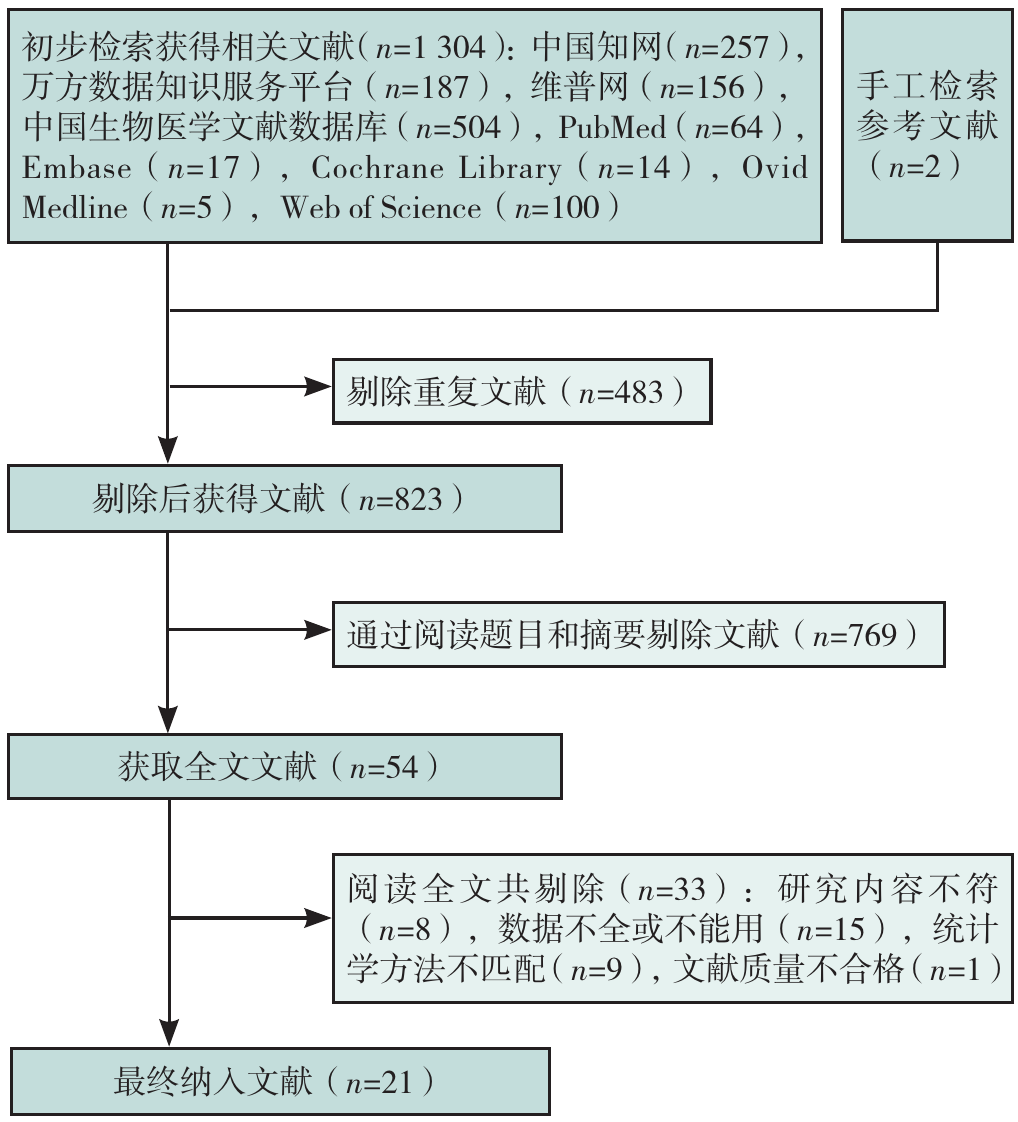
图1 文献筛选流程图
Figure 1 Flow chart of literature searching and screening
| 第一作者 | 发表年份(年) | 诊断标准 | 样本来源 | 研究类型 | 样本例数(复发/未复发) | 影响因素 |
|---|---|---|---|---|---|---|
| 马迎春[ | 2014 | CCMD-3 | 住院患者 | 队列研究 | 185(77/108) | 6、7、8、10 |
| 彭习呈[ | 2022 | CCMD-3 | 社区患者 | 队列研究 | 150(39/111) | 7、12、14 |
| 吴逢春[ | 2016 | ICD-10 | 社区患者 | 队列研究 | 179(72/107) | 7、12、14 |
| 徐孟松[ | 2017 | ICD-10 | 住院患者 | 队列研究 | 148(67/81) | 6、7、9、10 |
| 张红梅[ | 2017 | ICD-10 | 住院患者 | 队列研究 | 192(93/99) | 1、2、3、4、6、7、10 |
| 孙志刚[ | 2017 | ICD-10 | 住院患者 | 队列研究 | 151(113/38) | 1、7 |
| 蔡清艳[ | 2009 | DSM-Ⅳ | 社区患者 | 队列研究 | 316(222/94) | 4、7、12 |
| 纪淑娇[ | 2022 | CCMD-3 | 社区患者 | 队列研究 | 120(31/89) | 2、5、7、9、10、13 |
| 付艳梅[ | 2015 | ICD-10 | 住院患者 | 队列研究 | 218(89/129) | 2、4、5、7、9、10、13 |
| 王威[ | 2024 | ICD-10 | 住院患者 | 队列研究 | 130(43/87) | 3、4、7 |
| 邢成涛[ | 2022 | CCMD-3 | 住院患者 | 队列研究 | 120(73/47) | 1、3、5、7 |
| Mi[ | 2020 | ICD-10 | 社区患者 | 队列研究 | 1 295(465/830) | 7、14 |
| Zhang[ | 2012 | CCMD-3 | 社区患者 | 队列研究 | 963(174/789) | 2 |
| Wu[ | 2017 | ICD-10 | 社区患者 | 队列研究 | 370(248/122) | 7 |
| 吴洪军[ | 2014 | ICD-10 | 住院患者 | 病例对照研究 | 368(202/166) | 7、8、11 |
| 蔡梦燕[ | 2016 | ICD-10 | 住院患者 | 病例对照研究 | 160(87/73) | 7、8、11 |
| 时丽款[ | 2022 | ICD-10 | 社区患者 | 病例对照研究 | 160(65/95) | 6、7、9、10 |
| 孙香凤[ | 2023 | ICD-10 | 住院患者 | 病例对照研究 | 300(110/190) | 1、2、7、8、11 |
| 王宏杰[ | 2022 | ICD-10 | 社区患者 | 横断面研究 | 293(211/82) | 11 |
| 赵紫琪[ | 2024 | ICD-10 | 住院患者 | 横断面研究 | 430(199/231) | 3、4、7、8、13 |
| Wang[ | 2021 | ICD-10 | 社区患者 | 横断面研究 | 248(106/142) | 4、8 |
表1 纳入研究的基本特征
Table 1 Basic characteristics of the included articles
| 第一作者 | 发表年份(年) | 诊断标准 | 样本来源 | 研究类型 | 样本例数(复发/未复发) | 影响因素 |
|---|---|---|---|---|---|---|
| 马迎春[ | 2014 | CCMD-3 | 住院患者 | 队列研究 | 185(77/108) | 6、7、8、10 |
| 彭习呈[ | 2022 | CCMD-3 | 社区患者 | 队列研究 | 150(39/111) | 7、12、14 |
| 吴逢春[ | 2016 | ICD-10 | 社区患者 | 队列研究 | 179(72/107) | 7、12、14 |
| 徐孟松[ | 2017 | ICD-10 | 住院患者 | 队列研究 | 148(67/81) | 6、7、9、10 |
| 张红梅[ | 2017 | ICD-10 | 住院患者 | 队列研究 | 192(93/99) | 1、2、3、4、6、7、10 |
| 孙志刚[ | 2017 | ICD-10 | 住院患者 | 队列研究 | 151(113/38) | 1、7 |
| 蔡清艳[ | 2009 | DSM-Ⅳ | 社区患者 | 队列研究 | 316(222/94) | 4、7、12 |
| 纪淑娇[ | 2022 | CCMD-3 | 社区患者 | 队列研究 | 120(31/89) | 2、5、7、9、10、13 |
| 付艳梅[ | 2015 | ICD-10 | 住院患者 | 队列研究 | 218(89/129) | 2、4、5、7、9、10、13 |
| 王威[ | 2024 | ICD-10 | 住院患者 | 队列研究 | 130(43/87) | 3、4、7 |
| 邢成涛[ | 2022 | CCMD-3 | 住院患者 | 队列研究 | 120(73/47) | 1、3、5、7 |
| Mi[ | 2020 | ICD-10 | 社区患者 | 队列研究 | 1 295(465/830) | 7、14 |
| Zhang[ | 2012 | CCMD-3 | 社区患者 | 队列研究 | 963(174/789) | 2 |
| Wu[ | 2017 | ICD-10 | 社区患者 | 队列研究 | 370(248/122) | 7 |
| 吴洪军[ | 2014 | ICD-10 | 住院患者 | 病例对照研究 | 368(202/166) | 7、8、11 |
| 蔡梦燕[ | 2016 | ICD-10 | 住院患者 | 病例对照研究 | 160(87/73) | 7、8、11 |
| 时丽款[ | 2022 | ICD-10 | 社区患者 | 病例对照研究 | 160(65/95) | 6、7、9、10 |
| 孙香凤[ | 2023 | ICD-10 | 住院患者 | 病例对照研究 | 300(110/190) | 1、2、7、8、11 |
| 王宏杰[ | 2022 | ICD-10 | 社区患者 | 横断面研究 | 293(211/82) | 11 |
| 赵紫琪[ | 2024 | ICD-10 | 住院患者 | 横断面研究 | 430(199/231) | 3、4、7、8、13 |
| Wang[ | 2021 | ICD-10 | 社区患者 | 横断面研究 | 248(106/142) | 4、8 |
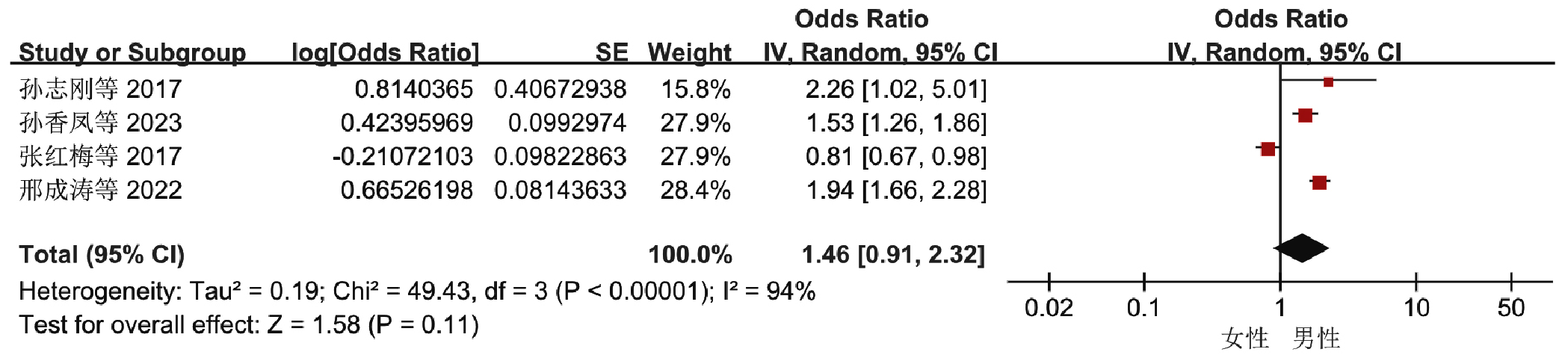
图2 性别对精神分裂症患者复发影响的森林图
Figure 2 Forest plot of the impact of gender on the relapse of schizophrenia
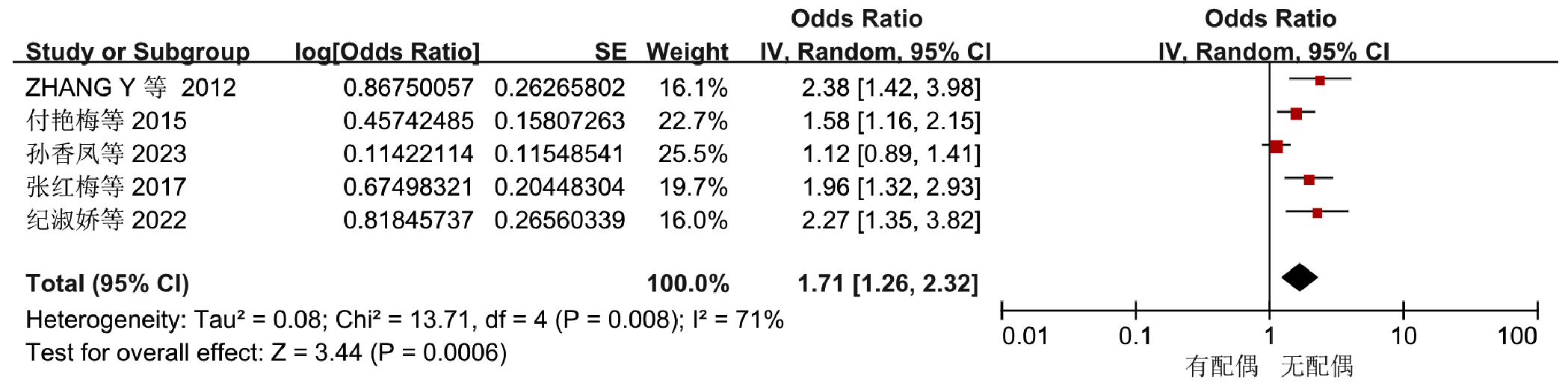
图3 婚姻情况对精神分裂症患者复发影响的森林图
Figure 3 Forest plot of the impact of marriage on the relapse of schizophrenia
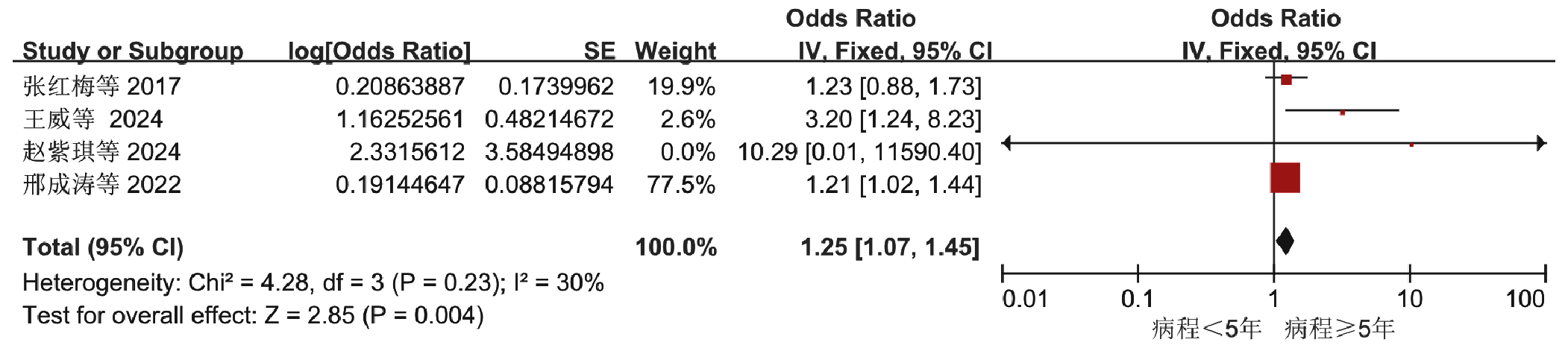
图4 病程对精神分裂症患者复发影响的森林图
Figure 4 Forest plot of the impact of disease duration on the relapse of schizophrenia
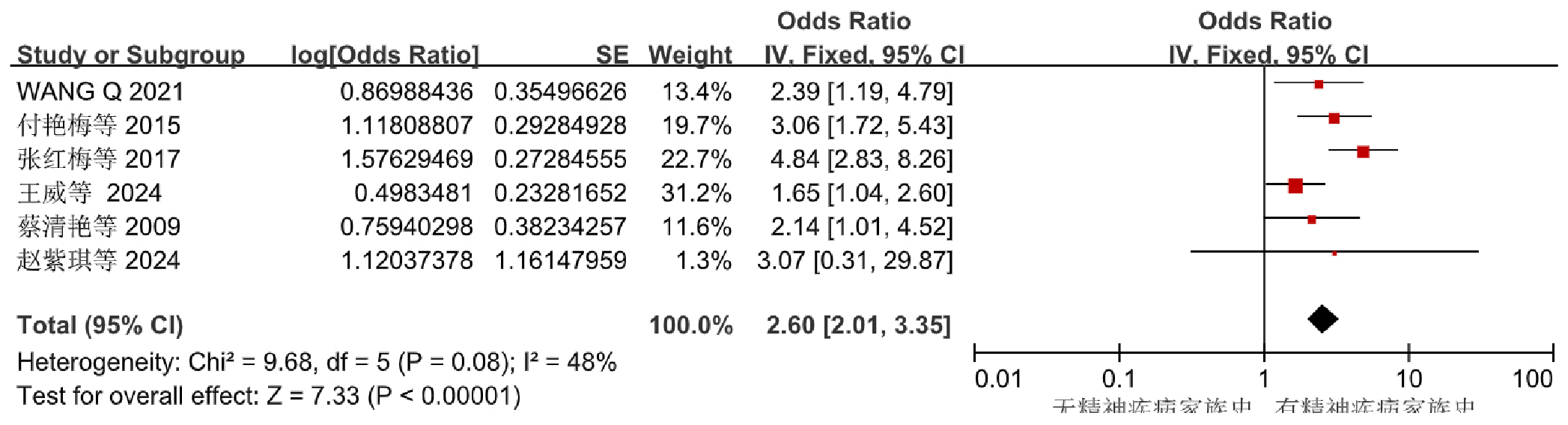
图5 精神疾病家族史对精神分裂症患者复发影响的森林图
Figure 5 Forest plot of the impact of family history on the relapse of schizophrenia
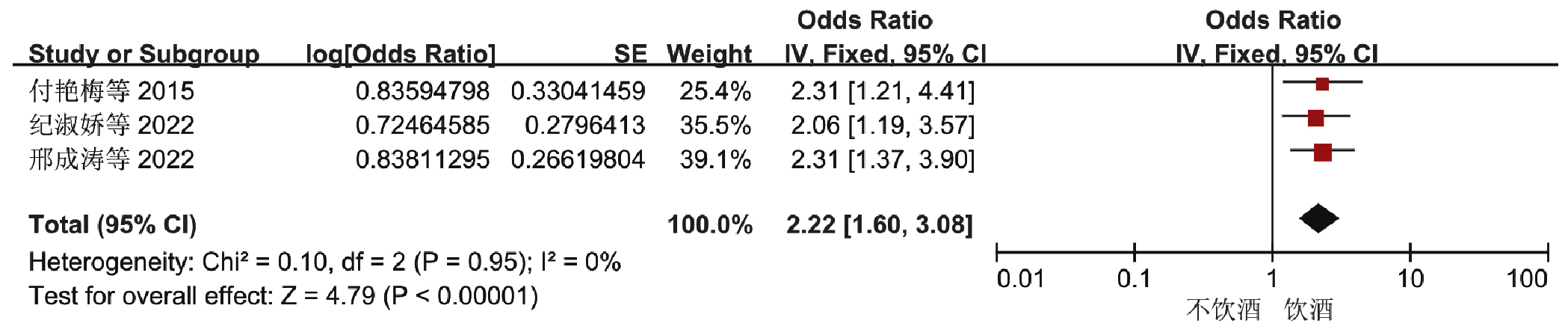
图6 饮酒史对精神分裂症患者复发影响的森林图
Figure 6 Forest plot of the impact of drinking history on the relapse of schizophrenia
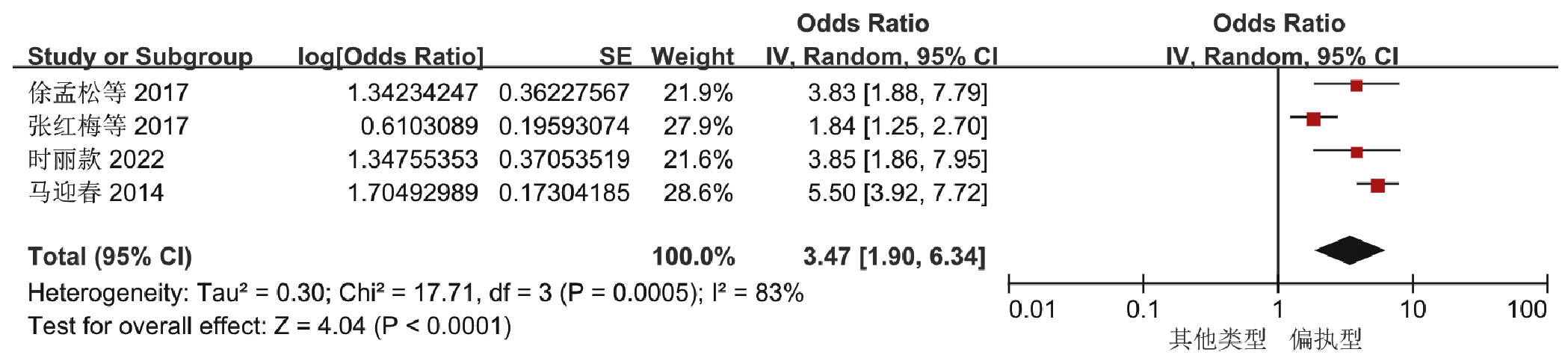
图7 偏执型精神分裂症对精神分裂症患者复发影响的森林图
Figure 7 Forest plot of the impact of paranoid type on the relapse of schizophrenia
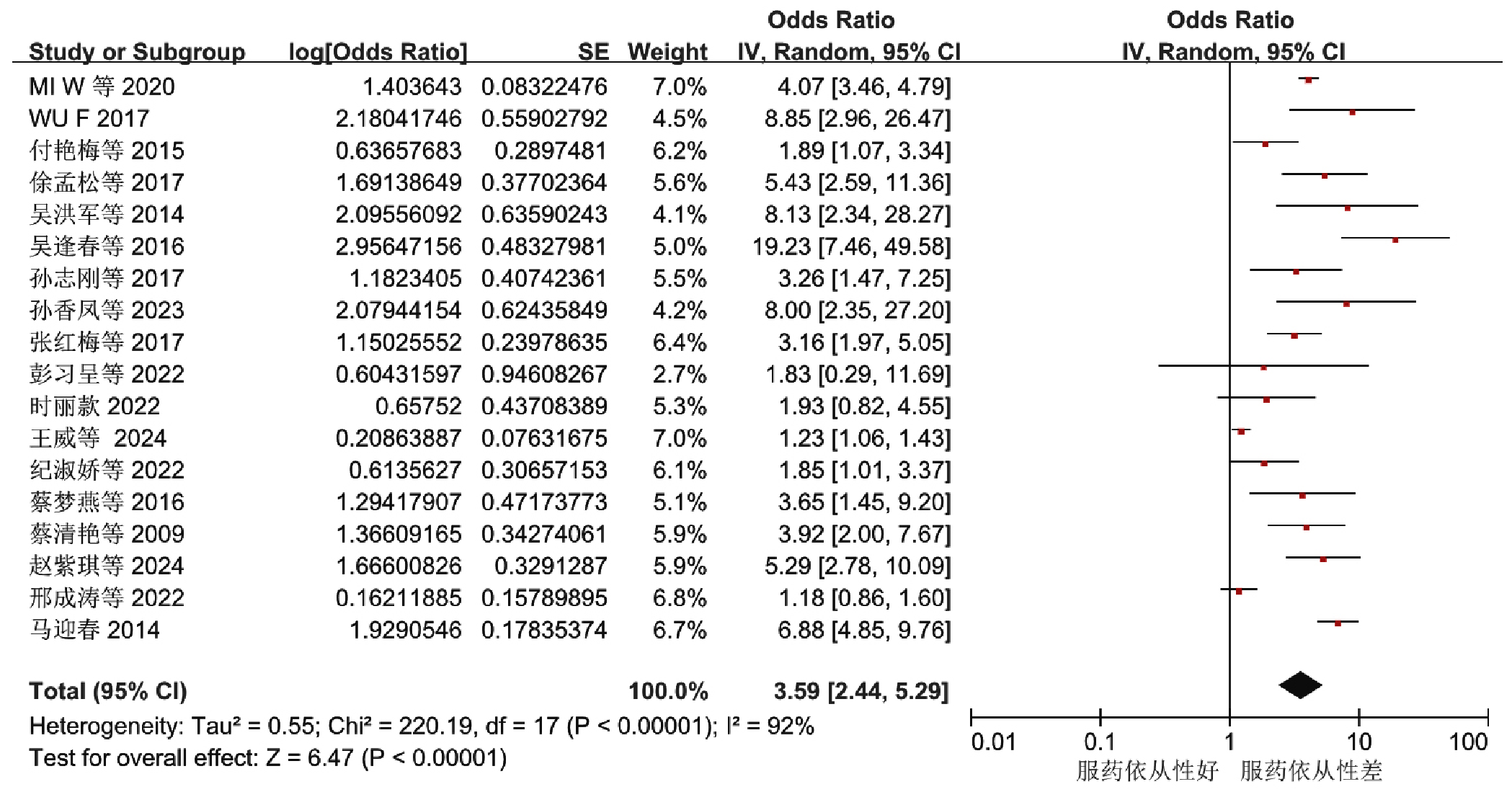
图8 服药依从性对精神分裂症患者复发影响的森林图
Figure 8 Forest plot of the impact of medication adherence on the relapse of schizophrenia
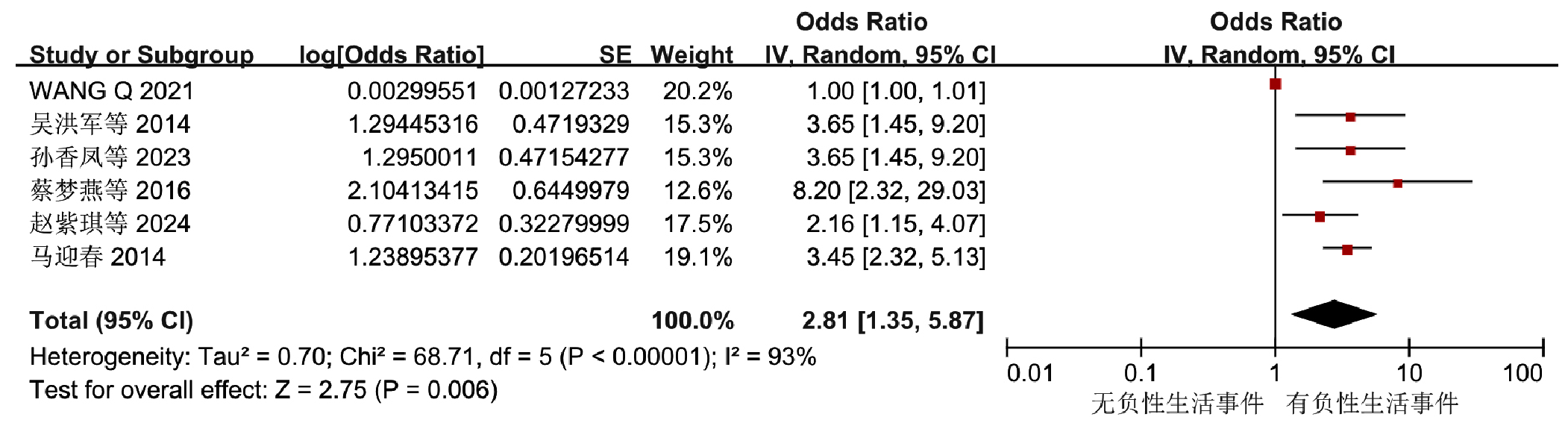
图9 负性生活事件对精神分裂症患者复发影响的森林图
Figure 9 Forest plot of the impact of negative life events on the relapse of schizophrenia
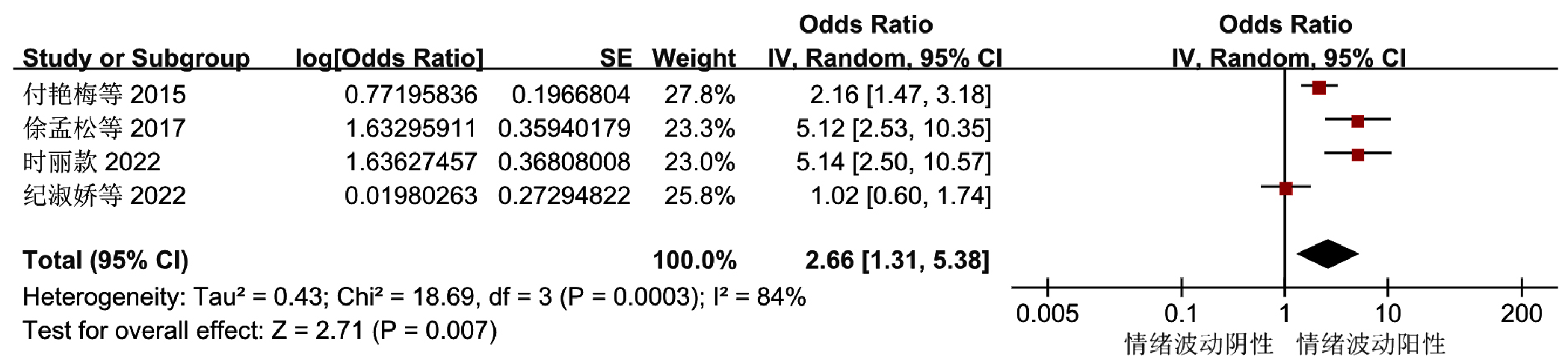
图10 情绪波动情况对精神分裂症患者复发影响的森林图
Figure 10 Forest plot of the impact of mood fluctuations on the relapse of schizophrenia
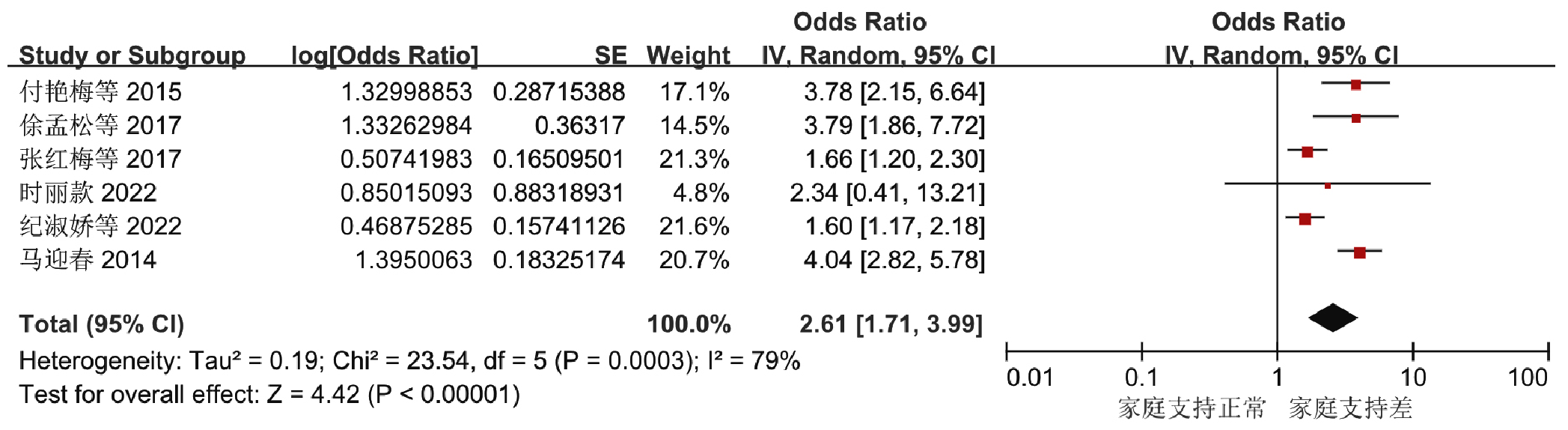
图11 家庭支持对精神分裂症患者复发影响的森林图
Figure 11 Forest plot of the impact of family support on the relapse of schizophrenia
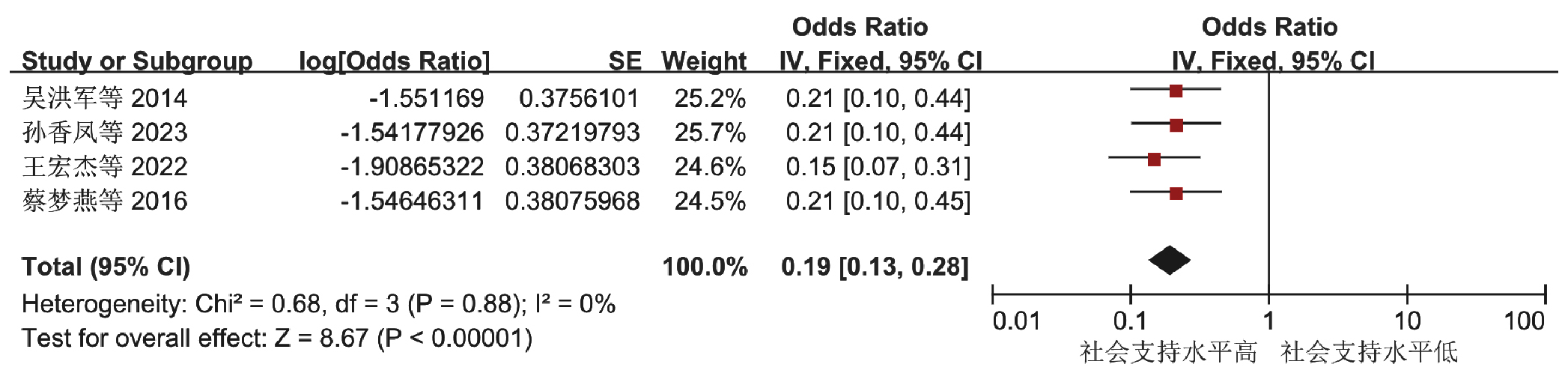
图12 社会支持对精神分裂症患者复发影响的森林图
Figure 12 Forest plot of the impact of social support on the relapse of schizophrenia
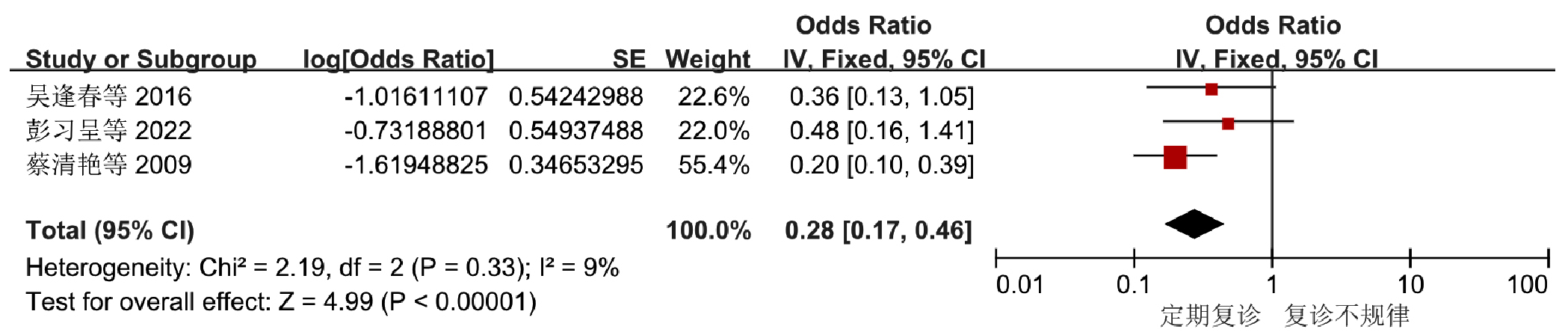
图13 复诊频率对精神分裂症患者复发影响的森林图
Figure 13 Forest plot of the impact of follow-up frequency on the relapse of schizophrenia
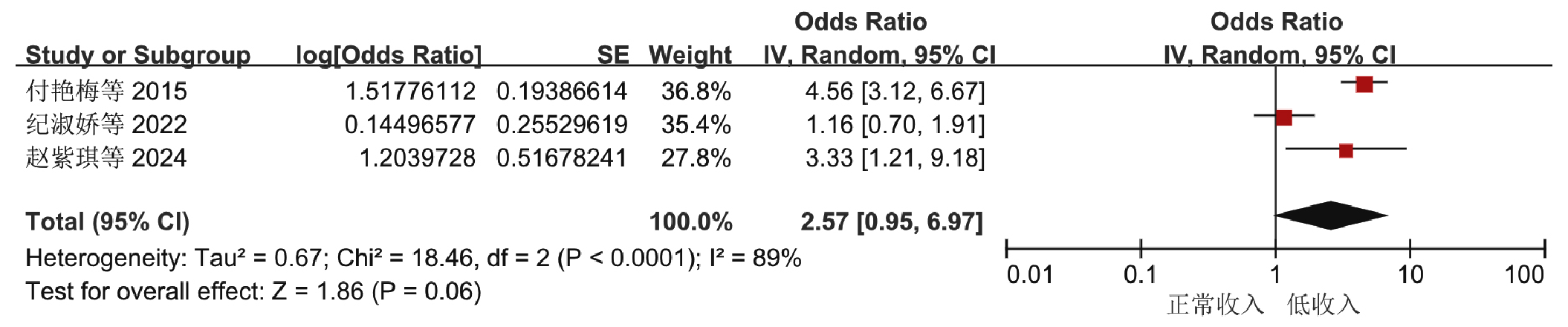
图14 家庭经济状况对精神分裂症患者复发影响的森林图
Figure 14 Forest plot of the impact of family economic status on the relapse of schizophrenia
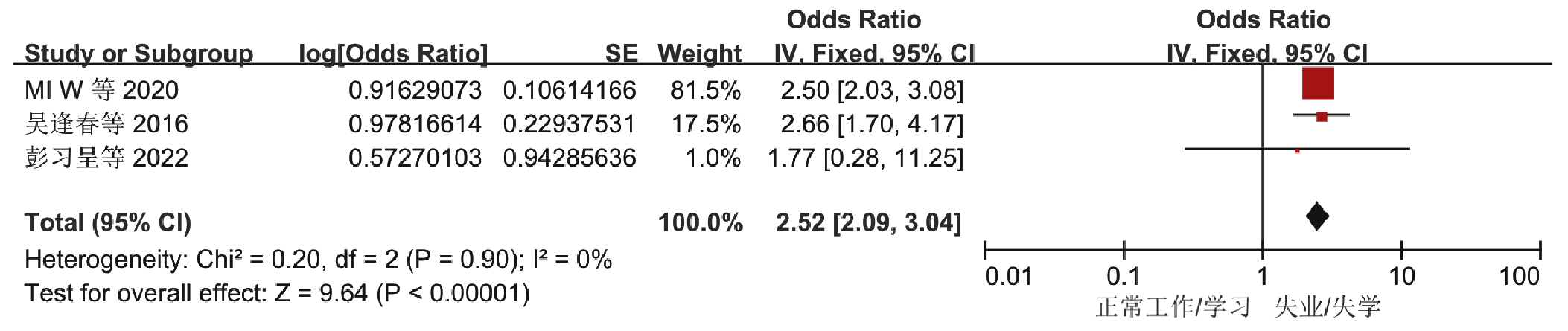
图15 工作/学习对精神分裂症患者复发影响的森林图
Figure 15 Forest plot of the impact of work/study on the relapse of schizophrenia
| 亚组 | 影响因素 | 研究数量(篇) | 异质性检验 | 合并效应值 | |||
|---|---|---|---|---|---|---|---|
| I2值(%) | P值 | OR值 | 95%CI | P值 | |||
| 社区患者 | 服药依从性(以好为参照) | ||||||
| 差 | 7[ | 73 | <0.01 | 4.03 | 2.44~6.66 | <0.01 | |
| 工作/学习(以正常工作/学习为参照) | |||||||
| 失业/失学 | 3[ | 0 | 0.90 | 2.52 | 2.09~3.04 | <0.01 | |
| 复诊频率(以不规律为参照) | |||||||
| 规律 | 3[ | 9 | 0.33 | 0.28 | 0.17~0.46 | <0.01 | |
| 住院患者 | 婚姻情况(以有配偶为参照) | ||||||
| 无配偶 | 3[ | 71 | 0.03 | 1.47 | 1.06~2.04 | 0.02 | |
| 病程(以<5年为参照) | |||||||
| ≥5年 | 4[ | 30 | 0.23 | 1.25 | 1.07~1.45 | <0.01 | |
| 精神疾病家族史(以无为参照) | |||||||
| 有 | 4[ | 68 | 0.03 | 2.87 | 1.60~5.15 | <0.01 | |
| 疾病类型(以其他类型为参照) | |||||||
| 偏执型 | 3[ | 89 | <0.01 | 3.37 | 1.57~7.25 | <0.01 | |
| 服药依从性(以好为参照) | |||||||
| 差 | 11[ | 92 | <0.01 | 3.35 | 2.02-5.56 | <0.01 | |
| 负性生活事件(以无为参照) | |||||||
| 有 | 5[ | 93 | <0.01 | 2.81 | 1.35~5.87 | <0.01 | |
| 家庭支持(以正常为参照) | |||||||
| 差 | 4[ | 81 | <0.01 | 3.04 | 1.81~5.12 | <0.01 | |
| 社会支持(以水平低为参照) | |||||||
| 水平高 | 3[ | 0 | 1.00 | 0.21 | 0.14~0.33 | <0.01 | |
表2 精神分裂症患者复发影响因素的亚组分析
Table 2 Subgroup analysis of influencing factors of relapse in patients with schizophrenia
| 亚组 | 影响因素 | 研究数量(篇) | 异质性检验 | 合并效应值 | |||
|---|---|---|---|---|---|---|---|
| I2值(%) | P值 | OR值 | 95%CI | P值 | |||
| 社区患者 | 服药依从性(以好为参照) | ||||||
| 差 | 7[ | 73 | <0.01 | 4.03 | 2.44~6.66 | <0.01 | |
| 工作/学习(以正常工作/学习为参照) | |||||||
| 失业/失学 | 3[ | 0 | 0.90 | 2.52 | 2.09~3.04 | <0.01 | |
| 复诊频率(以不规律为参照) | |||||||
| 规律 | 3[ | 9 | 0.33 | 0.28 | 0.17~0.46 | <0.01 | |
| 住院患者 | 婚姻情况(以有配偶为参照) | ||||||
| 无配偶 | 3[ | 71 | 0.03 | 1.47 | 1.06~2.04 | 0.02 | |
| 病程(以<5年为参照) | |||||||
| ≥5年 | 4[ | 30 | 0.23 | 1.25 | 1.07~1.45 | <0.01 | |
| 精神疾病家族史(以无为参照) | |||||||
| 有 | 4[ | 68 | 0.03 | 2.87 | 1.60~5.15 | <0.01 | |
| 疾病类型(以其他类型为参照) | |||||||
| 偏执型 | 3[ | 89 | <0.01 | 3.37 | 1.57~7.25 | <0.01 | |
| 服药依从性(以好为参照) | |||||||
| 差 | 11[ | 92 | <0.01 | 3.35 | 2.02-5.56 | <0.01 | |
| 负性生活事件(以无为参照) | |||||||
| 有 | 5[ | 93 | <0.01 | 2.81 | 1.35~5.87 | <0.01 | |
| 家庭支持(以正常为参照) | |||||||
| 差 | 4[ | 81 | <0.01 | 3.04 | 1.81~5.12 | <0.01 | |
| 社会支持(以水平低为参照) | |||||||
| 水平高 | 3[ | 0 | 1.00 | 0.21 | 0.14~0.33 | <0.01 | |
| [1] |
|
| [2] |
|
| [3] |
罗晓东, 吕跃中, 贾雪珍, 等. 阿立哌唑联合丁螺环酮治疗精神分裂症的效果及安全性分析[J]. 中华全科医学, 2021, 19(1): 83-85, 123. DOI: 10.16766/j.cnki.issn.1674-4152.001737.
|
| [4] |
陆林. 沈渔邨精神病学[M]. 6版. 北京: 人民卫生出版社, 2018.
|
| [5] |
杨薇薇, 高帅, 朱如芳, 等. 稳定期精神分裂症患者生活质量影响因素分析[J]. 中国护理管理, 2019, 19(6): 856-860.
|
| [6] |
|
| [7] |
|
| [8] |
|
| [9] |
|
| [10] |
|
| [11] |
|
| [12] |
|
| [13] |
|
| [14] |
|
| [15] |
|
| [16] |
|
| [17] |
|
| [18] |
马迎春. 精神分裂症患者复发危险因素流行病学调查分析[J]. 中国医院统计, 2014, 21(5): 346-347, 350.
|
| [19] |
彭习呈, 孙香凤, 喻珍. 精神分裂症患者出院后1年复发情况及影响因素分析[J]. 中国处方药, 2022, 20(6): 113-115.
|
| [20] |
吴逢春, 黄园园, 李荷花, 等. 精神分裂症患者出院后2年的复发情况调查[J]. 临床精神医学杂志, 2016, 26(3): 162-164.
|
| [21] |
徐孟松, 符彬, 邹军辉. 精神分裂症患者治愈后复发的相关影响因素调查分析[J]. 中国农村卫生事业管理, 2017, 37(12): 1553-1555.
|
| [22] |
张红梅, 赵占胜, 孙志刚, 等. 精神分裂症恢复期复发影响因素的研究[J]. 国际精神病学杂志, 2017, 44(3): 411-413, 426.
|
| [23] |
孙志刚, 李素水, 武密玲, 等. 农村精神分裂症患者复发相关因素: Logistic回归分析[J]. 国际精神病学杂志, 2017, 44(3): 414-416, 426. DOI: 10.13479/j.cnki.jip.2017.03.010.
|
| [24] |
蔡清艳, 黎举红, 万姝, 等. 首发精神分裂症复发高危因素的回归分析[J]. 四川精神卫生, 2009, 22(2): 88-90.
|
| [25] |
纪淑娇, 李平, 黄红艳. 社区精神分裂症患者复发的影响因素及应对策略[J]. 中西医结合护理, 2022, 8(12): 145-147.
|
| [26] |
付艳梅, 李昱, 陈尚周. 恩施州精神分裂症患者复发的危险因素研究[J]. 中国社会医学杂志, 2015, 32(1): 61-63.
|
| [27] |
王威, 任华, 代光智, 等. 老年精神分裂症患者复发影响因素及与营养状况的相关性分析[J]. 国际精神病学杂志, 2024, 51(4): 1057-1060. DOI: 10.13479/j.cnki.jip.2024.04.065.
|
| [28] |
邢成涛, 赵文旭. 精神分裂症患者出院治疗依从性对复发率的影响[J]. 医疗装备, 2022, 35(23): 98-100.
|
| [29] |
|
| [30] |
|
| [31] |
|
| [32] |
吴洪军, 张伟娟, 徐丽萍, 等. 精神分裂症复发再入院影响因素及管理治疗研究[J]. 中国康复理论与实践, 2014, 20(4): 378-381.
|
| [33] |
蔡梦燕, 陈勇华, 王旭东. 精神分裂症患者复发再入院的影响因素与治疗策略[J]. 中医药管理杂志, 2016, 24(12): 157-158.
|
| [34] |
时丽款. 精神分裂症复发相关因素的调查分析[J]. 康颐, 2022(19): 260-262.
|
| [35] |
孙香凤, 彭习呈, 李楚清. 精神分裂症复发预测与个性化治疗研究[J]. 医学食疗与健康, 2023, 21(1): 174-176.
|
| [36] |
王宏杰, 孙艳平, 朱陵群, 等. 精神分裂症患者再住院相关因素分析[J]. 慢性病学杂志, 2022, 23(8): 1201-1204, 1208.
|
| [37] |
赵紫琪, 王丽娜, 安瑞琦, 等. 精神分裂症复发现状及影响因素分析[J]. 医学研究与教育, 2024, 41(6): 32-41.
|
| [38] |
|
| [39] |
|
| [40] |
朱锋利, 范秋瑾. 个体化预测首发精神分裂症患者复发的风险列线图模型的建立与验证[J]. 临床精神医学杂志, 2023, 33(2): 142-146.
|
| [41] |
侯明如, 王军, 薛建华, 等. 精神分裂症患者再入院危险因素分析与风险预测模型构建[J]. 现代预防医学, 2024, 51(5): 797-802, 835. DOI: 10.20043/j.cnki.MPM.202309290.
|
| [42] |
卓恺明, 李萍, 甘鸿, 等. 多家庭团体治疗对精神分裂症患者生活质量及社会功能的影响[J]. 长春中医药大学学报, 2020, 36(5): 1056-1059.
|
| [43] |
刘露露, 陆剑尧, 龙丽云. 医院-社区-家庭联合康复模式对精神分裂症患者社区防治及康复效果的影响[J]. 临床心身疾病杂志, 2025, 31(3): 78-81.
|
| [44] |
宋媛媛, 陈兵, 刘静静, 等. BP神经网络模型与Logistic回归模型在精神分裂症患者复发影响因素分析中的比较[J]. 护理学报, 2022, 29(13): 59-65. DOI: 10.16460/j.issn1008-9969.2022.13.059.
|
| [45] |
|
| [46] |
|
| [47] |
|
| [48] |
|
| [49] |
|
| [50] |
|
| [51] |
张永筠, 向萍, 朱清香, 等. 关于对精神分裂症复发的相关因素及对策的探讨[J]. 当代医学, 2014, 20(27): 123-124.
|
| [52] |
|
| [53] |
|
| [54] |
|
| [55] |
黄爱丽, 殷丽芬, 唐晓芳, 等. 精神分裂症病人出院30 d内非计划再入院的危险因素分析及风险预测[J]. 循证护理, 2024, 10(17): 3187-3192.
|
| [56] |
中华医学会精神医学分会精神分裂症协作组, 中国神经科学学会精神病学基础与临床分会精神分裂症临床研究联盟. 精神分裂症维持治疗中国专家共识(2024)[J]. 中华精神科杂志, 2024, 57(7): 397-406.
|
| [57] |
何卓玲, 朱紫颖, 王丹, 等. 综合护理干预在恢复期精神分裂症康复护理中的应用探讨[J]. 中国实用医药, 2020, 15(12): 175-177. DOI: 10.14163/j.cnki.11-5547/r.2020.12.079.
|
| [58] |
|
| [59] |
|
| [60] |
余林花, 王铁虎. 复发性精神分裂症患者生活质量状况调查及影响因素分析[J]. 中华全科医学, 2022, 20(5): 821-823, 858.
|
| [61] |
徐静, 胡茂荣, 赖雄, 等. 精神分裂症患者家庭亲密度与适应性的Meta分析[J]. 中华行为医学与脑科学杂志, 2019, 28(5): 470-475.
|
| [62] |
蔡颖, 樊理诗, 何锐, 等. "安全屋"家庭教育对社区精神分裂症患者症状的影响[J]. 中国心理卫生杂志, 2023, 37(10): 825-832.
|
| [63] |
|
| [64] |
|
| [65] |
胡伟明, 胡婀娜, 蒋月红, 等. 衢州地区精神分裂症患者复发相关因素分析与干预策略[J]. 浙江医学, 2013, 35(10): 973-975.
|
| [66] |
|
| [1] | 李佳威, 高欣怡, 葛奥淇, 李娟娟, 袁蓓蓓. 2型糖尿病患者的医防融合服务需求及其影响因素研究[J]. 中国全科医学, 2026, 29(21): 3028-3039. |
| [2] | 李凤, 胡昌好, 罗旭. 老年慢性病共病患者心理健康的影响因素及干预策略研究进展[J]. 中国全科医学, 2026, 29(20): 2816-2828. |
| [3] | 黄海丽, 李玉红, 俞洋, 郭平, 韩长征, 刘萍. 安徽省育龄女性生育意愿及其影响因素的混合性研究[J]. 中国全科医学, 2026, 29(20): 2887-2894. |
| [4] | 张慧芳, 陈存川, 范博阳, 孙雯宁, 王英杰, 张奥, 赵洋, 王海鹏. 山东省基层医生医防融合服务能力及影响因素研究[J]. 中国全科医学, 2026, 29(19): 2711-2716. |
| [5] | 赵慧丽, 路丽娜, 卓亚, 王欣. 隐源性机化性肺炎临床特征及复发危险因素研究[J]. 中国全科医学, 2026, 29(19): 2648-2655. |
| [6] | 唐丽娟, 祁琪, 张帆, 高屹福, 曹亚景, 岳福娟, 高金钗, 刘晓丽. 2013年和2020年河北省18~44岁居民超重、肥胖流行特征研究[J]. 中国全科医学, 2026, 29(19): 2695-2704. |
| [7] | 李俞彤, 赵丹廷, 江枫, 王艳娜, 刘益宗, 梁文娟, 陆家海. 呼吸道合胞病毒mRNA疫苗与重组蛋白亚单位疫苗有效性和安全性的系统评价与Meta分析[J]. 中国全科医学, 2026, 29(19): 2744-2752. |
| [8] | 刘芳, 刘伟楠, 项渊月, 陆琤, 朱滨海. 江苏省"3+2"订单定向助理全科医生工作惬意感影响因素研究[J]. 中国全科医学, 2026, 29(18): 2454-2460. |
| [9] | 李亚婵, 杨阳, 徐千婷, 柯亭羽. 中国内脏脂肪指数与2型糖尿病合并左心室舒张功能障碍的关联性研究[J]. 中国全科医学, 2026, 29(18): 2482-2488. |
| [10] | 王奕博, 何凯羽, 梁国芬, 杨振华, 赵庭贤, 廖碧仪, 张腊, 刘世巍, 龚学忠, 刘旭生, 古月瑜, 秦新东, 苏国彬. 女性复发性尿路感染的诊断与管理:基于现有指南的对比与解读[J]. 中国全科医学, 2026, 29(17): 2387-2399. |
| [11] | 尤莉莉, 刘璐, 陈营, 康琪雪, 王雨星, 王竞波, 张并立. 中国基本公共卫生服务十五年回顾及展望[J]. 中国全科医学, 2026, 29(17): 2282-2295. |
| [12] | 陈燕, 沈德权, 盛仁磊, 常玉洁, 杨佳琦, 丁洁, 孙志芳, 王大辉. 老年人基层中医预防保健服务利用的影响因素及重要性排序[J]. 中国全科医学, 2026, 29(16): 2182-2189. |
| [13] | 于珊, 车雅洁, 苏比伊努尔·麦麦提, 郭楷扬, 冯星星, 颜萍. 新疆地区城乡老年人主观认知下降现状及影响因素的对比研究[J]. 中国全科医学, 2026, 29(16): 2227-2233. |
| [14] | 陈碧华, 林其意, 李物华, 苏瑾, 屠丽萍, 施岚, 丁小芹, 易春涛. 团队效能视角下家庭医生团队工作产出水平的影响因素和作用机制研究[J]. 中国全科医学, 2026, 29(16): 2167-2173. |
| [15] | 于超, 宋丽华, 王琳彦, 芦云平, 王林洋, 崔伟. 首发抑郁障碍患者7年后功能结局及影响因素研究[J]. 中国全科医学, 2026, 29(16): 2221-2226. |
| 阅读次数 | ||||||
|
全文 |
|
|||||
|
摘要 |
|
|||||