
中国全科医学 ›› 2026, Vol. 29 ›› Issue (10): 1256-1266.DOI: 10.12114/j.issn.1007-9572.2025.0373
所属专题: 社区卫生服务最新研究合辑
林小洁1, 杨颖2,*( ), 王皓翔1,*()
收稿日期:2025-11-12
修回日期:2025-12-03
出版日期:2026-04-05
发布日期:2026-03-25
通讯作者:
杨颖, 王皓翔
作者贡献:
林小洁负责构思全文,筛选文献,撰写论文,整理图表;杨颖负责筛选文献,实施指导与项目监督;王皓翔负责文献筛选,文章的质量控制及审校,对文章整体负责。
基金资助:
LIN Xiaojie1, YANG Ying2,*(), WANG Haoxiang1,*()
Received:2025-11-12
Revised:2025-12-03
Published:2026-04-05
Online:2026-03-25
Contact:
YANG Ying, WANG Haoxiang
摘要: 随着我国基层卫生体系改革的深入推进,科学、系统的评价指标体系成为衡量基层卫生服务能力与发展水平的关键工具。本文系统梳理了自2009年新医改以来,围绕基层卫生服务与管理方面进行评价的指标体系文献,涵盖绩效评价、服务能力评价等6类主题,分析其发表时间、研究区域分布、指标特征及研究方法等特点。研究发现,不同时期研究主题侧重点不同,现有研究较多集中在东部地区,研究内容以绩效评价为主,多采用文献分析法、德尔菲法和层次分析法等构建指标体系。各类指标体系构建有其特点和趋势,但存在缺乏动态调整机制、应用推广受限及指标选取主观等问题。未来研究应关注服务质量、医防融合等薄弱领域,结合大数据技术提升指标客观性,进一步强化动态监测与指标体系现场应用,以期更全面、精准地反映基层卫生发展的实效,为政策优化提供参考依据。
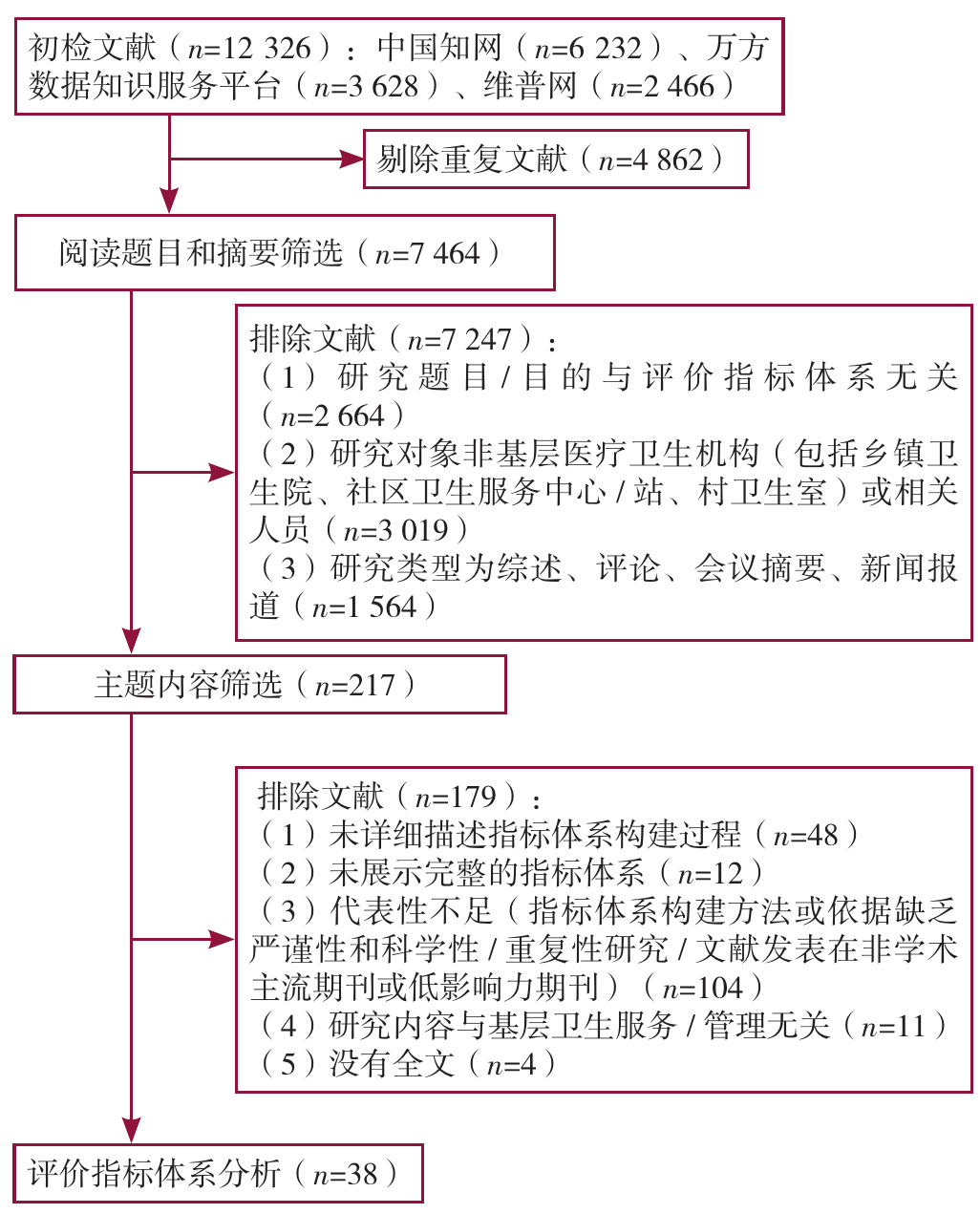
图1 文献检索流程图
Figure 1 Literature search flowchart
| 研究主题(文献数量,篇) | 研究具体内容(文献数量,篇) |
|---|---|
| 绩效评价(80) | 基本公共卫生服务项目绩效评价(22)、综合绩效(18)、基层医疗卫生机构运营绩效(15)、公共卫生专项(10)、人力资源绩效(8)、医联体绩效(5)、经济绩效(2) |
| 能力评价(36) | 基层卫生专项服务能力评价(12)、基层卫生服务机构综合服务能力评价(8)、基层卫生重点人群服务能力评价(5)、基层卫生应急与防控能力评价(7)、基层卫生人员能力评价(4) |
| 家庭医生相关(57) | 绩效评价指标体系构建(18)、服务质量评价体系(12)、服务模式与政策效果评估(10)、能力与胜任力评价(8)、特殊人群/场景服务评价(6)、理论框架与概念模型(3) |
| 服务质量评价(14) | 基层卫生服务质量综合评价(4)、慢性病与基本公共卫生服务质量评价(3)、农村基层卫生服务质量评价(3)、家庭医生与全科团队服务质量评价(2)、临床药学与专科服务质量评价(1)、医养结合服务质量评价(1) |
| 医联体相关(22) | 绩效评价体系构建(8)、专项能力评价(5)、分级诊疗相关评价(3)、可持续发展与脆弱性分析(2)、公共卫生服务评价(2)、综合服务能力评价(2) |
| 医防融合相关(8) | 基层医生医防融合服务能力评价(2)、县域医防融合评价指标体系(2)、基层医疗卫生机构医防融合服务质量评价(1)、社区卫生服务中心医防融合效果评价(1)、社区慢性病医防融合程度评价(1)、医防融合概念框架与指标体系构建(1) |
表1 纳入主题内容筛选的文献研究内容
Table 1 Research content of thematically-screened literature
| 研究主题(文献数量,篇) | 研究具体内容(文献数量,篇) |
|---|---|
| 绩效评价(80) | 基本公共卫生服务项目绩效评价(22)、综合绩效(18)、基层医疗卫生机构运营绩效(15)、公共卫生专项(10)、人力资源绩效(8)、医联体绩效(5)、经济绩效(2) |
| 能力评价(36) | 基层卫生专项服务能力评价(12)、基层卫生服务机构综合服务能力评价(8)、基层卫生重点人群服务能力评价(5)、基层卫生应急与防控能力评价(7)、基层卫生人员能力评价(4) |
| 家庭医生相关(57) | 绩效评价指标体系构建(18)、服务质量评价体系(12)、服务模式与政策效果评估(10)、能力与胜任力评价(8)、特殊人群/场景服务评价(6)、理论框架与概念模型(3) |
| 服务质量评价(14) | 基层卫生服务质量综合评价(4)、慢性病与基本公共卫生服务质量评价(3)、农村基层卫生服务质量评价(3)、家庭医生与全科团队服务质量评价(2)、临床药学与专科服务质量评价(1)、医养结合服务质量评价(1) |
| 医联体相关(22) | 绩效评价体系构建(8)、专项能力评价(5)、分级诊疗相关评价(3)、可持续发展与脆弱性分析(2)、公共卫生服务评价(2)、综合服务能力评价(2) |
| 医防融合相关(8) | 基层医生医防融合服务能力评价(2)、县域医防融合评价指标体系(2)、基层医疗卫生机构医防融合服务质量评价(1)、社区卫生服务中心医防融合效果评价(1)、社区慢性病医防融合程度评价(1)、医防融合概念框架与指标体系构建(1) |
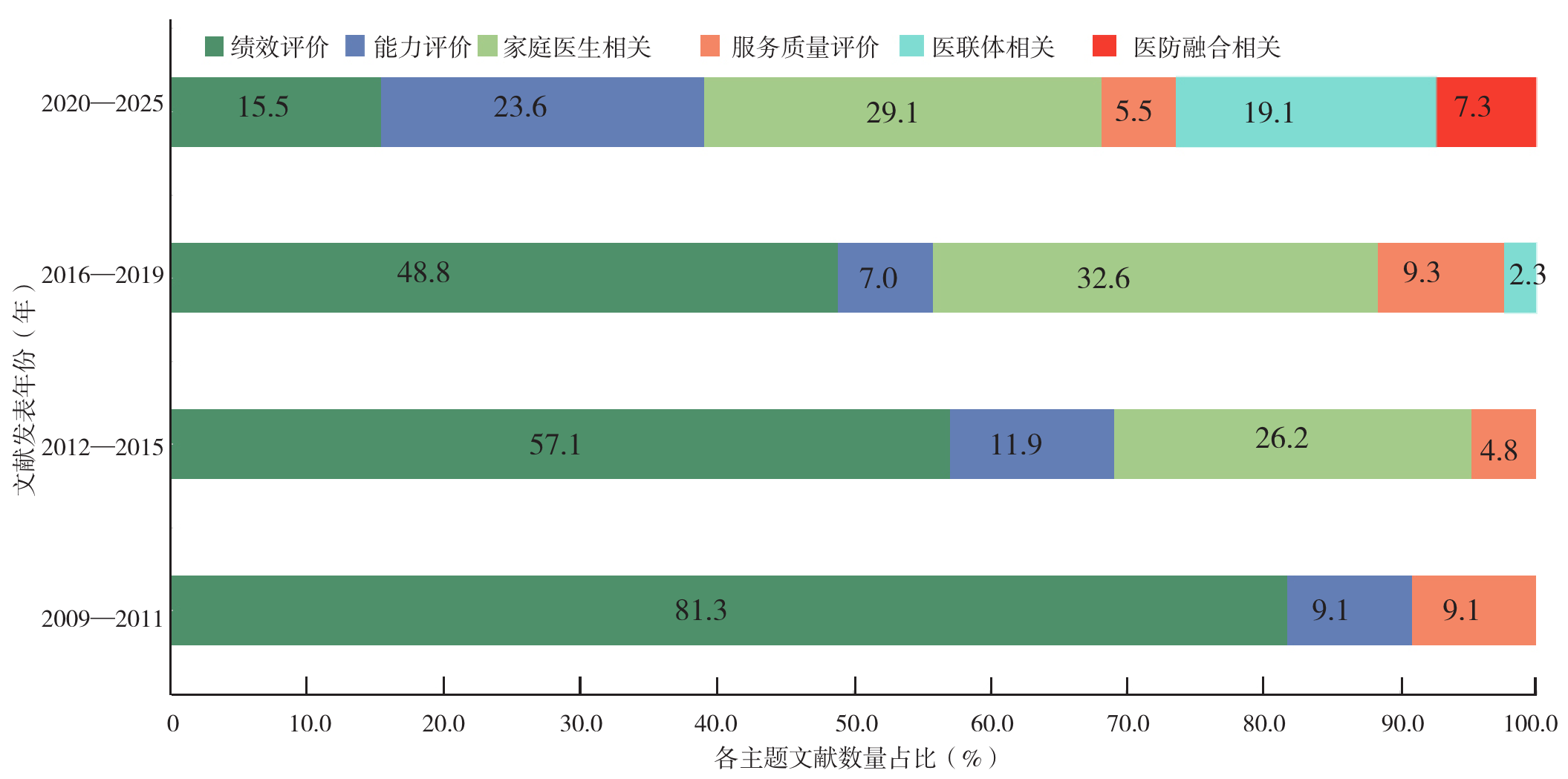
图2 纳入主题内容筛选的文献发表时间分布情况
Figure 2 Temporal distribution of publications of thematically-screened literature
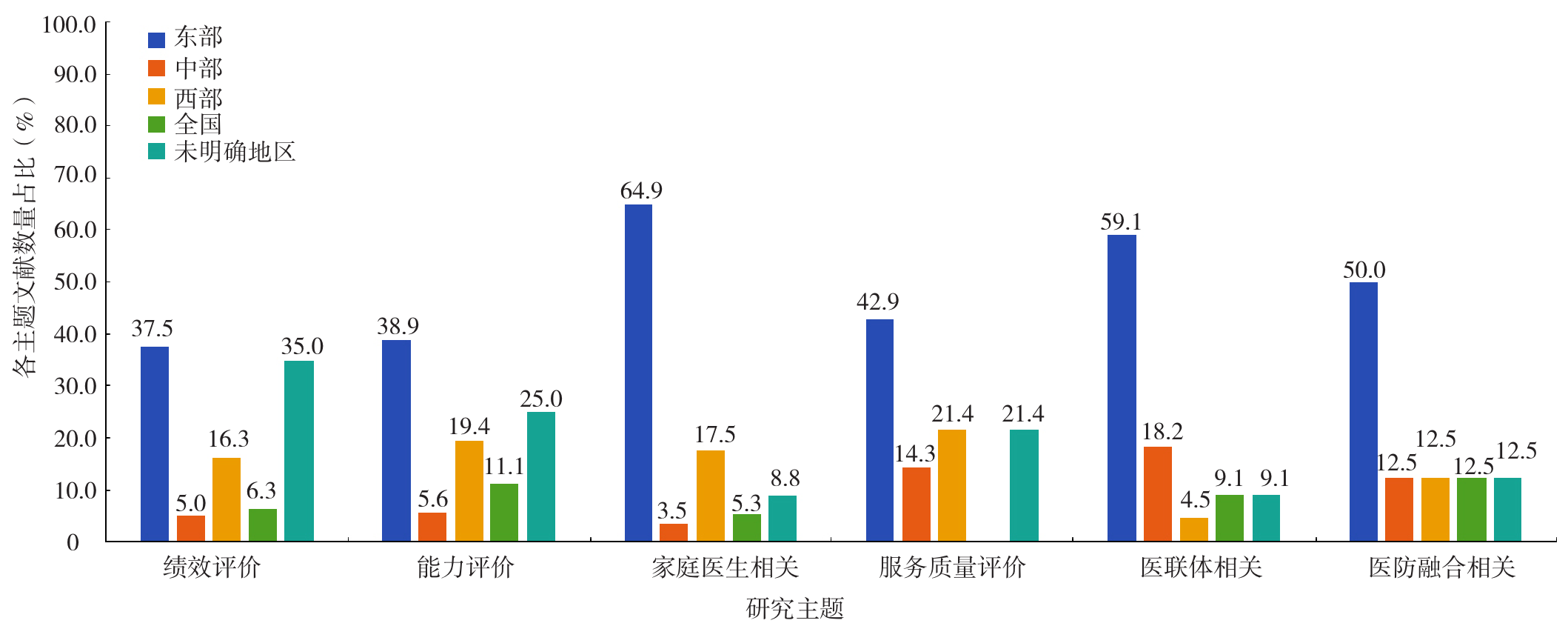
图3 纳入主题内容筛选的文献研究地区分布情况
Figure 3 Regional distribution of thematically-screened literature
| 研究主题 | 序号 | 第一作者 | 年份(年) | 题目 | 评价方法 | 研究地区 | 评价指标 | 结果运用 |
|---|---|---|---|---|---|---|---|---|
| 绩效评价 | 1 | 王馨[ | 2014 | 广东省全科服务团队绩效评价指标体系的构建与实证性检验 | 平衡计分卡理论、关键绩效指标法、文献回顾和专家访谈 | 广东省 | 4个一级指标("资源维度""便民性维度"等),15个二级指标("居民全科服务团队满意度""基本公共卫生服务数量"等),34个三级指标("孕产妇管理效果""糖尿病管理效果"等) | 是 |
| 2 | 李隆威[ | 2017 | 基于平衡计分卡理论的广东省农村乡镇卫生院绩效评价指标体系的构建 | 文献研究法、德尔菲法、平衡计分卡 | 广东省 | 4个一级指标("财务层面""顾客层面"等),9个二级指标("盈利能力""卫生服务质量"等),33个三级指标("患者满意度""健康档案建档率"等) | 否 | |
| 3 | 成撒诺[ | 2018 | 重庆市基本公共卫生服务绩效考核指标体系构建研究 | 文献研究法、德尔菲法 | 重庆市 | 5个一级指标("组织管理""资金管理"等),26个二级指标("管理体系""预算安排"等),67个三级指标("制度建设""人员培训"等) | 否 | |
| 4 | 马新雅[ | 2018 | 分级诊疗制度下基层医疗卫生机构2型糖尿病患者健康管理绩效评价指标体系的建立 | 文献研究法、德尔菲法、层次分析法 | 四川省 | 3个一级指标("工作保障""服务落实"等),13个二级指标("制度保障""人员保障"等),46个三级指标("构建合格的家庭医生团队""机构中心分管领导考核合格"等) | 否 | |
| 5 | 童心玥[ | 2019 | 国家基本公共卫生服务项目绩效评价研究:以湖北省为例 | 文献研究法、头脑风暴法 | 湖北省 | 4个一级指标("投入维度指标""过程维度指标"等),13个二级指标("资金投入""资金到位"等),44个三级指标("公共卫生总经费的比重""居民人均基本公共卫生经费"等) | 是 | |
| 6 | 陶军[ | 2022 | 武汉市基层医疗卫生机构绩效指标体系构建与评价 | 文献研究法、德尔菲法 | 武汉市 | 4个一级指标("公共卫生服务""综合管理"等),16个二级指标("孕产妇健康管理""入出院诊断符合率"等),18个三级指标("产后访视率""病种数"等) | 是 | |
| 7 | 吴腾燕[ | 2022 | "三位一体"防治模式下基层结核病防治绩效综合评价指标体系的构建研究:基于德尔菲法和层次分析法 | 文献研究法、德尔菲法、层次分析法 | 广西壮族自治区 | 2个一级指标("客观指标""主观指标"等),10个二级指标("患者发现""患者治疗"等),69个三级指标("肺结核患者接受治疗率""病原学阳性患者的治愈率"等) | 否 | |
| 8 | 杨光玲[ | 2023 | 基层卫生组织绩效评价体系构建及应用研究:以C社区卫生服务中心为例 | 文献研究法、案例分析法、专家咨询法 | 重庆市 | 5个一级指标("财务维度""客户维度"等),10个二级指标("运营能力""费用控制"等),24个三级指标("药占比""病床使用率"等) | 是 | |
| 服务能力评价 | 9 | 朱霖[ | 2010 | 欠发达地区农村社区卫生服务能力评价指标体系研究 | 文献研究法、专题小组讨论、德尔菲法 | 江西省 | 4个方面("基础建设""基本功能""管理培训"等),15个角度("人员配备""业务用房""业务用房"等),145个三级指标("卫技人员占职工总数比例""临床科室设置率""免费接种率"等) | 否 |
| 10 | 王晰[ | 2020 | 基层儿童健康服务能力评价指标体系探索 | 文献梳理、专家研讨会 | 全国 | 3个一级指标("资源投入""服务产出""服务效果"),9个二级指标("设施设备""人员配备"等),15个三级指标和34个具体指标 | 否 | |
| 11 | 余伯韬[ | 2022 | 城市社区中医药服务能力评价指标体系构建及实证研究 | 扎根理论、文献分析法和专家咨询法 | 广州市 | 3个一级指标("服务推力""服务拉力"等),6个二级指标("基础设施与投入""人力配备"等),31个三级指标("中医药业务用房面积占比""中医药设备种类"等) | 是 | |
| 12 | 沈明辉[ | 2023 | 基层医疗卫生机构服务能力评价指标体系构建与应用:基于主成分分析法 | 文献分析、专家咨询和主成分分析法 | 四川省 | 5个一级指标("资源配置""机构运营"等),20个二级指标("房屋建筑""政府补贴"等) | 是 | |
| 13 | 黄洁[ | 2024 | 我国居家社区医养结合服务能力评价指标研究 | 文献研究法、德尔菲法 | 未明确 | 3个一级指标("投入""过程""结果"),11个二级指标("组织管理""人力资源投入""资金投入"等),36个三级指标("加强组织领导""建立长护险制度""社区医养信息共享"等) | 否 | |
| 14 | 魏戌[ | 2025 | 基层医疗卫生机构骨健康服务能力评价指标体系研究 | 文献研究法、半结构化访谈法、头脑风暴法、德尔菲法 | 未明确 | 3个一级指标("资源配置""基本医疗和公共卫生服务"等),15个二级指标("科室设置""设施设备"等),40个三级指标("设置独立骨健康相关诊疗科室数量"等) | 否 | |
| 服务质量评价 | 15 | 李宁秀[ | 2011 | 四川农村乡镇卫生院服务质量评价指标与TOPSIS分析 | 专题小组法、专家咨询法与TOPSIS分析方法 | 四川省 | 2个一级指标("医疗机构卫生服务指标""病患服务消费指标"),5个二级指标("医疗过程指标""治疗效果指标""公共卫生指标"等),23个三级指标("病床周转次数""平均住院日"等) | 是 |
| 16 | 谭潇漪[ | 2014 | 基于因子分析的基本公共卫生服务质量监管指标体系构建 | 文献法、问卷调查法及专家访谈法 | 黑龙江省 | 3个一级指标("结构""过程""结构"),10个二级指标("领导者的战略""组织管理"等),45个三级指标("领导者的执行力"等) | 是 | |
| 17 | 刑新[ | 2017 | 中国西部地区村卫生室服务质量评价指标体系研究:以甘肃省为例 | 文献研究法、专家访谈、德尔菲法 | 甘肃省 | 6个一级指标("卫生人力资源""收入和支出情况"等),36个二级指标("每千人口村医数量""每年获得补助经费数"等) | 是 | |
| 18 | 朱亮[ | 2019 | 医养结合社区居家养老中心供给服务质量评价指标体系的构建研究 | 文献研究法、质性访谈和德尔菲法 | 北京市 天津市 河北省 | 3个一级指标("服务结构质量""服务过程质量"等),15个二级指标("环境""制度"等),64个三级指标("居室环境清洁程度"等) | 否 | |
| 19 | 陈楠[ | 2022 | 甘肃省村卫生室卫生服务质量评价指标体系研究 | 定性系统评价、德尔菲调查、共识会议法、问卷调查、小组访谈 | 甘肃省 | 6个一级指标("卫生人力资源""基础设施"等),27个二级指标("业务用房设置""季度参加培训学习"等) | 是 | |
| 家庭医生相关 | 20 | 李薇[ | 2015 | 家庭医生工作室服务质量评价指标体系的构建研究 | 文献研究法、专家咨询法 | 北京市西城区 | 5个一级指标("签约量""门诊服务量""服务效果"等),32个二级指标项("工作室门诊量占机构工作量比例""签约人数占工作室就诊人数比例"等) | 否 |
| 21 | 徐蕾[ | 2016 | 家庭医生绩效考核指标体系的构建研究 | 文献研究法、专家咨询法 | 上海市 | 7个一级指标("资料信息化管理""签约"等),17个二级指标("完整性""准确性"等),29个三级指标("健康档案完整性""评估手册完整性"等) | 否 | |
| 22 | 欧伟麟[ | 2018 | 基于德尔菲法的广东省全科团队家庭医生式签约服务绩效考核指标体系构建研究 | 文献回顾法、德尔菲法 | 广东省 | 3个一级指标("协作能力""服务效率""居民满意度"),6个二级指标("团队成员培训率""双向转诊及时率"等),20个三级指标("年度培训时长""危急重症转诊时间""重点人群续约覆盖率"等) | 否 | |
| 23 | 田淼淼[ | 2020 | 家庭医生签约服务政策效果评价指标体系研究 | 文献分析、专家座谈、德尔菲专家咨询法 | 未明确 | 2个一级指标("政策执行层""人际交往能力"),7个二级指标("签约主体及内容""组织管理"等),23个三级指标("每万人口全科医生数""家庭医生签约服务宣传程度"等) | 否 | |
| 24 | 练璐[ | 2021 | 应用改良德尔菲法构建我国家庭医生卫生服务能力指标体系 | 文献研究法、政策研究、改良德尔菲法(即函询与专家讨论相结合) | 青海省 甘肃省 浙江省 安徽省 | 4个一级指标("政策执行层""人际交往能力"等),17个二级指标("签约主体及内容""组织管理"等),41个三级指标("每万人口全科医生数""家庭医生签约服务宣传程度"等) | 否 | |
| 25 | 刘畅畅[ | 2021 | 农村家庭医生岗位胜任力指标体系构建 | 文献研究法与德尔菲法、层次分析法 | 湖北省 | 6个一级指标("成就与行动""协助与服务"等),16个二级指标("成就导向""人际理解力"等),59个三级指标("发挥健康守门人职责""基本人际沟通能力"等) | 否 | |
| 26 | 张璟瑜[ | 2021 | 家庭医生签约服务团队内部考核指标体系构建研究 | 文献研究法、德尔菲法 | 四川省成都市 | 3个一级指标("面对面服务""非面对面服务"等),10个二级指标("体检""疫苗"等),23个三级指标(如"评估""通知"等) | 否 | |
| 27 | 孙彩霞[ | 2021 | 我国家庭医生签约服务绩效评价指标体系构建研究 | 文献研究法、德尔菲法 | 全国 | 3个一级指标("结构质量""过程质量"等),10个二级指标("团队规划""人才队伍"等),59个三级指标("成立工作领导小组""建立完善服务团队"等) | 否 | |
| 医防融合相关 | 28 | 袁蓓蓓[ | 2022 | 基层卫生服务医防融合:概念框架及指标体系构建 | 文献综述、专家咨询 | 广西壮族自治区 | 5个一级指标("个人水平医防融合""机构水平医防融合"等),16个二级指标("融合服务能力""融合服务意识"等),28个三级指标["医务人员对跨预防/医疗知识了解程度(自评)""医务人员对整合型服务的知识储备水平(自评)"等] | 是 |
| 29 | 张县[ | 2022 | 社区慢病医防融合程度评价指标体系构建研究 | 文献研究法、德尔菲法、层次分析法 | 未明确 | 5个一级指标("系统整合""组织整合"等),14个二级指标("出台政策""运行经费""治理架构"等),32个三级指标("发展政策""医保政策""人均经费""统筹管理"等) | 否 | |
| 30 | 李灿灿[ | 2022 | 县域医防融合评价指标体系研究 | 文献复习、访谈法、德尔菲法、专家咨询法 | 未明确 | 6个一级指标("制度融合""组织融合"等),15个二级指标("管理制度""工作制度"等),37个三级指标("公共卫生机构参与医防融合工作""医疗卫生机构间签订医防融合工作协议"等) | 否 | |
| 31 | 郭佳[ | 2023 | 基层医疗卫生机构慢性病医防融合服务质量现场评价指标体系构建 | 文献分析法、政策归纳法、专家访谈法 | 天津市 | 5个一级指标("服务团队""服务设施"等),12个二级指标("人员配备""诊疗设备"等),40个三级指标("日均负担服务人次""全员参与培训"等) | 否 | |
| 32 | 兰晓霞[ | 2024 | 基层全科医生医防融合能力评价指标体系构建 | 文献回顾法、改良的德尔菲法、层次分析法 | 未明确 | 3个一级指标("知识结构方面的医防融合能力""能力、技能、技术方面的医防融合能力"等),10个二级指标("基层医学基础知识""职业素养"等),36个三级指标("社区管理能力""掌握合理用药及预防知识"等) | 否 | |
| 33 | 陈存川[ | 2024 | 基层医生医防融合服务能力评价指标体系的构建与应用研究 | 德尔菲法、层次分析法、问卷调查法 | 山东省聊城市、潍坊市、烟台市 | 3个一级指标("职业素养""综合服务能力"等),9个二级指标("职业态度""职业意识"等),26个三级指标("人民至上,维护人民健康权利""平等对待每个人,尊重人格与权利"等) | 否 | |
| 医联体相关 | 34 | 周心舒[ | 2020 | 紧密型医联体协同能力评价指标体系研究:以广州市某紧密型医联体为例 | 文献研究法、专家咨询法、层次分析法、模糊综合评价法 | 广州市 | 5个一级指标("信息协同能力""战略协同能力"等),10个二级指标("信息系统资源""信息协同过程能力"等),35个三级指标("信息系统建设情况""信息系统运行效率"等) | 是 |
| 35 | 林陶玉[ | 2022 | 区域医联体背景下医养结合服务评价指标体系构建 | 文献研究法、德尔菲法、层次分析法 | 未明确 | 6个一级指标("治理与监督""服务协同"等),24个二级指标("医养结合地方政策""资源配置"等),48个三级指标("医联体分配激励机制""老年人健康管理率"等) | 否 | |
| 36 | 刘曦[ | 2022 | 基于整合型医疗卫生服务体系的广西紧密型县域医共体绩效评价研究 | 文献研究法、德尔菲专家咨询法 | 广西壮族自治区 | 5个一级指标("系统整合""资源整合"等),16个二级指标("外部治理机制""内部管理机制"等),59个三级指标("医共体内落实财务统一管理""医共体内开展药品耗材统一管理"等) | 是 | |
| 37 | 章珂[ | 2023 | 基于AHP-TOPSIS法的海南省县域医共体建设运行评价指标体系研究 | 文献分析法、半结构式访谈、德尔菲专家咨询法、层次分析法、加权TOPSIS法 | 海南省 | 5个一级指标("组织治理""可持续发展"等),15个二级指标("组织架构""政府支持"等),58个三级指标["成立管委会(是/否)""组建医共体(是/否)"等] | 是 | |
| 38 | 张珺茹[ | 2023 | 紧密型医联体医保支付方式改革绩效评价指标体系构建研究 | 文献分析法、半结构式访谈、专家咨询法、层次分析法、加权TOPSIS法 | 安徽省、浙江省 | 3个一级指标("组织管理""运行情况"等),9个二级指标("内部治理""政策环境"等),30个三级指标("医保基金结余是否留用与分配""医保基金超支是否合理分担"等) | 否 |
表2 评价指标体系分析文献汇总
Table 2 Summary of evaluation indicator system literature analysis
| 研究主题 | 序号 | 第一作者 | 年份(年) | 题目 | 评价方法 | 研究地区 | 评价指标 | 结果运用 |
|---|---|---|---|---|---|---|---|---|
| 绩效评价 | 1 | 王馨[ | 2014 | 广东省全科服务团队绩效评价指标体系的构建与实证性检验 | 平衡计分卡理论、关键绩效指标法、文献回顾和专家访谈 | 广东省 | 4个一级指标("资源维度""便民性维度"等),15个二级指标("居民全科服务团队满意度""基本公共卫生服务数量"等),34个三级指标("孕产妇管理效果""糖尿病管理效果"等) | 是 |
| 2 | 李隆威[ | 2017 | 基于平衡计分卡理论的广东省农村乡镇卫生院绩效评价指标体系的构建 | 文献研究法、德尔菲法、平衡计分卡 | 广东省 | 4个一级指标("财务层面""顾客层面"等),9个二级指标("盈利能力""卫生服务质量"等),33个三级指标("患者满意度""健康档案建档率"等) | 否 | |
| 3 | 成撒诺[ | 2018 | 重庆市基本公共卫生服务绩效考核指标体系构建研究 | 文献研究法、德尔菲法 | 重庆市 | 5个一级指标("组织管理""资金管理"等),26个二级指标("管理体系""预算安排"等),67个三级指标("制度建设""人员培训"等) | 否 | |
| 4 | 马新雅[ | 2018 | 分级诊疗制度下基层医疗卫生机构2型糖尿病患者健康管理绩效评价指标体系的建立 | 文献研究法、德尔菲法、层次分析法 | 四川省 | 3个一级指标("工作保障""服务落实"等),13个二级指标("制度保障""人员保障"等),46个三级指标("构建合格的家庭医生团队""机构中心分管领导考核合格"等) | 否 | |
| 5 | 童心玥[ | 2019 | 国家基本公共卫生服务项目绩效评价研究:以湖北省为例 | 文献研究法、头脑风暴法 | 湖北省 | 4个一级指标("投入维度指标""过程维度指标"等),13个二级指标("资金投入""资金到位"等),44个三级指标("公共卫生总经费的比重""居民人均基本公共卫生经费"等) | 是 | |
| 6 | 陶军[ | 2022 | 武汉市基层医疗卫生机构绩效指标体系构建与评价 | 文献研究法、德尔菲法 | 武汉市 | 4个一级指标("公共卫生服务""综合管理"等),16个二级指标("孕产妇健康管理""入出院诊断符合率"等),18个三级指标("产后访视率""病种数"等) | 是 | |
| 7 | 吴腾燕[ | 2022 | "三位一体"防治模式下基层结核病防治绩效综合评价指标体系的构建研究:基于德尔菲法和层次分析法 | 文献研究法、德尔菲法、层次分析法 | 广西壮族自治区 | 2个一级指标("客观指标""主观指标"等),10个二级指标("患者发现""患者治疗"等),69个三级指标("肺结核患者接受治疗率""病原学阳性患者的治愈率"等) | 否 | |
| 8 | 杨光玲[ | 2023 | 基层卫生组织绩效评价体系构建及应用研究:以C社区卫生服务中心为例 | 文献研究法、案例分析法、专家咨询法 | 重庆市 | 5个一级指标("财务维度""客户维度"等),10个二级指标("运营能力""费用控制"等),24个三级指标("药占比""病床使用率"等) | 是 | |
| 服务能力评价 | 9 | 朱霖[ | 2010 | 欠发达地区农村社区卫生服务能力评价指标体系研究 | 文献研究法、专题小组讨论、德尔菲法 | 江西省 | 4个方面("基础建设""基本功能""管理培训"等),15个角度("人员配备""业务用房""业务用房"等),145个三级指标("卫技人员占职工总数比例""临床科室设置率""免费接种率"等) | 否 |
| 10 | 王晰[ | 2020 | 基层儿童健康服务能力评价指标体系探索 | 文献梳理、专家研讨会 | 全国 | 3个一级指标("资源投入""服务产出""服务效果"),9个二级指标("设施设备""人员配备"等),15个三级指标和34个具体指标 | 否 | |
| 11 | 余伯韬[ | 2022 | 城市社区中医药服务能力评价指标体系构建及实证研究 | 扎根理论、文献分析法和专家咨询法 | 广州市 | 3个一级指标("服务推力""服务拉力"等),6个二级指标("基础设施与投入""人力配备"等),31个三级指标("中医药业务用房面积占比""中医药设备种类"等) | 是 | |
| 12 | 沈明辉[ | 2023 | 基层医疗卫生机构服务能力评价指标体系构建与应用:基于主成分分析法 | 文献分析、专家咨询和主成分分析法 | 四川省 | 5个一级指标("资源配置""机构运营"等),20个二级指标("房屋建筑""政府补贴"等) | 是 | |
| 13 | 黄洁[ | 2024 | 我国居家社区医养结合服务能力评价指标研究 | 文献研究法、德尔菲法 | 未明确 | 3个一级指标("投入""过程""结果"),11个二级指标("组织管理""人力资源投入""资金投入"等),36个三级指标("加强组织领导""建立长护险制度""社区医养信息共享"等) | 否 | |
| 14 | 魏戌[ | 2025 | 基层医疗卫生机构骨健康服务能力评价指标体系研究 | 文献研究法、半结构化访谈法、头脑风暴法、德尔菲法 | 未明确 | 3个一级指标("资源配置""基本医疗和公共卫生服务"等),15个二级指标("科室设置""设施设备"等),40个三级指标("设置独立骨健康相关诊疗科室数量"等) | 否 | |
| 服务质量评价 | 15 | 李宁秀[ | 2011 | 四川农村乡镇卫生院服务质量评价指标与TOPSIS分析 | 专题小组法、专家咨询法与TOPSIS分析方法 | 四川省 | 2个一级指标("医疗机构卫生服务指标""病患服务消费指标"),5个二级指标("医疗过程指标""治疗效果指标""公共卫生指标"等),23个三级指标("病床周转次数""平均住院日"等) | 是 |
| 16 | 谭潇漪[ | 2014 | 基于因子分析的基本公共卫生服务质量监管指标体系构建 | 文献法、问卷调查法及专家访谈法 | 黑龙江省 | 3个一级指标("结构""过程""结构"),10个二级指标("领导者的战略""组织管理"等),45个三级指标("领导者的执行力"等) | 是 | |
| 17 | 刑新[ | 2017 | 中国西部地区村卫生室服务质量评价指标体系研究:以甘肃省为例 | 文献研究法、专家访谈、德尔菲法 | 甘肃省 | 6个一级指标("卫生人力资源""收入和支出情况"等),36个二级指标("每千人口村医数量""每年获得补助经费数"等) | 是 | |
| 18 | 朱亮[ | 2019 | 医养结合社区居家养老中心供给服务质量评价指标体系的构建研究 | 文献研究法、质性访谈和德尔菲法 | 北京市 天津市 河北省 | 3个一级指标("服务结构质量""服务过程质量"等),15个二级指标("环境""制度"等),64个三级指标("居室环境清洁程度"等) | 否 | |
| 19 | 陈楠[ | 2022 | 甘肃省村卫生室卫生服务质量评价指标体系研究 | 定性系统评价、德尔菲调查、共识会议法、问卷调查、小组访谈 | 甘肃省 | 6个一级指标("卫生人力资源""基础设施"等),27个二级指标("业务用房设置""季度参加培训学习"等) | 是 | |
| 家庭医生相关 | 20 | 李薇[ | 2015 | 家庭医生工作室服务质量评价指标体系的构建研究 | 文献研究法、专家咨询法 | 北京市西城区 | 5个一级指标("签约量""门诊服务量""服务效果"等),32个二级指标项("工作室门诊量占机构工作量比例""签约人数占工作室就诊人数比例"等) | 否 |
| 21 | 徐蕾[ | 2016 | 家庭医生绩效考核指标体系的构建研究 | 文献研究法、专家咨询法 | 上海市 | 7个一级指标("资料信息化管理""签约"等),17个二级指标("完整性""准确性"等),29个三级指标("健康档案完整性""评估手册完整性"等) | 否 | |
| 22 | 欧伟麟[ | 2018 | 基于德尔菲法的广东省全科团队家庭医生式签约服务绩效考核指标体系构建研究 | 文献回顾法、德尔菲法 | 广东省 | 3个一级指标("协作能力""服务效率""居民满意度"),6个二级指标("团队成员培训率""双向转诊及时率"等),20个三级指标("年度培训时长""危急重症转诊时间""重点人群续约覆盖率"等) | 否 | |
| 23 | 田淼淼[ | 2020 | 家庭医生签约服务政策效果评价指标体系研究 | 文献分析、专家座谈、德尔菲专家咨询法 | 未明确 | 2个一级指标("政策执行层""人际交往能力"),7个二级指标("签约主体及内容""组织管理"等),23个三级指标("每万人口全科医生数""家庭医生签约服务宣传程度"等) | 否 | |
| 24 | 练璐[ | 2021 | 应用改良德尔菲法构建我国家庭医生卫生服务能力指标体系 | 文献研究法、政策研究、改良德尔菲法(即函询与专家讨论相结合) | 青海省 甘肃省 浙江省 安徽省 | 4个一级指标("政策执行层""人际交往能力"等),17个二级指标("签约主体及内容""组织管理"等),41个三级指标("每万人口全科医生数""家庭医生签约服务宣传程度"等) | 否 | |
| 25 | 刘畅畅[ | 2021 | 农村家庭医生岗位胜任力指标体系构建 | 文献研究法与德尔菲法、层次分析法 | 湖北省 | 6个一级指标("成就与行动""协助与服务"等),16个二级指标("成就导向""人际理解力"等),59个三级指标("发挥健康守门人职责""基本人际沟通能力"等) | 否 | |
| 26 | 张璟瑜[ | 2021 | 家庭医生签约服务团队内部考核指标体系构建研究 | 文献研究法、德尔菲法 | 四川省成都市 | 3个一级指标("面对面服务""非面对面服务"等),10个二级指标("体检""疫苗"等),23个三级指标(如"评估""通知"等) | 否 | |
| 27 | 孙彩霞[ | 2021 | 我国家庭医生签约服务绩效评价指标体系构建研究 | 文献研究法、德尔菲法 | 全国 | 3个一级指标("结构质量""过程质量"等),10个二级指标("团队规划""人才队伍"等),59个三级指标("成立工作领导小组""建立完善服务团队"等) | 否 | |
| 医防融合相关 | 28 | 袁蓓蓓[ | 2022 | 基层卫生服务医防融合:概念框架及指标体系构建 | 文献综述、专家咨询 | 广西壮族自治区 | 5个一级指标("个人水平医防融合""机构水平医防融合"等),16个二级指标("融合服务能力""融合服务意识"等),28个三级指标["医务人员对跨预防/医疗知识了解程度(自评)""医务人员对整合型服务的知识储备水平(自评)"等] | 是 |
| 29 | 张县[ | 2022 | 社区慢病医防融合程度评价指标体系构建研究 | 文献研究法、德尔菲法、层次分析法 | 未明确 | 5个一级指标("系统整合""组织整合"等),14个二级指标("出台政策""运行经费""治理架构"等),32个三级指标("发展政策""医保政策""人均经费""统筹管理"等) | 否 | |
| 30 | 李灿灿[ | 2022 | 县域医防融合评价指标体系研究 | 文献复习、访谈法、德尔菲法、专家咨询法 | 未明确 | 6个一级指标("制度融合""组织融合"等),15个二级指标("管理制度""工作制度"等),37个三级指标("公共卫生机构参与医防融合工作""医疗卫生机构间签订医防融合工作协议"等) | 否 | |
| 31 | 郭佳[ | 2023 | 基层医疗卫生机构慢性病医防融合服务质量现场评价指标体系构建 | 文献分析法、政策归纳法、专家访谈法 | 天津市 | 5个一级指标("服务团队""服务设施"等),12个二级指标("人员配备""诊疗设备"等),40个三级指标("日均负担服务人次""全员参与培训"等) | 否 | |
| 32 | 兰晓霞[ | 2024 | 基层全科医生医防融合能力评价指标体系构建 | 文献回顾法、改良的德尔菲法、层次分析法 | 未明确 | 3个一级指标("知识结构方面的医防融合能力""能力、技能、技术方面的医防融合能力"等),10个二级指标("基层医学基础知识""职业素养"等),36个三级指标("社区管理能力""掌握合理用药及预防知识"等) | 否 | |
| 33 | 陈存川[ | 2024 | 基层医生医防融合服务能力评价指标体系的构建与应用研究 | 德尔菲法、层次分析法、问卷调查法 | 山东省聊城市、潍坊市、烟台市 | 3个一级指标("职业素养""综合服务能力"等),9个二级指标("职业态度""职业意识"等),26个三级指标("人民至上,维护人民健康权利""平等对待每个人,尊重人格与权利"等) | 否 | |
| 医联体相关 | 34 | 周心舒[ | 2020 | 紧密型医联体协同能力评价指标体系研究:以广州市某紧密型医联体为例 | 文献研究法、专家咨询法、层次分析法、模糊综合评价法 | 广州市 | 5个一级指标("信息协同能力""战略协同能力"等),10个二级指标("信息系统资源""信息协同过程能力"等),35个三级指标("信息系统建设情况""信息系统运行效率"等) | 是 |
| 35 | 林陶玉[ | 2022 | 区域医联体背景下医养结合服务评价指标体系构建 | 文献研究法、德尔菲法、层次分析法 | 未明确 | 6个一级指标("治理与监督""服务协同"等),24个二级指标("医养结合地方政策""资源配置"等),48个三级指标("医联体分配激励机制""老年人健康管理率"等) | 否 | |
| 36 | 刘曦[ | 2022 | 基于整合型医疗卫生服务体系的广西紧密型县域医共体绩效评价研究 | 文献研究法、德尔菲专家咨询法 | 广西壮族自治区 | 5个一级指标("系统整合""资源整合"等),16个二级指标("外部治理机制""内部管理机制"等),59个三级指标("医共体内落实财务统一管理""医共体内开展药品耗材统一管理"等) | 是 | |
| 37 | 章珂[ | 2023 | 基于AHP-TOPSIS法的海南省县域医共体建设运行评价指标体系研究 | 文献分析法、半结构式访谈、德尔菲专家咨询法、层次分析法、加权TOPSIS法 | 海南省 | 5个一级指标("组织治理""可持续发展"等),15个二级指标("组织架构""政府支持"等),58个三级指标["成立管委会(是/否)""组建医共体(是/否)"等] | 是 | |
| 38 | 张珺茹[ | 2023 | 紧密型医联体医保支付方式改革绩效评价指标体系构建研究 | 文献分析法、半结构式访谈、专家咨询法、层次分析法、加权TOPSIS法 | 安徽省、浙江省 | 3个一级指标("组织管理""运行情况"等),9个二级指标("内部治理""政策环境"等),30个三级指标("医保基金结余是否留用与分配""医保基金超支是否合理分担"等) | 否 |
| [1] |
国家卫生健康委,中央编办,国家发展改革委, 等. 关于优化基层医疗卫生机构布局建设的指导意见:国卫基层发〔2025〕2号[A/OL]. (2025-04-25)[2025-08-08].
|
| [2] |
国务院办公厅. 国务院办公厅关于印发"十四五"国民健康规划的通知:国办发〔2022〕11号[A/OL]. (2022-04-27)[2025-08-08].
|
| [3] |
国家卫生健康委办公厅,国家医保局办公室,国家中医药局综合司. 关于印发紧密型县域医疗卫生共同体监测指标体系的通知:国卫办基层发〔2024〕22号[A/OL]. (2024-10-30)[2025-08-08].
|
| [4] |
袁素维,祝翠悦,蒋绮蕴,等. 我国公立医疗机构卫生应急能力评价指标体系研究现状与进展[J]. 中国医院管理, 2022, 42(12): 35-39.
|
| [5] |
许诗瑶,陈畑至,廖鹏,等. 中国农村基本医疗卫生服务综合评价指标体系构建的定性系统评价[J]. 中国卫生资源, 2021, 24(1): 62-70. DOI: 10.13688/j.cnki.chr.2021.200170.
|
| [6] |
魏云,王飞跃,王美荣,等. 我国全科医生岗位胜任力评估指标体系研究进展[J]. 中国全科医学, 2021, 24(19): 2394-2400. DOI: 10.12114/j.issn.1007-9572.2021.00.103.
|
| [7] |
王馨. 广东省全科服务团队绩效评价指标体系的构建与实证性检验[D]. 广州: 广州医科大学, 2014.
|
| [8] |
李隆威,赵宇,温佳欣,等. 基于平衡计分卡理论的广东省农村乡镇卫生院绩效评价指标体系的构建[J]. 中国医药导报, 2017, 14(19): 145-149.
|
| [9] |
成撒诺,何坪,邓宇,等. 重庆市基本公共卫生服务绩效考核指标体系构建研究[J]. 中国全科医学, 2018, 21(10): 1161-1166.
|
| [10] |
马新雅,关旭静,唐雪峰,等. 分级诊疗制度下基层医疗卫生机构2型糖尿病患者健康管理绩效评价指标体系的建立[J]. 现代预防医学, 2019, 46(3): 467-471.
|
| [11] |
童心玥. 国家基本公共卫生服务项目绩效评价研究:以湖北省为例[D]. 武汉: 华中科技大学, 2018.
|
| [12] |
陶军. 武汉市基层医疗卫生机构绩效指标体系构建与评价[D]. 武汉: 华中科技大学, 2020.
|
| [13] |
吴腾燕. "三位一体"防治模式下基层结核病防治绩效综合评价指标体系的构建研究:基于德尔菲法和层次分析法[J]. 广西人文医学发展报告, 2022(1): 369-379.
|
| [14] |
杨光玲. 基层卫生组织绩效评价体系构建及应用研究:以C社区卫生服务中心为例[D]. 石家庄: 河北师范大学, 2023.
|
| [15] |
朱霖. 欠发达地区农村社区卫生服务能力评价指标体系研究[D]. 南昌: 南昌大学, 2010.
|
| [16] | |
| [17] |
余伯韬. 城市社区中医药服务能力评价指标体系构建及实证研究[D]. 广州: 南方医科大学, 2022.
|
| [18] |
沈明辉,刘洋,毛云鹏,等. 基层医疗卫生机构服务能力评价指标体系构建与应用:基于主成分分析法[J]. 卫生经济研究, 2023, 40(11): 39-43. DOI: 10.14055/j.cnki.33-1056/f.2023.11.006.
|
| [19] |
黄洁. 我国居家社区医养结合服务能力评价指标研究[D]. 北京: 北京协和医学院, 2023.
|
| [20] |
魏戌,尹煜辉,王旭,等. 基层医疗卫生机构骨健康服务能力评价指标体系研究[J]. 中国全科医学, 2025, 28(19): 2354-2362. DOI: 10.12114/j.issn.1007-9572.2025.0024.
|
| [21] |
李宁秀,柯雄. 四川农村乡镇卫生院服务质量评价指标与TOPSIS分析[J]. 中国卫生事业管理, 2011, 28(10): 776-778. DOI: 10.3969/j.issn.1004-4663.2011.10.023.
|
| [22] |
谭潇漪,樊立华,谢明霏,等. 基于因子分析的基本公共卫生服务质量监管指标体系构建[J]. 中国卫生经济, 2014, 33(5): 49-50.
|
| [23] |
邢新. 中国西部地区村卫生室服务质量评价指标体系研究:以甘肃省为例[D]. 兰州: 兰州大学, 2017.
|
| [24] |
朱亮. 医养结合社区居家养老中心供给服务质量评价指标体系构建[D]. 唐山: 华北理工大学, 2019.
|
| [25] |
陈楠. 甘肃省村卫生室卫生服务质量评价指标体系研究[D]. 兰州: 兰州大学, 2022.
|
| [26] |
李薇,彭迎春. 家庭医生工作室服务质量评价指标体系的构建研究[J]. 中国全科医学, 2015, 18(22): 2632-2636.
|
| [27] |
徐蕾,赵琦,朱敏杰,等. 家庭医生绩效考核指标体系的构建研究[J]. 中国全科医学, 2016, 19(25): 3028-3032.
|
| [28] |
欧伟麟,沈欢瑜,欧文森,等. 基于德尔菲法的广东省全科团队家庭医生式签约服务绩效考核指标体系构建研究[J]. 中国全科医学, 2018, 21(7): 795-799.
|
| [29] |
田淼淼,王芳,贾梦,等. 家庭医生签约服务政策效果评价指标体系研究[J]. 中华医院管理杂志, 2020, 36(7): 553-556. DOI: 10.3760/cma.j.cn111325-20200408-01051.
|
| [30] |
练璐,李心怡,邹慕蓉,等. 应用改良德尔菲法构建我国家庭医生卫生服务能力指标体系[J]. 中国卫生资源, 2021, 24(4): 448-452. DOI: 10.13688/j.cnki.chr.2021.200914.
|
| [31] |
刘畅畅,高红霞,张研. 农村家庭医生岗位胜任力指标体系构建[J]. 医学与社会, 2021, 34(1): 20-24, 33.
|
| [32] |
张璟瑜,刘利霞,王小刚,等. 家庭医生签约服务团队内部考核指标体系构建研究[J]. 中国全科医学, 2021, 24(25): 3244-3249. DOI: 10.12114/j.issn.1007-9572.2021.00.147.
|
| [33] |
孙彩霞,司驷骏,蒋锋,等. 我国家庭医生签约服务绩效评价指标体系构建研究[J]. 中国全科医学, 2021, 24(34): 4378-4385. DOI: 10.12114/j.issn.1007-9572.2021.00.249.
|
| [34] |
袁蓓蓓,何平,徐进,等. 基层卫生服务医防融合:概念框架及指标体系构建[J]. 中国卫生政策研究, 2022, 15(9): 11-18.
|
| [35] |
张县. 社区慢病医防融合程度评价指标体系构建研究[D]. 北京: 北京中医药大学, 2022.
|
| [36] |
李灿灿. 县域医防融合评价指标体系研究[D]. 合肥: 安徽医科大学, 2022.
|
| [37] |
郭佳,孙华君,陈营,等. 基层医疗卫生机构慢性病医防融合服务质量现场评价指标体系构建[J]. 中国全科医学, 2023, 26(28): 3489-3495. DOI: 10.12114/j.issn.1007-9572.2023.0277.
|
| [38] |
兰晓霞,杨朝晖,岳帅,等. 基层全科医生医防融合能力评价指标体系构建[J]. 健康发展与政策研究, 2024, 27(2): 148-156.
|
| [39] |
陈存川. 基层医生医防融合服务能力评价指标体系的构建与应用研究[D]. 济南: 山东大学, 2024.
|
| [40] |
周心舒. 紧密型医联体协同能力评价指标体系研究:以广州市某紧密型医联体为例[D]. 广州: 广州医科大学, 2020.
|
| [41] |
林陶玉,唐昌敏. 区域医联体背景下医养结合服务评价指标体系构建[J]. 医学与社会, 2022, 35(11): 38-43, 49.
|
| [42] |
刘曦. 基于整合型医疗卫生服务体系的广西紧密型县域医共体绩效评价研究[D]. 南宁: 广西医科大学, 2022.
|
| [43] |
章珂. 基于AHP-TOPSIS法的海南省县域医共体建设运行评价指标体系研究[D]. 海口: 海南医学院, 2023.
|
| [44] |
张珺茹. 紧密型医联体医保支付方式改革绩效评价指标体系构建研究[D]. 南昌: 江西中医药大学, 2022.
|
| [45] |
基层卫生健康司. 关于加强基层医疗卫生机构绩效考核的指导意见(试行):国卫办基层发〔2020〕9号[A/OL]. (2020-08-17)[2025-08-08].
|
| [46] |
国家卫生健康委员会办公厅. 关于做好2018年家庭医生签约服务工作的通知:国卫办基层函〔2018〕209号[A/OL]. (2018-04-02)[2025-08-08].
|
| [47] |
|
| [48] |
李梓齐,何平,袁蓓蓓,等. "以基层为重点"的县域卫生体系发展指数构建与应用案例分析[J]. 中国全科医学, 2023, 26(25): 3147-3152.
|
| [49] |
国务院. 国务院关于建立全科医生制度的指导意见:国发〔2011〕23号[A/OL]. (2011-07-01)[2025-08-08].
|
| [50] |
国务院医改办,卫生计生委,发展改革委, 等. 关于印发推进家庭医生签约服务指导意见的通知:国医改办发〔2016〕1号[A/OL]. (2016-05-25)[2025-08-08].
|
| [51] |
国家卫生健康委,财政部,人力资源社会保障部, 等. 关于推进家庭医生签约服务高质量发展的指导意见:国卫基层发〔2022〕10号[A/OL]. (2022-03-03)[2025-08-08].
|
| [52] |
国家卫生健康委办公厅,国家医保局办公室,国家中医药局办公室. 关于印发紧密型县域医疗卫生共同体建设评判标准和监测指标体系(试行)的通知:国卫办基层发〔2020〕12号[A/OL]. (2020-08-31)[2025-08-08].
|
| [53] |
中共中央办公厅,国务院办公厅. 关于进一步完善医疗卫生服务体系的意见[A/OL]. (2023-03-23)[2025-08-08].
|
| [54] |
王震,朱凤梅. 中国医疗卫生改革十年(2009—2019)研究报告[EB/OL]. (2019-12-19)[2025-08-08].
|
| [55] |
支涵颖. 全国基层医疗卫生资源区域性配置差异研究[J]. 社会科学前沿, 2024, 13(5): 410-418.
|
| [1] | 李震宇, 竺琼, 陈榕, 陆静, 虞智杰, 沈福来, 沈怡, 冯雨, 刘梅. 基于单组社区干预试验的医防"微"融合强化服务包提升签约居民服务能效研究[J]. 中国全科医学, 2026, 29(21): 3020-3027. |
| [2] | 崔珑严, 代高岚歆, 陶红兵. 人力资源管理过程视角下我国医防融合人力资源相关政策文本分析[J]. 中国全科医学, 2026, 29(21): 3012-3019. |
| [3] | 李佳威, 高欣怡, 葛奥淇, 李娟娟, 袁蓓蓓. 2型糖尿病患者的医防融合服务需求及其影响因素研究[J]. 中国全科医学, 2026, 29(21): 3028-3039. |
| [4] | 张峥璐, 乌依罕. 全科医学精神卫生亚专长发展的国际经验及对中国的启示[J]. 中国全科医学, 2026, 29(20): 2775-2780. |
| [5] | 张小娟, 刘阳, 彭博, 叶媛, 朱坤. 基层医疗卫生机构高血压和糖尿病防治现状研究[J]. 中国全科医学, 2026, 29(19): 2614-2620. |
| [6] | 陈存川, 张慧芳, 范博阳, 孙雯宁, 王英杰, 张奥, 赵洋, 王海鹏. 基层医生医防融合服务能力评价指标体系构建[J]. 中国全科医学, 2026, 29(19): 2705-2710. |
| [7] | 张慧芳, 陈存川, 范博阳, 孙雯宁, 王英杰, 张奥, 赵洋, 王海鹏. 山东省基层医生医防融合服务能力及影响因素研究[J]. 中国全科医学, 2026, 29(19): 2711-2716. |
| [8] | 赵世超, 何静, 李治颖, 常汇晨, 王颖. 山东省基层卫生人员的自主性动机及其变化分析:基于自我决定理论的调查研究[J]. 中国全科医学, 2026, 29(18): 2461-2471. |
| [9] | 崔明明, 政晓果, 殷涛, 李雯, 尹德卢. 北京市中小学生家庭医生签约服务包设计研究[J]. 中国全科医学, 2026, 29(17): 2312-2318. |
| [10] | 黄蛟灵, 康力, 葛敏, 潘志刚, 梁鸿. 中国家庭医生签约服务发展的十五年及未来展望[J]. 中国全科医学, 2026, 29(17): 2296-2302. |
| [11] | 尤莉莉, 刘璐, 陈营, 康琪雪, 王雨星, 王竞波, 张并立. 中国基本公共卫生服务十五年回顾及展望[J]. 中国全科医学, 2026, 29(17): 2282-2295. |
| [12] | 陈碧华, 林其意, 李物华, 苏瑾, 屠丽萍, 施岚, 丁小芹, 易春涛. 团队效能视角下家庭医生团队工作产出水平的影响因素和作用机制研究[J]. 中国全科医学, 2026, 29(16): 2167-2173. |
| [13] | 李佳威, 葛奥淇, 高欣怡, 李娟娟, 袁蓓蓓. 医防融合的概念内涵和实现路径:一项系统综述研究[J]. 中国全科医学, 2026, 29(16): 2156-2166. |
| [14] | 焦姝婷, 赵亚利. 社区老年慢性瘙痒服务现状的质性研究[J]. 中国全科医学, 2026, 29(13): 1682-1687. |
| [15] | 陈怡翔, 张子阳, 张菲斐, 李思源, 史芳亚, 唐尚锋. 家庭医生团队成员互动行为对工作绩效的影响研究[J]. 中国全科医学, 2026, 29(11): 1393-1398. |
| 阅读次数 | ||||||
|
全文 |
|
|||||
|
摘要 |
|
|||||