
中国全科医学 ›› 2026, Vol. 29 ›› Issue (10): 1300-1310.DOI: 10.12114/j.issn.1007-9572.2025.0064
所属专题: 社区卫生服务最新研究合辑; 心血管最新文章合辑; 老年人群健康最新文章合辑
余新艳1, 马忠2, 曹凡3, 苏鹏4, 林颖5, 张海澄6,*( )
)
收稿日期:2025-03-27
修回日期:2025-06-23
出版日期:2026-04-05
发布日期:2026-03-25
通讯作者:
张海澄
作者贡献:
余新艳负责研究的实施与可行性分析纳入与排除标准的制订,撰写论文,对主要研究结果进行分析与解释;马忠负责数据整理、检索文献;曹凡负责数据核对、最终版本修订;苏鹏负责统计学处理;林颖负责图、表绘制,结果的可视化呈现;张海澄提出研究思路,设计研究方案进行文章的构思与设计,对文章整体负责、监督管理。
基金资助:
YU Xinyan1, MA Zhong2, CAO Fan3, SU Peng4, LIN Ying5, ZHANG Haicheng6,*()
Received:2025-03-27
Revised:2025-06-23
Published:2026-04-05
Online:2026-03-25
Contact:
ZHANG Haicheng
摘要: 背景 心血管代谢疾病与抑郁密切相关。基层心血管代谢疾病管理工作已初具规模,但对于患者抑郁等心理问题一方面缺乏关注,另一方面缺乏简单、准确、高效的筛查评估工具。 目的 应用单导联可穿戴心电设备构建宁夏基层老年心血管代谢疾病患者抑郁发生风险的列线图预测模型并验证。 方法 选取2022年1月—2023年6月宁夏地区5个市的20家基层医疗卫生机构应用单导联可穿戴心电设备采集并上传至云平台的3 121例65岁以上高血压、糖尿病、冠心病等心血管代谢疾病患者的心电图资料及云平台收集的患者社会人口学、生活行为方式、心理健康等资料。采用简单随机抽样方法按3∶1比例分为训练集(2 341例)和验证集(780例)。通过运行RStudio 4.1.1软件,使用LASSO回归分析以及交叉验证筛选最佳预测因子,采用多因素Logistic回归分析构建预测老年心血管代谢疾病患者抑郁发生风险的列线图预测模型,采用受试者工作特征(ROC)曲线、校正曲线及决策曲线评估模型的效能。 结果 LASSO回归筛选出10个变量:性别、BMI、城乡、运动、焦虑、冠心病、期前收缩、RR间期平均值标准差(SDANN)、正常相邻窦性RR间期差值均方根(rMSSD)、睡眠效率;多因素Logistic回归分析结果显示,性别(OR=1.747,95%CI=1.258~2.434)、BMI(OR=1.073,95%CI=1.024~1.125)、城乡(OR=1.684,95%CI=1.172~2.456)、运动(OR=0.610,95%CI=0.460~0.799)、焦虑(OR=3.041,95%CI=1.597~5.484)、冠心病(OR=2.743,95%CI=1.971~3.815),期前收缩(OR=4.745,95%CI=1.681~19.977)、SDANN(OR=4.745,95%CI=1.681~19.977)、rMSSD(OR=0.986,95%CI=0.972~0.999)、睡眠效率(OR=0.988,95%CI=0.982~0.995)是老年心血管代谢疾病患者抑郁发生风险的影响因素(P<0.05)。Logistic回归方程Logit(P)=4.322+0.558×性别+0.071×BMI+0.521×城乡-0.494×运动+1.112×焦虑+1.009×冠心病+1.557×期前收缩-0.011×SDANN-0.014×rMSSD-0.012×睡眠效率,基于此构建列线图预测模型,在训练集和验证集中预测老年慢性病患者抑郁发生风险的ROC曲线下面积分别为0.748(95%CI=0.707~0.786,P<0.001)、0.751(95%CI=0.692~0.809,P<0.001),灵敏度分别为75.2%、76.7%,特异度分别为63.4%、60.6%。临床决策曲线显示,在训练集和验证集中当抑郁风险阈值概率分别在8%~35%、8%~37%时,预测老年心血管代谢疾病患者抑郁发生风险的净收益更高。 结论 性别、BMI、城乡、运动、焦虑、冠心病、期前收缩、SDANN、rMSSD、睡眠效率均是老年心血管代谢疾病患者抑郁发生风险的影响因素。本研究基于单导联可穿戴心电设备构建基层老年心血管代谢疾病患者抑郁发生风险的列线图模型,有较好的预测效能及临床应用价值,不但有助于在基层医疗卫生机构对患者进行抑郁筛查与个体化干预措施的制订,还可助力基层心血管疾病防控工作。
中图分类号:
| 变量 | 训练集(n=2 341) | 验证集(n=780) | 检验统计量值 | P值 |
|---|---|---|---|---|
| 年龄( | 71.4±5.0 | 71.4±4.9 | 0.114a | 0.909 |
| 性别[例(%)] | 0.079 | 0.778 | ||
| 男 | 966(41.3) | 327(41.9) | ||
| 女 | 1 375(58.7) | 453(58.1) | ||
| 民族[例(%)] | 3.317 | 0.069 | ||
| 汉族 | 2 098(89.6) | 680(87.2) | ||
| 少数民族 | 243(10.4) | 100(12.8) | ||
| 城乡[例(%)] | 0.247 | 0.619 | ||
| 城市 | 1 615(69.0) | 530(67.9) | ||
| 乡镇 | 726(31.0) | 250(32.1) | ||
| BMI( | 24.8±3.2 | 24.6±3.2 | -1.469a | 0.142 |
| BMI分组[例(%)] | 5.763 | 0.124 | ||
| <18.5 kg/m2 | 41(1.8) | 24(3.1) | ||
| 18.5~23.9 kg/m2 | 921(39.3) | 298(38.2) | ||
| 24.0~27.9 kg/m2 | 1 019(43.5) | 347(44.5) | ||
| >27.9 kg/m2 | 360(15.4) | 111(14.2) | ||
| 受教育程度[例(%)] | 1.939 | 0.585 | ||
| 小学以下 | 731(31.2) | 224(28.7) | ||
| 小学 | 614(26.2) | 212(27.2) | ||
| 初中 | 613(26.2) | 207(26.5) | ||
| 高中及以上 | 383(16.4) | 137(17.6) | ||
| 职业[例(%)] | 0.854 | 0.653 | ||
| 无职业 | 1 091(46.6) | 359(46.0) | ||
| 离退休 | 655(28.0) | 231(29.6) | ||
| 农林牧渔业等 | 595(25.4) | 190(24.4) | ||
| 吸烟[例(%)] | 1.068 | 0.586 | ||
| 从不 | 2 026(86.5) | 681(87.3) | ||
| 以前 | 39(1.7) | 9(1.2) | ||
| 持续 | 276(11.8) | 90(11.5) | ||
| 饮酒[例(%)] | 0.034 | 0.983 | ||
| 从不 | 2 132(91.1) | 712(91.3) | ||
| 以前 | 15(0.6) | 5(0.6) | ||
| 持续 | 194(8.3) | 63(8.1) | ||
| 饮茶[例(%)] | 2.490 | 0.288 | ||
| 从不 | 1 985(84.8) | 679(87.1) | ||
| 偶尔 | 124(5.3) | 37(4.7) | ||
| 经常 | 232(9.9) | 64(8.2) | ||
| 运动[例(%)] | 0.648 | 0.723 | ||
| 从不 | 1 049(44.8) | 340(43.6) | ||
| 偶尔 | 1 060(45.3) | 366(46.9) | ||
| 经常 | 232(9.9) | 74(9.5) | ||
| 高血压[例(%)] | 1 859(79.4) | 628(80.5) | 0.374 | 0.541 |
| 糖尿病[例(%)] | 586(25.0) | 184(23.6) | 0.580 | 0.446 |
| 冠心病[例(%)] | 609(26.0) | 201(25.8) | 0.008 | 0.930 |
| 焦虑[例(%)] | 103(4.4) | 34(4.4) | <0.001 | >0.999 |
| SDNN( | 126.01±33.66 | 127.08±31.79 | 0.783a | 0.434 |
| SDANN( | 117.81±33.55 | 117.40±31.56 | 0.307a | 0.764 |
| rMSSD( | 28.19±16.67 | 27.64±14.48 | -0.821a | 0.412 |
| TP( | 10 152.18±5 602.83 | 9 993.67±5 317.12 | -0.693a | 0.488 |
| LF/HF( | 1.88±1.17 | 1.88±1.12 | 0.014a | 0.989 |
| 入睡时间[M(P25,P75),min] | 14.17(9.83,32.25) | 15.50(9.83,38.17) | 133 668.628b | <0.001 |
| 卧床时间( | 469.91±131.31 | 467.72±134.37 | -0.402a | 0.688 |
| 觉醒时间( | 176.63±114.91 | 176.03±114.55 | -0.127a | 0.899 |
| 快速眼动时间[M(P25,P75),min] | 32.50(12.00,66.00) | 29.75(12.50,61.99) | 10 083.152b | <0.001 |
| 浅睡时间[M(P25,P75),min] | 56.5(25.0,95.0) | 53.0(23.1,95.5) | 6 125.387b | <0.001 |
| 深睡时间( | 108.08±100.03 | 179.50±105.67 | -0.139a | 0.890 |
| 睡眠效率( | 61.56±22.42 | 61.32±22.71 | -0.265a | 0.791 |
| OSA分级[例(%)] | 5.063 | 0.167 | ||
| 无 | 367(15.7) | 112(14.4) | ||
| 轻度 | 733(31.3) | 234(30.0) | ||
| 中度 | 756(32.3) | 243(31.2) | ||
| 重度 | 485(20.7) | 191(24.5) | ||
| 心律失常类型[例(%)] | ||||
| 期前收缩 | 2 225(95.0) | 751(96.3) | 1.752 | 0.186 |
| 室性心动过速 | 44(1.9) | 25(3.2) | 4.162 | 0.041 |
| 并行心律 | 35(1.5) | 14(1.8) | 0.174 | 0.677 |
| 心室预激 | 5(0.2) | 1(0.1) | <0.001 | >0.999 |
| 房室传导阻滞 | 71(3.0) | 18(2.3) | 0.864 | 0.353 |
| 心房扑动 | 4(0.2) | 1(0.1) | <0.001 | >0.999 |
| 房性心动过速 | 612(26.1) | 226(29.0) | 2.247 | 0.134 |
| 束支传导阻滞 | 128(5.5) | 51(6.5) | 1.050 | 0.305 |
| 窦房传导阻滞 | 29(1.2) | 3(0.4) | 3.407 | 0.065 |
| 长间歇 | 66(2.8) | 19(2.4) | 0.196 | 0.658 |
| 心房颤动 | 67(2.9) | 26(3.3) | 0.301 | 0.583 |
| 非危急值分组[例(%)] | 92(3.9) | 34(4.4) | 0.178 | 0.673 |
表1 训练集和验证集老年心血管代谢疾病患者基线特征比较
Table 1 Comparison of baseline characteristics of elderly patients with cardiometabolic diseases in the training set and validation set
| 变量 | 训练集(n=2 341) | 验证集(n=780) | 检验统计量值 | P值 |
|---|---|---|---|---|
| 年龄( | 71.4±5.0 | 71.4±4.9 | 0.114a | 0.909 |
| 性别[例(%)] | 0.079 | 0.778 | ||
| 男 | 966(41.3) | 327(41.9) | ||
| 女 | 1 375(58.7) | 453(58.1) | ||
| 民族[例(%)] | 3.317 | 0.069 | ||
| 汉族 | 2 098(89.6) | 680(87.2) | ||
| 少数民族 | 243(10.4) | 100(12.8) | ||
| 城乡[例(%)] | 0.247 | 0.619 | ||
| 城市 | 1 615(69.0) | 530(67.9) | ||
| 乡镇 | 726(31.0) | 250(32.1) | ||
| BMI( | 24.8±3.2 | 24.6±3.2 | -1.469a | 0.142 |
| BMI分组[例(%)] | 5.763 | 0.124 | ||
| <18.5 kg/m2 | 41(1.8) | 24(3.1) | ||
| 18.5~23.9 kg/m2 | 921(39.3) | 298(38.2) | ||
| 24.0~27.9 kg/m2 | 1 019(43.5) | 347(44.5) | ||
| >27.9 kg/m2 | 360(15.4) | 111(14.2) | ||
| 受教育程度[例(%)] | 1.939 | 0.585 | ||
| 小学以下 | 731(31.2) | 224(28.7) | ||
| 小学 | 614(26.2) | 212(27.2) | ||
| 初中 | 613(26.2) | 207(26.5) | ||
| 高中及以上 | 383(16.4) | 137(17.6) | ||
| 职业[例(%)] | 0.854 | 0.653 | ||
| 无职业 | 1 091(46.6) | 359(46.0) | ||
| 离退休 | 655(28.0) | 231(29.6) | ||
| 农林牧渔业等 | 595(25.4) | 190(24.4) | ||
| 吸烟[例(%)] | 1.068 | 0.586 | ||
| 从不 | 2 026(86.5) | 681(87.3) | ||
| 以前 | 39(1.7) | 9(1.2) | ||
| 持续 | 276(11.8) | 90(11.5) | ||
| 饮酒[例(%)] | 0.034 | 0.983 | ||
| 从不 | 2 132(91.1) | 712(91.3) | ||
| 以前 | 15(0.6) | 5(0.6) | ||
| 持续 | 194(8.3) | 63(8.1) | ||
| 饮茶[例(%)] | 2.490 | 0.288 | ||
| 从不 | 1 985(84.8) | 679(87.1) | ||
| 偶尔 | 124(5.3) | 37(4.7) | ||
| 经常 | 232(9.9) | 64(8.2) | ||
| 运动[例(%)] | 0.648 | 0.723 | ||
| 从不 | 1 049(44.8) | 340(43.6) | ||
| 偶尔 | 1 060(45.3) | 366(46.9) | ||
| 经常 | 232(9.9) | 74(9.5) | ||
| 高血压[例(%)] | 1 859(79.4) | 628(80.5) | 0.374 | 0.541 |
| 糖尿病[例(%)] | 586(25.0) | 184(23.6) | 0.580 | 0.446 |
| 冠心病[例(%)] | 609(26.0) | 201(25.8) | 0.008 | 0.930 |
| 焦虑[例(%)] | 103(4.4) | 34(4.4) | <0.001 | >0.999 |
| SDNN( | 126.01±33.66 | 127.08±31.79 | 0.783a | 0.434 |
| SDANN( | 117.81±33.55 | 117.40±31.56 | 0.307a | 0.764 |
| rMSSD( | 28.19±16.67 | 27.64±14.48 | -0.821a | 0.412 |
| TP( | 10 152.18±5 602.83 | 9 993.67±5 317.12 | -0.693a | 0.488 |
| LF/HF( | 1.88±1.17 | 1.88±1.12 | 0.014a | 0.989 |
| 入睡时间[M(P25,P75),min] | 14.17(9.83,32.25) | 15.50(9.83,38.17) | 133 668.628b | <0.001 |
| 卧床时间( | 469.91±131.31 | 467.72±134.37 | -0.402a | 0.688 |
| 觉醒时间( | 176.63±114.91 | 176.03±114.55 | -0.127a | 0.899 |
| 快速眼动时间[M(P25,P75),min] | 32.50(12.00,66.00) | 29.75(12.50,61.99) | 10 083.152b | <0.001 |
| 浅睡时间[M(P25,P75),min] | 56.5(25.0,95.0) | 53.0(23.1,95.5) | 6 125.387b | <0.001 |
| 深睡时间( | 108.08±100.03 | 179.50±105.67 | -0.139a | 0.890 |
| 睡眠效率( | 61.56±22.42 | 61.32±22.71 | -0.265a | 0.791 |
| OSA分级[例(%)] | 5.063 | 0.167 | ||
| 无 | 367(15.7) | 112(14.4) | ||
| 轻度 | 733(31.3) | 234(30.0) | ||
| 中度 | 756(32.3) | 243(31.2) | ||
| 重度 | 485(20.7) | 191(24.5) | ||
| 心律失常类型[例(%)] | ||||
| 期前收缩 | 2 225(95.0) | 751(96.3) | 1.752 | 0.186 |
| 室性心动过速 | 44(1.9) | 25(3.2) | 4.162 | 0.041 |
| 并行心律 | 35(1.5) | 14(1.8) | 0.174 | 0.677 |
| 心室预激 | 5(0.2) | 1(0.1) | <0.001 | >0.999 |
| 房室传导阻滞 | 71(3.0) | 18(2.3) | 0.864 | 0.353 |
| 心房扑动 | 4(0.2) | 1(0.1) | <0.001 | >0.999 |
| 房性心动过速 | 612(26.1) | 226(29.0) | 2.247 | 0.134 |
| 束支传导阻滞 | 128(5.5) | 51(6.5) | 1.050 | 0.305 |
| 窦房传导阻滞 | 29(1.2) | 3(0.4) | 3.407 | 0.065 |
| 长间歇 | 66(2.8) | 19(2.4) | 0.196 | 0.658 |
| 心房颤动 | 67(2.9) | 26(3.3) | 0.301 | 0.583 |
| 非危急值分组[例(%)] | 92(3.9) | 34(4.4) | 0.178 | 0.673 |
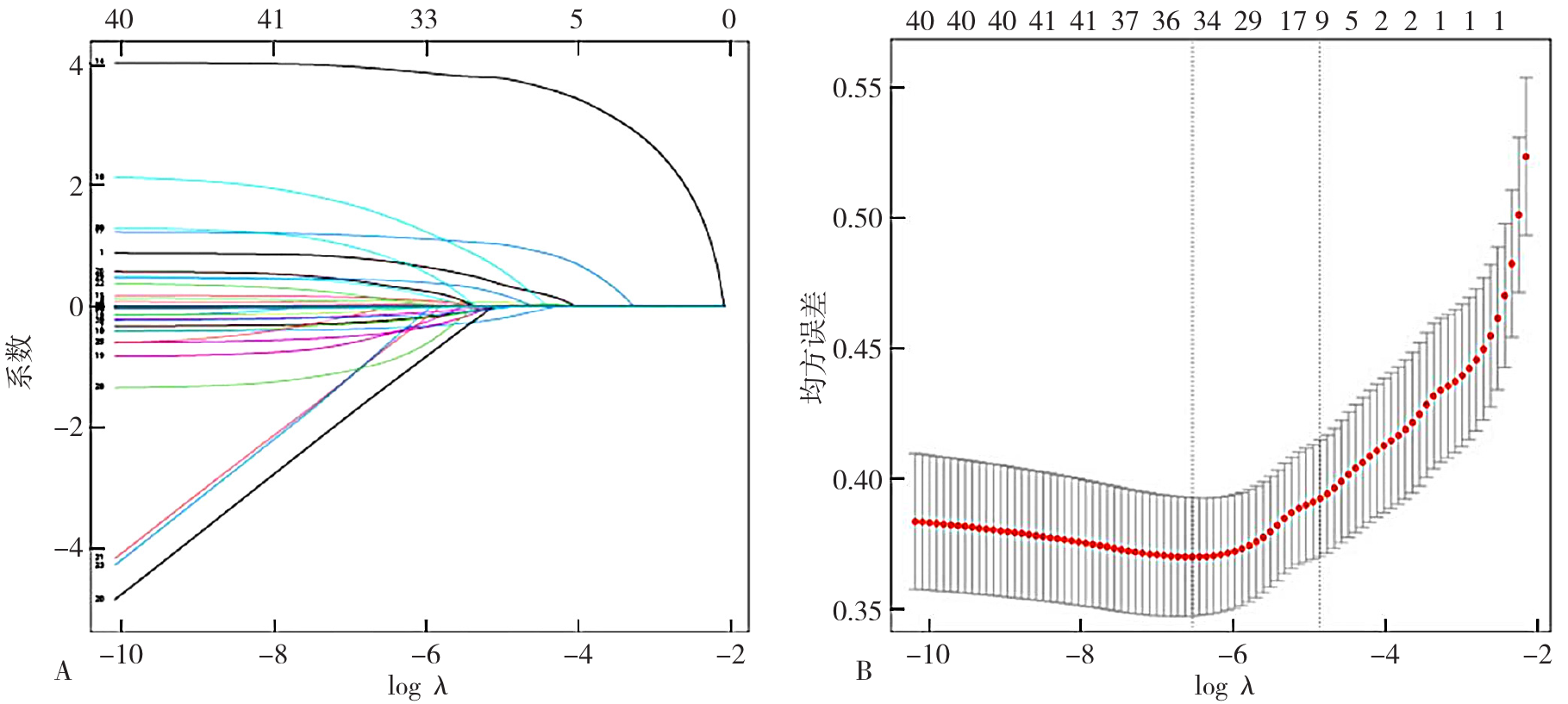
图1 LASSO回归模型筛选特征变量注:A为41个变量的系数曲线,B为交叉验证对最佳变量的筛选。
Figure 1 Screening of feature variables using the LASSO regression model
| 变量 | β | SE | Wald χ2值 | Z值 | P值 | OR(95%CI) |
|---|---|---|---|---|---|---|
| 性别(以女为参照) | ||||||
| 男 | 0.558 | 0.169 | 12.184 | 3.318 | <0.001 | 1.747(1.258~2.434) |
| BMI | 0.071 | 0.024 | 8.619 | 2.929 | 0.003 | 1.073(1.024~1.125) |
| 城乡(以乡镇为参照) | ||||||
| 城市 | 0.521 | 0.187 | 8.045 | 2.764 | 0.006 | 1.684(1.172~2.456) |
| 运动(以从不为参照) | ||||||
| 偶尔 | -0.208 | 0.172 | 1.454 | -2.523 | 0.228 | 0.812(0.580~1.139) |
| 经常 | -2.076 | 0.600 | 11.983 | -3.520 | <0.001 | 0.610(0.460~0.799) |
| 焦虑 | 1.112 | 0.313 | 12.779 | 3.556 | <0.001 | 3.041(1.597~5.484) |
| 冠心病 | 1.009 | 0.169 | 37.497 | 5.999 | <0.001 | 2.743(1.971~3.815) |
| 期前收缩 | 1.557 | 0.609 | 6.521 | 2.549 | 0.011 | 4.745(1.681~19.977) |
| SDANN | -0.011 | 0.003 | 15.158 | -3.884 | <0.001 | 0.989(0.983~0.994) |
| rMSSD | -0.014 | 0.007 | 4.214 | -2.028 | 0.043 | 0.986(0.972~0.999) |
| 睡眠效率 | -0.012 | 0.004 | 11.706 | -3.314 | <0.001 | 0.988(0.982~0.995) |
表2 老年心血管代谢疾病患者抑郁发生风险影响因素的多因素Logistic回归分析
Table 2 Multivariate Logistic regression analysis of factors influencing depression risk in elderly patients with cardiometabolic diseases
| 变量 | β | SE | Wald χ2值 | Z值 | P值 | OR(95%CI) |
|---|---|---|---|---|---|---|
| 性别(以女为参照) | ||||||
| 男 | 0.558 | 0.169 | 12.184 | 3.318 | <0.001 | 1.747(1.258~2.434) |
| BMI | 0.071 | 0.024 | 8.619 | 2.929 | 0.003 | 1.073(1.024~1.125) |
| 城乡(以乡镇为参照) | ||||||
| 城市 | 0.521 | 0.187 | 8.045 | 2.764 | 0.006 | 1.684(1.172~2.456) |
| 运动(以从不为参照) | ||||||
| 偶尔 | -0.208 | 0.172 | 1.454 | -2.523 | 0.228 | 0.812(0.580~1.139) |
| 经常 | -2.076 | 0.600 | 11.983 | -3.520 | <0.001 | 0.610(0.460~0.799) |
| 焦虑 | 1.112 | 0.313 | 12.779 | 3.556 | <0.001 | 3.041(1.597~5.484) |
| 冠心病 | 1.009 | 0.169 | 37.497 | 5.999 | <0.001 | 2.743(1.971~3.815) |
| 期前收缩 | 1.557 | 0.609 | 6.521 | 2.549 | 0.011 | 4.745(1.681~19.977) |
| SDANN | -0.011 | 0.003 | 15.158 | -3.884 | <0.001 | 0.989(0.983~0.994) |
| rMSSD | -0.014 | 0.007 | 4.214 | -2.028 | 0.043 | 0.986(0.972~0.999) |
| 睡眠效率 | -0.012 | 0.004 | 11.706 | -3.314 | <0.001 | 0.988(0.982~0.995) |
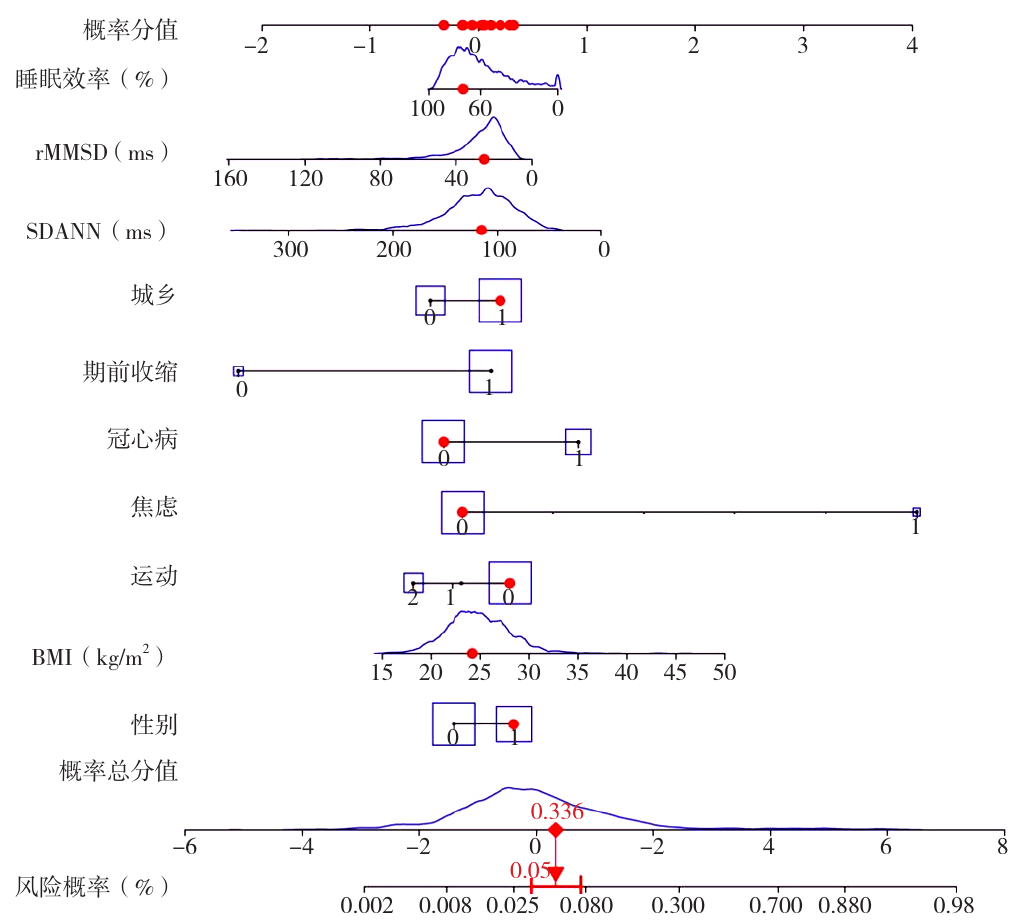
图2 老年心血管代谢疾病患者抑郁发生风险的列线图预测模型注:SDANN=RR间期平均值标准差,rMSSD=正常相邻窦性RR间期差值均方根。
Figure 2 Nomogram prediction model for the risk of depression in elderly patients with cardiometabolic diseases
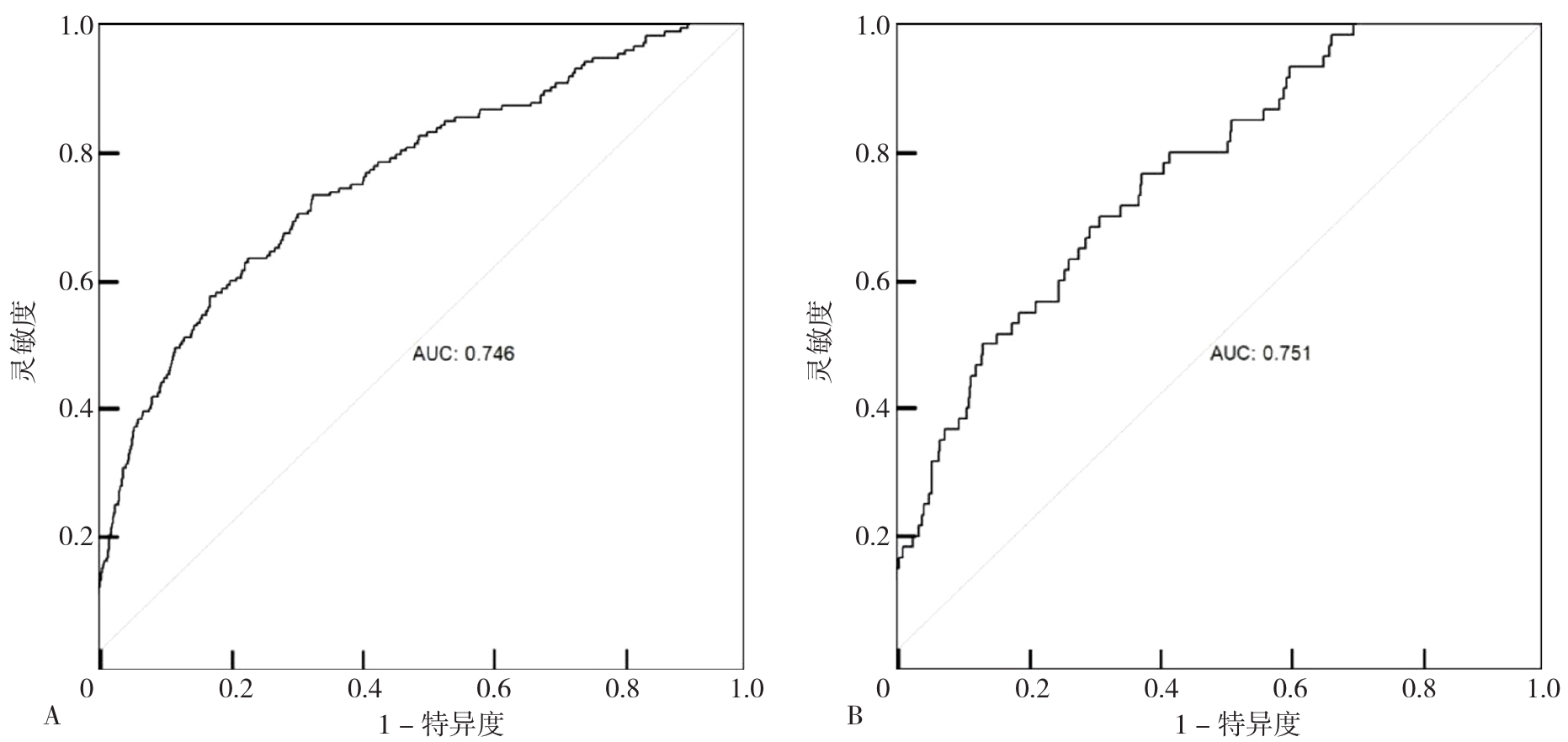
图3 列线图预测模型预测老年心血管代谢疾病患者抑郁发生风险的ROC曲线注:A为训练集,B为验证集;ROC=受试者工作特征,AUC=ROC曲线下面积。
Figure 3 ROC curve of the nomogram prediction model for predicting depression risk in elderly patients with cardiometabolic diseases
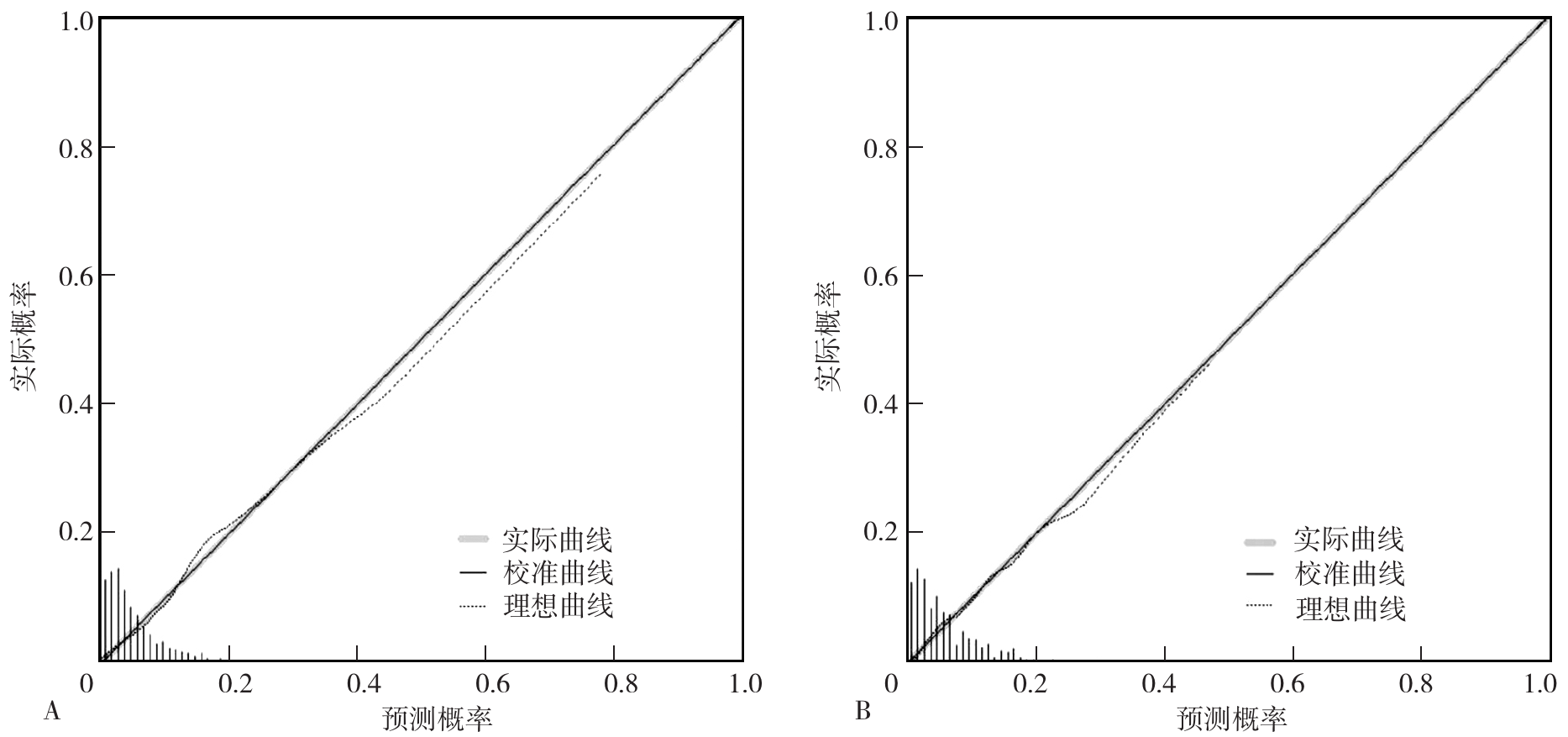
图4 列线图预测模型预测老年心血管代谢疾病患者抑郁发生风险的校准曲线注:A为训练集,B为验证集。
Figure 4 Calibration curve of the nomogram prediction model for predicting depression risk in elderly patients with cardiometabolic diseases
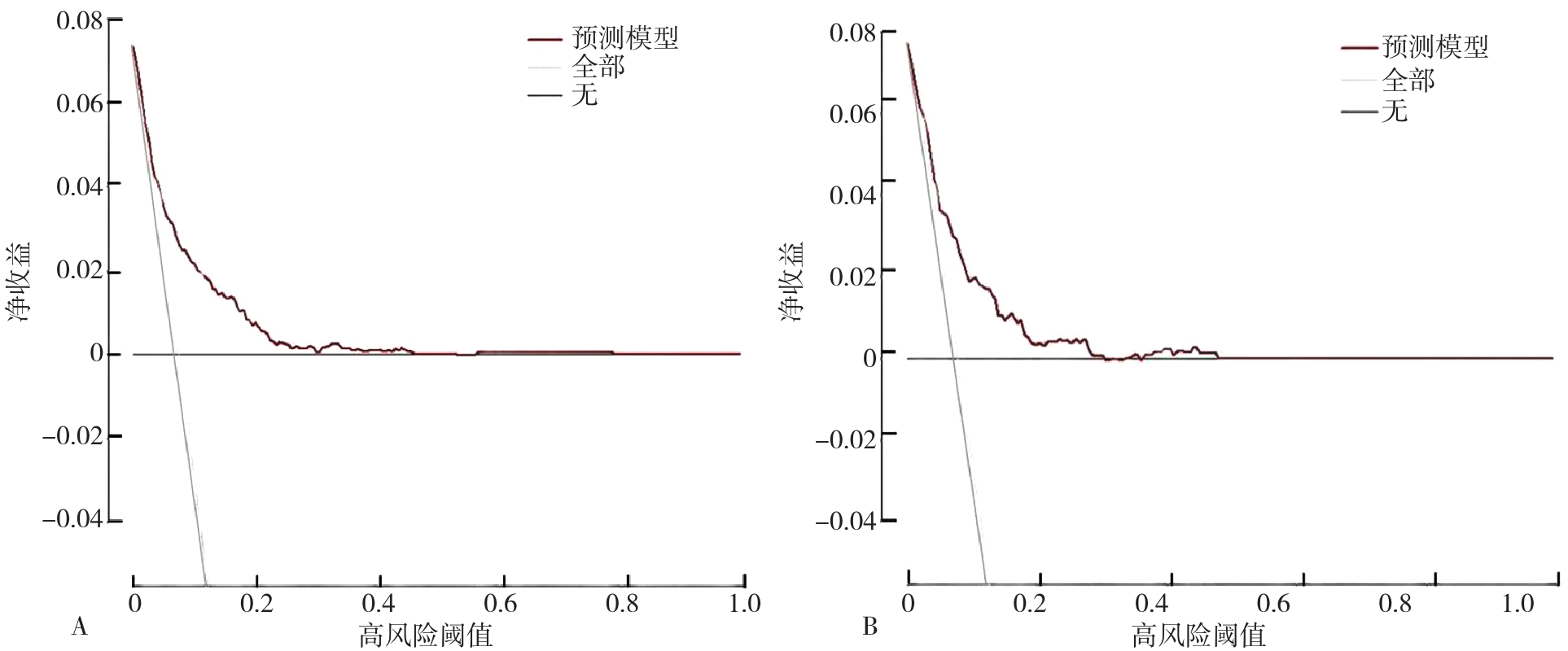
图5 列线图预测模型预测老年心血管代谢疾病患者抑郁发生风险的决策曲线注:A为训练集,B为验证集。
Figure 5 Decision curve of the nomogram prediction model for predicting depression risk in elderly patients with cardiometabolic diseases
| [1] |
|
| [2] |
|
| [3] |
|
| [4] |
|
| [5] |
|
| [6] |
|
| [7] |
|
| [8] |
|
| [9] |
|
| [10] |
|
| [11] |
|
| [12] |
|
| [13] |
|
| [14] |
|
| [15] |
余新艳,苏鹏,袁晓静,等. 基层老年慢性病患者心血管疾病综合发生风险的影响因素研究[J]. 中国全科医学, 2024, 27(10): 1186-1193, 1200.
|
| [16] |
余新艳,赵珺,赵晓晔,等. 移动智慧医疗在基层老年慢性病患者心血管病防控中的应用研究[J]. 中国全科医学, 2023, 26(33): 4167-4172.
|
| [17] |
|
| [18] |
中华医学会,中华医学会杂志社,中华医学会全科医学分会,等. 抑郁症基层诊疗指南(2021年)[J]. 中华全科医师杂志, 2021, 20(12): 1249-1260.
|
| [19] |
中华医学会,中华医学会杂志社,中华医学会全科医学分会,等. 广泛性焦虑障碍基层诊疗指南(2021年)[J]. 中华全科医师杂志, 2021, 20(12): 1232-1241.
|
| [20] |
Task Force of the European Society of Cardiology and the North American Society of Pacing and Electrophysiology. Heart rate variability: standards of measurement, physiological interpretation, and clinical use[J]. Noninvasive Electrocardiol, 1996, 1(2): 151-181.
|
| [21] |
中国老年型糖尿病防治临床指南编写组,中国老年医学学会老年内分泌代谢分会,中国老年保健医学研究会老年内分泌与代谢分会,等. 中国老年2型糖尿病防治临床指南(2022年版)[J]. 中华内科杂志, 2022, 61(1): 12-50.
|
| [22] |
|
| [23] |
中国老年医学学会高血压分会,北京高血压防治协会,国家老年疾病临床医学研究中心(中国人民解放军总医院),等. 中国老年高血压管理指南2023[J]. 中华高血压杂志, 2023, 31(6): 508-538. DOI: 10.16439/j.issn.1673-7245.2023.06.003.
|
| [24] |
|
| [25] |
|
| [26] |
赵慧,王志伟,马婷婷,等. 基于倾向性评分匹配法的慢性病共病对我国中老年人抑郁症状的影响研究[J]. 医学与社会, 2022, 35(6): 127-132, 144. DOI: 10.13723/j.yxysh.2022.06.024.
|
| [27] |
郑文娟,戚瑞,王丹,等. 基于健康信念模型理论的中老年2型糖尿病患者服药依从性影响因素分析[J]. 实用预防医学, 2021, 28(8): 991-994.
|
| [28] |
刘海燕,马萍,徐清斌,等. 宁夏吴忠市高血压患病率、知晓率、治疗率、控制率的调查分析[J]. 实用医学杂志, 2012, 28(2): 313-316.
|
| [29] |
黄紫婷,罗颜,苏鹤轩,等. 中国老年心血管代谢性共病与抑郁症状的关系[J]. 中国慢性病预防与控制, 2021, 29(9): 644-648. DOI: 10.16386/j.cjpccd.issn.1004-6194.2021.09.002.
|
| [30] |
|
| [31] |
高月霞,徐程,刘国恩,等. 社会支持对老年人健康相关生命质量影响研究——基于南通的实证[J]. 人口与发展, 2013, 19(4): 73-81. DOI: 10.3969/j.issn.1674-1668.2013.04.009.
|
| [32] |
吴小婷,储爱琴,张海玲,等. 孤独感在社区老年慢性病患者述情障碍和抑郁间的中介效应研究[J]. 中国全科医学, 2021, 24(36): 4563-4568. DOI: 10.12114/j.issn.1007-9572.2021.02.082.
|
| [33] |
|
| [34] |
李豪豪,李卓群. 患慢性病对老年人抑郁症状的影响[J]. 中国健康教育, 2024, 40(6): 525-530.
|
| [35] |
杨丽,陈长香,李建民,等. 城乡老年人睡眠质量现状调查[J]. 现代预防医学, 2006, 33(7): 1297.
|
| [36] |
|
| [37] |
|
| [38] |
|
| [39] |
|
| [40] |
|
| [41] |
|
| [42] |
陈婷,张泽彧,陈喆,等. 睡眠时间不足致脂肪细胞因子分泌紊乱与肥胖相关性的研究进展[J]. 上海交通大学学报(医学版), 2013, 33(3): 359-362.
|
| [43] |
|
| [44] |
张先庚,王玉婷,刘林峰,等. 基于智慧服务平台的运动方案对糖尿病前期老年人运动效能的影响研究[J/OL]. 成都医学院学报, 2024.(2024-08-28)[2025-01-10].
|
| [45] |
|
| [46] |
王潘悦,王艳. 中等强度健步走对中老年高血压患者睡眠质量的影响[J]. 中国运动医学杂志, 2024, 43(6): 465-472.
|
| [47] |
|
| [48] |
张易,郑素珍,杨丽薇,等. 中度有氧运动对老年抑郁症病人5-羟色胺、去甲肾上腺素水平及自主神经功能的干预效果研究[J]. 实用老年医学, 2023, 37(6): 595-598.
|
| [49] |
王建云. 社区居家失能老年人精神健康的社会支持体系构建研究[D]. 上海: 华东师范大学, 2021.
|
| [50] |
|
| [51] |
|
| [52] |
|
| [53] |
|
| [54] |
|
| [55] |
|
| [56] |
|
| [57] |
李斌,郭颖强,安邦,等. 老年心律失常患者的抑郁、焦虑情绪和睡眠质量及心率变异性的研究[J]. 国际精神病学杂志, 2016, 43(6): 1029-1032.
|
| [58] |
王福军,罗亚雄,向红菊,等. 心脏早搏患者伴焦虑抑郁的治疗及其对生活质量的影响[J]. 中国医药, 2012, 7(2): 137-139. DOI: 10.3760/cma.j.issn.1673-4777.2012.02.004.
|
| [59] |
|
| [60] |
|
| [61] |
|
| [62] |
毛家亮,鲍正宇,李春波,等. 对心脏早搏患者伴发的焦虑抑郁症状的治疗及其意义[J]. 中国心脏起搏与心电生理杂志, 2008, 22(3): 206-209.
|
| [63] |
|
| [64] |
|
| [65] |
|
| [66] |
冯蕾,李诺,陈玲,等. 社区老年慢性病患者共病焦虑及抑郁症状的横断面研究[J]. 精神医学杂志, 2023, 36(4): 381-386.
|
| [67] |
周云飞,刘铁榜. 矛盾性失眠研究进展[J]. 临床精神医学杂志, 2019, 29(2): 139-141.
|
| [68] |
|
| [69] |
|
| [70] |
彭婉晴,罗帏,周仁来. 工作记忆刷新训练改善抑郁倾向大学生情绪调节能力的HRV证据[J]. 心理学报, 2019, 51(6): 648-661. DOI: 10.3724/SP.J.1041.2019.00648.
|
| [71] |
姜敏敏,谭磊,房亚明,等. 广州市社区老年人睡眠质量、自我觉知健康水平与抑郁的相关性[J]. 中国老年学杂志, 2021, 41(18): 4095-4098. DOI: 10.3969/j.issn.1005-9202.2021.18.058.
|
| [72] |
|
| [73] |
|
| [74] |
|
| [75] |
晏月平,李雅琳. 独居老人的多维健康脆弱性研究——基于"中国老年健康影响因素跟踪调查"的实证分析[J]. 云南民族大学学报(哲学社会科学版), 2022, 39(4): 64-75. DOI: 10.13727/j.cnki.53-1191/c.20220704.007.
|
| [1] | 李文萍, 陈建华, 许家培, 金雪, 潘子涵, 迟春花. 数智化健康管理平台赋能社区老年人健康服务的范围综述[J]. 中国全科医学, 2026, 29(21): 2938-2949. |
| [2] | 柴智浩, 张维森, 罗娇玲, 朱峰, 朱彤, 靳雅丽, 潘静, 卢映君, 江朝强. 中老年人社会经济状况在少儿期父母文化与认知功能间的中介效应:基于广州生物库队列研究[J]. 中国全科医学, 2026, 29(21): 2959-2966. |
| [3] | 安艳红, 王世东, 李潇然, 郭家扬, 王哲, 沙培林, 孟怡珺, 李小萱, 石雪, 于泽兴, 肖永华. 糖尿病肾病影响因素及列线图预测模型研究:基于超声造影技术[J]. 中国全科医学, 2026, 29(21): 2995-3003. |
| [4] | 颜文, 张含之, 金花, 钱洁, 于德华. 上海市社区卫生服务机构抑郁障碍诊疗能力研究[J]. 中国全科医学, 2026, 29(20): 2790-2799. |
| [5] | 李凤, 胡昌好, 罗旭. 老年慢性病共病患者心理健康的影响因素及干预策略研究进展[J]. 中国全科医学, 2026, 29(20): 2816-2828. |
| [6] | 程玉, 韩士尧, 孙平, 向娟, 杨辉, 李东泽, 郑莉, 廖晓阳. 慢性病管理中的社会经济与人口学挑战分析[J]. 中国全科医学, 2026, 29(20): 2800-2807. |
| [7] | 刘影, 刘世炜, 张驰, 沈姞, 张玉珊, 张洁, 桑莹宸, 王友娇, 王蕾, 周厚广, 施红. 中国老年脑卒中患者主观认知功能下降流行特征及影响因素研究[J]. 中国全科医学, 2026, 29(20): 2829-2835. |
| [8] | 庞姝, 孙颖, 姜春燕. Fried衰弱表型量表与FRAIL量表在社区体检老年人衰弱前期评估中的效能比较[J]. 中国全科医学, 2026, 29(19): 2664-2670. |
| [9] | 张小娟, 刘阳, 彭博, 叶媛, 朱坤. 基层医疗卫生机构高血压和糖尿病防治现状研究[J]. 中国全科医学, 2026, 29(19): 2614-2620. |
| [10] | 鲍若林, 鲁潮, 冯昕, 叶春梅, 来芬华, 倪作为, 杨东波, 郑永韬. 基于巢式病例对照研究老年人流感疫苗突破病例的风险预测模型[J]. 中国全科医学, 2026, 29(19): 2671-2677. |
| [11] | 苗境杰, 张晋雯, 吴千豪, 韩佩佩. 间歇性禁食对心血管代谢疾病影响的研究进展[J]. 中国全科医学, 2026, 29(18): 2538-2545. |
| [12] | 聂佳慧, 李国娟, 郝卓群, 杜巧荣, 刘鹏鸿, 刘志芬, 刘莎, 张爱霞, 王彦芳. 重性抑郁障碍患者认知功能损害的异质性及影响因素研究[J]. 中国全科医学, 2026, 29(17): 2340-2346. |
| [13] | 李思旻, 张婷婷, 王鲲博, 杨建洲, 平卫伟. 运动剂量对老年肌肉减少性肥胖患者的影响:一项Meta分析[J]. 中国全科医学, 2026, 29(17): 2400-2409. |
| [14] | 杨婷婷, 郑利, 梁大强, 吴凡, 袁娴娴, 魏来, 胡瑾, 汪俊华, 王子云. 40~65岁人群睡眠碎片化与动脉硬化的关联性研究[J]. 中国全科医学, 2026, 29(16): 2190-2197. |
| [15] | 陈燕, 沈德权, 盛仁磊, 常玉洁, 杨佳琦, 丁洁, 孙志芳, 王大辉. 老年人基层中医预防保健服务利用的影响因素及重要性排序[J]. 中国全科医学, 2026, 29(16): 2182-2189. |
| 阅读次数 | ||||||
|
全文 |
|
|||||
|
摘要 |
|
|||||