
中国全科医学 ›› 2026, Vol. 29 ›› Issue (10): 1324-1333.DOI: 10.12114/j.issn.1007-9572.2024.0495
胡嘉琦1, 李端1, 方昊2, 樊兴颖1, 杜薇1, 周涵妮1,*( )
)
收稿日期:2025-04-10
修回日期:2026-01-24
出版日期:2026-04-05
发布日期:2026-03-25
通讯作者:
周涵妮
作者贡献:
胡嘉琦负责统筹项目研究,撰写论文初稿并负责最终版本修订,对论文负责;李端提出研究思路,设计研究方案,负责文章的质量控制与审查,对文章整体负责,为研究课题提供资金支持;方昊、李端负责数据收集,以及数据整理与统计学分析;樊兴颖、杜薇、周涵妮负责数据校验,论文修订及论文质量把控。
基金资助:
HU Jiaqi1, LI Duan1, FANG Hao2, FAN Xingying1, DU Wei1, ZHOU Hanni1,*()
Received:2025-04-10
Revised:2026-01-24
Published:2026-04-05
Online:2026-03-25
Contact:
ZHOU Hanni
摘要: 背景 我国高尿酸血症(HUA)患病率日益增加,控制并降低发病率已成为我国公共卫生事业的主要方向。通过及时识别地方性HUA高危人群,运用有效的风险预测模型能够针对高危人群开展健康干预,有望成为卫生干预方案效果评价、疾病预防以及政府决策的重要手段。 目的 探讨人群HUA的非遗传独立危险因素,并建立5年内HUA风险预测模型,为贵阳市人群HUA的预防和筛查提供工具。 方法 选取2019—2023年贵阳市贵州医科大学第一附属医院体检人群队列为研究对象,共纳入2 926人。收集人群基本信息与血液检测指标,分别按性别和年龄调查HUA患病率,比较分析HUA患病人群基本情况;采用Cox比例风险回归分析HUA的独立危险因素;运用不同组合遗传风险评分(NGRS)方式建立HUA风险预测模型,并采用受试者工作特征曲线(ROC)评价模型预测能力。 结果 通过Cox比例风险回归分析得到性别、肥胖、高血压、高甘油三酯血症、高胆固醇血症为HUA的独立危险因素;建立了HUA非遗传风险预测模型,分别为:Logist P(非老年人群)=-1.206+2.13×(0.959X1+1.441X3+2.383X4+2.892X5+1.521X6+1.384X7),Logist P(老年人群)=-3.102+2.114×(0.959X1+1.441X3+2.383X4+2.892X5+1.384X7)。其中,X1、X3、X4、X5、X6、X7分别为性别、肥胖、高血压、高甘油三酯血症、高胆固醇血症、尿酸参考值;两种模型ROC曲线下面积(AUC)(95%CI)分别为0.88(0.77~1.18),P=0.001及0.89(0.77~1.24),P=0.001;灵敏度和特异度分别为92.1%和89.5%,77.8%和78.6%;HUA风险预测模型预测效力,老年人群体验证与模型的AUC(95%CI)分别为0.87(0.76~1.16)和0.88(0.77~1.18),非老年人群体验证与模型的AUC(95%CI)分别为0.88(0.77~1.22)和0.89(0.77~1.24),结果均与原模型拟合AUC差异性较小,模型内部验证效果较好。 结论 研究结果提示性别、肥胖、高血压、高甘油三酯血症以及高胆固醇血症是HUA的独立危险因素;基于队列研究,在非老年人群及老年人群中成功建立了HUA风险预测模型。
| 项目 | 患病组 | 未患病组 | t值 | P值 |
|---|---|---|---|---|
| 年龄( | 58.6±13.8 | 55.6±15.8 | -11.354 | 0.001 |
| BMI( | 26.7±3.76 | 24.2±3.22 | -3.443 | <0.001 |
| UA( | 432.98±121.88 | 327.17±117.58 | -27.828 | <0.001 |
| TP( | 68.51±12.96 | 64.71±11.49 | -3.785 | <0.001 |
| Scr( | 121.06±33.23 | 102.44±23.33 | -8.523 | <0.001 |
| TC( | 260.57±106.83 | 185.65±89.52 | -13.523 | <0.001 |
| LDL-C( | 116.31±24.42 | 110.12±15.22 | -10.341 | <0.001 |
| TG( | 10.57±106.83 | 5.65±89.52 | -3.523 | <0.001 |
| BUN( | 21.43±12.16 | 18.13±22.12 | -1.324 | <0.001 |
| eGFR[ | 91.18±18.49 | 92.32±18.76 | 1.421 | 0.074 |
| SBP( | 139±18 | 134±18 | -2.152 | 0.001 |
| DBP( | 76±12 | 74±11 | -2.147 | 0.002 |
表1 体检队列中HUA患病组与未患病组资料比较情况
Table 1 Comparison of data between HUA cases and non-cases in the physical examination cohort
| 项目 | 患病组 | 未患病组 | t值 | P值 |
|---|---|---|---|---|
| 年龄( | 58.6±13.8 | 55.6±15.8 | -11.354 | 0.001 |
| BMI( | 26.7±3.76 | 24.2±3.22 | -3.443 | <0.001 |
| UA( | 432.98±121.88 | 327.17±117.58 | -27.828 | <0.001 |
| TP( | 68.51±12.96 | 64.71±11.49 | -3.785 | <0.001 |
| Scr( | 121.06±33.23 | 102.44±23.33 | -8.523 | <0.001 |
| TC( | 260.57±106.83 | 185.65±89.52 | -13.523 | <0.001 |
| LDL-C( | 116.31±24.42 | 110.12±15.22 | -10.341 | <0.001 |
| TG( | 10.57±106.83 | 5.65±89.52 | -3.523 | <0.001 |
| BUN( | 21.43±12.16 | 18.13±22.12 | -1.324 | <0.001 |
| eGFR[ | 91.18±18.49 | 92.32±18.76 | 1.421 | 0.074 |
| SBP( | 139±18 | 134±18 | -2.152 | 0.001 |
| DBP( | 76±12 | 74±11 | -2.147 | 0.002 |
| 自变量 | 赋值 |
|---|---|
| 性别 | 女=0,男=1 |
| 年龄 | ≤59岁=0,≥60岁=1 |
| 肥胖 | 否=0,是=1 |
| 婚姻情况 | 未婚=0,已婚=1,离异、丧偶=2 |
| 户籍所在地 | 农村=0,城镇=1 |
| 高血压 | 阴性=0,阳性=1 |
| 高甘油三酯血症 | 阴性=0,阳性=1 |
| 高胆固醇血症 | 阴性=0,阳性=1 |
| 低密度脂蛋白血症 | 阴性=0,阳性=1 |
表2 HUA患病影响因素的多因素Cox比例风险回归分析变量赋值
Table 2 Multilevel Cox regression analysis variable assignment of influencing factors for HUA
| 自变量 | 赋值 |
|---|---|
| 性别 | 女=0,男=1 |
| 年龄 | ≤59岁=0,≥60岁=1 |
| 肥胖 | 否=0,是=1 |
| 婚姻情况 | 未婚=0,已婚=1,离异、丧偶=2 |
| 户籍所在地 | 农村=0,城镇=1 |
| 高血压 | 阴性=0,阳性=1 |
| 高甘油三酯血症 | 阴性=0,阳性=1 |
| 高胆固醇血症 | 阴性=0,阳性=1 |
| 低密度脂蛋白血症 | 阴性=0,阳性=1 |
| 组别 | 模型1 | 模型2 | 模型3 | |||
|---|---|---|---|---|---|---|
| HR(95%CI) | P值 | HR(95%CI) | P值 | HR(95%CI) | P值 | |
| 高血压 | 1.26(0.93~1.71) | 0.017 | 1.23(0.91~1.68) | 0.016 | 1.31(0.96~1.78) | 0.003 |
| 高甘油三酯血症 | 1.36(1.06~1.76) | <0.001 | 1.44(1.12~1.85) | 0.005 | 1.81(1.40~2.34) | <0.001 |
| 高胆固醇血症 | 1.73(1.34~2.25) | 0.012 | 1.74(1.35~2.25) | <0.001 | 1.40(1.09~1.81) | 0.004 |
| 高低密度脂蛋白血症 | 1.44(1.12~2.31) | 0.024 | 1.15(0.67~1.98) | 0.113 | 1.64(1.31~2.11) | 0.071 |
| 性别 | 1.25(0.94~1.65) | 0.002 | 1.00(0.88~1.10) | 0.002 | ||
| 年龄 | 1.39(1.10~1.76) | 0.001 | 1.35(1.58~1.80) | 0.002 | ||
| 肥胖 | 1.14(0.63~1.93) | 0.003 | ||||
| 婚姻情况 | 1.44(1.09~1.80) | 0.085 | ||||
| 户籍所在地 | 1.54(1.22~1.91) | 0.057 | ||||
表3 HUA患病影响因素的多因素Cox比例风险回归分析
Table 3 Multilevel Cox regression analysis of influencing factors for HUA
| 组别 | 模型1 | 模型2 | 模型3 | |||
|---|---|---|---|---|---|---|
| HR(95%CI) | P值 | HR(95%CI) | P值 | HR(95%CI) | P值 | |
| 高血压 | 1.26(0.93~1.71) | 0.017 | 1.23(0.91~1.68) | 0.016 | 1.31(0.96~1.78) | 0.003 |
| 高甘油三酯血症 | 1.36(1.06~1.76) | <0.001 | 1.44(1.12~1.85) | 0.005 | 1.81(1.40~2.34) | <0.001 |
| 高胆固醇血症 | 1.73(1.34~2.25) | 0.012 | 1.74(1.35~2.25) | <0.001 | 1.40(1.09~1.81) | 0.004 |
| 高低密度脂蛋白血症 | 1.44(1.12~2.31) | 0.024 | 1.15(0.67~1.98) | 0.113 | 1.64(1.31~2.11) | 0.071 |
| 性别 | 1.25(0.94~1.65) | 0.002 | 1.00(0.88~1.10) | 0.002 | ||
| 年龄 | 1.39(1.10~1.76) | 0.001 | 1.35(1.58~1.80) | 0.002 | ||
| 肥胖 | 1.14(0.63~1.93) | 0.003 | ||||
| 婚姻情况 | 1.44(1.09~1.80) | 0.085 | ||||
| 户籍所在地 | 1.54(1.22~1.91) | 0.057 | ||||
| 变量 | OR(95%CI) | P值 | Pe(%) | PAR(%) |
|---|---|---|---|---|
| 性别 | 1.02(1.01~1.02) | 0.024 | 65.4 | 28.3 |
| 肥胖 | 1.12(1.02~1.42) | 0.015 | 48.8 | 31.4 |
| 年龄 | 1.35(1.07~1.71) | 0.011 | 49.3 | 27.6 |
| 高血压 | 1.31(1.07~1.69) | 0.003 | 23.8 | 12.2 |
| 高甘油三酯血症 | 1.81(1.40~2.34) | <0.001 | 35.4 | 33.7 |
| 高胆固醇血症 | 1.40(1.09~1.81) | 0.009 | 41.7 | 39.4 |
表4 HUA归因度计算
Table 4 HUA attribution degree calculation
| 变量 | OR(95%CI) | P值 | Pe(%) | PAR(%) |
|---|---|---|---|---|
| 性别 | 1.02(1.01~1.02) | 0.024 | 65.4 | 28.3 |
| 肥胖 | 1.12(1.02~1.42) | 0.015 | 48.8 | 31.4 |
| 年龄 | 1.35(1.07~1.71) | 0.011 | 49.3 | 27.6 |
| 高血压 | 1.31(1.07~1.69) | 0.003 | 23.8 | 12.2 |
| 高甘油三酯血症 | 1.81(1.40~2.34) | <0.001 | 35.4 | 33.7 |
| 高胆固醇血症 | 1.40(1.09~1.81) | 0.009 | 41.7 | 39.4 |
| 编号 | 变量 | OR(95%CI) | P值 | lnOR(β) |
|---|---|---|---|---|
| 1 | 性别 | 2.61(1.79~3.81) | <0.001 | 0.959 |
| 2 | 年龄 | 1.51(1.33~2.78) | 0.002 | 0.672 |
| 3 | 肥胖 | 5.28(1.71~8.13) | 0.001 | 1.441 |
| 4 | 高血压 | 10.84(6.92~16.10) | <0.001 | 2.383 |
| 5 | 高甘油三酯血症 | 18.04(12.56~25.91) | <0.001 | 2.892 |
| 6 | 高胆固醇血症 | 4.58(3.19~6.57) | <0.001 | 1.521 |
表5 HUA非遗传风险因素的筛选结果
Table 5 Screening results of non-genetic risk factors for HUA
| 编号 | 变量 | OR(95%CI) | P值 | lnOR(β) |
|---|---|---|---|---|
| 1 | 性别 | 2.61(1.79~3.81) | <0.001 | 0.959 |
| 2 | 年龄 | 1.51(1.33~2.78) | 0.002 | 0.672 |
| 3 | 肥胖 | 5.28(1.71~8.13) | 0.001 | 1.441 |
| 4 | 高血压 | 10.84(6.92~16.10) | <0.001 | 2.383 |
| 5 | 高甘油三酯血症 | 18.04(12.56~25.91) | <0.001 | 2.892 |
| 6 | 高胆固醇血症 | 4.58(3.19~6.57) | <0.001 | 1.521 |
| NGRS组合 | 纳入候选非遗传因素编号 |
|---|---|
| HUANGRS3 | 3,4,6 |
| HUANGRS4 | 3,4,6,1 |
| HUANGRS5 | 3,4,6,1,5 |
| HUANGRS6 | 3,4,6,1,5,2 |
表6 HUA不同非遗传因素组合方式
Table 6 Combination of different non-genetic factors in HUA
| NGRS组合 | 纳入候选非遗传因素编号 |
|---|---|
| HUANGRS3 | 3,4,6 |
| HUANGRS4 | 3,4,6,1 |
| HUANGRS5 | 3,4,6,1,5 |
| HUANGRS6 | 3,4,6,1,5,2 |
| NGRS组合 | 总体人群 | 非老年人 | 老年人 | |||
|---|---|---|---|---|---|---|
| OR(95%CI) | P值 | OR(95%CI) | P值 | OR(95%CI) | P值 | |
| HUANGRS3 | 1.45(1.20~2.31) | 0.005 | 1.70(1.55~5.36) | 0.008 | 1.56(1.26~4.42) | 0.018 |
| HUANGRS4 | 1.27(0.88~1.81) | <0.001 | 1.73(1.58~5.94) | 0.003 | 1.66(1.36~4.97) | 0.007 |
| HUANGRS5 | 1.39(1.17~2.16) | 0.005 | 1.44(1.19~2.26) | 0.006 | 1.51(1.22~3.82) | 0.005 |
| HUANGRS6 | 1.36(1.13~2.11) | 0.025 | 1.53(1.24~4.11) | 0.010 | 1.24(0.79~1.69) | 0.011 |
表7 总人群、非老年人、老年人HUA不同NGRS组合Logistic回归分析
Table 7 Logistic regression analysis of different NGRS with HUA in total population, non-elderly and elderly
| NGRS组合 | 总体人群 | 非老年人 | 老年人 | |||
|---|---|---|---|---|---|---|
| OR(95%CI) | P值 | OR(95%CI) | P值 | OR(95%CI) | P值 | |
| HUANGRS3 | 1.45(1.20~2.31) | 0.005 | 1.70(1.55~5.36) | 0.008 | 1.56(1.26~4.42) | 0.018 |
| HUANGRS4 | 1.27(0.88~1.81) | <0.001 | 1.73(1.58~5.94) | 0.003 | 1.66(1.36~4.97) | 0.007 |
| HUANGRS5 | 1.39(1.17~2.16) | 0.005 | 1.44(1.19~2.26) | 0.006 | 1.51(1.22~3.82) | 0.005 |
| HUANGRS6 | 1.36(1.13~2.11) | 0.025 | 1.53(1.24~4.11) | 0.010 | 1.24(0.79~1.69) | 0.011 |
| NGRS组合 | 总体人群 | 非老年人 | 老年人 | |||
|---|---|---|---|---|---|---|
| AUC(95%CI) | P值 | AUC(95%CI) | P值 | AUC(95%CI) | P值 | |
| HUANGRS3 | 0.76(0.61~0.82) | <0.001 | 0.72(0.59~0.81) | <0.001 | 0.79(0.66~0.86) | <0.001 |
| HUANGRS4 | 0.68(0.56~0.75) | <0.001 | 0.78(0.63~0.83) | 0.001 | 0.82(0.74~0.88) | <0.001 |
| HUANGRS5 | 0.82(0.73~0.87) | <0.001 | 0.81(0.73~0.87) | <0.001 | 0.77(0.63~0.83) | <0.001 |
| HUANGRS6 | 0.67(0.53~0.73) | <0.001 | 0.75(0.61~0.81) | 0.001 | 0.79(0.64~0.85) | 0.001 |
表8 总人群、非老年人、老年人HUA不同NGRS组合预测效力比较
Table 8 Comparison of prediction effectiveness of different NGRS with HUA in total population, non-elderly and elderly
| NGRS组合 | 总体人群 | 非老年人 | 老年人 | |||
|---|---|---|---|---|---|---|
| AUC(95%CI) | P值 | AUC(95%CI) | P值 | AUC(95%CI) | P值 | |
| HUANGRS3 | 0.76(0.61~0.82) | <0.001 | 0.72(0.59~0.81) | <0.001 | 0.79(0.66~0.86) | <0.001 |
| HUANGRS4 | 0.68(0.56~0.75) | <0.001 | 0.78(0.63~0.83) | 0.001 | 0.82(0.74~0.88) | <0.001 |
| HUANGRS5 | 0.82(0.73~0.87) | <0.001 | 0.81(0.73~0.87) | <0.001 | 0.77(0.63~0.83) | <0.001 |
| HUANGRS6 | 0.67(0.53~0.73) | <0.001 | 0.75(0.61~0.81) | 0.001 | 0.79(0.64~0.85) | 0.001 |
| 人群 | 预测因子 | Logistic回归方程 | AUC预测效力检验 | ||
|---|---|---|---|---|---|
| OR(95%CI) | P值 | AUC(95%CI) | P值 | ||
| 总人群 | HUANGRS5 | 1.39(1.17~2.16) | 0.005 | 0.82(0.73~0.87) | <0.001 |
| HUANGRS5+ | 1.43(1.25~2.22) | 0.002 | 0.90(0.79~1.28) | 0.002 | |
| 非老年人 | HUANGRS5 | 1.44(1.19~2.26) | 0.006 | 0.81(0.73~0.87) | <0.001 |
| HUANGRS5+ | 1.52(1.22~4.31) | 0.001 | 0.89(0.77~1.24) | 0.001 | |
| 老年人 | HUANGRS4 | 1.66(1.36~4.97) | 0.007 | 0.82(0.74~0.88) | <0.001 |
| HUANGRS4+ | 1.68(1.37~5.00) | 0.001 | 0.88(0.77~1.18) | <0.001 | |
表9 NGRS加入UA参考值高值后各预测模型Logistic回归分析及预测效力比较
Table 9 Logistic regression analysis and prediction effectiveness comparison of prediction models with NGRS added to normal values
| 人群 | 预测因子 | Logistic回归方程 | AUC预测效力检验 | ||
|---|---|---|---|---|---|
| OR(95%CI) | P值 | AUC(95%CI) | P值 | ||
| 总人群 | HUANGRS5 | 1.39(1.17~2.16) | 0.005 | 0.82(0.73~0.87) | <0.001 |
| HUANGRS5+ | 1.43(1.25~2.22) | 0.002 | 0.90(0.79~1.28) | 0.002 | |
| 非老年人 | HUANGRS5 | 1.44(1.19~2.26) | 0.006 | 0.81(0.73~0.87) | <0.001 |
| HUANGRS5+ | 1.52(1.22~4.31) | 0.001 | 0.89(0.77~1.24) | 0.001 | |
| 老年人 | HUANGRS4 | 1.66(1.36~4.97) | 0.007 | 0.82(0.74~0.88) | <0.001 |
| HUANGRS4+ | 1.68(1.37~5.00) | 0.001 | 0.88(0.77~1.18) | <0.001 | |
| 人群 | 预测因素 | β | SE | χ2值 | OR | 95%CI | P值 |
|---|---|---|---|---|---|---|---|
| 总人群 | HUANGRS5 | 2.328 | 0.173 | 12.068 | 4.112 | 1.45~8.87 | 0.002 |
| HUANGRS5+ | 1.517 | 0.165 | 23.113 | 3.428 | 1.25~7.66 | 0.003 | |
| 非老年人 | HUANGRS5 | 3.143 | 0.521 | 5.625 | 5.614 | 2.72~11.21 | <0.001 |
| HUANGRS5+ | 2.325 | 0.443 | 2.877 | 4.522 | 1.52~8.95 | 0.002 | |
| 老年人 | HUANGRS4 | 1.215 | 0.387 | 11.142 | 3.245 | 1.11~6.96 | <0.001 |
| HUANGRS4+ | 1.314 | 0.402 | 7.512 | 4.357 | 1.63~8.95 | 0.002 |
表10 HUA人群多因素Logistic回归分析结果
Table 10 Multilevel Logistic regression analysis of the influence of hyperuricemia population multi-factor
| 人群 | 预测因素 | β | SE | χ2值 | OR | 95%CI | P值 |
|---|---|---|---|---|---|---|---|
| 总人群 | HUANGRS5 | 2.328 | 0.173 | 12.068 | 4.112 | 1.45~8.87 | 0.002 |
| HUANGRS5+ | 1.517 | 0.165 | 23.113 | 3.428 | 1.25~7.66 | 0.003 | |
| 非老年人 | HUANGRS5 | 3.143 | 0.521 | 5.625 | 5.614 | 2.72~11.21 | <0.001 |
| HUANGRS5+ | 2.325 | 0.443 | 2.877 | 4.522 | 1.52~8.95 | 0.002 | |
| 老年人 | HUANGRS4 | 1.215 | 0.387 | 11.142 | 3.245 | 1.11~6.96 | <0.001 |
| HUANGRS4+ | 1.314 | 0.402 | 7.512 | 4.357 | 1.63~8.95 | 0.002 |
| 人群 | 预测因素 | 风险预测模型 |
|---|---|---|
| 非老年人 | HUANGRS5+ | Logist P=-1.206+2.132×(0.959X1+1.441X3+2.383X4+2.892X5+1.521X6+1.384X7) |
| 老年人 | HUANGRS4+ | Logist P=-3.102+2.114×(0.959X1+1.441X3+2.383X4+2.892X5+1.384X7) |
表11 HUA人群非遗传因素风险预测模型
Table 11 HUA population non-genetic risk prediction model
| 人群 | 预测因素 | 风险预测模型 |
|---|---|---|
| 非老年人 | HUANGRS5+ | Logist P=-1.206+2.132×(0.959X1+1.441X3+2.383X4+2.892X5+1.521X6+1.384X7) |
| 老年人 | HUANGRS4+ | Logist P=-3.102+2.114×(0.959X1+1.441X3+2.383X4+2.892X5+1.384X7) |
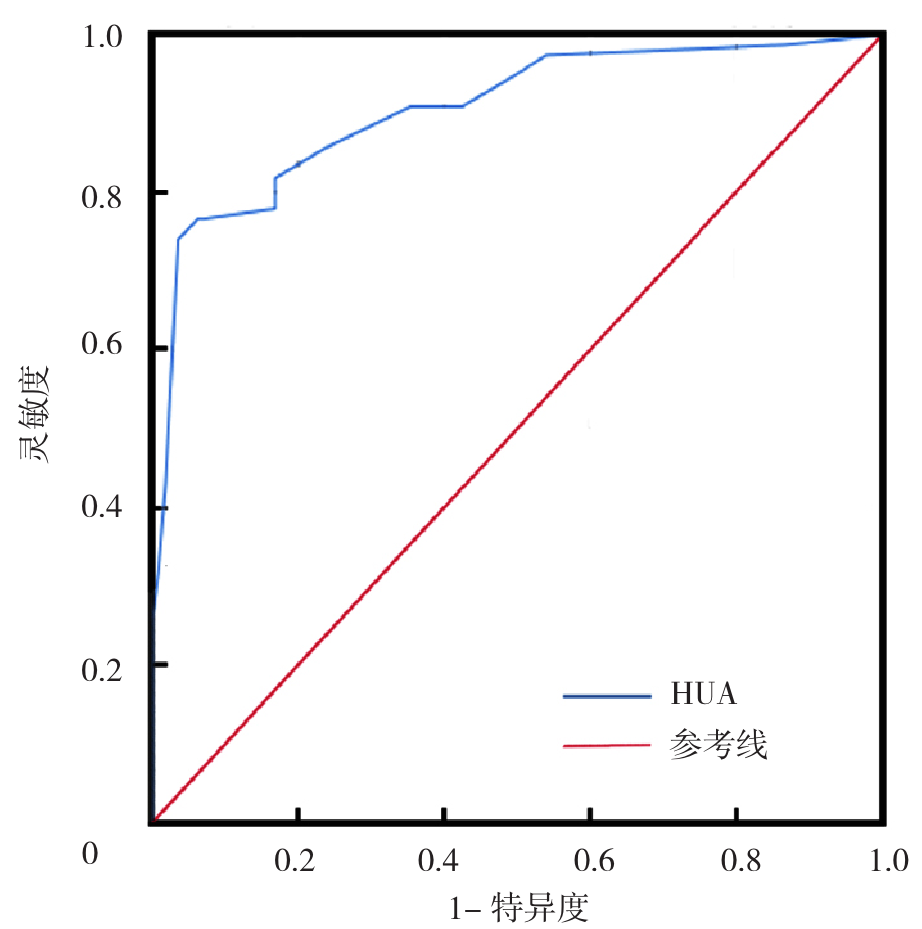
图1 非老年人HUA风险预测的ROC曲线注:ROC曲线=受试者工作特征曲线,HUA=高尿酸血症。
Figure 1 ROC curve of HUA to the risk in non-elderly
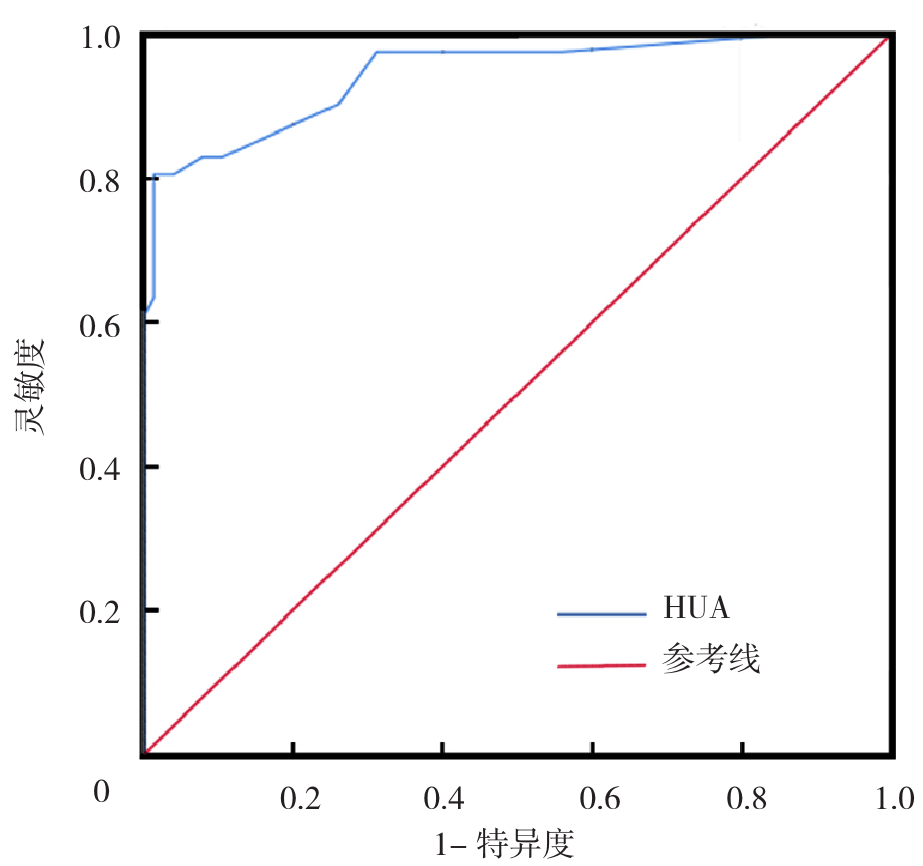
图2 老年人HUA风险预测的ROC曲线
Figure 2 ROC curve of HUA to the risk in elderly
| 指标 | AUC | 95%CI | 灵敏度(%) | 特异度(%) | 最佳截断值 | P值 |
|---|---|---|---|---|---|---|
| 非老年人HUANGRS5+ | 0.89 | 0.77~1.24 | 89.5 | 78.6 | 1.503 | 0.001 |
| 老年人HUANGRS4+ | 0.88 | 0.77~1.18 | 92.1 | 77.8 | 1.427 | 0.001 |
表12 HUA风险预测模型预测效力比较
Table 12 Prediction effectiveness comparison of HUA risk prediction model
| 指标 | AUC | 95%CI | 灵敏度(%) | 特异度(%) | 最佳截断值 | P值 |
|---|---|---|---|---|---|---|
| 非老年人HUANGRS5+ | 0.89 | 0.77~1.24 | 89.5 | 78.6 | 1.503 | 0.001 |
| 老年人HUANGRS4+ | 0.88 | 0.77~1.18 | 92.1 | 77.8 | 1.427 | 0.001 |
| 人群 | 预测因子 | 验证AUC(95%CI) | 模型AUC(95%CI) | P值 |
|---|---|---|---|---|
| 非老年人 | HUANGRS5+ | 0.88(0.77~1.22) | 0.89(0.77~1.24) | 0.008 |
| 老年人 | HUANGRS4+ | 0.87(0.76~1.16) | 0.88(0.77~1.18) | 0.012 |
表13 HUA风险预测模型预测效力比较
Table 13 HUA comparison of prediction effectiveness of risk prediction models
| 人群 | 预测因子 | 验证AUC(95%CI) | 模型AUC(95%CI) | P值 |
|---|---|---|---|---|
| 非老年人 | HUANGRS5+ | 0.88(0.77~1.22) | 0.89(0.77~1.24) | 0.008 |
| 老年人 | HUANGRS4+ | 0.87(0.76~1.16) | 0.88(0.77~1.18) | 0.012 |
| 人群 | 预测值(%) | ||||
|---|---|---|---|---|---|
| 非老年人 | ≤18a | 18~29b | 29~34c | 34~40d | >40e |
| 老年人 | ≤14a | 14~26b | 26~31c | 31~36d | >36e |
表14 非老年人与老年人HUA疾病预测值与风险等级划分对照表
Table 14 Comparison table of predicted and risk level of HUA in non-elderly and elderly
| 人群 | 预测值(%) | ||||
|---|---|---|---|---|---|
| 非老年人 | ≤18a | 18~29b | 29~34c | 34~40d | >40e |
| 老年人 | ≤14a | 14~26b | 26~31c | 31~36d | >36e |
| [1] |
彭成,袁丙坤,伍成凯,等. 广州市6991名企业职工饮用不同饮品发生高尿酸血症风险的研究[J]. 护理学报, 2023, 30(12): 17-21. DOI: 10.16460/j.issn1008-9969.2023.12.017.
|
| [2] |
温少诗,王涛. 补肾中药对于高尿酸血症治疗作用研究[J]. 辽宁中医药大学学报, 2018, 20(10): 89-91.
|
| [3] |
|
| [4] |
中华医学会内分泌学分会. 中国高尿酸血症与痛风诊疗指南(2019)[J]. 中华内分泌代谢杂志, 2020, 36(1): 1-13.
|
| [5] |
沈小芳,张萍,罗瑞琼. 广西地区2型糖尿病患者高尿酸血症流行状况及危险因素分析[J]. 医学信息, 2023, 36(9): 54-57, 66.
|
| [6] |
中华医学会,中华医学会杂志社,中华医学会全科医学分会,等. 痛风及高尿酸血症基层诊疗指南(2019年)[J]. 中华全科医师杂志, 2020, 19(4): 293-303.
|
| [7] |
刘宇婷,孙维峰. 高尿酸血症患者血清脂联素、单核细胞趋化蛋白1水平变化及意义[J]. 山东医药, 2017, 57(21): 5-8.
|
| [8] |
于晓丽. 老年脑卒中患者居家健康管理模型的构建研究[D]. 苏州: 苏州大学, 2021.
|
| [9] |
徐霞,胡元会,宋庆桥,等. 两种公式估算的肾小球滤过率对慢性心力衰竭患者远期预后预测价值比较研究[J]. 中国循证心血管医学杂志, 2022, 14(5): 554-558.
|
| [10] |
|
| [11] |
庄红玲,张程亮,桂玲,等. 1例宫颈癌患者合并肾功能不全和高尿酸血症的药物治疗分析[J]. 中国药师, 2017, 20(6): 1092-1094. DOI: 10.3969/j.issn.1008-049X.2017.06.035.
|
| [12] |
杨进平,闻瑛,周海燕,等. 补阳还五汤辅治脑梗死恢复期临床观察[J]. 实用中医药杂志, 2021, 37(12): 2034-2035.
|
| [13] |
高华,戈吉祥,杨锐英,等. 代谢综合征患者静息心率与靶器官损害的相关性分析研究[J]. 实用心脑肺血管病杂志, 2010, 18(12): 1755-1759.
|
| [14] |
中国肥胖问题工作组. 中国成人超重与肥胖症预防与控制指南(节录)[J]. 营养学报, 2004, 26(1): 1-4. DOI: 10.3321/j.issn:0512-7955.2004.01.001.
|
| [15] |
李杰. GDF-15对冠状动脉搭桥围术期心力衰竭的诊断与预测价值[D]. 天津: 天津医科大学, 2017.
|
| [16] |
李海英. 中性粒细胞明胶酶相关脂质运载蛋白与狼疮性肾炎活动性及病理分型关系的初步研究[D]. 长沙: 中南大学, 2014.
|
| [17] |
陈莹,杨彩哲,王良宸,等. 趾臂指数对糖尿病足患者心脑血管事件发生风险的预测价值研究[J]. 中国全科医学, 2020, 23(34): 4332-4336, 4348. DOI: 10.12114/j.issn.1007-9572.2020.00.313.
|
| [18] |
张经纬. 儿童急性淋巴细胞性白血病环境危险因素研究[D]. 天津: 天津医科大学, 2017.
|
| [19] |
桂李暄. 遗传风险评分预测中国汉族人群冠心病患病风险[D]. 武汉: 华中科技大学, 2014.
|
| [20] |
蒋曦依,李璐,唐慧娟,等. 结直肠癌高危人群多因素风险预测模型及评价[J]. 浙江大学学报(医学版), 2018, 47(2): 194-200.
|
| [21] |
|
| [22] |
唐小芬,仇小强,曾小云,等. 广西35~74岁壮族居民高尿酸血症患病情况及其影响因素分析[J]. 广西医科大学学报, 2021, 38(3): 583-590. DOI: 10.16190/j.cnki.45-1211/r.2021.03.028.
|
| [23] |
胡浩杰,宋晓昀,金东辉,等. 中国四省18岁及以上成年居民肥胖与高尿酸血症的关联[J]. 环境与职业医学, 2021, 38(9): 1015-1021. DOI: 10.13213/j.cnki.jeom.2021.21015.
|
| [24] |
李禄伟,黄倩,施佳成,等. 超重及肥胖人群高尿酸血症发病风险预测模型的构建及评价[J]. 实用医学杂志, 2021, 37(18): 2401-2406. DOI: 10.3969/j.issn.1006-5725.2021.18.019.
|
| [25] |
|
| [26] |
马利丹,孙瑞霞,辛颖,等. 不同体重指数痛风患者临床特点分析[J]. 中华内科杂志, 2017, 56(5): 353-357.
|
| [27] |
|
| [28] |
|
| [29] |
陈蕾,伍成凯,康峻鸣,等. 我国45岁及以上中老年人群高尿酸血症与常见慢性病的关联研究[J]. 中国全科医学, 2021, 24(4): 447-452. DOI: 10.12114/j.issn.1007-9572.2020.00.599.
|
| [30] |
尹相林,魏金枫,姚嵩坡,等. 油田职业老年男性人群肥胖指标与高尿酸血症相关性[J]. 中国老年学杂志, 2022, 42(16): 3913-3916. DOI: 10.3969/j.issn.1005-9202.2022.16.011.
|
| [31] |
孙茹茹,沈捷. 多囊卵巢综合征与高尿酸血症的关系[J]. 自然科学, 2017(2): 113-119.
|
| [32] |
宋华,赵莉,宋艳玲. 中老年人高血糖高血脂发生高尿酸血症的危险因素研究[J]. 系统医学, 2022, 7(19): 99-102.
|
| [33] |
张文,李楠,刘守东,等. 海勤疗养员高尿酸血症对高血脂及肝功能的影响[J]. 中国疗养医学, 2020, 29(12): 1259-1261.
|
| [34] |
丁贤彬,毛德强,沈卓之,等. 重庆市城市与农村居民慢性病相关行为与生活方式比较[J]. 中国慢性病预防与控制, 2015, 23(7): 512-515. DOI: 10.16386/j.cjpccd.issn.1004-6194.2015.07.009.
|
| [35] |
杨朵儿,汤少梁. 基于Tobit模型的川冀甘三省慢性病患者健康相关生命质量影响因素研究[J]. 中国全科医学, 2018, 21(28): 3459-3466, 3470. DOI: 10.12114/j.issn.1007-9572.2018.28.010.
|
| [36] |
王晶,陈长香,李淑杏,等. 河北省老年人婚姻状况与生存质量的相关性[J]. 中国老年学杂志, 2015, 35(9): 2522-2523.
|
| [37] |
李剑,袁泉,吴清锋,等. 赣南地区高尿酸血症相关性研究[J]. 赣南医学院学报, 2022, 42(8): 852-856.
|
| [38] |
何伟林. 中国队列人群高胆固醇血症发病率及其影响因素[D]. 北京: 北京协和医学院, 2018.
|
| [39] |
|
| [40] |
宋小玲,蒋芝月,葛雯,等. 高尿酸血症患病风险预测模型的构建[J]. 中国初级卫生保健, 2022, 36(10): 51-54.
|
| [41] |
于汉成,张霁娟,刘峰,等. 基于纵向健康体检数据的高尿酸血症发病风险预测模型[J]. 现代预防医学, 2021, 48(23): 4408-4412.
|
| [42] |
彭成. 高尿酸血症发病风险预测模型研究[D]. 广州: 南方医科大学, 2023.
|
| [43] |
陈京蓉,罗书全,熊鹰,等. 基于回归和分类树模型的重庆7~17岁儿童青少年高尿酸血症影响因素分析[J]. 中国食品卫生杂志, 2022, 34(5): 1077-1082. DOI: 10.13590/j.cjfh.2022.05.034.
|
| [44] |
肖宁婷,李莉,郭雪梅,等. 儿童青少年高尿酸血症风险预测模型的构建与验证[J]. 护理研究, 2024, 38(11): 1908-1913.
|
| [45] |
|
| [46] |
杨兴华,陶秋山,詹思延,等. 中国台湾35~74岁健检人群高尿酸血症5年发病风险预测模型[J]. 中国预防医学杂志, 2013, 14(9): 655-659. DOI: 10.16506/j.1009-6639.2013.09.016.
|
| [47] |
李金金. 天津市慢性病队列研究及风险预测模型的建立[D]. 天津: 天津医科大学, 2018.
|
| [1] | 刘翔, 陈红, 崔睿, 郭志超, 李盼盼, 曹子龙, 纪伊晴, 俞文雅. 特大城市儿童早期发展一致性与差异性:一项回顾性队列研究[J]. 中国全科医学, 2026, 29(11): 1411-1421. |
| [2] | 李秋春, 苏萍, 逄锦宏, 陈巧巧, 赵颖颖, 何蕊言, 王玥, 陈学禹, 乔俊鹏, 迟蔚蔚. 三酰甘油-葡萄糖指数与心血管-肾脏-代谢综合征0~3期人群心血管疾病的关联性:一项前瞻性队列研究[J]. 中国全科医学, 2026, 29(09): 1129-1136. |
| [3] | 赵倩倩, 张梅, 李艳英, 张艳红, 晏文华, 潘慧, 班博. 生长激素缺乏症的临床特征与重组人生长激素疗效分析:一项十年纵向队列研究[J]. 中国全科医学, 2026, 29(06): 733-740. |
| [4] | 朱辰蕊, 李娜, 吴云涛, 赵海燕, 黄喆, 刘妍, 季春鹏, 吴寿岭. 血尿酸水平对新发房室传导阻滞的影响:一项前瞻性队列研究[J]. 中国全科医学, 2026, 29(05): 583-590. |
| [5] | 江晓蕊, 闫玉瑶, 卫靖靖, 乔利杰, 彭广操, 朱明军. 冠心病患者并发心力衰竭风险预测模型的系统评价[J]. 中国全科医学, 2026, 29(03): 393-402. |
| [6] | 鹿妍秋, 吴云涛, 刘少鹏, 林海颖, 邓惠友, 武英, 黄喆, 杨鹏, 吴寿岭, 李云. 正常高值血压人群血压轨迹对心血管疾病发病风险的影响:基于开滦队列研究[J]. 中国全科医学, 2026, 29(03): 299-310. |
| [7] | 的机卓玛, 邹雁秋, 郑迪心, 胡梦婕, 刘小雪, 姜侠, 樊萌语, 李佳圆. 中国中老年人社交隔离和孤独与心血管疾病发病风险的前瞻性关联研究[J]. 中国全科医学, 2026, 29(01): 122-128. |
| [8] | 李纪新, 邱林杰, 任燕, 王文茹, 杨振宇, 刘峰兆, 李美洁, 栗文婕, 张晋. 肌肉脂肪比例与非肥胖高尿酸血症的相关性及预测价值研究[J]. 中国全科医学, 2026, 29(01): 84-90. |
| [9] | 张姝, 程钰, 吴寿岭, 陈朔华, 吴云涛. 非糖尿病人群累积血浆致动脉粥样硬化指数暴露对新发心血管疾病影响的队列研究[J]. 中国全科医学, 2025, 28(36): 4558-4565. |
| [10] | 刘瑞越, 杨雪梅, 赵乃慧, 温薪冉, 蔡汐, 梁雅靖, 马佳佳, 吴寿岭, 崔刘福. 不同年龄段超敏C反应蛋白与白蛋白比值对新发心血管疾病的影响:一项队列研究[J]. 中国全科医学, 2025, 28(36): 4566-4577. |
| [11] | 曾明慧, 蒯文涛, 陈林, 韩家鑫, 徐连欣, 葛立颖, 代容容, 宓余强, 徐亮. 2型糖尿病对核苷(酸)类似物治疗慢性乙型肝炎效果的影响研究[J]. 中国全科医学, 2025, 28(35): 4414-4420. |
| [12] | 向凤玲, 王远坤, 王小燕, 何圣洁, 干锦华. 中国儿童青少年高尿酸血症患病率的Meta分析[J]. 中国全科医学, 2025, 28(33): 4206-4213. |
| [13] | 商鲁翔, 朱明琪, 周贤惠, 高梅, 汤宝鹏, 侯应龙. 中国成年人心房颤动患病率及影响因素的荟萃分析[J]. 中国全科医学, 2025, 28(33): 4192-4198. |
| [14] | 杨冰清, 扬天元, 侯辰雪, 王琦. 无创模型在评估慢性乙型肝炎合并非酒精性脂肪性肝病患者肝纤维化中的比较研究[J]. 中国全科医学, 2025, 28(32): 4067-4074. |
| [15] | 陈慧龙, 廖芸楚, 刘育伟, 孔政辉, 黄兴辉, 徐嘉辉, 漆娜, 王远平, 梁文坚. 相对脂肪量与中老年人群心血管疾病之间的关联:一项基于CHARLS的横断面与纵向研究[J]. 中国全科医学, 2025, 28(32): 4047-4054. |
| 阅读次数 | ||||||
|
全文 |
|
|||||
|
摘要 |
|
|||||