中国全科医学 ›› 2026, Vol. 29 ›› Issue (09): 1109-1120.DOI: 10.12114/j.issn.1007-9572.2024.0722
所属专题: 社区卫生服务最新研究合辑
葛奥淇1,2, 高欣怡1,2, 李佳威1,2, 李娟娟1,2, 袁蓓蓓2,*( )
)
收稿日期:2024-12-31
修回日期:2025-09-29
出版日期:2026-03-20
发布日期:2026-01-28
通讯作者:
袁蓓蓓
作者贡献:
葛奥淇、袁蓓蓓确定文章立题、撰写论文,对文章负责;高欣怡、李佳威参与数据提取和论文撰写;李娟娟参与数据提取和论文修订。
基金资助:
GE Aoqi1,2, GAO Xinyi1,2, LI Jiawei1,2, LI Juanjuan1,2, YUAN Beibei2,*()
Received:2024-12-31
Revised:2025-09-29
Published:2026-03-20
Online:2026-01-28
Contact:
YUAN Beibei
摘要: 生活方式处方是慢性病患者行为管理的重要内容,已被多个慢性病国际指南作为推荐治疗方案。基层医务人员是提供生活方式服务的重要来源,但存在能力不足的问题。已有试验证明培训可提高基层医务人员健康行为的管理能力,但仍缺乏生活方式教育培训干预效果的证据整合。本文系统全面地探讨了目前针对基层医务人员健康行为管理培训的内容、形式、效果,通过梳理文献发现现有慢性病行为管理培训存在的问题并提出建议。本文发现现有培训中对改善患者压力、睡眠、社交方面培训不足,缺乏对行为改变基础理论和技能的规范性培训。教育干预虽对提升基层医务人员行为管理知识和技能有一定效果,但对于改善患者健康作用有限。本文可为提升基层医务人员慢性病管理质量提供一定的参考。
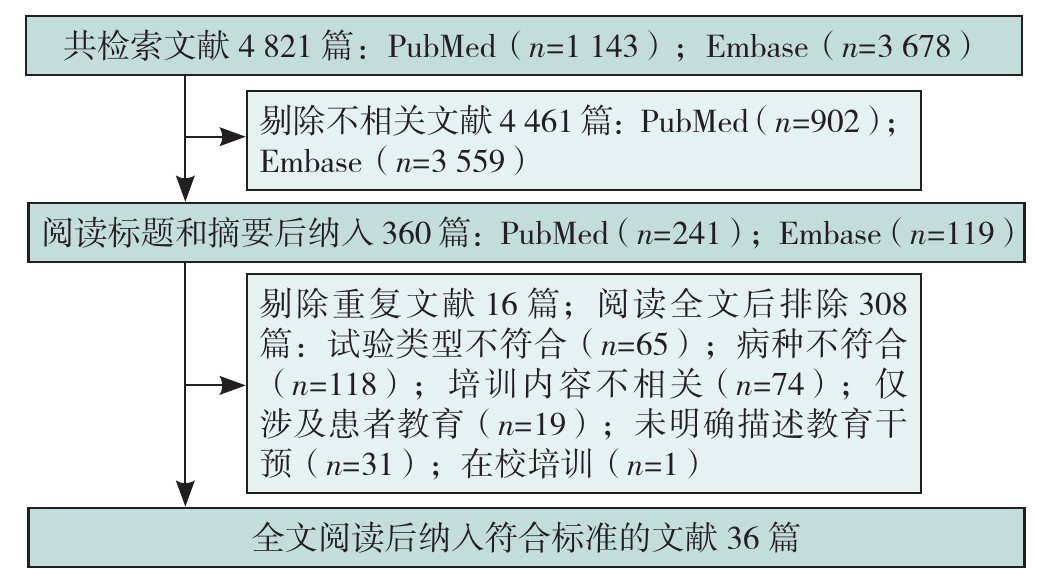
图1 文献筛选流程
Figure 1 Flow chart of literature screening
| 序号 | 第一作者 | 试验地点 | 试验类型 | 慢性病种类 | 医务人员类型 | 样本量及分组情况 | 干预类型 |
|---|---|---|---|---|---|---|---|
| 1 | PRESSEAU[ | 英国 | 整群随机对照试验 | 2型糖尿病 | 全科医生、初级保健护士、初级保健助理 | 干预组:123名(全科医生、护士和医疗助理)和1 124例患者 对照组:172名(全科医生、护士和医疗助理)和973例患者 | 针对医务人员干预 |
| 2 | CATLEY[ | 南非 | 整群随机对照试验 | 2型糖尿病、高血压 | 社区卫生工作人员(CHWs) | 干预组:240例患者 对照组:254例患者 | 联合干预 |
| 3 | GONG[ | 中国 | 整群随机对照试验 | 心血管疾病(脑卒中) | 乡村医生 | 干预组:25名乡村医生和637例患者 对照组:25名乡村医生和662例患者 | 联合干预 |
| 4 | CHEN[ | 中国 | 整群随机对照试验 | 2型糖尿病 | 县乡村三级的医生、护士、公卫人员、糖尿病专家 | 干预组:132名乡镇卫生院医生和乡村医生,389例患者 对照组:109名乡镇卫生院医生和乡村医生,394例患者 | 联合干预 |
| 5 | JAFAR[ | 巴基斯坦 | 2×2析因设计整群随机对照 | 高血压 | CHWs全科医生 | CHWs家庭护理组:6名CHWs,348例患者 全科医生培训组:335例患者 CHWs和全科医生联合培训组:332例患者 常规对照组:326例患者 | 联合干预 |
| 6 | RIDDELL[ GAMAGE[ ABDEL[ | 印度 | 整群随机对照试验 | 高血压 | CHWs | 14名社会健康活动家(accredited social health activists, ASHAs) 干预组:637例高血压患者 对照组:1 097例患者 | 联合干预 |
| 7 | KAMATH[ XAVIER[ | 印度 | 随机对照试验 | 心血管疾病(急性冠脉综合征) | CHWs | 共计16名CHWs全部接受培训 干预组:404例患者 对照组:401例患者 | 联合干预 |
| 8 | SYLAJA[ | 印度 | 随机对照试验 | 心血管疾病(卒中) | CHWs | 干预组:114例患者 对照组:120例患者 | 针对医务人员干预 |
| 9 | LAURITZEN[ RASMUSSEN[ | 丹麦 | 整群随机对照试验 | 2型糖尿病[糖耐量受损(IGT)、空腹血糖受损(IFT)患者] | 全科医生 | 干预组:77名全科医生,645例患者 对照组:76名全科医生,865例患者 | 联合干预 |
| 10 | BALDEÓN[ | 厄瓜多尔 | 整群随机对照试验 | 2型糖尿病高风险者 | 全科医生、初级保健诊所的内科医生 | 干预护理组(ICG):8名医生和125例患者 常规护理组(UCG):7名医生和100例患者 | 针对医务人员干预 |
| 11 | JAFAR[ | 新加坡 | 整群随机对照试验 | 高血压 | 全科医生和初级保健护士 | 干预组:447例患者 对照组:469例患者 | 联合干预 |
| 12 | LOOIJMANS[ | 荷兰 | 整群随机对照试验 | 具有心血管风险因素的重度精神障碍患者 | 初级保健护士 | 干预组:82名护士,140例患者 对照组:56名护士,104例患者 | 联合干预 |
| 13 | KRUIS[ | 荷兰 | 整群随机对照试验 | 慢性阻塞性肺疾病(COPD) | 全科医生、初级保健护士、理疗师 | 共计76名全科医生 干预组:554例患者 对照组:532例患者 | 针对医务人员干预 |
| 14 | WESTLAND[ | 荷兰 | 整群随机对照试验 | 心血管疾病 | 初级保健护士 | 干预组:16名全科医生20名护士和102例患者 对照组:15名全科医生16名护士和93例患者 | 联合干预 |
| 15 | VAN LIESHOUT[ HUNTINK[ | 荷兰 | 整群随机对照试验 | 心血管疾病 | 全科医生、初级保健护士 | 干预组:20名执业护士和1 250例患者 对照组:14名执业护士和979例患者 | 联合干预 |
| 16 | KHETAN[ | 印度 | 整群随机对照试验 | 心血管疾病危险因素的人群(高血压、糖尿病、吸烟) | CHWs | 干预组:3名CHWs和736名具有风险因素者 对照组:3名CHWs和506名具有风险因素者 | 联合干预 |
| 17 | KATON[ | 美国 | 随机对照试验 | 2型糖尿病合并抑郁症 | 全科医生、初级保健护士 | 151名初级保健护士 干预组:106例患者 常规护理组:108例患者 | 联合干预 |
| 18 | XU[ | 中国 | 整群随机对照试验 | 2型糖尿病 | 全科医生 | 干预组:75名全科医生和597例患者 对照组:611例患者 | 联合干预 |
| 19 | ZUO[ | 中国 | 整群随机对照试验 | 2型糖尿病 | 全科医生 | 干预组:189名全科医生和96例患者 对照组:95例患者 | 联合干预 |
| 20 | TAVAKOLY[ | 伊朗 | 整群随机对照试验 | 高血压 | 全科医生、初级保健护士、营养师 | 干预组:17名医生和121例患者 对照组:18名医生和121例患者 | 针对医务人员干预 |
| 21 | RAMALLO-FARIÑA[ | 西班牙 | 2×2析因设计整群随机对照 | 2型糖尿病 | 全科医生 | 患者及其家属干预组:537例患者 医生和护士干预组:654例患者 患者和医务人员联合干预:557例患者 对照组:586例患者 | 联合干预、针对患者进行干预、针对医务人员进行干预 |
| 22 | KRONES[ | 德国 | 整群随机对照试验 | 心血管疾病 | 家庭医生 | 干预组:7个继续教育小组,44名家庭医生,550例患者 对照组:7个继续教育小组,47名家庭医生,582例患者 | 针对医务人员干预 |
| 23 | HEINRICH[ | 荷兰 | 整群随机对照试验 | 2型糖尿病 | 初级保健护士 | 干预组:18名护士,287例患者 对照组:15名护士,272例患者 | 针对医务人员干预 |
| 24 | RUBAK[ | 丹麦 | 整群随机对照实验 | 2型糖尿病 | 全科医生 | 干预组:29名全科医生,137例患者 对照组:36名全科医生,128例患者 | 针对医务人员干预 |
| 25 | JERANT[ | 美国 | 随机对照试验 | 2型糖尿病合并抑郁症 | 初级保健诊所的家庭医生、普通内科医生 | 干预组:28名家庭医生和普通内科医生,66例患者 对照组:24名家庭医生和普通内科医生,65例患者 | 针对医务人员干预 |
| 26 | JANSINK[ | 荷兰 | 整群随机对照试验 | 2型糖尿病 | 初级保健护士 | 干预组:30名初级保健护士,229例患者 对照组:30名初级保健护士,292例患者 | 针对医务人员干预 |
| 27 | WOLLNY[ | 德国 | 整群随机对照试验 | 2型糖尿病 | 全科医生 | 干预组:435例患者,54名全科医生 对照组:398例患者,54名全科医生 | 针对医务人员干预 |
| 28 | TINSEL[ | 德国 | 整群随机对照试验 | 高血压 | 全科医生 | 干预组:17名全科医生,552例患者 对照组:19名全科医生,568例患者 | 针对医务人员干预 |
| 29 | AKTURAN[ | 土耳其 | 整群随机对照试验 | 2型糖尿病 | 全科医生 | 干预组:4名家庭医生,57例患者 对照组:4名家庭医生,55例患者 | 针对医务人员干预 |
| 30 | DREVENHORN[ | 瑞典 | 随机对照试验 | 高血压 | 初级保健护士 | 干预组:14名护士,155例患者 对照组:14名护士,60例患者 | 针对医务人员干预 |
| 31 | STUCKEY[ GABBAY[ | 美国 | 随机对照试验 | 2型糖尿病 | 初级保健护士 | 共计3名护士接受了培训 干预组:232例患者 对照组:313例患者 | 联合干预 |
| 32 | COOPER[ | 美国 | 2×2析因设计随机对照试验 | 高血压 | 初级保健诊所的家庭医生、普通内科医生 | 医生强化干预组:22名全科医生,83例患者强化干预,84例患者普通治疗 医生最小干预对照组:19名全科医生,57例患者强化干预,55例患者普通治疗 | 联合干预 |
| 33 | FREUND[ | 德国 | 整群随机对照试验 | 2型糖尿病COPD慢性心力衰竭 | 全科医生、医疗助理 | 干预组:69名全科医生,71名医疗助理,1 093例患者 对照组:63名全科医生,69名医疗助理,983例患者 | 联合干预 |
| 34 | STEURER-STEY[ MARKUN[ | 瑞士 | 随机对照试验 | COPD | 全科医生 | 干预组:16名医生,101例患者 对照组:17名全科医生,115例患者 | 联合干预 |
| 35 | WALTERS[ | 澳大利亚 | 随机对照试验 | COPD | 初级保健护士 | 共31名护士 干预组:92例患者,18名护士 常规护理组:90例患者,13名护士 | 联合干预 |
| 36 | KHAN[ | 巴基斯坦 | 整群随机对照实验 | COPD | 全科医生和初级保健护士 | 干预组:159例患者,30名医生和护士 对照组:154例患者,30名医生和护士 | 针对医务人员干预 |
表1 纳入文献基本研究特征
Table 1 Basic features of the studies
| 序号 | 第一作者 | 试验地点 | 试验类型 | 慢性病种类 | 医务人员类型 | 样本量及分组情况 | 干预类型 |
|---|---|---|---|---|---|---|---|
| 1 | PRESSEAU[ | 英国 | 整群随机对照试验 | 2型糖尿病 | 全科医生、初级保健护士、初级保健助理 | 干预组:123名(全科医生、护士和医疗助理)和1 124例患者 对照组:172名(全科医生、护士和医疗助理)和973例患者 | 针对医务人员干预 |
| 2 | CATLEY[ | 南非 | 整群随机对照试验 | 2型糖尿病、高血压 | 社区卫生工作人员(CHWs) | 干预组:240例患者 对照组:254例患者 | 联合干预 |
| 3 | GONG[ | 中国 | 整群随机对照试验 | 心血管疾病(脑卒中) | 乡村医生 | 干预组:25名乡村医生和637例患者 对照组:25名乡村医生和662例患者 | 联合干预 |
| 4 | CHEN[ | 中国 | 整群随机对照试验 | 2型糖尿病 | 县乡村三级的医生、护士、公卫人员、糖尿病专家 | 干预组:132名乡镇卫生院医生和乡村医生,389例患者 对照组:109名乡镇卫生院医生和乡村医生,394例患者 | 联合干预 |
| 5 | JAFAR[ | 巴基斯坦 | 2×2析因设计整群随机对照 | 高血压 | CHWs全科医生 | CHWs家庭护理组:6名CHWs,348例患者 全科医生培训组:335例患者 CHWs和全科医生联合培训组:332例患者 常规对照组:326例患者 | 联合干预 |
| 6 | RIDDELL[ GAMAGE[ ABDEL[ | 印度 | 整群随机对照试验 | 高血压 | CHWs | 14名社会健康活动家(accredited social health activists, ASHAs) 干预组:637例高血压患者 对照组:1 097例患者 | 联合干预 |
| 7 | KAMATH[ XAVIER[ | 印度 | 随机对照试验 | 心血管疾病(急性冠脉综合征) | CHWs | 共计16名CHWs全部接受培训 干预组:404例患者 对照组:401例患者 | 联合干预 |
| 8 | SYLAJA[ | 印度 | 随机对照试验 | 心血管疾病(卒中) | CHWs | 干预组:114例患者 对照组:120例患者 | 针对医务人员干预 |
| 9 | LAURITZEN[ RASMUSSEN[ | 丹麦 | 整群随机对照试验 | 2型糖尿病[糖耐量受损(IGT)、空腹血糖受损(IFT)患者] | 全科医生 | 干预组:77名全科医生,645例患者 对照组:76名全科医生,865例患者 | 联合干预 |
| 10 | BALDEÓN[ | 厄瓜多尔 | 整群随机对照试验 | 2型糖尿病高风险者 | 全科医生、初级保健诊所的内科医生 | 干预护理组(ICG):8名医生和125例患者 常规护理组(UCG):7名医生和100例患者 | 针对医务人员干预 |
| 11 | JAFAR[ | 新加坡 | 整群随机对照试验 | 高血压 | 全科医生和初级保健护士 | 干预组:447例患者 对照组:469例患者 | 联合干预 |
| 12 | LOOIJMANS[ | 荷兰 | 整群随机对照试验 | 具有心血管风险因素的重度精神障碍患者 | 初级保健护士 | 干预组:82名护士,140例患者 对照组:56名护士,104例患者 | 联合干预 |
| 13 | KRUIS[ | 荷兰 | 整群随机对照试验 | 慢性阻塞性肺疾病(COPD) | 全科医生、初级保健护士、理疗师 | 共计76名全科医生 干预组:554例患者 对照组:532例患者 | 针对医务人员干预 |
| 14 | WESTLAND[ | 荷兰 | 整群随机对照试验 | 心血管疾病 | 初级保健护士 | 干预组:16名全科医生20名护士和102例患者 对照组:15名全科医生16名护士和93例患者 | 联合干预 |
| 15 | VAN LIESHOUT[ HUNTINK[ | 荷兰 | 整群随机对照试验 | 心血管疾病 | 全科医生、初级保健护士 | 干预组:20名执业护士和1 250例患者 对照组:14名执业护士和979例患者 | 联合干预 |
| 16 | KHETAN[ | 印度 | 整群随机对照试验 | 心血管疾病危险因素的人群(高血压、糖尿病、吸烟) | CHWs | 干预组:3名CHWs和736名具有风险因素者 对照组:3名CHWs和506名具有风险因素者 | 联合干预 |
| 17 | KATON[ | 美国 | 随机对照试验 | 2型糖尿病合并抑郁症 | 全科医生、初级保健护士 | 151名初级保健护士 干预组:106例患者 常规护理组:108例患者 | 联合干预 |
| 18 | XU[ | 中国 | 整群随机对照试验 | 2型糖尿病 | 全科医生 | 干预组:75名全科医生和597例患者 对照组:611例患者 | 联合干预 |
| 19 | ZUO[ | 中国 | 整群随机对照试验 | 2型糖尿病 | 全科医生 | 干预组:189名全科医生和96例患者 对照组:95例患者 | 联合干预 |
| 20 | TAVAKOLY[ | 伊朗 | 整群随机对照试验 | 高血压 | 全科医生、初级保健护士、营养师 | 干预组:17名医生和121例患者 对照组:18名医生和121例患者 | 针对医务人员干预 |
| 21 | RAMALLO-FARIÑA[ | 西班牙 | 2×2析因设计整群随机对照 | 2型糖尿病 | 全科医生 | 患者及其家属干预组:537例患者 医生和护士干预组:654例患者 患者和医务人员联合干预:557例患者 对照组:586例患者 | 联合干预、针对患者进行干预、针对医务人员进行干预 |
| 22 | KRONES[ | 德国 | 整群随机对照试验 | 心血管疾病 | 家庭医生 | 干预组:7个继续教育小组,44名家庭医生,550例患者 对照组:7个继续教育小组,47名家庭医生,582例患者 | 针对医务人员干预 |
| 23 | HEINRICH[ | 荷兰 | 整群随机对照试验 | 2型糖尿病 | 初级保健护士 | 干预组:18名护士,287例患者 对照组:15名护士,272例患者 | 针对医务人员干预 |
| 24 | RUBAK[ | 丹麦 | 整群随机对照实验 | 2型糖尿病 | 全科医生 | 干预组:29名全科医生,137例患者 对照组:36名全科医生,128例患者 | 针对医务人员干预 |
| 25 | JERANT[ | 美国 | 随机对照试验 | 2型糖尿病合并抑郁症 | 初级保健诊所的家庭医生、普通内科医生 | 干预组:28名家庭医生和普通内科医生,66例患者 对照组:24名家庭医生和普通内科医生,65例患者 | 针对医务人员干预 |
| 26 | JANSINK[ | 荷兰 | 整群随机对照试验 | 2型糖尿病 | 初级保健护士 | 干预组:30名初级保健护士,229例患者 对照组:30名初级保健护士,292例患者 | 针对医务人员干预 |
| 27 | WOLLNY[ | 德国 | 整群随机对照试验 | 2型糖尿病 | 全科医生 | 干预组:435例患者,54名全科医生 对照组:398例患者,54名全科医生 | 针对医务人员干预 |
| 28 | TINSEL[ | 德国 | 整群随机对照试验 | 高血压 | 全科医生 | 干预组:17名全科医生,552例患者 对照组:19名全科医生,568例患者 | 针对医务人员干预 |
| 29 | AKTURAN[ | 土耳其 | 整群随机对照试验 | 2型糖尿病 | 全科医生 | 干预组:4名家庭医生,57例患者 对照组:4名家庭医生,55例患者 | 针对医务人员干预 |
| 30 | DREVENHORN[ | 瑞典 | 随机对照试验 | 高血压 | 初级保健护士 | 干预组:14名护士,155例患者 对照组:14名护士,60例患者 | 针对医务人员干预 |
| 31 | STUCKEY[ GABBAY[ | 美国 | 随机对照试验 | 2型糖尿病 | 初级保健护士 | 共计3名护士接受了培训 干预组:232例患者 对照组:313例患者 | 联合干预 |
| 32 | COOPER[ | 美国 | 2×2析因设计随机对照试验 | 高血压 | 初级保健诊所的家庭医生、普通内科医生 | 医生强化干预组:22名全科医生,83例患者强化干预,84例患者普通治疗 医生最小干预对照组:19名全科医生,57例患者强化干预,55例患者普通治疗 | 联合干预 |
| 33 | FREUND[ | 德国 | 整群随机对照试验 | 2型糖尿病COPD慢性心力衰竭 | 全科医生、医疗助理 | 干预组:69名全科医生,71名医疗助理,1 093例患者 对照组:63名全科医生,69名医疗助理,983例患者 | 联合干预 |
| 34 | STEURER-STEY[ MARKUN[ | 瑞士 | 随机对照试验 | COPD | 全科医生 | 干预组:16名医生,101例患者 对照组:17名全科医生,115例患者 | 联合干预 |
| 35 | WALTERS[ | 澳大利亚 | 随机对照试验 | COPD | 初级保健护士 | 共31名护士 干预组:92例患者,18名护士 常规护理组:90例患者,13名护士 | 联合干预 |
| 36 | KHAN[ | 巴基斯坦 | 整群随机对照实验 | COPD | 全科医生和初级保健护士 | 干预组:159例患者,30名医生和护士 对照组:154例患者,30名医生和护士 | 针对医务人员干预 |
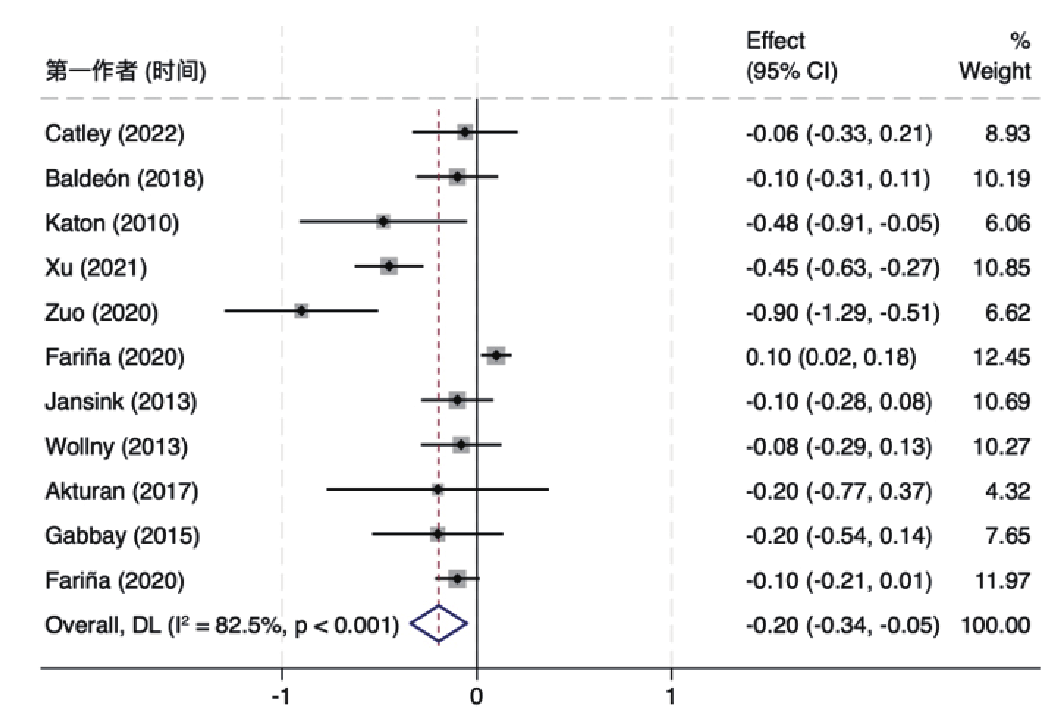
图2 干预组和对照组糖化血红蛋白均值的比较森林图
Figure 2 Forest plot of Meta-analysis of glycated hemoglobin
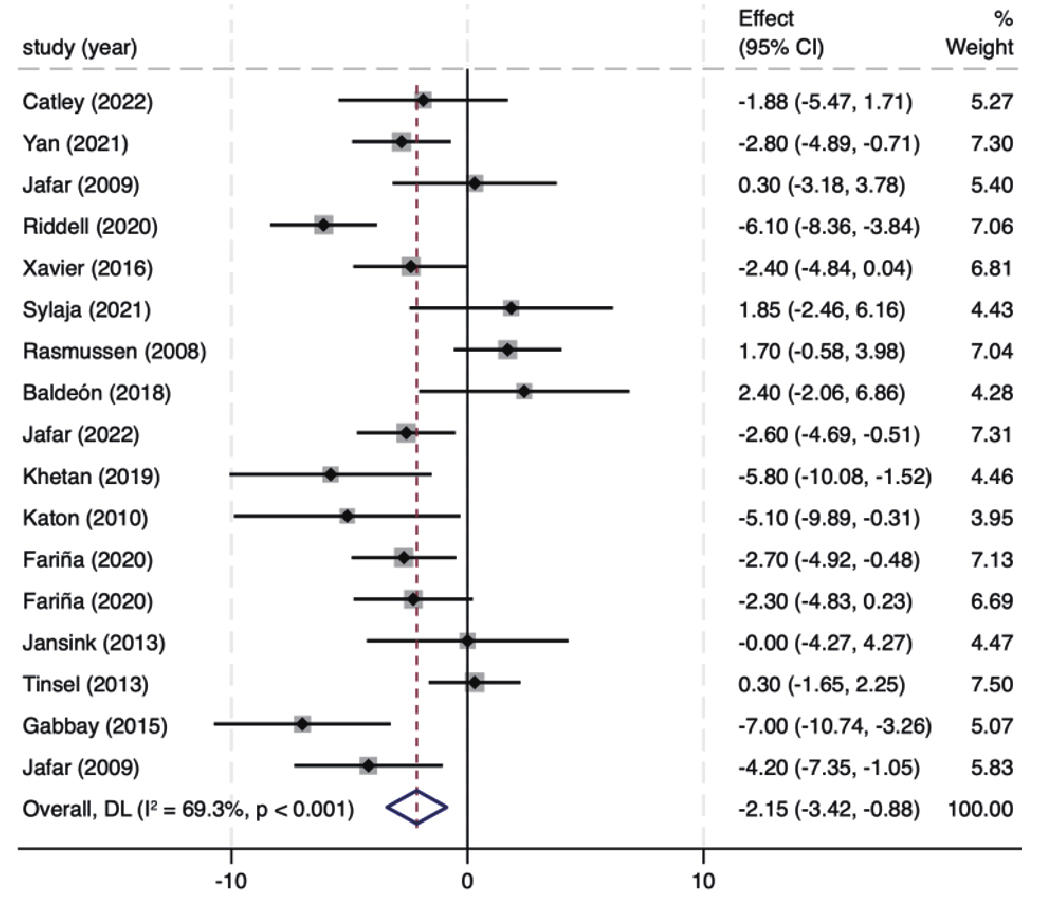
图3 干预组和对照组收缩压变化值比较的森林图
Figure 3 Forest plot of Meta-analysis of SBP change
| 结局指标 | 研究数量 | 受试者例数 | 异质性检验 | 效应模型 | Meta分析 | 亚组间差异P值 | ||
|---|---|---|---|---|---|---|---|---|
| I2 | P值 | 效应量(95%CI) | P值 | |||||
| HbA1c | 11 | 5 372 | 83% | <0.001 | 随机 | -0.20(-0.34~-0.05) | 0.008 | 0.018 |
| 医务人员单独干预 | 5 | 2 257 | 51% | 0.089 | -0.03(-0.15~0.09) | 0.659 | ||
| 联合干预 | 6 | 3 115 | 80% | <0.001 | -0.33(-0.36~-0.11) | 0.003 | ||
| SBP | 17 | 11 353 | 69% | <0.001 | 随机 | -2.15(-3.42~-0.88) | 0.001 | 0.005 |
| 医务人员单独干预 | 6 | 3 069 | 32% | 0.195 | -0.13(-1.68~1.42) | 0.868 | ||
| 联合干预 | 11 | 8 284 | 69% | <0.001 | -3.26(-4.77~-1.75) | <0.001 | ||
表2 根据不同干预类型进行的亚组分析结果
Table 2 Results of subgroup analysis based on different intervention type
| 结局指标 | 研究数量 | 受试者例数 | 异质性检验 | 效应模型 | Meta分析 | 亚组间差异P值 | ||
|---|---|---|---|---|---|---|---|---|
| I2 | P值 | 效应量(95%CI) | P值 | |||||
| HbA1c | 11 | 5 372 | 83% | <0.001 | 随机 | -0.20(-0.34~-0.05) | 0.008 | 0.018 |
| 医务人员单独干预 | 5 | 2 257 | 51% | 0.089 | -0.03(-0.15~0.09) | 0.659 | ||
| 联合干预 | 6 | 3 115 | 80% | <0.001 | -0.33(-0.36~-0.11) | 0.003 | ||
| SBP | 17 | 11 353 | 69% | <0.001 | 随机 | -2.15(-3.42~-0.88) | 0.001 | 0.005 |
| 医务人员单独干预 | 6 | 3 069 | 32% | 0.195 | -0.13(-1.68~1.42) | 0.868 | ||
| 联合干预 | 11 | 8 284 | 69% | <0.001 | -3.26(-4.77~-1.75) | <0.001 | ||
| 结局指标 | 研究数量 | 受试者例数 | 异质性检验 | 效应模型 | Meta分析 | 亚组间差异P值 | ||
|---|---|---|---|---|---|---|---|---|
| I2 | P值 | 效应量(95%CI) | P值 | |||||
| HbA1c | 11 | 5 372 | 83% | <0.001 | 随机 | -0.20(-0.34~-0.05) | 0.008 | 0.034 |
| <10 h | 4 | 2 032 | 75% | 0.019 | -0.03(-0.18~0.12) | 0.687 | ||
| 10 h及以上 | 7 | 3 340 | 80% | 0.001 | -0.29(-0.49~-0.10) | 0.003 | ||
| SBP | 17 | 11 353 | 69% | <0.001 | 随机 | -2.15(-3.42~-0.88) | 0.001 | 0.064 |
| <10 h | 6 | 4 992 | 66% | 0.011 | -0.85(-2.55~0.85) | 0.327 | ||
| 10 h及以上 | 11 | 6 361 | 62% | 0.004 | -3.05(-4.65~-1.46) | 0.001 | ||
表3 根据培训时间进行的亚组分析结果
Table 3 Results of subgroup analysis based on education hours
| 结局指标 | 研究数量 | 受试者例数 | 异质性检验 | 效应模型 | Meta分析 | 亚组间差异P值 | ||
|---|---|---|---|---|---|---|---|---|
| I2 | P值 | 效应量(95%CI) | P值 | |||||
| HbA1c | 11 | 5 372 | 83% | <0.001 | 随机 | -0.20(-0.34~-0.05) | 0.008 | 0.034 |
| <10 h | 4 | 2 032 | 75% | 0.019 | -0.03(-0.18~0.12) | 0.687 | ||
| 10 h及以上 | 7 | 3 340 | 80% | 0.001 | -0.29(-0.49~-0.10) | 0.003 | ||
| SBP | 17 | 11 353 | 69% | <0.001 | 随机 | -2.15(-3.42~-0.88) | 0.001 | 0.064 |
| <10 h | 6 | 4 992 | 66% | 0.011 | -0.85(-2.55~0.85) | 0.327 | ||
| 10 h及以上 | 11 | 6 361 | 62% | 0.004 | -3.05(-4.65~-1.46) | 0.001 | ||
| [1] | |
| [2] |
|
| [3] |
|
| [4] |
|
| [5] |
|
| [6] |
|
| [7] |
|
| [8] |
|
| [9] |
|
| [10] |
|
| [11] |
|
| [12] |
|
| [13] |
|
| [14] |
|
| [15] |
|
| [16] |
|
| [17] |
|
| [18] |
|
| [19] |
|
| [20] |
|
| [21] |
|
| [22] |
|
| [23] |
|
| [24] |
|
| [25] |
|
| [26] |
|
| [27] |
|
| [28] |
|
| [29] |
|
| [30] |
|
| [31] |
|
| [32] |
|
| [33] |
|
| [34] |
|
| [35] |
|
| [36] |
|
| [37] |
|
| [38] |
|
| [39] |
|
| [40] |
|
| [41] |
|
| [42] |
|
| [43] |
|
| [44] |
|
| [45] |
|
| [46] |
|
| [47] |
|
| [48] |
|
| [49] |
|
| [50] |
|
| [51] |
|
| [52] |
|
| [53] |
|
| [54] |
|
| [55] |
|
| [56] |
|
| [57] |
|
| [58] |
|
| [59] |
|
| [60] |
|
| [61] |
|
| [62] |
|
| [63] |
|
| [64] |
|
| [65] |
|
| [66] |
|
| [67] |
|
| [68] |
|
| [69] |
|
| [70] |
|
| [71] |
|
| [72] |
|
| [73] |
|
| [74] |
|
| [75] |
|
| [76] |
|
| [77] |
|
| [78] |
|
| [79] |
|
| [80] |
|
| [81] |
|
| [82] |
|
| [83] |
|
| [84] |
|
| [85] |
|
| [86] |
|
| [87] |
|
| [88] |
|
| [89] |
|
| [90] |
|
| [1] | 于海燕, 相彤, 高文娟, 吴浩. 数智化技术在慢病共存管理中的研究与应用[J]. 中国全科医学, 2026, 29(21): 2933-2937. |
| [2] | 李凤, 胡昌好, 罗旭. 老年慢性病共病患者心理健康的影响因素及干预策略研究进展[J]. 中国全科医学, 2026, 29(20): 2816-2828. |
| [3] | 程玉, 韩士尧, 孙平, 向娟, 杨辉, 李东泽, 郑莉, 廖晓阳. 慢性病管理中的社会经济与人口学挑战分析[J]. 中国全科医学, 2026, 29(20): 2800-2807. |
| [4] | 陈向阳, 黄红梅, 李舍予. 成人肥胖的预防与管理:从六大关键词看2025年度进展与趋势[J]. 中国全科医学, 2026, 29(20): 2753-2758. |
| [5] | 张小娟, 刘阳, 彭博, 叶媛, 朱坤. 基层医疗卫生机构高血压和糖尿病防治现状研究[J]. 中国全科医学, 2026, 29(19): 2614-2620. |
| [6] | 陈秋龙, 陈佳, 房静, 戴维, 杨青. 观察者报告结局的应用现状与研究进展[J]. 中国全科医学, 2026, 29(18): 2561-2570. |
| [7] | 孙禧斌, 李佳威, 葛奥淇, 袁蓓蓓. 专科医师下沉与基层医务人员工作感受和糖尿病管理能力的关系研究[J]. 中国全科医学, 2026, 29(17): 2319-2325. |
| [8] | 陈佳丽, 张静静, 王和霞, 唐笑睿, 吴钰洁, 雷阳, 林征. 糖尿病前期人群慢性病资源利用的潜在剖面分析及其对健康促进行为的影响研究[J]. 中国全科医学, 2026, 29(16): 2244-2251. |
| [9] | 李佳威, 葛奥淇, 高欣怡, 李娟娟, 袁蓓蓓. 医防融合的概念内涵和实现路径:一项系统综述研究[J]. 中国全科医学, 2026, 29(16): 2156-2166. |
| [10] | 汪洋, 金花, 杨森, 杨辉, 于德华. 中国基本医疗服务功能特征及其对卫生服务结局的影响路径:一项15年的混合方法系统综述[J]. 中国全科医学, 2026, 29(16): 2140-2155. |
| [11] | 张佳雯, 胡佳, 郑英, 代涛. 慢性病患者用药依从性影响因素研究[J]. 中国全科医学, 2026, 29(13): 1753-1758. |
| [12] | 李春莲, 张颖, 郭铭钊, 何美忱, 徐玲玲, 王永晨. 全科医生开具医疗运动处方促进体医融合[J]. 中国全科医学, 2026, 29(12): 1618-1623. |
| [13] | 李明月, 张笑天, 汤皓晴, 郑汇娴, 程晓冉, 魏添添, 张柏松, 程昊哲, 周俣勋, 刘晓云. 我国中西部农村慢性病可避免住院分析[J]. 中国全科医学, 2026, 29(10): 1267-1276. |
| [14] | 焦玺同, 刘璐, 郭嘉悦, 尤莉莉. 国内外高血压数字疗法产品的应用前景及对我国的启示[J]. 中国全科医学, 2026, 29(10): 1354-1360. |
| [15] | 王娜, 翟方明. 基于棘轮效应的多重慢性病患者社区卫生服务质量评价研究:以医保为调节变量[J]. 中国全科医学, 2026, 29(08): 982-987. |
| 阅读次数 | ||||||
|
全文 |
|
|||||
|
摘要 |
|
|||||