中国全科医学 ›› 2026, Vol. 29 ›› Issue (09): 1121-1128.DOI: 10.12114/j.issn.1007-9572.2024.0199

所属专题: 社区卫生服务最新研究合辑 心血管最新文章合辑

• 全科医学教育研究 • 上一篇    下一篇

全科住院医师规范化培训第3年基层门诊教学实践:PQRST疼痛评估法联合心血管风险评估诊治不典型急性冠脉综合征

杨玲*(), 杜雪平   

  1. 100045 北京市,首都医科大学附属复兴医院月坛社区卫生服务中心
  • 收稿日期:2024-03-06 修回日期:2025-11-01 出版日期:2026-03-20 发布日期:2026-01-28
  • 通讯作者: 杨玲

  • 作者贡献:

    杨玲、杜雪平进行文章的构思与设计;杨玲负责文献与资料的收集及整理,撰写论文和论文修订;杜雪平进行文章的可行性分析,负责文章的质量控制及审校,对文章进行监督管理。

Community Outpatient Teaching Practice in the Third Year of Standardized Training for General Practice Residents: PQRST Pain Assessment Method Combined with Cardiovascular Risk Assessment for the Diagnosis and Treatment of Atypical Acute Coronary Syndrome

YANG Ling*(), DU Xueping   

  1. Yuetan Community Health Service Center, Fuxing Hospital, Capital Medical University, Beijing 100045, China
  • Received:2024-03-06 Revised:2025-11-01 Published:2026-03-20 Online:2026-01-28
  • Contact: YANG Ling

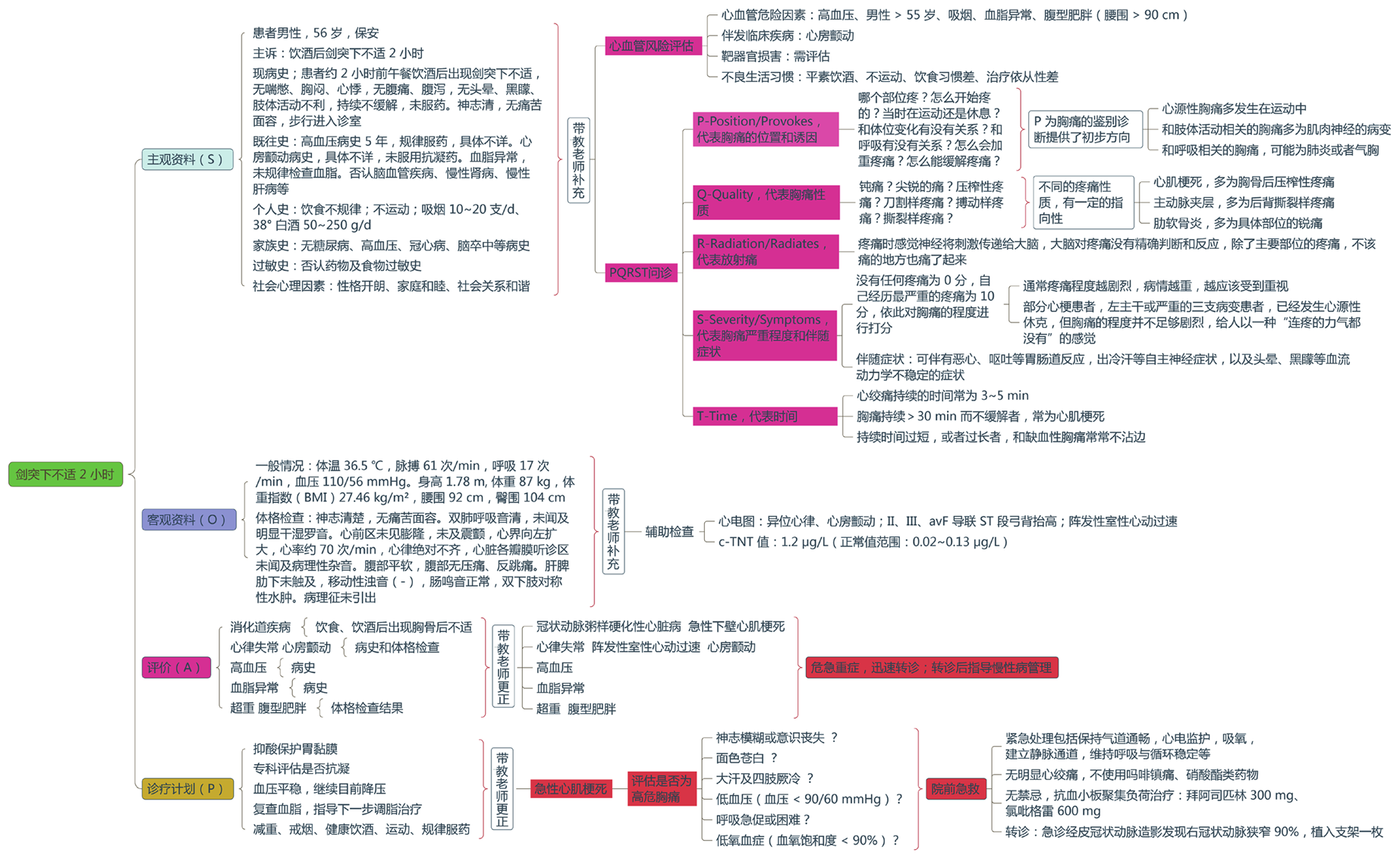
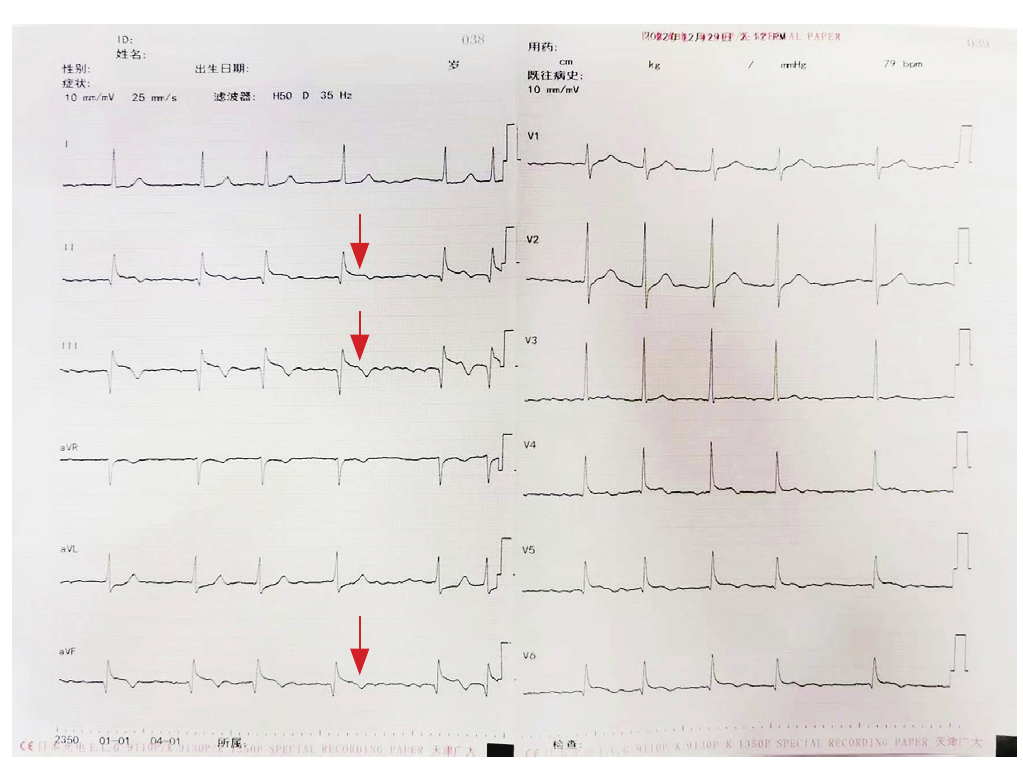
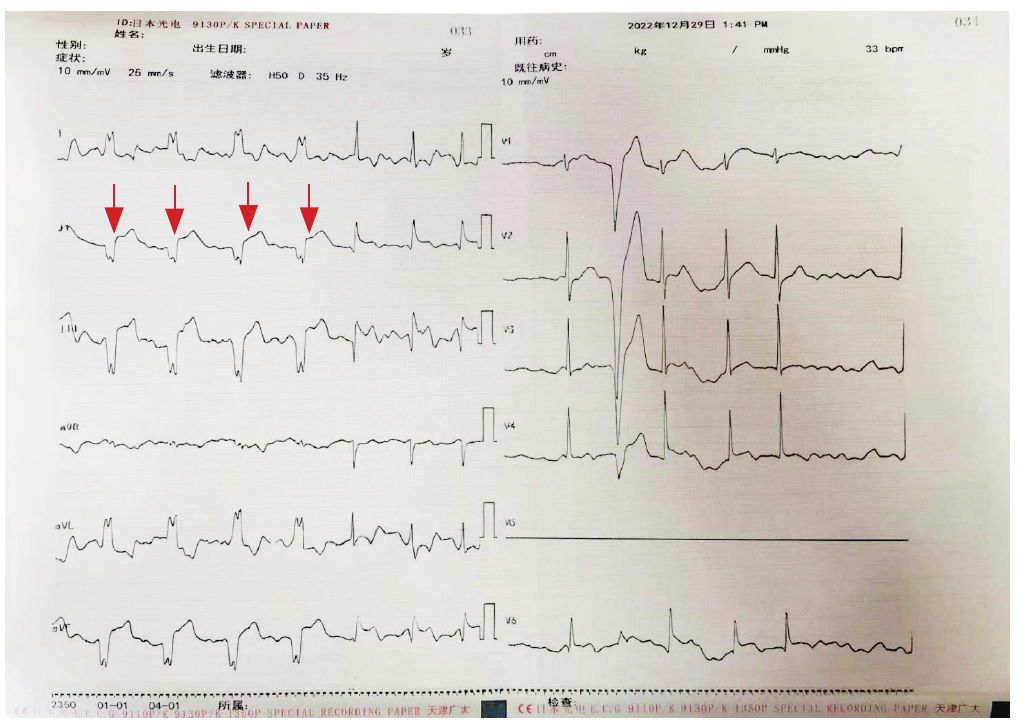
摘要: 背景 全科住院医师规范化培训(以下简称全科住培)分层递进式的培养目标要求全科住培第3年的住院医师(R3)具备独立接诊能力,带教老师就重点问题、疑难问题进行指导,从而提升其临床思维与全科诊疗能力。然而目前基层门诊教学内容、方法较单一,难以满足对危急重症如不典型急性冠脉综合征(ACS)的系统识别与处理能力的培养需求。 目的 探索在全科住培基层门诊教学中,采用PQRST疼痛评估法联合心血管风险评估,提升R3对不典型ACS的识别、诊断与处理能力,优化门诊教学质量。 方法 采用案例导向学习(CBL)法,以1名"饮酒后剑突下不适2小时"就诊患者为例,由R3独立接诊并书写病历,带教老师观察后补充并指出存在的问题,运用PQRST疼痛评估法系统采集症状信息,结合心血管风险评估工具进行风险分层,辅助心电图及心肌损伤标志物检查,明确ACS诊断,并实施院前急救与转诊。教学过程中采用思维导图记录与反馈,强化R3的临床推理与总结能力。 结果 通过PQRST疼痛评估法明确患者症状符合不典型胸痛特征,心血管风险评估属于"很高危"层次,心电图及心肌损伤标志物结果确诊为ST段抬高型心肌梗死(STEMI)。R3在带教老师指导下完成快速评估、院前处理及有序转诊。教学后R3对不典型ACS的识别能力、临床逻辑思维及急救转诊流程掌握程度显著提升。 结论 PQRST疼痛评估法联合心血管风险评估有助于提高R3对不典型ACS的早期识别与处理能力,结合思维导图进行反馈与总结,可有效构建系统鉴别诊断框架,适用于基层门诊教学中危急重症的案例教学,具有推广价值。

关键词: 全科医生, 全科住院医师规范化培训第3年, 基层门诊教学, PQRST疼痛评估法, 心血管风险评估, 不典型急性冠脉综合征

Abstract:

Background

The hierarchical and progressive objectives of standardized training for general practice residents require that third-year residents (R3) develop the ability to manage patients independently. Supervisors provide guidance on complex and critical cases to foster clinical reasoning and enhance diagnostic and management skills among R3. However, community outpatient teaching often relies on limited content and methods, falling short in cultivating systematic recognition and management of critical diseases such as atypical acute coronary syndrome (ACS).

Objective

To investigate the application of the PQRST pain assessment method combined with cardiovascular risk assessment in community outpatient teaching, with the aim of improving R3's ability to recognize, diagnose, and manage atypical ACS, thereby optimizing the quality of outpatient teaching.

Methods

Case-based learning was employed using a patient presenting with "subxiphoid discomfort for 2 hours after alcohol consumption". The R3 independently conducted the consultation and documented the medical record, while the supervisor observed, supplemented the documentation, and identified problems. The PQRST method was used to systematically collect symptom information, complemented by cardiovascular risk stratification using validated assessment tools. Electrocardiogram (ECG) and cardiac injury markers were utilized to confirm the diagnosis of ACS, followed by prehospital emergency management and referral. Mind map were incorporated into the teaching process to facilitate recording and feedback, reinforcing the R3's clinical reasoning and summarization skills.

Results

Using the PQRST pain assessment method, the patient's symptoms were confirmed to be consistent with atypical chest pain. Cardiovascular risk assessment categorized the patient as being at"very high-risk". ECG and myocardial injury marker findings confirmed ST-segment elevation myocardial infarction (STEMI). Under the supervisor's guidance, the R3 successfully completed rapid assessment, prehospital management, and orderly referral. After the teaching session, the R3 demonstrated significantly improved ability to recognize atypical ACS, enhanced clinical logical reasoning, and greater familiarity with emergency referral procedures.

Conclusion

The combination of the PQRST pain assessment method and cardiovascular risk assessment improves R3's capacity for early recognition and management of atypical ACS. The integration of mind maps for feedback and summarization helps establish a systematic framework for differential diagnosis. This approach is applicable to teaching critical care management in community outpatient teaching and holds promise for broader implementation.

Key words: General practitioners, The third year of standardized training for general practice residents, Community outpatient teaching, The PQRST pain assessment method, Cardiovascular risk assessment, Atypical acute coronary syndrome

中图分类号: