中国全科医学 ›› 2026, Vol. 29 ›› Issue (22): 3123-3130.DOI: 10.12114/j.issn.1007-9572.2024.0700

所属专题: 社区卫生服务最新研究合辑

• 全科医疗/社区卫生服务工作研究·社区卫生人力管理 • 上一篇    下一篇

社区卫生服务人员工作绩效的潜在剖面分析及影响因素研究

刘迪1,2, 黄婉尧3, 李莉4,*(), 石磊5,6,7,8,*()   

  1. 1.150086 黑龙江省哈尔滨市,哈尔滨医科大学马克思主义学院
    2.150001 黑龙江省哈尔滨市,哈尔滨工程大学经济管理学院
    3.511436 广东省广州市,广州医科大学中西医临床学院
    4.310015 浙江省杭州市,浙大城市学院法学院
    5.511436 广东省广州市,广州医科大学卫生管理学院
    6.510515 广东省广州市,广东省高校健康管理政策与精准健康服务协同创新研究哲学社会科学重点实验室
    7.511436 广东省广州市,广东省高校基于大数据利用的卫生健康治理哲学社会科学重点实验室
    8.511436 广东省广州市,粤港澳大湾区医药健康产(行)业高质量发展法治保障研究中心
  • 收稿日期:2025-10-15 修回日期:2026-06-11 出版日期:2026-08-05 发布日期:2026-07-08
  • 通讯作者: 李莉, 石磊

  • 作者贡献:

    刘迪提出研究思路,设计研究方案,实施研究过程及论文撰写;黄婉尧负责数据收集、采集、清洗和分析、绘制图表及论文格式修改;刘迪、李莉、石磊负责文章的质量控制与审查,对文章整体负责,监督管理。

  • 基金资助:
    黑龙江省哲学社会科学研究规划项目(22GLE375)

Latent Profile Analysis and Influencing Factors of Job Performance among Community Health Service Personnel

LIU Di1,2, HUANG Wanyao3, LI Li4,*(), SHI Lei5,6,7,8,*()   

  1. 1. School of Marxism, Harbin Medical University, Harbin 150086, China
    2. School of Economics and Management, Harbin Engineering University, Harbin 150001, China
    3. The Clinical School of Integrated Traditional Chinese and Western Medicine, Guangzhou Medical University, Guangzhou 511436, China
    4. Law of School, Hangzhou City University, Hangzhou 310015, China
    5. School of Health Management, Guangzhou Medical University, Guangzhou 511436, China
    6. Social Science Key Laboratory of Guangdong Higher Education Institutes for Health Management Policy and Precision Health Services, Guangzhou 510515, China
    7. Social Science Key Laboratory of Guangdong Higher Education Institutes for Health Governance Based on Big Data Utilization, Guangzhou 511436, China
    8. Guangdong-Hong Kong-Macao Greater Bay Area Medical and Health Industry High Quality Development Rule of Law Guarantee Research Center, Guangzhou 511436, China
  • Received:2025-10-15 Revised:2026-06-11 Published:2026-08-05 Online:2026-07-08
  • Contact: LI Li, SHI Lei

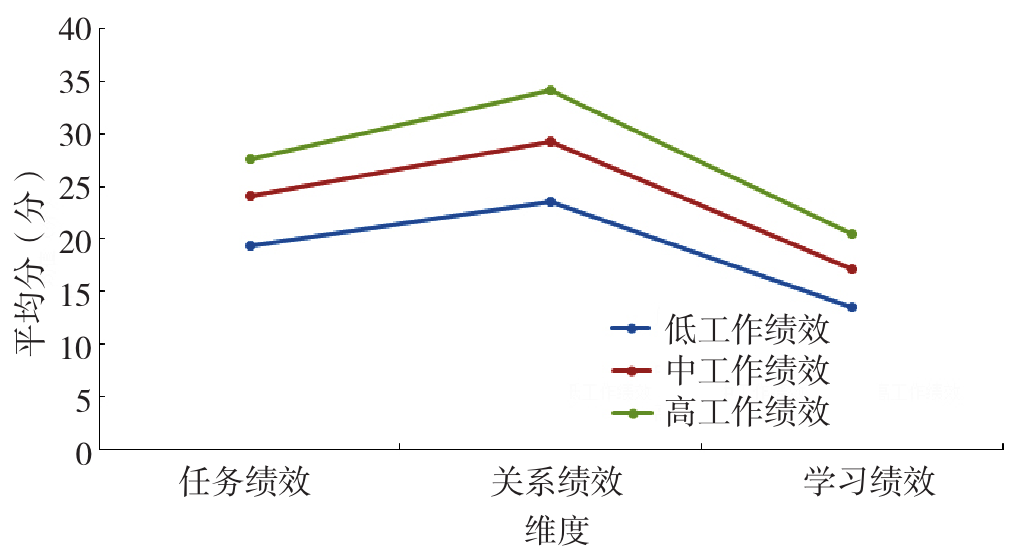
摘要: 背景 目前我国社区卫生服务人员面临诸多现实问题,使得其工作积极性和动力受到严重影响。同时关于社区卫生服务人员工作动机和工作绩效关系的研究仍处于起步阶段,且无系统研究。 目的 采取以"个体"为关注点,通过潜在剖面分析探讨工作绩效的亚类别,进而探讨工作动机对工作绩效亚类别的预测作用。 方法 本研究于2023年7—9月分别对黑龙江省、湖北省、甘肃省、广东省随机选取的50家社区卫生中心或服务站中进行调查,在每家社区服务中心或服务站中随机选择20名工作人员开展工作动机量表、工作绩效量表评价,共计4 000名工作人员进行调查,最终收回问卷3 925份,3 854份有效问卷,有效回收率达98.2%。通过潜在剖面分析确定社区卫生服务人员工作绩效的潜在分类,采用多元线性回归分析评估不同工作绩效亚类别与工作动机之间的关系,并控制性别、年龄等人口统计学变量。 结果 潜在剖面分析显示,社区卫生服务人员工作绩效可分为低、中、高3个工作绩效类别,分别占14.71%、46.16%和39.13%;3类模型分类效果较好,各类别平均归属概率为93.8%~96.6%。不同绩效类别在任务绩效、关系绩效和学习绩效得分上差异均有统计学意义(P<0.001)。低工作绩效、中工作绩效、高工作绩效类别的年龄、婚姻状况、学历、工作年限、专业技术职称、编制类型及月均收入比较,差异有统计学意义(P<0.001)。多元线性回归分析显示,控制相关人口学变量后,工作动机均能正向预测低、中、高绩效组的工作绩效(β=0.264、0.207、0.340,均P<0.001)。 结论 社区卫生服务人员的工作动机通过相应的激励措施得到有效提升,将直接促进其工作绩效的改善与提高。

关键词: 社区卫生服务, 工作动机, 工作绩效, 社区卫生服务人员, 潜在剖面分析

Abstract:

Background

At present, community health service personnel in China are facing many practical problems, which seriously affect their work enthusiasm and motivation. At the same time, the research on the relationship between work motivation and work performance of community health service personnel is still in its infancy, and there is no systematic research.

Objective

To identify potential subgroups of job performance among community health service personnel using a person-centered approach and to examine the predictive effect of work motivation on different job performance subgroups.

Methods

This study was conducted from July to September 2023, surveying 50 randomly selected community health centers or service stations in Heilongjiang, Hubei, Gansu, and Guangdong provinces. Within each community service center or station, 20 staff members were randomly selected to complete work motivation and work performance scales. A total of 4 000 staff members were surveyed, with 3 925 questionnaires returned and 3 854 valid questionnaires, resulting in an effective response rate of 98.2%. Latent profile analysis was used to determine the latent classification of community health service personnel's work performance. Multivariate linear regression analysis was employed to assess the relationship between different work performance subcategories and work motivation, while controlling for demographic variables such as gender and age.

Results

The latent profile analysis (LPA) identified three distinct classes of job performance among community health service personnel, namely low, moderate, and high job performance groups, accounting for 14.71%, 46.16%, and 39.13% of the sample, respectively. The three-class model demonstrated good classification quality, with average posterior probabilities ranging from 93.8% to 96.6% across classes. Significant differences were observed among the three performance classes in task performance, contextual (relational) performance, and learning performance scores (all P<0.001). The low-, moderate-, and high-performance groups also differed significantly with respect to age, marital status, educational attainment, years of work experience, professional title, employment status, and average monthly income (all P<0.001). Multiple linear regression analyses indicated that, after controlling for relevant demographic characteristics, work motivation was a significant positive predictor of job performance in the low-, moderate-, and high-performance groups (β=0.264, 0.207, and 0.340, respectively; all P<0.001).

Conclusion

The work motivation of community health service personnel is effectively improved through corresponding incentive measures, which will directly promote the improvement and improvement of their work performance.

Key words: Community health service, Work motivation, Job performance, Community health service personnel, Potential profile analysis