
中国全科医学 ›› 2026, Vol. 29 ›› Issue (32): 4721-4729.DOI: 10.12114/j.issn.1007-9572.2025.0504
所属专题: 阿尔茨海默病最新文章合辑
李姣1, 向庆伟2,3,4, 刘进进2,3,4, 彭朗2,3,4, 周剑杰2,3,4, 杨琼2,3,4, 梅应兵2,3,4, 柳慧2,3,4, 方英嵩1,2,3,4, 谭子虎2,3,4,*( )
)
收稿日期:2025-12-10
修回日期:2026-03-20
出版日期:2026-11-15
发布日期:2026-10-10
通讯作者:
谭子虎
作者贡献:
李姣负责研究设计、数据清理、统计分析、图表绘制与论文初稿撰写;向庆伟、刘进进负责研究实施与可行性分析;彭朗、周剑杰、杨琼负责论文质量控制及审校;梅应兵、柳慧、方英嵩负责数据采集;谭子虎负责提出研究思路、监督指导以及论文最终版本修订,对文章整体负责。
基金资助:
LI Jiao1, XIANG Qingwei2,3,4, LIU Jinjin2,3,4, PENG Lang2,3,4, ZHOU Jianjie2,3,4, YANG Qiong2,3,4, MEI Yingbing2,3,4, LIU Hui2,3,4, FANG Yingsong1,2,3,4, TAN Zihu2,3,4,*()
Received:2025-12-10
Revised:2026-03-20
Published:2026-11-15
Online:2026-10-10
Contact:
TAN Zihu
摘要: 背景 跌倒是阿尔茨海默病(AD)患者的常见临床事件,不仅增加严重创伤、感染、失能与死亡风险,也常导致非计划性住院,给家庭与社会带来沉重负担。 目的 构建AD患者跌倒相关住院的风险预测模型,并分析AD患者跌倒相关住院的危险因素,以辅助医师精准识别高危个体并进行干预。 方法 共纳入987例2020年1月—2025年10月收录于湖北省中医院痴呆数据库的AD患者,将其按照7∶3随机拆分为训练集(n=690)和验证集(n=297)。提取研究对象的一般资料、评估量表、实验室检查指标及用药相关数据。以AD患者是否发生跌倒相关住院事件作为结局变量。以LASSO回归筛选潜在预测变量,并采用多因素Logistic回归建立列线图预测模型。采用受试者工作特征(ROC)曲线下面积(AUC)、校准曲线和临床决策曲线(DCA)检验模型的区分度、校准度和临床实用性。 结果 987例AD患者中,跌倒相关住院者276例(27.96%)。在LASSO回归基础上进行多因素Logistic回归分析结果显示,病程(OR=2.843,95%CI=1.862~4.342)、临床痴呆评定量表(CDR)评分(OR=1.275,95%CI=1.010~1.610)、跌倒史(OR=7.779,95%CI=3.515~17.213)、骨关节炎(OR=1.757,95%CI=1.068~2.892)、骨质疏松(OR=2.481,95%CI=1.692~3.638)、高危痴呆的精神行为症状(BPSD)(OR=2.193,95%CI=1.229~3.914)、白蛋白(ALB)水平(OR=1.781,95%CI=1.128~2.814)及高风险用药(OR=1.466,95%CI=1.191~1.805)是AD患者跌倒相关住院的独立影响因素(P<0.05)。ROC曲线结果显示,训练集与验证集AUC分别为0.753(95%CI=0.711~0.795)和0.794(95%CI=0.734~0.853);校准曲线结果显示,训练集与验证集的预测曲线及理想曲线拟合度较好;DCA结果显示:当列线图预测AD患者跌倒相关住院风险概率在0.1~0.8阈值范围时,患者的净获益率>0。 结论 病程、CDR评分、跌倒史、骨关节炎、骨质疏松、高危BPSD、ALB、高风险用药是AD患者跌倒相关住院的影响因素,本研究构建的列线图模型可用于预测AD患者跌倒相关住院风险。
中图分类号:
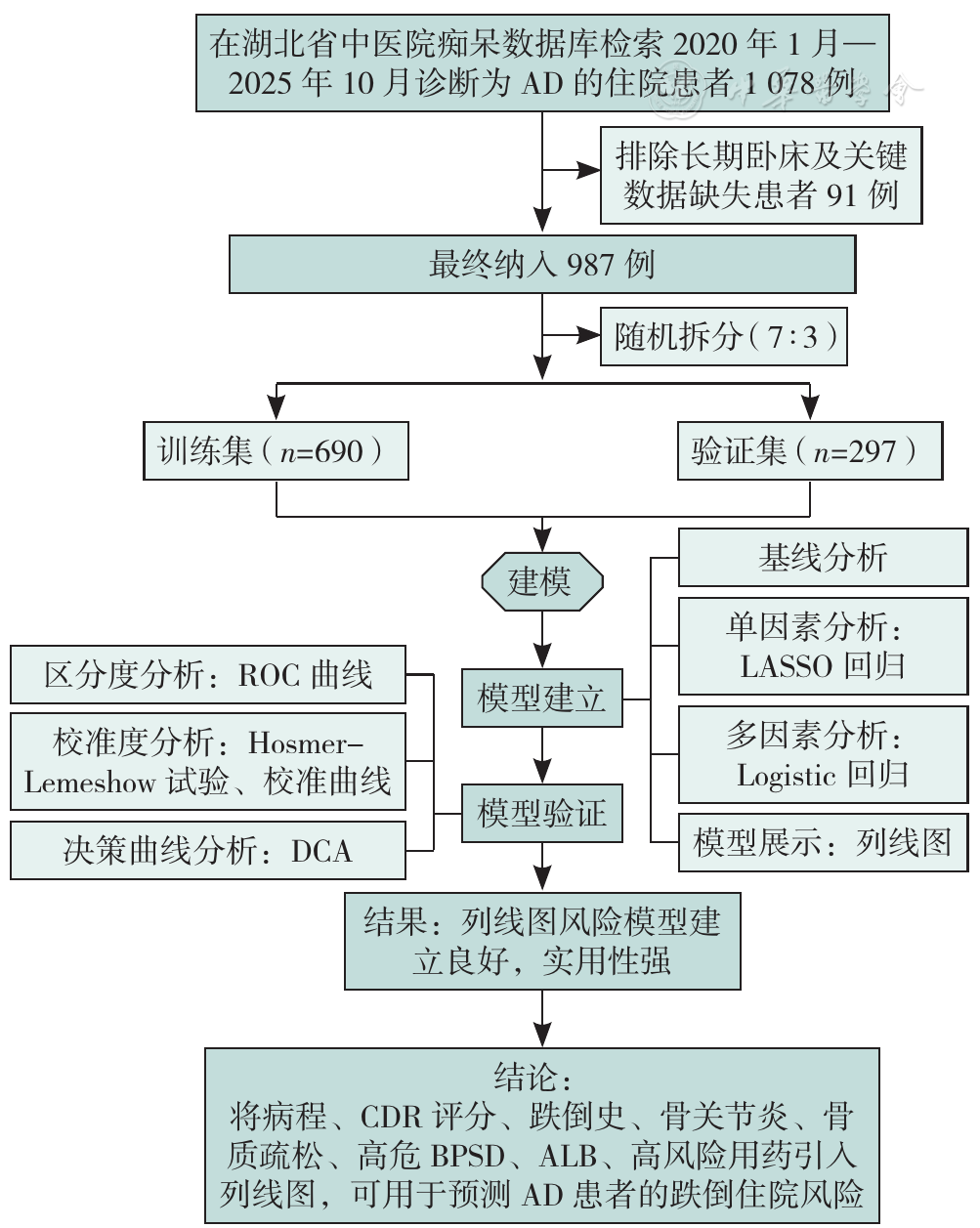
图1 研究设计流程图注:AD=阿尔茨海默病,ROC曲线=受试者工作特征曲线,DCA=临床决策曲线,CDR=临床痴呆评定量表,BPSD=痴呆的精神行为症状,ALB=白蛋白。
Figure 1 Flow diagram of study design
| 变量 | 训练集(n=690) | 验证集(n=297) | χ2值 | P值 | 变量 | 训练集(n=690) | 验证集(n=297) | χ2值 | P值 |
|---|---|---|---|---|---|---|---|---|---|
| 跌倒相关住院 | 0.050 | 0.823 | 骨关节炎 | 0.185 | 0.667 | ||||
| 否 | 499(72.32) | 212(71.38) | 否 | 581(84.20) | 254(85.52) | ||||
| 是 | 191(27.68) | 85(28.62) | 是 | 109(15.80) | 43(14.48) | ||||
| 性别 | 0.051 | 0.821 | 骨质疏松 | 0.027 | 0.870 | ||||
| 女 | 360(52.17) | 158(53.20) | 否 | 415(60.14) | 181(60.94) | ||||
| 男 | 330(47.83) | 139(46.80) | 是 | 275(39.86) | 116(39.06) | ||||
| 年龄 | 2.524 | 0.471 | 高危BPSD | 0.525 | 0.469 | ||||
| ≤60岁 | 25(3.62) | 7(2.36) | 否 | 621(90.00) | 262(88.22) | ||||
| >60~70岁 | 79(11.45) | 27(9.09) | 是 | 69(10.00) | 35(11.78) | ||||
| >70~80岁 | 205(29.71) | 95(31.99) | 失眠 | 2.003 | 0.157 | ||||
| >80岁 | 381(55.22) | 168(56.57) | 否 | 377(54.64) | 147(49.49) | ||||
| 婚姻状况 | 1.196 | 0.274 | 是 | 313(45.36) | 150(50.51) | ||||
| 在婚 | 510(73.91) | 230(77.44) | 帕金森病 | 0.677 | 0.411 | ||||
| 未在婚 | 180(26.09) | 67(22.56) | 否 | 648(93.91) | 274(92.26) | ||||
| 吸烟史 | 0.741 | 0.389 | 是 | 42(6.09) | 23(7.74) | ||||
| 否 | 479(69.42) | 215(72.39) | 视力下降 | 0.069 | 0.792 | ||||
| 是 | 211(30.58) | 82(27.61) | 否 | 641(92.90) | 278(93.60) | ||||
| 饮酒史 | 0.314 | 0.575 | 是 | 49(7.10) | 19(6.40) | ||||
| 否 | 465(67.39) | 194(65.32) | 听力下降 | 0.006 | 0.939 | ||||
| 是 | 225(32.61) | 103(34.68) | 否 | 653(94.64) | 280(94.28) | ||||
| 病程 | 0.389 | 0.533 | 是 | 37(5.36) | 17(5.72) | ||||
| ≤5年 | 512(74.20) | 214(72.05) | CCI | 1.367 | 0.242 | ||||
| >5年 | 178(25.80) | 83(27.95) | ≤5分 | 656(95.07) | 288(96.97) | ||||
| CDR评分 | 0.770 | 0.680 | >5分 | 34(4.93) | 9(3.03) | ||||
| 轻度痴呆 | 245(35.51) | 113(38.05) | HGB | 1.704 | 0.426 | ||||
| 中度痴呆 | 185(26.81) | 73(24.58) | 正常 | 427(61.88) | 172(57.91) | ||||
| 重度痴呆 | 260(37.68) | 111(37.37) | 降低 | 235(34.06) | 114(38.38) | ||||
| ADL评分 | 0.034 | 0.853 | 升高 | 28(4.06) | 11(3.70) | ||||
| 无障碍 | 354(51.30) | 155(52.19) | ALB | 0.017 | 0.895 | ||||
| 有障碍 | 336(48.70) | 142(47.81) | 未降低 | 181(26.23) | 76(25.59) | ||||
| BMI | 1.074 | 0.585 | 降低 | 509(73.77) | 221(74.41) | ||||
| 正常 | 415(60.14) | 184(61.95) | 高风险用药 | 0.392 | 0.942 | ||||
| 过轻 | 133(19.28) | 49(16.50) | 0种 | 205(29.71) | 87(29.29) | ||||
| 超重 | 142(20.58) | 64(21.55) | 1种 | 265(38.41) | 120(40.40) | ||||
| 跌倒史 | 0.011 | 0.918 | 2种 | 157(22.75) | 64(21.55) | ||||
| 否 | 651(94.35) | 279(93.94) | 3种 | 63(9.13) | 26(8.75) | ||||
| 是 | 39(5.65) | 18(6.06) | |||||||
表1 训练集和验证集基线资料比较[例(%)]
Table 1 Comparison of baseline data between the training and validation
| 变量 | 训练集(n=690) | 验证集(n=297) | χ2值 | P值 | 变量 | 训练集(n=690) | 验证集(n=297) | χ2值 | P值 |
|---|---|---|---|---|---|---|---|---|---|
| 跌倒相关住院 | 0.050 | 0.823 | 骨关节炎 | 0.185 | 0.667 | ||||
| 否 | 499(72.32) | 212(71.38) | 否 | 581(84.20) | 254(85.52) | ||||
| 是 | 191(27.68) | 85(28.62) | 是 | 109(15.80) | 43(14.48) | ||||
| 性别 | 0.051 | 0.821 | 骨质疏松 | 0.027 | 0.870 | ||||
| 女 | 360(52.17) | 158(53.20) | 否 | 415(60.14) | 181(60.94) | ||||
| 男 | 330(47.83) | 139(46.80) | 是 | 275(39.86) | 116(39.06) | ||||
| 年龄 | 2.524 | 0.471 | 高危BPSD | 0.525 | 0.469 | ||||
| ≤60岁 | 25(3.62) | 7(2.36) | 否 | 621(90.00) | 262(88.22) | ||||
| >60~70岁 | 79(11.45) | 27(9.09) | 是 | 69(10.00) | 35(11.78) | ||||
| >70~80岁 | 205(29.71) | 95(31.99) | 失眠 | 2.003 | 0.157 | ||||
| >80岁 | 381(55.22) | 168(56.57) | 否 | 377(54.64) | 147(49.49) | ||||
| 婚姻状况 | 1.196 | 0.274 | 是 | 313(45.36) | 150(50.51) | ||||
| 在婚 | 510(73.91) | 230(77.44) | 帕金森病 | 0.677 | 0.411 | ||||
| 未在婚 | 180(26.09) | 67(22.56) | 否 | 648(93.91) | 274(92.26) | ||||
| 吸烟史 | 0.741 | 0.389 | 是 | 42(6.09) | 23(7.74) | ||||
| 否 | 479(69.42) | 215(72.39) | 视力下降 | 0.069 | 0.792 | ||||
| 是 | 211(30.58) | 82(27.61) | 否 | 641(92.90) | 278(93.60) | ||||
| 饮酒史 | 0.314 | 0.575 | 是 | 49(7.10) | 19(6.40) | ||||
| 否 | 465(67.39) | 194(65.32) | 听力下降 | 0.006 | 0.939 | ||||
| 是 | 225(32.61) | 103(34.68) | 否 | 653(94.64) | 280(94.28) | ||||
| 病程 | 0.389 | 0.533 | 是 | 37(5.36) | 17(5.72) | ||||
| ≤5年 | 512(74.20) | 214(72.05) | CCI | 1.367 | 0.242 | ||||
| >5年 | 178(25.80) | 83(27.95) | ≤5分 | 656(95.07) | 288(96.97) | ||||
| CDR评分 | 0.770 | 0.680 | >5分 | 34(4.93) | 9(3.03) | ||||
| 轻度痴呆 | 245(35.51) | 113(38.05) | HGB | 1.704 | 0.426 | ||||
| 中度痴呆 | 185(26.81) | 73(24.58) | 正常 | 427(61.88) | 172(57.91) | ||||
| 重度痴呆 | 260(37.68) | 111(37.37) | 降低 | 235(34.06) | 114(38.38) | ||||
| ADL评分 | 0.034 | 0.853 | 升高 | 28(4.06) | 11(3.70) | ||||
| 无障碍 | 354(51.30) | 155(52.19) | ALB | 0.017 | 0.895 | ||||
| 有障碍 | 336(48.70) | 142(47.81) | 未降低 | 181(26.23) | 76(25.59) | ||||
| BMI | 1.074 | 0.585 | 降低 | 509(73.77) | 221(74.41) | ||||
| 正常 | 415(60.14) | 184(61.95) | 高风险用药 | 0.392 | 0.942 | ||||
| 过轻 | 133(19.28) | 49(16.50) | 0种 | 205(29.71) | 87(29.29) | ||||
| 超重 | 142(20.58) | 64(21.55) | 1种 | 265(38.41) | 120(40.40) | ||||
| 跌倒史 | 0.011 | 0.918 | 2种 | 157(22.75) | 64(21.55) | ||||
| 否 | 651(94.35) | 279(93.94) | 3种 | 63(9.13) | 26(8.75) | ||||
| 是 | 39(5.65) | 18(6.06) | |||||||
| 变量 | 赋值方法 |
|---|---|
| 跌倒相关住院 | 否=0,是=1 |
| 性别 | 女=0,男=1 |
| 年龄 | ≤60岁=1,>60~70岁=2,>70~80岁=3,>80岁=4 |
| 婚姻状况 | 在婚=0,未在婚=1 |
| 吸烟史 | 否=0,是=1 |
| 饮酒史 | 否=0,是=1 |
| 病程 | ≤5年=0,>5年=1 |
| CDR评分 | 轻度痴呆=1,中度痴呆=2,重度痴呆=3 |
| ADL评分 | 无障碍=0,有障碍=1 |
| BMI | 正常=0,过轻=1,超重=2 |
| 跌倒史 | 否=0,是=1 |
| 骨关节炎 | 否=0,是=1 |
| 骨质疏松 | 否=0,是=1 |
| 高危BPSD | 否=0,是=1 |
| 失眠 | 否=0,是=1 |
| 帕金森病 | 否=0,是=1 |
| 视力下降 | 否=0,是=1 |
| 听力下降 | 否=0,是=1 |
| CCI | ≤5分=0,>5分=1 |
| HGB | 正常=0,降低=1,升高=2 |
| ALB | 未降低=0,降低=1 |
| 高风险用药 | 0种=0,1种=1,2种=2,3种=3 |
表2 变量赋值情况
Table 2 Variable assignment
| 变量 | 赋值方法 |
|---|---|
| 跌倒相关住院 | 否=0,是=1 |
| 性别 | 女=0,男=1 |
| 年龄 | ≤60岁=1,>60~70岁=2,>70~80岁=3,>80岁=4 |
| 婚姻状况 | 在婚=0,未在婚=1 |
| 吸烟史 | 否=0,是=1 |
| 饮酒史 | 否=0,是=1 |
| 病程 | ≤5年=0,>5年=1 |
| CDR评分 | 轻度痴呆=1,中度痴呆=2,重度痴呆=3 |
| ADL评分 | 无障碍=0,有障碍=1 |
| BMI | 正常=0,过轻=1,超重=2 |
| 跌倒史 | 否=0,是=1 |
| 骨关节炎 | 否=0,是=1 |
| 骨质疏松 | 否=0,是=1 |
| 高危BPSD | 否=0,是=1 |
| 失眠 | 否=0,是=1 |
| 帕金森病 | 否=0,是=1 |
| 视力下降 | 否=0,是=1 |
| 听力下降 | 否=0,是=1 |
| CCI | ≤5分=0,>5分=1 |
| HGB | 正常=0,降低=1,升高=2 |
| ALB | 未降低=0,降低=1 |
| 高风险用药 | 0种=0,1种=1,2种=2,3种=3 |
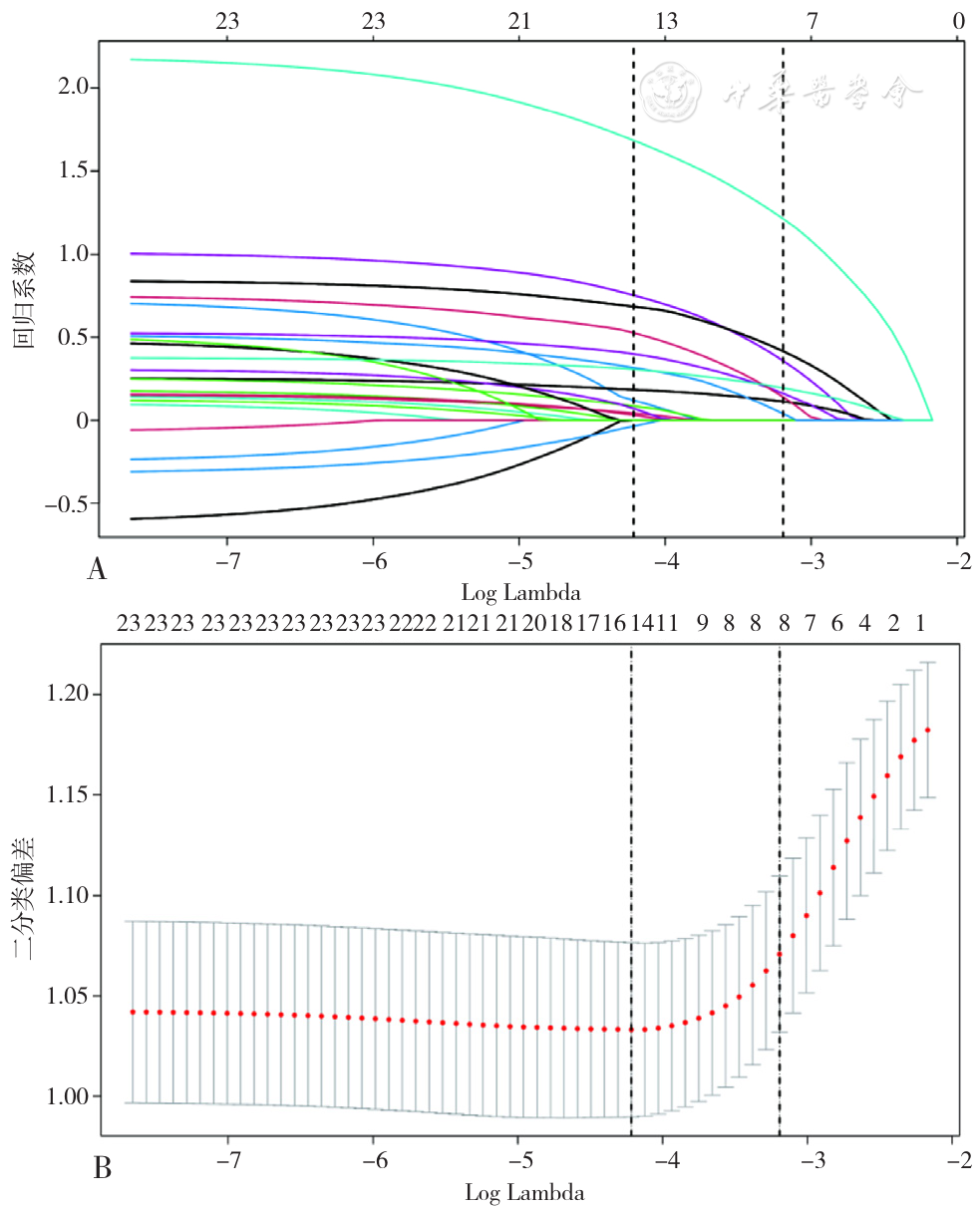
图2 基于LASSO回归的潜在变量选择注:图A为21个变量的系数曲线;图B为10折交叉验证对最佳变量的筛选,其中左竖线为Lambda.min,右竖线为Lambda.1se。
Figure 2 Potential predictor variable selection for LASSO regression
| 自变量 | β | SE | Z值 | P值 | OR(95%CI) |
|---|---|---|---|---|---|
| 病程 | 1.045 | 0.216 | 4.838 | <0.001 | 2.843(1.862~4.342) |
| CDR评分 | 0.243 | 0.119 | 2.046 | <0.050 | 1.275(1.010~1.610) |
| 跌倒史 | 2.051 | 0.405 | 5.062 | <0.001 | 7.779(3.515~17.213) |
| 骨关节炎 | 0.564 | 0.254 | 2.219 | <0.050 | 1.757(1.068~2.892) |
| 骨质疏松 | 0.909 | 0.195 | 4.652 | <0.001 | 2.481(1.692~3.638) |
| 高危BPSD | 0.785 | 0.296 | 2.656 | <0.01 | 2.193(1.229~3.914) |
| ALB | 0.577 | 0.233 | 2.475 | <0.050 | 1.781(1.128~2.814) |
| 高风险用药 | 0.383 | 0.106 | 3.610 | <0.001 | 1.466(1.191~1.805) |
| 常量 | -3.404 | 0.354 | -9.615 | <0.001 |
表3 AD患者发生跌倒相关住院影响因素的多因素Logistic回归分析
Table 3 Multivariate Logistic regression analysis of factors affecting fall-related hospitalization in AD patients
| 自变量 | β | SE | Z值 | P值 | OR(95%CI) |
|---|---|---|---|---|---|
| 病程 | 1.045 | 0.216 | 4.838 | <0.001 | 2.843(1.862~4.342) |
| CDR评分 | 0.243 | 0.119 | 2.046 | <0.050 | 1.275(1.010~1.610) |
| 跌倒史 | 2.051 | 0.405 | 5.062 | <0.001 | 7.779(3.515~17.213) |
| 骨关节炎 | 0.564 | 0.254 | 2.219 | <0.050 | 1.757(1.068~2.892) |
| 骨质疏松 | 0.909 | 0.195 | 4.652 | <0.001 | 2.481(1.692~3.638) |
| 高危BPSD | 0.785 | 0.296 | 2.656 | <0.01 | 2.193(1.229~3.914) |
| ALB | 0.577 | 0.233 | 2.475 | <0.050 | 1.781(1.128~2.814) |
| 高风险用药 | 0.383 | 0.106 | 3.610 | <0.001 | 1.466(1.191~1.805) |
| 常量 | -3.404 | 0.354 | -9.615 | <0.001 |
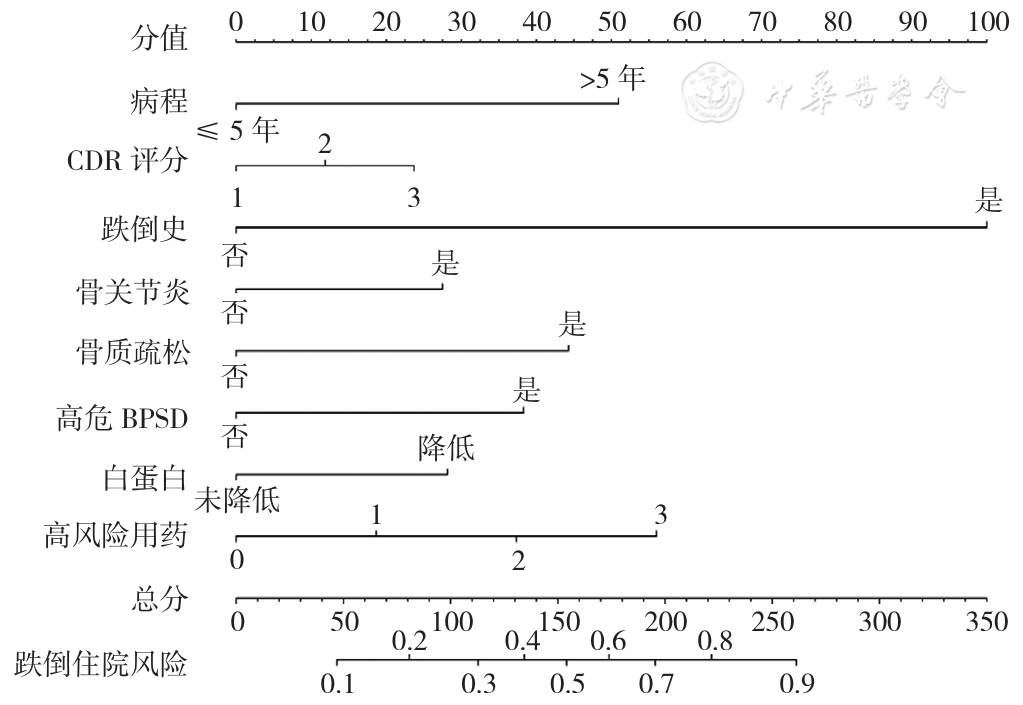
图3 AD患者跌倒相关住院风险预测模型的列线图
Figure 3 Nomogram of the risk prediction model for hospitalization due to fall-induced trauma in AD patients
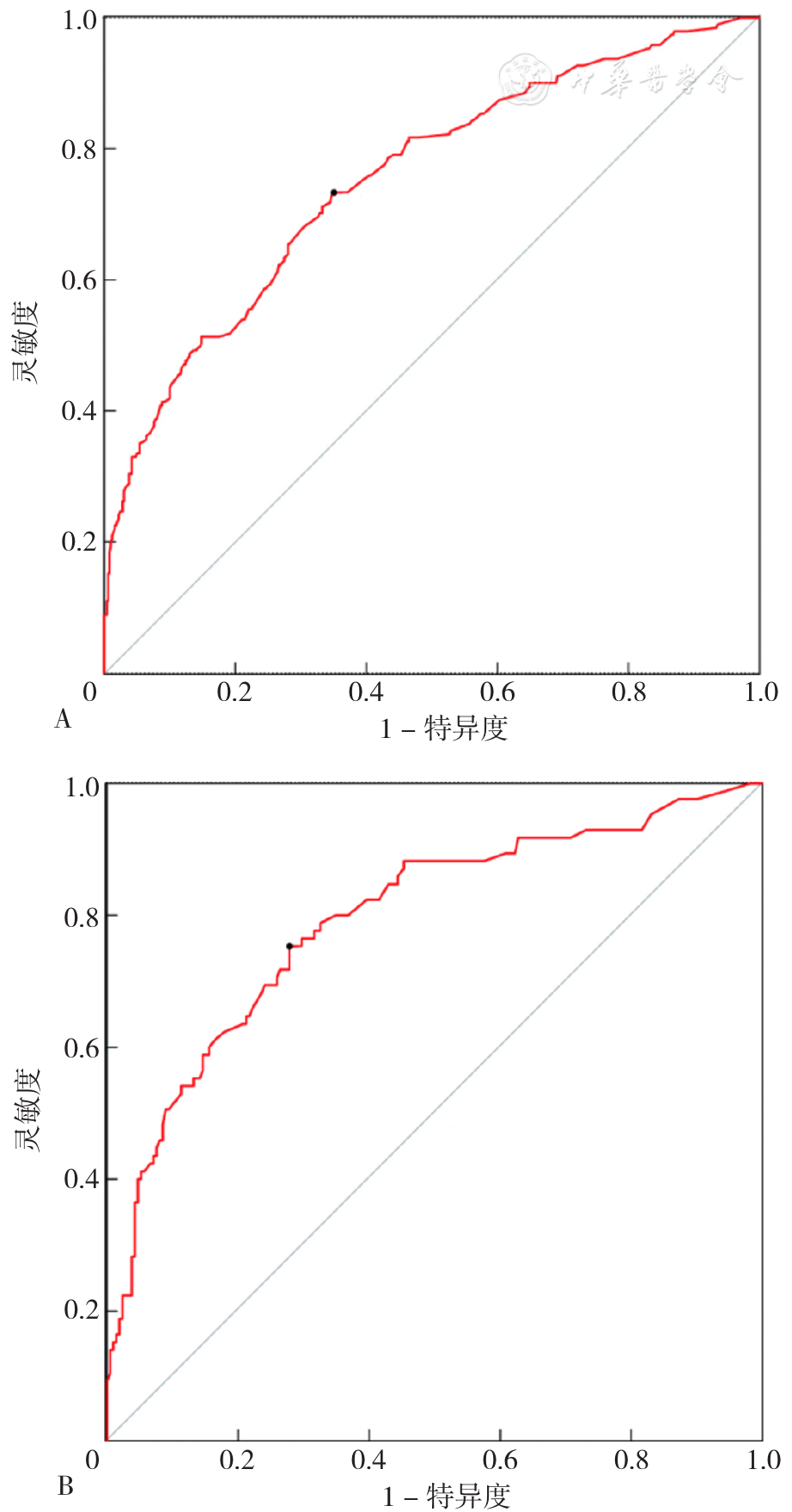
图4 AD患者跌倒相关住院风险预测模型的ROC曲线注:A为训练集,B为验证集;ROC曲线=受试者工作特征曲线。
Figure 4 ROC curve of the risk prediction model for hospitalization due to fall-induced trauma in AD patients
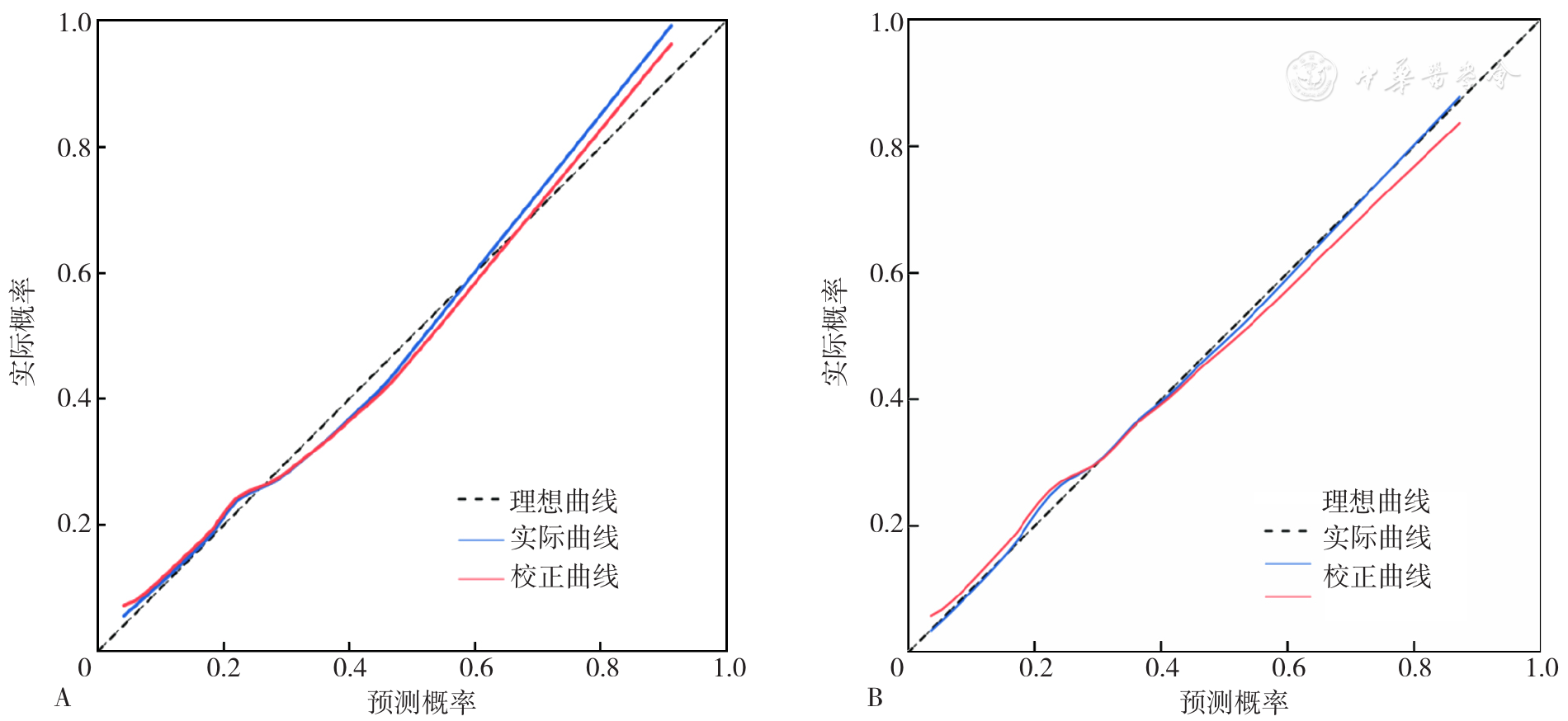
图5 AD患者跌倒相关住院风险预测模型的校准曲线注:A为训练集,B为验证集。
Figure 5 Calibration curve of the risk prediction model for hospitalization due to fall-induced trauma in AD patients
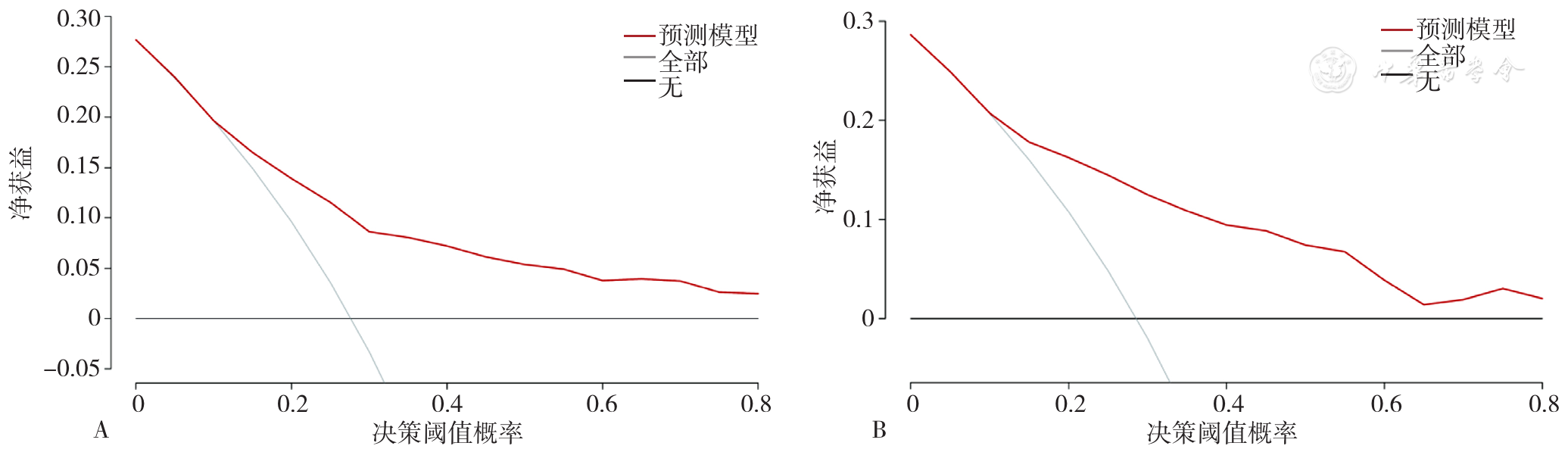
图6 AD患者跌倒相关住院风险预测模型的DCA分析注:A为训练集,B为验证集。
Figure 6 DCA analysis of the risk prediction model for hospitalization due to fall-induced trauma in AD patients
| [1] |
|
| [2] |
|
| [3] |
|
| [4] |
|
| [5] |
张懿姝,邱嘉婷,尚群竺, 等. 痴呆患者跌倒风险及预测模型研究进展[J]. 中国神经精神疾病杂志, 2025, 51(5): 298-302. DOI: 10.3969/j.issn.1002-0152.2025.05.008.
|
| [6] |
|
| [7] |
|
| [8] |
|
| [9] |
|
| [10] |
|
| [11] |
|
| [12] |
|
| [13] |
|
| [14] |
|
| [15] |
|
| [16] |
|
| [17] |
|
| [18] |
|
| [19] |
胡海琼,李莉霞,邵宇, 等. 帕金森病患者跌倒风险调查及基于LASSO回归的列线图预测模型建立与验证[J]. 重庆医科大学学报, 2025, 50(10): 1338-1344. DOI: 10.13406/j.cnki.cyxb.003926.
|
| [20] |
王清清,陈阳希,贡歌, 等. 共病指数与急性冠状动脉综合征患者冠状动脉病变程度及早期预后的相关性[J]. 国际老年医学杂志, 2025, 47(3): 302-307. DOI: 10.3969/j.issn.1674-7593.2026.03.007.
|
| [21] |
|
| [22] |
|
| [23] |
|
| [24] |
|
| [25] |
|
| [26] |
|
| [27] |
|
| [28] |
|
| [29] |
|
| [30] |
|
| [31] |
|
| [32] |
|
| [33] |
|
| [34] |
|
| [35] |
|
| [36] |
|
| [37] |
|
| [38] |
|
| [39] |
|
| [40] |
|
| [41] |
|
| [42] |
|
| [43] |
|
| [44] |
|
| [45] |
|
| [46] |
|
| [1] | 谭丽博, 刘南阳, 李浩. 中成药治疗阿尔茨海默病临床研究的证据图分析[J]. 中国全科医学, 2026, 29(32): 4805-4814. |
| [2] | 唐博, 杨芮, 赵茜, 刘红, 刘力滴, 张颖, 蒋莉华, 王小刚, 杨荣, 廖晓阳. 美国预防临床服务指南工作组《社区老年人跌倒的预防措施》推荐声明解读[J]. 中国全科医学, 2026, 29(30): 4360-4365. |
| [3] | 么颖, 段丽然, 韩殿丽, 苗田鑫, 陈可, 张岚, 顾海粤. 年轻老年患者跌倒预防延续性干预方案的构建及应用研究[J]. 中国全科医学, 2026, 29(30): 4415-4423. |
| [4] | 李姣, 周剑杰, 彭朗, 梅应兵, 谭子虎. 阿尔茨海默病合并社区获得性肺炎发生不良预后风险预测模型的构建与验证研究[J]. 中国全科医学, 2026, 29(29): 4248-4257. |
| [5] | 蒋晨, 安妮, 徐运璟, 牛少娜, 李凤鸣, 姜良美. 心血管-肾脏-代谢综合征患者住院特征及医疗资源消耗的横断面研究[J]. 中国全科医学, 2026, 29(28): 4172-4178. |
| [6] | 赵泽宙, 王杰萍, 杜雪平, 闫巍, 吴薇, 李倩, 赵亚文, 李昊东. 北京市某三级综合医院全科医学科住院患者疾病特征研究[J]. 中国全科医学, 2026, 29(26): 3739-3744. |
| [7] | 李海瑾, 朱宸立, 李卉, 冯郑文, 乔雨晨, 杜娟. 失智症诊断后管理相关指南的质量评价与内容分析[J]. 中国全科医学, 2026, 29(25): 3569-3576. |
| [8] | 蔡秋茂, 朱怡, 许军. 县域医共体建设对糖尿病住院服务利用及费用控制的影响研究[J]. 中国全科医学, 2026, 29(25): 3593-3598. |
| [9] | 潘昊, 邱勇, 刘荣梅, 郭智萍, 戴能光, 金彤, 桑艳红, 李毅, 廖丽娟. 基本公共卫生服务管理对患者住院经济负担及生存结局的影响研究:以糖尿病住院患者为例[J]. 中国全科医学, 2026, 29(25): 3599-3607. |
| [10] | 丘淑娴, 吴婉婷, 赵玫, 张海峰, 李涛, 于欣, 王华丽. 阿尔茨海默病知识量表在社区医生中的因子结构分析研究[J]. 中国全科医学, 2026, 29(23): 3336-3341. |
| [11] | 袁杭滔, 洪妍, 袁沛宏, 林博, 崔晓云, 李伟炜. 预测中国绝经后女性新发心脏代谢性共病风险的可解释机器学习模型研究[J]. 中国全科医学, 2026, 29(23): 3294-3306. |
| [12] | 安艳红, 王世东, 李潇然, 郭家扬, 王哲, 沙培林, 孟怡珺, 李小萱, 石雪, 于泽兴, 肖永华. 糖尿病肾病影响因素及列线图预测模型研究:基于超声造影技术[J]. 中国全科医学, 2026, 29(21): 2995-3003. |
| [13] | 李超辉, 刘慧, 王凯. 持续性心房颤动的影响因素识别及判别模型构建研究[J]. 中国全科医学, 2026, 29(20): 2846-2853. |
| [14] | 鲍若林, 鲁潮, 冯昕, 叶春梅, 来芬华, 倪作为, 杨东波, 郑永韬. 基于巢式病例对照研究老年人流感疫苗突破病例的风险预测模型[J]. 中国全科医学, 2026, 29(19): 2671-2677. |
| [15] | 简迎春, 曾永秦, 张海平, 王争地, 安科, 严瑞. 线粒体功能障碍在慢性代谢性疾病中的研究进展[J]. 中国全科医学, 2026, 29(18): 2577-2584. |
| 阅读次数 | ||||||
|
全文 |
|
|||||
|
摘要 |
|
|||||