
中国全科医学 ›› 2026, Vol. 29 ›› Issue (30): 4489-4502.DOI: 10.12114/j.issn.1007-957.2024.0592
胡玉婷1,2, 严颖3, 闫明婕2, 王惠君2, 韩虎1,*( )
)
收稿日期:2024-11-24
修回日期:2024-12-25
出版日期:2026-10-20
发布日期:2026-09-02
通讯作者:
韩虎
作者贡献:
胡玉婷负责数据运算及论文初稿的撰写;以及修改论文;严颖负责选定研究主题;闫明婕负责文献的检索、筛选及数据提取;王慧君进行论文修订;韩虎负责偏倚风险中的第三方裁定。
基金资助:
HU Yuting1,2, YAN Ying3, YAN Mingjie2, WANG Huijun2, HAN Hu1,*()
Received:2024-11-24
Revised:2024-12-25
Published:2026-10-20
Online:2026-09-02
Contact:
HAN Hu
摘要: 背景 骨相关事件(SREs)是实体瘤骨转移或多发性骨髓瘤患者的严重并发症,骨改良药物(BMAs)与传统治疗方法相比具有骨组织靶向给药系统的优势,但鉴于种类繁多且药物治疗策略相对复杂,如何确定适宜的药物和给药频率是现阶段BMAs面临的重要问题。 目的 比较不同BMAs治疗实体瘤骨转移或多发性骨髓瘤患者的疗效。 方法 由2名研究员按照检索策略独立检索PubMed、Cochrane Library、Embase、Clinical Trials、Web of Science、中国知网、万方数据知识服务平台及维普网中BMAs治疗实体瘤骨转移癌症或多发性骨髓瘤患者的随机对照试验(RCT),检索时限为建库至2024年1月。采用Cochrane风险评价工具对纳入文献进行质量评价,利用R 4.3.3软件和STATA 17.0软件进行统计学分析。 结果 共纳入64项RCT,28 773例患者,涉及安慰剂/未使用骨改良药物组(PLA),地舒单抗原研药标准给药组(DENO),唑来膦酸标准给药组(ZA),伊班膦酸标准给药组(IBA),帕米膦酸标准给药组(PAM),帕米膦酸长间隔给药组(PAM*),氯膦酸标准给药组(CLO),利赛膦酸标准给药组(RIS),阿仑膦酸标准给药组(ALE),地舒单抗生物类似药标准给药组(DENO#),地舒单抗原研药长间隔给药组(DENO*)和唑来膦酸长间隔给药组(ZA*)共12种干预措施。网状Meta分析结果显示,总SREs发生率的累积概率排序图下面积(SUCRA)排序为:DENO(82.29%)>DENO*(81.48%)>DENO#(76.09%)>ZA(59.74%)>ZA*(55.53%)>IBA(43.19%)>PAM*(42.21%)>CLO(37.37%)>PAM(31.87%)>RIS(31.26%)>PLA(8.97%);至首次发生SREs时间的SUCRA排序为:DENO*(85.45%)>DENO(83.89%)>IBA(56.72%)>ZA(53.35%)>PAM(44.39%)>ZA*(42.58%)>DENO#(27.04%)>PLA(6.59%);总生存时间(OS)的SUCRA排序为:ZA*(79.66%)>IBA(79.05%)>DENO(73.19%)>ZA(64.14%)>CLO(42.96%)>PAM(30.55%)>PLA(18.95%)>RIS(11.49%);无进展生存时间(PFS)的SUCRA排序为:ZA(75.90%)>ALE(68.08%)>PAM(53.91%)>PLA(31.73%)>CLO(20.37%)。亚组分析结果显示,标准给药亚组与长间隔给药亚组的总SREs发生率和至首次发生SREs时间比较,差异均无统计学意义(总SREs发生率:RR=1.00,95%CI=0.89~1.13,P=0.960;至首次发生SRE时间:HR=0.97,95%CI=0.74~1.27,P=0.775)。 结论 当前证据显示,地舒单抗是目前治疗实体瘤骨转移或多发性骨髓瘤患者的最佳药物干预方式。其中,延长给药频率是一种可接受的治疗方案。
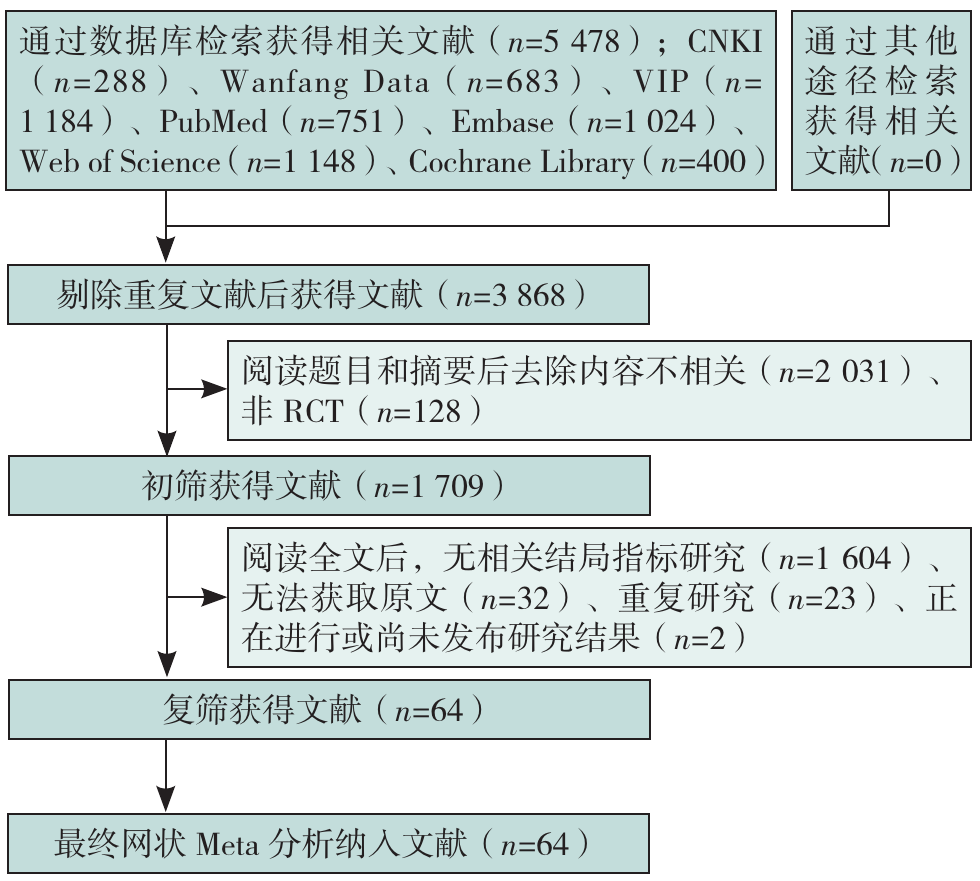
图1 文献筛选流程图注:CNKI=中国知网,Wanfang Data=万方数据知识服务平台,VIP=维普网,RCT=随机对照试验。
Figure 1 Flow chart of literature screening
| 第一作者 | 发表时间(年) | 研究对象 | 性别(男/女) | 干预措施 | 给药频率、剂量和途径 | 样本量(例) | 用药时长(周) | 结局指标 | |||
|---|---|---|---|---|---|---|---|---|---|---|---|
| 试验组 | 对照组 | 试验组 | 对照组 | 试验组 | 对照组 | ||||||
| Smith[ | 2014 | 前列腺骨转移患者 | 645/0 | 雄激素剥夺疗法+唑来膦酸 | 雄激素剥夺疗法+安慰剂 | 1次/4周,4 mg/次,iv | 1次/4周,4 mg/次,iv | 323 | 322 | 192 | ①②③④ |
| Fizazi[ | 2011 | 前列腺骨转移患者 | 1 901/0 | 地舒单抗+安慰剂 | 唑来膦酸+安慰剂 | 1次/4周,120 mg/次,im | 1次/4周,4 mg/次,iv | 950 | 951 | 108 | ①②③ |
| Kamba[ | 2017 | 前列腺骨转移患者 | 219/0 | 雄激素剥夺疗法+唑来膦酸 | 雄激素剥夺疗法 | 1次/4周,4 mg/次,iv | 109 | 110 | 96 | ①②③ | |
| Fizazi[ | 2009 | 实体瘤骨转移患者 | 56/55 | 1组:地舒单抗 2组:地舒单抗 | 唑来膦酸 | 1组:1次/4周,180 mg/次,im 2组:1次/12周,180 mg/次,im | 1次/4周,4 mg/次,iv | 1组:38 2组:36 | 37 | 25 | ①② |
| James[ | 2016 | 前列腺骨转移患者 | 757/0 | 多西他赛+泼尼+唑来膦酸/多西他赛+泼尼+S89+唑来膦酸 | 多西他赛+泼尼/多西他赛+泼尼+S89 | 1次/4周,4 mg/次,iv | 376 | 381 | 未知 | ①②③④ | |
| Figg[ | 2005 | 前列腺骨转移患者 | 72/0 | 酮康唑+阿仑膦酸 | 酮康唑 | 40 mg/d,po | 36 | 36 | 未知 | ④ | |
| Dearnaley[ | 2003 | 前列腺骨转移患者 | 311/0 | 氯膦酸 | 安慰剂 | 2080 mg/d,po | 2080 mg/d,po | 155 | 156 | 144 | ①③ |
| Hahn[ | 2014 | 前列腺骨转移患者 | 63/0 | 雄激素剥夺疗法+利赛膦酸 | 雄激素剥夺疗法+安慰剂 | 30 mg/d,po | 30 mg/d,po | 32 | 31 | 未知 | ① |
| Henry[ | 2011 | 实体瘤骨转移/多发性骨髓瘤骨髓瘤患者 | 1 137/639 | 地舒单抗 | 唑来膦酸 | 1次/4周,120 mg/次,im | 1次/4周,4 mg/次,iv | 886 | 890 | 96 | ①②③ |
| Raje[ | 2018 | 多发性骨髓瘤患者 | 893/825 | 地舒单抗+安慰剂 | 唑来膦酸+安慰剂 | 1次/4周,120 mg/次,im | 1次/4周,4 mg/次,iv | 859 | 859 | 96 | ①②③ |
| Morgan[ | 2010 | 多发性骨髓瘤患者 | 1 156/804 | 唑来膦酸 | 氯膦酸 | 1次/4周,4 mg/次,iv | 1600 mg/d,po | 981 | 979 | 48 | ①③④ |
| Novartis Pharmaceuticals[ | 2000 | 多发性骨髓瘤患者 | 70/73 | 唑来膦酸 | 安慰剂 | 1次/4周,4 mg/次,iv | 1次/4周,4 mg/次,iv | 72 | 71 | 48 | ① |
| Bergner[ | 2010 | 多发性骨髓瘤患者 | 52/29 | 唑来膦酸 | 伊班膦酸 | 1次/4周,4 mg/次,iv | 1次/4周,6 mg/次,iv | 40 | 41 | 92 | ① |
| Avilés[ | 2013 | 多发性骨髓瘤患者 | 157/151 | 唑来膦酸 | 1次/4周,4 mg/次,iv | 151 | 157 | 96 | ①③④ | ||
| García-Sanz[ | 2015 | 多发性骨髓瘤患者 | 53/47 | 唑来膦酸 | 1次/4周,4 mg/次,iv | 51 | 49 | 48 | ①③④ | ||
| Lipton[ | 2007 | 乳腺癌骨转移患者 | 0/128 | 1组:地舒单抗 2组:地舒单抗 | 唑来膦酸 | 1组:1次/4周,120 mg/次,im 2组:1次/12周,180 mg/次,im | 1次/4周,4 mg/次,iv | 1组:42 2组:43 | 43 | 24 | ①② |
| Stopeck[ | 2010 | 乳腺癌骨转移患者 | 0/2 046 | 地舒单抗 | 唑来膦酸 | 1次/4周,120 mg/次,im | 1次/4周,4 mg/次,iv | 1026 | 1020 | 136 | ①②③ |
| Barrett-Lee[ | 2014 | 乳腺癌骨转移患者 | 0/1 404 | 唑来膦酸 | 伊班膦酸 | 1次/4周,4 mg/次,iv | 50 mg/d,po | 699 | 705 | 96 | ①②③ |
| Hilton[ | 2017 | 乳腺癌骨转移患者 | 0/73 | 唑来膦酸 | 帕米膦酸 | 1次/4周,4 mg/次,iv | 1次/4周,90 mg/次,iv | 38 | 35 | 12 | ①② |
| Himelstein[ | 2017 | 实体瘤骨转移/多发性骨髓瘤骨髓瘤患者 | 765/1057 | 唑来膦酸 | 唑来膦酸 | 1次/4周,4 mg/次,iv | 1次/12周,4 mg/次,iv | 911 | 911 | 96 | ① |
| Hortobagyi[ | 2017 | 乳腺癌骨转移患者 | 0/403 | 唑来膦酸 | 唑来膦酸 | 1次/4周,4 mg/次,iv | 1次/12周,4 mg/次,iv | 200 | 203 | 96 | ①② |
| Clemons[ | 2021 | 实体瘤骨转移患者 | 103/160 | BMA(地舒单抗为主) | BMA | 1次/4周,120 mg/次,im | 1次/12周,120 mg/次,im | 133 | 130 | 48 | ①② |
| Zhang[ | 2024 | 实体瘤骨转移患者 | 241/467 | 地舒单抗生物类似药 | 地舒单抗原研药 | 1次/4周,120 mg/次,im | 1次/4周,120 mg/次,im | 354 | 354 | 49 | ① |
| Li[ | 2023 | 实体瘤骨转移患者 | 240/488 | 地舒单抗生物类似药 | 地舒单抗原研药 | 1次/4周,120 mg/次,im | 1次/4周,120 mg/次,im | 364 | 364 | 49 | ① |
| Apsangikar[ | 2022 | 实体瘤骨转移患者 | 43/95 | 地舒单抗生物类似药 | 地舒单抗原研药 | 1次/4周,120 mg/次,im | 1次/4周,120 mg/次,im | 103 | 35 | 36 | ①② |
| Wang[ | 2013 | 前列腺骨转移患者 | 137/0 | 唑来膦酸 | 氯膦酸 | 1次/4周,4 mg/次,iv | 1600 mg/d,po | 69 | 68 | 80 | ①④ |
| Saad[ | 2002 | 前列腺骨转移患者 | 661/0 | 唑来膦酸 | 安慰剂 | 1次/4周,4/8 mg,iv | 1次/4周,4/8 mg,iv | 435 | 208 | 96 | ①② |
| Small[ | 2003 | 前列腺骨转移患者 | 378/0 | 帕米膦酸 | 安慰剂 | 1次/4周,90 mg/次,iv | 1次/4周,90 mg/次,iv | 182 | 196 | 27 | ① |
| Meulenbeld[ | 2012 | 前列腺骨转移患者 | 592/0 | 多西他赛+利赛膦酸 | 多西他赛 | 30 mg/d,po | 291 | 301 | 未知 | ③ | |
| Ernst[ | 2003 | 前列腺骨转移患者 | 227/0 | 氯膦酸+米托蒽醌+泼尼松 | 安慰剂+米托蒽醌+泼尼松 | 1次/3周,1 500 mg,po | 1次/3周,1 500 mg,po | 115 | 112 | 28 | ③④ |
| Musto[ | 2003 | 多发性骨髓瘤患者 | 96/81 | 帕米膦酸 | 1次/4周,60 mg,po | 89 | 88 | 48 | ①③④ | ||
| Musto[ | 2008 | 多发性骨髓瘤患者 | 90/73 | 唑来膦酸 | 1次/4周,4 mg/次,iv | 81 | 82 | 48 | ①④ | ||
| Attal[ | 2006 | 多发性骨髓瘤患者 | 218/178 | 帕米膦酸 | 1次/4周,90 mg,iv | 196 | 200 | 未知 | ① | ||
| Berenson[ | 1996 | 多发性骨髓瘤患者 | 219/158 | 帕米膦酸 | 安慰剂 | 1次/4周,90 mg,iv | 1次/4周,90 mg,iv | 196 | 181 | 36 | ①③ |
| Rosen[ | 2001 | 乳腺癌骨转移/多发性骨髓瘤患者 | 201/915 | 唑来膦酸 | 帕米膦酸 | 1次/4周,4 mg/次,iv | 1次/4周,90 mg,iv | 561 | 555 | 100 | ①② |
| Avilés[ | 2007 | 多发性骨髓瘤患者 | 49/45 | 唑来膦酸+化疗 | 化疗 | 1次/4周,4 mg/次,iv | 46 | 48 | 96 | ①③ | |
| Heim[ | 2004 | 多发性骨髓瘤患者 | 77/80 | 氯膦酸+化疗 | 化疗 | 1 600 mg/d,po | 77 | 80 | 48 | ①④ | |
| Brincker [ | 1998 | 多发性骨髓瘤患者 | 159/141 | 帕米膦酸 | 安慰剂 | 300 mg/d,po | 300 mg/d,po | 152 | 148 | 72 | ①②③ |
| Mccloskey[ | 1998 | 多发性骨髓瘤患者 | 311/225 | 氯膦酸 | 安慰剂 | 1 600 mg/d,po | 1 600 mg/d,po | 264 | 272 | 未知 | ①③ |
| Lahtinen[ | 1992 | 多发性骨髓瘤患者 | 165/171 | 氯膦酸 | 安慰剂 | 2 400 mg/d,po | 2 400 mg/d,po | 168 | 168 | 96 | ①③ |
| Kraj[ | 2004 | 多发性骨髓瘤患者 | 26/20 | 帕米膦酸+化疗 | 化疗 | 1次/4周,90 mg,iv | 23 | 23 | 264 | ①③ | |
| Conte[ | 1996 | 乳腺癌骨转移患者 | 0/295 | 帕米膦酸+化疗 | 化疗 | 1次/3周,45 mg,iv | 143 | 152 | 至疾病进展 | ① | |
| Hortobagyi[ | 1996 | 乳腺癌骨转移患者 | 0/382 | 帕米膦酸 | 安慰剂 | 1次/4周,90 mg,iv | 1次/4周,90 mg,iv | 185 | 197 | 96 | ①②③ |
| Theriault[ | 1999 | 乳腺癌骨转移患者 | 0/371 | 帕米膦酸 | 安慰剂 | 1次/4周,90 mg,iv | 1次/4周,90 mg,iv | 182 | 189 | 96 | ①②③ |
| Hultborn[ | 1999 | 乳腺癌骨转移患者 | 0/404 | 帕米膦酸 | 安慰剂 | 1次/4周,60 mg,iv | 1次/4周,60 mg,iv | 201 | 203 | 96 | ①④ |
| Berenson[ | 2001 | 乳腺癌骨转移/多发性骨髓瘤患者 | 27/113 | 唑来膦酸 | 帕米膦酸 | 1次/4周,4 mg/次,iv | 1次/4周,90 mg,iv | 67 | 73 | 40 | ① |
| Kohno[ | 2005 | 乳腺癌骨转移患者 | 0/228 | 唑来膦酸 | 安慰剂 | 1次/4周,4 mg/次,iv | 1次/4周,4 mg/次,iv | 114 | 114 | 48 | ① |
| Body[ | 2004 | 乳腺癌骨转移患者 | 0/312 | 伊班膦酸 | 安慰剂 | 1次/4周,6 mg/次,iv | 1次/4周,6 mg/次,iv | 154 | 158 | 96 | ①② |
| Body[ | 2004 | 乳腺癌骨转移患者 | 0/564 | 伊班膦酸 | 安慰剂 | 50 mg/d,po | 50 mg/d,po | 287 | 277 | 96 | ①② |
| Paterson[ | 1993 | 乳腺癌骨转移患者 | 0/173 | 氯膦酸 | 安慰剂 | 1 600 mg/d,po | 1 600 mg/d,po | 85 | 88 | 144 | ① |
| Kristensen[ | 1999 | 乳腺癌骨转移患者 | 0/100 | 氯膦酸 | / | 1 600 mg/d,po | 49 | 51 | 96 | ①③ | |
| Tripathy[ | 2004 | 乳腺癌骨转移患者 | 0/291 | 伊班膦酸 | 安慰剂 | 50 mg/d,po | 50 mg/d,po | 148 | 143 | 96 | ① |
| Heras[ | 2009 | 乳腺癌骨转移患者 | 0/150 | 伊班膦酸 | 安慰剂 | 1次/4周,6 mg/次,iv | 1次/4周,6 mg/次,iv | 75 | 75 | 96 | ①② |
| Tubiana-Hulin[ | 2001 | 乳腺癌骨转移患者 | 0/137 | 氯膦酸 | 安慰剂 | 1 600 mg/d,po | 1 600 mg/d,po | 69 | 68 | 48 | ①② |
| Francini[ | 2011 | 肺癌骨转移患者 | 41/14 | 唑来膦酸 | 伊班膦酸 | 1次/4周,4 mg/次,iv | 50 mg/d,po | 28 | 27 | 96 | ①② |
| Rosen[ | 2003 | 肺癌骨转移和其他实体瘤骨转移患者 | 526/247 | 唑来膦酸 | 安慰剂 | 1次/4周,4/8 mg/次,iv | 1次/4周,4/8 mg/次,iv | 523 | 250 | 84 | ①②③ |
| Heras[ | 2007 | 结直肠骨转移患者 | 37/36 | 伊班膦酸 | 安慰剂 | 1次/4周,6 mg/次,iv | 1次/4周,6 mg/次,iv | 37 | 36 | 36 | ①② |
| Broom[ | 2015 | 肾癌骨转移患者 | 24/6 | 依维莫司+唑来膦酸 | 依维莫司 | 1次/4周,4 mg/次,iv | 15 | 15 | 至疾病进展 | ①②③④ | |
| Murakami[ | 2014 | 肺癌骨转移患者 | 63/37 | 多西他赛+唑来膦酸 | 多西他赛 | 1次/4周,4 mg/次,iv | 50 | 50 | 至疾病进展 | ①③④ | |
| Zaghloul[ | 2010 | 膀胱癌骨转移患者 | 31/9 | 唑来膦酸 | 安慰剂 | 1次/4周,4 mg/次,iv | 1次/4周,4 mg/次,iv | 20 | 20 | 24 | ①② |
| Amadori[ | 2013 | 乳腺癌骨转移患者 | 0/425 | 唑来膦酸 | 唑来膦酸 | 1次/4周,4 mg/次,iv | 1次/12周,4 mg/次,iv | 216 | 209 | 48 | ① |
| Addison[ | 2014 | 乳腺癌骨转移患者 | 0/30 | 帕米膦酸 | 帕米膦酸 | 1次/4周,90 mg/次,iv | 1次/12周,90 mg/次,iv | 13 | 17 | 48 | ① |
| Amir[ | 2013 | 乳腺癌骨转移患者 | 0/38 | 帕米膦酸 | 帕米膦酸 | 1次/4周,90 mg/次,iv | 1次/12周,90 mg/次,iv | 19 | 19 | 48 | ① |
| Katakami[ | 2023 | 肺癌骨转移患者 | 73/36 | 唑来膦酸 | 唑来膦酸 | 1次/4周,4 mg/次,iv | 1次/8周,4 mg/次,iv | 54 | 55 | 48 | ①②③ |
表1 纳入文献基本特征
Table 1 Basic characteristic of included literature
| 第一作者 | 发表时间(年) | 研究对象 | 性别(男/女) | 干预措施 | 给药频率、剂量和途径 | 样本量(例) | 用药时长(周) | 结局指标 | |||
|---|---|---|---|---|---|---|---|---|---|---|---|
| 试验组 | 对照组 | 试验组 | 对照组 | 试验组 | 对照组 | ||||||
| Smith[ | 2014 | 前列腺骨转移患者 | 645/0 | 雄激素剥夺疗法+唑来膦酸 | 雄激素剥夺疗法+安慰剂 | 1次/4周,4 mg/次,iv | 1次/4周,4 mg/次,iv | 323 | 322 | 192 | ①②③④ |
| Fizazi[ | 2011 | 前列腺骨转移患者 | 1 901/0 | 地舒单抗+安慰剂 | 唑来膦酸+安慰剂 | 1次/4周,120 mg/次,im | 1次/4周,4 mg/次,iv | 950 | 951 | 108 | ①②③ |
| Kamba[ | 2017 | 前列腺骨转移患者 | 219/0 | 雄激素剥夺疗法+唑来膦酸 | 雄激素剥夺疗法 | 1次/4周,4 mg/次,iv | 109 | 110 | 96 | ①②③ | |
| Fizazi[ | 2009 | 实体瘤骨转移患者 | 56/55 | 1组:地舒单抗 2组:地舒单抗 | 唑来膦酸 | 1组:1次/4周,180 mg/次,im 2组:1次/12周,180 mg/次,im | 1次/4周,4 mg/次,iv | 1组:38 2组:36 | 37 | 25 | ①② |
| James[ | 2016 | 前列腺骨转移患者 | 757/0 | 多西他赛+泼尼+唑来膦酸/多西他赛+泼尼+S89+唑来膦酸 | 多西他赛+泼尼/多西他赛+泼尼+S89 | 1次/4周,4 mg/次,iv | 376 | 381 | 未知 | ①②③④ | |
| Figg[ | 2005 | 前列腺骨转移患者 | 72/0 | 酮康唑+阿仑膦酸 | 酮康唑 | 40 mg/d,po | 36 | 36 | 未知 | ④ | |
| Dearnaley[ | 2003 | 前列腺骨转移患者 | 311/0 | 氯膦酸 | 安慰剂 | 2080 mg/d,po | 2080 mg/d,po | 155 | 156 | 144 | ①③ |
| Hahn[ | 2014 | 前列腺骨转移患者 | 63/0 | 雄激素剥夺疗法+利赛膦酸 | 雄激素剥夺疗法+安慰剂 | 30 mg/d,po | 30 mg/d,po | 32 | 31 | 未知 | ① |
| Henry[ | 2011 | 实体瘤骨转移/多发性骨髓瘤骨髓瘤患者 | 1 137/639 | 地舒单抗 | 唑来膦酸 | 1次/4周,120 mg/次,im | 1次/4周,4 mg/次,iv | 886 | 890 | 96 | ①②③ |
| Raje[ | 2018 | 多发性骨髓瘤患者 | 893/825 | 地舒单抗+安慰剂 | 唑来膦酸+安慰剂 | 1次/4周,120 mg/次,im | 1次/4周,4 mg/次,iv | 859 | 859 | 96 | ①②③ |
| Morgan[ | 2010 | 多发性骨髓瘤患者 | 1 156/804 | 唑来膦酸 | 氯膦酸 | 1次/4周,4 mg/次,iv | 1600 mg/d,po | 981 | 979 | 48 | ①③④ |
| Novartis Pharmaceuticals[ | 2000 | 多发性骨髓瘤患者 | 70/73 | 唑来膦酸 | 安慰剂 | 1次/4周,4 mg/次,iv | 1次/4周,4 mg/次,iv | 72 | 71 | 48 | ① |
| Bergner[ | 2010 | 多发性骨髓瘤患者 | 52/29 | 唑来膦酸 | 伊班膦酸 | 1次/4周,4 mg/次,iv | 1次/4周,6 mg/次,iv | 40 | 41 | 92 | ① |
| Avilés[ | 2013 | 多发性骨髓瘤患者 | 157/151 | 唑来膦酸 | 1次/4周,4 mg/次,iv | 151 | 157 | 96 | ①③④ | ||
| García-Sanz[ | 2015 | 多发性骨髓瘤患者 | 53/47 | 唑来膦酸 | 1次/4周,4 mg/次,iv | 51 | 49 | 48 | ①③④ | ||
| Lipton[ | 2007 | 乳腺癌骨转移患者 | 0/128 | 1组:地舒单抗 2组:地舒单抗 | 唑来膦酸 | 1组:1次/4周,120 mg/次,im 2组:1次/12周,180 mg/次,im | 1次/4周,4 mg/次,iv | 1组:42 2组:43 | 43 | 24 | ①② |
| Stopeck[ | 2010 | 乳腺癌骨转移患者 | 0/2 046 | 地舒单抗 | 唑来膦酸 | 1次/4周,120 mg/次,im | 1次/4周,4 mg/次,iv | 1026 | 1020 | 136 | ①②③ |
| Barrett-Lee[ | 2014 | 乳腺癌骨转移患者 | 0/1 404 | 唑来膦酸 | 伊班膦酸 | 1次/4周,4 mg/次,iv | 50 mg/d,po | 699 | 705 | 96 | ①②③ |
| Hilton[ | 2017 | 乳腺癌骨转移患者 | 0/73 | 唑来膦酸 | 帕米膦酸 | 1次/4周,4 mg/次,iv | 1次/4周,90 mg/次,iv | 38 | 35 | 12 | ①② |
| Himelstein[ | 2017 | 实体瘤骨转移/多发性骨髓瘤骨髓瘤患者 | 765/1057 | 唑来膦酸 | 唑来膦酸 | 1次/4周,4 mg/次,iv | 1次/12周,4 mg/次,iv | 911 | 911 | 96 | ① |
| Hortobagyi[ | 2017 | 乳腺癌骨转移患者 | 0/403 | 唑来膦酸 | 唑来膦酸 | 1次/4周,4 mg/次,iv | 1次/12周,4 mg/次,iv | 200 | 203 | 96 | ①② |
| Clemons[ | 2021 | 实体瘤骨转移患者 | 103/160 | BMA(地舒单抗为主) | BMA | 1次/4周,120 mg/次,im | 1次/12周,120 mg/次,im | 133 | 130 | 48 | ①② |
| Zhang[ | 2024 | 实体瘤骨转移患者 | 241/467 | 地舒单抗生物类似药 | 地舒单抗原研药 | 1次/4周,120 mg/次,im | 1次/4周,120 mg/次,im | 354 | 354 | 49 | ① |
| Li[ | 2023 | 实体瘤骨转移患者 | 240/488 | 地舒单抗生物类似药 | 地舒单抗原研药 | 1次/4周,120 mg/次,im | 1次/4周,120 mg/次,im | 364 | 364 | 49 | ① |
| Apsangikar[ | 2022 | 实体瘤骨转移患者 | 43/95 | 地舒单抗生物类似药 | 地舒单抗原研药 | 1次/4周,120 mg/次,im | 1次/4周,120 mg/次,im | 103 | 35 | 36 | ①② |
| Wang[ | 2013 | 前列腺骨转移患者 | 137/0 | 唑来膦酸 | 氯膦酸 | 1次/4周,4 mg/次,iv | 1600 mg/d,po | 69 | 68 | 80 | ①④ |
| Saad[ | 2002 | 前列腺骨转移患者 | 661/0 | 唑来膦酸 | 安慰剂 | 1次/4周,4/8 mg,iv | 1次/4周,4/8 mg,iv | 435 | 208 | 96 | ①② |
| Small[ | 2003 | 前列腺骨转移患者 | 378/0 | 帕米膦酸 | 安慰剂 | 1次/4周,90 mg/次,iv | 1次/4周,90 mg/次,iv | 182 | 196 | 27 | ① |
| Meulenbeld[ | 2012 | 前列腺骨转移患者 | 592/0 | 多西他赛+利赛膦酸 | 多西他赛 | 30 mg/d,po | 291 | 301 | 未知 | ③ | |
| Ernst[ | 2003 | 前列腺骨转移患者 | 227/0 | 氯膦酸+米托蒽醌+泼尼松 | 安慰剂+米托蒽醌+泼尼松 | 1次/3周,1 500 mg,po | 1次/3周,1 500 mg,po | 115 | 112 | 28 | ③④ |
| Musto[ | 2003 | 多发性骨髓瘤患者 | 96/81 | 帕米膦酸 | 1次/4周,60 mg,po | 89 | 88 | 48 | ①③④ | ||
| Musto[ | 2008 | 多发性骨髓瘤患者 | 90/73 | 唑来膦酸 | 1次/4周,4 mg/次,iv | 81 | 82 | 48 | ①④ | ||
| Attal[ | 2006 | 多发性骨髓瘤患者 | 218/178 | 帕米膦酸 | 1次/4周,90 mg,iv | 196 | 200 | 未知 | ① | ||
| Berenson[ | 1996 | 多发性骨髓瘤患者 | 219/158 | 帕米膦酸 | 安慰剂 | 1次/4周,90 mg,iv | 1次/4周,90 mg,iv | 196 | 181 | 36 | ①③ |
| Rosen[ | 2001 | 乳腺癌骨转移/多发性骨髓瘤患者 | 201/915 | 唑来膦酸 | 帕米膦酸 | 1次/4周,4 mg/次,iv | 1次/4周,90 mg,iv | 561 | 555 | 100 | ①② |
| Avilés[ | 2007 | 多发性骨髓瘤患者 | 49/45 | 唑来膦酸+化疗 | 化疗 | 1次/4周,4 mg/次,iv | 46 | 48 | 96 | ①③ | |
| Heim[ | 2004 | 多发性骨髓瘤患者 | 77/80 | 氯膦酸+化疗 | 化疗 | 1 600 mg/d,po | 77 | 80 | 48 | ①④ | |
| Brincker [ | 1998 | 多发性骨髓瘤患者 | 159/141 | 帕米膦酸 | 安慰剂 | 300 mg/d,po | 300 mg/d,po | 152 | 148 | 72 | ①②③ |
| Mccloskey[ | 1998 | 多发性骨髓瘤患者 | 311/225 | 氯膦酸 | 安慰剂 | 1 600 mg/d,po | 1 600 mg/d,po | 264 | 272 | 未知 | ①③ |
| Lahtinen[ | 1992 | 多发性骨髓瘤患者 | 165/171 | 氯膦酸 | 安慰剂 | 2 400 mg/d,po | 2 400 mg/d,po | 168 | 168 | 96 | ①③ |
| Kraj[ | 2004 | 多发性骨髓瘤患者 | 26/20 | 帕米膦酸+化疗 | 化疗 | 1次/4周,90 mg,iv | 23 | 23 | 264 | ①③ | |
| Conte[ | 1996 | 乳腺癌骨转移患者 | 0/295 | 帕米膦酸+化疗 | 化疗 | 1次/3周,45 mg,iv | 143 | 152 | 至疾病进展 | ① | |
| Hortobagyi[ | 1996 | 乳腺癌骨转移患者 | 0/382 | 帕米膦酸 | 安慰剂 | 1次/4周,90 mg,iv | 1次/4周,90 mg,iv | 185 | 197 | 96 | ①②③ |
| Theriault[ | 1999 | 乳腺癌骨转移患者 | 0/371 | 帕米膦酸 | 安慰剂 | 1次/4周,90 mg,iv | 1次/4周,90 mg,iv | 182 | 189 | 96 | ①②③ |
| Hultborn[ | 1999 | 乳腺癌骨转移患者 | 0/404 | 帕米膦酸 | 安慰剂 | 1次/4周,60 mg,iv | 1次/4周,60 mg,iv | 201 | 203 | 96 | ①④ |
| Berenson[ | 2001 | 乳腺癌骨转移/多发性骨髓瘤患者 | 27/113 | 唑来膦酸 | 帕米膦酸 | 1次/4周,4 mg/次,iv | 1次/4周,90 mg,iv | 67 | 73 | 40 | ① |
| Kohno[ | 2005 | 乳腺癌骨转移患者 | 0/228 | 唑来膦酸 | 安慰剂 | 1次/4周,4 mg/次,iv | 1次/4周,4 mg/次,iv | 114 | 114 | 48 | ① |
| Body[ | 2004 | 乳腺癌骨转移患者 | 0/312 | 伊班膦酸 | 安慰剂 | 1次/4周,6 mg/次,iv | 1次/4周,6 mg/次,iv | 154 | 158 | 96 | ①② |
| Body[ | 2004 | 乳腺癌骨转移患者 | 0/564 | 伊班膦酸 | 安慰剂 | 50 mg/d,po | 50 mg/d,po | 287 | 277 | 96 | ①② |
| Paterson[ | 1993 | 乳腺癌骨转移患者 | 0/173 | 氯膦酸 | 安慰剂 | 1 600 mg/d,po | 1 600 mg/d,po | 85 | 88 | 144 | ① |
| Kristensen[ | 1999 | 乳腺癌骨转移患者 | 0/100 | 氯膦酸 | / | 1 600 mg/d,po | 49 | 51 | 96 | ①③ | |
| Tripathy[ | 2004 | 乳腺癌骨转移患者 | 0/291 | 伊班膦酸 | 安慰剂 | 50 mg/d,po | 50 mg/d,po | 148 | 143 | 96 | ① |
| Heras[ | 2009 | 乳腺癌骨转移患者 | 0/150 | 伊班膦酸 | 安慰剂 | 1次/4周,6 mg/次,iv | 1次/4周,6 mg/次,iv | 75 | 75 | 96 | ①② |
| Tubiana-Hulin[ | 2001 | 乳腺癌骨转移患者 | 0/137 | 氯膦酸 | 安慰剂 | 1 600 mg/d,po | 1 600 mg/d,po | 69 | 68 | 48 | ①② |
| Francini[ | 2011 | 肺癌骨转移患者 | 41/14 | 唑来膦酸 | 伊班膦酸 | 1次/4周,4 mg/次,iv | 50 mg/d,po | 28 | 27 | 96 | ①② |
| Rosen[ | 2003 | 肺癌骨转移和其他实体瘤骨转移患者 | 526/247 | 唑来膦酸 | 安慰剂 | 1次/4周,4/8 mg/次,iv | 1次/4周,4/8 mg/次,iv | 523 | 250 | 84 | ①②③ |
| Heras[ | 2007 | 结直肠骨转移患者 | 37/36 | 伊班膦酸 | 安慰剂 | 1次/4周,6 mg/次,iv | 1次/4周,6 mg/次,iv | 37 | 36 | 36 | ①② |
| Broom[ | 2015 | 肾癌骨转移患者 | 24/6 | 依维莫司+唑来膦酸 | 依维莫司 | 1次/4周,4 mg/次,iv | 15 | 15 | 至疾病进展 | ①②③④ | |
| Murakami[ | 2014 | 肺癌骨转移患者 | 63/37 | 多西他赛+唑来膦酸 | 多西他赛 | 1次/4周,4 mg/次,iv | 50 | 50 | 至疾病进展 | ①③④ | |
| Zaghloul[ | 2010 | 膀胱癌骨转移患者 | 31/9 | 唑来膦酸 | 安慰剂 | 1次/4周,4 mg/次,iv | 1次/4周,4 mg/次,iv | 20 | 20 | 24 | ①② |
| Amadori[ | 2013 | 乳腺癌骨转移患者 | 0/425 | 唑来膦酸 | 唑来膦酸 | 1次/4周,4 mg/次,iv | 1次/12周,4 mg/次,iv | 216 | 209 | 48 | ① |
| Addison[ | 2014 | 乳腺癌骨转移患者 | 0/30 | 帕米膦酸 | 帕米膦酸 | 1次/4周,90 mg/次,iv | 1次/12周,90 mg/次,iv | 13 | 17 | 48 | ① |
| Amir[ | 2013 | 乳腺癌骨转移患者 | 0/38 | 帕米膦酸 | 帕米膦酸 | 1次/4周,90 mg/次,iv | 1次/12周,90 mg/次,iv | 19 | 19 | 48 | ① |
| Katakami[ | 2023 | 肺癌骨转移患者 | 73/36 | 唑来膦酸 | 唑来膦酸 | 1次/4周,4 mg/次,iv | 1次/8周,4 mg/次,iv | 54 | 55 | 48 | ①②③ |
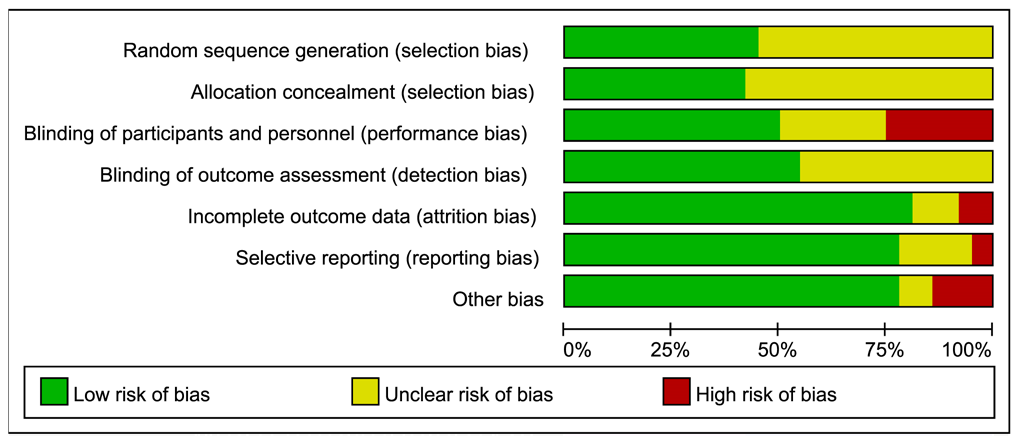
图2 偏倚风险图
Figure 2 Risk of bias chart
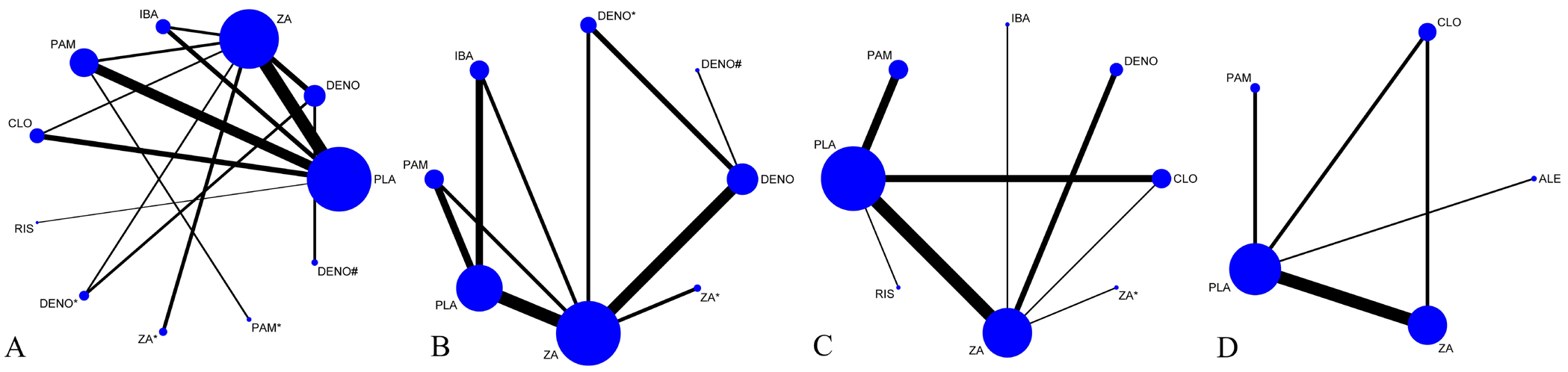
图3 不同药物治疗实体瘤骨转移或多发性骨髓瘤患者的各结局指标网状关系图注:A为不同药物治疗实体瘤骨转移或多发性骨髓瘤患者的总骨相关事件(SREs)发生率网状关系图,B为不同药物治疗实体瘤骨转移或多发性骨髓瘤患者的至首次发生SREs时间,C为不同药物治疗实体瘤骨转移或多发性骨髓瘤患者的总生存时间(OS)网状关系图,D为不同药物治疗实体瘤骨转移或多发性骨髓瘤患者的无进展生存时间(PFS)网状关系图;PLA=安慰剂/未使用骨改良药物组,DENO=地舒单抗原研药标准给药组,ZA=唑来膦酸标准给药组,IBA=伊班膦酸标准给药组,PAM=帕米膦酸标准给药组,PAM*=帕米膦酸长间隔给药组;CLO=氯膦酸标准给药组,ALE=阿仑膦酸标准给药组,RIS=利赛膦酸标准给药组,DENO#=地舒单抗生物类似药标准给药组,DENO*=地舒单抗原研药长间隔给药组,ZA*=唑来膦酸长间隔给药组。
Figure 3 Network evidence map for each outcome indicator in patients with bone metastases or multiple myeloma treated with different drugs
| 干预措施 | PLA | ZA* | PAM* | DENO# | DENO | ZA | IBA | PAM | CLO | RIS |
|---|---|---|---|---|---|---|---|---|---|---|
| ZA* | 1.34(1.07~1.71)a | |||||||||
| PAM* | 1.16(0.35~3.59) | 0.86(0.26~2.72) | ||||||||
| DENO# | 1.58(1.06~2.36)a | 1.17(0.75~1.83) | 1.36(0.41~4.73) | |||||||
| DENO | 1.56(1.34~1.86)a | 1.16(0.91~1.51) | 1.35(0.43~4.47) | 0.99(0.69~1.43) | ||||||
| ZA | 1.36(1.24~1.50)a | 1.01(0.82~1.25) | 1.17(0.38~3.85) | 0.86(0.58~1.27) | 0.87(0.76~0.99)a | |||||
| IBA | 1.26(1.11~1.45)a | 0.94(0.72~1.22) | 1.09(0.35~3.61) | 0.80(0.53~1.21) | 0.81(0.66~0.98)a | 0.93(0.80~1.08) | ||||
| PAM | 1.20(1.09~1.34)a | 0.90(0.70~1.15) | 1.04(0.34~3.39) | 0.76(0.51~1.14) | 0.77(0.64~0.92)a | 0.89(0.78~1.00) | 0.95(0.81~1.12) | |||
| CLO | 1.23(1.08~1.40)a | 0.92(0.70~1.18) | 1.06(0.34~3.50) | 0.78(0.51~1.18) | 0.79(0.64~0.95)a | 0.91(0.78~1.05) | 0.97(0.81~1.17) | 1.02(0.87~1.20) | ||
| RIS | 1.03(0.41~2.60) | 0.77(0.29~1.99) | 0.89(0.21~3.98) | 0.65(0.24~1.79) | 0.66(0.26~1.68) | 0.76(0.30~1.92) | 0.81(0.32~2.08) | 0.86(0.33~2.17) | 0.84(0.33~2.13) | |
| DENO* | 1.65(1.12~2.48)a | 1.23(0.79~1.93) | 1.42(0.43~4.99) | 1.05(0.62~1.77) | 1.05(0.73~1.54) | 1.22(0.83~1.80) | 1.31(0.87~1.99) | 1.37(0.92~2.07) | 1.34(0.89~2.05) | 1.61(0.58~4.42) |
表2 不同药物治疗实体瘤骨转移或多发性骨髓瘤患者的总SREs发生率网状Meta分析[RR(95%CI)]
Table 2 Network meta-analysis of the incidence of total SREs in patients with bone metastases or multiple myeloma treated with different drugs for solid tumors
| 干预措施 | PLA | ZA* | PAM* | DENO# | DENO | ZA | IBA | PAM | CLO | RIS |
|---|---|---|---|---|---|---|---|---|---|---|
| ZA* | 1.34(1.07~1.71)a | |||||||||
| PAM* | 1.16(0.35~3.59) | 0.86(0.26~2.72) | ||||||||
| DENO# | 1.58(1.06~2.36)a | 1.17(0.75~1.83) | 1.36(0.41~4.73) | |||||||
| DENO | 1.56(1.34~1.86)a | 1.16(0.91~1.51) | 1.35(0.43~4.47) | 0.99(0.69~1.43) | ||||||
| ZA | 1.36(1.24~1.50)a | 1.01(0.82~1.25) | 1.17(0.38~3.85) | 0.86(0.58~1.27) | 0.87(0.76~0.99)a | |||||
| IBA | 1.26(1.11~1.45)a | 0.94(0.72~1.22) | 1.09(0.35~3.61) | 0.80(0.53~1.21) | 0.81(0.66~0.98)a | 0.93(0.80~1.08) | ||||
| PAM | 1.20(1.09~1.34)a | 0.90(0.70~1.15) | 1.04(0.34~3.39) | 0.76(0.51~1.14) | 0.77(0.64~0.92)a | 0.89(0.78~1.00) | 0.95(0.81~1.12) | |||
| CLO | 1.23(1.08~1.40)a | 0.92(0.70~1.18) | 1.06(0.34~3.50) | 0.78(0.51~1.18) | 0.79(0.64~0.95)a | 0.91(0.78~1.05) | 0.97(0.81~1.17) | 1.02(0.87~1.20) | ||
| RIS | 1.03(0.41~2.60) | 0.77(0.29~1.99) | 0.89(0.21~3.98) | 0.65(0.24~1.79) | 0.66(0.26~1.68) | 0.76(0.30~1.92) | 0.81(0.32~2.08) | 0.86(0.33~2.17) | 0.84(0.33~2.13) | |
| DENO* | 1.65(1.12~2.48)a | 1.23(0.79~1.93) | 1.42(0.43~4.99) | 1.05(0.62~1.77) | 1.05(0.73~1.54) | 1.22(0.83~1.80) | 1.31(0.87~1.99) | 1.37(0.92~2.07) | 1.34(0.89~2.05) | 1.61(0.58~4.42) |
| 干预措施 | PLA | DENO | ZA | IBA | PAM | DENO* | ZA* |
|---|---|---|---|---|---|---|---|
| DENO | 1.64(1.33~2.09)a | ||||||
| ZA | 1.40(1.23~1.64)a | 0.86(0.72~1.02) | |||||
| IBA | 1.42(1.19~1.76)a | 0.87(0.67~1.12) | 1.01(0.84~1.22) | ||||
| PAM | 1.34(1.13~1.65)a | 0.82(0.63~1.07) | 0.96(0.78~1.17) | 0.95(0.73~1.21) | |||
| DENO* | 1.81(1.12~2.97)a | 1.10(0.71~1.72) | 1.28(0.81~2.05) | 1.27(0.77~2.1) | 1.34(0.81~2.23) | ||
| ZA* | 1.30(0.81~2.11) | 0.79(0.48~1.29) | 0.92(0.58~1.45) | 0.91(0.55~1.49) | 0.96(0.58~1.58) | 0.72(0.37~1.37) | |
| DENO# | 1.14(0.67~1.98) | 0.69(0.42~1.13) | 0.81(0.48~1.36) | 0.80(0.46~1.39) | 0.85(0.49~1.48) | 0.63(0.33~1.22) | 0.88(0.44~1.76) |
表3 不同药物治疗实体瘤骨转移或多发性骨髓瘤患者的至首次发生SREs的时间网状Meta分析[HR(95%CI)]
Table 3 Network meta-analysis of the time to the first occurrence of SREs in patients treated with bone metastases from solid tumors or multiple myeloma with different agents
| 干预措施 | PLA | DENO | ZA | IBA | PAM | DENO* | ZA* |
|---|---|---|---|---|---|---|---|
| DENO | 1.64(1.33~2.09)a | ||||||
| ZA | 1.40(1.23~1.64)a | 0.86(0.72~1.02) | |||||
| IBA | 1.42(1.19~1.76)a | 0.87(0.67~1.12) | 1.01(0.84~1.22) | ||||
| PAM | 1.34(1.13~1.65)a | 0.82(0.63~1.07) | 0.96(0.78~1.17) | 0.95(0.73~1.21) | |||
| DENO* | 1.81(1.12~2.97)a | 1.10(0.71~1.72) | 1.28(0.81~2.05) | 1.27(0.77~2.1) | 1.34(0.81~2.23) | ||
| ZA* | 1.30(0.81~2.11) | 0.79(0.48~1.29) | 0.92(0.58~1.45) | 0.91(0.55~1.49) | 0.96(0.58~1.58) | 0.72(0.37~1.37) | |
| DENO# | 1.14(0.67~1.98) | 0.69(0.42~1.13) | 0.81(0.48~1.36) | 0.80(0.46~1.39) | 0.85(0.49~1.48) | 0.63(0.33~1.22) | 0.88(0.44~1.76) |
| 干预措施 | PLA | DENO | ZA | IBA | PAM | CLO | RIS |
|---|---|---|---|---|---|---|---|
| DENO | 1.20(1.04~1.46)a | ||||||
| ZA | 1.16(1.06~1.32)a | 0.97(0.85~1.1) | |||||
| IBA | 1.26(0.99~1.69) | 1.05(0.79~1.38) | 1.09(0.85~1.39) | ||||
| PAM | 1.03(0.9~1.22) | 0.86(0.68~1.06) | 0.89(0.70~1.06) | 0.82(0.6~1.1) | |||
| CLO | 1.08(0.95~1.26) | 0.90(0.70~1.09) | 0.93(0.8~1.07) | 0.85(0.64~1.13) | 1.05(0.86~1.29) | ||
| RIS | 0.92(0.70~1.21) | 0.76(0.54~1.03) | 0.79(0.57~1.04) | 0.73(0.49~1.04) | 0.89(0.64~1.20) | 0.85(0.61~1.14) | |
| ZA* | 1.39(0.80~2.38) | 1.15(0.68~1.96) | 1.19(0.70~2.00) | 1.10(0.60~1.95) | 1.34(0.78~2.33) | 1.28(0.75~2.21) | 1.51(0.84~2.78) |
表4 不同药物治疗实体瘤骨转移或多发性骨髓瘤患者的OS网状Meta分析[HR(95%CI)]
Table 4 Network meta-analysis of OS in patients treated with bone metastases from solid tumors or multiple myeloma with different agents
| 干预措施 | PLA | DENO | ZA | IBA | PAM | CLO | RIS |
|---|---|---|---|---|---|---|---|
| DENO | 1.20(1.04~1.46)a | ||||||
| ZA | 1.16(1.06~1.32)a | 0.97(0.85~1.1) | |||||
| IBA | 1.26(0.99~1.69) | 1.05(0.79~1.38) | 1.09(0.85~1.39) | ||||
| PAM | 1.03(0.9~1.22) | 0.86(0.68~1.06) | 0.89(0.70~1.06) | 0.82(0.6~1.1) | |||
| CLO | 1.08(0.95~1.26) | 0.90(0.70~1.09) | 0.93(0.8~1.07) | 0.85(0.64~1.13) | 1.05(0.86~1.29) | ||
| RIS | 0.92(0.70~1.21) | 0.76(0.54~1.03) | 0.79(0.57~1.04) | 0.73(0.49~1.04) | 0.89(0.64~1.20) | 0.85(0.61~1.14) | |
| ZA* | 1.39(0.80~2.38) | 1.15(0.68~1.96) | 1.19(0.70~2.00) | 1.10(0.60~1.95) | 1.34(0.78~2.33) | 1.28(0.75~2.21) | 1.51(0.84~2.78) |
| 干预措施 | PLA | ZA | PAM | CLO |
|---|---|---|---|---|
| ZA | 1.18(0.97~1.42) | |||
| PAM | 1.09(0.75~1.56) | 0.93(0.61~1.39) | ||
| CLO | 0.94(0.68~1.27) | 0.80(0.59~1.06) | 0.86(0.50~1.40) | |
| ALE | 1.20(0.69~2.09) | 1.02(0.57~1.83) | 1.11(0.57~2.16) | 1.29(0.69~2.42) |
表5 不同药物治疗实体瘤骨转移或多发性骨髓瘤患者的PFS网状Meta分析[HR(95%CI)]
Table 5 Network meta-analysis of PFS in patients treated with bone metastases from solid tumors or multiple myeloma with different agents
| 干预措施 | PLA | ZA | PAM | CLO |
|---|---|---|---|---|
| ZA | 1.18(0.97~1.42) | |||
| PAM | 1.09(0.75~1.56) | 0.93(0.61~1.39) | ||
| CLO | 0.94(0.68~1.27) | 0.80(0.59~1.06) | 0.86(0.50~1.40) | |
| ALE | 1.20(0.69~2.09) | 1.02(0.57~1.83) | 1.11(0.57~2.16) | 1.29(0.69~2.42) |
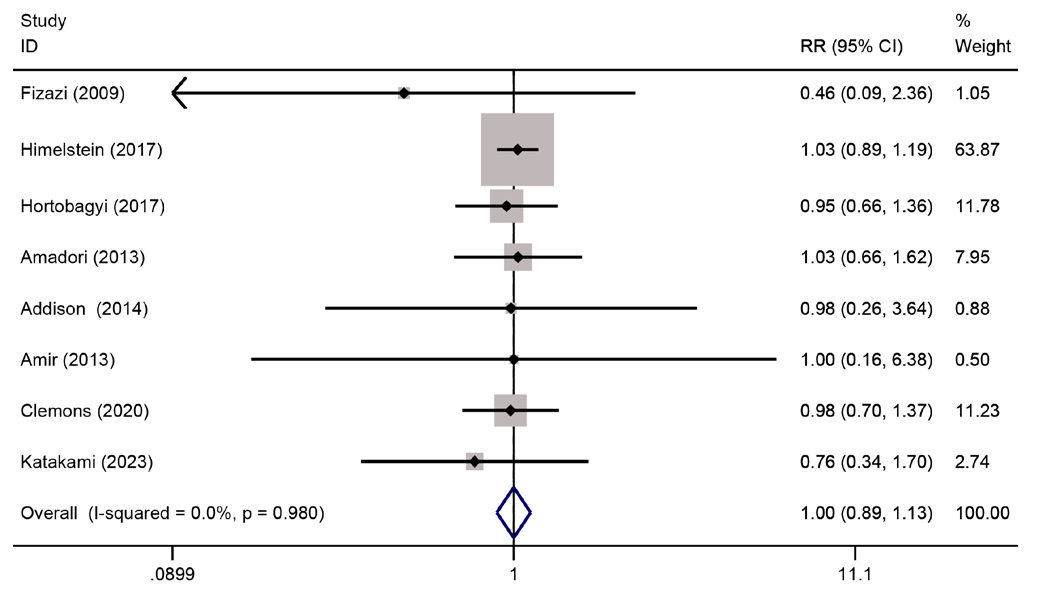
图4 标准给药亚组与长间隔给药亚组的总SREs发生率森林图
Figure 4 Forest plot of the incidence of total SREs in the standard dosing subgroup versus the long interval dosing subgroup
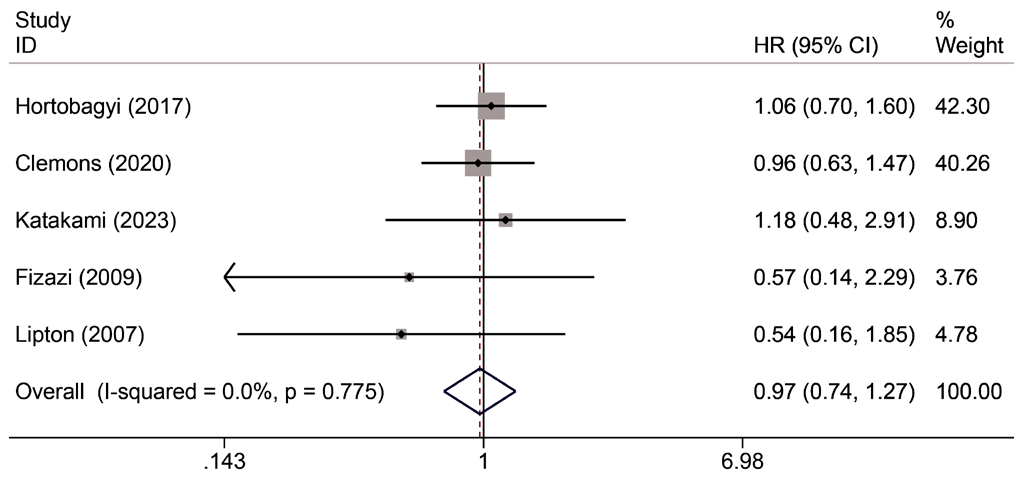
图5 标准给药亚组与长间隔给药亚组的至首次发生SRE时间森林图
Figure 5 Forest plot of the incidence of the time to the first occurrence of SREs in the standard dosing subgroup versus the long interval dosing subgroup
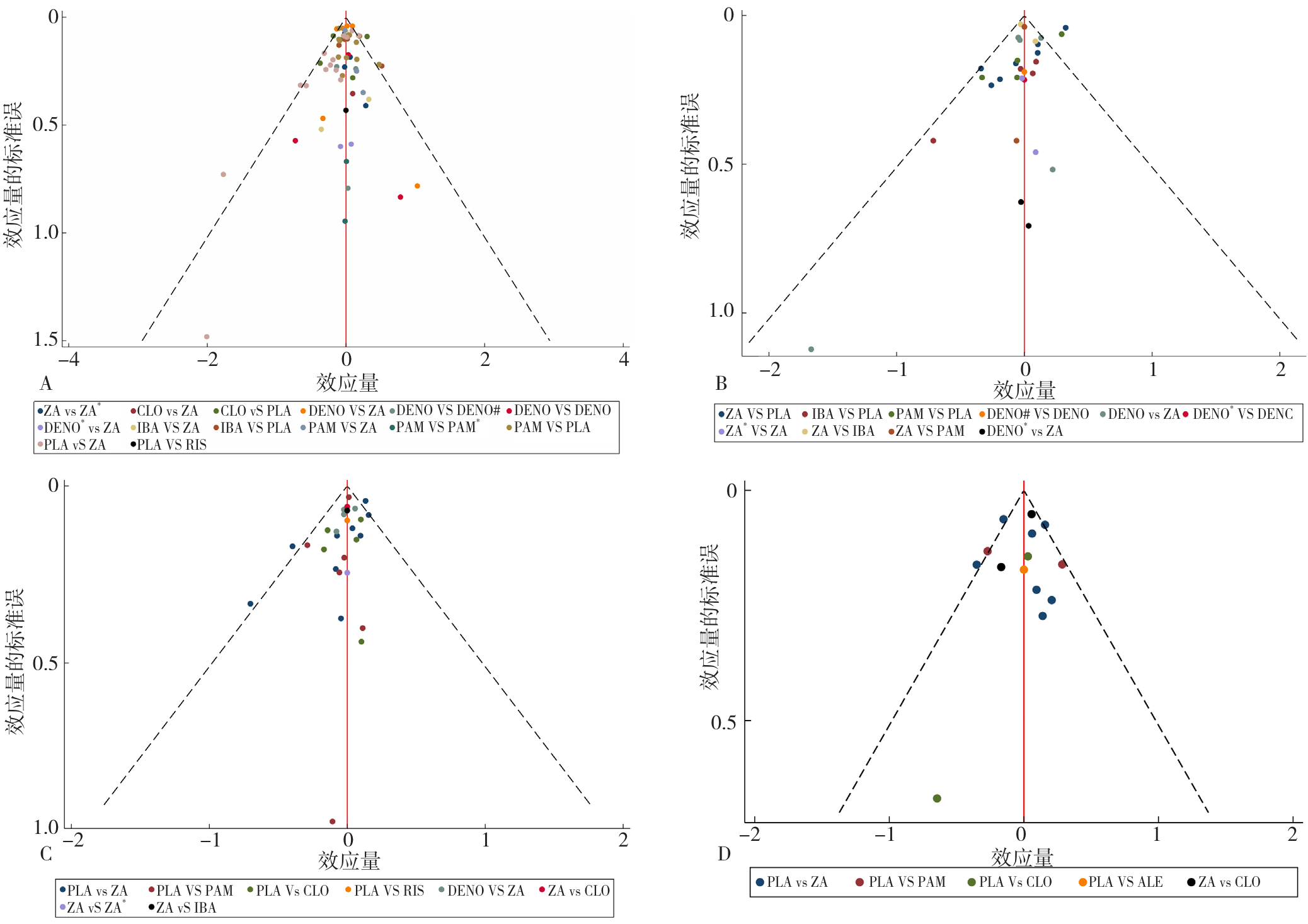
图6 不同药物治疗实体瘤骨转移或多发性骨髓瘤患者的总SREs发生率、至首次发生SREs时间、OS、PFS的"比较-校正"漏斗图注:A为不同药物治疗实体瘤骨转移或多发性骨髓瘤患者的总SREs发生率漏斗图,B为不同药物治疗实体瘤骨转移或多发性骨髓瘤患者的至首次发生SREs时间漏斗图,C为不同药物治疗实体瘤骨转移或多发性骨髓瘤患者的OS漏斗图,D为不同药物治疗实体瘤骨转移或多发性骨髓瘤患者的PFS漏斗图。
Figure 6 Funnel plot for correction the total incidence of SREs,time to first SREs,OS and PFS in patients with solid tumor bone metastasis or multiple myeloma treated with different drugs
| [1] |
|
| [2] |
中国医师协会肿瘤医师分会乳腺癌学组, 中国抗癌协会国际医疗交流分会. 骨改良药物用于恶性肿瘤骨转移治疗的安全性共识(2024版)[J]. 中华肿瘤杂志, 2024, 46(7): 637-645. DOI: 10.3760/cma.j.cn112152-20240111-00022.
|
| [3] |
支修益, 王洁, 刘伦旭, 等. 中国肺癌骨转移临床诊疗指南(2024版)[J]. 中国胸心血管外科临床杂志, 2024, 31(5): 643-653. DOI: 10.7507/1007-4848.202402042.
|
| [4] |
|
| [5] |
|
| [6] |
|
| [7] |
|
| [8] |
|
| [9] |
|
| [10] |
|
| [11] |
|
| [12] |
|
| [13] |
|
| [14] |
|
| [15] |
|
| [16] |
|
| [17] |
|
| [18] |
|
| [19] |
Novartis Pharmaceuticals. Therapy with zoledronic acid in patients with multiple myeloma stageⅠ[EB/OL].(2005-09-13)[2025-02-11].
|
| [20] |
|
| [21] |
|
| [22] |
|
| [23] |
|
| [24] |
|
| [25] |
|
| [26] |
|
| [27] |
|
| [28] |
|
| [29] |
|
| [30] |
|
| [31] |
|
| [32] |
|
| [33] |
|
| [34] |
|
| [35] |
|
| [36] |
|
| [37] |
|
| [38] |
|
| [39] |
|
| [40] |
|
| [41] |
|
| [42] |
|
| [43] |
|
| [44] |
|
| [45] |
|
| [46] |
|
| [47] |
|
| [48] |
|
| [49] |
|
| [50] |
|
| [51] |
|
| [52] |
|
| [53] |
|
| [54] |
|
| [55] |
|
| [56] |
|
| [57] |
|
| [58] |
|
| [59] |
|
| [60] |
|
| [61] |
|
| [62] |
|
| [63] |
|
| [64] |
|
| [65] |
|
| [66] |
|
| [67] |
|
| [68] |
|
| [69] |
|
| [70] |
|
| [71] |
|
| [72] |
向虹, 岳磊, 赵红, 等.应用R语言BUGSnet程序包实现贝叶斯网状Meta分析[J]. 中国循证医学杂志, 2022, 22(05): 600-608. DOI: 10.7507/1672-2531.202111140
|
| [73] |
|
| [74] |
阚红金, 韦薇. 关于地舒单抗生物类似药相似性评价的思考[J]. 中国新药杂志, 2023, 32(24): 2477-248. DOI: 10.3969/j.issn.1003-3734.20.24.007.
|
| [75] |
|
| [76] |
|
| [77] |
|
| [78] |
|
| [79] |
|
| [1] | 张天宇, 陈飞, 李新, 张佳佳, 申曼, 詹晓凯, 汤然, 范斯斌, 赵凤仪, 黄仲夏. 骨髓瘤患者白细胞免疫球蛋白样受体B1和CD36及淋巴增强因子1水平升高的意义研究[J]. 中国全科医学, 2026, 29(29): 4272-4280. |
| [2] | 赵聪娟, 金田田, 梁婕, 王贝宁, 高燕. 胰高血糖素样肽1受体激动剂对糖尿病肾脏病患者治疗效果比较:一项网状Meta分析[J]. 中国全科医学, 2026, 29(29): 4326-4336. |
| [3] | 姜妍琳, 王喆, 翟睿, 张梦洁, 陈溪, 王俊宏. 中药复方治疗注意缺陷多动障碍优势方案筛选研究:基于网状Meta分析和熵权TOPSIS法[J]. 中国全科医学, 2026, 29(27): 3985-3994. |
| [4] | 李俞彤, 赵丹廷, 江枫, 王艳娜, 刘益宗, 梁文娟, 陆家海. 呼吸道合胞病毒mRNA疫苗与重组蛋白亚单位疫苗有效性和安全性的系统评价与Meta分析[J]. 中国全科医学, 2026, 29(19): 2744-2752. |
| [5] | 詹立, 衡朝阳, 何俍钰, 赵捷, 陈杰, 邢晋山. 靶向B细胞成熟抗原的嵌合抗原受体-T细胞疗法治疗中国复发/难治性多发性骨髓瘤患者疗效及安全性的Meta分析[J]. 中国全科医学, 2026, 29(14): 1921-1930. |
| [6] | 王菲, 韩伟钰, 孙韬. 艾灸联合三阶梯疗法治疗癌性疼痛的网状Meta分析[J]. 中国全科医学, 2026, 29(09): 1203-1211. |
| [7] | 谭洁文, 陈嫦, 钟锦漫, 胡婉贞, 白海, 熊丹. 基于生物信息学分析乳酸代谢对多发性骨髓瘤患者预后及肿瘤微环境的影响研究[J]. 中国全科医学, 2025, 28(36): 4592-4604. |
| [8] | 郑博月, 付积艺, 吴佳霏, 王珺, 李慧. 卡非佐米治疗多发性骨髓瘤的疗效及安全性研究[J]. 中国全科医学, 2025, 28(30): 3806-3814. |
| [9] | 全家霖, 朱琳, 苏煜, 陈泽恺, 陈梓淇, 张卓凡. 运动方式对超重或肥胖儿童青少年执行功能改善效果的网状Meta分析[J]. 中国全科医学, 2025, 28(27): 3422-3431. |
| [10] | 李浩, 李江涛, 刘丹, 王建军. 贝利尤单抗和阿尼鲁单抗及泰它西普治疗系统性红斑狼疮疗效和安全性的网状Meta分析[J]. 中国全科医学, 2025, 28(23): 2924-2933. |
| [11] | 陈飞, 王金英, 于海搏, 李新, 张佳佳, 申曼, 詹晓凯, 汤然, 范斯斌, 赵凤仪, 张天宇, 黄仲夏. 中性粒细胞明胶酶相关运载蛋白、T细胞免疫球蛋白粘蛋白受体1、血管细胞黏附分子-1和激活素A升高在新诊断多发性骨髓瘤患者中的意义研究[J]. 中国全科医学, 2025, 28(22): 2740-2749. |
| [12] | 何芸, 范焕芳, 马盼, 许绍青, 杨柳, 金明哲, 张明蕊, 陈佳琪. 不同针灸治疗方式干预乳腺癌术后上肢淋巴水肿效果的网状Meta分析[J]. 中国全科医学, 2025, 28(14): 1788-1794. |
| [13] | 朱胜杰, 刁华琼, 杭晓屹, 孙文军. 不同中成药注射液治疗后循环缺血性眩晕效果的网状Meta分析[J]. 中国全科医学, 2025, 28(14): 1795-1808. |
| [14] | 迟洵, 刘思思, 陈巧, 胡玥, 王伟仙. 不同营养筛查工具对肝硬化患者营养筛查适用性的网状Meta分析[J]. 中国全科医学, 2025, 28(11): 1395-1402. |
| [15] | 谷明宇, 秦廷廷, 乔昆, 白欣苑, 王尧, 杨宇彤, 李星明. 中国基层高血压管理模式的网状Meta分析[J]. 中国全科医学, 2025, 28(10): 1265-1272. |
| 阅读次数 | ||||||
|
全文 |
|
|||||
|
摘要 |
|
|||||