
中国全科医学 ›› 2026, Vol. 29 ›› Issue (09): 1168-1179.DOI: 10.12114/j.issn.1007-9572.2024.0720
郭阳阳1, 张琳琳2, 石广志1, 张晋东3,*( )
)
收稿日期:2025-04-10
修回日期:2025-07-16
出版日期:2026-03-20
发布日期:2026-01-28
通讯作者:
张晋东
作者贡献:
郭阳阳负责文献数据分析,图表制作,论文的质量控制及核查,论文撰写及修改,并对论文整体负责;张琳琳负责文献检索,筛选和去重;石广志负责论文数据核验,论文质量控制及修改;张晋东负责确定论文选题,论文修改,论文结构总体把控,确定终稿,并对论文整体负责。
基金资助:
GUO Yangyang1, ZHANG Linlin2, SHI Guangzhi1, ZHANG Jindong3,*()
Received:2025-04-10
Revised:2025-07-16
Published:2026-03-20
Online:2026-01-28
Contact:
ZHANG Jindong
摘要: 背景 神经系统疾病严重影响患者生活质量,其复杂病因涉及遗传、感染、免疫等多种因素。近年来,关于肠道微生物群通过肠-脑轴参与神经系统疾病发生、发展的研究引起了广泛关注,但相关研究热点和发展趋势尚未得到系统梳理。 目的 对神经系统疾病与肠道菌群相关文献进行可视化分析,以了解国内外研究的现状,探索其热点和前沿趋势,为未来的研究提供参考依据。 方法 检索Web of Science数据库核心合集中自2000-01-01—2024-07-29的相关文献,运用CiteSpace软件从发文量、文献共被引、高被引文献、引文激增文献、关键词共现、国家合作、机构合作及作者合作等多个方面进行可视化分析。 结果 共纳入5 239篇文献,自2012年以来,发文量逐年上升,2022年年发文量超过1 000篇。研究热点主要集中于帕金森病、阿尔茨海默病、缺血性卒中及肌萎缩侧索硬化症等领域。文献共被引分析显示,肠道菌群与神经系统疾病的关系正成为近年来的研究重点。关键词共现分析进一步明确了短链脂肪酸、肠-脑轴、肠道菌群失调等重要研究主题的频繁出现,反映了对这些方向的高度关注。高被引文章和引文激增文献分析显示,研究趋势主要集中在肠道微生物对神经退行性疾病及中枢神经系统其他疾病的影响机制上,尤其是短链脂肪酸、肠道菌群多样性和肠-脑轴的调控作用。 结论 基于CiteSpace的文献计量学分析可见肠道菌群与多种神经系统疾病(如帕金森病、阿尔茨海默病、多发性硬化症等)之间的潜在关联,通过干预微生物群失调有望为神经系统疾病的治疗开辟新的方向。进一步的纵向研究和临床试验将有助于验证这一观点,揭示肠道菌群在神经系统疾病中的作用机制。
中图分类号:
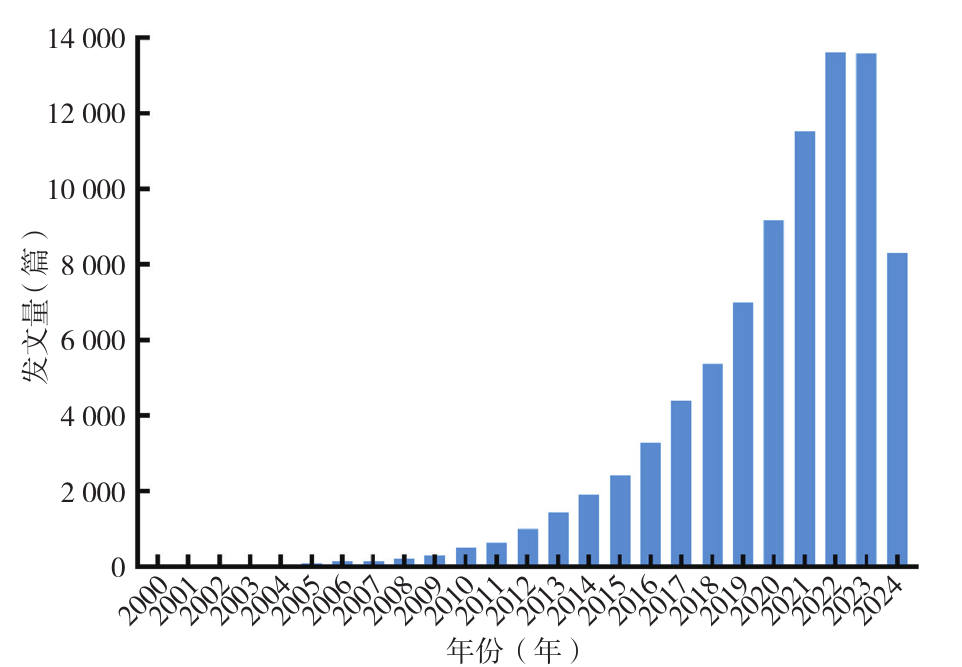
图1 2000—2024年肠道菌群领域相关文献发文趋势
Figure 1 Publication trends in gut microbiota research in 2000-2024
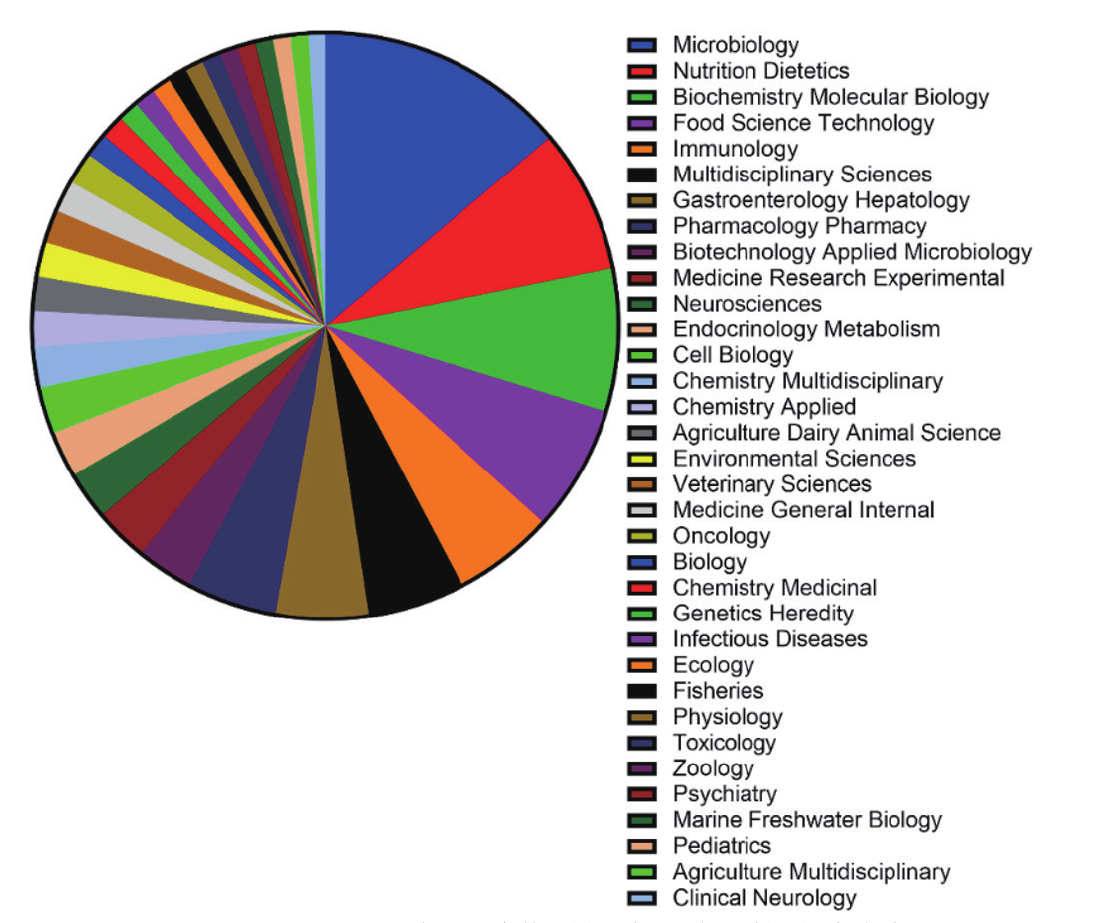
图2 2000—2024年肠道菌群领域相关文献学科分布
Figure 2 Subject distribution of gut microbiota research publications in 2000-2024
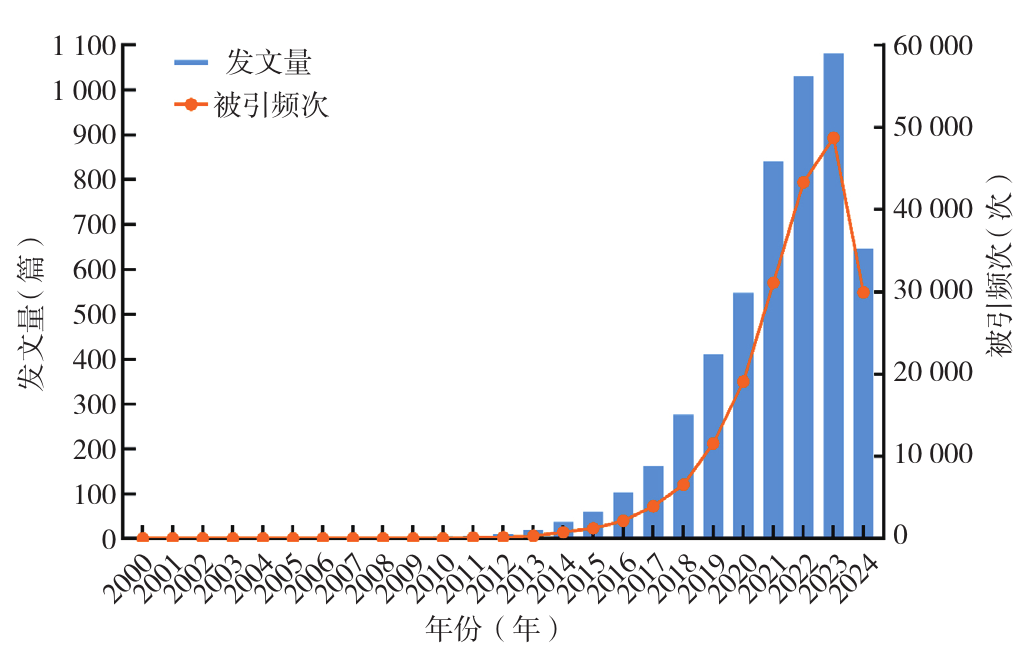
图3 2000—2024年神经系统疾病与肠道菌群相关文献发文量及被引频次
Figure 3 Number of publications and citation frequency of research on neurological diseases and gut microbiota in 2000-2024
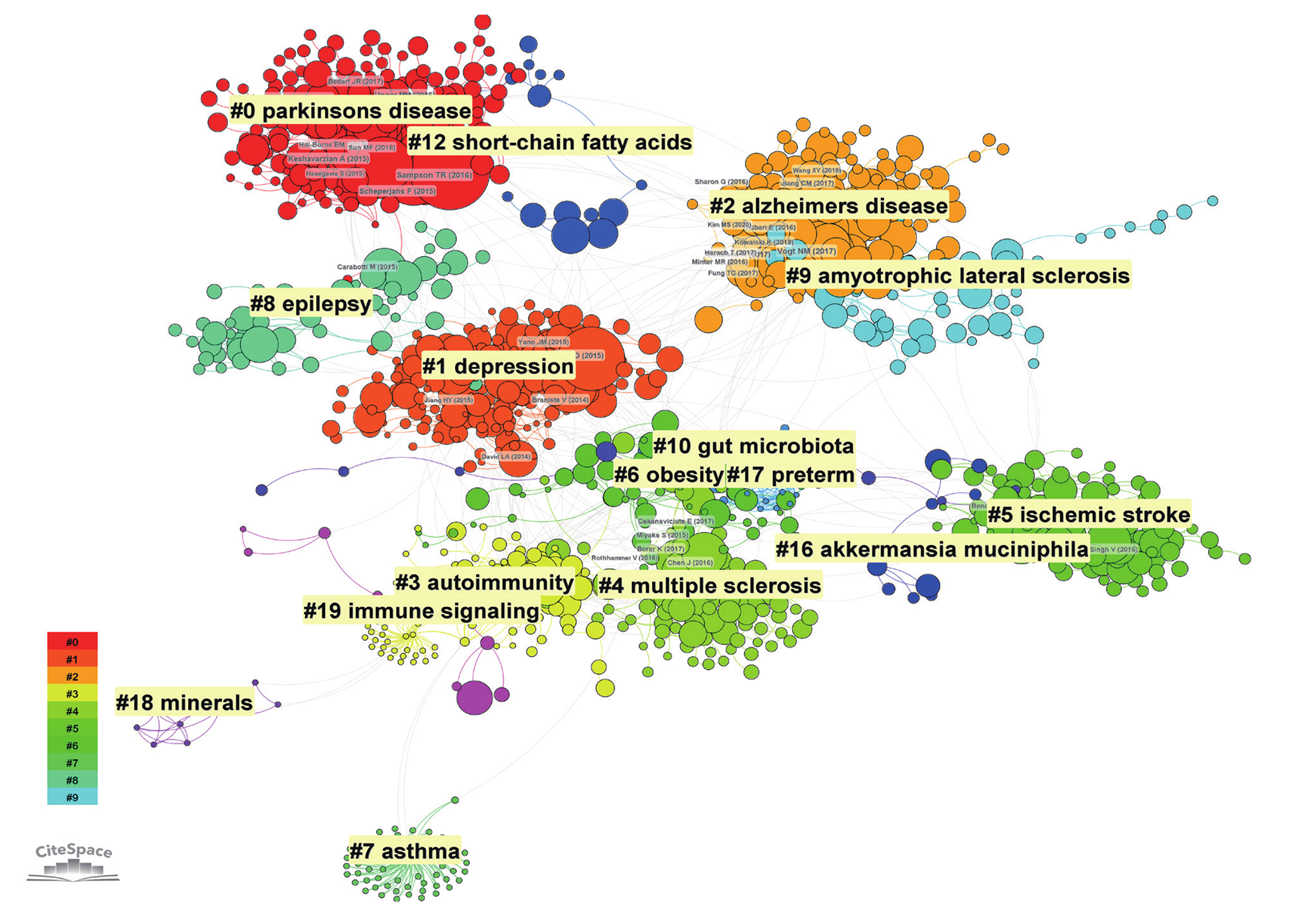
图4 神经系统疾病与肠道菌群领域相关文献共被引聚类网络图谱
Figure 4 Co-citation clustering network map of literature related to neurological diseases and gut microbiota
| 聚类编号 | 聚类规模 | 轮廓值 | 发表年份(平均值)(年) | 聚类标签(LLR) |
|---|---|---|---|---|
| 0 | 187 | 0.962 | 2017 | parkinsons disease |
| 1 | 169 | 0.866 | 2013 | depression |
| 2 | 169 | 0.914 | 2018 | alzheimers disease |
| 3 | 112 | 0.946 | 2009 | autoimmunity |
| 4 | 93 | 0.910 | 2017 | multiple sclerosis |
| 5 | 82 | 0.976 | 2017 | ischemic stroke |
| 6 | 62 | 0.913 | 2011 | obesity |
| 7 | 58 | 0.993 | 2005 | asthma |
| 8 | 51 | 0.936 | 2017 | epilepsy |
| 9 | 49 | 0.958 | 2019 | amyotrophic lateral sclerosis |
| 10 | 24 | 0.969 | 2011 | gut microbiota |
| 12 | 16 | 0.983 | 2018 | short-chain fatty acids |
| 16 | 9 | 0.999 | 2017 | akkermansia muciniphila |
| 17 | 9 | 0.988 | 2013 | preterm |
| 18 | 8 | 0.990 | 2007 | minerals |
| 19 | 8 | 0.996 | 2013 | immune signaling |
表1 2005—2024年神经系统疾病与肠道菌群领域共被引网络中16个最大聚类的信息总结
Table 1 Summary of information for the 16 largest clusters in the co-citation network of neurological diseases and gut microbiota in 2005-2024
| 聚类编号 | 聚类规模 | 轮廓值 | 发表年份(平均值)(年) | 聚类标签(LLR) |
|---|---|---|---|---|
| 0 | 187 | 0.962 | 2017 | parkinsons disease |
| 1 | 169 | 0.866 | 2013 | depression |
| 2 | 169 | 0.914 | 2018 | alzheimers disease |
| 3 | 112 | 0.946 | 2009 | autoimmunity |
| 4 | 93 | 0.910 | 2017 | multiple sclerosis |
| 5 | 82 | 0.976 | 2017 | ischemic stroke |
| 6 | 62 | 0.913 | 2011 | obesity |
| 7 | 58 | 0.993 | 2005 | asthma |
| 8 | 51 | 0.936 | 2017 | epilepsy |
| 9 | 49 | 0.958 | 2019 | amyotrophic lateral sclerosis |
| 10 | 24 | 0.969 | 2011 | gut microbiota |
| 12 | 16 | 0.983 | 2018 | short-chain fatty acids |
| 16 | 9 | 0.999 | 2017 | akkermansia muciniphila |
| 17 | 9 | 0.988 | 2013 | preterm |
| 18 | 8 | 0.990 | 2007 | minerals |
| 19 | 8 | 0.996 | 2013 | immune signaling |
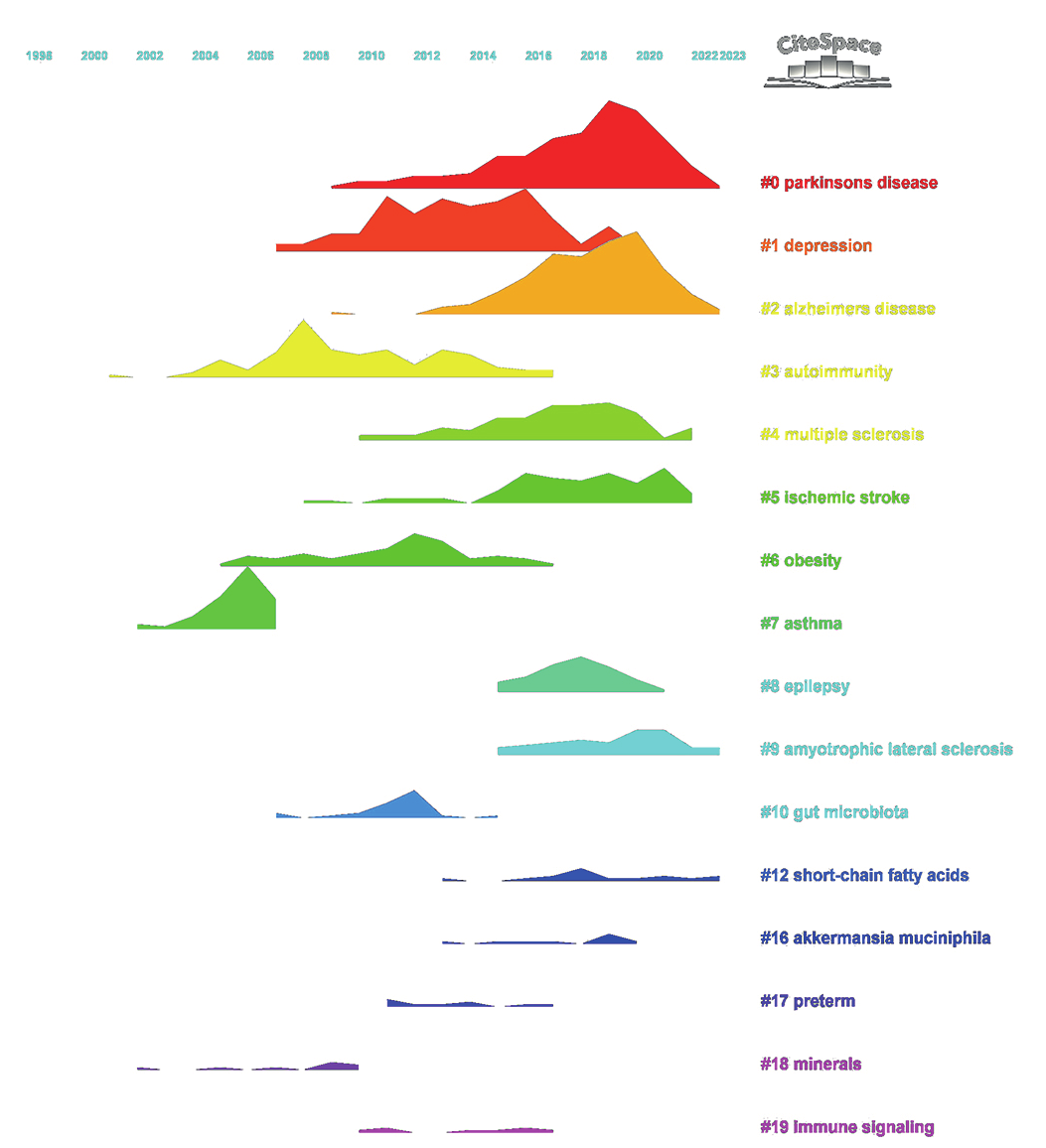
图5 神经系统疾病与肠道菌群领域相关文献共被引聚类网络时间趋势图
Figure 5 Temporal trend of the co-citation clustering network in the literature related to neurological diseases and gut microbiota
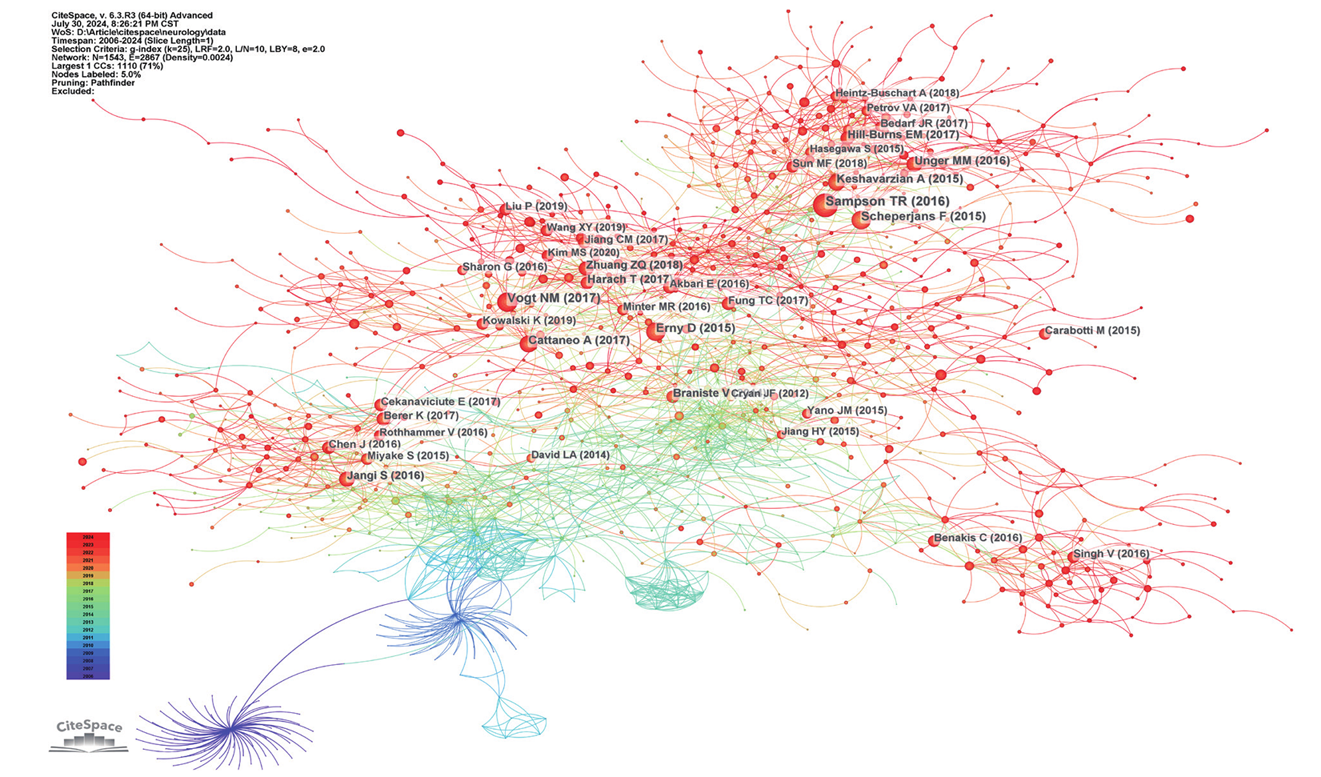
图6 神经系统疾病与肠道菌群领域高被引文章网络图谱
Figure 6 Network map of highly cited articles in the field of neurological diseases and gut microbiota
| 引用次数(次) | 第一作者 | 共被引文献节点标识 | DOI |
|---|---|---|---|
| 898 | SAMPSON[ | P1469 | 10.1016/j.cell.2016.11.018 |
| 670 | VOGT[ | P0 | 10.1038/s41598-017-13601-y |
| 645 | ERNY[ | P965 | 10.1038/nn.4030 |
| 625 | SCHEPERJANS[ | P350 | 10.1002/mds.26069 |
| 537 | CRYAN[ | P1877 | 10.1152/physrev.00018.2018 |
| 484 | CATTANEO[ | P60 | 10.1016/j.neurobiolaging.2016.08.019 |
| 479 | UNGER[ | P66 | 10.1016/j.parkreldis.2016.08.019 |
| 474 | KESHAVARZIAN[ | P1351 | 10.1002/mds.26307 |
| 399 | JANGI[ | P0 | 10.1038/ncomms12015 |
| 371 | BRANISTE[ | P0 | 10.1126/scitranslmed.3009759 |
表2 2006—2024年神经系统疾病与肠道菌群领域引用频率最高的10篇文献相关情况
Table 2 Top 10 most cited articles in the field of neurological diseases and gut microbiota from 2006 to 2024
| 引用次数(次) | 第一作者 | 共被引文献节点标识 | DOI |
|---|---|---|---|
| 898 | SAMPSON[ | P1469 | 10.1016/j.cell.2016.11.018 |
| 670 | VOGT[ | P0 | 10.1038/s41598-017-13601-y |
| 645 | ERNY[ | P965 | 10.1038/nn.4030 |
| 625 | SCHEPERJANS[ | P350 | 10.1002/mds.26069 |
| 537 | CRYAN[ | P1877 | 10.1152/physrev.00018.2018 |
| 484 | CATTANEO[ | P60 | 10.1016/j.neurobiolaging.2016.08.019 |
| 479 | UNGER[ | P66 | 10.1016/j.parkreldis.2016.08.019 |
| 474 | KESHAVARZIAN[ | P1351 | 10.1002/mds.26307 |
| 399 | JANGI[ | P0 | 10.1038/ncomms12015 |
| 371 | BRANISTE[ | P0 | 10.1126/scitranslmed.3009759 |
| 第一作者 | 发表年份(年) | 引用强度 |
|---|---|---|
| ROMANO[ | 2021 | 17.806 1 |
| AHO[ | 2021 | 17.779 6 |
| RUTSCH[ | 2020 | 17.608 3 |
| KESIKA[ | 2021 | 16.923 1 |
| COLOMBO[ | 2021 | 14.012 3 |
| TAN[ | 2021 | 12.472 1 |
| XU[ | 2021 | 12.130 0 |
| LING[ | 2020 | 11.445 7 |
| MARIZZONI[ | 2020 | 11.159 7 |
| NEEDHAM[ | 2020 | 11.103 6 |
| SRIVASTAV[ | 2019 | 10.590 5 |
| DEN[ | 2020 | 10.299 0 |
表3 2022—2024年神经系统疾病与肠道菌群领域引用激增的文献
Table 3 Literature with citation surge in the field of neurological diseases and gut microbiota from 2022 to 2024
| 第一作者 | 发表年份(年) | 引用强度 |
|---|---|---|
| ROMANO[ | 2021 | 17.806 1 |
| AHO[ | 2021 | 17.779 6 |
| RUTSCH[ | 2020 | 17.608 3 |
| KESIKA[ | 2021 | 16.923 1 |
| COLOMBO[ | 2021 | 14.012 3 |
| TAN[ | 2021 | 12.472 1 |
| XU[ | 2021 | 12.130 0 |
| LING[ | 2020 | 11.445 7 |
| MARIZZONI[ | 2020 | 11.159 7 |
| NEEDHAM[ | 2020 | 11.103 6 |
| SRIVASTAV[ | 2019 | 10.590 5 |
| DEN[ | 2020 | 10.299 0 |
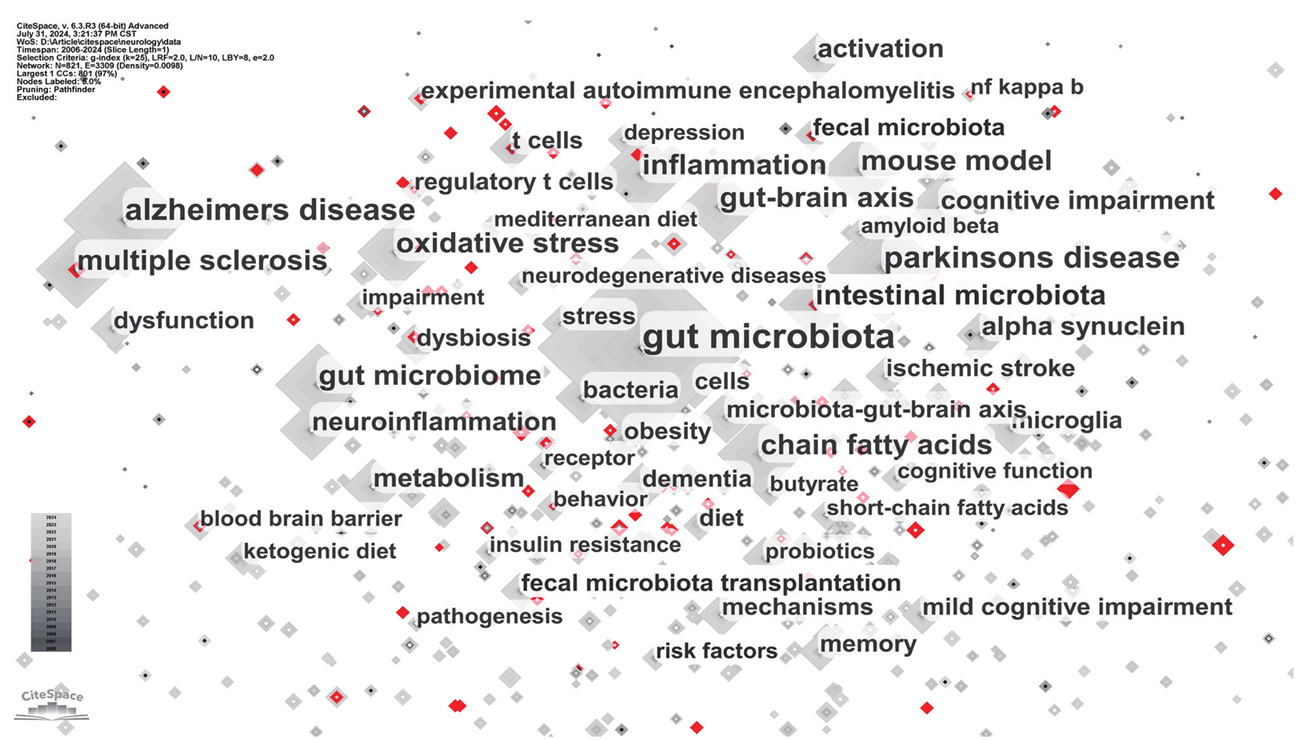
图7 神经系统疾病与肠道菌群领域文献关键词共现网络图谱
Figure 7 Co-occurrence network map of keywords in the field of neurological diseases and gut microbiota
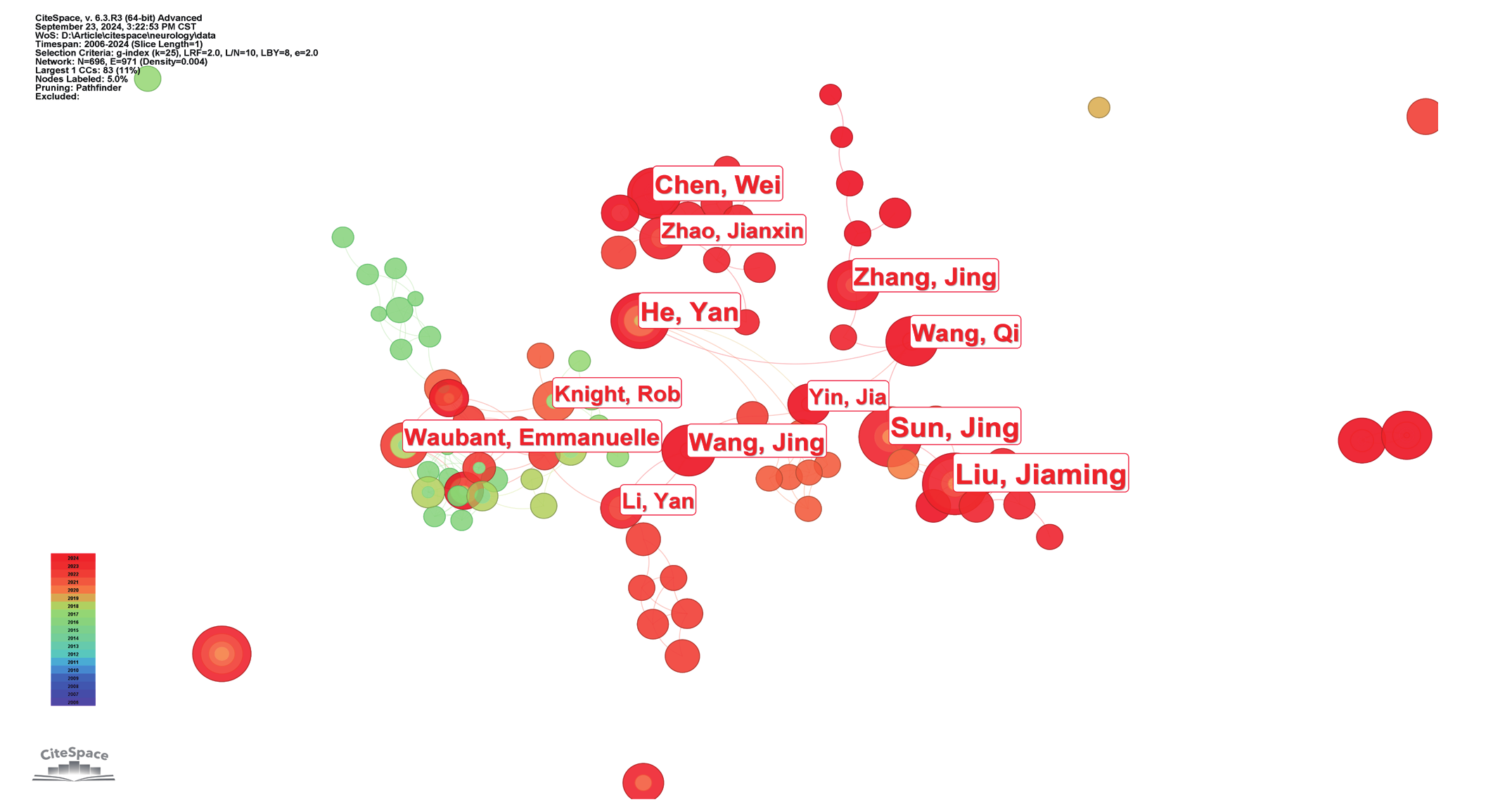
图8 神经系统疾病与肠道菌群领域文献不同国家/地区合作网络图谱
Figure 8 Collaboration network map of different countries/regions in the field of neurological diseases and gut microbiota
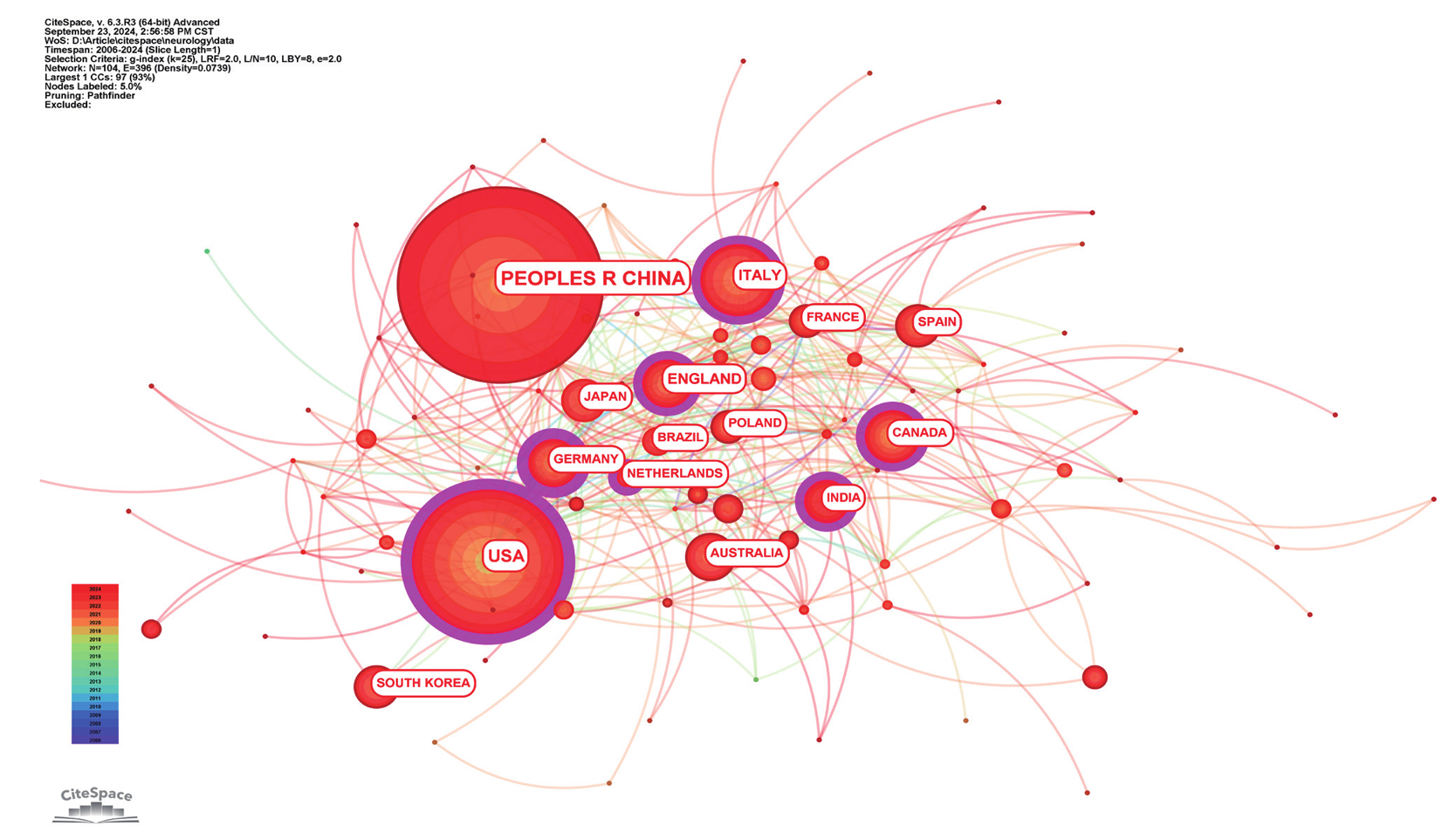
图9 神经系统疾病与肠道菌群领域文献不同机构合作网络图谱
Figure 9 Collaboration network map of different institutions in the field of neurological diseases and gut microbiota
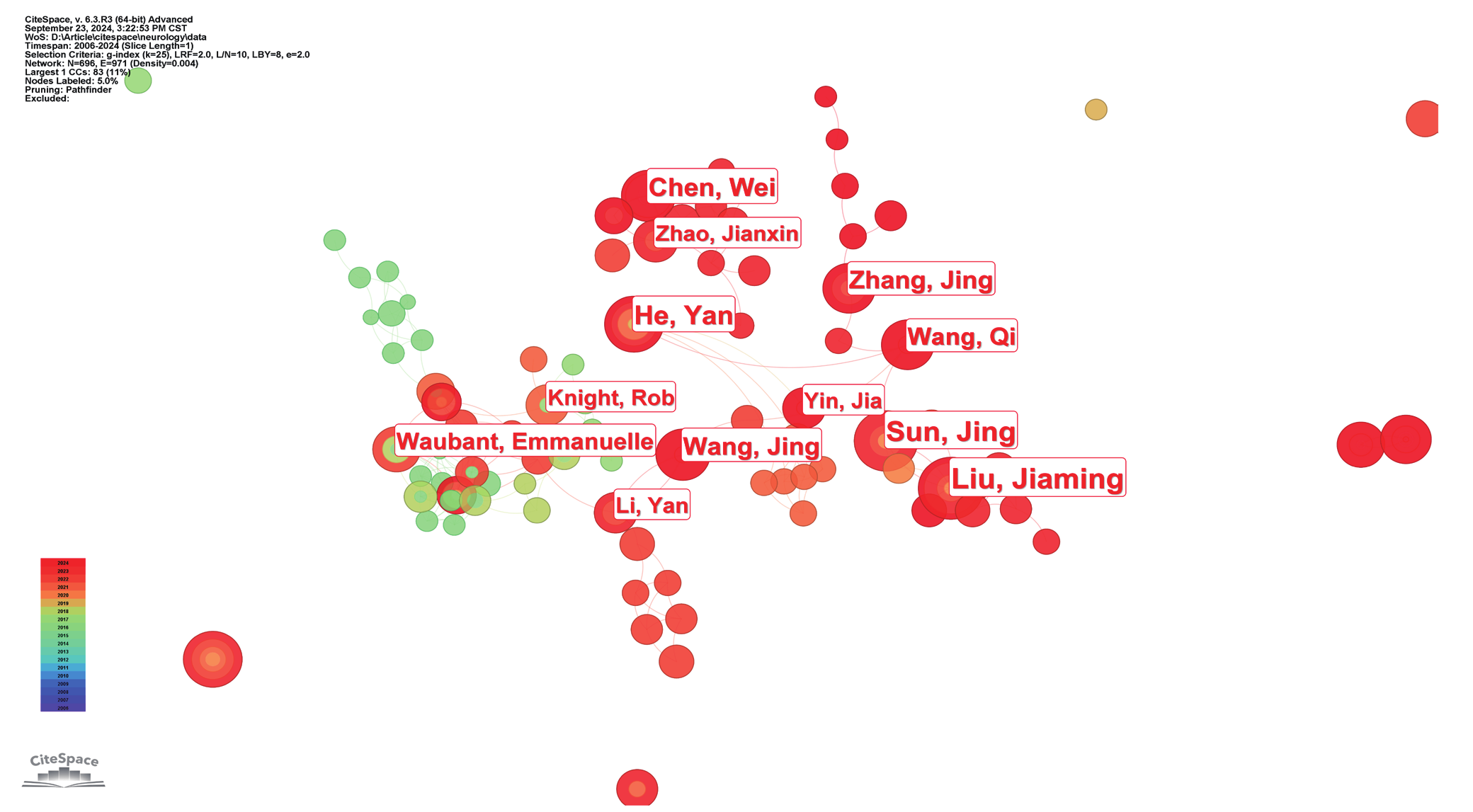
图10 神经系统疾病与肠道菌群领域文献作者合作网络图谱
Figure 10 Author collaboration network map in the field of neurological diseases and gut microbiota
| [1] |
|
| [2] |
|
| [3] |
|
| [4] |
|
| [5] |
|
| [6] |
|
| [7] |
|
| [8] |
|
| [9] |
|
| [10] |
|
| [11] |
|
| [12] |
|
| [13] |
|
| [14] |
|
| [15] |
|
| [16] |
|
| [17] |
|
| [18] |
|
| [19] |
|
| [20] |
|
| [21] |
|
| [22] |
|
| [23] |
|
| [24] |
|
| [25] |
|
| [26] |
陈悦, 陈超美, 刘则渊, 等. CiteSpace知识图谱的方法论功能[J]. 科学学研究, 2015, 33(2): 242-253. DOI: 10.16192/j.cnki.1003-2053.2015.02.009.
|
| [27] |
|
| [28] |
|
| [29] |
|
| [30] |
|
| [31] |
|
| [32] |
|
| [33] |
|
| [34] |
|
| [35] |
|
| [36] |
|
| [37] |
|
| [38] |
|
| [39] |
|
| [40] |
|
| [41] |
|
| [42] |
|
| [43] |
|
| [44] |
|
| [45] |
|
| [46] |
|
| [47] |
|
| [48] |
|
| [49] |
|
| [50] |
|
| [51] |
|
| [52] |
|
| [53] |
|
| [54] |
|
| [1] | 潘茈云, 殷豪, 林至柔, 毛靖仪, 黄艳, 罗艳华, 肖家福, 胡阴. 从机制到治疗:糖尿病自主神经病变[J]. 中国全科医学, 2026, 29(21): 2982-2988. |
| [2] | 宋超, 许岩丽, 梁万年. 中国全科医学发展态势分析——基于《中国全科医学》2015—2024年研究型论文数据[J]. 中国全科医学, 2026, 29(04): 464-475. |
| [3] | 田甜, 张飞, 张璇, 李铭麟, 王佳贺. 2013—2023年国内外全科医生培养的文献计量学研究[J]. 中国全科医学, 2026, 29(01): 50-57. |
| [4] | 黄丹华, 官兰, 杨信, 张晓菲, 胡丙杰. 我国全科医学研究生学位论文的现状与分析[J]. 中国全科医学, 2025, 28(36): 4619-4626. |
| [5] | 牛奔, 朱晓倩, 杨辰, 梁万年, 刘珏. 基于CiteSpace的国内外医疗大语言模型研究热点演进及趋势分析[J]. 中国全科医学, 2025, 28(25): 3200-3208. |
| [6] | 徐乙莎, 李春梅, 王城城, 郭维, 甘雨浓, 张宇, 张文, 余葱葱. 慢性疲劳综合征不同年龄组人群肠道菌群特征分析[J]. 中国全科医学, 2025, 28(23): 2900-2907. |
| [7] | 李丽清, 杨苏乐, 曾传美. 我国慢性病管理研究热点的演进路径与发展趋势预测研究[J]. 中国全科医学, 2025, 28(19): 2321-2329. |
| [8] | 王松柱, 姚易, 周伊恒, 赵茄茜, 杨荣, 赵茜, 张瑞, 代华, 李东泽, 廖晓阳, 杨辉. 近五年全科医学研究热点及发展趋势分析:基于CiteSpace的可视化分析[J]. 中国全科医学, 2025, 28(19): 2330-2337. |
| [9] | 戈琼, 胡佳康, 俞玉琪, 赖文文, 罗时文, 卢曲琴. RNA测序技术应用于肝癌的文献计量学分析[J]. 中国全科医学, 2025, 28(12): 1473-1478. |
| [10] | 郭玉梦, 崔杨霖, 张宪忠. 基于孟德尔随机化探讨肠道菌群与失眠的因果关联研究[J]. 中国全科医学, 2025, 28(08): 954-961. |
| [11] | 程琦, 于文兵, 李科科, 左右, 焦乾鑫, 刘新浩, 高丽丽. 基于CiteSpace的中学生心理健康研究的热点与前沿趋势分析[J]. 中国全科医学, 2025, 28(07): 853-862. |
| [12] | 王舒云, 梁夏, 李霞, 林琳, 冯启明, 黄照权. 中国县域医共体研究热点与前沿分析[J]. 中国全科医学, 2025, 28(01): 83-88. |
| [13] | 黄凯, 张浥, 杨春, 杨玲. 肠道菌群与心力衰竭合并抑郁的研究进展[J]. 中国全科医学, 2024, 27(35): 4455-4461. |
| [14] | 王健健, 卢珊, 张研, 潘杰. 门急诊服务敏感疾病的研究进展:基于CiteSpace的文献计量分析[J]. 中国全科医学, 2024, 27(34): 4248-4255. |
| [15] | 李苗苗, 吴雪, 景城阳, 张乐, 赵晖, 廖星. 快速综述在医学研究领域应用现状的文献计量学分析[J]. 中国全科医学, 2024, 27(33): 4215-4224. |
| 阅读次数 | ||||||
|
全文 |
|
|||||
|
摘要 |
|
|||||