中国全科医学 ›› 2026, Vol. 29 ›› Issue (09): 1161-1167.DOI: 10.12114/j.issn.1007-9572.2024.0565

• 论著 • 上一篇    

淀粉样变性患者临床特征及预后研究

夏宁1, 石岚1, 丁万宝1, 张洁1, 龙轶1, 戴辉1, 张灿2, 戴海龙2,*()   

  1. 1.650051 云南省昆明市,昆明医科大学附属延安医院肿瘤科
    2.650051 云南省昆明市,昆明医科大学附属延安医院心血管内科 云南省心血管疾病重点实验室心血管内科
  • 收稿日期:2024-09-04 修回日期:2025-08-13 出版日期:2026-03-20 发布日期:2026-01-28
  • 通讯作者: 戴海龙

  • 作者贡献:

    夏宁、石岚、龙轶提出主要研究目标、研究的构思与设计;夏宁负责研究的实施及撰写论文;戴辉、张灿负责数据收集整理,统计学处理,图、表的绘制与展示;丁万宝、张洁负责进行论文修订;戴海龙负责文章的质量控制与审查,对文章整体负责,监督管理。

  • 基金资助:
    国家自然科学基金资助项目(82060018,81700438); 云南省科技项目(202301AY070001-300,202405AJ310005-17,202101AS070043); 云南省创新团队(202505AS350027)

Clinical Characteristics and Prognosis of Patients with Amyloidosis

XIA Ning1, SHI Lan1, DING Wanbao1, ZHANG Jie1, LONG Yi1, DAI Hui1, ZHANG Can2, DAI Hailong2,*()   

  1. 1. Department of Oncology, Yan'an Affiliated Hospital of Kunming Medical University, Kunming 650051, China
    2. Department of Cardiology, Yan'an Affiliated Hospital of Kunming Medical University/Key Laboratory of Cardiovascular Diseases of Yunnan Province, Kunming 650051, China
  • Received:2024-09-04 Revised:2025-08-13 Published:2026-03-20 Online:2026-01-28
  • Contact: DAI Hailong

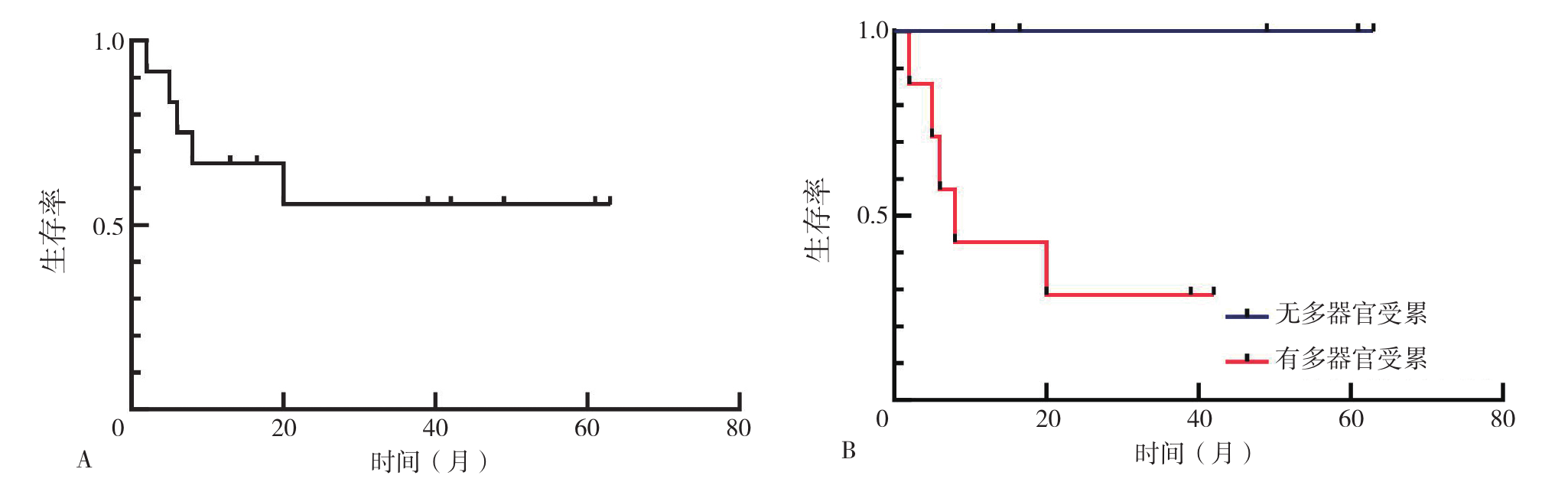
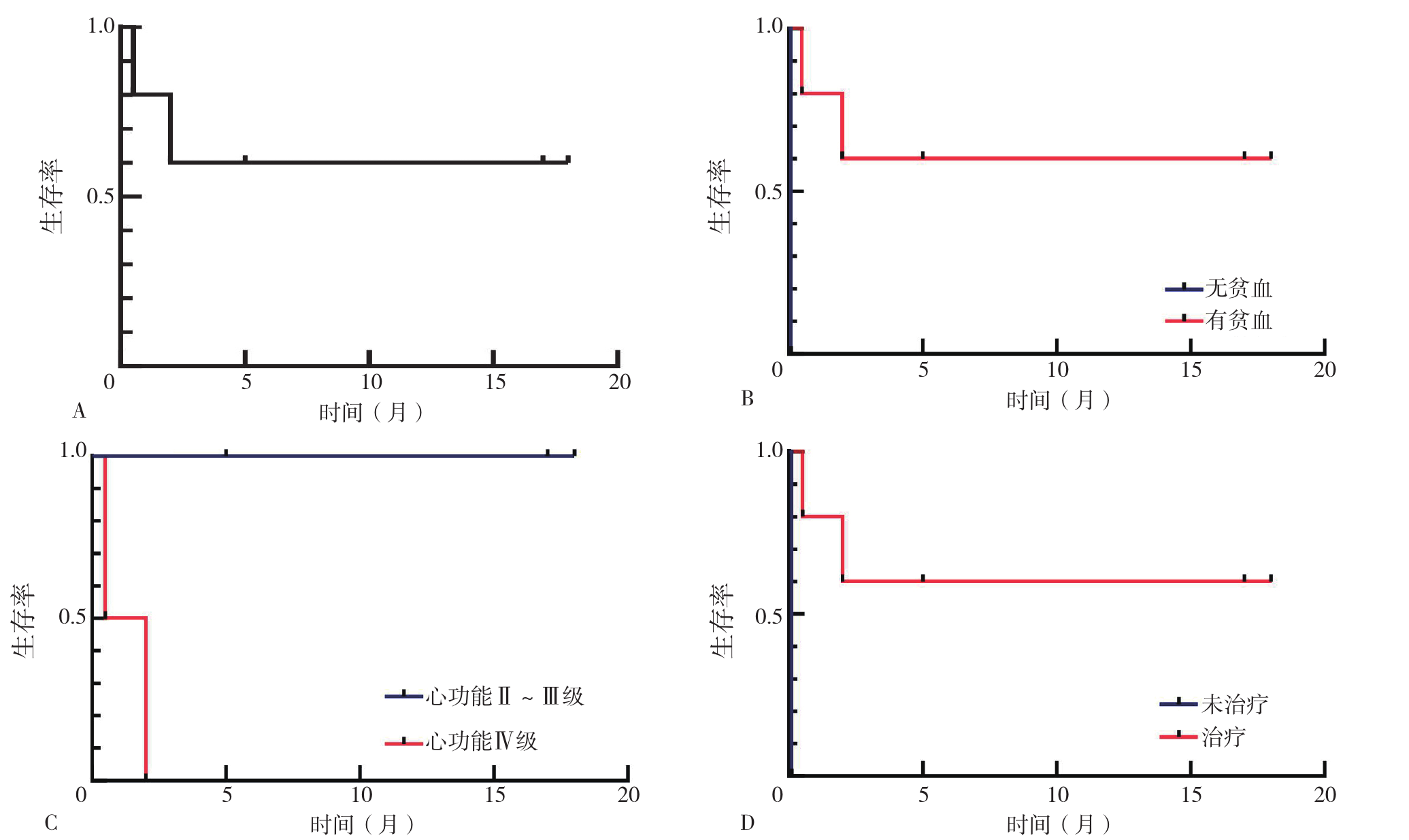
摘要: 背景 淀粉样变性患者临床表现多样且缺乏特异性,容易被漏诊、误诊,早期诊断及积极治疗对疾病预后至关重要。 目的 通过分析本中心诊断为淀粉样变性患者的临床特点及预后,提高对该疾病的认识。 方法 回顾性分析2015年1月—2023年10月于昆明医科大学附属延安医院69例确诊为淀粉样变性患者的临床资料,并通过电话随访收集患者生存情况,根据诊断为同种类型的淀粉样变性患者的生存结局分为死亡组与存活组。绘制患者的Kaplan-Meier生存曲线,进行Log-rank检验。 结果 共纳入69例淀粉样变性患者,其中脑血管淀粉样变性(CAA)35例,中位确诊年龄72(66,80)岁,临床特点主要为脑出血、认知障碍或痴呆,其中6例(17.1%)CAA患者初诊住院期间死于脑出血;皮肤淀粉样变性12例,中位确诊年龄67.0(53.5,75.5)岁,主要临床表现为胫前、四肢伸侧及背部等部位出现粟粒至绿豆大小的丘疹;喉淀粉样变性3例,主要表现为声音嘶哑、咽喉部不适、喉部异物感;多发性骨髓瘤(MM)合并轻链型淀粉样变性6例,平均年龄(60.8±9.0)岁,总体中位生存时间为3.5个月,5例(83.3%)患者有多器官受累(2个及以上器官受累),1例(16.7%)患者为单器官受累,6例患者均有水肿症状,5例(83.3%)伴有胸闷、气促,1例(16.7%)伴有骨痛,1例(16.7%)伴有四肢麻木,其中1例患者初诊时未开始治疗即死于心源性猝死;系统淀粉样变性13例[其中系统性轻链型(AL)淀粉样变性12例,AA型淀粉样变性1例],12例AL淀粉样变性患者多以乏力(10例,83.3%)、水肿(9例,75.0%)为首发症状,其次为泡沫尿(6例,50.0%)和胸闷(6例,50.0%),还可表现为气促、体质量减轻、肢体麻木、厌食、排便不规律等症状,其中累及1个器官者5例(41.7%),2个及以上器官受累者7例(58.3%),常见受累器官为肾脏(9例,75.0%)和心脏(8例,66.7%),其次为肝脏(3例,25.0%)。AL淀粉样变性患者死亡组24 h尿蛋白明显高于存活组(P<0.05)。Kaplan-Meier法分析结果显示AL淀粉样变性患者中位生存时间为18.3个月;Log-rank检验显示累及2个及以上器官的患者较累及单个器官的患者生存时间缩短(χ2=4.757,P=0.029)。MM合并轻链型淀粉样变性患者的总体中位生存时间为3.5个月,其中初诊死亡1例;MM合并轻链型淀粉样变性患者中,贫血患者生存时间较无贫血患者明显缩短(χ2=5.000,P=0.025);心功能Ⅳ级患者生存时间较心功能Ⅱ~Ⅲ级患者明显缩短(χ2=5.052,P=0.029);未接受治疗的患者生存时间较接受治疗的患者明显缩短(χ2=5.000,P=0.025)。 结论 淀粉样变性的临床表现多种多样,不同类型的淀粉样变性预后差异大;CAA为老年人易患病,且合并脑出血时急性期病死率高;MM合并轻链型淀粉样变性患者起病首发症状以淀粉样变性累及心、肾等重要器官的症状为主,有贫血及心功能分级Ⅳ级可能为预后不良因素,积极接受治疗可能为改善患者预后的有利因素;AL淀粉样变性患者累及多器官时提示预后不良。

关键词: 淀粉样变性, 免疫球蛋白轻链淀粉样变性, 临床特征, 预后

Abstract:

Background

Amyloidosis presents with diverse and nonspecific clinical manifestations, leading to frequent misdiagnosis or delayed diagnosis. Early diagnosis and aggressive intervention are critical for improving prognosis.

Objective

To enhance understanding of amyloidosis by analyzing the clinical features and outcomes of patients diagnosed at our center.

Methods

A retrospective analysis was conducted on clinical data from 69 patients diagnosed with amyloidosis at Yan'an Affiliated Hospital of Kunming Medical University between January 2015 and October 2023. Survival outcomes were collected via telephone follow-up. Patients were stratified into deceased and surviving groups based on disease-specific survival. Kaplan-Meier survival curves were generated, and between-group comparisons were performed using the Log-rank test.

Results

A total of 69 patients with amyloidosis were included. Among them, 35 had cerebral amyloid angiopathy (CAA) with a median age at diagnosis of 72 (66, 80) years. The main clinical manifestations were intracerebral hemorrhage, cognitive impairment, or dementia. Six (17.1%) CAA patients died of intracerebral hemorrhage during initial hospitalization. Twelve patients had cutaneous amyloidosis with a median age at diagnosis of 67.0 (53.5, 75.5) years, presenting with miliary to mung bean-sized papules on the anterior tibia, extensor sides of the limbs, and back. Three patients had laryngeal amyloidosis, mainly presenting with hoarseness, throat discomfort, and a foreign body sensation in the larynx. Six patients had multiple myeloma (MM) complicated with light chain amyloidosis, with a mean age of 60.8±9.0 years and a median overall survival of 3.5 months. Five (83.3%) patients had involvement of two or more organs, and one (16.7%) had single-organ involvement. All six patients had edema, five (83.3%) had chest tightness and dyspnea, one (16.7%) had bone pain, and one (16.7%) had numbness in the extremities. One patient died of sudden cardiac death before treatment. Thirteen patients had systemic amyloidosis, including 12 with AL amyloidosis and one with AA amyloidosis. The 12 AL amyloidosis patients mainly presented with fatigue (10 cases, 83.3%), edema (9 cases, 75.0%), followed by foamy urine (6 cases, 50.0%) and chest tightness (6 cases, 50.0%). Other symptoms included dyspnea, weight loss, limb numbness, anorexia, and irregular bowel movements. Five (41.7%) had involvement of one organ, and seven (58.3%) had involvement of two or more organs. The most commonly affected organs were the kidneys (9 cases, 75.0%) and heart (8 cases, 66.7%), followed by the liver (3 cases, 25.0%). In AL amyloidosis patients, the 24-hour urine protein level was significantly higher in the deceased group than in the surviving group (P<0.05). Kaplan-Meier analysis showed a median survival time of 18.3 months for AL amyloidosis patients. Log-rank test indicated that patients with involvement of two or more organs had shorter survival times than those with single-organ involvement (χ2=4.757, P=0.029). The overall median survival time for MM patients with light chain amyloidosis was 3.5 months, with one patient dying during initial diagnosis. Among MM patients with light chain amyloidosis, those with anemia had significantly shorter survival times than those without anemia (χ2=5.000, P=0.025). Patients with heart function classⅣ had significantly shorter survival times than those with heart function classⅡ-Ⅲ (χ2=5.052, P=0.029). Untreated patients had significantly shorter survival times than treated patients (χ2=5.000, P=0.025).

Conclusion

The clinical manifestations of amyloidosis are highly diverse, and the prognosis varies significantly among different types. CAA predominantly affects the elderly and has a high mortality rate in the acute phase when complicated with intracerebral hemorrhage. Patients with MM complicated with light chain amyloidosis often present with symptoms related to amyloidosis involvement of vital organs such as the heart and kidneys. Anemia and heart function class Ⅳ may be adverse prognostic factors, while active treatment may improve prognosis. AL amyloidosis patients with involvement of multiple organs have a poor prognosis.

Key words: Amyloidosis, Immunoglobulin light-chain amyloidosis, Clinical features, Prognosis