
中国全科医学 ›› 2026, Vol. 29 ›› Issue (24): 3509-3519.DOI: 10.12114/j.issn.1007-9572.2025.0289
所属专题: 心力衰竭最新文章合辑; 心血管最新文章合辑
李雪妮1, 刘格婧2, 刘永铭2,3,*( )
)
收稿日期:2025-09-03
修回日期:2025-10-30
出版日期:2026-08-20
发布日期:2026-07-03
通讯作者:
刘永铭
作者贡献:
李雪妮负责研究的构思、设计、文献检索策略的制订、文献筛选、数据收集、研究的偏倚风险评估和文章撰写;刘格婧负责文献检索策略的制订、文献筛选、数据收集和研究的偏倚风险评估;刘永铭负责文章的质量控制,解决研究过程中的分歧,对文章整体负责,监督管理。
本文为中文翻译版本,原文Efficacy and Safety of Semaglutide in Patients with Heart Failure: a Meta-analysis发表于Precision Medication,已获得授权。翻译与出版遵循COPE和ICMJE关于二次发表的指南。
基金资助:
LI Xueni1, LIU Gejing2, LIU Yongming2,3,*()
Received:2025-09-03
Revised:2025-10-30
Published:2026-08-20
Online:2026-07-03
Contact:
LIU Yongming
摘要: 背景 司美格鲁肽的多靶点作用使其成为糖尿病和肥胖管理的突破性药物,尤其是对合并心血管疾病的患者具有综合获益,但其对于心力衰竭(HF)患者的疗效和安全性应用仍在探索中。 目的 系统评价皮下注射司美格鲁治疗HF的疗效和安全性,不管是否肥胖或存在2型糖尿病(T2DM)。 方法 计算机检索Cochrane Library、PubMed、Embase、中国知网、万方数据知识服务平台和维普网,检索时限自建库至2024-11-02。筛选皮下注射司美格鲁肽治疗HF的随机对照试验,其中试验组为皮下注射司美格鲁肽,对照组为安慰剂。由两名研究者独立筛选、数据提取并评价纳入研究的偏倚风险,对因HF再入院、心血管死亡和全因死亡发生率、严重不良事件、堪萨斯城心肌病调查问卷评分(KCCQ-CSS)和6分钟步行距离(6-MWD)等数据收集和分析。基于合并症和不同给药剂量进行亚组分析,使用Review Manager 5.3软件进行Meta分析。 结果 共纳入4项随机对照试验,总计6 109例患者,其中试验组3 070例、对照组3 039例。Meta分析结果表明:与安慰剂相比,皮下注射司美格鲁肽可降低心血管死亡(RR=0.75,95%CI=0.61~0.92,P=0.005)、全因死亡(RR=0.81,95%CI=0.67~0.98,P=0.03)和严重不良事件(RR=0.53,95%CI=0.41~0.68,P<0.000 01)风险;亚组分析发现,皮下注射司美格鲁肽增加肥胖的射血分数保留的HF(HFpEF)患者KCCQ-CSS(MD=7.58,95%CI=4.40~10.77,P<0.000 01)和6-MWD(MD=16.91,95%CI=8.98~24.83,P<0.000 1),降低因HF再入院风险(RR=0.41,95%CI=0.26~0.65,P=0.000 1);在不合并T2DM的患者中,司美格鲁肽在降低因HF再入院(RR=0.16,95%CI=0.04~0.68,P=0.01)和心血管死亡(RR=0.76,95%CI=0.60~0.97,P=0.03)风险方面优于安慰剂;同样,在2.4 mg/周剂量组的患者中,与安慰剂相比,皮下注射司美格鲁肽可降低因HF再入院(RR=0.29,95%CI=0.14~0.58,P=0.000 5)和心血管死亡(RR=0.75,95%CI=0.59~0.95,P=0.02)风险,但1.0 mg/周剂量组的疗效与安慰剂相比并不显著。 结论 皮下注射司美格鲁肽可安全、有效地降低HF患者的心血管死亡、全因死亡和严重不良事件发生风险,改善肥胖的HFpEF患者的生活质量和运动耐量,降低因HF再入院风险。受纳入研究数量和人群限制,上述结论尚需开展更多高质量研究予以验证。
中图分类号:
| 步骤 | 检索式 |
|---|---|
| #1 | (heart failure[MeSH Terms]) OR ( "Cardiac Failure" [Title/Abstract] OR "Heart Decompensation" [Title/Abstract] OR "Decompensation Heart" [Title/Abstract] OR "Congestive Heart Failure" [Title/Abstract] OR "Heart Failure, Congestive" [Title/Abstract] OR "Heart Failure, Right-Sided" [Title/Abstract] OR "Heart Failure, Right Sided" [Title/Abstract] OR "Right-Sided Heart Failure" [Title/Abstract] OR "Right Sided Heart Failure" [Title/Abstract] OR "Heart Failure, Left-Sided" [Title/Abstract] OR "Heart Failure, Left Sided" [Title/Abstract] OR "Left-Sided Heart Failure" [Title/Abstract] OR "Left Sided Heart Failure" [Title/Abstract] OR "Myocardial Failure" [Title/Abstract] OR "Heart Failure, Diastolic" [Title/Abstract] OR "Heart Failure, Systolic" [Title/Abstract] OR "Heart Diseases" [Title/Abstract]) |
| #2 | Semaglutide[Title/Abstract] OR Ozempic[Title/Abstract] OR Rybelsus[Title/Abstract] OR Wegovy[Title/Abstract] |
| #3 | #1 AND #2 |
表1 PubMed检索策略
Table 1 PubMed search strategy
| 步骤 | 检索式 |
|---|---|
| #1 | (heart failure[MeSH Terms]) OR ( "Cardiac Failure" [Title/Abstract] OR "Heart Decompensation" [Title/Abstract] OR "Decompensation Heart" [Title/Abstract] OR "Congestive Heart Failure" [Title/Abstract] OR "Heart Failure, Congestive" [Title/Abstract] OR "Heart Failure, Right-Sided" [Title/Abstract] OR "Heart Failure, Right Sided" [Title/Abstract] OR "Right-Sided Heart Failure" [Title/Abstract] OR "Right Sided Heart Failure" [Title/Abstract] OR "Heart Failure, Left-Sided" [Title/Abstract] OR "Heart Failure, Left Sided" [Title/Abstract] OR "Left-Sided Heart Failure" [Title/Abstract] OR "Left Sided Heart Failure" [Title/Abstract] OR "Myocardial Failure" [Title/Abstract] OR "Heart Failure, Diastolic" [Title/Abstract] OR "Heart Failure, Systolic" [Title/Abstract] OR "Heart Diseases" [Title/Abstract]) |
| #2 | Semaglutide[Title/Abstract] OR Ozempic[Title/Abstract] OR Rybelsus[Title/Abstract] OR Wegovy[Title/Abstract] |
| #3 | #1 AND #2 |
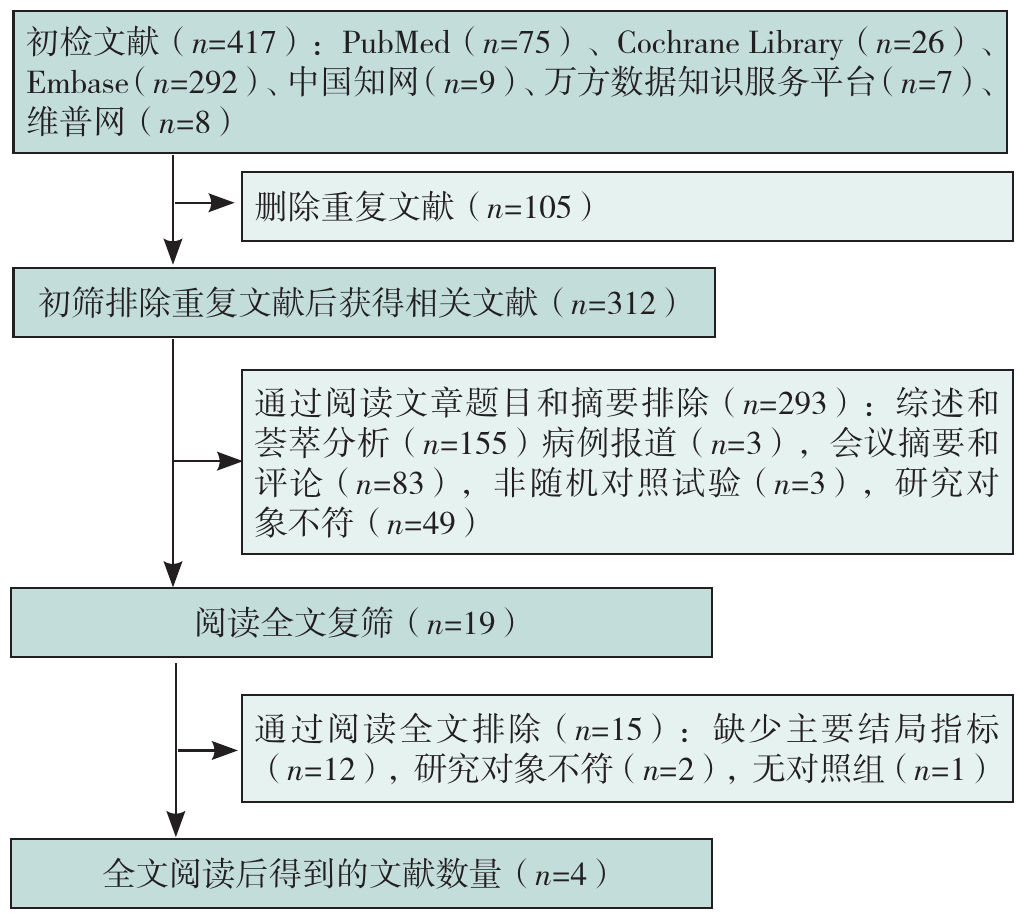
图1 文献筛选流程及结果
Figure 1 Flowchart of the identification of eligible studies
| 第一作者 | 发表时间(年) | 原始研究名称 | 临床试验注册号 | 试验阶段 | 治疗方案(T/C) | 样本量(T/C) | 年龄(T/C)(岁) | 女性(T/C)[例(%)] | BMI(T/C)(kg/m2) | LVEF(T/C)(%) | 人群特征 | 随访时间 | 结局指标 |
|---|---|---|---|---|---|---|---|---|---|---|---|---|---|
| Pratley[ | 2024 | FLOW | NCT03819153 | Ⅲ | 司美格鲁肽(1.0 mg/周)/安慰剂 | 342/336 | 68(63~73) | 247(36.7) | 33.3(28.9~38.0) | NA | HF+T2DM+CKD | 3.4年 | ①② |
| Kosiborod[ | 2024 | STEP-HFpEF DM | NCT04916470 | Ⅲ | 司美格鲁肽(2.4 mg/周)/安慰剂 | 310/306 | 69(62~74)/70(63~75) | 128(41.3)/145(47.4) | 36.9(33.6~41.5)/36.9(33.5~41.1) | 57(50~61)/55(50~60) | HFpEF+肥胖+T2DM | 52周 | ①②③④ |
| Kosiborod[ | 2023 | STEP-HFpEF | NCT04788511 | Ⅲ | 司美格鲁肽(2.4 mg/周)/安慰剂 | 263/266 | 70(62~75)/69(62~75) | 149(56.7)/148(55.6) | 37.2(33.9~41.1)/36.9(33.3~41.6) | 57(50~60)/57(50~60) | HFpEF+肥胖 | 52周 | ①②③④ |
| Deanfield[ | 2024 | SELECT | NCT03574597 | Ⅲ | 司美格鲁肽(2.4 mg/周)/安慰剂 | 2 155/2 131 | 61.9±8.7 | 1 183(26.6) | 33.9±5.3 | NA | HF+超重(或肥胖) | 104周 | ②③ |
表2 纳入研究的基本特征
Table 2 Basic characteristics of included studies
| 第一作者 | 发表时间(年) | 原始研究名称 | 临床试验注册号 | 试验阶段 | 治疗方案(T/C) | 样本量(T/C) | 年龄(T/C)(岁) | 女性(T/C)[例(%)] | BMI(T/C)(kg/m2) | LVEF(T/C)(%) | 人群特征 | 随访时间 | 结局指标 |
|---|---|---|---|---|---|---|---|---|---|---|---|---|---|
| Pratley[ | 2024 | FLOW | NCT03819153 | Ⅲ | 司美格鲁肽(1.0 mg/周)/安慰剂 | 342/336 | 68(63~73) | 247(36.7) | 33.3(28.9~38.0) | NA | HF+T2DM+CKD | 3.4年 | ①② |
| Kosiborod[ | 2024 | STEP-HFpEF DM | NCT04916470 | Ⅲ | 司美格鲁肽(2.4 mg/周)/安慰剂 | 310/306 | 69(62~74)/70(63~75) | 128(41.3)/145(47.4) | 36.9(33.6~41.5)/36.9(33.5~41.1) | 57(50~61)/55(50~60) | HFpEF+肥胖+T2DM | 52周 | ①②③④ |
| Kosiborod[ | 2023 | STEP-HFpEF | NCT04788511 | Ⅲ | 司美格鲁肽(2.4 mg/周)/安慰剂 | 263/266 | 70(62~75)/69(62~75) | 149(56.7)/148(55.6) | 37.2(33.9~41.1)/36.9(33.3~41.6) | 57(50~60)/57(50~60) | HFpEF+肥胖 | 52周 | ①②③④ |
| Deanfield[ | 2024 | SELECT | NCT03574597 | Ⅲ | 司美格鲁肽(2.4 mg/周)/安慰剂 | 2 155/2 131 | 61.9±8.7 | 1 183(26.6) | 33.9±5.3 | NA | HF+超重(或肥胖) | 104周 | ②③ |
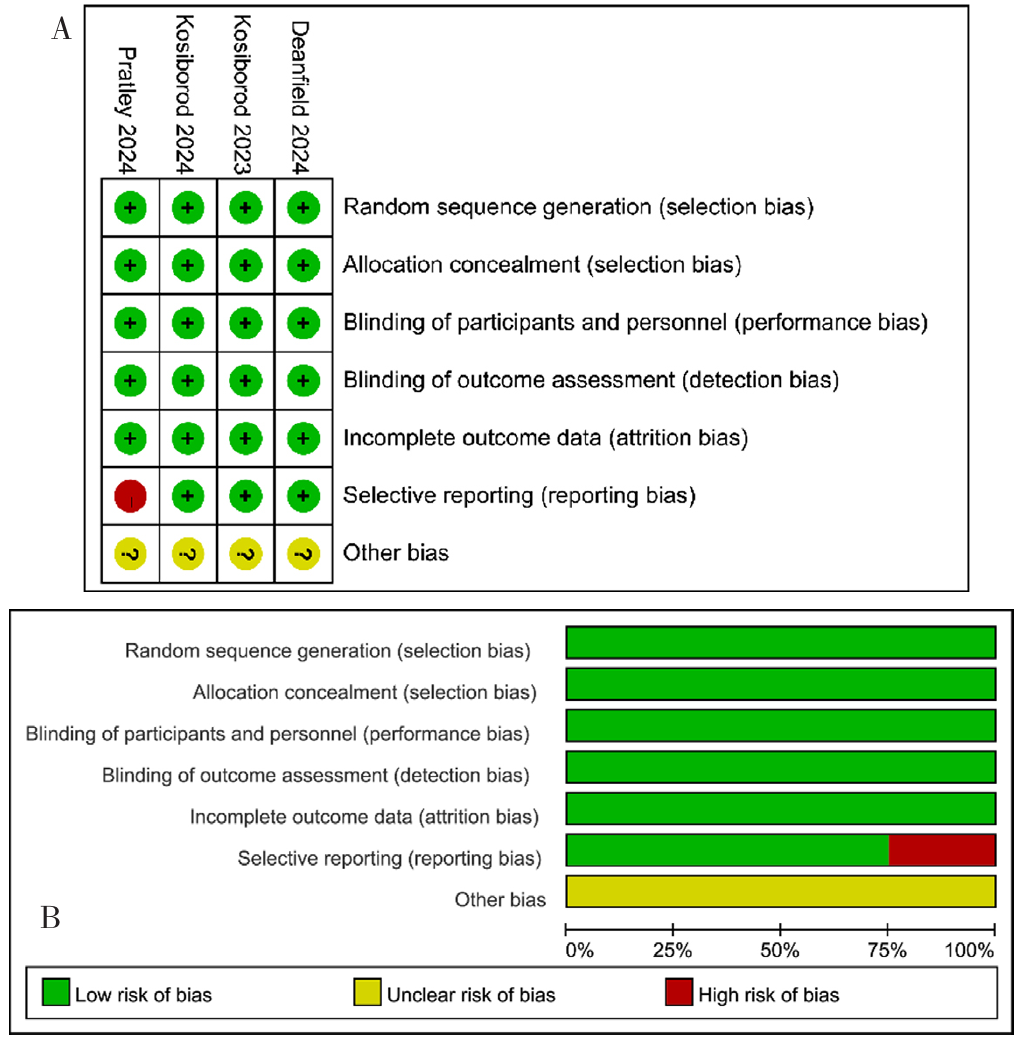
图2 纳入文献的偏倚风险评价注:A为偏倚风险图,B为偏倚风险总结图;Deanfield 2024为原始RCT研究SELECT的预设计划亚组分析,Pratley 2024为基于原始RCT研究FLOW的事后分析。
Figure 2 Risk of bias summary for included studies
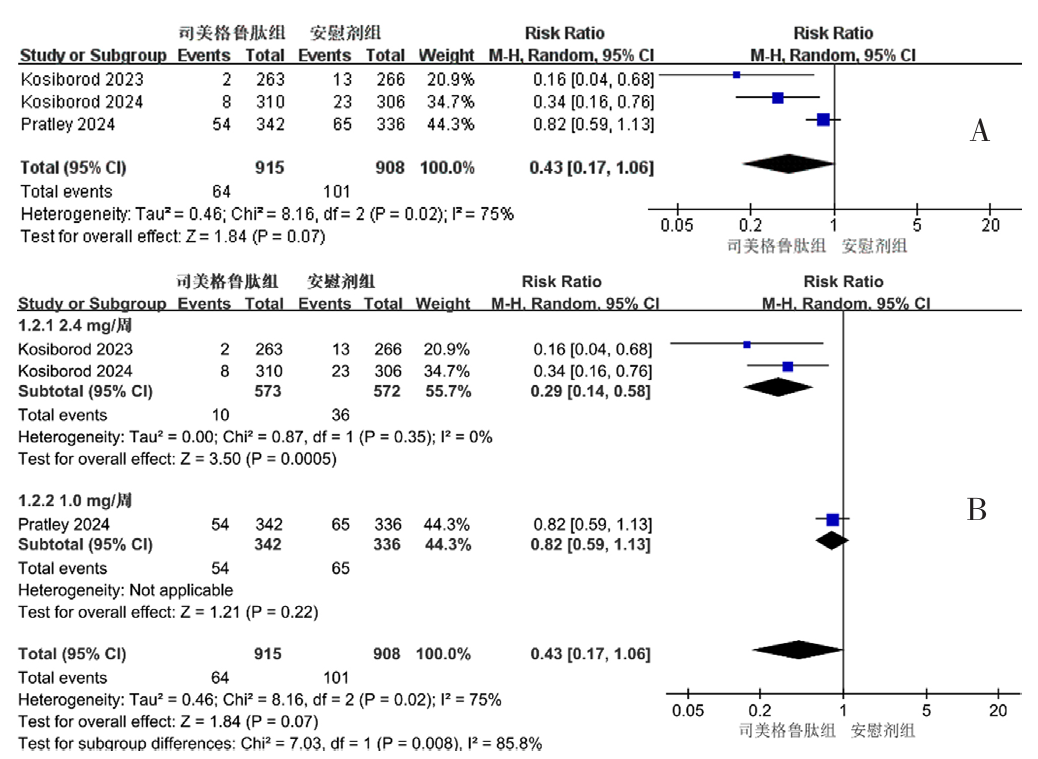
图3 两组因HF再入院发生风险比较的森林图注:A表示所有研究,B表示不同给药维持剂量亚组分析。
Figure 3 Forest plot for comparing the risk of hospitalization for heart failure in the two groups
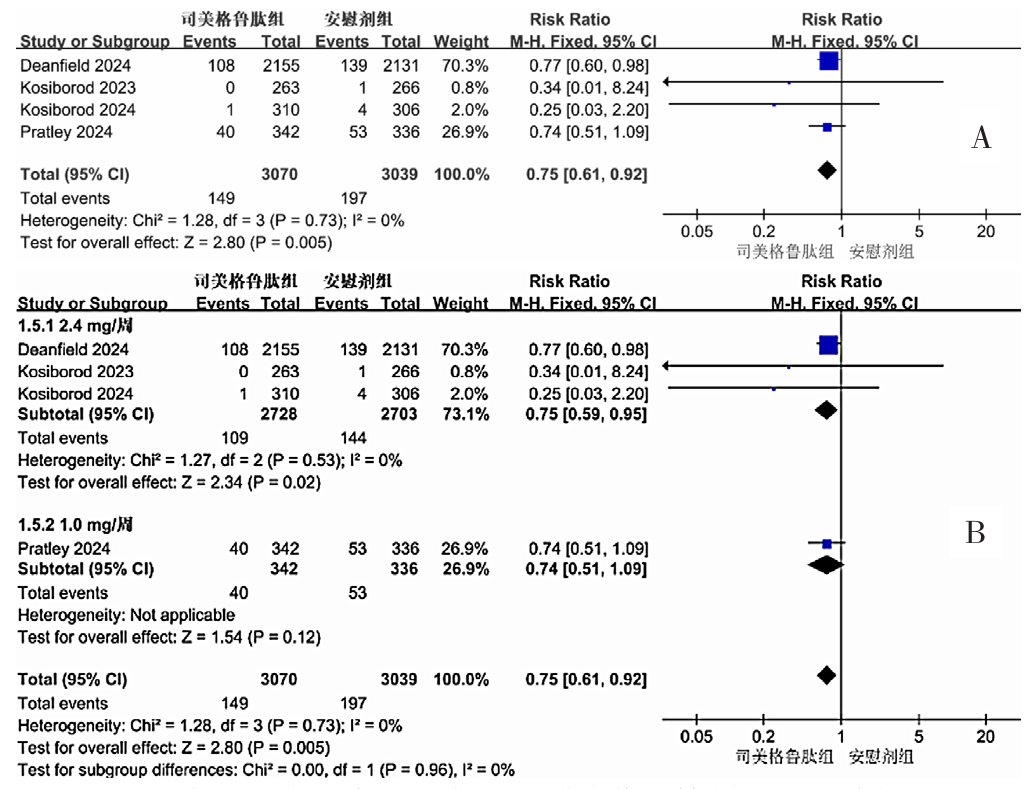
图4 两组心血管死亡发生风险比较的森林图注:A表示所有研究,B表示不同给药维持剂量亚组分析。
Figure 4 Forest plot for comparing the risk of cardiovascular death in the two groups
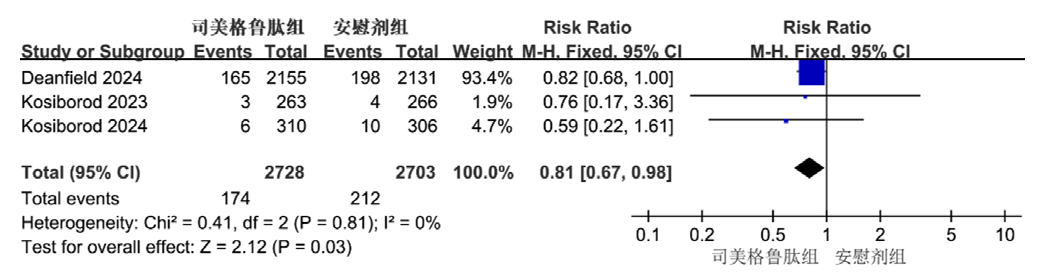
图5 两组全因死亡发生风险比较的森林图
Figure 5 Forest plot for comparing the risk of all-cause death in the two groups
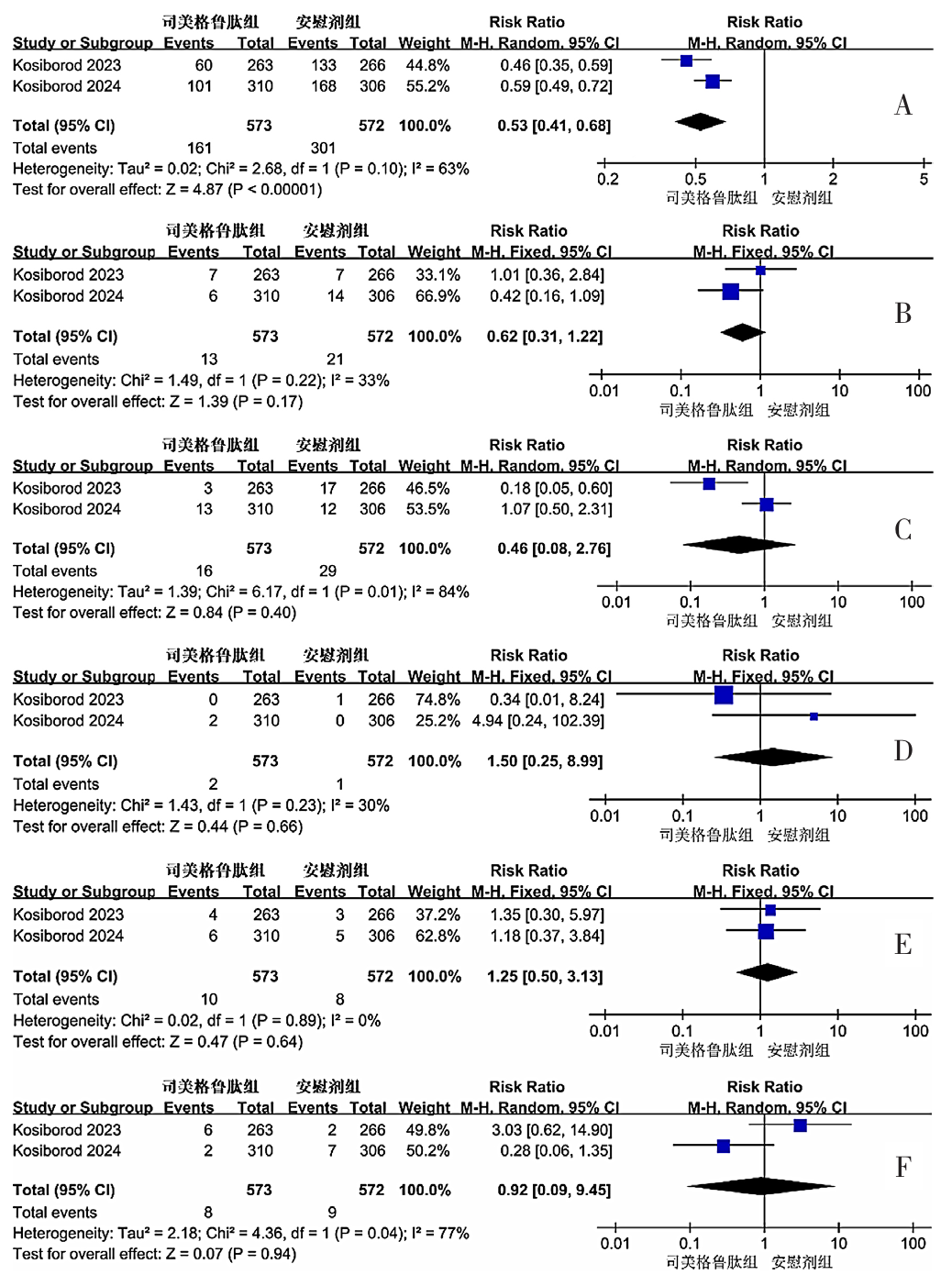
图6 两组严重不良事件发生风险比较的森林图注:A为严重不良事件,B为因严重不良事件停药,C为心律失常,D为急性胰腺炎,E为急性胆石症,F为急性肾衰竭。
Figure 6 Forest plot for comparing the risk of serious adverse events in the two groups
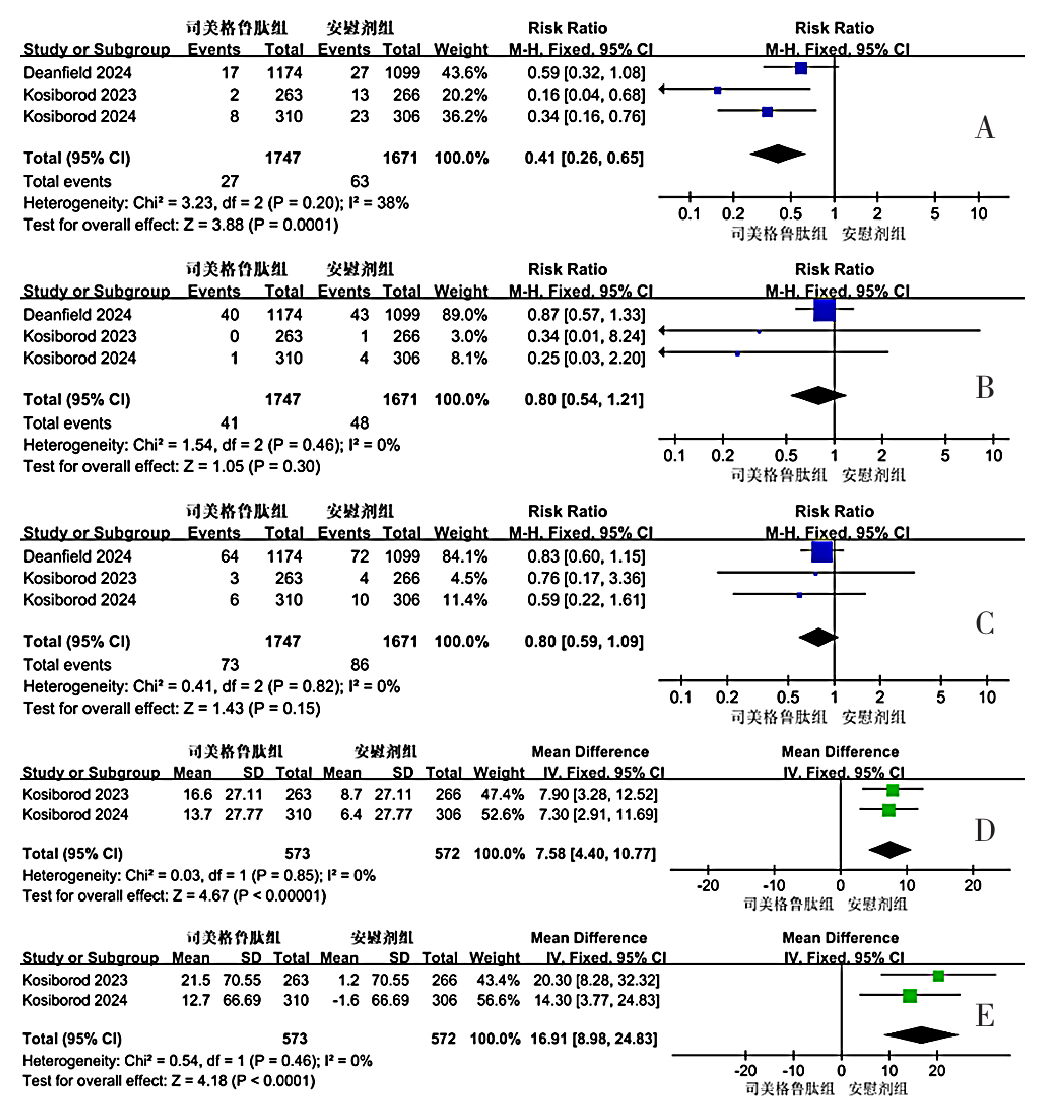
图7 HFpEF亚组有效性比较的森林图注:A为因HF再入院,B为心血管死亡,C为全因死亡,D为KCCQ-CSS评分,E为6分钟步行距离(6-MWD)。
Figure 7 Forest plot for comparing the effectiveness of HFpEF subgroups
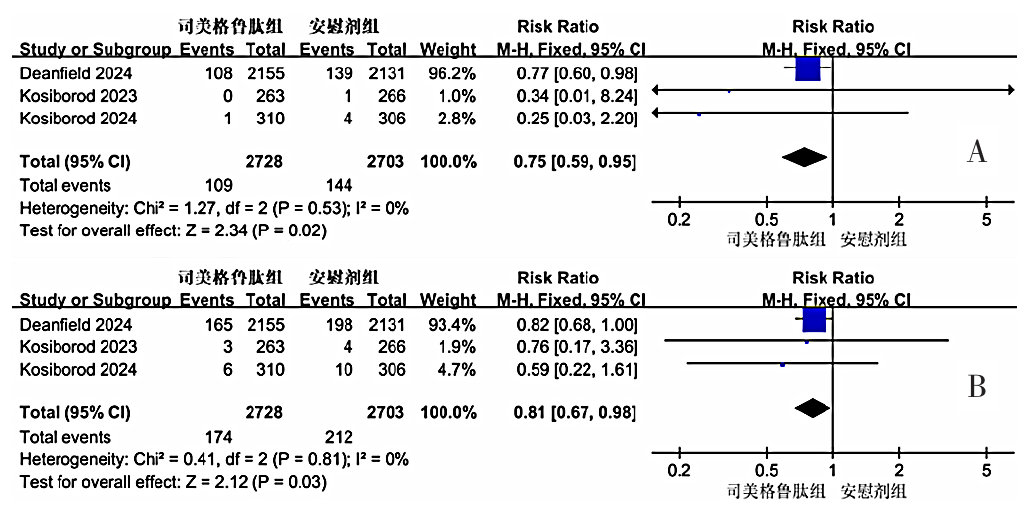
图8 肥胖亚组有效性比较的森林图注:A为心血管死亡,B为全因死亡。
Figure 8 Forest plot for comparing the effectiveness of obesity subgroups
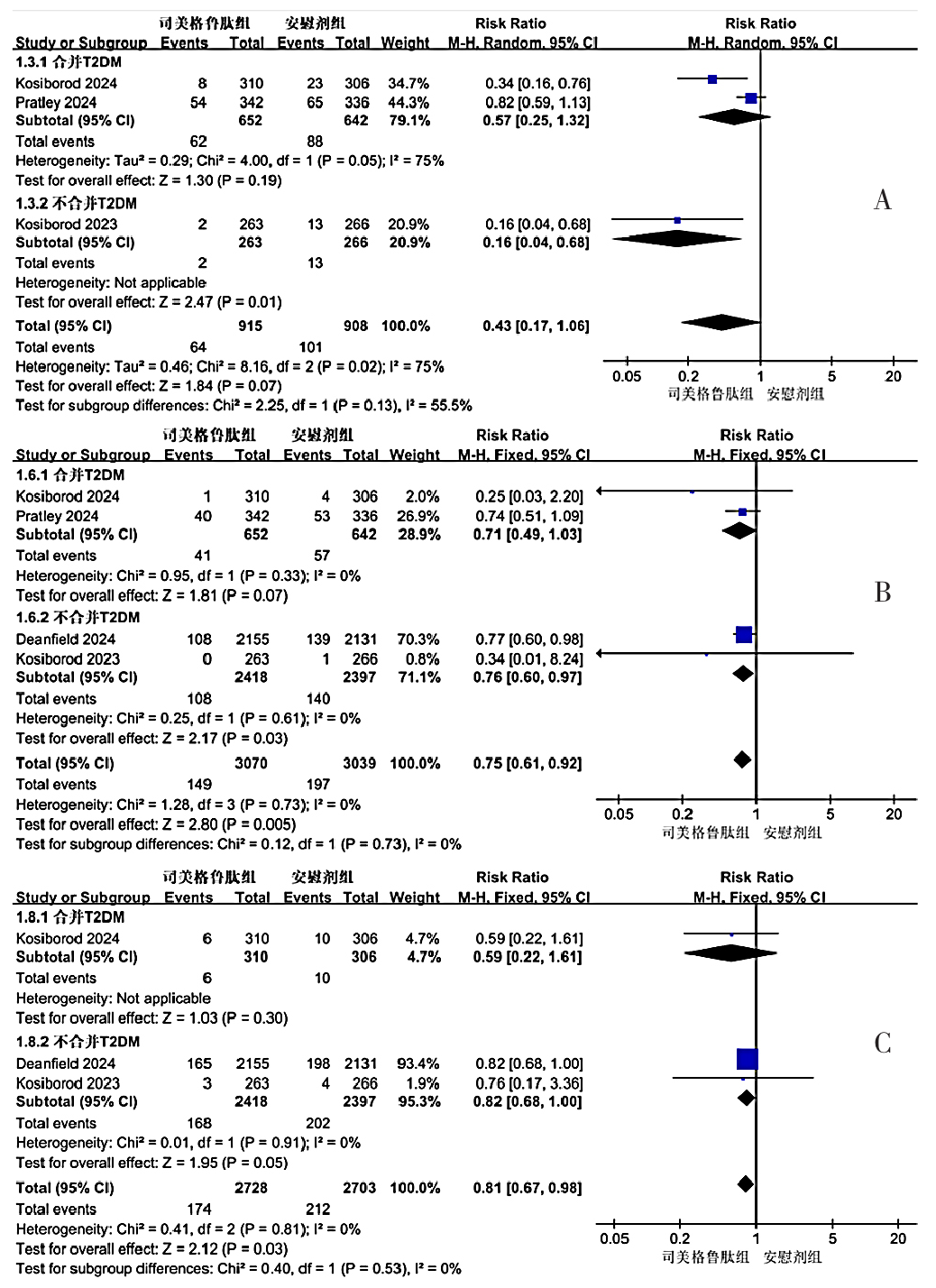
图9 是否合并T2DM亚组有效性比较的森林图注:A为因HF再入院,B为心血管死亡,C为全因死亡。
Figure 9 Forest plot for comparing the effectiveness between subgroups with and without type 2 diabetes mellitus(T2DM)
| 亚组分类 | 分析类型 | 纳入研究数 | 因HF再入院 | 心血管死亡 | 全因死亡 | |||
|---|---|---|---|---|---|---|---|---|
| 效应量(95%CI) | 基准化权重 | 效应量(95%CI) | 基准化权重 | 效应量(95%CI) | 基准化权重 | |||
| HFpEF | 主分析 | 3 | 0.41(0.26~0.65) | 100.00% | 0.80(0.54~1.21) | 100.00% | 0.80(0.59~1.09) | 100.00% |
| 剔除后 | 2 | 0.28(0.14~0.55) | 65.40% | 0.27(0.04~1.64) | 11.10% | 0.64(0.28~1.46) | 15.90% | |
| 肥胖 | 主分析 | 3 | — | — | 0.75(0.59~0.95) | 100.00% | 0.81(0.67~0.98) | 100.00% |
| 剔除后 | 2 | — | — | 0.27(0.04~1.64) | 3.80% | 0.64(0.28~1.46) | 6.60% | |
| 2.4 mg | 主分析 | 3 | — | — | 0.75(0.59~0.95) | 100.00% | — | — |
| 剔除后 | 2 | — | — | 0.27(0.04~1.64) | 3.83% | — | — | |
| 合并T2DM | 主分析 | 2 | 0.57(0.25~1.32) | 100.00% | 0.71(0.49~1.03) | 100.00% | — | — |
| 剔除后 | 1 | 0.34(0.16~0.76) | 43.87% | 0.25(0.03~2.20) | 6.92% | — | — | |
| 不合并T2DM | 主分析 | 2 | — | — | 0.76(0.60~0.97) | 100.00% | 0.82(0.68~1.00) | 100.00% |
| 剔除后 | 1 | — | — | 0.34(0.01~8.24) | 1.13% | 0.76(0.17~3.36) | 1.99% | |
表3 亚组分析敏感性检验(基于剔除缺失部分基线数据的Deanfield 2024和Pratley 2024)
Table 3 Sensitivity analysis of subgroup analysis (based on the exclusion of Deanfield 2024 and Pratley 2024 due to incomplete baseline data)
| 亚组分类 | 分析类型 | 纳入研究数 | 因HF再入院 | 心血管死亡 | 全因死亡 | |||
|---|---|---|---|---|---|---|---|---|
| 效应量(95%CI) | 基准化权重 | 效应量(95%CI) | 基准化权重 | 效应量(95%CI) | 基准化权重 | |||
| HFpEF | 主分析 | 3 | 0.41(0.26~0.65) | 100.00% | 0.80(0.54~1.21) | 100.00% | 0.80(0.59~1.09) | 100.00% |
| 剔除后 | 2 | 0.28(0.14~0.55) | 65.40% | 0.27(0.04~1.64) | 11.10% | 0.64(0.28~1.46) | 15.90% | |
| 肥胖 | 主分析 | 3 | — | — | 0.75(0.59~0.95) | 100.00% | 0.81(0.67~0.98) | 100.00% |
| 剔除后 | 2 | — | — | 0.27(0.04~1.64) | 3.80% | 0.64(0.28~1.46) | 6.60% | |
| 2.4 mg | 主分析 | 3 | — | — | 0.75(0.59~0.95) | 100.00% | — | — |
| 剔除后 | 2 | — | — | 0.27(0.04~1.64) | 3.83% | — | — | |
| 合并T2DM | 主分析 | 2 | 0.57(0.25~1.32) | 100.00% | 0.71(0.49~1.03) | 100.00% | — | — |
| 剔除后 | 1 | 0.34(0.16~0.76) | 43.87% | 0.25(0.03~2.20) | 6.92% | — | — | |
| 不合并T2DM | 主分析 | 2 | — | — | 0.76(0.60~0.97) | 100.00% | 0.82(0.68~1.00) | 100.00% |
| 剔除后 | 1 | — | — | 0.34(0.01~8.24) | 1.13% | 0.76(0.17~3.36) | 1.99% | |
| [1] |
|
| [2] |
中华医学会心血管病学分会, 中国医师协会心血管内科医师分会, 中国医师协会心力衰竭专业委员会, 等. 中国心力衰竭诊断和治疗指南2024[J]. 中华心血管病杂志, 2024, 52(3): 235-275. DOI: 10.3760/cma.j.cn112148-20231101-00405.
|
| [3] |
|
| [4] |
|
| [5] |
|
| [6] |
|
| [7] |
|
| [8] |
|
| [9] |
|
| [10] |
|
| [11] |
|
| [12] |
|
| [13] |
|
| [14] |
|
| [15] |
|
| [16] |
|
| [17] |
|
| [18] |
|
| [19] |
|
| [20] |
|
| [21] |
|
| [22] |
|
| [23] |
|
| [24] |
|
| [25] |
|
| [26] |
|
| [27] |
|
| [28] |
|
| [29] |
|
| [30] |
|
| [31] |
|
| [32] |
|
| [33] |
|
| [34] |
|
| [35] |
|
| [36] |
|
| [37] |
|
| [38] |
|
| [39] |
中华医学会糖尿病学分会, 朱大龙, 郭立新. 中国糖尿病防治指南(2024版)[J]. 中华糖尿病杂志, 2025(1): 16-139.
|
| [40] |
|
| [41] |
苏晞, 吴明祥. 射血分数降低的心力衰竭的疾病管理与药物治疗优化[J]. 中国心血管杂志, 2023, 28(3): 277-281.
|
| [42] |
葛均波, 霍勇, 杨杰孚, 等. 慢性心力衰竭"新四联"药物治疗临床决策路径专家共识[J]. 中国循环杂志, 2022, 37(8): 769-781.
|
| [43] |
|
| [44] |
|
| [1] | 郭治宏, 陈盈盈, 刘德伍. 抗生素骨水泥联合负压封闭引流技术治疗糖尿病足有效性和安全性的Meta分析[J]. 中国全科医学, 2026, 29(30): 4503-4512. |
| [2] | 胡玉婷, 严颖, 闫明婕, 王惠君, 韩虎. 不同骨改良药物治疗实体瘤骨转移或多发性骨髓瘤患者疗效的网状Meta分析[J]. 中国全科医学, 2026, 29(30): 4489-4502. |
| [3] | 赵聪娟, 金田田, 梁婕, 王贝宁, 高燕. 胰高血糖素样肽1受体激动剂对糖尿病肾脏病患者治疗效果比较:一项网状Meta分析[J]. 中国全科医学, 2026, 29(29): 4326-4336. |
| [4] | 姜妍琳, 王喆, 翟睿, 张梦洁, 陈溪, 王俊宏. 中药复方治疗注意缺陷多动障碍优势方案筛选研究:基于网状Meta分析和熵权TOPSIS法[J]. 中国全科医学, 2026, 29(27): 3985-3994. |
| [5] | 郭俊池, 张明妍, 秦广宁, 徐强, 路美娟. 新型指标TANS01在痰湿体质人群心血管风险评估中的初步应用研究[J]. 中国全科医学, 2026, 29(27): 3924-3930. |
| [6] | 王伟, 于飞, 闫晓红. 钠-葡萄糖协同转运蛋白2抑制剂在不同病因心力衰竭中的应用与机制:来自缺血性与非缺血性心力衰竭的证据[J]. 中国全科医学, 2026, 29(27): 3976-3984. |
| [7] | 赵怡茹, 郝欣雨, 赵蕾, 张才慧, 王朝霞, 张月英. 心力衰竭患者利尿剂抵抗管理的最佳证据总结[J]. 中国全科医学, 2026, 29(25): 3694-3703. |
| [8] | 王睿, 罗说明, 杨靓, 王鹏, 赵洋, 王淇, 周智广. 中国老年人糖尿病患病率:一项系统综述和Meta分析[J]. 中国全科医学, 2026, 29(24): 3500-3508. |
| [9] | 裴如青, 周郁秋, 张思宇, 刘西俊. 中国精神分裂症患者复发影响因素的Meta分析[J]. 中国全科医学, 2026, 29(23): 3359-3370. |
| [10] | 李俞彤, 赵丹廷, 江枫, 王艳娜, 刘益宗, 梁文娟, 陆家海. 呼吸道合胞病毒mRNA疫苗与重组蛋白亚单位疫苗有效性和安全性的系统评价与Meta分析[J]. 中国全科医学, 2026, 29(19): 2744-2752. |
| [11] | 李世龙, 王贺, 周晓宇, 付蕾, 赵倬, 华成俊, 司春婴. 心脏巨噬细胞在射血分数保留型心力衰竭中的研究进展[J]. 中国全科医学, 2026, 29(15): 2084-2091. |
| [12] | 田安妮, 杨晶, 孙晶, 王诗纯. 康复机器人辅助训练对不同阶段脑卒中患者手运动功能恢复效果的Meta分析[J]. 中国全科医学, 2026, 29(14): 1911-1920. |
| [13] | 詹立, 衡朝阳, 何俍钰, 赵捷, 陈杰, 邢晋山. 靶向B细胞成熟抗原的嵌合抗原受体-T细胞疗法治疗中国复发/难治性多发性骨髓瘤患者疗效及安全性的Meta分析[J]. 中国全科医学, 2026, 29(14): 1921-1930. |
| [14] | 肖瑶, 林秀文, 吴倩芳, 凌鑫, 梁艺龄, 刘嘉玲, 石磊. 基于欧洲五维健康量表的中国多重慢病患者健康效用值的Meta分析[J]. 中国全科医学, 2026, 29(11): 1463-1472. |
| [15] | 王菲, 韩伟钰, 孙韬. 艾灸联合三阶梯疗法治疗癌性疼痛的网状Meta分析[J]. 中国全科医学, 2026, 29(09): 1203-1211. |
| 阅读次数 | ||||||
|
全文 |
|
|||||
|
摘要 |
|
|||||