中国全科医学 ›› 2026, Vol. 29 ›› Issue (14): 1911-1920.DOI: 10.12114/j.issn.1007-9572.2024.0229
• 论著·医学循证 • 上一篇
田安妮1, 杨晶2,*( ), 孙晶3, 王诗纯1
收稿日期:2024-05-24
修回日期:2024-07-03
出版日期:2026-05-15
发布日期:2026-04-14
通讯作者:
杨晶
作者贡献:
田安妮负责文章设计和思路总结、数据分析与论文撰写;杨晶负责文章质量审核与控制,对文章整体负责;孙晶、王诗纯负责文献检索、进行文献筛选、数据提取与整理。
基金资助:
TIAN Anni1, YANG Jing2,*(), SUN Jing3, WANG Shichun1
Received:2024-05-24
Revised:2024-07-03
Published:2026-05-15
Online:2026-04-14
Contact:
YANG Jing
摘要: 背景 脑卒中手功能障碍严重影响患者的生活质量,近年来,机器人辅助训练用于脑卒中患者手功能恢复的研究逐渐增加,但改善效果缺乏有效的系统评价与分析,辅助训练具体方案仍需要进一步探讨。 目的 系统评价康复机器人辅助训练对脑卒中患者手运动功能的恢复效果。 方法 计算机检索PubMed、Embase、Scopus、Cochrane Library、Web of Science、中国知网(CNKI)、万方数据知识服务平台、维普网(VIP)和中国生物医学文献服务系统(SinoMed)中采用机器人辅助训练干预脑卒中患者手功能恢复的随机对照研究,检索时限为建库至2023年12月。严格按照纳排标准进行文献筛选,提取原始数据,对纳入文献进行方法学质量评价,使用RevMan 5.4和Stata 17.0软件进行Meta分析。 结果 共纳入文献23篇,693例脑卒中患者。Meta分析结果显示,试验组上肢运动功能评定量表(FMA-UL)(SMD=0.37,95%CI=0.17~0.58,P<0.001)、手腕FMA-UL(MD=1.66,95%CI=0.14~3.17,P=0.03)、手FMA-UL(MD=2.00,95%CI=1.17~2.83,P<0.001)、上肢动作研究量表(SMD=0.27,95%CI=0.01~0.53,P=0.04)、手握力(SMD=0.54,95%CI=0.09~1.00,P=0.02)、手捏力(SMD=0.62,95%CI=0.16~1.09,P=0.008)评分均高于对照组;两组间积木-箱子测验(MD=1.23,95%CI=-0.90~3.35,P=0.26)、改良Ashworth量表(SMD=-0.47,95%CI=-1.28~0.35,P=0.26)、Barthel指数(SMD=0.38,95%CI=-0.07~0.83,P=0.10)评分比较,差异均无统计学意义。 结论 康复机器人辅助训练有利于脑卒中患者手运动功能的恢复,能有效提高脑卒中患者手部活动能力、握捏能力,但在手部肌张力、灵活度与日常生活能力评分方面改善较小。未来需要大样本、多中心、更长随访期的研究来进一步评估其疗效和安全性。
中图分类号:
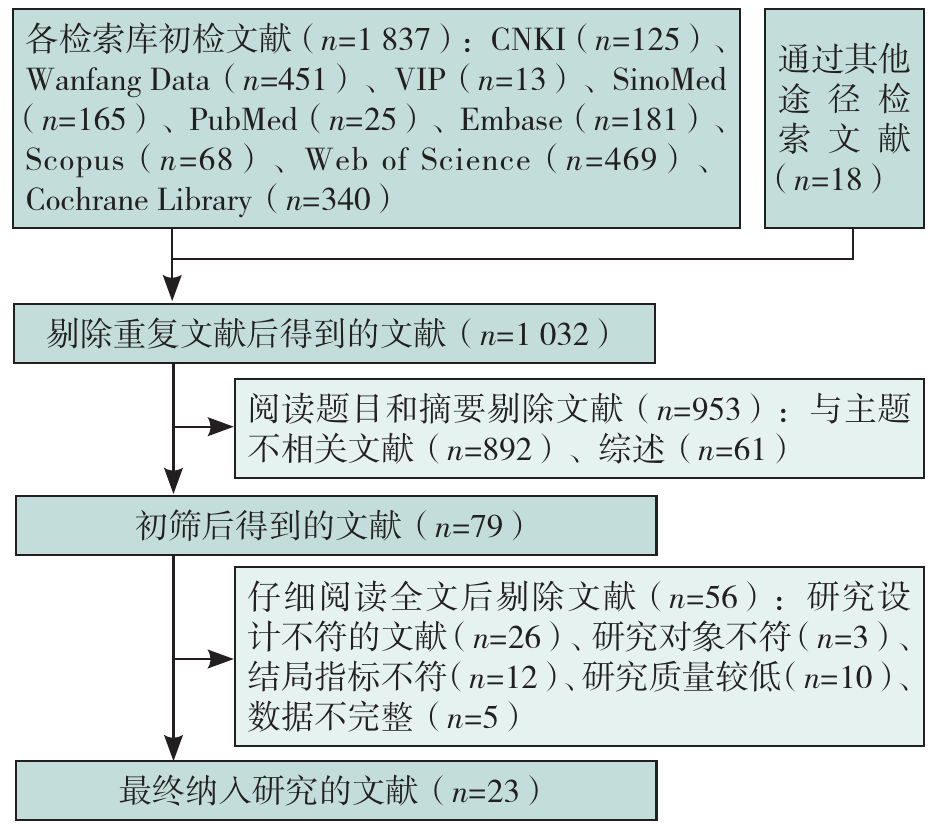
图1 文献筛选流程图注:CNKI=中国知网,Wanfang Data=万方知识数据服务平台,VIP=维普网,SinoMed=中国生物医学文献服务系统。
Figure 1 Literature screening flowchart
| 第一作者 | 发表时间(年) | 样本量[总例数(T/C)] | 性别(男/女) | 年龄(岁) | 卒中阶段 | 卒中类型(IS/HS) | 干预频率 | 干预措施 | 结局指标 | ||
|---|---|---|---|---|---|---|---|---|---|---|---|
| T | C | T | C | ||||||||
| 曾雅琴[ | 2023 | 50(25/25) | 30/20 | 59.9±13.5 | 56.1±12.2 | 亚急性 | 32/18 | 40 min/次,每周5 d,连续4周 | 高精度经颅直流电刺激+机器人辅助训练 | 机器人辅助训练 | ①④ |
| 李冰一[ | 2023 | 63(31/32) | 37/26 | 64.6±8.3 | 61.9±10.6 | 急性 | 47/16 | 20 min/次,1次/d,5次/周,共8周 | 神经肌肉电刺激+机器人辅助训练 | 神经肌肉电刺激 | ①⑨ |
| 何逸康[ | 2022 | 24(12/12) | 13/11 | 43.2±12.5 | 36.7±14.9 | 亚急性 | 15/9 | 30 min/次,2次/d,5 d/周,持续4周 | 常规康复训练+机器人辅助训练 | 常规康复训练 | ② |
| 李莹华[ | 2022 | 40(20/20) | 33/7 | 63.6±11.4 | 63.7±9.4 | 亚急性 | 38/2 | 1 h/次,1次/d,5 d/周,持续4周 | 机器人辅助训练 | 常规康复训练 | ③④⑥⑨ |
| 连雅雯[ | 2022 | 40(20/20) | 25/15 | 55.6±9.0 | 53.8±11.6 | 亚急性 | 33/7 | 1 h/次,1次/d,5 d/周,持续4周 | 常规康复训练+机器人辅助训练 | 常规康复训练 | ③⑥⑨ |
| MA[ | 2022 | 19(10/9) | 14/5 | 59.0±10.6 | 56.4±8.8 | 亚急性 | 17/2 | 90 min/次,1次/d,5次/周,持续4周 | 常规康复训练+机器人辅助训练 | 常规康复训练 | ①②④ |
| COSKUNSU[ | 2022 | 20(11/9) | 11/9 | 59.9±14.2 | 70.0±14.0 | 急性 | 20/0 | 1 h/次,5次/周,连续3周 | 神经生理康复训练+机器人辅助训练 | 神经生理康复训练 | ④ |
| BAYıNDıR[ | 2022 | 33(16/17) | 21/12 | 58.8±10.6 | 57.6±10.5 | 亚急性 | 20/13 | 常规康复3 h/次,机器人治疗1 h/次,2次/周,共5周 | 常规康复训练+机器人辅助训练 | 常规康复训练 | ①⑥⑦ |
| LEE[ | 2021 | 24(14/10) | 16/8 | 59.6±8.3 | 53.5±12.3 | 慢性 | 13/11 | 1 h/次,2次/周,持续6周 | 常规康复训练+机器人辅助训练 | 常规康复训练 | ①②⑤⑥ |
| SINGH[ | 2021 | 23(12/11) | 19/4 | 41.1±12.8 | 42.7±9.3 | 慢性 | 未说明 | 45 min/次,5次/周,持续4周 | 机器人辅助训练 | 常规康复训练 | ①②⑧⑨ |
| CHO[ | 2021 | 40(20/20) | 27/13 | 63.6±7.7 | 60.2±9.4 | 慢性 | 17/23 | 40 min/次,3次/周,持续4周 | 高惯量机械臂 | 低惯量机械臂 | ①②④ |
| HUANG[ | 2020 | 30(15/15) | 24/6 | 57.3±9.2 | 60.1±6.9 | 慢性 | 18/12 | 1 h/次,3~5次/周,共20次,持续7周 | 神经肌肉电刺激+机器人辅助训练 | 机器人辅助训练 | ①②④⑧ |
| 肖长林[ | 2018 | 30(15/15) | 21/9 | 57.9±9.2 | 58.8±7.3 | 急性 | 27/3 | 80 min/次,1次/d,5次/周,持续4周 | 常规康复训练+机器人辅助训练 | 常规康复训练 | ②⑧ |
| VILLAFAÑE[ | 2018 | 32(16/16) | 21/11 | 67.0±11.0 | 70.0±12.0 | 急性 | 24/8 | 90 min/次,5次/周,连续3周 | 常规康复训练+机器人辅助训练 | 常规康复训练 | ⑧⑨ |
| 付桢[ | 2017 | 33(17/16) | 23/10 | 65.2±5.3 | 64.8±2.7 | 亚急性 | 25/8 | 100 min/次,1次/d,5 d/周,持续2周 | 机器人辅助训练 | 常规康复训练 | ③ |
| VANOGLIO[ | 2017 | 30(15/15) | 14/16 | 73.0±14.0 | 72.0±11.0 | 急性 | 19/11 | 40 min/d,5 d/周,总共30个疗程,持续6周 | 机器人辅助训练 | 常规康复训练 | ⑥⑦ |
| ORIHUELA-ESPINA[ | 2016 | 17(9/8) | 11/6 | 56.2±13.7 | 55.0±25.8 | 亚急性 | 17/0 | 1 h/次,5次/周,持续8周 | 机器人辅助训练 | 常规康复训练 | ③ |
| HU[ | 2015 | 26(11/15) | 18/8 | 45.6±11.4 | 49.2±14.7 | 慢性 | 17/9 | 3~5次/周,共20次,持续7周 | 神经肌肉电刺激+机器人辅助训练 | 机器人辅助训练 | ②④⑧ |
| SUSANTO[ | 2015 | 19(9/10) | 14/5 | 50.7±9.0 | 55.1±10.6 | 慢性 | 未说明 | 1 h/次,3~5次/周,共20次,持续5周 | 机器人辅助训练 | 常规康复训练 | ①②④ |
| LEE[ | 2015 | 39(20/19) | 29/10 | 54.1±11.8 | 53.8±9.1 | 慢性 | 21/18 | 90~100 min/次,5次/周,持续4周 | 神经肌肉电刺激+机器人辅助训练 | 机器人辅助训练 | ①⑧ |
| SALE[ | 2014 | 20(11/9) | 14/6 | 67.0±12.4 | 72.6±9.0 | 急性 | 15/5 | 40 min/次,5次/周,持续4周 | 常规康复训练+机器人辅助训练 | 常规康复训练 | ⑤⑧ |
| REINKENSMEYER[ | 2012 | 26(13/13) | 17/9 | 60.0±10.0 | 61.0±13.0 | 慢性 | 13/8 | 1 h/次,3次/周,持续8周 | 机器人辅助训练 | 常规康复训练 | ①⑤⑥ |
| HWANG[ | 2012 | 15(9/6) | 9/6 | 50.2±3.7 | 51.3±3.0 | 慢性 | 未说明 | 40 min/次,5次/周,持续4周 | 机器人全期干预辅助训练 | 机器人半期干预辅助训练 | ②⑥⑦⑧ |
表1 纳入文献的基本特征
Table 1 Basic characteristics of included studies
| 第一作者 | 发表时间(年) | 样本量[总例数(T/C)] | 性别(男/女) | 年龄(岁) | 卒中阶段 | 卒中类型(IS/HS) | 干预频率 | 干预措施 | 结局指标 | ||
|---|---|---|---|---|---|---|---|---|---|---|---|
| T | C | T | C | ||||||||
| 曾雅琴[ | 2023 | 50(25/25) | 30/20 | 59.9±13.5 | 56.1±12.2 | 亚急性 | 32/18 | 40 min/次,每周5 d,连续4周 | 高精度经颅直流电刺激+机器人辅助训练 | 机器人辅助训练 | ①④ |
| 李冰一[ | 2023 | 63(31/32) | 37/26 | 64.6±8.3 | 61.9±10.6 | 急性 | 47/16 | 20 min/次,1次/d,5次/周,共8周 | 神经肌肉电刺激+机器人辅助训练 | 神经肌肉电刺激 | ①⑨ |
| 何逸康[ | 2022 | 24(12/12) | 13/11 | 43.2±12.5 | 36.7±14.9 | 亚急性 | 15/9 | 30 min/次,2次/d,5 d/周,持续4周 | 常规康复训练+机器人辅助训练 | 常规康复训练 | ② |
| 李莹华[ | 2022 | 40(20/20) | 33/7 | 63.6±11.4 | 63.7±9.4 | 亚急性 | 38/2 | 1 h/次,1次/d,5 d/周,持续4周 | 机器人辅助训练 | 常规康复训练 | ③④⑥⑨ |
| 连雅雯[ | 2022 | 40(20/20) | 25/15 | 55.6±9.0 | 53.8±11.6 | 亚急性 | 33/7 | 1 h/次,1次/d,5 d/周,持续4周 | 常规康复训练+机器人辅助训练 | 常规康复训练 | ③⑥⑨ |
| MA[ | 2022 | 19(10/9) | 14/5 | 59.0±10.6 | 56.4±8.8 | 亚急性 | 17/2 | 90 min/次,1次/d,5次/周,持续4周 | 常规康复训练+机器人辅助训练 | 常规康复训练 | ①②④ |
| COSKUNSU[ | 2022 | 20(11/9) | 11/9 | 59.9±14.2 | 70.0±14.0 | 急性 | 20/0 | 1 h/次,5次/周,连续3周 | 神经生理康复训练+机器人辅助训练 | 神经生理康复训练 | ④ |
| BAYıNDıR[ | 2022 | 33(16/17) | 21/12 | 58.8±10.6 | 57.6±10.5 | 亚急性 | 20/13 | 常规康复3 h/次,机器人治疗1 h/次,2次/周,共5周 | 常规康复训练+机器人辅助训练 | 常规康复训练 | ①⑥⑦ |
| LEE[ | 2021 | 24(14/10) | 16/8 | 59.6±8.3 | 53.5±12.3 | 慢性 | 13/11 | 1 h/次,2次/周,持续6周 | 常规康复训练+机器人辅助训练 | 常规康复训练 | ①②⑤⑥ |
| SINGH[ | 2021 | 23(12/11) | 19/4 | 41.1±12.8 | 42.7±9.3 | 慢性 | 未说明 | 45 min/次,5次/周,持续4周 | 机器人辅助训练 | 常规康复训练 | ①②⑧⑨ |
| CHO[ | 2021 | 40(20/20) | 27/13 | 63.6±7.7 | 60.2±9.4 | 慢性 | 17/23 | 40 min/次,3次/周,持续4周 | 高惯量机械臂 | 低惯量机械臂 | ①②④ |
| HUANG[ | 2020 | 30(15/15) | 24/6 | 57.3±9.2 | 60.1±6.9 | 慢性 | 18/12 | 1 h/次,3~5次/周,共20次,持续7周 | 神经肌肉电刺激+机器人辅助训练 | 机器人辅助训练 | ①②④⑧ |
| 肖长林[ | 2018 | 30(15/15) | 21/9 | 57.9±9.2 | 58.8±7.3 | 急性 | 27/3 | 80 min/次,1次/d,5次/周,持续4周 | 常规康复训练+机器人辅助训练 | 常规康复训练 | ②⑧ |
| VILLAFAÑE[ | 2018 | 32(16/16) | 21/11 | 67.0±11.0 | 70.0±12.0 | 急性 | 24/8 | 90 min/次,5次/周,连续3周 | 常规康复训练+机器人辅助训练 | 常规康复训练 | ⑧⑨ |
| 付桢[ | 2017 | 33(17/16) | 23/10 | 65.2±5.3 | 64.8±2.7 | 亚急性 | 25/8 | 100 min/次,1次/d,5 d/周,持续2周 | 机器人辅助训练 | 常规康复训练 | ③ |
| VANOGLIO[ | 2017 | 30(15/15) | 14/16 | 73.0±14.0 | 72.0±11.0 | 急性 | 19/11 | 40 min/d,5 d/周,总共30个疗程,持续6周 | 机器人辅助训练 | 常规康复训练 | ⑥⑦ |
| ORIHUELA-ESPINA[ | 2016 | 17(9/8) | 11/6 | 56.2±13.7 | 55.0±25.8 | 亚急性 | 17/0 | 1 h/次,5次/周,持续8周 | 机器人辅助训练 | 常规康复训练 | ③ |
| HU[ | 2015 | 26(11/15) | 18/8 | 45.6±11.4 | 49.2±14.7 | 慢性 | 17/9 | 3~5次/周,共20次,持续7周 | 神经肌肉电刺激+机器人辅助训练 | 机器人辅助训练 | ②④⑧ |
| SUSANTO[ | 2015 | 19(9/10) | 14/5 | 50.7±9.0 | 55.1±10.6 | 慢性 | 未说明 | 1 h/次,3~5次/周,共20次,持续5周 | 机器人辅助训练 | 常规康复训练 | ①②④ |
| LEE[ | 2015 | 39(20/19) | 29/10 | 54.1±11.8 | 53.8±9.1 | 慢性 | 21/18 | 90~100 min/次,5次/周,持续4周 | 神经肌肉电刺激+机器人辅助训练 | 机器人辅助训练 | ①⑧ |
| SALE[ | 2014 | 20(11/9) | 14/6 | 67.0±12.4 | 72.6±9.0 | 急性 | 15/5 | 40 min/次,5次/周,持续4周 | 常规康复训练+机器人辅助训练 | 常规康复训练 | ⑤⑧ |
| REINKENSMEYER[ | 2012 | 26(13/13) | 17/9 | 60.0±10.0 | 61.0±13.0 | 慢性 | 13/8 | 1 h/次,3次/周,持续8周 | 机器人辅助训练 | 常规康复训练 | ①⑤⑥ |
| HWANG[ | 2012 | 15(9/6) | 9/6 | 50.2±3.7 | 51.3±3.0 | 慢性 | 未说明 | 40 min/次,5次/周,持续4周 | 机器人全期干预辅助训练 | 机器人半期干预辅助训练 | ②⑥⑦⑧ |
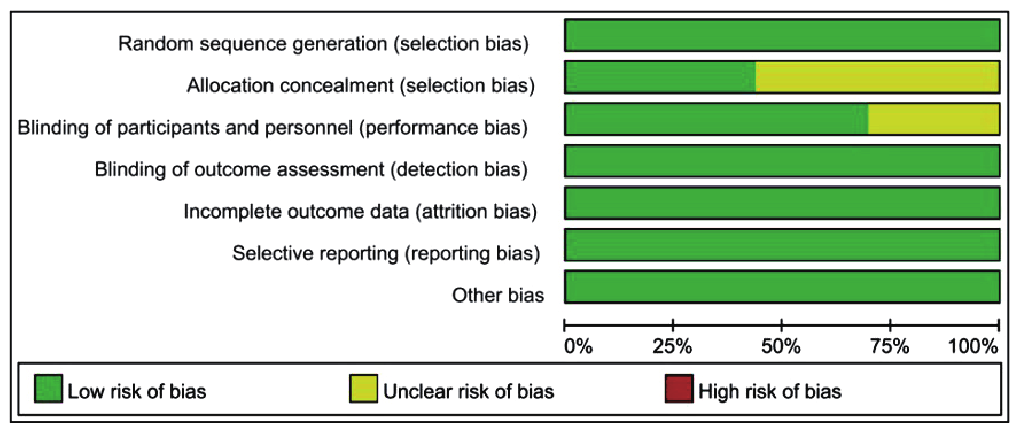
图2 纳入研究偏倚风险评估百分图
Figure 2 Risk of bias graph of included studies
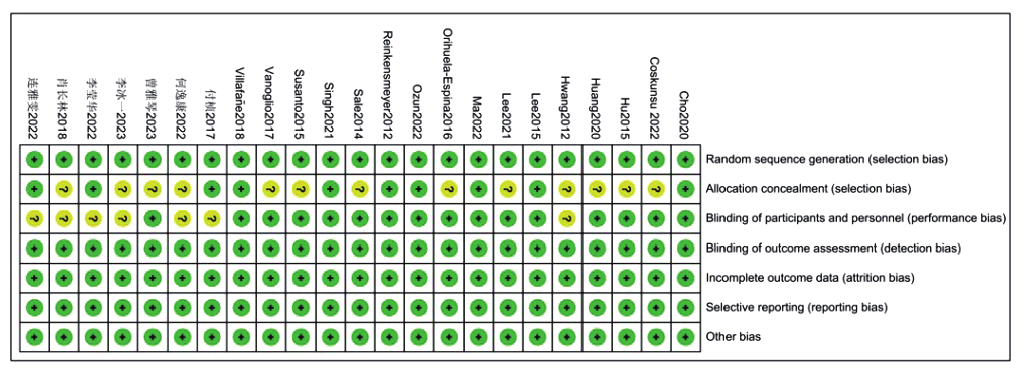
图3 纳入研究偏倚风险评估散点图注:+为低风险,-为高风险,?为不清楚。
Figure 3 Risk of bias assessment graph for included studies
| 结局指标 | 研究数量(篇) | 证据质量评价 | 质量等级 | |||||
|---|---|---|---|---|---|---|---|---|
| 研究类型 | 偏倚风险 | 不一致性 | 不精确性 | 间接性 | 发表偏倚 | |||
| FMA-UL | 11[ | RCT | 无 | 无 | 无 | 无 | 无 | 高质量 |
| FMA-UL手腕部分 | 10[ | RCT | 无 | 无 | 无 | 无 | 无 | 高质量 |
| FMA-UL手部分 | 4[ | RCT | 无 | 无 | 无 | 无 | 无 | 高质量 |
| ARAT | 8[ | RCT | 无 | 无 | 无 | 无 | 无 | 高质量 |
| BBT | 3[ | RCT | 无 | 有a | 有b | 无 | 无 | 低质量 |
| 手握力 | 7[ | RCT | 无 | 无 | 无 | 无 | 无 | 高质量 |
| 手捏力 | 3[ | RCT | 无 | 有a | 有b | 无 | 无 | 低质量 |
| MAS | 8[ | RCT | 无 | 有a | 无 | 无 | 无 | 中等质量 |
| BI | 5[ | RCT | 无 | 有a | 有c | 无 | 无 | 低质量 |
表2 康复机器人辅助训练在脑卒中患者手运动功能康复结局指标的GRADE证据分级
Table 2 GRADE evidence classification of outcomes of hand motor function in stroke patients rehabilitation with robot-assisted training
| 结局指标 | 研究数量(篇) | 证据质量评价 | 质量等级 | |||||
|---|---|---|---|---|---|---|---|---|
| 研究类型 | 偏倚风险 | 不一致性 | 不精确性 | 间接性 | 发表偏倚 | |||
| FMA-UL | 11[ | RCT | 无 | 无 | 无 | 无 | 无 | 高质量 |
| FMA-UL手腕部分 | 10[ | RCT | 无 | 无 | 无 | 无 | 无 | 高质量 |
| FMA-UL手部分 | 4[ | RCT | 无 | 无 | 无 | 无 | 无 | 高质量 |
| ARAT | 8[ | RCT | 无 | 无 | 无 | 无 | 无 | 高质量 |
| BBT | 3[ | RCT | 无 | 有a | 有b | 无 | 无 | 低质量 |
| 手握力 | 7[ | RCT | 无 | 无 | 无 | 无 | 无 | 高质量 |
| 手捏力 | 3[ | RCT | 无 | 有a | 有b | 无 | 无 | 低质量 |
| MAS | 8[ | RCT | 无 | 有a | 无 | 无 | 无 | 中等质量 |
| BI | 5[ | RCT | 无 | 有a | 有c | 无 | 无 | 低质量 |
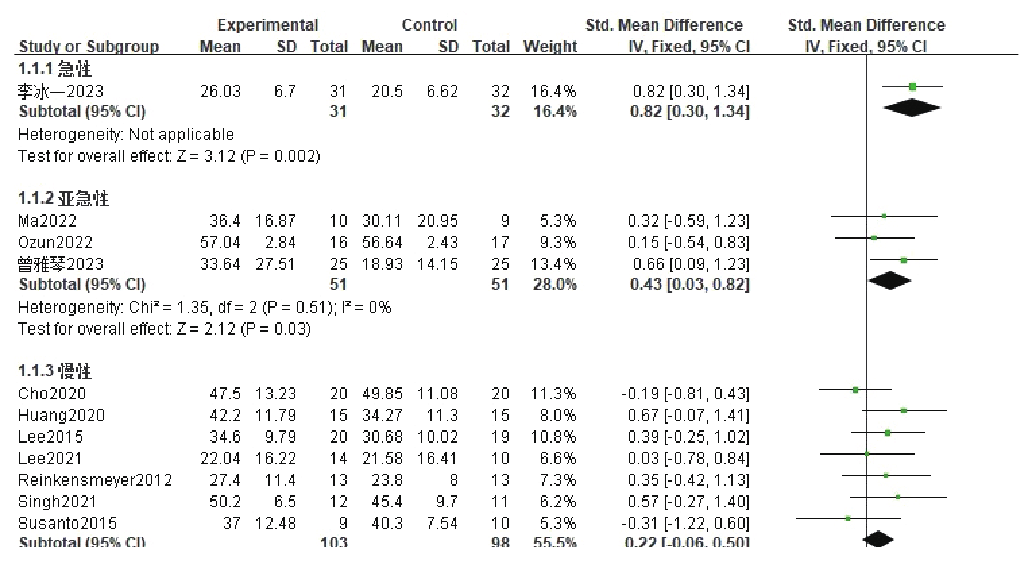
图4 两组FMA-UL评分比较的森林图
Figure 4 Forest plot comparing the FMA-UL scores between the two groups
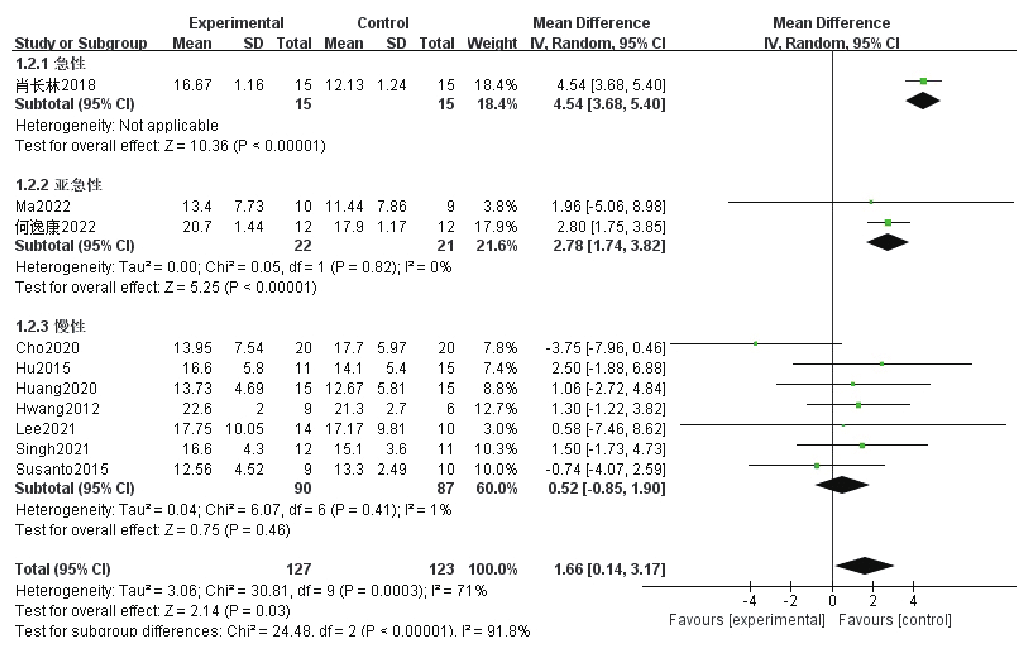
图5 两组FMA-UL(手腕)评分比较的森林图
Figure 5 Forest plot comparing the FMA-UL(Wrist)scores between the two groups
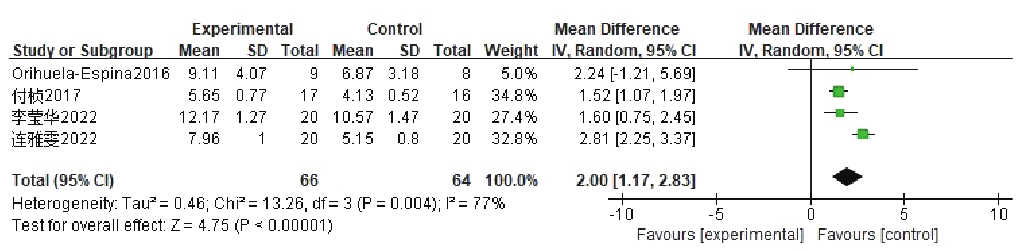
图6 两组FMA-UL(手)评分比较的森林图
Figure 6 Forest plot comparing the FMA-UL(Hand)scores between the two groups
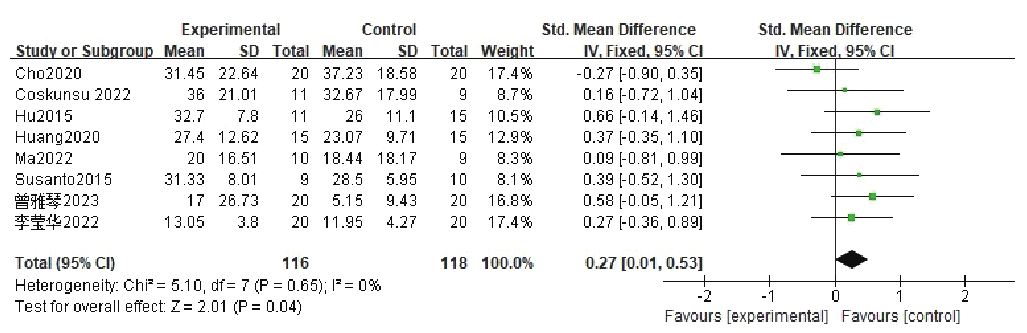
图7 两组ARAT评分比较的森林图
Figure 7 Forest plot comparing the ARAT scores between the two groups
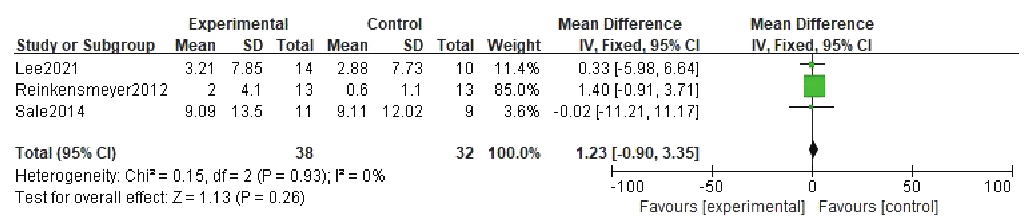
图8 两组BBT评分比较的森林图
Figure 8 Forest plot comparing the BBT scores between the two groups
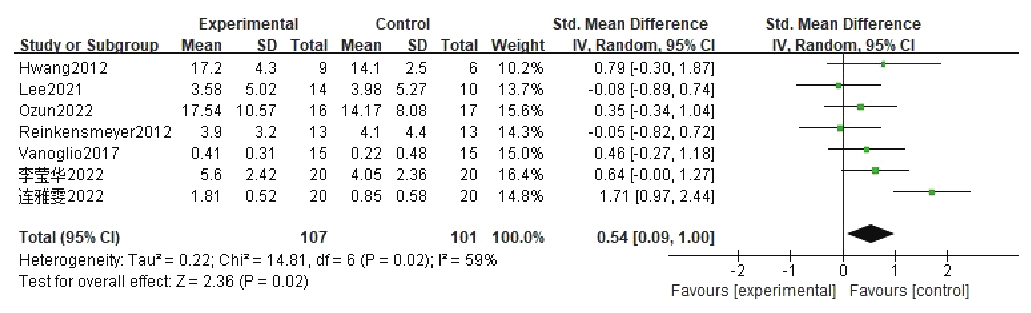
图9 两组手握力比较的森林图
Figure 9 Forest plot comparing the grip strength between the two groups
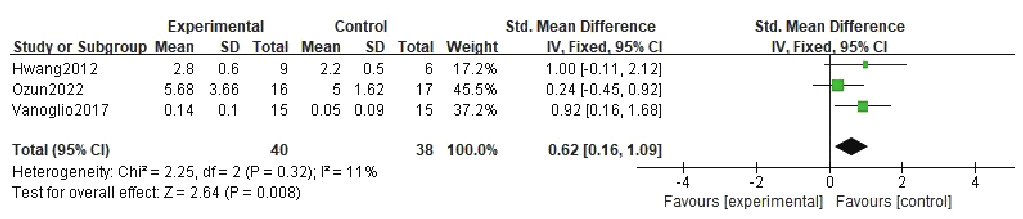
图10 两组手捏力比较的森林图
Figure 10 Forest plot comparing the pinch strength between the two groups
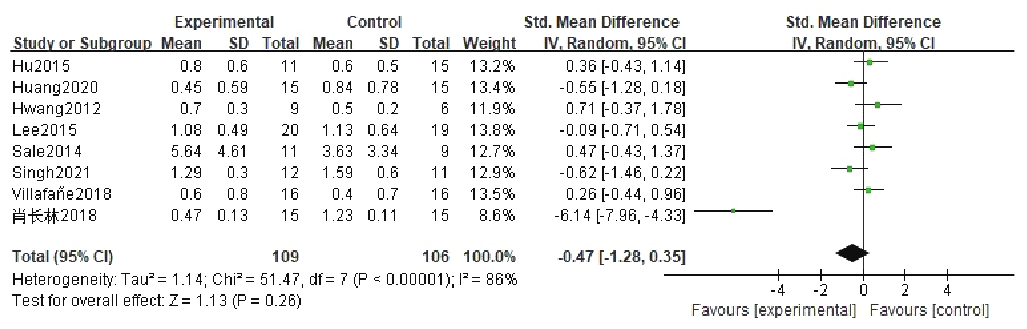
图11 两组MAS评分比较的森林图
Figure 11 Forest plot comparing MAS scores between the two groups
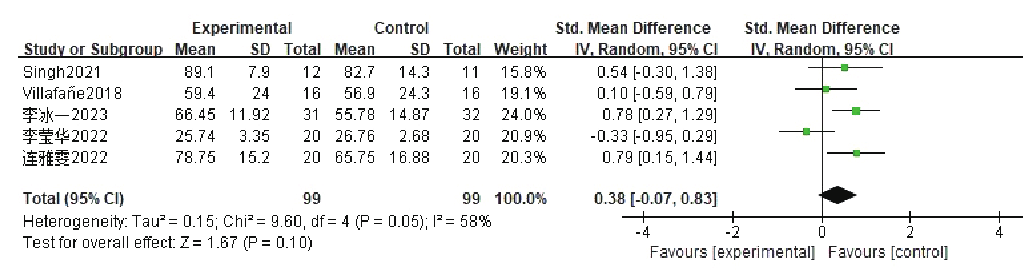
图12 两组BI评分比较的森林图
Figure 12 Forest plot comparing BI scores between the two groups
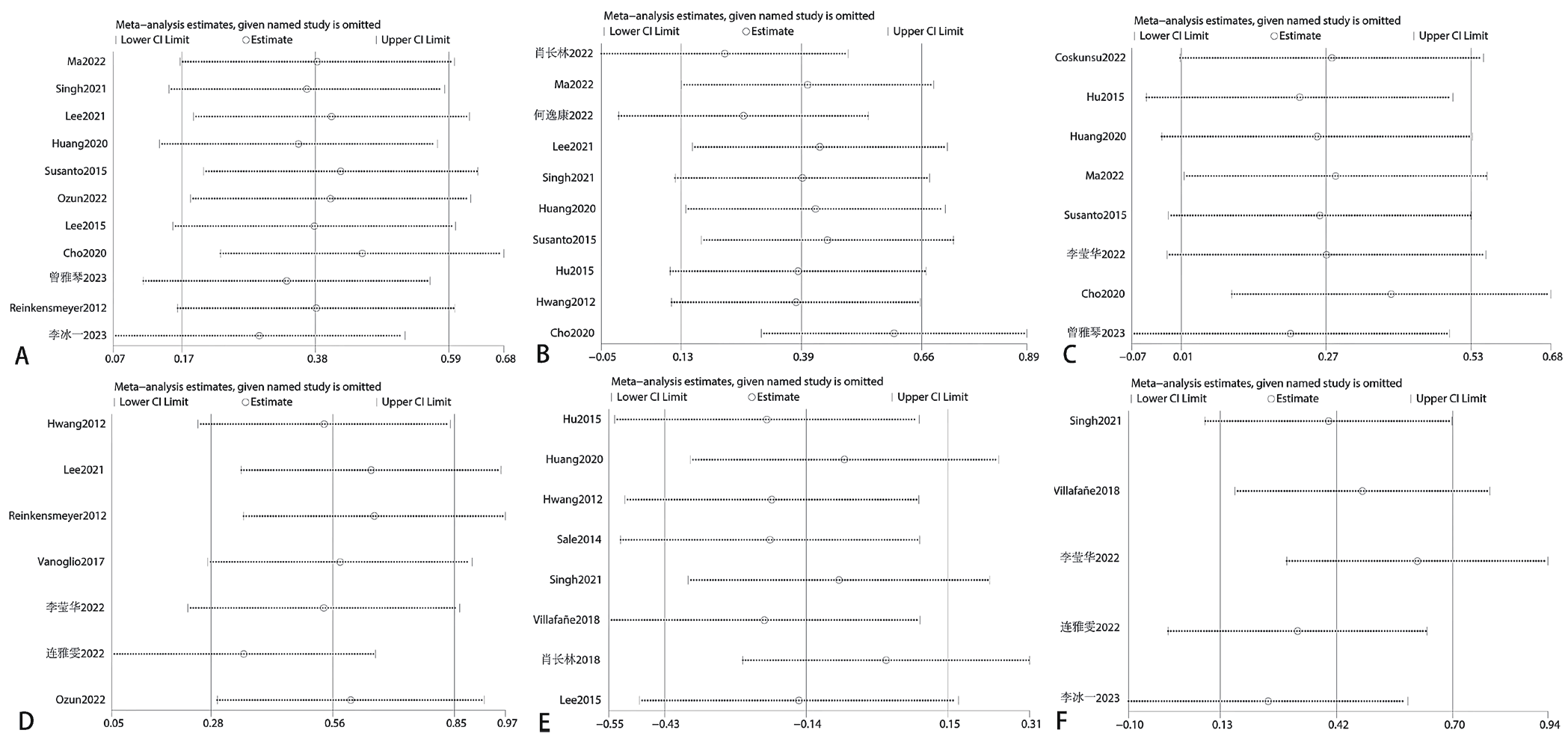
图13 各指标敏感性分析图注:A为上肢运动功能评定量表(FMA-UL),B为手腕FMA-UL,C为上肢动作研究量表,D为手握力,E为改良Ashworth量表,F为日常生活能力Barthel指数。
Figure 13 Sensitivity analysis charts of outcomes
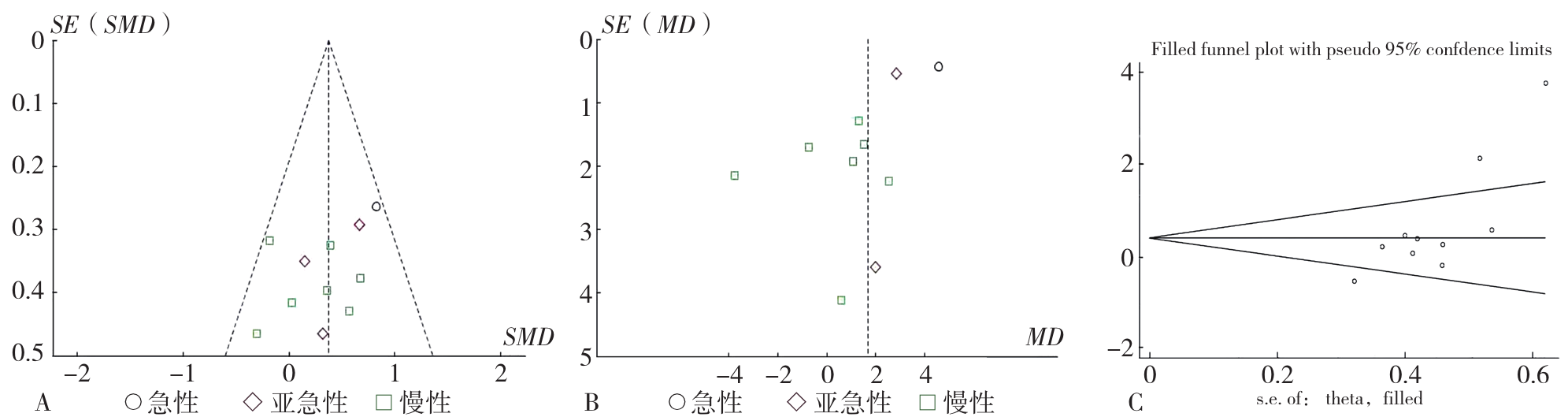
图14 不同结局指标的漏斗图及FMA-UL手腕部分剪补后的漏斗图注:A为FMA-UL发表偏倚漏斗图,B为FMA-UL手腕部分发表偏倚漏斗图,C为FMA-UL手腕部分剪补后的漏斗图。
Figure 14 Funnel plots for different outcomes indicators and filled funnel plot of FMAUL(Wrist)
| [1] |
|
| [2] |
|
| [3] |
|
| [4] |
贾杰. 脑卒中后手功能康复应评价和治疗并重[J]. 上海医药, 2014, 35(2): 6-9.
|
| [5] |
|
| [6] |
陈树耿, 贾杰. 脑机接口在脑卒中手功能康复中的应用进展[J]. 中国康复理论与实践, 2017, 23(1): 23-26. DOI: 10.3969/j.issn.1006-9771.2017.01.006.
|
| [7] |
|
| [8] |
连雅雯, 李贞兰, 陈晓伟, 等. 脑卒中手功能康复机器人的研究现状[J]. 中华物理医学与康复杂志, 2024, 46(2): 177-182. DOI: 10.3760/cma.j.issn.0254-1424-2024.02.017.
|
| [9] |
|
| [10] |
|
| [11] | |
| [12] |
|
| [13] |
|
| [14] |
|
| [15] |
|
| [16] |
|
| [17] |
|
| [18] |
曾雅琴, 程瑞动, 张利, 等. 高精度经颅直流电刺激联合康复机器人对亚急性期脑卒中患者上肢和手功能的效果[J]. 中国康复理论与实践, 2023, 29(11): 1327-1332. DOI: 10.3969/j.issn.1006-9771.2023.11.010.
|
| [19] |
李冰一. 手康复机器人联合神经肌肉电刺激对脑卒中患者上肢及手功能恢复的影响[D]. 大连: 大连医科大学, 2023.
|
| [20] |
何逸康, 宋爱国, 赖健伟, 等. 基于镜像疗法的手部外骨骼机器人在脑卒中偏瘫手康复中的应用[J]. 中国康复医学杂志, 2022, 37(12): 1616-1621. DOI: 10.3969/j.issn.1001-1242.2022.12.005.
|
| [21] |
李莹华. 基于力反馈的手部康复机器人结合任务导向性训练对脑卒中偏瘫患者手指粗大抓握功能的影响[D]. 长春: 吉林大学, 2022.
|
| [22] |
连雅雯. 感觉驱动手功能机器人训练对脑卒中患者手功能恢复的影响[D]. 长春: 吉林大学, 2022.
|
| [23] |
|
| [24] |
|
| [25] |
|
| [26] |
|
| [27] |
|
| [28] |
|
| [29] |
|
| [30] |
肖长林, 潘翠环, 陈艳, 等. 肌电触发机器手对脑卒中早期患者手功能康复的影响[J]. 中华物理医学与康复杂志, 2018, 40(2): 100-105. DOI: 10.3760/cma.j.issn.0254-1424.2018.02.005.
|
| [31] |
|
| [32] |
付桢. 辅助任务导向训练对脑卒中早期手功能康复的影响[D]. 广州: 广州医科大学, 2017.
|
| [33] |
|
| [34] |
|
| [35] |
|
| [36] |
|
| [37] |
|
| [38] |
|
| [39] |
|
| [40] |
|
| [41] |
李辉, 申丽, 周朝君, 等. 脑卒中后手功能障碍的康复诊疗[J]. 山西大同大学学报(自然科学版), 2022, 38(6): 84-89. DOI: 10.3969/j.issn.1674-0874.2022.06.019.
|
| [42] |
樊东, 许文强, 余秋华, 等. 基于"中枢-外周-中枢"闭环干预系统在脑卒中后手功能康复的研究进展[J]. 中国医学创新, 2022, 19(15): 160-165.
|
| [43] |
吴宏健, 李莉娜, 李龙, 等. 脑卒中后手功能康复机器人综合干预研究进展[J]. 生物医学工程学杂志, 2019, 36(1): 151-156. DOI: 10.7507/1001-5515.201711024.
|
| [44] |
赵金婷, 李四楠, 蔡楚杰, 等. 脑卒中后手功能康复机器人的研究进展——从传动机构角度的探讨[J]. 中国康复医学杂志, 2023, 38(11): 1616-1622. DOI:10.3969/j.issn.1001-1242.2023.11.024.
|
| [45] |
|
| [46] |
李京斌, 崔向红, 佟明杰, 等. 脑卒中后手功能障碍康复治疗的进展[J]. 中国疗养医学, 2024, 33(2): 54-58. DOI: 10.13517/j.cnki.ccm.2024.02.011.
|
| [47] |
张丽英, 王杰宁, 于小明. 机器人辅助训练对脑卒中患者上肢运动功能效果的Meta分析[J]. 中国康复理论与实践, 2023, 29(2): 156-166. DOI: 10.3969/j.issn.1006-9771.2023.02.004.
|
| [48] |
|
| [49] |
|
| [50] |
|
| [51] |
陈姣, 梁万添, 汤周全, 等. 虚拟现实技术结合真实日常功能训练对脑卒中后上肢功能与心理状况的影响[J]. 吉林医学, 2022, 43(9): 2496-2498. DOI: 10.3969/j.issn.1004-0412.2022.09.060.
|
| [52] |
励莉. 中风后手功能障碍的康复治疗研究概述[J]. 中国民族民间医药, 2018, 27(4): 45-46, 56.
|
| [53] |
凌骏麒, 蒋留军, 白玉龙. 腕-手矫形器在脑卒中患者手功能障碍康复治疗中的应用研究进展[J]. 上海医药, 2023, 44(13): 48-51, 109. DOI: 10.3969/j.issn.1006-1533.2023.13.015.
|
| [54] |
杨钰琳, 常万鹏, 丁江涛, 等. 康复机器人对卒中后手部运动功能效果的网状meta分析[J]. 中国康复医学杂志, 2024, 39(2): 246-253.
|
| [1] | 韩悦, 边哲, 谷昊辰, 王大力, 彭延波. 他汀类药物累积限定日剂量对缺血性脑卒中复发风险的研究[J]. 中国全科医学, 2026, 29(14): 1821-1826. |
| [2] | 曹煜隆, 单娇, 王斌, 王琰, 王艳槟, 怀伟, 包小源, 金梦, 匡季秋, 高燕. 基于流行特征与专家调研构建手术相关感染暴发调查表单[J]. 中国全科医学, 2026, 29(13): 1776-1783. |
| [3] | 杨静然, 马芳, 王渝, 张义美, 周敏. 先天性心脏病患儿行开胸手术后疼痛管理的最佳证据总结[J]. 中国全科医学, 2026, 29(11): 1473-1480. |
| [4] | 肖瑶, 林秀文, 吴倩芳, 凌鑫, 梁艺龄, 刘嘉玲, 石磊. 基于欧洲五维健康量表的中国多重慢病患者健康效用值的Meta分析[J]. 中国全科医学, 2026, 29(11): 1463-1472. |
| [5] | 刘洋, 梁芳, 吴玲, 李文磊, 李鹏飞. 非常规脂质以及甘油三酯-葡萄糖指数诊断初发急性缺血性脑卒中的价值研究[J]. 中国全科医学, 2026, 29(11): 1422-1429. |
| [6] | 王菲, 韩伟钰, 孙韬. 艾灸联合三阶梯疗法治疗癌性疼痛的网状Meta分析[J]. 中国全科医学, 2026, 29(09): 1203-1211. |
| [7] | 王小楠, 阮晓楠, 刘杨, 吴抗, 邱桦, 刘庆平, 宋家慧, 高娇娇, 周弋, 刘晓琳. 不同身体测量指标与脑卒中发病风险的巢式病例对照研究[J]. 中国全科医学, 2026, 29(08): 1020-1028. |
| [8] | 曹磊, 刘学春, 江伟, 陈炎, 严孙宏, 杜静. 颞肌横截面积和颞肌厚度预测急性缺血性脑卒中患者肌肉衰减状态的研究[J]. 中国全科医学, 2026, 29(08): 997-1007. |
| [9] | 裴志怡, 张晓欣, 林佳艺, 张向毅, 康晓凤. 基于患者决策辅助工具国际标准的心血管领域患者决策辅助工具质量及应用效果的系统评价[J]. 中国全科医学, 2026, 29(07): 945-952. |
| [10] | 张玲, 黄双英, 徐慧, 梅慧婷, 洪咏萍. 不同运动方式对老年人跌倒效能影响的网状Meta分析[J]. 中国全科医学, 2026, 29(06): 741-751. |
| [11] | 赵雪姣, 李娟, 李雨洁, 卢婷, 先丽红, 颜欢. 中国脑卒中后认知障碍患病趋势及影响因素的Meta分析[J]. 中国全科医学, 2026, 29(03): 380-392. |
| [12] | 周文超, 梁佳琪, 姚尚满, 薛朝, 刘龙, 郭相杰. 高血压与帕金森病的共享基因位点识别研究[J]. 中国全科医学, 2026, 29(02): 201-206. |
| [13] | 余浩, 廖鹏, 罗力. 脑卒中数字疗法:从筛查到干预的进展与挑战[J]. 中国全科医学, 2026, 29(02): 240-246. |
| [14] | 龙禹同, 陆诗雨, 谭洁, 杨博璐, 段京莹, 杨同德, 阎丽静, 宫恩莹, 邵瑞太. 中国农村地区脑卒中患者长期用药依从态度与行为及相关因素:基于河北某县随访数据[J]. 中国全科医学, 2026, 29(02): 170-179. |
| [15] | 向凤玲, 王远坤, 王小燕, 何圣洁, 干锦华. 中国儿童青少年高尿酸血症患病率的Meta分析[J]. 中国全科医学, 2025, 28(33): 4206-4213. |
| 阅读次数 | ||||||
|
全文 |
|
|||||
|
摘要 |
|
|||||