中国全科医学 ›› 2026, Vol. 29 ›› Issue (04): 444-456.DOI: 10.12114/j.issn.1007-9572.2024.0217
曹新阳1, 汪洋2,3,4,5, 金花2,3,6,7, 于德华2,3,6,7, 杨辉8, 刘晓云4,5,*( ), 许岩丽1,*()
收稿日期:2024-12-29
修回日期:2025-06-26
出版日期:2026-02-05
发布日期:2026-01-15
通讯作者:
刘晓云, 许岩丽
曹新阳和汪洋为共同第一作者
作者贡献:
曹新阳负责数据收集、数据分析、论文初稿撰写、论文审校;汪洋负责研究设计、部分数据筛选和分析、论文审校;许岩丽参与部分研究设计并负责整体管理;金花、于德华、杨辉、刘晓云对论文进行审校;于德华、刘晓云、许岩丽对文章整体负责。
CAO Xinyang1, WANG Yang2,3,4,5, JIN Hua2,3,6,7, YU Dehua2,3,6,7, YANG Hui8, LIU Xiaoyun4,5,*(), XU Yanli1,*()
Received:2024-12-29
Revised:2025-06-26
Published:2026-02-05
Online:2026-01-15
Contact:
LIU Xiaoyun, XU Yanli
About author:CAO Xinyang and WANG Yang are co-first authors
摘要: 背景 全科医学作为一种新兴医疗模式,强调以社区为基础的全面医疗服务,旨在提高医疗的可及性和效率。然而,尽管全科医学在提升基本医疗卫生服务能力中扮演关键角色,但全科医学研究仍处于发展滞后的状态,需要通过科学研究和社会支持来改善这一状况,并提高其学科地位。 目的 在研究人员、科研机构和学科整体三个自下而上的层级中,分层次地分析影响全科医学领域科研能力发展的因素。 方法 于2023年12月—2024年3月,本文采用范围综述方法,对中国知网、万方数据知识服务平台、PubMed、Web of Science数据库进行检索,并手动浏览国际全科医学科研和行业学会的信息发布平台,以及谷歌搜索引擎,收集2000—2023年发表的全科医学科研能力发展影响因素的相关文献,并通过手动检索补充灰色文献。通过两阶段的筛选,最终纳入相关文献,使用Excel进行数据整理,归类影响因素,并通过归纳性的主题分析法分析数据,最终以日冕图的形式展示研究结果。 结果 本研究最终纳入122篇文献,包括原创研究62篇、系统综述2篇、非原创论文54篇、灰色文献4篇,基于文献分析,共归纳出21项影响全科医学科研能力发展的因素。相关因素被分为个体(研究人员)、群体(机构)和整体(学科)三个层级。个体层面的因素涉及研究人员的科研知识和技能、申请资金的能力、对科研的兴趣和积极性、学习科研知识和发展科研合作的机遇、用于科研工作的时间以及科研和临床工作的结合情况;群体层面的因素涉及科研机构的科研人力、科研资源、科研环境、科研管理机制、科研培训能力、外部科研合作资源和机构管理者的重视程度;学科层面的因素则涉及学科的科研特点、核心的科研和协调机构、政府、学协会、学术期刊和国际合作者的外部影响,以及科研经费等方面。 结论 本研究综述了全球范围内关于全科医学科研能力发展的文献,识别出21个关键的影响因素。在我国的实际环境中,上述因素可能会集中表现为学科组织分散、总体资源有限、学科理论不清、社会认知不足等一系列相互影响的问题。这要求该领域的研究者更加主动地以学科核心理念为导向,对机构的科研绩效导向和管理机制,以及个人的科研领域和路径进行合理的调整和重塑,并增强对全科医生具有全科医学学科特色的科研理论、方法和能力的培养,以增强形成学科合力的基础。
中图分类号:
| 数据库名称 | 检索式 |
|---|---|
| PubMed | (primary health care[Mesh] OR "primary care"[tiab] OR "primary health care"[tiab] or "primary healthcare"[tiab] OR "community health"[tiab] OR "population health"[tiab])OR "family medicine"[tiab] OR "family doctor*"[tiab] OR "general practi*"[tiab] OR "family physician*"[tiab] AND(research capacit* [tiab] or research culture* [tiab]) |
| Web of Science | (TS =("primary care" OR "primary health care" OR "primary healthcare" OR "community health*" OR "population health" OR "family medicine" OR "family physician*" OR "general practi*" OR "family doctor*"))AND(TS =("research capacit*" or "research culture")) |
| 中国知网 | SU=('初级保健'+'初级卫生保健'+'基本医疗'+'基本医疗'+'基层卫生'+'社区卫生'+'社区健康'+'乡镇卫生'+'全科医学'+'家庭医学'+'全科医生'+'基层医生')AND SU=('科研能力'+ '研究能力'+'研究工作'+'科研工作'+ '研究情况'+'科研情况'+ '研究培养'+'科研培养'+ '研究需求'+'科研需求') |
| 万方数据知识服务平台 | 主题:("初级保健"or"初级卫生保健"or"基本医疗"or"基本医疗"or"基层卫生"or"社区卫生"or"社区健康"or"乡镇卫生"or"全科医学"or"家庭医学"or"全科医生"or"基层医生")and主题:("科研能力"or"研究能力"or"科研工作"or"研究工作"or"科研情况"or"研究情况"or"科研培养"or"研究培养"or"科研需求"or"研究需求") |
表1 对数据库进行文献检索时所使用的检索式
Table 1 Search formulas used in literature searches of databases
| 数据库名称 | 检索式 |
|---|---|
| PubMed | (primary health care[Mesh] OR "primary care"[tiab] OR "primary health care"[tiab] or "primary healthcare"[tiab] OR "community health"[tiab] OR "population health"[tiab])OR "family medicine"[tiab] OR "family doctor*"[tiab] OR "general practi*"[tiab] OR "family physician*"[tiab] AND(research capacit* [tiab] or research culture* [tiab]) |
| Web of Science | (TS =("primary care" OR "primary health care" OR "primary healthcare" OR "community health*" OR "population health" OR "family medicine" OR "family physician*" OR "general practi*" OR "family doctor*"))AND(TS =("research capacit*" or "research culture")) |
| 中国知网 | SU=('初级保健'+'初级卫生保健'+'基本医疗'+'基本医疗'+'基层卫生'+'社区卫生'+'社区健康'+'乡镇卫生'+'全科医学'+'家庭医学'+'全科医生'+'基层医生')AND SU=('科研能力'+ '研究能力'+'研究工作'+'科研工作'+ '研究情况'+'科研情况'+ '研究培养'+'科研培养'+ '研究需求'+'科研需求') |
| 万方数据知识服务平台 | 主题:("初级保健"or"初级卫生保健"or"基本医疗"or"基本医疗"or"基层卫生"or"社区卫生"or"社区健康"or"乡镇卫生"or"全科医学"or"家庭医学"or"全科医生"or"基层医生")and主题:("科研能力"or"研究能力"or"科研工作"or"研究工作"or"科研情况"or"研究情况"or"科研培养"or"研究培养"or"科研需求"or"研究需求") |
| 组织名称 | 所在国家和地区 | 平台链接 |
|---|---|---|
| 北美初级保健科研学会(North American Primary Care Research Group, NAPCRG) | 北美地区,包括美国和加拿大 | https://napcrg.org/home |
| 欧洲全科医学科研网络(European General Practice Research Network, EGPRN) | 欧洲地区 | https://www.egprn.org/ |
| 英国学术初级保健学会(Society for Academic Primary Care, SAPC) | 英国 | https://sapc.ac.uk/ |
| 澳大利亚皇家全科医生学会(Royal Australian College of General Practitioners, RACGP) | 澳大利亚 | https://www.racgp.org.au/ |
| 加拿大家庭医学学院(College of Family Physicians of Canada, CFPC) | 加拿大 | https://www.cfpc.ca/en/home |
表2 手动检索的知名国际全科医学科研和行业学会信息发布网站
Table 2 Manually searched websites that publish information on reputable international general practice research and societies
| 组织名称 | 所在国家和地区 | 平台链接 |
|---|---|---|
| 北美初级保健科研学会(North American Primary Care Research Group, NAPCRG) | 北美地区,包括美国和加拿大 | https://napcrg.org/home |
| 欧洲全科医学科研网络(European General Practice Research Network, EGPRN) | 欧洲地区 | https://www.egprn.org/ |
| 英国学术初级保健学会(Society for Academic Primary Care, SAPC) | 英国 | https://sapc.ac.uk/ |
| 澳大利亚皇家全科医生学会(Royal Australian College of General Practitioners, RACGP) | 澳大利亚 | https://www.racgp.org.au/ |
| 加拿大家庭医学学院(College of Family Physicians of Canada, CFPC) | 加拿大 | https://www.cfpc.ca/en/home |
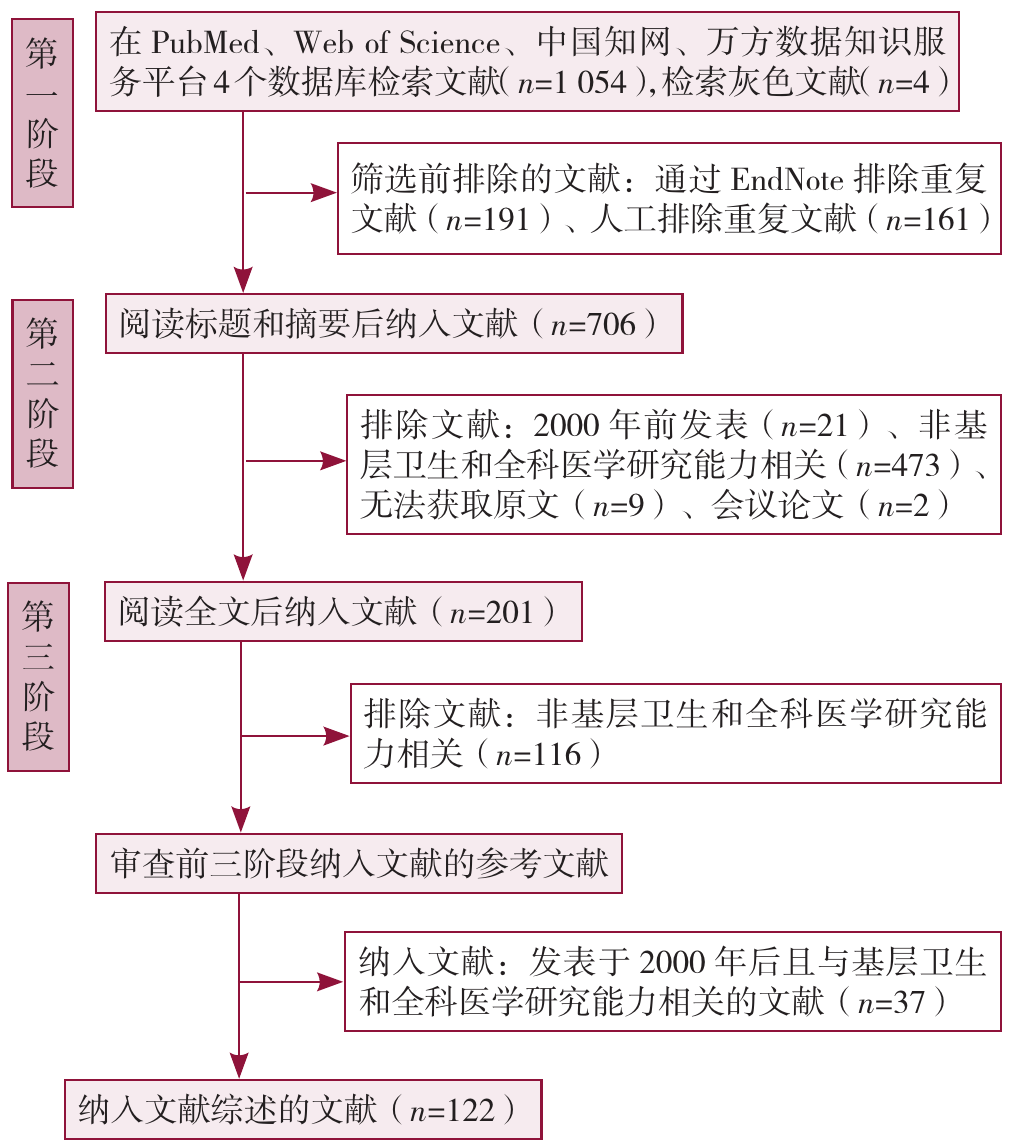
图1 本研究的文献检索流程和结果
Figure 1 Literature search process and results
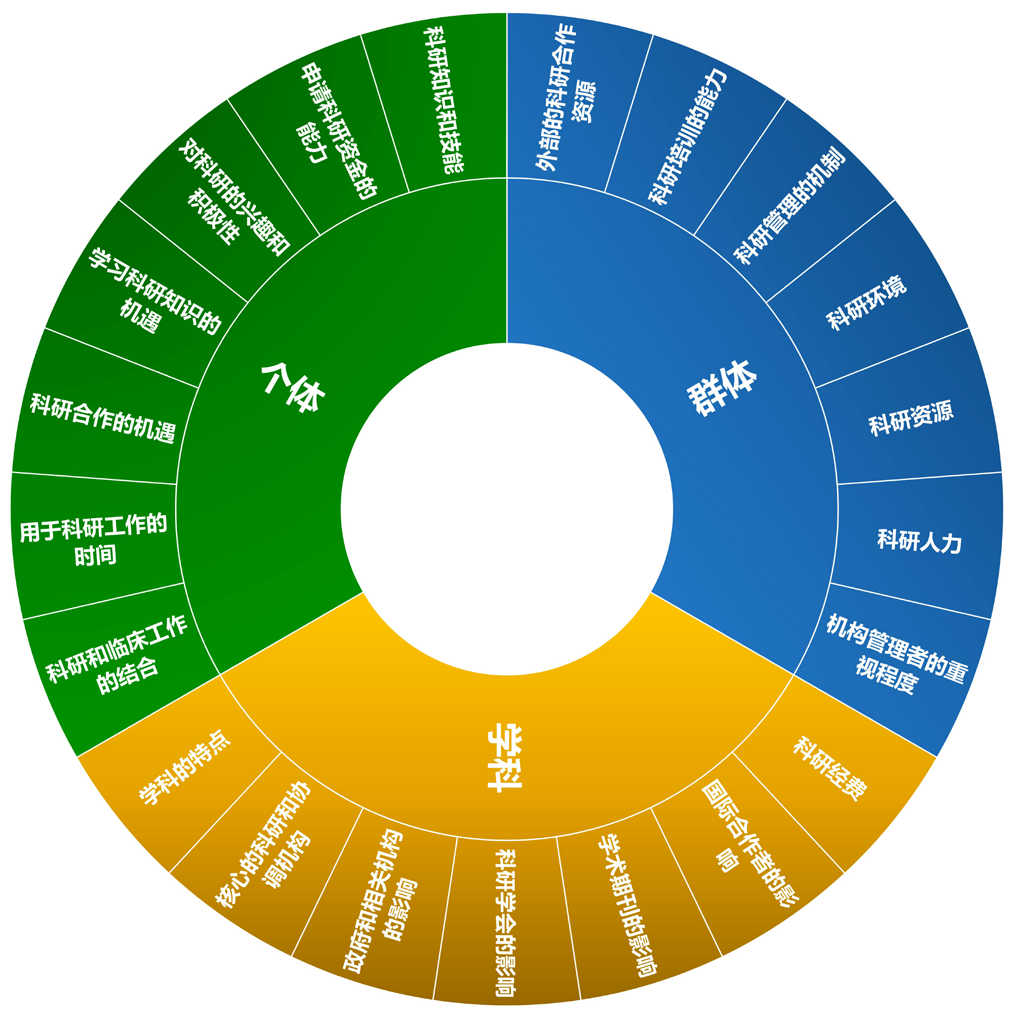
图2 发展全科医学科研能力的影响因素
Figure 2 Factors influencing the development of research capabilities in general practice
| 层级 | 因素 | 诠释 | 代表性观点(案例)1 | 代表性观点(案例)2 | 代表性观点(案例)3 |
|---|---|---|---|---|---|
| 科研人员个体 | 科研知识和技能 | 具备专业科研知识和技能的情况,会影响科研人员参与科研工作的程度和完成可靠的研究的能力 | 尽管许多医生在澳大利亚的全科医学研究中参与了如数据收集或协助大型项目等部分科研活动,但由于他们在科研知识和技能方面的不足,很难更深入地参与到科研工作中[ | 在非洲的全科医学研究中,大多数医务人员由于缺乏执行大规模实验性和调查性研究的能力,所进行的科研项目多为小规模的描述性研究,且常存在多种缺陷[ | 一项针对上海市浦东新区社区全科医生的调查,发现持有研究生学历和高级职称的全科医生在科研产出上有着更出色的表现[ |
| 申请科研资金的能力 | 掌握申请科研资金的技能的情况,会决定科研人员获得资金支持和开展研究工作的机遇 | 一项关于澳大利亚全科医生的半结构化访谈揭露,其中一个参与科研的主要困难是申请科研基金;全科医生对此过程感到艰辛和挫败,进而难以推进有意义的科研项目[ | 针对8个阿拉伯国家的全科医生进行的在线调查发现,尽管有75%的医生强调科研的必要性,他们普遍缺乏申请和筹集科研基金的能力[ | 一篇探讨我国基层医院科研发展的论文指出,目前基层医院的科研项目普遍面临题目设计水平低下、创新性和实践意义不足以及临床转化困难的问题,这不仅导致项目难以立项和获得资金支持,即使一些具有创新点的项目也因开题报告写作水平不足而未能成功立项[ | |
| 对科研的兴趣和积极性 | 对全科医学和全科医学领域研究的内在热情,是推动研究人员,尤其是青年研究人员参与科研工作的关键动力 | 在探讨年轻全科医生如何融合科研与临床工作的过程中,WONCA青年医生运动的成员指出,内在的兴趣和热忱是驱动他们投身于科研领域的关键[ | 在一项关于丹麦招募及留任全科医学研究人员的半结构化访谈科研中,他们表达了其对该领域的发展、满足学术探索的好奇心以及追求职业发展机会的强烈愿景;尽管部分成员对学术路径感到困惑,但其对科研的热情保持在较高水平[ | 在对我国广东省青年全科医生进行的关于科研素养及培训需求的调研中,大部分参与者都表达了对科研的热情,以及对进一步学习和接受培训的强烈需求和愿望[ | |
| 学习科研知识的机遇 | 是否拥有经验丰富的科研导师,以及是否拥有参与学术培训、会议和科研项目的机会,都会影响全科医学研究人员的科研能力和研究机遇 | 一项针对爱尔兰西部地区全科医学医务人员的科研活动与能力的调查揭示,由于缺乏专业研究人员的监督和指导,他们的科研兴趣受到了限制,参与科研活动也遭遇阻碍[ | 在一项针对澳大利亚昆士兰省全科医学医务人员的科研能力调查中,多数参与者指出,缺乏专业科研知识和统计分析技能的培训机会,是他们进行科研工作的主要障碍之一[ | 在上海市杨浦区社区卫生服务中心对全科医生的调查中,大多数受访者均表示,缺乏专业指导已成为他们进行科研工作的主要障碍[ | |
| 科研合作的机遇 | 是否拥有科研合作者和支持者,尤其是与有经验的研究人员合作和获得其指导,会影响全科科研人员的心态和成果产出 | 在一项关于澳大利亚全科医学医务人员科研能力的调查中,参与者表示他们普遍面临一种困境:由于缺乏管理层、同行和合作伙伴的协调与支持,他们在科研工作中感到孤立无援[ | 一项对澳大利亚全科医生进行的半结构访谈中显示,全科医生与经验丰富的导师建立紧密的联系并积极融入同事及其他研究人员的学术圈,有助于增强他们的自信心,并能减少科研工作中的孤立与隔离感[ | 在关于上海市社区卫生中心医务人员的科研意识与需求的调查中,近半数的受访者认为缺乏同事间的合作成为阻碍他们参与科研工作的一大障碍[ | |
| 用于科研工作的时间 | 是否拥有稳定的科研时间,以及是否可以灵活地分配和规划时间,会决定研究人员,特别是全科医生可以在多大程度上投身于科研活动 | 一项关于澳大利亚昆士兰州全科医学从业者科研能力的调查揭示,受访者普遍将缺乏稳定的科研时间视为开展科研工作的主要阻碍之一[ | 一项对丹麦招聘和留任全科医学研究人员的半结构化访谈中,受访者认为具有弹性灵活的工作时间对于开展科研工作具有明显的促进作用[ | 在上海市杨浦区的全科医生问卷调查中,近半数医生表示,由于需要处理日常门诊、健康教育、随访和健康档案管理等众多任务,他们难以腾出时间进行科研工作;此外,由于大部分受访者为女性,家庭职责进一步减少了他们的科研时间[ | |
| 科研和临床工作的结合 | 科研工作和临床实践的结合程度,会影响研究型全科医生兼顾临床工作和科研工作的时间调配能力 | 在一项关于中低收入国家基本医疗与全科医学科研能力的研究中,强调了研究人员与临床实践人员之间分隔的问题;由于资金领域的不断变化,研究人员可能需要花费更多时间在纯粹的科研活动上,从而减少了参与临床或实践环境中的活动[ | |||
| 科研机构 | 机构管理者的重视程度 | 基层医疗卫生机构管理者对科研工作的重视程度,会影响机构对科研工作的倾向性和资源调配 | 在中国上海市普陀区对全科医学机构的医务人员进行的问卷调查中,82.8%的参与者认为,中心领导对科研工作的重视和支持,是科研成功的决定性因素[ | ||
| 科研人力 | 机构科研人员的质量和数量,会影响其科研团队的科研能力和稳定性 | 在荷兰,全科医学领域的博士研究员为医疗机构提供了宝贵的专业知识资源,对该领域的研究发展起到了积极的推动作用,他们的参与明显提高了机构团队的科研能力,并促进了其在专业上的发展[ | 关于澳大利亚昆士兰州全科医学科研能力建设的一项调查揭示,机构的人员流失导致剩余员工的工作负担加重和科研团队的不稳定,进而阻碍了科研工作的开展[ | 一篇探讨我国基层医院科研工作的论文强调,我国在基层科研人才培养方面面临的一大挑战是科研人员的短缺与人才流失严重,这进一步削弱了基层医院的科研能力[ | |
| 科研资源 | 基层医疗卫生机构获得科研资源的情况,将影响其科研工作的开展 | 尽管多数学术期刊和其他科研资料会提供在线的免费版本,部分发展中国家也可获得免费纸质版,但由于这些国家部分研究者面临机构硬件设施不足和网络连接问题,他们未能充分利用这些数字资源,从而限制了科研能力的提升[ | 在一项探讨全科医学科研必要性的研究中,作者指出,我国社区卫生机构在科研设施上的明显不足限制了其科研质量;这不仅包括硬件设备、科研数据库及专业资料的不足,也涵盖了科研软环境的问题,例如全科医师科研能力的培训和科研资料的匮乏,严重制约了科研工作的展开[ | 一篇研究我国基层医疗卫生机构进行临床研究的论文中提到,基层医院进行临床科研的主要障碍之一是缺乏专门的伦理审核机构[ | |
| 科研环境 | 机构的科研环境和文化氛围会影响研究人员的心态,从而影响科研工作的开展 | 在一项关于丹麦招聘和留任全科医学研究人员的定性研究中,受访青年医生强调,良好的科研文化环境可以吸引和保留更多的全科医学卫生研究人员,并提高其科研积极性,从而支持其开展科研工作[ | 苏丹的青年全科医生组织针对全科医生进行的一项横断面研究指出,在支持科研工作的机构环境中,研究人员更容易获得所需的指导与资源,并增强其科研信心,这对他们持续开展科研活动非常有利[ | ||
| 科研管理的机制 | 机构与科研相关的管理机制,会影响研究人员的职业发展,以及对科研工作的参与度和热情 | 在北美全科医学科研学会的一次科研能力建设讨论会议中,参与者强调,新入行的全科医学研究人员在最初的2~3年里,可能需要机构为其提供50%~80%的全职研究时间,以支持其向独立研究人员转变[ | 在一项对284名法国全科医生的调查中,25%的医生报告,管理性的文书工作较多,是阻碍他们参与科研的原因[ | 一项对我国上海市普陀区社区卫生服务中心的医务人员进行的调查显示,78.2%的参与者均表示,清晰而具体的激励策略,对于开展科研工作有着至关重要的支持作用[ | |
| 科研培训的能力 | 机构具有科研培训能力,可以增强研究人员的科研能力 | 在一次非洲关于全科医学科研工作的研讨会中,参会者强调了在基层医疗卫生机构开展科研培训的价值,其可以增强基层医疗卫生机构工作人员的科研能力,并有助于扩展他们的研究视野[ | 中日友好医院的援藏医疗队在提供医疗援助的同时,还帮助当地社区卫生服务中心建立了一套完整的科研培训体系;通过这一工作,当地基层医务人员构建起了基本的科研知识体系,其临床科研思维和能力也有所增强[ | ||
| 外部的科研合作资源 | 机构是否拥有外部的合作资源(如合作科研网络),会影响其从事更广泛、更高水平的研究的能力 | 美国达特茅斯医学院的社区和家庭医学系与三个州的44家基层卫生诊所合作,构建了"达特茅斯基层卫生合作信息计划"这一科研合作网络,提升了该机构实施临床研究、卫生管理研究和质量评估研究的能力[ | 芝加哥儿童纪念医院与西北大学儿科系,携手35家基层诊所,创建了"儿科实践科研组织"这一科研合作网络,借此研究了儿童疾病的风险因素、临床工具的适用性以及所提供医疗服务的质量等科研问题[ | 17所澳大利亚大学和基于实践的科研网络合作,并协同开展科研工作,从而提高了研究的质量[ | |
| 学科 | 学科的特点 | 全科医学学科的基本性质,即关注大多数人最常见的医疗问题,决定了对这一领域进行研究的重要性;该学科起步较晚和缺乏科研文化的特点,使该领域科研发展落后,但也较容易产生创新研究 | 全科医学涉及困扰世界上大多数人的最常见的问题,如传染病、慢性病、有效的卫生政策,对其研究可以使大多数人获益[ | 在非洲关于全科医学的学科研讨会中,与会者一致认为,作为一门通才学科,目前对这一领域的研究很少,以至于研究都具有巨大潜力,可以为了解社区卫生需求和增强初级卫生保健而发挥作用[ | 全科医学于20世纪80年代后期才正式引入我国,起步时间远滞后于其他临床医学学科,导致全科科研的发展在一定程度上落后于其他临床专科[ |
| 核心的科研和协调机构 | 核心的科研机构,可以通过强化在科研的跨领域合作深化科研工作与临床实践的联系;核心的协调机构,则可以对全科医学科研发展进行整体的协调和布局,推动该领域科研能力的总体发展 | 在一次由WONCA组织的科研能力建设研讨会上,与会者强调了推动家庭(全科)医学系在高校中发展的重要性,并倡导加强已有家庭(全科)医学系与生物医学、健康科学及社会科学领域研究人员之间的合作,以保持其科研工作处于前沿地位[ | 在一份由加拿大卫生服务研究基金会发布的名为"基本医疗研究的未来规划"的报告中,建议成立一个代表研究人员、资助者和政策制定者的全国全科医学研究协调机构,旨在制定研究策略、建立资金支持计划以增强研究能力,并确保研究资金能够灵活用于全科医学工作者的研究培训和职业发展,同时协助解决全科医学改革中的关键问题[ | 美国医疗保健研究与质量局被赋权全面协调美国基于实践的科研网络工作,目的在于更紧密地将研究与临床实践相连,以更有效地解决不同人群在卫生保健质量、结局、成本和可及性方面的不平等问题;其职责包括:为科研网络提供资金、举办年度会议、组织定期活动、构建科研数据库和网络社区等[ | |
| 政府和相关机构的影响 | 政府可以在科研经费筹资、研究议题设定、协调跨部门合作和改善科研环境等方面,影响全科医学的科研能力 | 美国医疗保健研究与质量局承担着支持能够改善医疗质量、医疗服务获取和患者安全性,降低医疗成本的科研工作的责任。2009年的美国复苏与再投资法案中,其获得了7亿美元资金用于效果对比研究,从而为从事该领域研究的美国全科医学研究人员提供资金支持[ | 澳大利亚政府通过"初级卫生保健研究评估和发展计划"和"初级卫生保健研究和信息服务"等项目,以及相关机构,例如澳大利亚全科医学与全科医学研究院,对全科医学研究进行持续投资[ | 在一项针对WONCA东地中海地区阿拉伯成员国家庭医生的线上调查中,受访医生认为,公共卫生的领导者对全科医学科研的兴趣和积极性不足,是导致该领域缺乏资金和支持性环境,难以开展科研的主要原因之一[ | |
| 科研学会的影响 | 科研学会可以在树立学科声誉、科研培训、技术指导和建设基础设施等方面,影响全科医学的科研能力 | 英国和荷兰都在20世纪50年代建立了本国的全科医学科研学会,以提高全科医生的社会地位,并为其科研工作提供支持,目前,英国和荷兰都已是全球全科医学领域的科研领军国家[ | 葡萄牙的国家全科医学协会明确表达了对科研工作的支持,并在其最近的会议上展示了全科医学的研究成果。在建立其他支持性组织(如葡萄牙的全科医学科研网络)、形成科研议题,以及传播研究结果等方面都起到了关键作用[ | 自1998年以来,尼日利亚全科医生学会一直努力提升国内的科研能力,主要包括在其年度会议上提供培训,运营学术期刊(尼日利亚家庭医学杂志),以及在2014年建立本国的基于实践的研究网络[ | |
| 学术期刊的影响 | 学术期刊可以在科研成果分享、提炼政策依据、传递实践知识,以及组织和协调科研活动等方面,影响全科医学的科研能力 | 根据欧洲全科医学科研网络及WONCA欧洲分会的成员提供的信息,同行评议期刊为科研成果提供了一个公开透明的发表与审查平台,这不仅提高了研究质量,还促进研究人员将其发现转化为与政策相关的可执行信息,进而影响临床实践和政策制定[ | 荷兰和英国的全科医学研究发展历程反映出,同行评议期刊是科研发展的有益条件之一,其不仅使基层卫生工作者得以了解最新的科研成果,推动科研进程,还充当了科研活动的组织与协调平台,弥补了科研成果与临床实践之间的鸿沟[ | 一项针对澳大利亚全科医生的半结构化访谈揭示,全科医生本学科科研论文发表机会有限,是减弱其科研参与积极性的因素之一[ | |
| 国际合作者的影响 | 国际合作者可以在提供专业培训、竞争性科研资金和国际交流机会等方面,支持后发国家提升全科医学科研能力 | 丹麦外交部曾资助过一项名为"增强科研能力"的项目,该项目针对中低收入国家,提供与其发展需求匹配的高质量硕士、博士和博士后培训,旨在提升这些国家研究人员的能力,以更有效地应对健康问题[ | 惠康信托、美国国家健康科研院和Fogarty国际中心等研究资助组织,为中低收入国家的全科医学科研人才的培训提供竞争性奖学金,帮助这些国家实现科研进步,并为其研究人员开放前沿培训和科研机会[ | 在探讨欧洲全科医学研究能力建设策略时,与会者强调,全科医学的国际研究合作主要分为两部分:由国际机构推动的全科医学发展项目,以及跨国学术组织提供的科研培训和国际交流活动[ | |
| 科研经费 | 全科医学总体的科研经费,会影响该领域总体的科研活动和产出 | 美国全科医生的科研资助率总体偏低,反映了该领域可能面临经费和资源不足的问题[ | 在讨论葡萄牙全科医学领域的科研能力时,研究者指出,资金短缺制约了全科医学科研的发展[ | 上海市杨浦区有超过三分之一的社区全科医生表示,资金不足是其开展科研的主要障碍,而且他们在获取和使用科研资金时遭遇了多种限制[ |
表3 发展全科医学科研能力的影响因素
Table 3 Factors influencing the development of research capabilities in general practice
| 层级 | 因素 | 诠释 | 代表性观点(案例)1 | 代表性观点(案例)2 | 代表性观点(案例)3 |
|---|---|---|---|---|---|
| 科研人员个体 | 科研知识和技能 | 具备专业科研知识和技能的情况,会影响科研人员参与科研工作的程度和完成可靠的研究的能力 | 尽管许多医生在澳大利亚的全科医学研究中参与了如数据收集或协助大型项目等部分科研活动,但由于他们在科研知识和技能方面的不足,很难更深入地参与到科研工作中[ | 在非洲的全科医学研究中,大多数医务人员由于缺乏执行大规模实验性和调查性研究的能力,所进行的科研项目多为小规模的描述性研究,且常存在多种缺陷[ | 一项针对上海市浦东新区社区全科医生的调查,发现持有研究生学历和高级职称的全科医生在科研产出上有着更出色的表现[ |
| 申请科研资金的能力 | 掌握申请科研资金的技能的情况,会决定科研人员获得资金支持和开展研究工作的机遇 | 一项关于澳大利亚全科医生的半结构化访谈揭露,其中一个参与科研的主要困难是申请科研基金;全科医生对此过程感到艰辛和挫败,进而难以推进有意义的科研项目[ | 针对8个阿拉伯国家的全科医生进行的在线调查发现,尽管有75%的医生强调科研的必要性,他们普遍缺乏申请和筹集科研基金的能力[ | 一篇探讨我国基层医院科研发展的论文指出,目前基层医院的科研项目普遍面临题目设计水平低下、创新性和实践意义不足以及临床转化困难的问题,这不仅导致项目难以立项和获得资金支持,即使一些具有创新点的项目也因开题报告写作水平不足而未能成功立项[ | |
| 对科研的兴趣和积极性 | 对全科医学和全科医学领域研究的内在热情,是推动研究人员,尤其是青年研究人员参与科研工作的关键动力 | 在探讨年轻全科医生如何融合科研与临床工作的过程中,WONCA青年医生运动的成员指出,内在的兴趣和热忱是驱动他们投身于科研领域的关键[ | 在一项关于丹麦招募及留任全科医学研究人员的半结构化访谈科研中,他们表达了其对该领域的发展、满足学术探索的好奇心以及追求职业发展机会的强烈愿景;尽管部分成员对学术路径感到困惑,但其对科研的热情保持在较高水平[ | 在对我国广东省青年全科医生进行的关于科研素养及培训需求的调研中,大部分参与者都表达了对科研的热情,以及对进一步学习和接受培训的强烈需求和愿望[ | |
| 学习科研知识的机遇 | 是否拥有经验丰富的科研导师,以及是否拥有参与学术培训、会议和科研项目的机会,都会影响全科医学研究人员的科研能力和研究机遇 | 一项针对爱尔兰西部地区全科医学医务人员的科研活动与能力的调查揭示,由于缺乏专业研究人员的监督和指导,他们的科研兴趣受到了限制,参与科研活动也遭遇阻碍[ | 在一项针对澳大利亚昆士兰省全科医学医务人员的科研能力调查中,多数参与者指出,缺乏专业科研知识和统计分析技能的培训机会,是他们进行科研工作的主要障碍之一[ | 在上海市杨浦区社区卫生服务中心对全科医生的调查中,大多数受访者均表示,缺乏专业指导已成为他们进行科研工作的主要障碍[ | |
| 科研合作的机遇 | 是否拥有科研合作者和支持者,尤其是与有经验的研究人员合作和获得其指导,会影响全科科研人员的心态和成果产出 | 在一项关于澳大利亚全科医学医务人员科研能力的调查中,参与者表示他们普遍面临一种困境:由于缺乏管理层、同行和合作伙伴的协调与支持,他们在科研工作中感到孤立无援[ | 一项对澳大利亚全科医生进行的半结构访谈中显示,全科医生与经验丰富的导师建立紧密的联系并积极融入同事及其他研究人员的学术圈,有助于增强他们的自信心,并能减少科研工作中的孤立与隔离感[ | 在关于上海市社区卫生中心医务人员的科研意识与需求的调查中,近半数的受访者认为缺乏同事间的合作成为阻碍他们参与科研工作的一大障碍[ | |
| 用于科研工作的时间 | 是否拥有稳定的科研时间,以及是否可以灵活地分配和规划时间,会决定研究人员,特别是全科医生可以在多大程度上投身于科研活动 | 一项关于澳大利亚昆士兰州全科医学从业者科研能力的调查揭示,受访者普遍将缺乏稳定的科研时间视为开展科研工作的主要阻碍之一[ | 一项对丹麦招聘和留任全科医学研究人员的半结构化访谈中,受访者认为具有弹性灵活的工作时间对于开展科研工作具有明显的促进作用[ | 在上海市杨浦区的全科医生问卷调查中,近半数医生表示,由于需要处理日常门诊、健康教育、随访和健康档案管理等众多任务,他们难以腾出时间进行科研工作;此外,由于大部分受访者为女性,家庭职责进一步减少了他们的科研时间[ | |
| 科研和临床工作的结合 | 科研工作和临床实践的结合程度,会影响研究型全科医生兼顾临床工作和科研工作的时间调配能力 | 在一项关于中低收入国家基本医疗与全科医学科研能力的研究中,强调了研究人员与临床实践人员之间分隔的问题;由于资金领域的不断变化,研究人员可能需要花费更多时间在纯粹的科研活动上,从而减少了参与临床或实践环境中的活动[ | |||
| 科研机构 | 机构管理者的重视程度 | 基层医疗卫生机构管理者对科研工作的重视程度,会影响机构对科研工作的倾向性和资源调配 | 在中国上海市普陀区对全科医学机构的医务人员进行的问卷调查中,82.8%的参与者认为,中心领导对科研工作的重视和支持,是科研成功的决定性因素[ | ||
| 科研人力 | 机构科研人员的质量和数量,会影响其科研团队的科研能力和稳定性 | 在荷兰,全科医学领域的博士研究员为医疗机构提供了宝贵的专业知识资源,对该领域的研究发展起到了积极的推动作用,他们的参与明显提高了机构团队的科研能力,并促进了其在专业上的发展[ | 关于澳大利亚昆士兰州全科医学科研能力建设的一项调查揭示,机构的人员流失导致剩余员工的工作负担加重和科研团队的不稳定,进而阻碍了科研工作的开展[ | 一篇探讨我国基层医院科研工作的论文强调,我国在基层科研人才培养方面面临的一大挑战是科研人员的短缺与人才流失严重,这进一步削弱了基层医院的科研能力[ | |
| 科研资源 | 基层医疗卫生机构获得科研资源的情况,将影响其科研工作的开展 | 尽管多数学术期刊和其他科研资料会提供在线的免费版本,部分发展中国家也可获得免费纸质版,但由于这些国家部分研究者面临机构硬件设施不足和网络连接问题,他们未能充分利用这些数字资源,从而限制了科研能力的提升[ | 在一项探讨全科医学科研必要性的研究中,作者指出,我国社区卫生机构在科研设施上的明显不足限制了其科研质量;这不仅包括硬件设备、科研数据库及专业资料的不足,也涵盖了科研软环境的问题,例如全科医师科研能力的培训和科研资料的匮乏,严重制约了科研工作的展开[ | 一篇研究我国基层医疗卫生机构进行临床研究的论文中提到,基层医院进行临床科研的主要障碍之一是缺乏专门的伦理审核机构[ | |
| 科研环境 | 机构的科研环境和文化氛围会影响研究人员的心态,从而影响科研工作的开展 | 在一项关于丹麦招聘和留任全科医学研究人员的定性研究中,受访青年医生强调,良好的科研文化环境可以吸引和保留更多的全科医学卫生研究人员,并提高其科研积极性,从而支持其开展科研工作[ | 苏丹的青年全科医生组织针对全科医生进行的一项横断面研究指出,在支持科研工作的机构环境中,研究人员更容易获得所需的指导与资源,并增强其科研信心,这对他们持续开展科研活动非常有利[ | ||
| 科研管理的机制 | 机构与科研相关的管理机制,会影响研究人员的职业发展,以及对科研工作的参与度和热情 | 在北美全科医学科研学会的一次科研能力建设讨论会议中,参与者强调,新入行的全科医学研究人员在最初的2~3年里,可能需要机构为其提供50%~80%的全职研究时间,以支持其向独立研究人员转变[ | 在一项对284名法国全科医生的调查中,25%的医生报告,管理性的文书工作较多,是阻碍他们参与科研的原因[ | 一项对我国上海市普陀区社区卫生服务中心的医务人员进行的调查显示,78.2%的参与者均表示,清晰而具体的激励策略,对于开展科研工作有着至关重要的支持作用[ | |
| 科研培训的能力 | 机构具有科研培训能力,可以增强研究人员的科研能力 | 在一次非洲关于全科医学科研工作的研讨会中,参会者强调了在基层医疗卫生机构开展科研培训的价值,其可以增强基层医疗卫生机构工作人员的科研能力,并有助于扩展他们的研究视野[ | 中日友好医院的援藏医疗队在提供医疗援助的同时,还帮助当地社区卫生服务中心建立了一套完整的科研培训体系;通过这一工作,当地基层医务人员构建起了基本的科研知识体系,其临床科研思维和能力也有所增强[ | ||
| 外部的科研合作资源 | 机构是否拥有外部的合作资源(如合作科研网络),会影响其从事更广泛、更高水平的研究的能力 | 美国达特茅斯医学院的社区和家庭医学系与三个州的44家基层卫生诊所合作,构建了"达特茅斯基层卫生合作信息计划"这一科研合作网络,提升了该机构实施临床研究、卫生管理研究和质量评估研究的能力[ | 芝加哥儿童纪念医院与西北大学儿科系,携手35家基层诊所,创建了"儿科实践科研组织"这一科研合作网络,借此研究了儿童疾病的风险因素、临床工具的适用性以及所提供医疗服务的质量等科研问题[ | 17所澳大利亚大学和基于实践的科研网络合作,并协同开展科研工作,从而提高了研究的质量[ | |
| 学科 | 学科的特点 | 全科医学学科的基本性质,即关注大多数人最常见的医疗问题,决定了对这一领域进行研究的重要性;该学科起步较晚和缺乏科研文化的特点,使该领域科研发展落后,但也较容易产生创新研究 | 全科医学涉及困扰世界上大多数人的最常见的问题,如传染病、慢性病、有效的卫生政策,对其研究可以使大多数人获益[ | 在非洲关于全科医学的学科研讨会中,与会者一致认为,作为一门通才学科,目前对这一领域的研究很少,以至于研究都具有巨大潜力,可以为了解社区卫生需求和增强初级卫生保健而发挥作用[ | 全科医学于20世纪80年代后期才正式引入我国,起步时间远滞后于其他临床医学学科,导致全科科研的发展在一定程度上落后于其他临床专科[ |
| 核心的科研和协调机构 | 核心的科研机构,可以通过强化在科研的跨领域合作深化科研工作与临床实践的联系;核心的协调机构,则可以对全科医学科研发展进行整体的协调和布局,推动该领域科研能力的总体发展 | 在一次由WONCA组织的科研能力建设研讨会上,与会者强调了推动家庭(全科)医学系在高校中发展的重要性,并倡导加强已有家庭(全科)医学系与生物医学、健康科学及社会科学领域研究人员之间的合作,以保持其科研工作处于前沿地位[ | 在一份由加拿大卫生服务研究基金会发布的名为"基本医疗研究的未来规划"的报告中,建议成立一个代表研究人员、资助者和政策制定者的全国全科医学研究协调机构,旨在制定研究策略、建立资金支持计划以增强研究能力,并确保研究资金能够灵活用于全科医学工作者的研究培训和职业发展,同时协助解决全科医学改革中的关键问题[ | 美国医疗保健研究与质量局被赋权全面协调美国基于实践的科研网络工作,目的在于更紧密地将研究与临床实践相连,以更有效地解决不同人群在卫生保健质量、结局、成本和可及性方面的不平等问题;其职责包括:为科研网络提供资金、举办年度会议、组织定期活动、构建科研数据库和网络社区等[ | |
| 政府和相关机构的影响 | 政府可以在科研经费筹资、研究议题设定、协调跨部门合作和改善科研环境等方面,影响全科医学的科研能力 | 美国医疗保健研究与质量局承担着支持能够改善医疗质量、医疗服务获取和患者安全性,降低医疗成本的科研工作的责任。2009年的美国复苏与再投资法案中,其获得了7亿美元资金用于效果对比研究,从而为从事该领域研究的美国全科医学研究人员提供资金支持[ | 澳大利亚政府通过"初级卫生保健研究评估和发展计划"和"初级卫生保健研究和信息服务"等项目,以及相关机构,例如澳大利亚全科医学与全科医学研究院,对全科医学研究进行持续投资[ | 在一项针对WONCA东地中海地区阿拉伯成员国家庭医生的线上调查中,受访医生认为,公共卫生的领导者对全科医学科研的兴趣和积极性不足,是导致该领域缺乏资金和支持性环境,难以开展科研的主要原因之一[ | |
| 科研学会的影响 | 科研学会可以在树立学科声誉、科研培训、技术指导和建设基础设施等方面,影响全科医学的科研能力 | 英国和荷兰都在20世纪50年代建立了本国的全科医学科研学会,以提高全科医生的社会地位,并为其科研工作提供支持,目前,英国和荷兰都已是全球全科医学领域的科研领军国家[ | 葡萄牙的国家全科医学协会明确表达了对科研工作的支持,并在其最近的会议上展示了全科医学的研究成果。在建立其他支持性组织(如葡萄牙的全科医学科研网络)、形成科研议题,以及传播研究结果等方面都起到了关键作用[ | 自1998年以来,尼日利亚全科医生学会一直努力提升国内的科研能力,主要包括在其年度会议上提供培训,运营学术期刊(尼日利亚家庭医学杂志),以及在2014年建立本国的基于实践的研究网络[ | |
| 学术期刊的影响 | 学术期刊可以在科研成果分享、提炼政策依据、传递实践知识,以及组织和协调科研活动等方面,影响全科医学的科研能力 | 根据欧洲全科医学科研网络及WONCA欧洲分会的成员提供的信息,同行评议期刊为科研成果提供了一个公开透明的发表与审查平台,这不仅提高了研究质量,还促进研究人员将其发现转化为与政策相关的可执行信息,进而影响临床实践和政策制定[ | 荷兰和英国的全科医学研究发展历程反映出,同行评议期刊是科研发展的有益条件之一,其不仅使基层卫生工作者得以了解最新的科研成果,推动科研进程,还充当了科研活动的组织与协调平台,弥补了科研成果与临床实践之间的鸿沟[ | 一项针对澳大利亚全科医生的半结构化访谈揭示,全科医生本学科科研论文发表机会有限,是减弱其科研参与积极性的因素之一[ | |
| 国际合作者的影响 | 国际合作者可以在提供专业培训、竞争性科研资金和国际交流机会等方面,支持后发国家提升全科医学科研能力 | 丹麦外交部曾资助过一项名为"增强科研能力"的项目,该项目针对中低收入国家,提供与其发展需求匹配的高质量硕士、博士和博士后培训,旨在提升这些国家研究人员的能力,以更有效地应对健康问题[ | 惠康信托、美国国家健康科研院和Fogarty国际中心等研究资助组织,为中低收入国家的全科医学科研人才的培训提供竞争性奖学金,帮助这些国家实现科研进步,并为其研究人员开放前沿培训和科研机会[ | 在探讨欧洲全科医学研究能力建设策略时,与会者强调,全科医学的国际研究合作主要分为两部分:由国际机构推动的全科医学发展项目,以及跨国学术组织提供的科研培训和国际交流活动[ | |
| 科研经费 | 全科医学总体的科研经费,会影响该领域总体的科研活动和产出 | 美国全科医生的科研资助率总体偏低,反映了该领域可能面临经费和资源不足的问题[ | 在讨论葡萄牙全科医学领域的科研能力时,研究者指出,资金短缺制约了全科医学科研的发展[ | 上海市杨浦区有超过三分之一的社区全科医生表示,资金不足是其开展科研的主要障碍,而且他们在获取和使用科研资金时遭遇了多种限制[ |
| [1] |
World Health Organization & United Nations Children's Fund(UNICEF). Operational framework for primary health care: transforming vision into action[EB/OL]. (2020-12-14)[2023-11-15].
|
| [2] |
|
| [3] |
中华人民共和国中央人民政府. 中华人民共和国基本医疗卫生与健康促进法[A/OL]. (2019-12-29)[2023-11-15].
|
| [4] |
|
| [5] |
|
| [6] |
|
| [7] |
|
| [8] |
|
| [9] |
|
| [10] |
|
| [11] |
|
| [12] |
|
| [13] |
|
| [14] |
程榕梅. 搞好继续医学教育 提高科研能力——关于继续医学教育效果的调查分析与启迪[J]. 继续医学教育, 2001, 15(1): 16-18. DOI: 10.3969/j.issn.1004-6763.2001.01.008.
|
| [15] |
潘小炎, 王诗意, 李秋华, 等. 广西壮族自治区基层医疗机构全科医生专业技能需求调查研究[J]. 中国基层医药, 2016, 23(17): 2588-2591, 2592. DOI: 10.3760/cma.j.issn.1008-6706.2016.17.008.
|
| [16] |
肖凤珊, 叶燕琼, 麦洁梅. 基层医疗卫生机构护士科研情况调查分析[J]. 中国卫生标准管理, 2021, 12(13): 29-32. DOI: 10.3969/j.issn.1674-9316.2021.13.009.
|
| [17] |
林俊, 占玮, 黄建冰. 基层医院临床护士科研能力及影响因素分析[J]. 卫生职业教育, 2019, 37(4): 141-143.
|
| [18] |
梅碧琳, 张慧敏, 梅碧琪. 基层医院临床护士科研能力现状调查[J]. 全科护理, 2018, 16(21): 2671-2673. DOI: 10.12104/j.issn.1674-4748.2018.21.044.
|
| [19] |
李幼子, 胡丽萍, 盖红梅. 上海市浦东新区社区全科医生科研现况调查分析[J]. 中国初级卫生保健, 2020, 34(4): 25-27. DOI: 10.3969/j.issn.1001-568X.2020.04.0008.
|
| [20] | |
| [21] | |
| [22] |
|
| [23] |
|
| [24] |
|
| [25] |
|
| [26] |
|
| [27] |
|
| [28] |
唐皓, 陈淑英, 吴敬国, 等. 全科医学基地建设的思考与展望[J]. 中华全科医学, 2019, 17(10): 1753-1757. DOI: 10.16766/j.cnki.issn.1674-4152.001048.
|
| [29] |
Primary Care Practice-Based Research Networks[EB/OL]. [2023-11-15].
|
| [30] |
|
| [31] |
|
| [32] |
|
| [33] |
|
| [34] |
|
| [35] |
|
| [36] |
|
| [37] |
|
| [38] |
|
| [39] |
刘淑芸. 基层医院开展科研的难点与对策[J]. 中华医学科研管理杂志, 2016, 29(2): 156-158,封4. DOI: 10.3760/cma.j.issn.1006-1924.2016.02.019.
|
| [40] |
|
| [41] |
李俊, 江雁, 杨旦红. 上海市远郊家庭医生团队成员科研现状及影响因素分析[J]. 健康教育与健康促进, 2021, 16(4): 340-344, 395. DOI: 10.16117/j.cnki.31-1974/r.202104340.
|
| [42] | |
| [43] |
|
| [44] |
|
| [45] |
|
| [46] |
林恺, 姚弥, 林桂丽, 等. 青年全科医师科研素养及培训需求调查[J]. 中华全科医师杂志, 2022, 21(11): 1056-1062. DOI: 10.3760/cma.j.cn114798-20220130-00070.
|
| [47] |
|
| [48] |
|
| [49] |
|
| [50] |
|
| [51] |
|
| [52] |
|
| [53] |
|
| [54] |
俎德玲, 诸葛毅. 农村社区全科医学科研工作探索[J]. 中华医学科研管理杂志, 2013, 26(2): 126-128. DOI: 10.3760/cma.j.issn.1006-1924.2013.02.016.
|
| [55] |
|
| [56] |
|
| [57] |
|
| [58] |
袁飞, 冯妍. 北京某社区全科医师科研基础与科研培训需求的调查研究[J]. 继续医学教育, 2020, 34(1): 7-8. DOI: 10.3969/j.issn.1004-6763.2020.01.004.
|
| [59] |
刘蕊, 李乐园, 石建伟, 等. 上海市杨浦区社区全科医生的科研需求分析[J]. 医学与社会, 2017, 30(1): 21-23. DOI: 10.13723/j.yxysh.2017.01.007.
|
| [60] |
李智莉, 葛彩英, 赵新颖, 等. 全科医师科研能力的现状、存在问题和对策分析[J]. 继续医学教育, 2020, 34(4): 51-53. DOI: 10.3969/j.issn.1004-6763.2020.04.027.
|
| [61] |
杨风, 朱俊敏, 韦莹珏. 医学院校全科医学专业大学生科研基础能力培养的探讨[J]. 教育现代化, 2019, 6(92): 18-19. DOI: 10.16541/j.cnki.2095-8420.2019.92.009.
|
| [62] |
范静怡, 何禹禹, 赵显达, 等. 美国的医学生科研能力培养对我国的启示[J]. 中国成人教育, 2013(7): 108-111.
|
| [63] |
韩军, 张会芝, 杨爱军, 等. 乡镇卫生院护士科研能力现状调查[J]. 护理管理杂志, 2016, 16(8): 603-605.
|
| [64] |
|
| [65] |
王朝昕, 于德华, 石建伟, 等. 社区卫生服务中心科研能力综合评价体系特异性分析与优化研究[J]. 中国全科医学, 2019, 22(28): 3401-3405. DOI: 10.12114/j.issn.1007-9572.2019.00.503.
|
| [66] |
王朝昕, 陈宁, 刘茜, 等. 我国全科医学科研发展的回溯与展望:发展历史、研究领域及瓶颈分析[J]. 中华全科医学, 2019, 17(7): 1069-1072, 1141. DOI: 10.16766/j.cnki.issn.1674-4152.000865.
|
| [67] |
俞婧, 王捷, 马瑾, 等. 全科医师规范化培训学员科研能力的培养与对策[J]. 中华医学科研管理杂志, 2015, 28(4): 326-328. DOI: 10.3760/cma.j.issn.1006-1924.2015.04.014.
|
| [68] |
黄振静, 周寿红, 尹凯, 等. 全科医学专业研究生科研能力的现状与对策探讨[J]. 全科医学临床与教育, 2022, 20(9): 769-771. DOI: 10.13558/j.cnki.issn1672-3686.2022.009.001.
|
| [69] |
|
| [70] |
|
| [71] |
|
| [72] |
李觅琼, 史玲, 沈丽萍, 等. 社区卫生服务中心科研意识与需求问卷调查分析[J]. 上海医药, 2017, 38(8): 17-20, 59. DOI: 10.3969/j.issn.1006-1533.2017.08.006.
|
| [73] |
|
| [74] |
|
| [75] |
ASSOCIATION OF DEPARTMENTS OF FAMILY MEDICINE,
|
| [76] |
刘茜, 刘蕊, 黄蛟灵, 等. 2019年社区卫生服务中心科研能力综合评价体系及评价结果的认同度调查研究[J]. 中国全科医学, 2019, 22(28): 3411-3414. DOI: 10.12114/j.issn.1007-9572.2019.00.504.
|
| [77] | |
| [78] |
|
| [79] |
|
| [80] |
陈月卿, 饶和平, 徐晓琴, 等. 基层医院护士科研面临的困难与影响因素及提升策略研究[J]. 浙江医学教育, 2019, 18(5): 16-18, 45. DOI: 10.3969/j.issn.1672-0024.2019.05.006.
|
| [81] |
赵征. 基层医院200名社区护士科研能力现状调查及改进策略[J]. 河南职工医学院学报, 2014, 26(3): 310-312.
|
| [82] |
赵家义, 韩一平, 袁鹏群, 等. 浅谈研究型医院全科医师科研能力的培养[J]. 中国高等医学教育, 2015(3): 22-23, 125. DOI: 10.3969/j.issn.1002-1701.2015.03.012.
|
| [83] |
兰园淞, 罗蔓, 周玉华, 等. 广西乡镇卫生院护理人员晋升意愿及科研情况调查分析[J]. 广西教育, 2019(31): 23-25.
|
| [84] |
|
| [85] |
|
| [86] |
明志萍, 张振建. 浅谈基层医院开展科研工作的困难及其对策[J]. 湖北预防医学杂志, 2003, 14(3): 57.
|
| [87] |
徐洁, 高德海, 夏梅, 等. 基层医疗单位如何开展临床科研工作[J]. 中国医药导报, 2009, 6(13): 214-215. DOI: 10.3969/j.issn.1673-7210.2009.13.136.
|
| [88] |
|
| [89] |
陈碧华, 刘春燕. 社区卫生服务中心发展与科研能力提升的质性研究[J]. 上海医药, 2022, 43(2): 11-13, 62. DOI: 10.3969/j.issn.1006-1533.2022.02.004.
|
| [90] |
|
| [91] |
|
| [92] |
|
| [93] |
王俊, 王巍, 孙立前. 浅谈医联体对基层医院科研的促进作用[J]. 国外医学卫生经济分册, 2016, 33(3): 137-139.
|
| [94] |
|
| [95] |
|
| [96] |
汪霞晴, 程卢山, 胡爱忠, 等. 上海市浦东新区社区护士科研状况的调查与分析[J]. 解放军护理杂志, 2014, 31(6): 22-24. DOI: 10.3969/j.issn.1008-9993.2014.06.007.
|
| [97] |
杨霞. 全科医学研究生临床科研思维能力的培养与思考[J]. 中国保健营养, 2020, 30(20): 46-47.
|
| [98] |
殷培, 刘娟娟, 韩婷婷, 等. 科研能力培养在全科住院医师规范化培训中的作用及方式研究[J]. 中国毕业后医学教育, 2018, 2(2): 122-125.
|
| [99] |
|
| [100] |
|
| [101] |
|
| [102] |
|
| [103] |
陆媛, 王朝昕, 石建伟, 等. 全科医生开展科研工作的必要性及策略建议[J]. 中华全科医师杂志, 2017, 16(1): 11-14. DOI: 10.3760/cma.j.issn.1671-7368.2017.01.005.
|
| [104] |
姜道新, 王楠, 谢川, 等. 浅谈基层医院年轻医生临床思维和科研能力的培养[J]. 中国继续医学教育, 2015, 7(1): 4-6. DOI: 10.3969/j.issn.1674-9308.2015.01.003.
|
| [105] |
赵欣欣, 李觉, 吴恒璟. 社区全科医生科研培养路径的实践与思考[J]. 中华全科医学, 2019, 17(12): 1979-1981, 2091. DOI: 10.16766/j.cnki.issn.1674-4152.001107.
|
| [106] |
汪洋, 徐志杰,
|
| [107] |
刘丰. 全科医学专业学位硕士研究生培养质量调查及对策研究[D]. 郑州: 郑州大学, 2020.
|
| [108] |
|
| [109] |
|
| [110] |
|
| [111] |
|
| [112] |
North American Primary Care Research Group Committee on Building Research Capacity, Academic Family Medicine Organizations Research Subcommittee. What does it mean to build research capacity?[J]. Fam Med, 2002, 34(9): 678-684.
|
| [113] |
|
| [114] |
|
| [115] |
|
| [116] |
|
| [117] |
钟楚锋, 黎丽娴. 关于培养基层医生开展脑卒中临床科研的思路探讨[J]. 中国中医药现代远程教育, 2012, 10(13): 120-121. DOI: 10.3969/j.issn.1672-2779.2012.13.076.
|
| [118] |
曾学军, 沙悦, 王芳, 等. "新医改形势下全科人才培养"主题研讨[J]. 中国全科医学, 2018, 21(28): 3500-3507. DOI: 10.12114/j.issn.1007-9572.2018.28.017.
|
| [119] |
|
| [120] |
张勘, 沈福来. 社区卫生机构开展科研的回顾与建议[J]. 中国卫生资源, 2014, 17(2): 125-128.
|
| [121] |
陶楚楚, 符巧瑜, 戴敏. 全科医师科研能力的现状分析与管理对策[J]. 中医药管理杂志, 2021, 29(1): 97-99. DOI: 10.16690/j.cnki.1007-9203.2021.01.041.
|
| [122] |
高春, 王凯, 闫丽娥. 对口援藏构建拉萨八廓社区卫生服务中心的科研体系[J]. 西藏科技, 2021(4): 46-48.
|
| [123] |
|
| [124] | |
| [125] |
钟立, 罗兴能. 浅谈全科医生转岗培训中基层学员科研能力培养[J]. 医学教育研究与实践, 2020, 28(4): 587-589. DOI: 10.13555/j.cnki.c.m.e.2020.04.008.
|
| [126] |
|
| [127] |
|
| [128] |
鲍勇. 实施社区医学科学研究 提升社区卫生服务质量(一)[J]. 实用全科医学, 2006, 4(1): 1-2. DOI: 10.16766/j.cnki.issn.1674-4152.2006.01.001.
|
| [129] |
|
| [130] |
|
| [131] |
|
| [132] |
|
| [133] |
|
| [134] |
杨辉. 初级卫生保健与中国全科医学的发展及挑战[J]. 中国全科医学, 2018, 21(28): 3407-3410. DOI: 10.12114/j.issn.1007-9572.2018.28.001.
|
| [135] |
|
| [136] |
曹新阳, 汪洋, 徐志杰, 等. 2021年中国基本保健和全科医学科研论文生产力研究[J]. 中国全科医学, 2022, 25(34): 4232-4240, 4258. DOI: 10.12114/j.issn.1007-9572.2022.0701.
|
| [137] |
朱文华, 方力争, 戴红蕾, 等. 导师跟踪模式在全科住院医师规范化培训管理中的运用[J]. 中华全科医学, 2014, 12(3): 333-335. DOI: 10.16766/j.cnki.issn.1674-4152.2014.03.002.
|
| [138] |
2022年上海市医师协会全科医师分会年会主题报告(一)[J]. 中国全科医学, 2022, 25(28): 3475-3483. DOI: 10.12114/j.issn.1007-9572.2022.W0001.
|
| [139] |
于德华. 全科医学与社区卫生的科研趋向:未来已来[J]. 中国全科医学, 2022, 25(34): 4227-4231. DOI: 10.12114/j.issn.1007-9572.2022.0702.
|
| [140] |
国家卫生计生委, 中央编办, 国家发展改革委, 等. 国家卫生计生委等7部门关于建立住院医师规范化培训制度的指导意见[A/OL]. (2014-01-17)[2023-11-15].
|
| [141] |
国务院办公厅. 国务院办公厅关于改革完善全科医生培养与使用激励机制的意见[A/OL].(2018-01-14)[2023-11-15].
|
| [142] |
中华人民共和国国家发展和改革委员会. 以全科医生为重点的基本医疗卫生队伍建设规划[A/OL].(2010-04-08)[2023-11-15].
|
| [143] |
2022年中华医学会全科医学分会学术年会圆满举行[EB/OL]. [2023-11-15].
|
| [144] |
海峡两岸医药卫生交流协会, 全科医学专业委员会办公室. 海峡两岸医药卫生交流协会全科医学专业委员会第二届学术年会纪要——"医者心,全科梦" [J]. 中国全科医学, 2015, 18(14): 1606-1607. DOI: 10.3969/j.issn.1007-9572.2015.14.002.
|
| [145] |
赵雪雪, 路孝琴, 金光辉, 等. 2003—2013年我国全科医学相关领域基于不同研究方法的文献分布现状[J]. 中国医药导报, 2017, 14(3): 188-192.
|
| [146] |
|
| [147] |
|
| [148] |
|
| [149] |
王平, 周奇, 赵俊贤, 等. 临床实践指南基层版报告规范的研发[J]. 中国全科医学, 2023, 26(13): 1543-1550. DOI: 10.12114/j.issn.1007-9572.2023.0043.
|
| [150] |
博雅书院、卫生管理学院携手英国伯明翰大学开展线上学术讲座[EB/OL]. [2023-11-15].
|
| [151] |
|
| [152] |
|
| [153] |
|
| [1] | 李文萍, 陈建华, 许家培, 金雪, 潘子涵, 迟春花. 数智化健康管理平台赋能社区老年人健康服务的范围综述[J]. 中国全科医学, 2026, 29(21): 2938-2949. |
| [2] | 张峥璐, 乌依罕. 全科医学精神卫生亚专长发展的国际经验及对中国的启示[J]. 中国全科医学, 2026, 29(20): 2775-2780. |
| [3] | 赵欣欣, 孙小婷, 罗欣昊, 孙金, 彭德荣, 郑加麟. 以患者为中心的医疗之家模式中国本土化研究:适配度、挑战与路径分析[J]. 中国全科医学, 2026, 29(19): 2608-2613. |
| [4] | 安贤, 黄鹏, 任菁菁. 全科医生对未分化疾病多学科诊疗的认知与开展现状调查研究[J]. 中国全科医学, 2026, 29(18): 2472-2481. |
| [5] | 范梅香, 闫云云, 黄延焱. 澳大利亚全科医生学会《全科医学的预防活动指南》解读与讨论:膀胱癌的预防[J]. 中国全科医学, 2026, 29(18): 2450-2453. |
| [6] | 汪洋, 金花, 杨森, 杨辉, 于德华. 中国基本医疗服务功能特征及其对卫生服务结局的影响路径:一项15年的混合方法系统综述[J]. 中国全科医学, 2026, 29(16): 2140-2155. |
| [7] | 李静, 季燕, 孙柳, 王菡婷, 巫继东, 刘均娥. 初级卫生保健机构关于老年人听力损失管理的最佳证据总结[J]. 中国全科医学, 2026, 29(13): 1713-1719. |
| [8] | 闫温馨, 刘珏, 梁万年. 中国全科医学学科发展若干问题思考[J]. 中国全科医学, 2026, 29(13): 1649-1653. |
| [9] | 陈章, 邱珊娇, 李安春, 何智光, 黄文静. 澳大利亚全科医生学会《全科医学的预防活动指南》解读与讨论:工作人群身体活动健康促进与全科实践[J]. 中国全科医学, 2026, 29(13): 1645-1648. |
| [10] | 何智光, 邱珊娇, 陈章, 李安春, 黄文静. 澳大利亚全科医生学会《全科医学的预防活动指南》解读与讨论:体质量问题的筛查和全科预防策略[J]. 中国全科医学, 2026, 29(12): 1505-1510. |
| [11] | 叶鑫瑛, 殷安康, 刘定岭, 吕翔, 王逸. 按病种分值付费支付模式下综合医院全科医学科发展研究[J]. 中国全科医学, 2026, 29(11): 1378-1384. |
| [12] | 陈晓南, 张涵予, 黄延焱. 澳大利亚全科医生学会《全科医学的预防活动指南》解读与讨论:孕前保健与首次产前检查[J]. 中国全科医学, 2026, 29(11): 1374-1377. |
| [13] | 蔡东平, 任文, 任菁菁. 综合医院全科门诊乏力患者特征分析[J]. 中国全科医学, 2026, 29(10): 1334-1339. |
| [14] | 李明月, 张笑天, 汤皓晴, 郑汇娴, 程晓冉, 魏添添, 张柏松, 程昊哲, 周俣勋, 刘晓云. 我国中西部农村慢性病可避免住院分析[J]. 中国全科医学, 2026, 29(10): 1267-1276. |
| [15] | 王琪, 高欣怡, 袁蓓蓓. 基层医疗卫生体系改善2型糖尿病管理服务质量的干预推荐[J]. 中国全科医学, 2026, 29(10): 1286-1293. |
| 阅读次数 | ||||||
|
全文 |
|
|||||
|
摘要 |
|
|||||