中国全科医学 ›› 2026, Vol. 29 ›› Issue (19): 2678-2687.DOI: 10.12114/j.issn.1007-9572.2025.0479

所属专题: 呼吸疾病文章合辑

• 论著 • 上一篇    下一篇

近30年特发性肺纤维化中医证候时空演变规律分析

毛瑞晓1,2,3, 冯贞贞1,3,4, 刘文瑞1,2,3, 王佳佳1,3,4, 李建生3,4,*()   

  1. 1.450000 河南省郑州市,河南中医药大学第一附属医院呼吸科
    2.450000 河南省郑州市,河南中医药大学第一临床医学院
    3.450003 河南省郑州市,河南中医药大学第一附属医院 国家医学中心 肺病诊疗中心
    4.450046 河南省郑州市,河南中医药大学 呼吸疾病中医药防治省部共建协同创新中心 河南省中医药防治呼吸病重点实验室
  • 收稿日期:2025-06-15 修回日期:2025-12-23 出版日期:2026-07-05 发布日期:2026-06-05
  • 通讯作者: 李建生

  • 作者贡献:

    毛瑞晓负责文章的构思与设计、研究资料的收集与整理、论文撰写;冯贞贞负责文章的质量控制与审查,监督管理;刘文瑞、王佳佳分别负责数据的收集与整理、统计学处理指导;李建生负责论文最终版本审阅修订,对文章整体负责。

  • 基金资助:
    国家重大科技专项(2024ZD0522901); 河南省中原学者科学家工作室项目(2018-204); 河南省中医药科学研究专项(2024ZY2022); 河南省高等学校重点科研项目计划(25A360010)

Analysis of the Temporal and Spatial Evolution of TCM Syndromes in Idiopathic Pulmonary Fibrosis in the Past 30 Years

MAO Ruixiao1,2,3, FENG Zhenzhen1,3,4, LIU Wenrui1,2,3, WANG Jiajia1,3,4, LI Jiansheng3,4,*()   

  1. 1. Department of Respiratory Medicine, the First Affiliated Hospital of Henan University of Traditional Chinese Medicine, Zhengzhou 450000, China
    2. The First Clinical Medical College of Henan University of Traditional Chinese Medicine, Zhengzhou 450000, China
    3. Lung Disease Diagnosis and Treatment Center/National Medical Center/the First Affiliated Hospital of Henan University of Chinese Medicine, Zhengzhou 450003, China
    4. Collaborative Innovation Center for Chinese Medicine and Respiratory Diseases Co-constructed by Henan Province & Education Ministry of P.R. China/Henan Key Laboratory of Chinese Medicine for Respiratory Diseases, Henan University of Chinese Medicine, Zhengzhou 450046, China
  • Received:2025-06-15 Revised:2025-12-23 Published:2026-07-05 Online:2026-06-05
  • Contact: LI Jiansheng

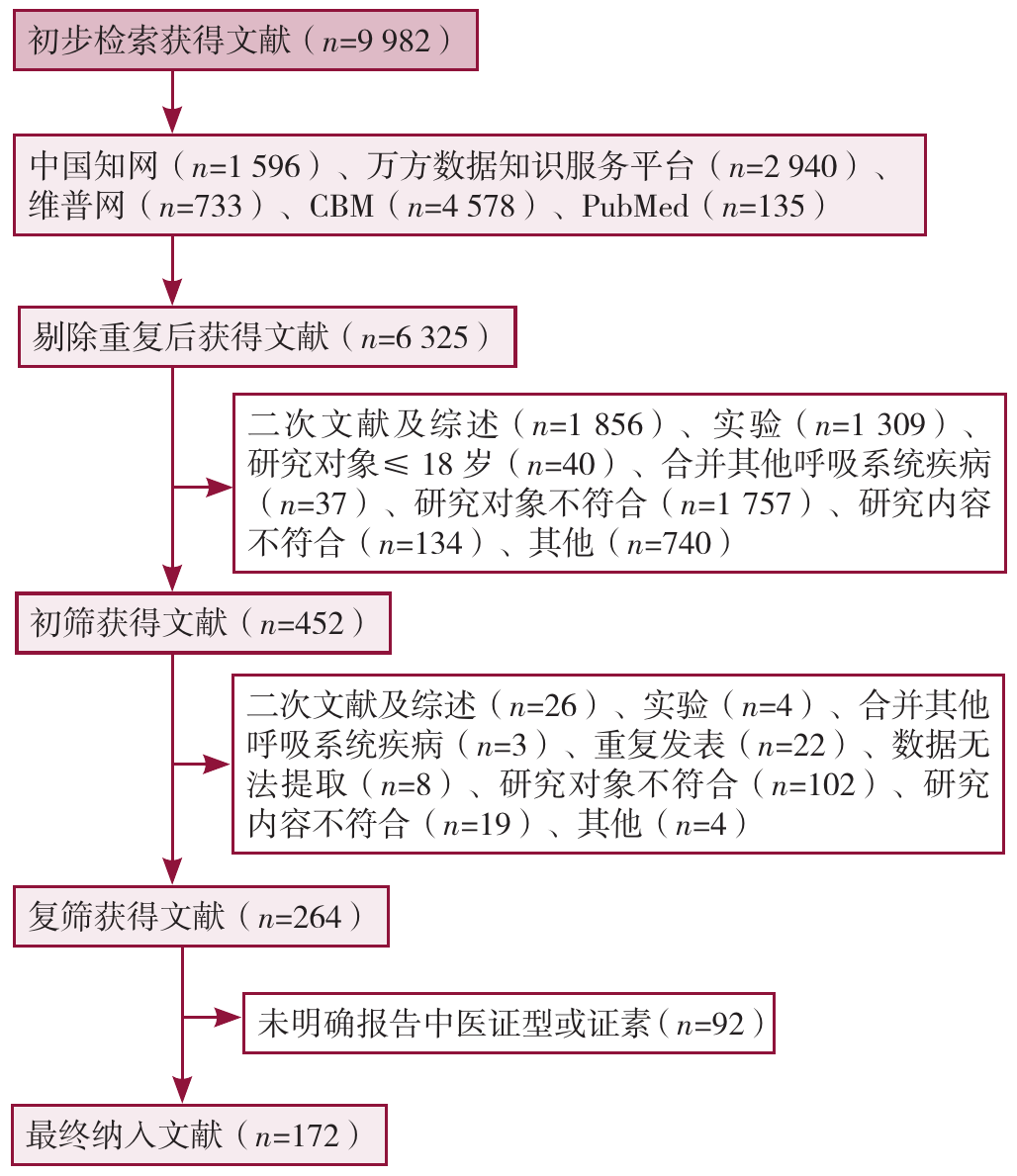
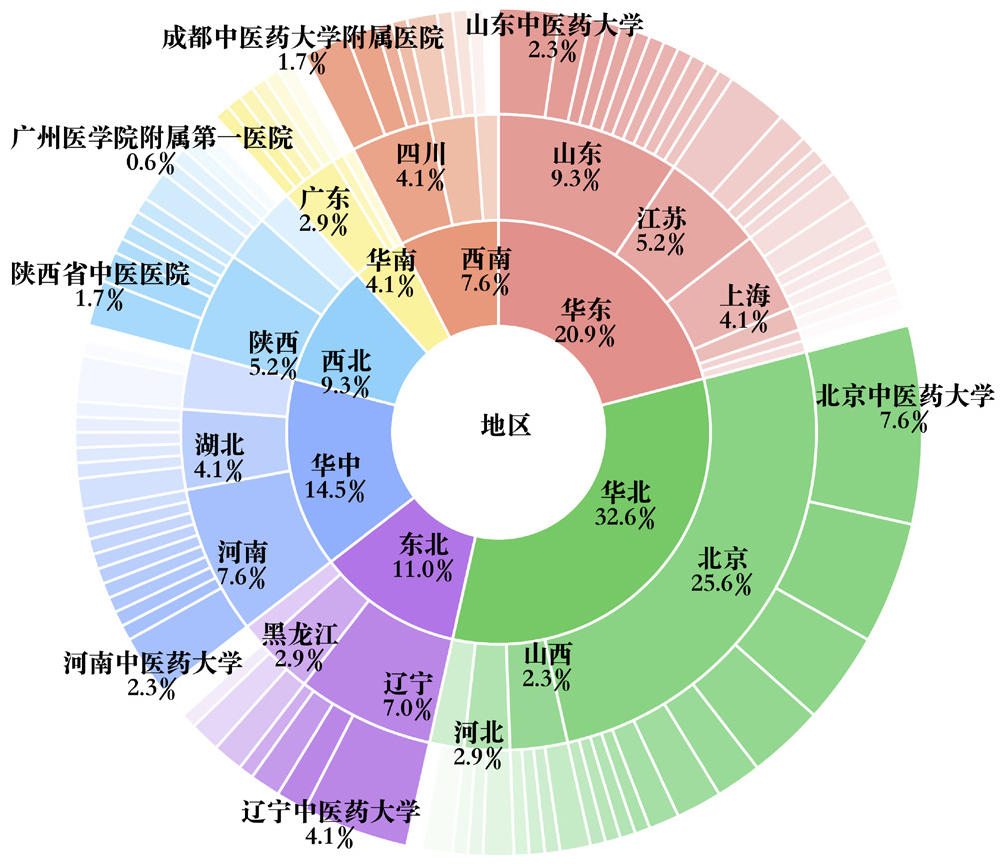
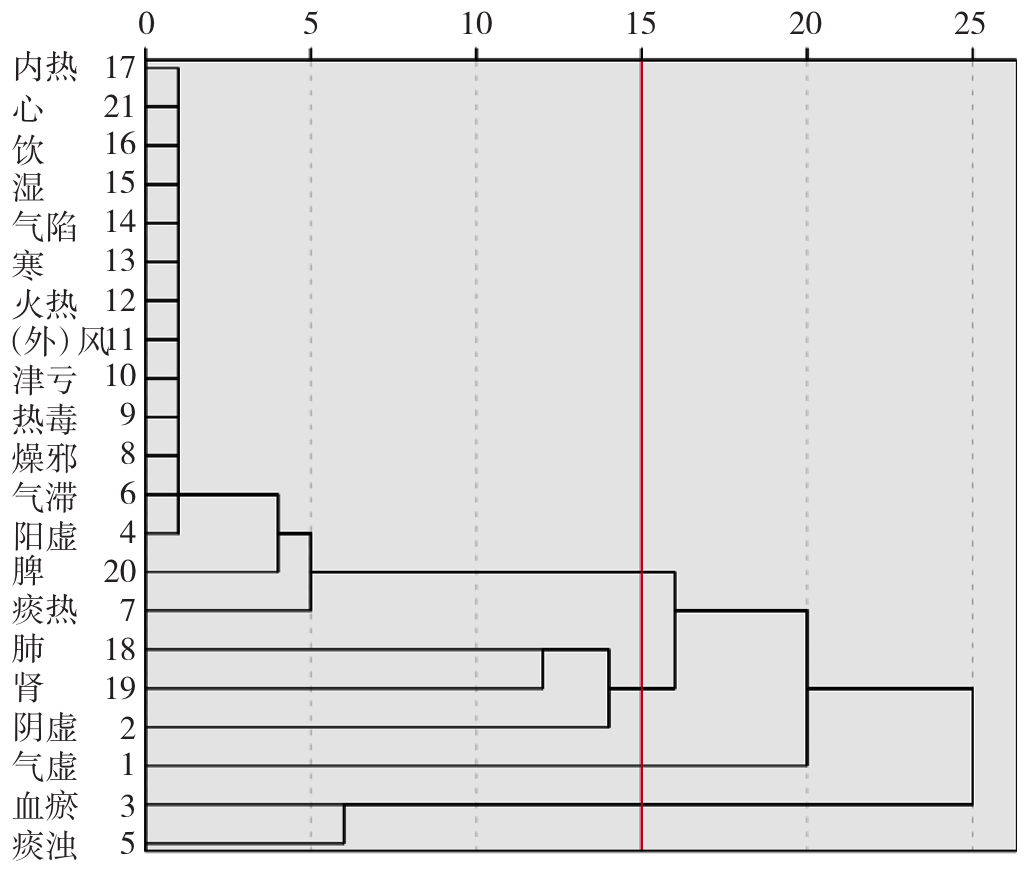
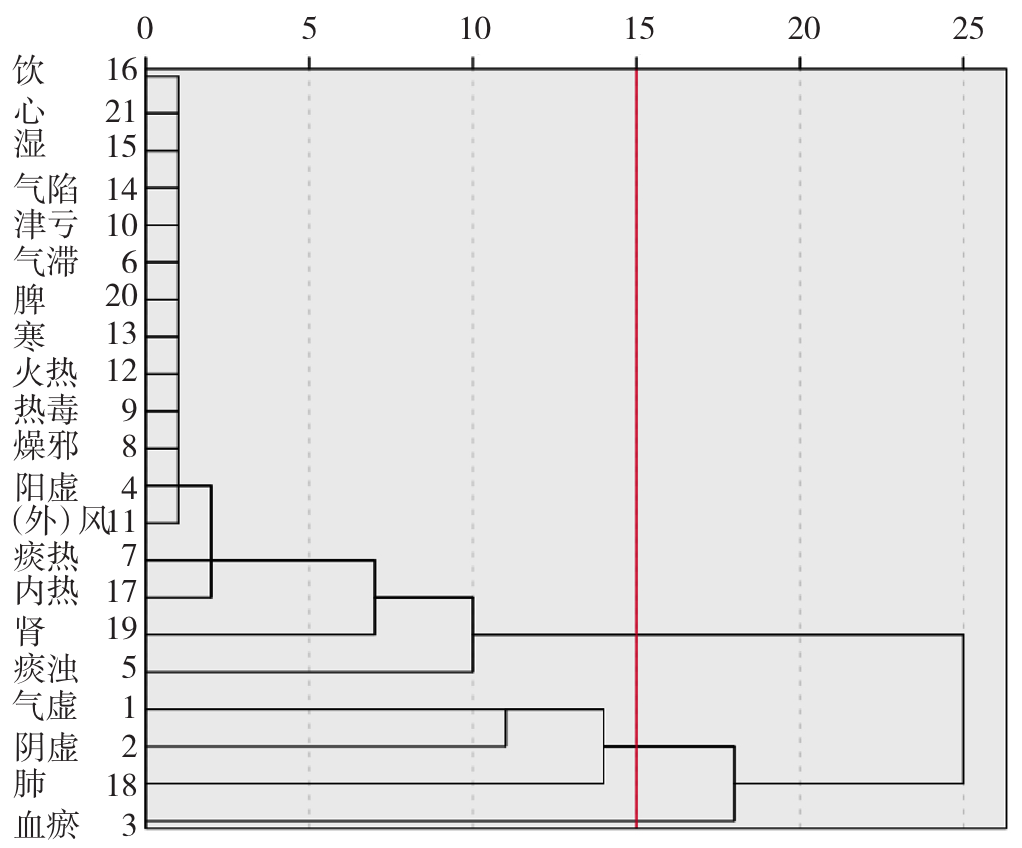
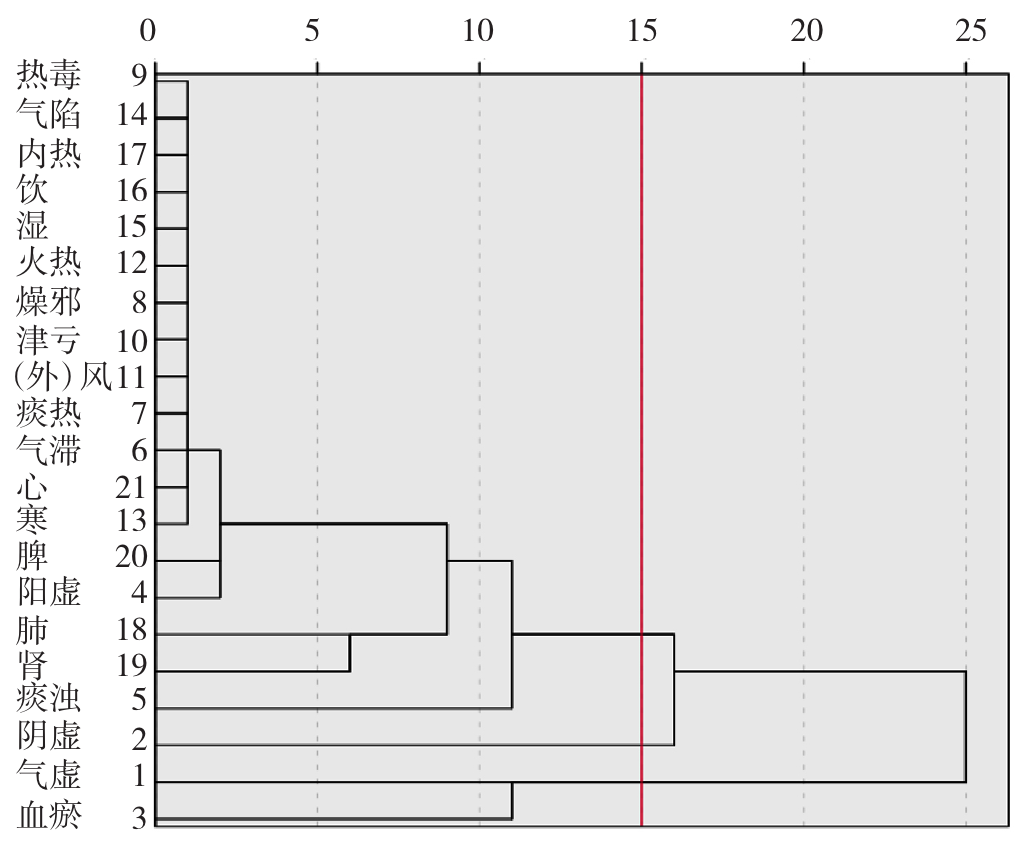
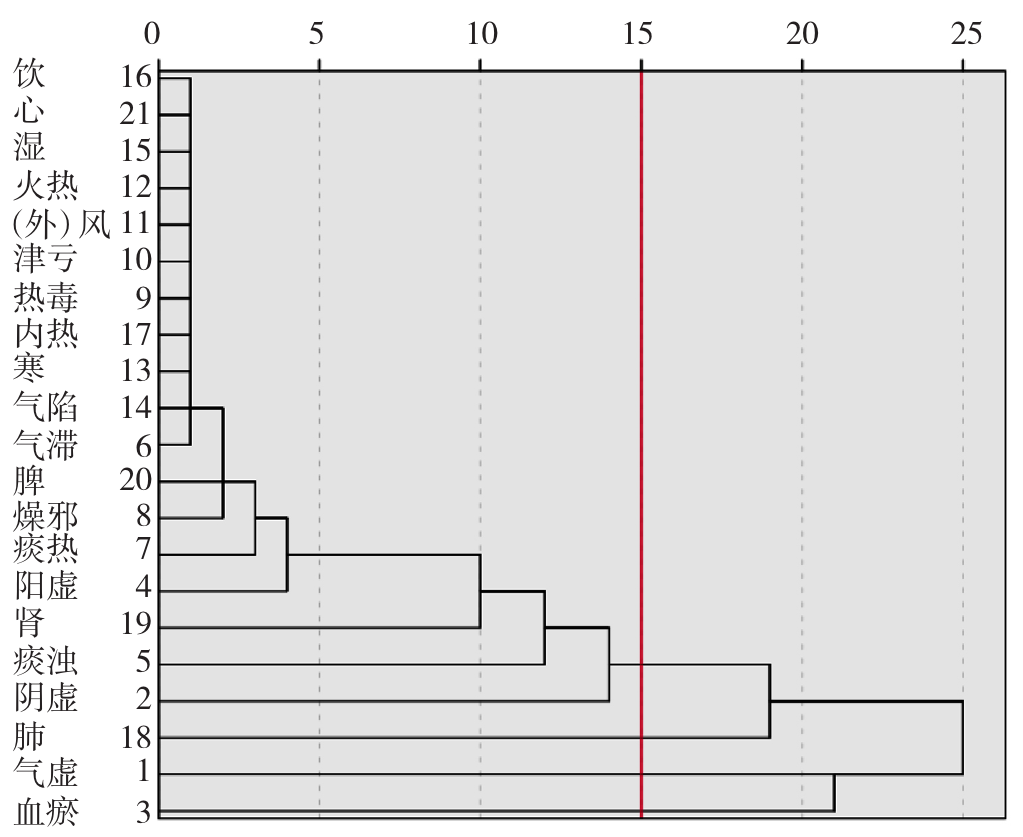
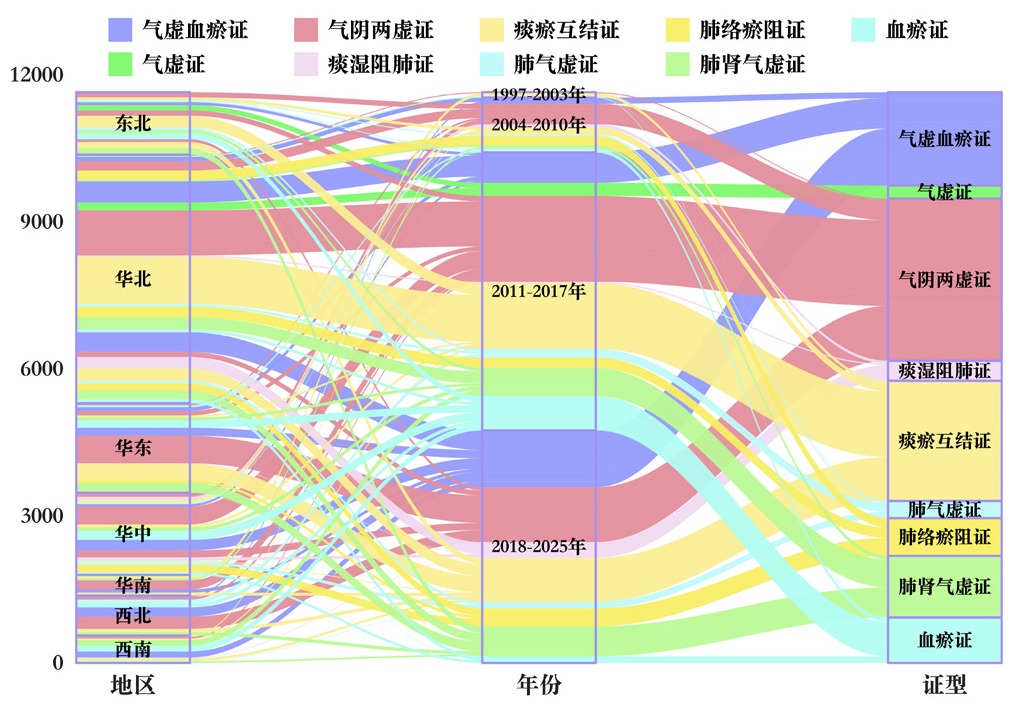
摘要: 背景 随着人口老龄化加剧,特发性肺纤维化(IPF)发病率与死亡率呈逐年上升趋势,预后不良,经济负担重。精准辨证是保证中医药疗效的前提和关键。IPF证候表现复杂,受时间演变及地域差异等多因素影响,现有研究多为阶段性或区域性分析,缺乏宏观历史视角下IPF证候及证素动态变化的综合探讨。基于文献研究系统挖掘证候与证素的时空分布特征及其演变规律,可为精准辨证诊疗提供依据。 目的 基于文献研究探求时空医学视角下1997—2025年特发性肺纤维化中医证候演变规律。 方法 检索中国知网(CNKI)、维普网(VIP)、万方数据知识服务平台(WanFang Data)、中国生物医学文献数据库(CBM)、PubMed发表的中医药防治IPF相关文献,检索时限为建库至2025年4月。根据纳入、排除标准进行文献筛选,提取中医证候、证素、标题、作者、发表时间、省份、第一作者单位等信息。按照发表年份将文献划分为1997年1月—2003年12月、2004年1月—2010年12月、2011年1月—2017年12月、2018年1月—2025年4月4个时段。按照地理分区将患者来源地区划分为华东、华南、华中、华北、西北、西南、东北7个地区。采用关联规则、系统聚类、描述性统计等方法对IPF证候、证素分布及时空演变规律进行分析。 结果 纳入文献172篇,包含11 680例IPF患者,发文最多的地区为华北地区(56篇),单位为北京中医药大学(13篇)。涉及50种证候,按例次由高到低依次为气阴两虚证(3 308例次)、痰瘀互结证(2 451例次)、气虚血瘀证(1 905例次)、肺肾气虚证(1 257例次)、血瘀证(937例次)等。包含证素17种,累计频次23 430例次,常见病性证素依次为气虚(7 069例次)、血瘀(7 021例次)、阴虚(4 279例次)、痰浊(2 647例次)等;病位证素4种,累计频次5 747例次,常见病位证素依次为肺(3 458例次)、肾(1 932例次)、脾(332例次)、心(25例次)。IPF证候时序性分析显示:气阴两虚证、痰瘀互结证在各个时段相对其他证型整体占比较高。气阴两虚证、肺肾气虚证在1997—2017年占比逐年上升,2018—2025年占比下降。气虚血瘀证占比呈逐年上升趋势。痰瘀互结证、血瘀证占比在1997—2025年占比呈下降、上升、下降的波动状态。肺气虚证在整个时段占比趋于平稳。气虚证仅在2011—2017年新增报告。痰热壅肺证在1997—2017年占比逐年下降,2018—2025年占比增加。IPF证素时序性分析显示:各时段病位均以肺、肾为主。气虚、血瘀、阴虚、痰浊在各时间段均占显著比例,其中气虚、阴虚、血瘀占比总体较平稳,痰浊病性证素近年来占比呈降低趋势。痰热病性证素在4个时间段的总体构成比均相对较低。2011—2017年新增报告寒、阳虚、气滞病性证素,2018—2025年新增报告燥邪、气陷病性证素,2004—2010年新增报告内热病性证素。在地区分布方面,华东、华中、华北、华南、西北地区均以气阴两虚证最多见,东北地区以痰瘀互结证最多见,西南地区以肺肾气虚证居多。关联规则分析及聚类分析结果显示,各时间段证素均存在气虚、阴虚、血瘀、痰浊组合。 结论 IPF核心证候可概括为气阴两虚、痰瘀互结。气虚、阴虚、血瘀、痰浊贯穿于疾病变化始终。临床应结合地域特点因地制宜,并根据证候演变规律实施动态化、个体化的诊疗方案,为精准辨证诊疗提供依据。

关键词: 特发性肺纤维化, 证候, 证素, 演变规律, 文献研究, 数据挖掘

Abstract:

Background

Idiopathic pulmonary fibrosis (IPF) is characterized by increasing incidence and mortality in the context of global population aging, with poor prognosis and substantial economic burden. In traditional Chinese medicine (TCM), accurate syndrome differentiation is essential for effective treatment. However, the heterogeneity of IPF syndromes, shaped by both temporal evolution and regional differences, has not been systematically investigated from a long-term, macroscopic perspective.

Objective

To investigate the spatiotemporal evolution of TCM syndromes and syndrome elements in IPF from 1997 to 2025 based on a comprehensive literature analysis.

Methods

Relevant studies on TCM interventions for IPF were retrieved from CNKI, VIP, WanFang Data, CBM, and PubMed. The search timeframe was from database inception to April 2025. After screening according to predefined criteria, data including TCM syndromes, syndrome elements, publication year, region, and author affiliations were extracted. The studies were categorized into four periods (1997-2003, 2004-2010, 2011-2017, and 2018-2025) and seven geographical regions in China. Statistical analyses, including association rule mining, hierarchical clustering, and descriptive statistics.

Results

A total of 172 studies involving 11 680 patients were included. Publications were most frequent in North China, with Beijing University of Chinese Medicine contributing the largest number. Fifty TCM syndromes were identified, among which qi-yin deficiency, phlegm-blood stasis congealing, qi deficiency with blood stasis, and lung-kidney qi deficiency were the most prevalent. Seventeen syndrome elements were extracted, with qi deficiency, blood stasis, yin deficiency, and phlegm turbidity being the most common pathological elements, while the lung and kidney were the predominant disease-location elements. Temporal analysis showed that qi-yin deficiency and phlegm-blood stasis congealing consistently predominated across all periods. The proportions of qi-yin deficiency and lung-kidney qi deficiency increased from 1997 to 2017 but declined thereafter, whereas qi deficiency with blood stasis exhibited a continuous upward trend. Syndrome element analysis indicated that qi deficiency, yin deficiency, blood stasis, and phlegm turbidity persisted throughout the disease course, with phlegm turbidity showing a decreasing trend in recent years. Regional analysis revealed that qi-yin deficiency predominated in most regions, whereas phlegm-blood stasis congealing was more common in Northeast China, and lung-kidney qi deficiency in Southwest China. Association rule and clustering analyses consistently identified core combinations of qi deficiency, yin deficiency, blood stasis, and phlegm turbidity.

Conclusion

The core TCM syndromes of IPF are characterized by qi-yin deficiency and phlegm-blood stasis congealing, with qi deficiency, yin deficiency, blood stasis, and phlegm turbidity forming the fundamental pathological basis throughout disease progression. These findings, revealing the core pathological basis and its spatiotemporal evolution, support the implementation of region-specific, dynamic, and individualized treatment strategies based on syndrome patterns, providing evidence for precision TCM diagnosis and management.

Key words: Idiopathic pulmonary fibrosis, Syndrome, Syndrome elements, Law of evolution, Literature research, Data mining

中图分类号: