
中国全科医学 ›› 2025, Vol. 28 ›› Issue (36): 4558-4565.DOI: 10.12114/j.issn.1007-9572.2024.0504
所属专题: 内分泌代谢性疾病最新文章合辑; 心血管最新文章合辑
张姝1, 程钰1, 吴寿岭2, 陈朔华2, 吴云涛2,*( )
)
收稿日期:2024-10-25
修回日期:2025-03-27
出版日期:2025-12-20
发布日期:2025-12-04
通讯作者:
吴云涛
作者贡献:
张姝负责提出课题,进行文章的构思与设计,研究的实施,研究所需数据的收集,统计学处理,图、表的绘制,结果的分析与解释;程钰负责研究数据的整理和清洗,统计方法协助,论文英文的修订;吴寿岭对研究的可行性进行分析,结果的分析与解释,文章的质量控制;陈朔华负责相关论文检索,数据的收集,论文思路指导;吴云涛对文章整体负责,全文监督管理。
ZHANG Shu1, CHENG Yu1, WU Shouling2, CHEN Shuohua2, WU Yuntao2,*()
Received:2024-10-25
Revised:2025-03-27
Published:2025-12-20
Online:2025-12-04
Contact:
WU Yuntao
摘要: 背景 血浆致动脉粥样硬化指数(AIP)是心血管疾病(CVD)发病的危险因素,而目前研究多基于单次AIP测量值,且多集中于一般人群或糖尿病人群,国内外尚缺乏累积血浆致动脉粥样硬化指数(cumAIP)暴露对非糖尿病人群新发CVD的影响。 目的 探讨非糖尿病人群cumAIP对新发CVD的影响。 方法 本研究采用前瞻性队列研究方法,选取参与并完成2006年度健康体检且在后续2006度、2008年度、2010年度3次健康体检中至少完成2次体检的非糖尿病开滦集团职工65 921例为研究对象,收集患者资料并对患者进行随访,计算cumAIP并根据cumAIP四分位数进行分组。利用Kaplan-Meier法计算各组的CVD累积发病率,并用Log-rank检验分析。采用Cox比例风险模型分析不同cumAIP水平对CVD发病风险的影响。采用限制性立方样条图探讨cumAIP与CVD发病风险的剂量-反应关系。 结果 第1分位组(cumAIP <-0.93)、第2分位组(-0.93≤cumAIP <-0.29)、第3分位组(-0.29≤cumAIP <0.39)、第4分位组(cumAIP≥0.39)研究对象分别为16 480、16 481、16 480、16 480例,4组研究对象的性别、年龄、收缩压、舒张压、BMI、空腹血糖、低密度脂蛋白胆固醇、总胆固醇、高密度脂蛋白胆固醇、三酰甘油、高敏C反应蛋白、吸烟、饮酒、体育锻炼、服用降压药、服用调脂药情况比较,差异有统计学意义(P<0.05)。平均随访(10.32±2.07)年,新发CVD事件4 137例。第1分位组、第2分位组、第3分位组、第4分位组CVD发病例数分别为867例、947例、1 095例和1 228例。Log-rank检验结果显示,各组间新发CVD事件的累积发病率比较,差异有统计学意义(χ2=73.33,P<0.05)。多因素Cox比例风险回归模型分析结果显示,以第1分位组为参照,第3分位组(HR=1.11,95%CI=1.00~1.24)和第4分位组(HR=1.16,95%CI=1.02~1.33)是非糖尿病人群发生CVD的危险因素(P<0.05)。校正年龄、性别等混杂因素后的限制性立方样条图显示,非糖尿病人群cumAIP与CVD发病风险呈线性相关(P总趋势<0.05,P非线性=0.97)。分别排除服用降压药(n=12 785)、服用调脂药(n=871)以及随访2年内新发CVD(n=546)的人群进行敏感性分析,结果显示排除基线服用调脂药人群、随访2年内新发CVD的人群后第4分位组是新发CVD的危险因素(HR=1.18,95%CI=1.03~1.35,P<0.05;HR=1.16,95%CI=1.00~1.34,P<0.05)。 结论 非糖尿病人群中高cumAIP水平是新发CVD的独立危险因素。
| 组别 | 例数 | 性别(男/女) | 年龄(岁) | SBP(mmHg) | DBP(mmHg) | BMI(kg/m2) | FBG(mmol/L) | LDL-C(mmol/L) | TC(mmol/L) | HDL-C(mmol/L) |
|---|---|---|---|---|---|---|---|---|---|---|
| 第1分位组 | 16 480 | 11 574/4 906 | 54.3±12.7 | 128±20 | 82±11 | 23.4±3.0 | 5.16±0.59 | 2.43±0.79 | 4.85±0.95 | 1.82±0.47 |
| 第2分位组 | 16 481 | 12 336/4 145 | 53.5±12.4 | 129±19 | 84±11 | 24.5±3.1 | 5.22±0.59 | 2.64±0.75 | 4.89±0.93 | 1.58±0.38 |
| 第3分位组 | 16 480 | 13 126/3 354 | 52.8±12.1 | 131±19 | 85±11 | 25.3±3.2 | 5.27±0.60 | 2.69±0.75 | 4.98±0.94 | 1.46±0.35 |
| 第4分位组 | 16 480 | 13 842/2 638 | 52.4±11.4 | 133±18 | 87±11 | 26.3±3.1 | 5.34±0.62 | 2.65±0.80 | 5.14±0.99 | 1.34±0.35 |
| 检验统计量值 | 993.99 | 77.64a | 289.48a | 649.39a | 2 700.11a | 253.69a | 368.38a | 299.29a | 4456.52a | |
| P值 | <0.05 | <0.05 | <0.05 | <0.05 | <0.05 | <0.05 | <0.05 | <0.05 | <0.05 | |
| 组别 | TG[M(P25,P75),mmol/L] | hs-CRP[M(P25,P75),mg/L] | 吸烟[例(%)] | 饮酒[例(%)] | 体育锻炼[例(%)] | 服降压药[例(%)] | 服调脂药[例(%)] | 2010年度AIP | ||
| 第1分位组 | 0.75(0.59,0.97) | 1.00(0.50,2.50) | 4 837(29.35) | 5 197(31.54) | 2 669(16.20) | 2 283(13.85) | 94(0.57) | -0.36±0.18 | ||
| 第2分位组 | 1.09(0.89,1.34) | 1.34(0.70,3.49) | 5 162(31.32) | 5 307(32.20) | 2 451(14.87) | 2 826(17.15) | 164(1.00) | -0.15±0.15 | ||
| 第3分位组 | 1.40(1.14,1.77) | 1.70(0.80,3.95) | 5 658(34.33) | 5 658(34.33) | 2 394(14.53) | 3 288(19.95) | 200(1.21) | 0.01±0.16 | ||
| 第4分位组 | 2.28(1.66,3.21) | 1.80(0.90,3.89) | 6 757(41.00) | 6 902(41.88) | 2 364(14.34) | 4 388(26.63) | 413(2.51) | 0.27±0.26 | ||
| 检验统计量值 | 35 925.54b | 1 637.68b | 572.25 | 490.03 | 27.14 | 931.54 | 263.61 | 26 475.70a | ||
| P值 | <0.05 | <0.05 | <0.05 | <0.05 | <0.05 | <0.05 | <0.05 | <0.05 |
表1 不同cumAIP组研究人群的基线情况比较
Table 1 Comparison of baseline date of the participants in different cumAIP groups
| 组别 | 例数 | 性别(男/女) | 年龄(岁) | SBP(mmHg) | DBP(mmHg) | BMI(kg/m2) | FBG(mmol/L) | LDL-C(mmol/L) | TC(mmol/L) | HDL-C(mmol/L) |
|---|---|---|---|---|---|---|---|---|---|---|
| 第1分位组 | 16 480 | 11 574/4 906 | 54.3±12.7 | 128±20 | 82±11 | 23.4±3.0 | 5.16±0.59 | 2.43±0.79 | 4.85±0.95 | 1.82±0.47 |
| 第2分位组 | 16 481 | 12 336/4 145 | 53.5±12.4 | 129±19 | 84±11 | 24.5±3.1 | 5.22±0.59 | 2.64±0.75 | 4.89±0.93 | 1.58±0.38 |
| 第3分位组 | 16 480 | 13 126/3 354 | 52.8±12.1 | 131±19 | 85±11 | 25.3±3.2 | 5.27±0.60 | 2.69±0.75 | 4.98±0.94 | 1.46±0.35 |
| 第4分位组 | 16 480 | 13 842/2 638 | 52.4±11.4 | 133±18 | 87±11 | 26.3±3.1 | 5.34±0.62 | 2.65±0.80 | 5.14±0.99 | 1.34±0.35 |
| 检验统计量值 | 993.99 | 77.64a | 289.48a | 649.39a | 2 700.11a | 253.69a | 368.38a | 299.29a | 4456.52a | |
| P值 | <0.05 | <0.05 | <0.05 | <0.05 | <0.05 | <0.05 | <0.05 | <0.05 | <0.05 | |
| 组别 | TG[M(P25,P75),mmol/L] | hs-CRP[M(P25,P75),mg/L] | 吸烟[例(%)] | 饮酒[例(%)] | 体育锻炼[例(%)] | 服降压药[例(%)] | 服调脂药[例(%)] | 2010年度AIP | ||
| 第1分位组 | 0.75(0.59,0.97) | 1.00(0.50,2.50) | 4 837(29.35) | 5 197(31.54) | 2 669(16.20) | 2 283(13.85) | 94(0.57) | -0.36±0.18 | ||
| 第2分位组 | 1.09(0.89,1.34) | 1.34(0.70,3.49) | 5 162(31.32) | 5 307(32.20) | 2 451(14.87) | 2 826(17.15) | 164(1.00) | -0.15±0.15 | ||
| 第3分位组 | 1.40(1.14,1.77) | 1.70(0.80,3.95) | 5 658(34.33) | 5 658(34.33) | 2 394(14.53) | 3 288(19.95) | 200(1.21) | 0.01±0.16 | ||
| 第4分位组 | 2.28(1.66,3.21) | 1.80(0.90,3.89) | 6 757(41.00) | 6 902(41.88) | 2 364(14.34) | 4 388(26.63) | 413(2.51) | 0.27±0.26 | ||
| 检验统计量值 | 35 925.54b | 1 637.68b | 572.25 | 490.03 | 27.14 | 931.54 | 263.61 | 26 475.70a | ||
| P值 | <0.05 | <0.05 | <0.05 | <0.05 | <0.05 | <0.05 | <0.05 | <0.05 |
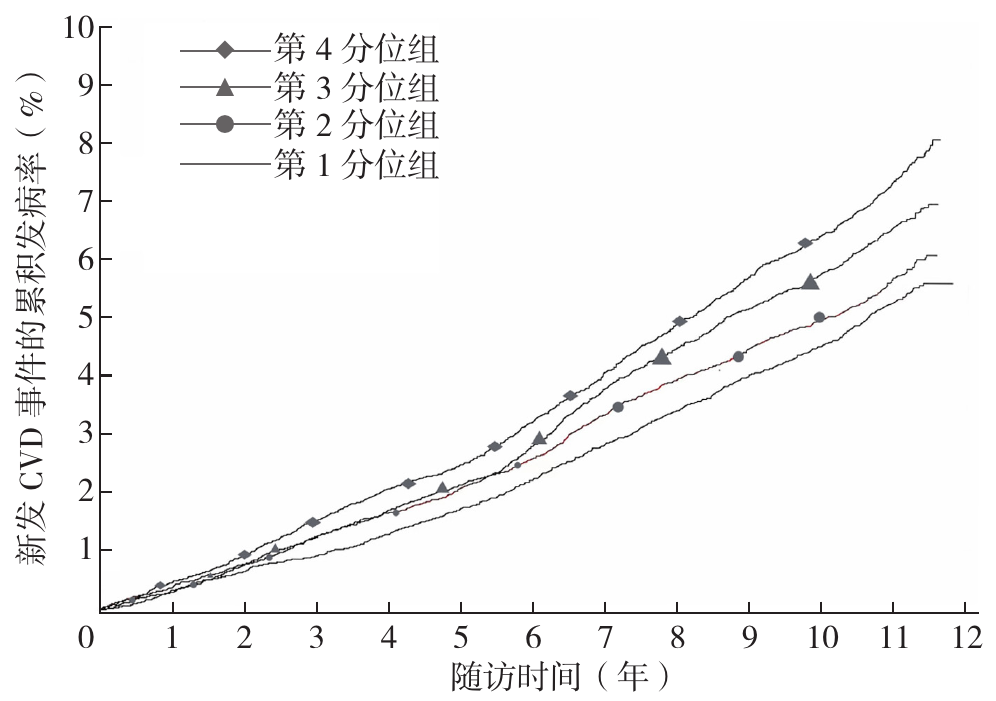
图1 非糖尿病人群不同cumAIP组新发心血管疾病的累积发病率注:CVD=心血管疾病。
Figure 1 Cumulative incidence of incident cardiovascular disease by cumAIP group in non-diabetic population
| 组别 | 模型1 | 模型2 | 模型3 | |||
|---|---|---|---|---|---|---|
| HR(95%CI) | P值 | HR(95%CI) | P值 | HR(95%CI) | P值 | |
| 第1分位组 | 1.00 | 1.00 | 1.00 | |||
| 第2分位组 | 1.13(1.03~1.24) | 0.01 | 1.04(0.95~1.14) | 0.34 | 1.02(0.92~1.13) | 0.65 |
| 第3分位组 | 1.33(1.22~1.45) | <0.01 | 1.15(1.05~1.26) | <0.01 | 1.11(1.00~1.24) | 0.04 |
| 第4分位组 | 1.55(1.42~1.69) | <0.01 | 1.23(1.12~1.35) | <0.01 | 1.16(1.02~1.33) | 0.03 |
| P趋势值 | <0.05 | <0.05 | 0.01 | |||
表2 不同cumAIP组非糖尿病人群新发心血管疾病的Cox比例风险模型
Table 2 Cox regression analysis of incident cardiovascular disease in non-diabetic population in different cumAIP groups
| 组别 | 模型1 | 模型2 | 模型3 | |||
|---|---|---|---|---|---|---|
| HR(95%CI) | P值 | HR(95%CI) | P值 | HR(95%CI) | P值 | |
| 第1分位组 | 1.00 | 1.00 | 1.00 | |||
| 第2分位组 | 1.13(1.03~1.24) | 0.01 | 1.04(0.95~1.14) | 0.34 | 1.02(0.92~1.13) | 0.65 |
| 第3分位组 | 1.33(1.22~1.45) | <0.01 | 1.15(1.05~1.26) | <0.01 | 1.11(1.00~1.24) | 0.04 |
| 第4分位组 | 1.55(1.42~1.69) | <0.01 | 1.23(1.12~1.35) | <0.01 | 1.16(1.02~1.33) | 0.03 |
| P趋势值 | <0.05 | <0.05 | 0.01 | |||
| 组别 | 模型1 | 模型2 | 模型3 | |||
|---|---|---|---|---|---|---|
| HR(95%CI) | P值 | HR(95%CI) | P值 | HR(95%CI) | P值 | |
| 第1分位组 | 1.00 | 1.00 | 1.00 | |||
| 第2分位组 | 1.13(1.03~1.24) | 0.04 | 1.05(0.95~1.15) | 0.51 | 1.02(0.93~1.13) | 0.75 |
| 第3分位组 | 1.34(1.23~1.47) | <0.01 | 1.16(1.06~1.28) | <0.01 | 1.12(1.00~1.25) | 0.12 |
| 第4分位组 | 1.56(1.43~1.70) | <0.01 | 1.24(1.13~1.36) | <0.01 | 1.16(1.02~1.34) | 0.04 |
| P趋势值 | <0.05 | <0.05 | 0.01 | |||
表3 不同cumAIP组非糖尿病人群新发心血管疾病的死亡竞争风险模型
Table 3 Competing risk models for new-onset cardiovascular disease mortality among non-diabetic people in different cumAIP groups
| 组别 | 模型1 | 模型2 | 模型3 | |||
|---|---|---|---|---|---|---|
| HR(95%CI) | P值 | HR(95%CI) | P值 | HR(95%CI) | P值 | |
| 第1分位组 | 1.00 | 1.00 | 1.00 | |||
| 第2分位组 | 1.13(1.03~1.24) | 0.04 | 1.05(0.95~1.15) | 0.51 | 1.02(0.93~1.13) | 0.75 |
| 第3分位组 | 1.34(1.23~1.47) | <0.01 | 1.16(1.06~1.28) | <0.01 | 1.12(1.00~1.25) | 0.12 |
| 第4分位组 | 1.56(1.43~1.70) | <0.01 | 1.24(1.13~1.36) | <0.01 | 1.16(1.02~1.34) | 0.04 |
| P趋势值 | <0.05 | <0.05 | 0.01 | |||
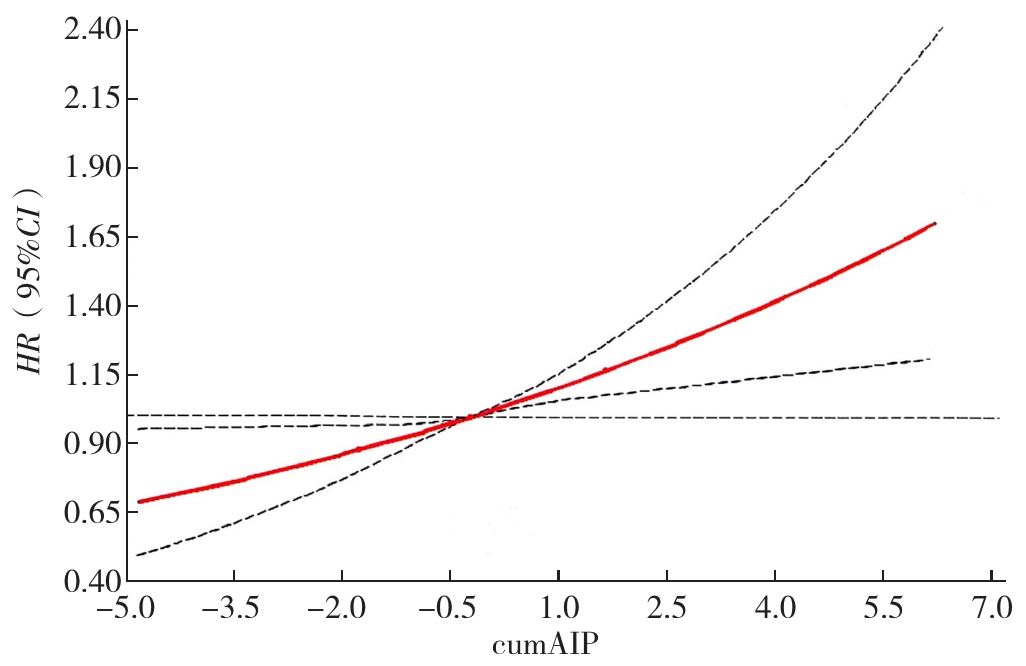
图2 非糖尿病人群不同cumAIP组新发心血管疾病的限制性立方样条图注:cumAIP=累积血浆致动脉粥样硬化指数。
Figure 2 Dose-response relationship of incident cardiovascular disease in different cumAIP groups in non-diabetic population
| 组别 | 发病数/总人数(例/例) | 发病密度(/千人年) | HR (95%CI) | ||
|---|---|---|---|---|---|
| 模型1 | 模型2 | 模型3 | |||
| 排除基线服用降压药人群(n=53 136) | |||||
| 第1分位组 | 627/14 197 | 4.26 | 1.00 | 1.00 | 1.00 |
| 第2分位组 | 652/13 655 | 4.56 | 1.12(1.00~1.25) | 1.04(0.93~1.16) | 1.00(0.89~1.13) |
| 第3分位组 | 729/13 192 | 5.28 | 1.33(1.20~1.48) | 1.18(1.05~1.31) | 1.11(0.97~1.26) |
| 第4分位组 | 747/12 092 | 5.91 | 1.54(1.38~1.71) | 1.30(1.16~1.45) | 1.17(0.99~1.38) |
| P趋势值 | <0.05 | <0.05 | 0.03 | ||
| 排除基线服用调脂药人群(n=65 050) | |||||
| 第1分位组 | 858/16 386 | 5.09 | 1.00 | 1.00 | 1.00 |
| 第2分位组 | 932/16 317 | 5.52 | 1.13(1.03~1.24) | 1.05(0.95~1.15) | 1.03(0.93~1.13) |
| 第3分位组 | 1 077/16 280 | 6.38 | 1.33(1.22~1.46) | 1.16(1.06~1.27) | 1.12(1.01~1.25) |
| 第4分位组 | 1 186/16 067 | 7.16 | 1.54(1.41~1.68) | 1.24(1.13~1.36) | 1.18(1.03~1.35)a |
| P趋势值 | <0.05 | <0.05 | <0.05 | ||
| 排除随访2年内新发CVD的人群(n=65 375) | |||||
| 第1分位组 | 752/16 365 | 4.44 | 1.00 | 1.00 | 1.00 |
| 第2分位组 | 810/16 344 | 4.75 | 1.11(1.00~1.22) | 1.03(0.93~1.14) | 1.00(0.90~1.11) |
| 第3分位组 | 961/16 346 | 5.63 | 1.34(1.21~1.47) | 1.17(1.06~1.29) | 1.12(0.99~1.26) |
| 第4分位组 | 1 068/16 320 | 6.30 | 1.53(1.40~1.68) | 1.25(1.13~1.38) | 1.16(1.00~1.34)a |
| P趋势值 | <0.05 | <0.05 | 0.01 | ||
表4 不同cumAIP组非糖尿病人群新发心血管疾病的敏感性分析结果
Table 4 Results of sensitivity analysis for new-onset cardiovascular diseases in non-diabetic individuals in different cumAIP groups
| 组别 | 发病数/总人数(例/例) | 发病密度(/千人年) | HR (95%CI) | ||
|---|---|---|---|---|---|
| 模型1 | 模型2 | 模型3 | |||
| 排除基线服用降压药人群(n=53 136) | |||||
| 第1分位组 | 627/14 197 | 4.26 | 1.00 | 1.00 | 1.00 |
| 第2分位组 | 652/13 655 | 4.56 | 1.12(1.00~1.25) | 1.04(0.93~1.16) | 1.00(0.89~1.13) |
| 第3分位组 | 729/13 192 | 5.28 | 1.33(1.20~1.48) | 1.18(1.05~1.31) | 1.11(0.97~1.26) |
| 第4分位组 | 747/12 092 | 5.91 | 1.54(1.38~1.71) | 1.30(1.16~1.45) | 1.17(0.99~1.38) |
| P趋势值 | <0.05 | <0.05 | 0.03 | ||
| 排除基线服用调脂药人群(n=65 050) | |||||
| 第1分位组 | 858/16 386 | 5.09 | 1.00 | 1.00 | 1.00 |
| 第2分位组 | 932/16 317 | 5.52 | 1.13(1.03~1.24) | 1.05(0.95~1.15) | 1.03(0.93~1.13) |
| 第3分位组 | 1 077/16 280 | 6.38 | 1.33(1.22~1.46) | 1.16(1.06~1.27) | 1.12(1.01~1.25) |
| 第4分位组 | 1 186/16 067 | 7.16 | 1.54(1.41~1.68) | 1.24(1.13~1.36) | 1.18(1.03~1.35)a |
| P趋势值 | <0.05 | <0.05 | <0.05 | ||
| 排除随访2年内新发CVD的人群(n=65 375) | |||||
| 第1分位组 | 752/16 365 | 4.44 | 1.00 | 1.00 | 1.00 |
| 第2分位组 | 810/16 344 | 4.75 | 1.11(1.00~1.22) | 1.03(0.93~1.14) | 1.00(0.90~1.11) |
| 第3分位组 | 961/16 346 | 5.63 | 1.34(1.21~1.47) | 1.17(1.06~1.29) | 1.12(0.99~1.26) |
| 第4分位组 | 1 068/16 320 | 6.30 | 1.53(1.40~1.68) | 1.25(1.13~1.38) | 1.16(1.00~1.34)a |
| P趋势值 | <0.05 | <0.05 | 0.01 | ||
| [1] |
|
| [2] |
|
| [3] |
|
| [4] |
中国心血管健康与疾病报告编写组,胡盛寿. 中国心血管健康与疾病报告2022概要[J]. 中国循环杂志,2023,38(6):583-612. DOI:10.3969/j.issn.1000-3614.2021.06.001.
|
| [5] |
|
| [6] |
|
| [7] |
|
| [8] |
|
| [9] |
|
| [10] |
|
| [11] |
|
| [12] |
|
| [13] |
|
| [14] |
刘婷婷,王希柱,宋巧凤,等. 累积空腹血糖暴露对心脑血管事件的影响[J]. 中华高血压杂志,2022,30(3):244-252. DOI:10.16439/j.issn.1673-7245.2022.03.008.
|
| [15] |
张丽沙,吴寿岭,邵郅强,等. 非高密度脂蛋白胆固醇对绝经后女性心血管疾病的影响[J]. 中国循环杂志,2024,39(1):61-67. DOI:10.3969/j.issn.1000-3614.2024.01.008.
|
| [16] |
中国超重/肥胖医学营养治疗专家共识编写委员会. 中国超重/肥胖医学营养治疗专家共识(2016年版)[J]. 中华糖尿病杂志,2016,8(9):525-540. DOI:10.3760/cma.j.issn.1674-5809.2016.09.004.
|
| [17] | |
| [18] |
中国高血压防治指南修订委员会,高血压联盟(中国),中华医学会心血管病学分会中国医师协会高血压专业委员会,等. 中国高血压防治指南(2018年修订版)[J]. 中国心血管杂志,2019,24(1):24-56. DOI:10.3969/j.issn.1007-5410.2019.01.002.
|
| [19] |
|
| [20] |
|
| [21] |
WHO Task Force on Stroke and other Cerebrovascular Disorders. Recommendations on stroke prevention,diagnosis,and therapy[J]. Stroke,1989,20(10):1407-1431.
|
| [22] |
|
| [23] |
|
| [24] |
|
| [25] |
|
| [26] |
|
| [27] |
|
| [28] |
|
| [29] |
|
| [30] |
|
| [31] |
|
| [32] |
|
| [33] |
|
| [34] |
|
| [35] |
|
| [36] |
|
| [37] |
|
| [38] |
|
| [1] | 安艳红, 王世东, 李潇然, 郭家扬, 王哲, 沙培林, 孟怡珺, 李小萱, 石雪, 于泽兴, 肖永华. 糖尿病肾病影响因素及列线图预测模型研究:基于超声造影技术[J]. 中国全科医学, 2026, 29(21): 2995-3003. |
| [2] | 杨晓峰, 李现文, 吴岩峰, 张倩, 陈娟, 赵凤姣. 血管内皮细胞钙黏蛋白水平与急性缺血性脑卒中后认知障碍发生风险的相关性研究[J]. 中国全科医学, 2026, 29(20): 2867-2873. |
| [3] | 热伊莱·麦麦提, 周燚然, 武云, 刘稹诚, 卢耀勤, 吴海燕. 高血压患者新型肥胖指标与心血管疾病发病风险的关联研究[J]. 中国全科医学, 2026, 29(20): 2836-2845. |
| [4] | 赵慧丽, 路丽娜, 卓亚, 王欣. 隐源性机化性肺炎临床特征及复发危险因素研究[J]. 中国全科医学, 2026, 29(19): 2648-2655. |
| [5] | 刘阳, 周国平, 李小石, 李萍, 张鑫. 急性呼吸窘迫综合征不同病因对驱动压预后评估价值的影响:一项前瞻性队列研究[J]. 中国全科医学, 2026, 29(19): 2638-2647. |
| [6] | 袁玉娟, 陶静, 王颖, 彭辉, 杨毅宁. 中性粒细胞百分比/白蛋白比值与急性心肌梗死患者院内全因死亡和心源性休克的相关性研究[J]. 中国全科医学, 2026, 29(18): 2489-2497. |
| [7] | 胡敏, 吕向东. 远程心电人工智能诊断的准确性研究[J]. 中国全科医学, 2026, 29(18): 2498-2503. |
| [8] | 于超, 宋丽华, 王琳彦, 芦云平, 王林洋, 崔伟. 首发抑郁障碍患者7年后功能结局及影响因素研究[J]. 中国全科医学, 2026, 29(16): 2221-2226. |
| [9] | 甄锐, 谷旭放, 高晟玮, 张博文, 任真娟, 杨睿璇. 1990—2021年中国归因于代谢风险因素的心血管疾病负担及2022—2035年趋势预测研究[J]. 中国全科医学, 2026, 29(15): 2077-2083. |
| [10] | 邱艳丽, 高永银, 卞雪艳, 王雪, 李越. 脉搏波传导速度对癌症患者全因和心血管相关死亡率的预测价值研究[J]. 中国全科医学, 2026, 29(14): 1890-1897. |
| [11] | 胡嘉琦, 李端, 方昊, 樊兴颖, 杜薇, 周涵妮. 基于体检人群队列的高尿酸血症非遗传因素风险预测模型构建研究[J]. 中国全科医学, 2026, 29(10): 1324-1333. |
| [12] | 杨旭, 樊洁婷, 宋红艳, 冯盼盼, 郝婧宇, 姚弥. 基层全科医生心血管疾病风险评估与沟通策略[J]. 中国全科医学, 2026, 29(10): 1294-1299. |
| [13] | 李秋春, 苏萍, 逄锦宏, 陈巧巧, 赵颖颖, 何蕊言, 王玥, 陈学禹, 乔俊鹏, 迟蔚蔚. 三酰甘油-葡萄糖指数与心血管-肾脏-代谢综合征0~3期人群心血管疾病的关联性:一项前瞻性队列研究[J]. 中国全科医学, 2026, 29(09): 1129-1136. |
| [14] | 裴志怡, 张晓欣, 林佳艺, 张向毅, 康晓凤. 基于患者决策辅助工具国际标准的心血管领域患者决策辅助工具质量及应用效果的系统评价[J]. 中国全科医学, 2026, 29(07): 945-952. |
| [15] | 朱辰蕊, 李娜, 吴云涛, 赵海燕, 黄喆, 刘妍, 季春鹏, 吴寿岭. 血尿酸水平对新发房室传导阻滞的影响:一项前瞻性队列研究[J]. 中国全科医学, 2026, 29(05): 583-590. |
| 阅读次数 | ||||||
|
全文 |
|
|||||
|
摘要 |
|
|||||