
中国全科医学 ›› 2026, Vol. 29 ›› Issue (20): 2903-2912.DOI: 10.12114/j.issn.1007-9572.2024.0320
• 论著·流行病学研究 • 上一篇
张泽宇, 李春晖*( )
)
收稿日期:2025-09-02
修回日期:2026-01-24
出版日期:2026-07-15
发布日期:2026-06-05
通讯作者:
李春晖
作者贡献:
张泽宇负责数据收集和处理,进行论文的撰写和修改;李春晖参与分析与讨论,提出修改意见,负责最终版本审校,提供基金资助。
基金资助:
ZHANG Zeyu, LI Chunhui*()
Received:2025-09-02
Revised:2026-01-24
Published:2026-07-15
Online:2026-06-05
Contact:
LI Chunhui
摘要: 背景 缺血性心脏病(IHD)是中国第二大死因,二手烟暴露是导致IHD的一个重要危险因素。 目的 探索1990—2021年中国归因于二手烟的IHD疾病负担及其变化趋势,并与5类社会人口指数(SDI)地区对比分析,为我国降低归因于二手烟的IHD致病死亡风险提供科学参考。 方法 本文数据来源于全球疾病负担(GBD) 2021,通过人群归因分值评估二手烟对IHD疾病负担的影响;采用Joinpoint回归分析25~94岁人群的死亡和伤残调整寿命年(DALYs)的平均年度变化百分比(AAPC);应用年龄-时期-队列模型分析死亡率和DALYs率的年龄、时期及队列效应。 结果 二手烟为中国人群IHD的危险因素,其死亡和DALYs的人群归因分值较5类SDI地区均处于较高水平,1990—2021年分别下降了0.66%和0.67%。中国人群归因于二手烟的IHD年龄标准化死亡率(1990年:12.27/10万,2021年:11.62/10万)和年龄标准化DALYs率(1990年:284.58/10万,2021年:239.26/10万)整体上呈波动变化,其AAPC分别为-0.20%(95%CI=-0.65%~0.24%)、-0.58%(95%CI=-0.98%~-0.19%)。总人群中,中国归因于二手烟的IHD死亡和DALYs的年龄效应风险随年龄而上升,在75岁之后上升速度显著增大,时期效应呈下降趋势,队列效应呈现先上升后下降的趋势;然而,男性的时期和队列效应均呈上升趋势。 结论 中国归因于二手烟的IHD疾病负担较重,总体下降趋势更多得益于女性负担率的降低。男性的二手烟风险控制及高龄人群的疾病状况应受到更多关注。
中图分类号:
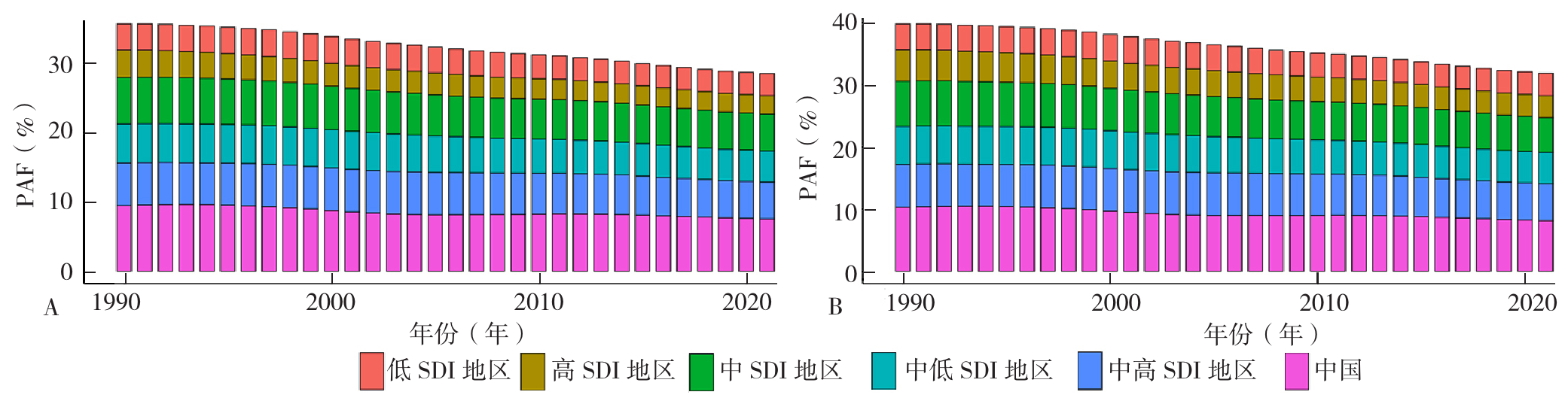
图1 1990—2021年中国与5类SDI地区IHD二手烟危险因素PAF对比分析注:A为死亡的PAF,B为DALYs的PAF;IHD=缺血性心脏病,PAF=人群归因分值,DALYs=伤残调整寿命年,SDI=社会人口指数。
Figure 1 Population attributable fraction of second-hand smoke risk factor that related to IHD in China and five types of SDI regions from 1990 to 2021
| 危险因素 | 死亡PAF(%) | DALYs PAF(%) |
|---|---|---|
| 颗粒物污染 | 34.75 | 34.48 |
| 吸烟 | 17.45 | 22.66 |
| 高钠饮食 | 12.25 | 14.00 |
| 全谷物含量低的饮食 | 11.23 | 13.41 |
| 饮食中多不饱和脂肪酸含量低 | 8.10 | 9.25 |
| 二手烟 | 7.45 | 8.09 |
| 铅暴露 | 7.67 | 7.15 |
| 低温 | 7.18 | 6.92 |
| 饮食中坚果和种子含量低 | 5.82 | 6.58 |
| 饮食富含红肉 | 3.87 | 4.62 |
表1 2021年中国IHD前十大危险因素归因分值
Table 1 Population attribution fraction for the top 10 risk factors of IHD in China in 2021
| 危险因素 | 死亡PAF(%) | DALYs PAF(%) |
|---|---|---|
| 颗粒物污染 | 34.75 | 34.48 |
| 吸烟 | 17.45 | 22.66 |
| 高钠饮食 | 12.25 | 14.00 |
| 全谷物含量低的饮食 | 11.23 | 13.41 |
| 饮食中多不饱和脂肪酸含量低 | 8.10 | 9.25 |
| 二手烟 | 7.45 | 8.09 |
| 铅暴露 | 7.67 | 7.15 |
| 低温 | 7.18 | 6.92 |
| 饮食中坚果和种子含量低 | 5.82 | 6.58 |
| 饮食富含红肉 | 3.87 | 4.62 |
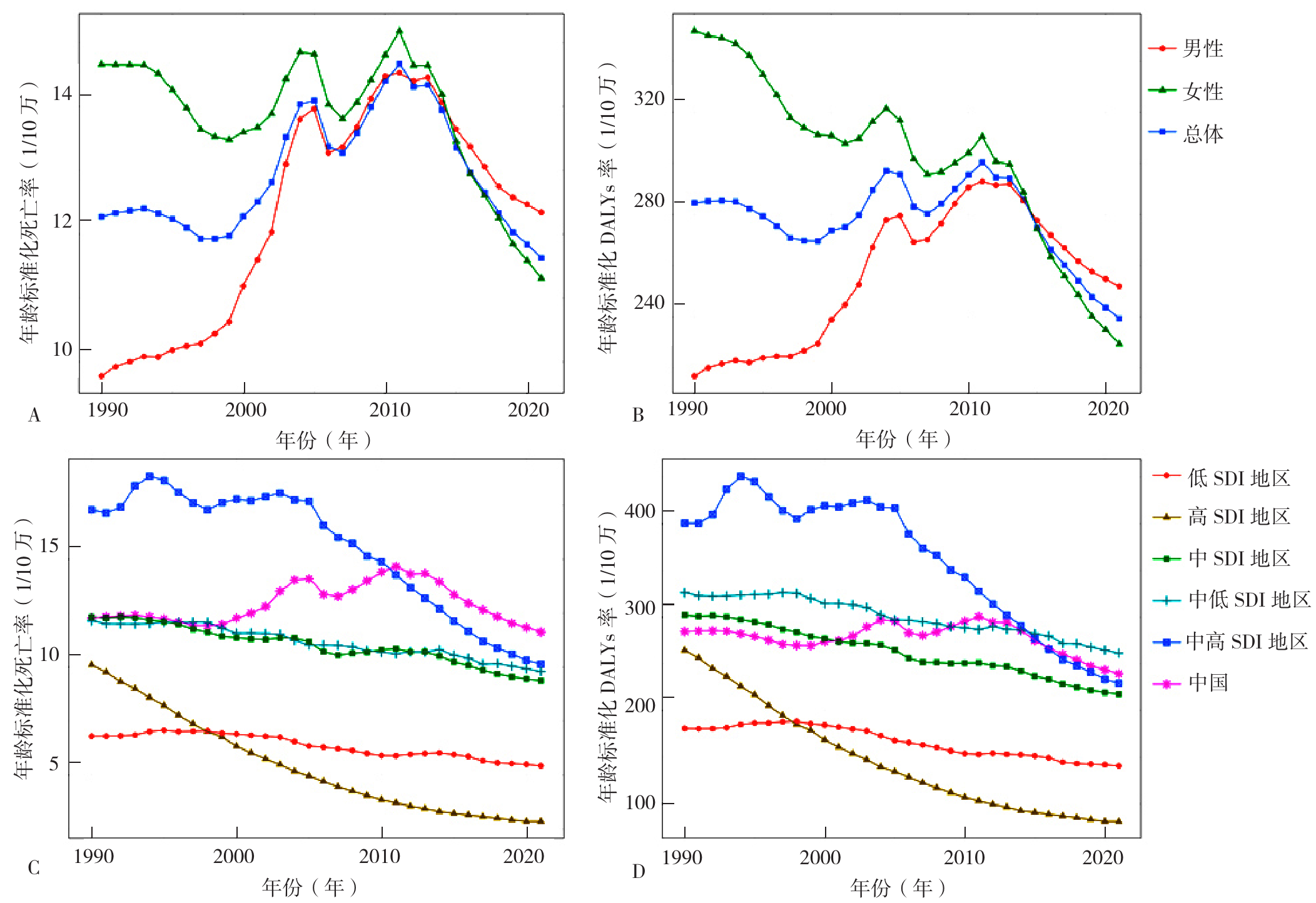
图2 1990—2021年中国和5类SDI地区归因于二手烟的IHD疾病负担趋势变化注:A为中国分性别的年龄标准化死亡率,B为中国分性别的年龄标准化DALYs率,共用性别图例;C为不同地区的年龄标准化死亡率,D为不同地区的年龄标准化DALYs率,共用地区图例。
Figure 2 Trends in the IHD disease burden attributable to second-hand smoke in China and five SDI regions from 1990 to 2021
| 项目 | 地区 | AAPC(%) | 95%CI | t值 | P值 |
|---|---|---|---|---|---|
| ASMR | 中国 | -0.20 | -0.65~0.24 | -0.90 | 0.370 |
| 高SDI | -4.04 | -4.16~-3.92 | -65.22 | <0.001 | |
| 中高SDI | -1.71 | -2.02~-1.40 | -10.75 | <0.001 | |
| 中SDI | -0.90 | -1.12~-0.68 | -7.89 | <0.001 | |
| 中低SDI | -0.67 | -0.84~-0.51 | -8.15 | <0.001 | |
| 低SDI | -0.69 | -0.95~-0.44 | -5.39 | <0.001 | |
| ASDR | 中国 | -0.58 | -0.98~-0.19 | -2.90 | 0.004 |
| 高SDI | -3.79 | -3.92~-3.66 | -55.23 | <0.001 | |
| 中高SDI | -1.81 | -2.11~-1.50 | -11.43 | <0.001 | |
| 中SDI | -1.06 | -1.21~ -0.91 | -13.82 | <0.001 | |
| 中低SDI | -0.69 | -0.80~-0.58 | -11.74 | <0.001 | |
| 低SDI | -0.78 | -1.00~-0.56 | -6.95 | <0.001 |
表2 归因于二手烟的IHD疾病负担平均年度变化百分比
Table 2 Changes in the IHD disease burden attributable to second-hand smoke
| 项目 | 地区 | AAPC(%) | 95%CI | t值 | P值 |
|---|---|---|---|---|---|
| ASMR | 中国 | -0.20 | -0.65~0.24 | -0.90 | 0.370 |
| 高SDI | -4.04 | -4.16~-3.92 | -65.22 | <0.001 | |
| 中高SDI | -1.71 | -2.02~-1.40 | -10.75 | <0.001 | |
| 中SDI | -0.90 | -1.12~-0.68 | -7.89 | <0.001 | |
| 中低SDI | -0.67 | -0.84~-0.51 | -8.15 | <0.001 | |
| 低SDI | -0.69 | -0.95~-0.44 | -5.39 | <0.001 | |
| ASDR | 中国 | -0.58 | -0.98~-0.19 | -2.90 | 0.004 |
| 高SDI | -3.79 | -3.92~-3.66 | -55.23 | <0.001 | |
| 中高SDI | -1.81 | -2.11~-1.50 | -11.43 | <0.001 | |
| 中SDI | -1.06 | -1.21~ -0.91 | -13.82 | <0.001 | |
| 中低SDI | -0.69 | -0.80~-0.58 | -11.74 | <0.001 | |
| 低SDI | -0.78 | -1.00~-0.56 | -6.95 | <0.001 |
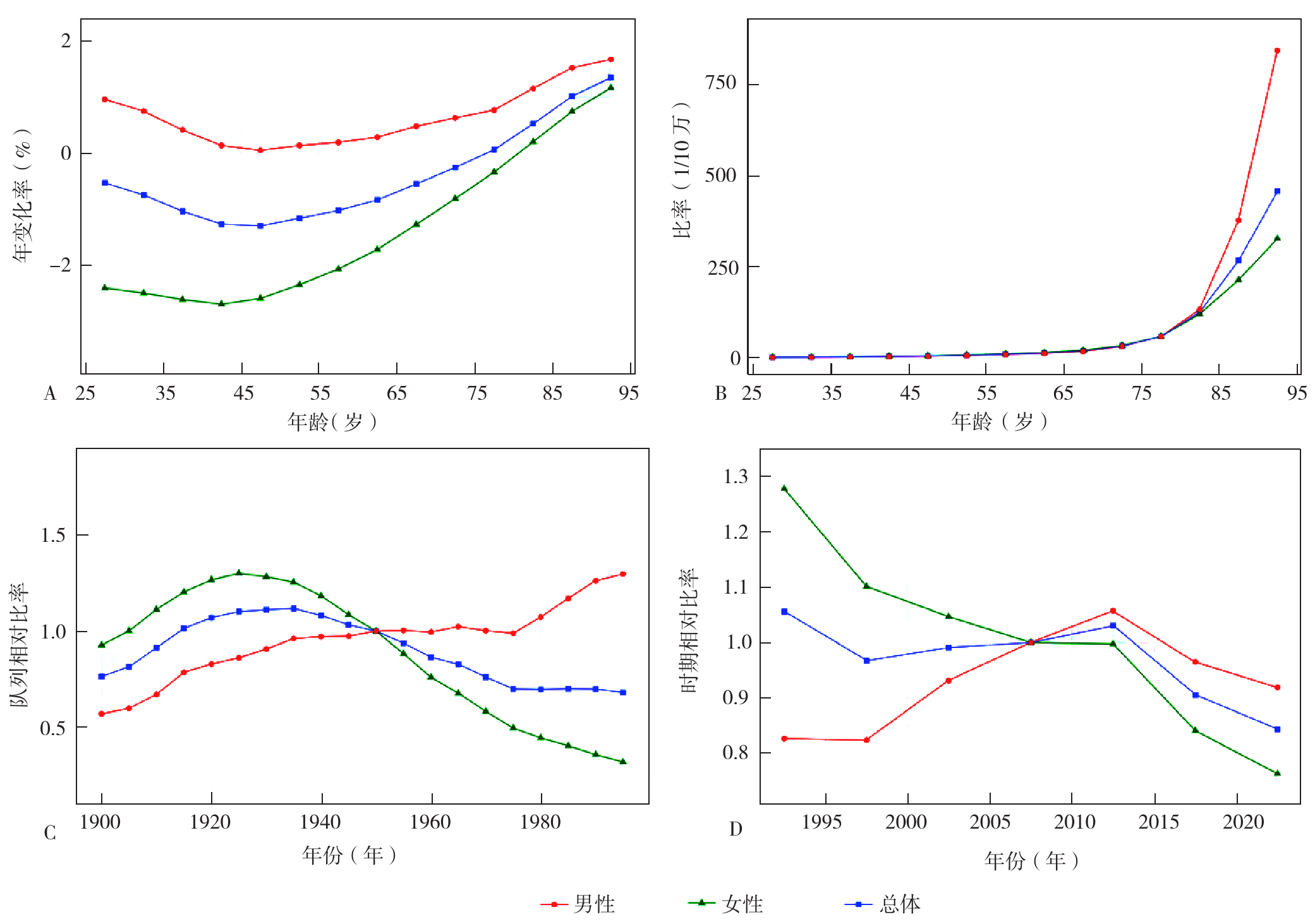
图3 1990—2021年中国归因于二手烟的IHD死亡率APC模型分析注:A为局部漂移,B为纵向年龄曲线,C为队列相对比率,D为时期相对比率。
Figure 3 APC model analysis results of the IHD mortality attributable to second-hand smoke in China from 1990 to 2021
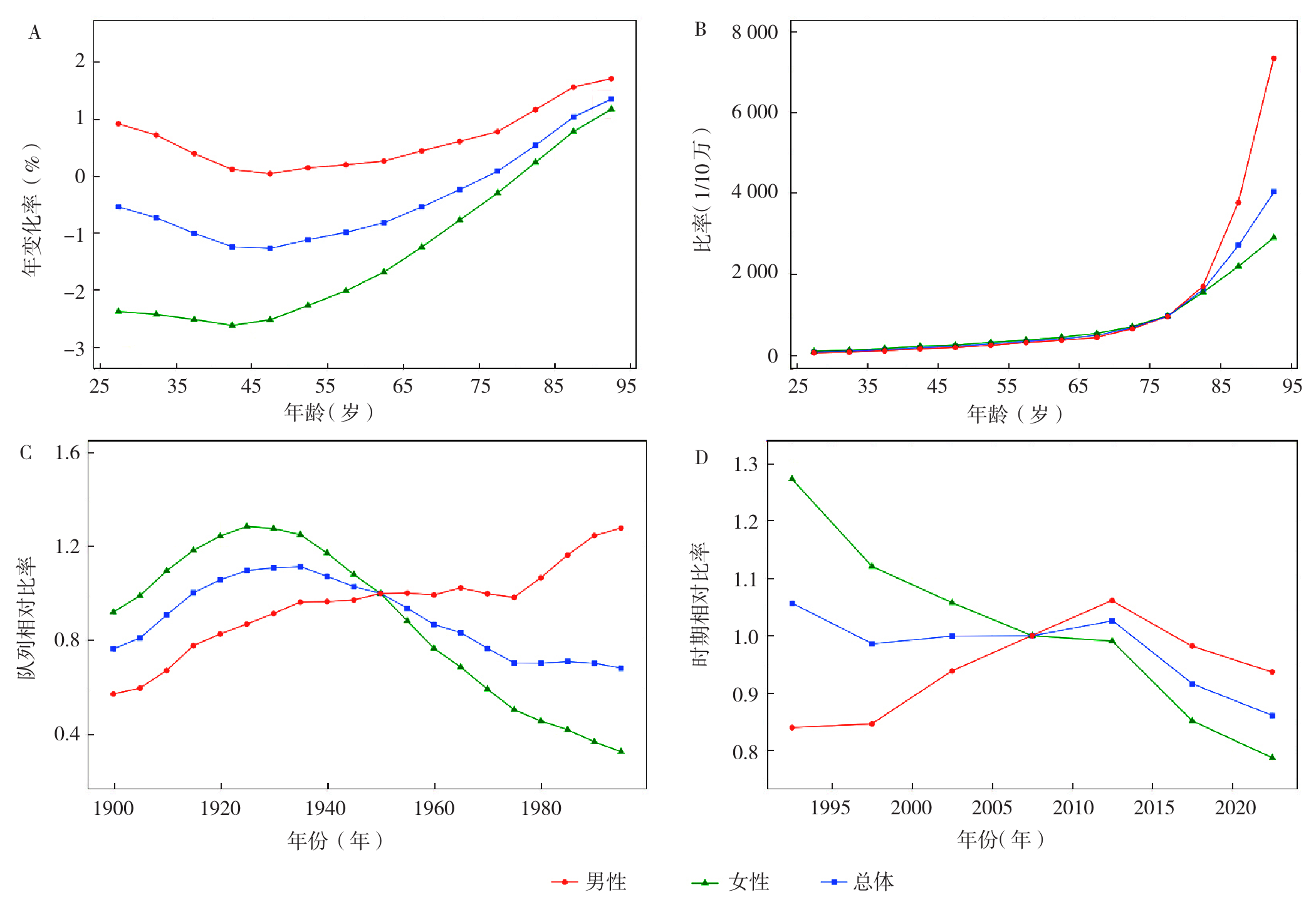
图4 1990—2021年中国归因于二手烟的IHD的DALYs率APC模型分析注:A为局部漂移,B为纵向年龄曲线,C为队列相对比率,D为时期相对比率。
Figure 4 APC model analysis results of DALYs rate of the IHD attributable to second-hand smoke in China from 1990 to 2021
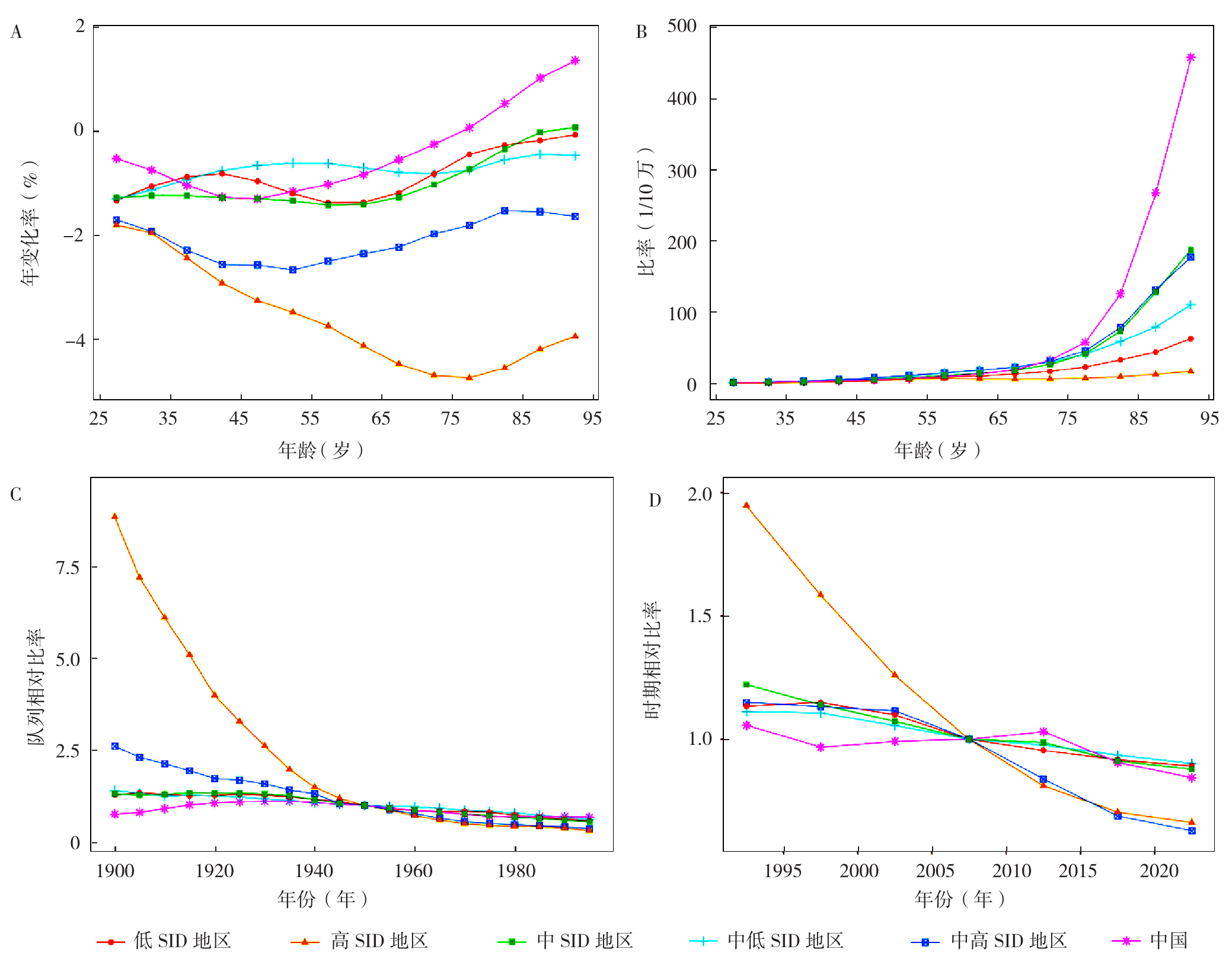
图5 中国与5类SDI地区归因于二手烟的IHD死亡率趋势比较注:A为局部漂移,B为纵向年龄曲线,C为队列相对比率,D为时期相对比率。
Figure 5 Comparison of trends in the IHD mortality attributable to second-hand smoke in China and five SDI regions
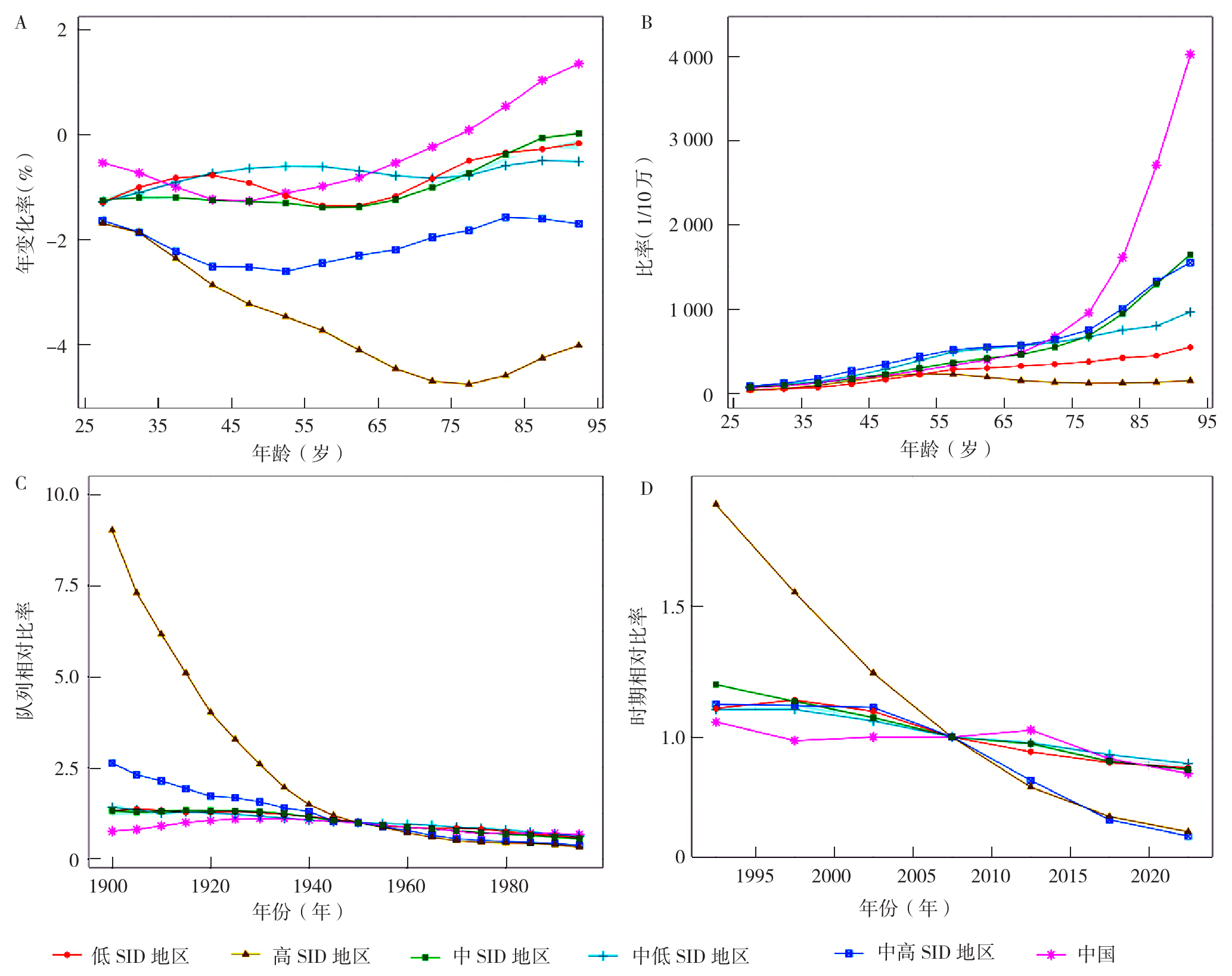
图6 中国与5类SDI地区归因于二手烟的IHD的DALYs率变化趋势比较注:A为局部漂移,B为纵向年龄曲线,C为队列相对比率,D为时期相对比率。
Figure 6 Comparison of trends in the IHD DALYs rate attributable to second-hand smoke in China and the five SDI
| [1] |
|
| [2] |
|
| [3] |
|
| [4] |
|
| [5] |
|
| [6] |
刘世炜,肖琳.中国烟草流行监测的发展及挑战[J].中华流行病学杂志, 2022, 43(6): 804-810.
|
| [7] |
|
| [8] |
|
| [9] |
|
| [10] |
|
| [11] |
|
| [12] |
GBD 2019 Tobacco Collaborators. Spatial, temporal, and demographic patterns in prevalence of smoking tobacco use and attributable disease burden in 204 countries and territories, 1990-2019: a systematic analysis from the Global Burden of Disease Study 2019[J]. Lancet, 2021, 397(10292): 2337-2360.
|
| [13] |
GBD 2017 Disease and Injury Incidence and Prevalence Collaborators. Global, regional, and national incidence, prevalence, and years lived with disability for 354 diseases and injuries for 195 countries and territories, 1990-2017: a systematic analysis for the Global Burden of Disease Study 2017[J]. Lancet, 2018, 392(10159) :1789-1858.
|
| [14] |
|
| [15] |
GBD 2017 DALYs and HALE Collaborators. Global, regional, and national disability-adjusted life-years (DALYs) for 359 diseases and injuries and healthy life expectancy (HALE) for 195 countries and territories, 1990-2017: a systematic analysis for the Global Burden of Disease Study 2017[J]. Lancet, 2018, 392(10159): 1859-1922.
|
| [16] |
|
| [17] |
GBD 2019 Risk Factors Collaborators. Global burden and strength of evidence for 88 risk factors in 204 countries and 811 subnational locations, 1990-2021: a systematic analysis for the Global Burden of Disease Study 2021[J]. Lancet, 2024, 403(10440): 2162-2203.
|
| [18] |
|
| [19] |
GBD 2019 Risk Factors Collaborators. Global burden of 87 risk factors in 204 countries and territories, 1990-2019: a systematic analysis for the Global Burden of Disease Study 2019[J]. Lancet, 2020, 396(10258): 1223-1249.
|
| [20] |
杨继, 张垚, 马腾. 1990—2019年中国心血管疾病流行现状、疾病负担及发病预测分析[J].中国全科医学, 2024, 27(2): 233-244, 252. DOI: 10.12114/j.issn.1007-9572.2023.0470.
|
| [21] |
屈媛媛, 曹淼, 王静. 1990—2019年中国哮喘患病、疾病负担趋势及其危险因素研究[J].中国全科医学, 2024, 27(13): 1594-1600. DOI: 10.12114/j.issn.1007-9572.2023.0172.
|
| [22] |
|
| [23] |
|
| [24] |
|
| [25] |
|
| [26] |
|
| [27] |
|
| [28] |
|
| [29] |
|
| [30] |
|
| [31] |
|
| [32] |
|
| [33] |
|
| [34] |
|
| [35] |
|
| [36] |
|
| [37] |
|
| [38] |
|
| [39] |
|
| [40] |
|
| [41] |
|
| [42] |
|
| [43] |
|
| [44] |
|
| [1] | 吴一璇, 肖亮满, 刘鑫, 严梓萁, 王毓婷, 林舒敏, 庄礼兴. 1990—2021年中国与全球帕金森病的疾病负担分析与未来趋势预测[J]. 中国全科医学, 2026, 29(20): 2895-2902. |
| [2] | 甄锐, 谷旭放, 高晟玮, 张博文, 任真娟, 杨睿璇. 1990—2021年中国归因于代谢风险因素的心血管疾病负担及2022—2035年趋势预测研究[J]. 中国全科医学, 2026, 29(15): 2077-2083. |
| [3] | 张紫钰, 韩树奎, 马昕, 宋盼盼, 马金祥, 任义涛, 陈虹汝. 1990—2021年中国人群药物滥用障碍的疾病负担及2022—2046年趋势预测[J]. 中国全科医学, 2026, 29(08): 1069-1076. |
| [4] | 刘璠, 李嘉丽, 柯立鑫, 张强, 陈嘉慧, 卢存存, 赵信科. 1990—2021年全球与中国60岁及以上人群高胆固醇血症的疾病负担:趋势分析与模型预测[J]. 中国全科医学, 2026, 29(05): 631-640. |
| [5] | 赵晓晓, 丁韵涵, 陈嘉慧, 王海博, 柯立鑫, 王子怡, 高武霖, 卢笑晖, 武继彪, 卢存存. 1990—2021年中国与全球老年1型糖尿病的疾病负担分析与未来趋势预测[J]. 中国全科医学, 2026, 29(01): 67-75. |
| [6] | 李书楠, 张诗妍, 邓亚楠, 胡丹青, 郑雨心, 李丹阳, 李灿东. 1990—2021年中国2型糖尿病肾病的疾病负担变化趋势及预测研究[J]. 中国全科医学, 2025, 28(33): 4214-4226. |
| [7] | 张永庆, 李娜, 高伊丽, 秦佳文, 俞海萍, 施辉. 1990—2021年我国中老年人听力损失疾病负担变化趋势分析[J]. 中国全科医学, 2025, 28(33): 4227-4233. |
| [8] | 刘明波, 何新叶, 杨晓红, 王增武. 《中国心血管健康与疾病报告2024》要点解读[J]. 中国全科医学, 2025, 28(32): 3989-4008. |
| [9] | 尚忠华, 蒋芝月, 黄朝晖, 杨星, 刘海燕, 张丽. 1990—2021年中国宫颈癌疾病负担趋势分析及2022—2035年预测研究[J]. 中国全科医学, 2025, 28(26): 3314-3320. |
| [10] | 罗新宇, 刘瑾, 陈海龙. 1990—2021年中国和全球胰腺炎疾病负担趋势分析及2022—2031年预测研究[J]. 中国全科医学, 2025, 28(26): 3321-3327. |
| [11] | 张志东, 金华, 胡继宏, 蒋露, 王莉, 龙开冲, 张荣华. 1990—2021年中国高血压肾病发病率和死亡率变化趋势分析及预测研究[J]. 中国全科医学, 2025, 28(18): 2262-2269. |
| [12] | 张冰清, 王忠凯, 吴长勇, 孙煌, 李锐洁, 刘文洁, 骆怡哗, 郑丽慧, 彭云珠. 1990—2021年全球先天性心脏缺陷疾病负担变化及未来趋势预测研究[J]. 中国全科医学, 2025, 28(18): 2253-2261. |
| [13] | 陈兴超, 高振华, 徐生刚, 邹永刚, 钱军, 魏建仝. 1990—2021年全球和中国及不同社会人口学指数地区骨关节炎疾病负担趋势分析[J]. 中国全科医学, 2025, 28(17): 2172-2178. |
| [14] | 方良梅, 苗瑞芬, 王荣, 仇蓓蓓, 洪忻, 王莉娜. 1992—2021年中国耐多药结核病疾病负担变化趋势分析[J]. 中国全科医学, 2025, 28(17): 2163-2171. |
| [15] | 赵晓晓, 柯立鑫, 荀杨芹, 王海博, 高武霖, 乔天慈, 卢笑晖, 武继彪, 卢存存. 1990—2021年全球与中国老年2型糖尿病的疾病负担调查与未来趋势预测[J]. 中国全科医学, 2025, 28(16): 2050-2058. |
| 阅读次数 | ||||||
|
全文 |
|
|||||
|
摘要 |
|
|||||