
Chinese General Practice ›› 2026, Vol. 29 ›› Issue (33): 4876-4884.DOI: 10.12114/j.issn.1007-9572.2025.0148
• Article • Previous Articles Next Articles
Received:2025-06-05
Revised:2026-02-24
Published:2026-11-20
Online:2026-10-21
Contact:
ZHANG Jin
通讯作者:
张晋
作者简介:作者贡献:
李纪新提出研究思路,设计研究方案与研究命题,负责数据收集、清洗及统计学分析,负责论文起草、最终版本修订,对论文负责;邱林杰参与研究思路与研究方案设计,负责研究过程实施与资料采集,参与论文起草与修改;任燕负责研究过程实施,参与数据收集与质量控制,参与论文修改;李美洁、邹姹姹、吴梓敬负责数据收集与清洗,参与统计结果整理与表格制作,参与论文起草;王文茹、杨振宇、刘峰兆参与研究方案设计与质量控制,参与结果解释与论文修改,参与最终版本审阅;张晋提出研究思路,设计研究方案,指导研究实施与关键方法学把关,负责最终版本修订,对论文负责。
基金资助:CLC Number:
Add to citation manager EndNote|Ris|BibTeX
URL: https://www.chinagp.net/EN/10.12114/j.issn.1007-9572.2025.0148
| 项目 | 非T2DM组(n=736) | T2DM组(n=298) | t(χ2)值 | P值 |
|---|---|---|---|---|
| 性别[例(%)] | 9.275a | <0.01 | ||
| 男 | 366(49.73) | 180(60.40) | ||
| 女 | 370(50.27) | 118(39.60) | ||
| 年龄( | 49.6±15.0 | 57.3±14.7 | -7.480 | <0.01 |
| 体重( | 73.17±10.85 | 76.74±13.65 | -4.029 | <0.01 |
| BMI( | 26.6±2.3 | 27.7±3.6 | -4.86 | <0.01 |
| 收缩压( | 129±18 | 134±19 | -3.891 | <0.01 |
| 舒张压( | 75±11 | 77±11 | -2.648 | <0.01 |
| TC( | 4.90±0.87 | 4.84±0.96 | 0.935 | 0.350 |
| HDL-C( | 1.25±0.27 | 1.18±0.26 | 3.878 | <0.01 |
| LDL-C( | 3.16±0.81 | 3.41±0.89 | -4.196 | <0.01 |
| FPG( | 5.49±0.54 | 7.34±2.26 | -13.97 | <0.01 |
| TG( | 1.48±0.90 | 1.69±1.32 | -2.519 | <0.01 |
| 血脂异常病史[例(%)] | 3.739a | 0.053 | ||
| 是 | 450(61.14) | 202(67.79) | ||
| 否 | 286(38.86) | 96(32.21) | ||
| 吸烟史[例(%)] | 27.196a | <0.01 | ||
| 是 | 93(12.64) | 78(27.17) | ||
| 否 | 643(87.36) | 220(72.83) | ||
| 饮酒史[例(%)] | 16.410a | <0.01 | ||
| 是 | 96(13.04) | 70(23.49) | ||
| 否 | 640(85.96) | 228(76.51) | ||
| PhA( | 5.33°± 0.86° | 4.44°± 1.04° | 13.074 | <0.01 |
| PhA分组[例(%)] | 140.901a | <0.01 | ||
| Q1组 | 102(13.86) | 137(45.97) | ||
| Q2组 | 191(25.95) | 78(26.17) | ||
| Q3组 | 187(25.41) | 45(15.10) | ||
| Q4组 | 256(34.78) | 38(12.75) | ||
Table 1 Comparison of baseline characteristics between non-T2DM and T2DM groups
| 项目 | 非T2DM组(n=736) | T2DM组(n=298) | t(χ2)值 | P值 |
|---|---|---|---|---|
| 性别[例(%)] | 9.275a | <0.01 | ||
| 男 | 366(49.73) | 180(60.40) | ||
| 女 | 370(50.27) | 118(39.60) | ||
| 年龄( | 49.6±15.0 | 57.3±14.7 | -7.480 | <0.01 |
| 体重( | 73.17±10.85 | 76.74±13.65 | -4.029 | <0.01 |
| BMI( | 26.6±2.3 | 27.7±3.6 | -4.86 | <0.01 |
| 收缩压( | 129±18 | 134±19 | -3.891 | <0.01 |
| 舒张压( | 75±11 | 77±11 | -2.648 | <0.01 |
| TC( | 4.90±0.87 | 4.84±0.96 | 0.935 | 0.350 |
| HDL-C( | 1.25±0.27 | 1.18±0.26 | 3.878 | <0.01 |
| LDL-C( | 3.16±0.81 | 3.41±0.89 | -4.196 | <0.01 |
| FPG( | 5.49±0.54 | 7.34±2.26 | -13.97 | <0.01 |
| TG( | 1.48±0.90 | 1.69±1.32 | -2.519 | <0.01 |
| 血脂异常病史[例(%)] | 3.739a | 0.053 | ||
| 是 | 450(61.14) | 202(67.79) | ||
| 否 | 286(38.86) | 96(32.21) | ||
| 吸烟史[例(%)] | 27.196a | <0.01 | ||
| 是 | 93(12.64) | 78(27.17) | ||
| 否 | 643(87.36) | 220(72.83) | ||
| 饮酒史[例(%)] | 16.410a | <0.01 | ||
| 是 | 96(13.04) | 70(23.49) | ||
| 否 | 640(85.96) | 228(76.51) | ||
| PhA( | 5.33°± 0.86° | 4.44°± 1.04° | 13.074 | <0.01 |
| PhA分组[例(%)] | 140.901a | <0.01 | ||
| Q1组 | 102(13.86) | 137(45.97) | ||
| Q2组 | 191(25.95) | 78(26.17) | ||
| Q3组 | 187(25.41) | 45(15.10) | ||
| Q4组 | 256(34.78) | 38(12.75) | ||
| 项目 | 非血脂异常组(n=382) | 血脂异常组(n=652) | t(χ2)值 | P值 |
|---|---|---|---|---|
| 性别[例(%)] | 6.807a | <0.01 | ||
| 男 | 181(47.38) | 365(55.98) | ||
| 女 | 201(52.62) | 287(44.02) | ||
| 年龄( | 49.5±17.1 | 53.2±14.0 | -3.578 | <0.01 |
| 体重( | 71.93±10.40 | 75.53±12.41 | -4.995 | <0.01 |
| BMI( | 26.5±2.4 | 27.2±2.9 | -4.125 | <0.01 |
| 收缩压( | 128±17 | 132±19 | -3.495 | <0.01 |
| 舒张压( | 73±10 | 77±12 | -5.758 | <0.01 |
| TC( | 4.29±0.59 | 5.24±0.86 | -21.004 | <0.01 |
| HDL-C( | 1.32±0.25 | 1.17±0.26 | 9.175 | <0.01 |
| LDL-C( | 2.61±0.53 | 3.45±0.83 | -19.843 | <0.01 |
| FPG( | 5.86±1.38 | 6.12±1.62 | -2.739 | <0.01 |
| TG( | 1.04±0.38 | 1.84±1.18 | -15.957 | <0.01 |
| T2DM病史[例(%)] | 3.739a | <0.053 | ||
| 是 | 96(25.13) | 202(30.98) | ||
| 否 | 286(74.87) | 450(69.02) | ||
| 吸烟史[例(%)] | 24.730a | <0.01 | ||
| 是 | 34(8.90) | 137(21.01) | ||
| 否 | 348(91.10) | 515(78.99) | ||
| 饮酒史[例(%)] | 16.052a | <0.01 | ||
| 是 | 38(9.95) | 128(19.63) | ||
| 否 | 344(90.05) | 524(80.37) | ||
| PhA( | 5.46°± 0.93° | 4.85°± 0.97° | 10.019 | <0.01 |
| PhA分组[例(%)] | 63.041a | <0.01 | ||
| Q1组 | 51(13.35) | 188(28.83) | ||
| Q2组 | 87(22.77) | 182(27.91) | ||
| Q3组 | 86(22.51) | 146(22.39) | ||
| Q4组 | 158(41.36) | 136(20.86) | ||
Table 2 Comparison of baseline characteristics between patients with and without dyslipidemia
| 项目 | 非血脂异常组(n=382) | 血脂异常组(n=652) | t(χ2)值 | P值 |
|---|---|---|---|---|
| 性别[例(%)] | 6.807a | <0.01 | ||
| 男 | 181(47.38) | 365(55.98) | ||
| 女 | 201(52.62) | 287(44.02) | ||
| 年龄( | 49.5±17.1 | 53.2±14.0 | -3.578 | <0.01 |
| 体重( | 71.93±10.40 | 75.53±12.41 | -4.995 | <0.01 |
| BMI( | 26.5±2.4 | 27.2±2.9 | -4.125 | <0.01 |
| 收缩压( | 128±17 | 132±19 | -3.495 | <0.01 |
| 舒张压( | 73±10 | 77±12 | -5.758 | <0.01 |
| TC( | 4.29±0.59 | 5.24±0.86 | -21.004 | <0.01 |
| HDL-C( | 1.32±0.25 | 1.17±0.26 | 9.175 | <0.01 |
| LDL-C( | 2.61±0.53 | 3.45±0.83 | -19.843 | <0.01 |
| FPG( | 5.86±1.38 | 6.12±1.62 | -2.739 | <0.01 |
| TG( | 1.04±0.38 | 1.84±1.18 | -15.957 | <0.01 |
| T2DM病史[例(%)] | 3.739a | <0.053 | ||
| 是 | 96(25.13) | 202(30.98) | ||
| 否 | 286(74.87) | 450(69.02) | ||
| 吸烟史[例(%)] | 24.730a | <0.01 | ||
| 是 | 34(8.90) | 137(21.01) | ||
| 否 | 348(91.10) | 515(78.99) | ||
| 饮酒史[例(%)] | 16.052a | <0.01 | ||
| 是 | 38(9.95) | 128(19.63) | ||
| 否 | 344(90.05) | 524(80.37) | ||
| PhA( | 5.46°± 0.93° | 4.85°± 0.97° | 10.019 | <0.01 |
| PhA分组[例(%)] | 63.041a | <0.01 | ||
| Q1组 | 51(13.35) | 188(28.83) | ||
| Q2组 | 87(22.77) | 182(27.91) | ||
| Q3组 | 86(22.51) | 146(22.39) | ||
| Q4组 | 158(41.36) | 136(20.86) | ||
| 变量 | T2DM | |||||
|---|---|---|---|---|---|---|
| 模型1 | 模型2 | 模型3 | ||||
| OR(95%CI) | P值 | OR(95%CI) | P值 | OR(95%CI) | P值 | |
| PhA水平 | 0.36(0.30~0.42) | <0.01 | 0.34(0.28~0.41) | <0.01 | 0.37(0.31~0.46) | <0.01 |
| PhA分组(以Q1组为参照) | ||||||
| Q2组 | 0.30(0.21~0.44) | <0.01 | 0.31(0.21~0.46) | <0.01 | 0.35(0.24~0.52) | <0.01 |
| Q3组 | 0.18(0.12~0.27) | <0.01 | 0.17(0.11~0.26) | <0.01 | 0.21(0.13~0.32) | <0.01 |
| Q4组 | 0.11(0.07~0.17) | <0.01 | 0.10(0.06~0.16) | <0.01 | 0.12(0.07~0.20) | <0.01 |
| 变量 | FPG | |||||
| 模型1 | 模型2 | 模型3 | ||||
| β(95%CI) | P值 | β(95%CI) | P值 | β(95%CI) | P值 | |
| PhA水平 | -0.54(-0.63~-0.45) | <0.01 | -0.41(-0.50~-0.31) | <0.01 | -0.39(-0.48~-0.29) | <0.01 |
| PhA分组(以Q1组为参照) | ||||||
| Q2组 | -0.75(-1.00~-0.49) | <0.01 | -0.73(-0.98~-0.49) | <0.01 | -0.69(-0.94~-0.44) | <0.01 |
| Q3组 | -0.92(-1.19~-0.66) | <0.01 | -0.71(-0.96~-0.45) | <0.01 | -0.64(-0.90~-0.38) | <0.01 |
| Q4组 | -1.26(-1.51~-1.01) | <0.01 | -0.86(-1.12~-0.59) | <0.01 | -0.79(-1.06~-0.52) | <0.01 |
Table 3 Study on the correlation between PhA and the risk of T2DM and FPG levels in overweight/obese patients
| 变量 | T2DM | |||||
|---|---|---|---|---|---|---|
| 模型1 | 模型2 | 模型3 | ||||
| OR(95%CI) | P值 | OR(95%CI) | P值 | OR(95%CI) | P值 | |
| PhA水平 | 0.36(0.30~0.42) | <0.01 | 0.34(0.28~0.41) | <0.01 | 0.37(0.31~0.46) | <0.01 |
| PhA分组(以Q1组为参照) | ||||||
| Q2组 | 0.30(0.21~0.44) | <0.01 | 0.31(0.21~0.46) | <0.01 | 0.35(0.24~0.52) | <0.01 |
| Q3组 | 0.18(0.12~0.27) | <0.01 | 0.17(0.11~0.26) | <0.01 | 0.21(0.13~0.32) | <0.01 |
| Q4组 | 0.11(0.07~0.17) | <0.01 | 0.10(0.06~0.16) | <0.01 | 0.12(0.07~0.20) | <0.01 |
| 变量 | FPG | |||||
| 模型1 | 模型2 | 模型3 | ||||
| β(95%CI) | P值 | β(95%CI) | P值 | β(95%CI) | P值 | |
| PhA水平 | -0.54(-0.63~-0.45) | <0.01 | -0.41(-0.50~-0.31) | <0.01 | -0.39(-0.48~-0.29) | <0.01 |
| PhA分组(以Q1组为参照) | ||||||
| Q2组 | -0.75(-1.00~-0.49) | <0.01 | -0.73(-0.98~-0.49) | <0.01 | -0.69(-0.94~-0.44) | <0.01 |
| Q3组 | -0.92(-1.19~-0.66) | <0.01 | -0.71(-0.96~-0.45) | <0.01 | -0.64(-0.90~-0.38) | <0.01 |
| Q4组 | -1.26(-1.51~-1.01) | <0.01 | -0.86(-1.12~-0.59) | <0.01 | -0.79(-1.06~-0.52) | <0.01 |
| 变量 | 血脂异常 | |||||
|---|---|---|---|---|---|---|
| 模型1 | 模型2 | 模型3 | ||||
| OR(95%CI) | P值 | OR(95%CI) | P值 | OR(95%CI) | P值 | |
| PhA水平 | 0.51(0.44~0.59) | <0.01 | 0.42(0.34~0.50) | <0.01 | 0.42(0.35~0.52) | <0.01 |
| PhA分组(以Q1组为参照) | ||||||
| Q2组 | 0.57(0.38~0.85) | <0.01 | 0.63(0.42~0.94) | 0.03 | 0.68(0.45~1.03) | 0.07 |
| Q3组 | 0.46(0.31~0.69) | <0.01 | 0.44(0.28~0.67) | <0.01 | 0.48(0.31~0.74) | <0.01 |
| Q4组 | 0.23(0.16~0.34) | <0.01 | 0.16(0.10~0.26) | <0.01 | 0.18(0.11~0.29) | <0.01 |
| 变量 | TC | |||||
| 模型1 | 模型2 | 模型3 | ||||
| β(95%CI) | P值 | β(95%CI) | P值 | β(95%CI) | P值 | |
| PhA水平 | -0.17(-0.22~-0.11) | <0.01 | -0.15(-0.21~-0.09) | <0.01 | -0.15(-0.22~-0.09) | <0.01 |
| PhA分组(以Q1组为参照) | ||||||
| Q2组 | -0.14(-0.29~0.02) | 0.08 | -0.16(-0.31~-0.00) | 0.04 | -0.16(-0.32~-0.01) | 0.04 |
| Q3组 | -0.31(-0.47~-0.15) | <0.01 | -0.30(-0.46~-0.14) | <0.01 | -0.31(-0.48~-0.14) | <0.01 |
| Q4组 | -0.44(-0.59~-0.29) | <0.01 | -0.38(-0.55~-0.21) | <0.01 | -0.39(-0.56~-0.21) | <0.01 |
| 变量 | TG | |||||
| 模型1 | 模型2 | 模型3 | ||||
| β(95%CI) | P值 | β(95%CI) | P值 | β(95%CI) | P值 | |
| PhA水平 | -0.33(-0.39~-0.27) | <0.01 | -0.41(-0.48~-0.34) | <0.01 | -0.42(-0.49~-0.35) | <0.01 |
| PhA分组(以Q1组为参照) | ||||||
| Q2组 | -0.70(-0.87~-0.53) | <0.01 | -0.64(-0.81~-0.47) | <0.01 | -0.64(-0.82~-0.47) | <0.01 |
| Q3组 | -0.77(-0.95~-0.59) | <0.01 | -0.81(-0.99~-0.64) | <0.01 | -0.82(-1.01~-0.64) | <0.01 |
| Q4组 | -0.87(-1.04~-0.71) | <0.01 | -1.07(-1.26~-0.89) | <0.01 | -1.08(-1.27~-0.89) | <0.01 |
| 变量 | HDL-C | |||||
| 模型1 | 模型2 | 模型3 | ||||
| β(95%CI) | P值 | β(95%CI) | P值 | β(95%CI) | P值 | |
| PhA水平 | 0.02(-0.00~0.03) | 0.06 | 0.04(0.03~0.06) | <0.01 | 0.03(0.02~0.05) | <0.01 |
| PhA分组(以Q1组为参照) | ||||||
| Q2组 | 0.02(-0.02~0.07) | 0.34 | -0.01(-0.06~0.03) | 0.55 | -0.04(-0.08~0.01) | 0.10 |
| Q3组 | 0.01(-0.03~0.06) | 0.54 | 0.02(-0.02~0.07) | 0.28 | -0.01(-0.05~0.04) | 0.77 |
| Q4组 | 0.00(-0.05~0.04) | 0.89 | 0.08(0.04~0.13) | <0.01 | 0.05(0.00~0.10) | 0.03 |
| 变量 | LDL-C | |||||
| 模型1 | 模型2 | 模型3 | ||||
| β(95%CI) | P值 | β(95%CI) | P值 | β(95%CI) | P值 | |
| PhA水平 | -0.20(-0.25~-0.14) | <0.01 | -0.16(-0.26~-0.05) | <0.01 | -0.12(-0.23~-0.01) | <0.01 |
| PhA分组(以Q1组为参照) | ||||||
| Q2组 | 0.07(-0.08~0.24) | 0.33 | 0.10(-0.06~0.26) | 0.24 | 0.17(0.01~0.34) | 0.04 |
| Q3组 | -0.25(-0.40~-0.08) | <0.01 | -0.29(-0.43~-0.10) | <0.01 | -0.15(-0.31~0.03) | 0.07 |
| Q4组 | -0.47(-0.62~-0.31) | <0.01 | -0.56(-0.74~-0.38) | <0.01 | -0.39(-0.54~-0.26) | <0.01 |
Table 4 Study on the correlation between PhA and dyslipidemia in overweight/obese patients
| 变量 | 血脂异常 | |||||
|---|---|---|---|---|---|---|
| 模型1 | 模型2 | 模型3 | ||||
| OR(95%CI) | P值 | OR(95%CI) | P值 | OR(95%CI) | P值 | |
| PhA水平 | 0.51(0.44~0.59) | <0.01 | 0.42(0.34~0.50) | <0.01 | 0.42(0.35~0.52) | <0.01 |
| PhA分组(以Q1组为参照) | ||||||
| Q2组 | 0.57(0.38~0.85) | <0.01 | 0.63(0.42~0.94) | 0.03 | 0.68(0.45~1.03) | 0.07 |
| Q3组 | 0.46(0.31~0.69) | <0.01 | 0.44(0.28~0.67) | <0.01 | 0.48(0.31~0.74) | <0.01 |
| Q4组 | 0.23(0.16~0.34) | <0.01 | 0.16(0.10~0.26) | <0.01 | 0.18(0.11~0.29) | <0.01 |
| 变量 | TC | |||||
| 模型1 | 模型2 | 模型3 | ||||
| β(95%CI) | P值 | β(95%CI) | P值 | β(95%CI) | P值 | |
| PhA水平 | -0.17(-0.22~-0.11) | <0.01 | -0.15(-0.21~-0.09) | <0.01 | -0.15(-0.22~-0.09) | <0.01 |
| PhA分组(以Q1组为参照) | ||||||
| Q2组 | -0.14(-0.29~0.02) | 0.08 | -0.16(-0.31~-0.00) | 0.04 | -0.16(-0.32~-0.01) | 0.04 |
| Q3组 | -0.31(-0.47~-0.15) | <0.01 | -0.30(-0.46~-0.14) | <0.01 | -0.31(-0.48~-0.14) | <0.01 |
| Q4组 | -0.44(-0.59~-0.29) | <0.01 | -0.38(-0.55~-0.21) | <0.01 | -0.39(-0.56~-0.21) | <0.01 |
| 变量 | TG | |||||
| 模型1 | 模型2 | 模型3 | ||||
| β(95%CI) | P值 | β(95%CI) | P值 | β(95%CI) | P值 | |
| PhA水平 | -0.33(-0.39~-0.27) | <0.01 | -0.41(-0.48~-0.34) | <0.01 | -0.42(-0.49~-0.35) | <0.01 |
| PhA分组(以Q1组为参照) | ||||||
| Q2组 | -0.70(-0.87~-0.53) | <0.01 | -0.64(-0.81~-0.47) | <0.01 | -0.64(-0.82~-0.47) | <0.01 |
| Q3组 | -0.77(-0.95~-0.59) | <0.01 | -0.81(-0.99~-0.64) | <0.01 | -0.82(-1.01~-0.64) | <0.01 |
| Q4组 | -0.87(-1.04~-0.71) | <0.01 | -1.07(-1.26~-0.89) | <0.01 | -1.08(-1.27~-0.89) | <0.01 |
| 变量 | HDL-C | |||||
| 模型1 | 模型2 | 模型3 | ||||
| β(95%CI) | P值 | β(95%CI) | P值 | β(95%CI) | P值 | |
| PhA水平 | 0.02(-0.00~0.03) | 0.06 | 0.04(0.03~0.06) | <0.01 | 0.03(0.02~0.05) | <0.01 |
| PhA分组(以Q1组为参照) | ||||||
| Q2组 | 0.02(-0.02~0.07) | 0.34 | -0.01(-0.06~0.03) | 0.55 | -0.04(-0.08~0.01) | 0.10 |
| Q3组 | 0.01(-0.03~0.06) | 0.54 | 0.02(-0.02~0.07) | 0.28 | -0.01(-0.05~0.04) | 0.77 |
| Q4组 | 0.00(-0.05~0.04) | 0.89 | 0.08(0.04~0.13) | <0.01 | 0.05(0.00~0.10) | 0.03 |
| 变量 | LDL-C | |||||
| 模型1 | 模型2 | 模型3 | ||||
| β(95%CI) | P值 | β(95%CI) | P值 | β(95%CI) | P值 | |
| PhA水平 | -0.20(-0.25~-0.14) | <0.01 | -0.16(-0.26~-0.05) | <0.01 | -0.12(-0.23~-0.01) | <0.01 |
| PhA分组(以Q1组为参照) | ||||||
| Q2组 | 0.07(-0.08~0.24) | 0.33 | 0.10(-0.06~0.26) | 0.24 | 0.17(0.01~0.34) | 0.04 |
| Q3组 | -0.25(-0.40~-0.08) | <0.01 | -0.29(-0.43~-0.10) | <0.01 | -0.15(-0.31~0.03) | 0.07 |
| Q4组 | -0.47(-0.62~-0.31) | <0.01 | -0.56(-0.74~-0.38) | <0.01 | -0.39(-0.54~-0.26) | <0.01 |
| 分类 | T2DM | 血脂异常 | ||||
|---|---|---|---|---|---|---|
| OR(95%CI) | P值 | P交互值 | OR(95%CI) | P值 | P交互值 | |
| 性别 | <0.01 | 0.59 | ||||
| 男 | 0.35(0.27~0.43) | <0.01 | 0.38(0.25~0.46) | <0.01 | ||
| 女 | 0.16(0.11~0.25) | <0.01 | 0.25(0.20~0.33) | <0.01 | ||
| 年龄 | <0.01 | <0.01 | ||||
| <52岁 | 0.33(0.23~0.45) | <0.01 | 0.39(0.28~0.53) | <0.01 | ||
| ≥52岁 | 0.18(0.12~0.24) | <0.01 | 0.14(0.08~0.23) | <0.01 | ||
| 吸烟 | 0.42 | 0.81 | ||||
| 是 | 0.44(0.29~0.67) | <0.01 | 0.48(0.31~0.75) | <0.01 | ||
| 否 | 0.36(0.30~0.43) | <0.01 | 0.51(0.44~0.60) | <0.01 | ||
| 饮酒 | 0.04 | 0.04 | ||||
| 是 | 0.38(0.30~0.45) | <0.01 | 0.74(0.55~1.01) | 0.14 | ||
| 否 | 0.22(0.12~0.32) | <0.01 | 0.48(0.41~0.56) | <0.01 | ||
Table 5 Subgroup analysis of the association between PHA and the prevalence of T2DM and dyslipidemia in overweight/obese patients
| 分类 | T2DM | 血脂异常 | ||||
|---|---|---|---|---|---|---|
| OR(95%CI) | P值 | P交互值 | OR(95%CI) | P值 | P交互值 | |
| 性别 | <0.01 | 0.59 | ||||
| 男 | 0.35(0.27~0.43) | <0.01 | 0.38(0.25~0.46) | <0.01 | ||
| 女 | 0.16(0.11~0.25) | <0.01 | 0.25(0.20~0.33) | <0.01 | ||
| 年龄 | <0.01 | <0.01 | ||||
| <52岁 | 0.33(0.23~0.45) | <0.01 | 0.39(0.28~0.53) | <0.01 | ||
| ≥52岁 | 0.18(0.12~0.24) | <0.01 | 0.14(0.08~0.23) | <0.01 | ||
| 吸烟 | 0.42 | 0.81 | ||||
| 是 | 0.44(0.29~0.67) | <0.01 | 0.48(0.31~0.75) | <0.01 | ||
| 否 | 0.36(0.30~0.43) | <0.01 | 0.51(0.44~0.60) | <0.01 | ||
| 饮酒 | 0.04 | 0.04 | ||||
| 是 | 0.38(0.30~0.45) | <0.01 | 0.74(0.55~1.01) | 0.14 | ||
| 否 | 0.22(0.12~0.32) | <0.01 | 0.48(0.41~0.56) | <0.01 | ||
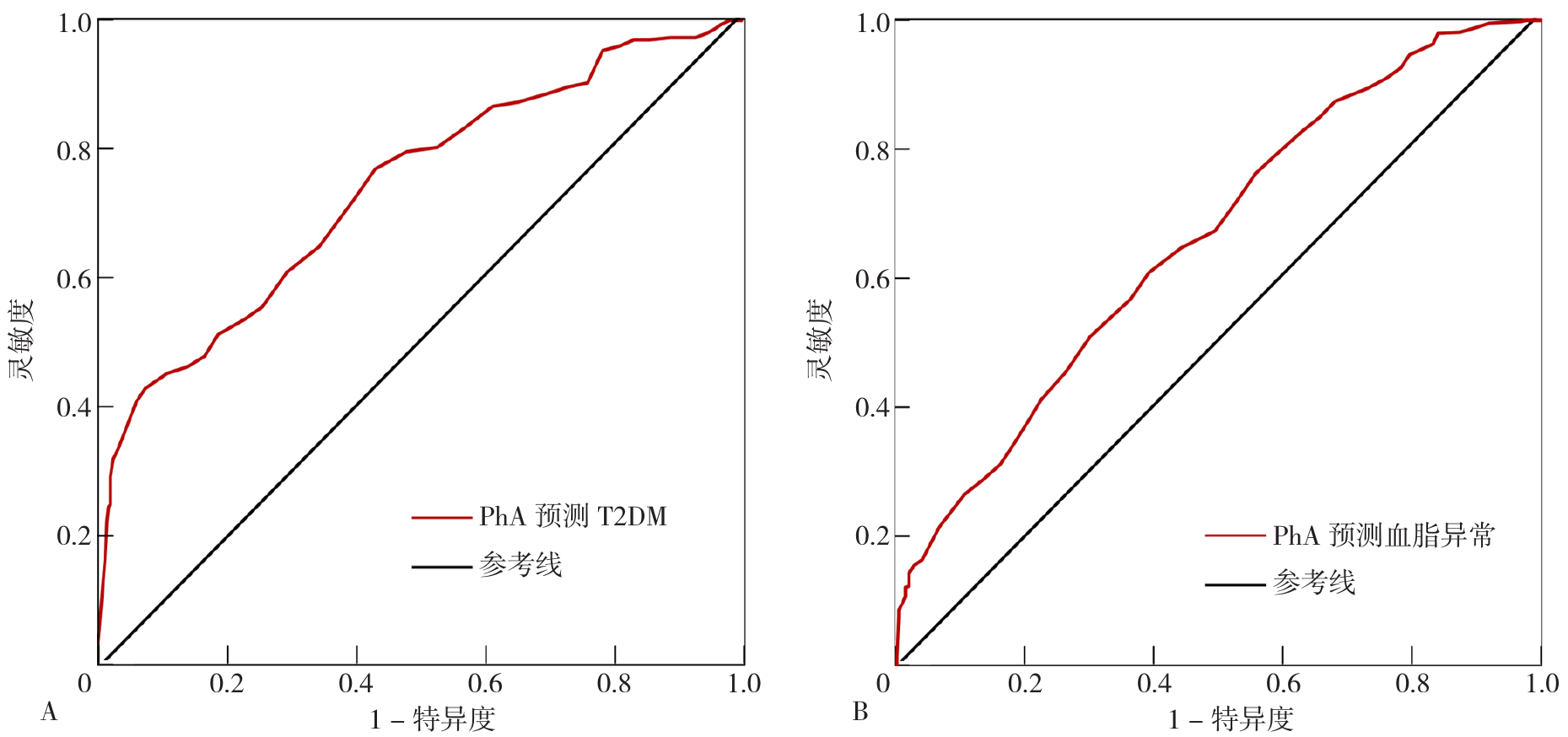
Figure 1 ROC curve for PhA in predicting the risk of T2DM and dyslipidemia in overweight/obese patients
| [1] |
|
| [2] |
NCD Risk Factor Collaboration (NCD-RisC). Trends in adult body-mass index in 200 countries from 1975 to 2014: a pooled analysis of 1698 population-based measurement studies with 19.2 million participants[J]. Lancet, 2016, 387(10026): 1377-1396.
|
| [3] |
|
| [4] |
|
| [5] |
|
| [6] |
|
| [7] |
|
| [8] |
|
| [9] |
|
| [10] |
李茜, 朱红, 叶梦, 等. 相位角与中老年2型糖尿病患者肌少症的相关性研究[J]. 首都医科大学学报, 2025, 46(2): 340-347. DOI: 10.3969/j.issn.1006-7795.2025.02.021.
|
| [11] |
厚双龙, 潘义, 高彩红, 等. 相位角在肥胖患者管理中的应用研究进展[J]. 中国慢性病预防与控制, 2024, 32(7): 543-546.
|
| [12] |
|
| [13] |
|
| [14] |
|
| [15] |
曹梦宇, 祁晓磊, 周明, 等. 不同诊断标准下相位角对老年男性肌少症的诊断价值分析[J]. 解放军医学院学报, 2021, 42(5): 494-499, 532. DOI: 10.3969/j.issn.2095-5227.2021.05.004.
|
| [16] |
中华医学会糖尿病学分会. 中国2型糖尿病防治指南(2020年版)(下)[J]. 中国实用内科杂志, 2021, 41(9): 757-784.
|
| [17] |
张美红, 杨晶, 钟文倩, 等. 身体圆度指数与阻塞性睡眠呼吸暂停相关性分析及其预测价值评估研究[J]. 中国全科医学, 2026, 29(8): 1013-1019. DOI: 10.12114/j.issn.1007-9572.2025.0275.
|
| [18] |
中国中西医结合学会心血管病专业委员会动脉粥样硬化与血脂异常专业组. 血脂异常中西医结合诊疗专家共识[J]. 中国全科医学, 2017, 20(3): 262-269. DOI: 10.3969/j.issn.1007-9572.2017.03.002.
|
| [19] |
|
| [20] |
|
| [21] |
|
| [22] |
|
| [23] |
李纪新, 邱林杰, 任燕, 等. 肥胖慢性炎症中医药治疗的潜在靶点:巨噬细胞极化[J]. 中国中药杂志, 2023, 48(19): 5113-5121.
|
| [24] |
李纪新, 邱林杰, 任燕, 等. 中药及活性成分靶向M1/M2巨噬细胞极化平衡干预肥胖合并2型糖尿病的研究进展[J]. 中国中药杂志, 2024, 49(13): 3441-3451.
|
| [25] |
|
| [26] |
|
| [27] |
乔威佳. 相位角与老年肌少症的相关性分析[D]. 南昌: 南昌大学, 2023.
|
| [28] |
|
| [29] |
|
| [1] | CHEN Lai, YU Yufeng, ZHOU Xin, RAN Minghui, SHU Siwei, ZHANG Tingxuan, ZHAO Jinsuo. Meta-analysis of the Prevalence and Associated Factors for the Triple Comorbidity of Hypertension, Diabetes, and Dyslipidemia Among Chinese Adults [J]. Chinese General Practice, 2026, 29(33): 4951-4959. |
| [2] | LI Zihan, LIU Lei, WANG Jiayu, ZHU Xinyu, TIAN Yu. Research Progress on the Application of Virtual Reality Technology in the Management of Childhood and Adolescent Obesity [J]. Chinese General Practice, 2026, 29(33): 4943-4950. |
| [3] | HU Ruomeng, LIU Zhidong, CHEN Junlan, WANG Miao, ZHOU Shigao. Multicenter, Double Blind, Randomized, Controlled Study on Metabolic Formula Combined with Metformin Intervening Type 2 Diabetes Patients with Obesity [J]. Chinese General Practice, 2026, 29(33): 4854-4860. |
| [4] | China Sport Science Society. Guidelines for Exercise Prescription of Dyslipidemia [J]. Chinese General Practice, 2026, 29(32): 4673-4689. |
| [5] | LI Lan, LIU Lidi, ZHANG Peng, LI Dongze, YANG Ziyu, CHENG Yonglang, LIAO Xiaoyang, WAN Zhi. Lifestyle Intervention-based Weight Management: an Analysis of Key Highlights from the Partial Update of the 2025 NICE Guideline Overweight and Obesity Management (NG246) [J]. Chinese General Practice, 2026, 29(30): 4353-4359. |
| [6] | FU Xiaoya, YANG Fei, GU Keyi, GU Handong, WANG Weiqiang. Correlation between Relative Fat Mass Index and Decreased Glomerular Filtration Rate in Patients with Cardiometabolic Comorbidities [J]. Chinese General Practice, 2026, 29(28): 4187-4192. |
| [7] | ZHANG Han, CAI Genshen, FENG Zhengwen, ZHANG Kaiyue, LIAN Dongbo, ZHANG Hua, ZHANG Jing. Evaluating the Availability of Health Services for Obesity Comorbidities under Hierarchical Diagnosis and Treatment in Beijing: a Healthcare Institution Survey Study [J]. Chinese General Practice, 2026, 29(28): 4117-4124. |
| [8] | ZHANG Ying, TANG Yijun, LIU Lidi, JIANG Lihua, JIA Yu, YANG Rong, YANG Ziyu, LIAO Xiaoyang. Management of Cardiovascular Metabolic Risks in Obese Children and Adolescents in China: Based on the 2024 Italian Society of Pediatric Endocrinology and Diabetes Position Paper on Cardiometabolic Risk in Children and Adolescents with Obesity [J]. Chinese General Practice, 2026, 29(27): 3879-3887. |
| [9] | JIANG Huajie, ZHUO Lin, LI Xinyue, JIN Rui, MA Yue, CUI Jingqiu, WANG Xiuying. Related Factors and Preventive Measures of Hyperuricemia in Elderly Men [J]. Chinese General Practice, 2026, 29(27): 3915-3923. |
| [10] | Expert Group on Guidelines for the Assessment, Treatment, and Prevention of Childhood Obesity in China, Professional Committee on Obesity Control in Women and Children, China Maternal and Child Health Research Association. Guidelines for the Assessment, Treatment, and Prevention of Childhood Obesity in China (Second Edition) [J]. Chinese General Practice, 2026, 29(23): 3233-3252. |
| [11] | HAN Congcong, QIU Xinyu, SHAN Chunfang, SONG Ning, CHEN Qingjie, MULADILI· Abudureheman, LI Xiaomei, YANG Yining, ZHAO Qian. Impact of Metabolic Obesity Phenotype on Long-term Prognosis after Percutaneous Coronary Intervention in Patients with Acute Coronary Syndrome [J]. Chinese General Practice, 2026, 29(21): 2950-2958. |
| [12] | ZHANG Ke, ZENG Xianchang, ZOLZAYA Enkhzaya, ZHU Yelin, HUANG Yiwen, LIU Zhenxiu, TAO Feng. Effect of Xiere Xingpi Yin on Eating Behaviors and Weight-related Outcomes in Patients with Obesity: a Randomized Controlled Trial [J]. Chinese General Practice, 2026, 29(20): 2759-2765. |
| [13] | CHEN Xiangyang, HUANG Hongmei, LI Sheyu. Prevention and Management of Adult Obesity: Progress and Trends from Six Keywords in 2025 [J]. Chinese General Practice, 2026, 29(20): 2753-2758. |
| [14] | REYILAI· Maimaiti, ZHOU Yiran, WU Yun, LIU Zhencheng, LU Yaoqin, WU Haiyan. Association between Novel Obesity Indicators and Cardiovascular Disease Risk in Hypertensive Patients [J]. Chinese General Practice, 2026, 29(20): 2836-2845. |
| [15] | WU Zhen, XI Yaqi, HU Linlin. Characteristics of Policy Instrument Selection and Combination for Weight Management in China: a Content Analysis of National Policy Documents (2016-2025) [J]. Chinese General Practice, 2026, 29(20): 2766-2774. |
| Viewed | ||||||
|
Full text |
|
|||||
|
Abstract |
|
|||||
