
中国全科医学 ›› 2026, Vol. 29 ›› Issue (36): 5368-5375.DOI: 10.12114/j.issn.1007-9572.2025.0018
所属专题: 心血管最新文章合辑
• 论著 • 上一篇
马笑凡1, 潘玉颖1, 崔伟锋1,*( ), 娄静1, 王维峰1, 张明利1, 张杰2
收稿日期:2026-02-25
修回日期:2026-09-15
出版日期:2026-12-20
发布日期:2026-10-30
通讯作者:
崔伟锋
作者贡献:
崔伟锋负责提出模型构建研究思路,设计研究方案,修改论文;马笑凡负责构思撰写论文,对论文负责;娄静、王维峰负责收集病例;潘玉颖负责数据清洗和统计分析;张明利、张杰负责质量控制和论文审校。
基金资助:
MA Xiaofan1, PAN Yuying1, CUI Weifeng1,*(), LOU Jing1, WANG Weifeng1, ZHANG Mingli1, ZHANG Jie2
Received:2026-02-25
Revised:2026-09-15
Published:2026-12-20
Online:2026-10-30
Contact:
CUI Weifeng
摘要: 背景 原发性高血压是一种非传染性全球流行疾病,其并发主要不良心脑血管事件(MACCE)具有高发病率、高致残率等特点,中医药防治该病具有显著优势,构建病证结合具有中医证素特征的风险预测模型可以为防治原发性高血压合并MACCE提供可靠策略。 目的 探究原发性高血压患者发生MACCE的危险因素,构建基于多模态数据融合条件,以组合分类器为基础算法,具有中医证素参与的风险预测模型。 方法 选取2020—2023年就诊于河南省中西医结合医院(河南省中医药研究院)门诊及住院的原发性高血压患者985例,采集一般资料、实验室检查指标、中医证候等临床数据,并随访发生MACCE的情况,以是否发生MACCE为结局指标,将患者分为MACCE组284例、非MACCE组701例。运用Cox比例风险回归模型筛选独立危险因素并确定最终建模变量,分别采用随机森林算法和AdaBoost算法建立模型,并通过混淆矩阵对比两种模型效能。 结果 以Cox比例风险回归模型的共线性诊断结果结合临床实际情况最终确立病程、性别、早发心血管病家族史、BMI、血同型半胱氨酸、平均踝臂压指数、平均动脉压、血流介导的血管舒张功能、头痛、气虚血瘀证、阴虚阳亢证、肝肾阴虚证、阴阳两虚证、糖耐量受损、血脂异常、颈股脉搏波传导速度、头晕17个变量,构建随机森林模型和AdaBoost模型,混淆矩阵评估效能显示,AdaBoost模型预测原发性高血压患者MACCE发生风险的总体准确率为85.57%,精准率为91.02%,召回率为92.09%,F1值为91.55%,高于随机森林模型(总体准确率为71.81%,精准率为75.47%,召回率为91.32%,F1值为82.64%)。 结论 基于多模态数据融合条件下,以含有中医证素特征变量构建的组合分类器风险预测模型效能更好,可以对MACCE发病进行初步判定,并对临床防治决策有科学指导作用。
| 中医证型 | 辨证标准 |
|---|---|
| 肝火亢盛证 | 头痛,性情急躁,口干苦,面红耳赤;舌脉:舌尖边红,苔黄,脉弦有力 |
| 痰浊壅盛证 | 头如裹,胸闷,呕吐痰涎,心悸,失眠;舌脉:舌胖苔腻,脉滑;若伴见舌质暗、口唇发暗等瘀血症候表现,可诊断为痰瘀互结证 |
| 气虚血瘀证 | 严重头晕,走路觉轻浮无力,面色㿠白,心悸气促,面部或双下肢水肿,肢麻或偏瘫;舌脉:舌质淡嫩或紫暗,有瘀斑、瘀点,苔薄白或无苔,脉沉;若无乏力,面色㿠白,心悸气促等气虚症候表现,可诊断为瘀血内阻证 |
| 阴虚阳亢证 | 头部空虚感,头痛,眩晕,耳鸣,面部潮红,手足心热,腰膝无力,易怒,心悸,乏力,失眠,健忘;舌脉:舌红而干,薄苔或少苔,脉弦细或沉细;若无手足心热,腰膝无力,少苔等阴虚症候表现,可诊断为肝阳上亢证 |
| 肝肾阴虚证 | 眩晕久发不已,视物昏花,双眼干涩,腰膝酸软,失眠多梦,心烦口干,滑泄耳鸣;舌脉:舌红苔少,脉细弦 |
| 阴阳两虚证 | 头晕头痛,体倦乏力,腰膝酸软,筋惕肉瞤,阵发性面项潮红,有时烘热,有时怕冷,心烦自汗;舌脉:舌淡少津,脉弱而数 |
表1 高血压中医辨证标准
Table 1 Criteria for diagnosing hypertension in traditional Chinese medicine
| 中医证型 | 辨证标准 |
|---|---|
| 肝火亢盛证 | 头痛,性情急躁,口干苦,面红耳赤;舌脉:舌尖边红,苔黄,脉弦有力 |
| 痰浊壅盛证 | 头如裹,胸闷,呕吐痰涎,心悸,失眠;舌脉:舌胖苔腻,脉滑;若伴见舌质暗、口唇发暗等瘀血症候表现,可诊断为痰瘀互结证 |
| 气虚血瘀证 | 严重头晕,走路觉轻浮无力,面色㿠白,心悸气促,面部或双下肢水肿,肢麻或偏瘫;舌脉:舌质淡嫩或紫暗,有瘀斑、瘀点,苔薄白或无苔,脉沉;若无乏力,面色㿠白,心悸气促等气虚症候表现,可诊断为瘀血内阻证 |
| 阴虚阳亢证 | 头部空虚感,头痛,眩晕,耳鸣,面部潮红,手足心热,腰膝无力,易怒,心悸,乏力,失眠,健忘;舌脉:舌红而干,薄苔或少苔,脉弦细或沉细;若无手足心热,腰膝无力,少苔等阴虚症候表现,可诊断为肝阳上亢证 |
| 肝肾阴虚证 | 眩晕久发不已,视物昏花,双眼干涩,腰膝酸软,失眠多梦,心烦口干,滑泄耳鸣;舌脉:舌红苔少,脉细弦 |
| 阴阳两虚证 | 头晕头痛,体倦乏力,腰膝酸软,筋惕肉瞤,阵发性面项潮红,有时烘热,有时怕冷,心烦自汗;舌脉:舌淡少津,脉弱而数 |
| 项目 | 非MACCE组(n=701) | MACCE组(n=284) | χ2 (t)值 | P值 |
|---|---|---|---|---|
| 年龄( | 51.9±6.2 | 59.7±4.5 | 21.962a | 0.045 |
| 病程( | 6.50±4.35 | 14.70±3.80 | 29.393a | 0.047 |
| 早发心血管病家族史[例(%)] | 280(39.9) | 151(53.2) | 14.100 | <0.001 |
| 腰臀比( | 0.92±0.05 | 0.92±0.07 | 0.000a | 0.996 |
| BMI( | 26.9±4.3 | 26.4±3.6 | 1.863a | 0.084 |
| 性别(男/女) | 574/127 | 259/25 | 13.431 | <0.001 |
| 基线血压分级[例(%)] | 8.000 | 0.046 | ||
| 正常 | 186(26.5) | 94(33.1) | ||
| 1级 | 415(59.2) | 166(58.5) | ||
| 2级 | 78(11.1) | 17(6.0) | ||
| 3级 | 22(3.1) | 7(2.5) | ||
| 吸烟[例(%)] | 208(29.7) | 87(30.6) | 0.089 | 0.765 |
| 饮酒[例(%)] | 281(40.1) | 103(36.3) | 1.239 | 0.266 |
| 运动量[例(%)] | 8.862 | 0.012 | ||
| 经常运动 | 291(41.5) | 136(47.9) | ||
| 有时运动 | 241(34.4) | 70(24.6) | ||
| 很少运动 | 169(24.1) | 78(27.5) | ||
| 睡眠[例(%)] | 5.301 | 0.071 | ||
| 很好 | 376(53.6) | 160(56.3) | ||
| 时好时坏 | 222(31.7) | 71(25.0) | ||
| 较差 | 103(14.7) | 53(18.7) | ||
| 糖耐量受损[例(%)] | 195(27.8) | 71(25.0) | 0.814 | 0.367 |
| 血脂异常[例(%)] | 287(40.9) | 114(40.1) | 0.054 | 0.817 |
| 肌酐( | 67.22±14.94 | 65.62±13.87 | 1.603a | 0.110 |
| Hcy( | 15.67±6.97 | 17.18±7.58 | 3.160a | 0.003 |
| 血钾( | 4.07±0.23 | 4.06±0.27 | 0.549a | 0.607 |
| 血钠( | 139.06±2.00 | 139.32±1.96 | 1.874a | 0.057 |
| 右侧baPWV( | 1 656.53±280.18 | 1 635.88±311.35 | 0.969a | 0.333 |
| 左侧baPWV( | 1 663.15±279.37 | 1 647.13±325.43 | 0.728a | 0.467 |
| 右侧ABI( | 1.15±0.09 | 1.13±0.09 | 3.150a | 0.007 |
| 左侧ABI( | 1.14±0.83 | 1.12±0.09 | 3.160a | 0.003 |
| cfPWV( | 8.88±2.65 | 8.77±2.60 | 0.598a | 0.558 |
| crPWV( | 9.22±2.04 | 9.20±1.89 | 0.147a | 0.848 |
| 右侧颈总动脉IMT( | 0.80±0.45 | 0.76±0.12 | 1.500a | 0.134 |
| 左侧颈总动脉IMT( | 0.88±0.51 | 0.82±0.12 | 1.770a | 0.077 |
| 颈动脉斑块[例(%)] | 441(62.9) | 173(60.9) | 0.343 | 0.558 |
| FMD( | 6.01±2.17 | 5.93±2.70 | 0.444a | 0.630 |
| 24 h平均收缩压( | 140±18 | 139±18 | 1.031a | 0.292 |
| 24 h平均舒张压( | 85±12 | 83±13 | 3.180a | 0.007 |
| 平均动脉压( | 104±9 | 101±12 | 3.170a | <0.001 |
表2 非MACCE组与MACCE组患者基线资料比较
Table 2 Comparison of baseline data between non-MACCE group and MACCE group
| 项目 | 非MACCE组(n=701) | MACCE组(n=284) | χ2 (t)值 | P值 |
|---|---|---|---|---|
| 年龄( | 51.9±6.2 | 59.7±4.5 | 21.962a | 0.045 |
| 病程( | 6.50±4.35 | 14.70±3.80 | 29.393a | 0.047 |
| 早发心血管病家族史[例(%)] | 280(39.9) | 151(53.2) | 14.100 | <0.001 |
| 腰臀比( | 0.92±0.05 | 0.92±0.07 | 0.000a | 0.996 |
| BMI( | 26.9±4.3 | 26.4±3.6 | 1.863a | 0.084 |
| 性别(男/女) | 574/127 | 259/25 | 13.431 | <0.001 |
| 基线血压分级[例(%)] | 8.000 | 0.046 | ||
| 正常 | 186(26.5) | 94(33.1) | ||
| 1级 | 415(59.2) | 166(58.5) | ||
| 2级 | 78(11.1) | 17(6.0) | ||
| 3级 | 22(3.1) | 7(2.5) | ||
| 吸烟[例(%)] | 208(29.7) | 87(30.6) | 0.089 | 0.765 |
| 饮酒[例(%)] | 281(40.1) | 103(36.3) | 1.239 | 0.266 |
| 运动量[例(%)] | 8.862 | 0.012 | ||
| 经常运动 | 291(41.5) | 136(47.9) | ||
| 有时运动 | 241(34.4) | 70(24.6) | ||
| 很少运动 | 169(24.1) | 78(27.5) | ||
| 睡眠[例(%)] | 5.301 | 0.071 | ||
| 很好 | 376(53.6) | 160(56.3) | ||
| 时好时坏 | 222(31.7) | 71(25.0) | ||
| 较差 | 103(14.7) | 53(18.7) | ||
| 糖耐量受损[例(%)] | 195(27.8) | 71(25.0) | 0.814 | 0.367 |
| 血脂异常[例(%)] | 287(40.9) | 114(40.1) | 0.054 | 0.817 |
| 肌酐( | 67.22±14.94 | 65.62±13.87 | 1.603a | 0.110 |
| Hcy( | 15.67±6.97 | 17.18±7.58 | 3.160a | 0.003 |
| 血钾( | 4.07±0.23 | 4.06±0.27 | 0.549a | 0.607 |
| 血钠( | 139.06±2.00 | 139.32±1.96 | 1.874a | 0.057 |
| 右侧baPWV( | 1 656.53±280.18 | 1 635.88±311.35 | 0.969a | 0.333 |
| 左侧baPWV( | 1 663.15±279.37 | 1 647.13±325.43 | 0.728a | 0.467 |
| 右侧ABI( | 1.15±0.09 | 1.13±0.09 | 3.150a | 0.007 |
| 左侧ABI( | 1.14±0.83 | 1.12±0.09 | 3.160a | 0.003 |
| cfPWV( | 8.88±2.65 | 8.77±2.60 | 0.598a | 0.558 |
| crPWV( | 9.22±2.04 | 9.20±1.89 | 0.147a | 0.848 |
| 右侧颈总动脉IMT( | 0.80±0.45 | 0.76±0.12 | 1.500a | 0.134 |
| 左侧颈总动脉IMT( | 0.88±0.51 | 0.82±0.12 | 1.770a | 0.077 |
| 颈动脉斑块[例(%)] | 441(62.9) | 173(60.9) | 0.343 | 0.558 |
| FMD( | 6.01±2.17 | 5.93±2.70 | 0.444a | 0.630 |
| 24 h平均收缩压( | 140±18 | 139±18 | 1.031a | 0.292 |
| 24 h平均舒张压( | 85±12 | 83±13 | 3.180a | 0.007 |
| 平均动脉压( | 104±9 | 101±12 | 3.170a | <0.001 |
| 项目 | 非MACCE组(n=701) | MACCE组(n=284) | χ2值 | P值 |
|---|---|---|---|---|
| 首次就诊临床表现 | ||||
| 头晕 | 401(57.2) | 177(62.3) | 2.185 | 0.139 |
| 头痛 | 367(52.4) | 168(59.2) | 3.767 | 0.052 |
| 心悸 | 8(1.1) | 0 | — | 1.000 |
| 心慌 | 25(3.6) | 9(3.2) | 0.096 | 0.757 |
| 易怒 | 4(0.6) | 1(0.4) | <0.001 | >0.999 |
| 耳鸣 | 12(1.7) | 3(1.1) | 0.224 | 0.636 |
| 口干苦 | 8(1.1) | 1(0.4) | 0.655 | 0.418 |
| 面红 | 4(0.6) | 2(0.7) | 0.043 | 0.835 |
| 失眠 | 23(3.3) | 4(1.4) | 2.656 | 0.103 |
| 水肿 | 0 | 1(0.4) | — | 0.288 |
| 辨证结果 | ||||
| 肝火亢盛证 | 235(33.5) | 76(26.8) | 4.278 | 0.039 |
| 气虚血瘀证 | 104(14.8) | 60(21.1) | 5.763 | 0.016 |
| 阴虚阳亢证 | 26(3.7) | 25(8.8) | 10.681 | 0.001 |
| 痰浊壅塞证 | 157(22.4) | 83(29.2) | 5.114 | 0.024 |
| 肝肾阴虚证 | 134(19.1) | 73(25.7) | 5.286 | 0.021 |
| 阴阳两虚证 | 4(0.6) | 7(2.5) | 4.964 | 0.026 |
表3 非MACCE组与MACCE组患者中医证候资料比较[例(%)]
Table 3 Comparison of traditional Chinese medicine syndrome data between patients in the non-MACCE group and the MACCE group
| 项目 | 非MACCE组(n=701) | MACCE组(n=284) | χ2值 | P值 |
|---|---|---|---|---|
| 首次就诊临床表现 | ||||
| 头晕 | 401(57.2) | 177(62.3) | 2.185 | 0.139 |
| 头痛 | 367(52.4) | 168(59.2) | 3.767 | 0.052 |
| 心悸 | 8(1.1) | 0 | — | 1.000 |
| 心慌 | 25(3.6) | 9(3.2) | 0.096 | 0.757 |
| 易怒 | 4(0.6) | 1(0.4) | <0.001 | >0.999 |
| 耳鸣 | 12(1.7) | 3(1.1) | 0.224 | 0.636 |
| 口干苦 | 8(1.1) | 1(0.4) | 0.655 | 0.418 |
| 面红 | 4(0.6) | 2(0.7) | 0.043 | 0.835 |
| 失眠 | 23(3.3) | 4(1.4) | 2.656 | 0.103 |
| 水肿 | 0 | 1(0.4) | — | 0.288 |
| 辨证结果 | ||||
| 肝火亢盛证 | 235(33.5) | 76(26.8) | 4.278 | 0.039 |
| 气虚血瘀证 | 104(14.8) | 60(21.1) | 5.763 | 0.016 |
| 阴虚阳亢证 | 26(3.7) | 25(8.8) | 10.681 | 0.001 |
| 痰浊壅塞证 | 157(22.4) | 83(29.2) | 5.114 | 0.024 |
| 肝肾阴虚证 | 134(19.1) | 73(25.7) | 5.286 | 0.021 |
| 阴阳两虚证 | 4(0.6) | 7(2.5) | 4.964 | 0.026 |
| 项目 | HR(95%CI) | P值 |
|---|---|---|
| 年龄 | 1.024(1.014~1.253) | 0.001 |
| 病程 | 1.209(1.187~1.869) | <0.001 |
| 腰臀比 | 5.929(0.785~44.746) | 0.084 |
| BMI | 1.036(1.023~1.524) | 0.041 |
| 性别(以女为参照) | 3.322(2.087~5.289) | <0.001 |
| 早发心血管病家族史 | 1.726(1.361~2.190) | <0.001 |
| 吸烟 | 1.281(1.003~1.651) | 0.050 |
| 饮酒 | 1.095(0.858~1.397) | 0.465 |
| 基线血压分级(以正常为参照) | ||
| 1级 | 0.948(0.735~1.222) | 0.679 |
| 2级 | 0.575(0.343~0.965) | 0.036 |
| 3级 | 0.825(0.382~1.732) | 0.625 |
| 运动量(以很少运动为参照) | ||
| 有时运动 | 0.710(0.514~1.211) | 0.380 |
| 经常运动 | 0.946(0.716~1.250) | 0.695 |
| 睡眠(以较差为参照) | ||
| 时好时坏 | 0.673(0.471~1.001) | 0.290 |
| 较好 | 0.904(0.662~1.234) | 0.525 |
| 糖耐量受损 | 0.785(0.600~1.028) | 0.078 |
| 血脂异常 | 0.960(0.757~1.217) | 0.737 |
| 肌酐 | 0.991(0.977~1.005) | 0.187 |
| Hcy | 1.020(1.008~1.033) | 0.002 |
| 血钾 | 1.044(0.639~1.704) | 0.864 |
| 血钠 | 1.070(1.009~1.134) | 0.024 |
| 右侧baPWV | 1.000(0.999~1.000) | 0.206 |
| 左侧baPWV | 1.000(0.999~1.000) | 0.309 |
| 右侧ABI | 0.125(0.035~0.447) | 0.001 |
| 左侧ABI | 0.135(0.039~0.472) | 0.002 |
| cfPWV | 0.989(0.944~1.036) | 0.633 |
| crPWV | 1.003(0.945~1.064) | 0.932 |
| 右侧颈总动脉IMT | 0.859(0.379~1.945) | 0.715 |
| 左侧颈总动脉IMT | 0.564(0.228~1.397) | 0.216 |
| 颈动脉斑块 | 0.919(0.722~1.170) | 0.492 |
| 平均动脉压 | 1.012(1.003~1.043) | <0.001 |
| 头晕 | 1.109(0.869~1.415) | 0.405 |
| 头痛 | 1.299(1.024~1.647) | 0.031 |
| 心悸 | 0.049(<0.001~149.70) | 0.462 |
| 心慌 | 0.745(0.381~1.455) | 0.388 |
| 易怒 | 0.495(0.069~3.567) | 0.485 |
| 耳鸣 | 0.479(0.151~1.516) | 0.210 |
| 口干苦 | 0.230(0.032~1.662) | 0.145 |
| 面红 | 0.644(0.158~2.626) | 0.540 |
| 失眠 | 0.374(0.138~1.008) | 0.052 |
| 水肿 | 68.124(8.958~518.069) | <0.001 |
| 肝火亢盛证 | 0.919(0.710~1.189) | 0.519 |
| 气虚血瘀证 | 1.196(1.091~1.952) | 0.022 |
| 阴虚阳亢证 | 1.521(1.008~2.294) | 0.046 |
| 痰浊壅塞证 | 1.147(0.882~1.492) | 0.306 |
| 肝肾阴虚证 | 1.274(1.198~1.966) | 0.035 |
| 阴阳两虚证 | 2.220(1.047~4.709) | 0.038 |
表4 MACCE影响因素的单因素Cox回归分析
Table 4 Univariate Cox regression analysis of influencing factors of MACCE
| 项目 | HR(95%CI) | P值 |
|---|---|---|
| 年龄 | 1.024(1.014~1.253) | 0.001 |
| 病程 | 1.209(1.187~1.869) | <0.001 |
| 腰臀比 | 5.929(0.785~44.746) | 0.084 |
| BMI | 1.036(1.023~1.524) | 0.041 |
| 性别(以女为参照) | 3.322(2.087~5.289) | <0.001 |
| 早发心血管病家族史 | 1.726(1.361~2.190) | <0.001 |
| 吸烟 | 1.281(1.003~1.651) | 0.050 |
| 饮酒 | 1.095(0.858~1.397) | 0.465 |
| 基线血压分级(以正常为参照) | ||
| 1级 | 0.948(0.735~1.222) | 0.679 |
| 2级 | 0.575(0.343~0.965) | 0.036 |
| 3级 | 0.825(0.382~1.732) | 0.625 |
| 运动量(以很少运动为参照) | ||
| 有时运动 | 0.710(0.514~1.211) | 0.380 |
| 经常运动 | 0.946(0.716~1.250) | 0.695 |
| 睡眠(以较差为参照) | ||
| 时好时坏 | 0.673(0.471~1.001) | 0.290 |
| 较好 | 0.904(0.662~1.234) | 0.525 |
| 糖耐量受损 | 0.785(0.600~1.028) | 0.078 |
| 血脂异常 | 0.960(0.757~1.217) | 0.737 |
| 肌酐 | 0.991(0.977~1.005) | 0.187 |
| Hcy | 1.020(1.008~1.033) | 0.002 |
| 血钾 | 1.044(0.639~1.704) | 0.864 |
| 血钠 | 1.070(1.009~1.134) | 0.024 |
| 右侧baPWV | 1.000(0.999~1.000) | 0.206 |
| 左侧baPWV | 1.000(0.999~1.000) | 0.309 |
| 右侧ABI | 0.125(0.035~0.447) | 0.001 |
| 左侧ABI | 0.135(0.039~0.472) | 0.002 |
| cfPWV | 0.989(0.944~1.036) | 0.633 |
| crPWV | 1.003(0.945~1.064) | 0.932 |
| 右侧颈总动脉IMT | 0.859(0.379~1.945) | 0.715 |
| 左侧颈总动脉IMT | 0.564(0.228~1.397) | 0.216 |
| 颈动脉斑块 | 0.919(0.722~1.170) | 0.492 |
| 平均动脉压 | 1.012(1.003~1.043) | <0.001 |
| 头晕 | 1.109(0.869~1.415) | 0.405 |
| 头痛 | 1.299(1.024~1.647) | 0.031 |
| 心悸 | 0.049(<0.001~149.70) | 0.462 |
| 心慌 | 0.745(0.381~1.455) | 0.388 |
| 易怒 | 0.495(0.069~3.567) | 0.485 |
| 耳鸣 | 0.479(0.151~1.516) | 0.210 |
| 口干苦 | 0.230(0.032~1.662) | 0.145 |
| 面红 | 0.644(0.158~2.626) | 0.540 |
| 失眠 | 0.374(0.138~1.008) | 0.052 |
| 水肿 | 68.124(8.958~518.069) | <0.001 |
| 肝火亢盛证 | 0.919(0.710~1.189) | 0.519 |
| 气虚血瘀证 | 1.196(1.091~1.952) | 0.022 |
| 阴虚阳亢证 | 1.521(1.008~2.294) | 0.046 |
| 痰浊壅塞证 | 1.147(0.882~1.492) | 0.306 |
| 肝肾阴虚证 | 1.274(1.198~1.966) | 0.035 |
| 阴阳两虚证 | 2.220(1.047~4.709) | 0.038 |
| 变量 | HR(95%CI) | P值 |
|---|---|---|
| 年龄 | 0.989(0.966~1.013) | 0.377 |
| 病程 | 1.282(1.131~1.322) | <0.001 |
| 性别 | 2.719(1.619~4.566) | <0.001 |
| 早发心血管病家族史 | 1.547(1.214~1.970) | <0.001 |
| 吸烟 | 0.926(0.704~1.217) | 0.580 |
| BMI | 1.023(1.003~1.993) | 0.044 |
| Hcy | 1.022(1.008~1.037) | 0.002 |
| 血钠 | 1.023(0.963~1.087) | 0.455 |
| 平均ABI | 0.058(0.015~0.223) | <0.001 |
| 平均动脉压 | 1.204(1.064~1.987) | <0.001 |
| FMD | 0.959(0.909~0.994) | 0.013 |
| 头痛 | 1.344(1.055~1.712) | 0.017 |
| 水肿 | 39.079(4.716~323.841) | 0.001 |
| 气虚血瘀证 | 1.327(1.171~1.870) | 0.028 |
| 阴虚阳亢证 | 1.085(1.063~1.880) | 0.045 |
| 肝肾阴虚证 | 1.172(1.086~1.595) | 0.031 |
| 阴阳两虚证 | 1.204(1.143~2.439) | 0.047 |
表5 MACCE影响因素的多因素Cox回归分析
Table 5 Multivariate Cox regression analysis of influencing factors for MACCE
| 变量 | HR(95%CI) | P值 |
|---|---|---|
| 年龄 | 0.989(0.966~1.013) | 0.377 |
| 病程 | 1.282(1.131~1.322) | <0.001 |
| 性别 | 2.719(1.619~4.566) | <0.001 |
| 早发心血管病家族史 | 1.547(1.214~1.970) | <0.001 |
| 吸烟 | 0.926(0.704~1.217) | 0.580 |
| BMI | 1.023(1.003~1.993) | 0.044 |
| Hcy | 1.022(1.008~1.037) | 0.002 |
| 血钠 | 1.023(0.963~1.087) | 0.455 |
| 平均ABI | 0.058(0.015~0.223) | <0.001 |
| 平均动脉压 | 1.204(1.064~1.987) | <0.001 |
| FMD | 0.959(0.909~0.994) | 0.013 |
| 头痛 | 1.344(1.055~1.712) | 0.017 |
| 水肿 | 39.079(4.716~323.841) | 0.001 |
| 气虚血瘀证 | 1.327(1.171~1.870) | 0.028 |
| 阴虚阳亢证 | 1.085(1.063~1.880) | 0.045 |
| 肝肾阴虚证 | 1.172(1.086~1.595) | 0.031 |
| 阴阳两虚证 | 1.204(1.143~2.439) | 0.047 |
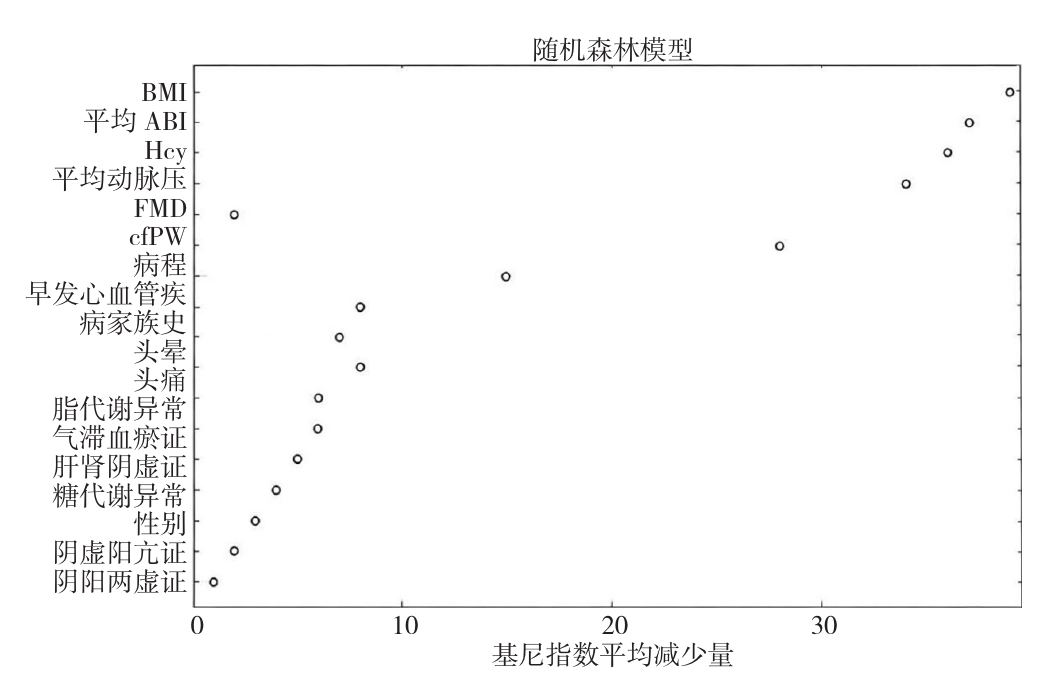
图1 随机森林模型中变量的重要度注:ABI=踝臂压指数,Hcy=血同型半胱氨酸,FMD=血流介导的血管舒张功能,cfPWV=颈股脉搏波传导速度。
Figure 1 Variable importance in random forest model
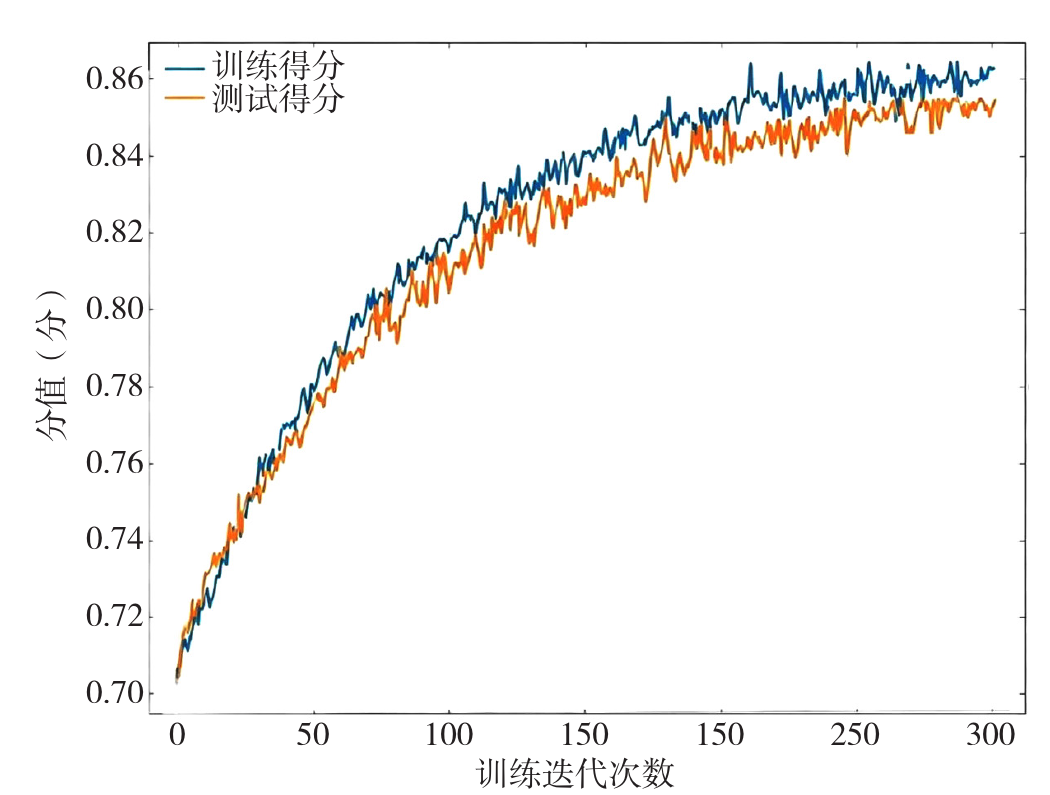
图2 AdaBoost算法迭代准确率
Figure 2 Iteration accuracy of AdaBoost algorithm
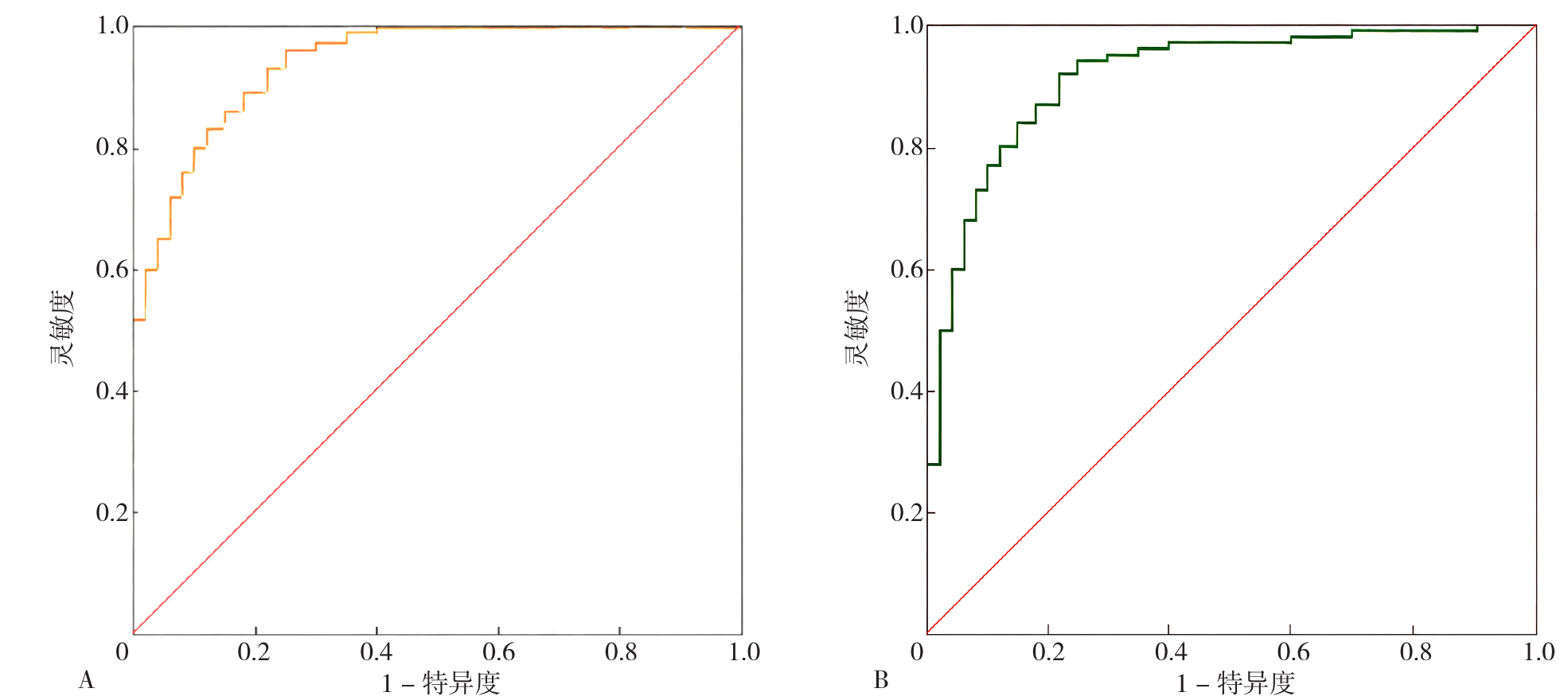
图3 AdaBoost组合分类器性能评估的ROC曲线注:A为训练集,B为测试集。
Figure 3 ROC curve for performance evaluation of AdaBoost ensemble classifier
| 模型 | 准确率(%) | 精准率(%) | 召回率(%) | F1值(%) |
|---|---|---|---|---|
| 随机森林 | 71.81 | 75.47 | 91.32 | 82.64 |
| AdaBoost组合分类器 | 85.57 | 91.02 | 92.09 | 91.55 |
表6 两种模型的评价指标
Table 6 Evaluation metrics for the two models
| 模型 | 准确率(%) | 精准率(%) | 召回率(%) | F1值(%) |
|---|---|---|---|---|
| 随机森林 | 71.81 | 75.47 | 91.32 | 82.64 |
| AdaBoost组合分类器 | 85.57 | 91.02 | 92.09 | 91.55 |
| [1] |
|
| [2] |
王丽颖, 韩学杰. 关于建立高血压前期人群高血压发病病证结合风险预测模型的思考[J]. 中医杂志, 2018, 59(6): 470-473.
|
| [3] |
中国高血压防治指南修订委员会, 高血压联盟(中国), 中华医学会心血管病学分会, 等. 中国高血压防治指南(2018年修订版)[J]. 中国心血管杂志, 2019, 24(1): 24-56. DOI: 10.3969/j.issn.1007-5410.2019.01.002.
|
| [4] |
中华中医药学会心血管分会. 高血压中医诊疗专家共识(2019版)[J]. 中国实验方剂学杂志, 2019, 25(15): 217-221. DOI: 10.13422/j.cnki.syfjx.20191521.
|
| [5] |
周仲瑛. 中医内科学[M]. 2版. 北京: 中国中医药出版社, 2007: 139-142, 411-412.
|
| [6] |
陈家旭, 邹小娟. 中医诊断学[M]. 2版. 北京: 人民卫生出版社, 2012: 38-45, 86-93.
|
| [7] |
李建平, 卢新政, 霍勇, 等. H型高血压诊断与治疗专家共识[J]. 中国医学前沿杂志:电子版, 2016, 8(5): 23-28, 6.
|
| [8] |
宋绮蕊, 蔡军. 人工智能及机器学习在心血管疾病中的应用[J]. 基础医学与临床, 2020, 40(5): 707-710.
|
| [9] |
苏文星, 张振一, 郑琰莉, 等. 基于集成学习的冠心病风险预测模型研究[J]. 智能计算机与应用, 2022, 12(7): 8-13, 19.
|
| [10] |
滕军燕. 缺血性心血管病风险评估模型的建立与研究[D]. 山东大学, 2017: 96-126.
|
| [11] |
|
| [12] |
|
| [13] |
|
| [14] |
张仲迎, 方向华, 吉训明, 等. 北京某社区1458名中老年居民血清同型半胱氨酸水平及影响因素分析[J]. 心脑血管病防治, 2017, 17(2): 133-137.
|
| [15] |
张仲迎, 高歌, 李莹, 等. 高血压合并高同型半胱氨酸与心脑血管病相关性的研究进展[J]. 中华高血压杂志, 2021, 29(7): 622-628.
|
| [16] |
|
| [17] |
|
| [18] |
林正奎, 唐焕玲, 鲁明羽, 等. 基于特征多视图提升Naive Bayesian的Boosting改进算法[J]. 北京交通大学学报, 2009, 33(6): 70-75.
|
| [19] |
李亚军, 刘晓霞, 陈平. 改进的AdaBoost算法与SVM的组合分类器[J]. 计算机工程与应用, 2008, 44(32): 140-142.
|
| [20] |
曹莹, 苗启广, 刘家辰, 等. AdaBoost算法研究进展与展望[J]. 自动化学报, 2013, 39(6): 745-758.
|
| [21] |
侯玉梅, 朱亚楠, 朱立春, 等. 决策树模型在2型糖尿病患病风险预测中的应用[J]. 中国卫生统计, 2016, 33(6): 976-978, 982.
|
| [22] |
于大海, 李金, 罗艳虹, 等. 随机森林模型和决策树模型在肝硬化上消化道出血预后中的应用[J]. 中国卫生统计, 2019, 36(2): 162-166.
|
| [23] |
翟夕阳, 王晓丹, 李睿, 等. 基于信息熵的RVM-AdaBoost组合分类器[J]. 计算机工程与应用, 2018, 54(5): 138-143.
|
| [1] | 刘帆, 陈秋雨, 李婧. 亚临床高风险人群夜间高血压筛查模型的构建与验证:一项单中心队列研究[J]. 中国全科医学, 2026, 29(15): 1998-2005. |
| [2] | 王斯曼, 张梦楚, 李文, 许艾, 徐璡, 郭睿, 燕海霞. 基于中医证候及脉图参数构建原发性高血压伴左心室肥厚风险预测模型研究[J]. 中国全科医学, 2026, 29(14): 1840-1848. |
| [3] | 胡嘉琦, 李端, 方昊, 樊兴颖, 杜薇, 周涵妮. 基于体检人群队列的高尿酸血症非遗传因素风险预测模型构建研究[J]. 中国全科医学, 2026, 29(10): 1324-1333. |
| [4] | 江晓蕊, 闫玉瑶, 卫靖靖, 乔利杰, 彭广操, 朱明军. 冠心病患者并发心力衰竭风险预测模型的系统评价[J]. 中国全科医学, 2026, 29(03): 393-402. |
| [5] | 代天顾, 何清, 高雪菲, 张高钰, 樊佳溶, 王子涵, 肖响, 李琳. 肱踝脉搏波传导速度和血清总胆固醇及N末端B型脑钠肽前体联合检测对原发性高血压患者发生冠心病的预测价值研究[J]. 中国全科医学, 2025, 28(32): 4061-4066. |
| [6] | 吕露露, 祝万洁, 肖明洋, 李祎珂, 张娟. 原发性高血压患者血压昼夜节律与血浆氧化的低密度脂蛋白/β2-糖蛋白I复合物及颈动脉粥样硬化的相关性研究[J]. 中国全科医学, 2025, 28(18): 2228-2233. |
| [7] | 马娟, 马盛宗, 燕茹, 马学平, 贾绍斌. C反应蛋白/白蛋白比值对2型糖尿病合并急性心肌梗死患者远期不良心脑血管事件的预测价值研究[J]. 中国全科医学, 2025, 28(06): 705-712. |
| [8] | 岳海涛, 何婵婵, 成羽攸, 张森诚, 吴悠, 马晶. 基于机器学习的冠心病风险预测模型构建与比较[J]. 中国全科医学, 2025, 28(04): 499-509. |
| [9] | 秦瑞丹, 张娟, 梁营营, 吕露露, 李祎珂. 原发性高血压患者血浆致动脉粥样硬化指数及血清脂蛋白相关磷脂酶A2水平与左心室肥厚的关系研究[J]. 中国全科医学, 2024, 27(27): 3359-3364. |
| [10] | 葛亚雪, 丁治国, 陈晓珩, 李会龙, 祁烁, 户蕊. 桥本甲状腺炎并发甲状腺毒症人群临床症状及证型分布规律研究[J]. 中国全科医学, 2024, 27(21): 2630-2638. |
| [11] | 谷珊珊, 许云, 付力, 王晶惠, 郭欣煜. 癌因性疲乏的中医证候特征及其与甲状腺功能水平的相关性研究[J]. 中国全科医学, 2024, 27(21): 2623-2629. |
| [12] | 高颖, 许欣宜, 刘洋, 杨晓琨. 基于中医体质的老年人动脉粥样硬化性心血管疾病预测模型的开发研究[J]. 中国全科医学, 2024, 27(15): 1878-1885. |
| [13] | 刘彩霞, 安婷婷, 刘静, 李向阳, 靳婕, 徐兰娟. IMPACT和CRASH模型对创伤性颅脑损伤患者预后评估价值的比较研究[J]. 中国全科医学, 2024, 27(15): 1843-1849. |
| [14] | 孙星河, 汪洋, 康俊萍, 刘小慧. 原发性高血压患者利用点尿钠估测24 h尿钠水平准确性的验证[J]. 中国全科医学, 2024, 27(06): 685-691. |
| [15] | 王珍, 申国旗, 李亚南, 朱英华, 仇航, 郑迪, 徐通达, 李文华. 急性心肌梗死患者行经皮冠状动脉介入治疗术后发生对比剂急性肾损伤风险预测模型的建立与验证研究[J]. 中国全科医学, 2023, 26(29): 3650-3656. |
| 阅读次数 | ||||||
|
全文 |
|
|||||
|
摘要 |
|
|||||