中国全科医学 ›› 2026, Vol. 29 ›› Issue (15): 1971-1977.DOI: 10.12114/j.issn.1007-9572.2023.0805

• 热点研究 • 上一篇    下一篇

效果导向的基本公共卫生服务综合评价指标体系在深圳市回顾性评价中的应用及启示

张思琪1, 陈营1, 陈雪晖1, 王奕婧2, 李梦宇1, 刘璐1, 刘刚2,*(), 尤莉莉1,*()   

  1. 1.100005 北京市,中国医学科学院 北京协和医学院 卫生健康管理政策学院
    2.518073 广东省深圳市疾病预防控制中心业务管理科
  • 收稿日期:2023-10-10 修回日期:2024-06-30 出版日期:2026-05-20 发布日期:2026-04-14
  • 通讯作者: 刘刚, 尤莉莉

  • 作者贡献:

    张思琪负责研究的设计、实施,撰写论文;陈营负责图表的绘制,文章的整理和修订;陈雪晖负责数据的清洗、整理和核对,进行论文的修订;王奕婧负责数据的收集和质量控制;李梦宇负责数据的收集和整理;刘璐负责图表绘制和论文的修订;刘刚提出研究的思路,提供数据并控制质量;尤莉莉负责研究的设计,负责文章的质量控制和监督管理,对文章整体负责。

  • 基金资助:
    美国中华医学会基金项目(CMB18-296); 深圳市"医疗卫生三为工程"项目资助(SZSM202011008)

Application and Implications of the Effect-oriented Comprehensive Evaluation Indicator System for the Retrospective Evaluation of National Essential Public Health Services in Shenzhen

ZHANG Siqi1, CHEN Ying1, CHEN Xuehui1, WANG Yijing2, LI Mengyu1, LIU Lu1, LIU Gang2,*(), YOU Lili1,*()   

  1. 1. School of Health Policy and Management, Chinese Academy of Medical Sciences/Peking Union Medical College, Beijing 100005, China
    2. Business Management Section, Shenzhen Center for Disease Control and Prevention, Shenzhen 518073, China
  • Received:2023-10-10 Revised:2024-06-30 Published:2026-05-20 Online:2026-04-14
  • Contact: LIU Gang, YOU Lili

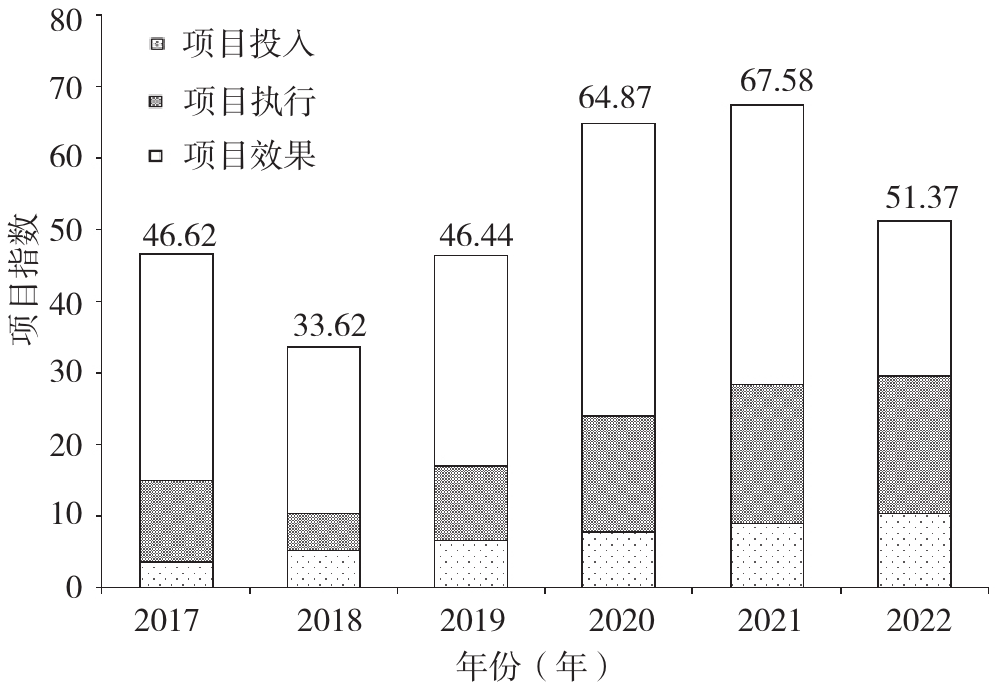
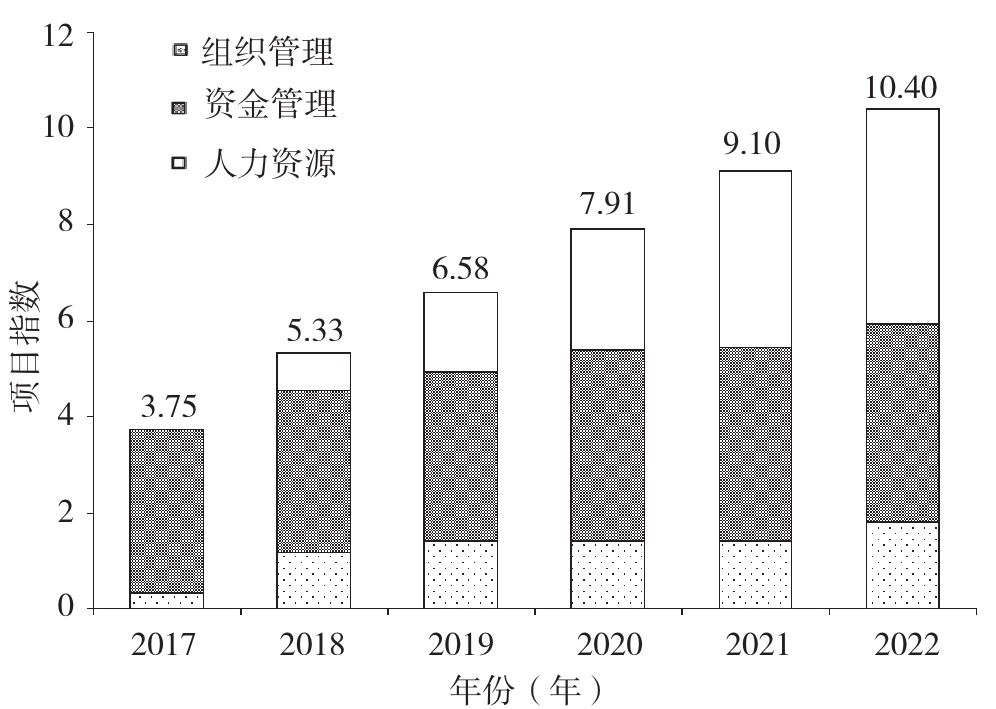
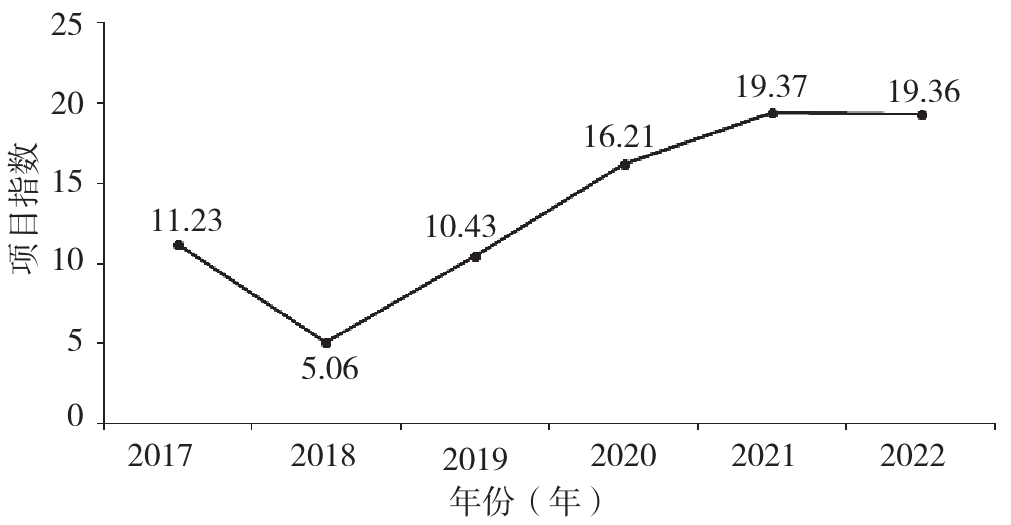
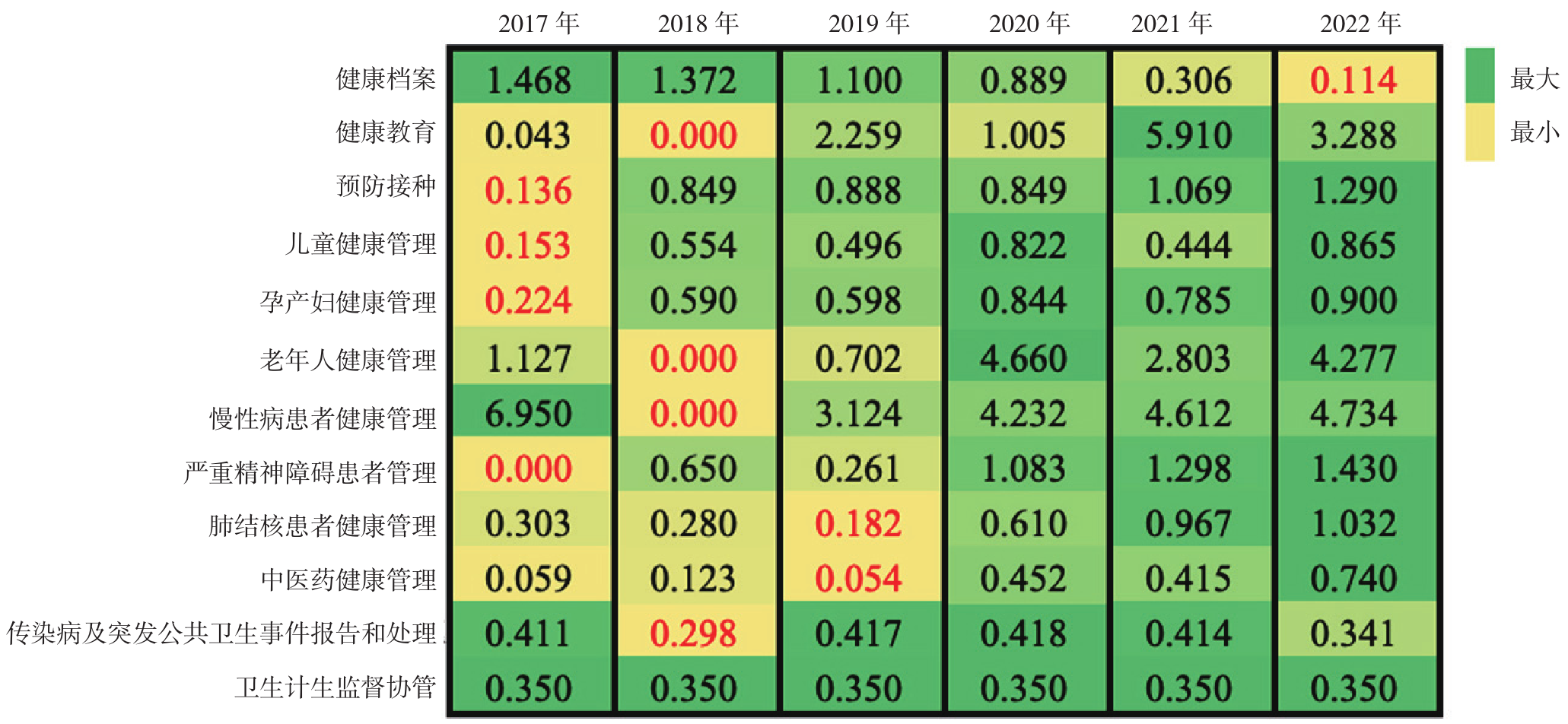
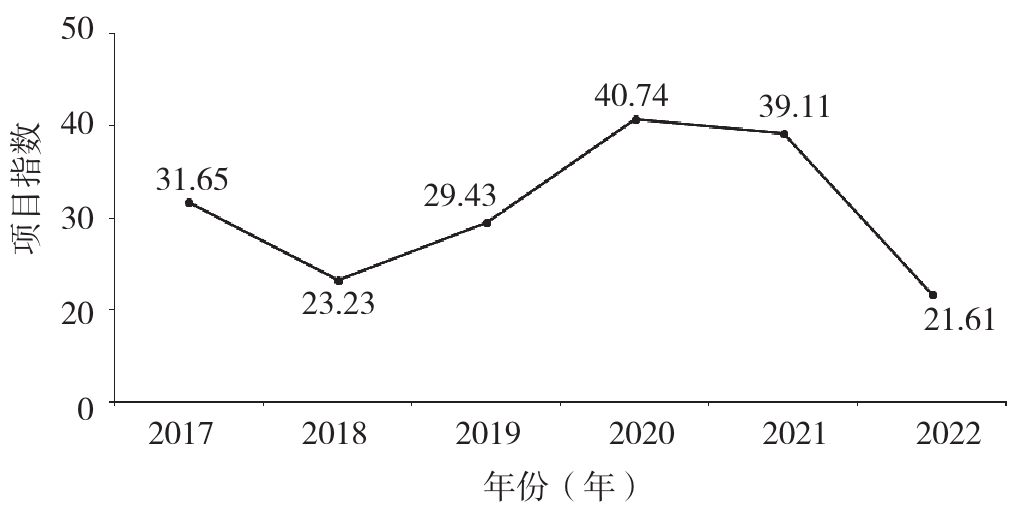
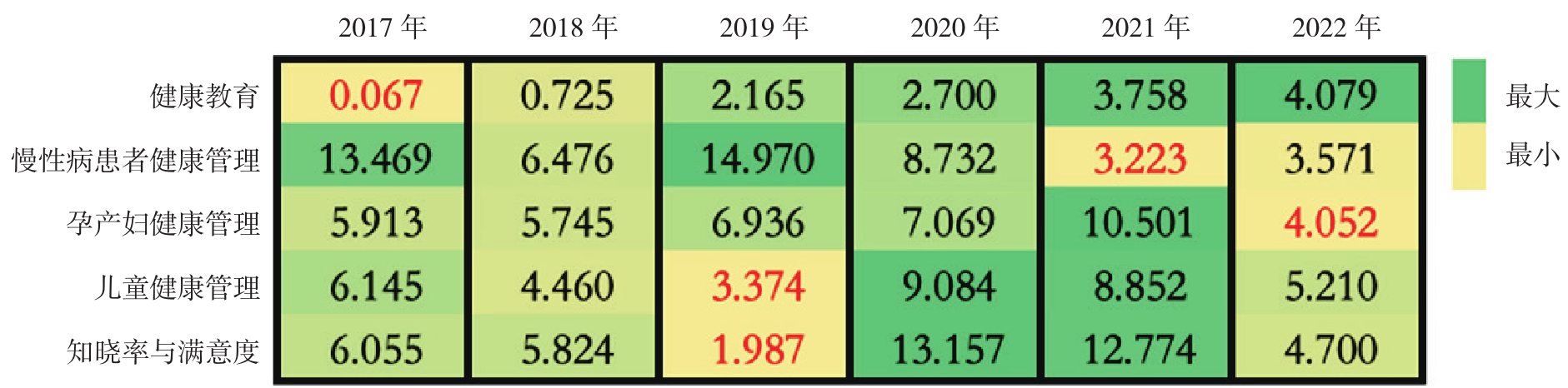
摘要: 背景 为了推进国家基本公共卫生服务考核评估从过程到结果的转变,课题组前期从理论上构建了"效果导向的基本公共卫生服务综合评价指标体系",但该指标体系实践应用尚不充分。 目的 为了进一步完善该指标体系的实践应用,本研究利用该指标体系对深圳市2017—2022年基本公共卫生服务实施效果进行回顾性评价。 方法 于2022年7月—2023年4月通过文献资料法、函调法收集指标数据,采用综合指数法,计算2017—2022年深圳市基本公共卫生服务综合指数及各维度指数。 结果 指标体系中有54个指标,本研究共收集49个,完成率为91.8%。2017—2022年,深圳市基本公共卫生服务综合指数从46.62增加至51.37,项目投入指数从3.75增加至10.40,项目执行指数从11.23增加至19.36,项目效果指数从31.65降低至21.61。单从各子项目的效果指数来看,健康教育效果指数有较大增幅,从2017年的0.067增加至2022年的4.079;慢性病患者健康管理效果指数从2017年的13.469降低至2022年的3.571,最低为3.223(2021年),最高为14.970(2019年),儿童健康管理、知晓率与满意度效果指数最低值分别为3.374、1.987,均出现在2019年。孕产妇健康管理效果指数最低值为4.052(2022年)。 结论 以效果为导向的基本公共卫生综合评价指标体系应用于评价市级层面基本公共卫生服务具有一定的可行性和科学性,但部分反映人群健康危险因素及健康状况的指标还存在可获得性低的问题。信息化全量考核能解决数据虚报的问题,提高项目的督导效率。但在服务覆盖率趋近饱和的情况下,其促进作用是有限的,未来基本公共卫生服务应该以提高服务质量、增进人群健康效益为目标,特别要以知晓率与满意度为重点,不断提升居民的获得感。

关键词: 公共卫生管理, 国家基本公共卫生服务项目, 评价研究, 综合指数法

Abstract:

Background

In order to promote the change from process to result in the assessment and evaluation of National Essential Public Health Services, the group has theoretically constructed an "effect-oriented comprehensive evaluation index system of essential public health services", but the practical application of this index system is still insufficient.

Objective

In order to improve the pratical application of this indicator system, this study uses the index system to retrospectively evaluate the implementation effect of basic public health services in Shenzhen from 2017 to 2022.

Methods

From 2022 to 2023, indicator data were collected through the literature method and the correspondence method, and the comprehensive index method was used to calculate the comprehensive index of basic public health services in Shenzhen and the index of each dimension from 2017 to 2022.

Results

Of the 54 indicators in the indicator system, 49 were collected, with a completion rate of 91.8%. From 2017 to 2022, the comprehensive index of essential public health services in Shenzhen increased from 46.62 to 51.37, and the investment index increased from 3.75 to 10.40, and the execution index increased from 11.23 to 19.36, and the effect index decreased from 31.65 to 21.61. Looking at the effectiveness indices of the sub-projects alone, there was a large increase in the effectiveness index of health education, from 0.067 in 2017 to 4.079 in 2022; the effectiveness index of health management of patients with chronic diseases decreased from 13.469 in 2017 to 3.571 in 2022, with a minimum of 3.223 (2021) and a maximum of 14.970 (2019), the lowest values of child health management, knowledge and satisfaction effectiveness index were 3.374 and 1.987 respectively, both occurring in 2019. The lowest value of maternal health management effect index was 4.052 in 2022.

Conclusion

The application of the effect-oriented basic public health comprehensive evaluation index system to evaluate the basic public health services at the municipal level has certain feasibility and scientificity, but some of the indicators reflecting the population's health risk factors and health status still have the problem of low availability. The information-based full-quantity appraisal can solve the problem of data misreporting and improve the efficiency of project supervision. However, with service coverage nearing saturation, its facilitating effect is limited. In the future, the essential public health services should aim to improve service quality and enhance the health benefits of the population, with a particular focus on awareness and satisfaction, to continually improve the sense of access for residents.

Key words: Public health administration, National Essential Public Health Service Programme, Evaluation study, Comprehensive index method

中图分类号: