中国全科医学 ›› 2026, Vol. 29 ›› Issue (34): 5010-5021.DOI: 10.12114/j.issn.1007-9572.2025.0591

• 中国深化医改十五年专题系列研究报告(四) • 上一篇    

中国基层临床实践指南十五年发展现状、挑战与对策建议

葛龙1,2,3,*(), 叶紫莹1, 陈耀龙2,3,4   

  1. 1.730000 甘肃省兰州市,兰州大学公共卫生学院卫生政策与管理学系
    2.730000 甘肃省兰州市,甘肃省循证医学重点实验室
    3.730000 甘肃省兰州市,世界卫生组织指南实施与知识转化合作中心
    4.730000 甘肃省兰州市,兰州大学基础医学院循证医学中心
  • 收稿日期:2025-11-03 修回日期:2026-08-31 出版日期:2026-12-05 发布日期:2026-10-26
  • 通讯作者: 葛龙

  • 作者贡献:

    葛龙负责论文选题;叶紫莹负责数据提取、整理与分析;葛龙、叶紫莹负责论文初稿撰写;葛龙、陈耀龙负责研究方案设计、研究团队组建、文章撰写过程的质量控制。

The Current Status, Challenges, and Development Strategies of Primary Care Clinical Practice Guidelines in China over the Past Fifteen Years

GE Long1,2,3,*(), YE Ziying1, CHEN Yaolong2,3,4   

  1. 1. Department of Health Policy and Management, School of Public Health, Lanzhou University, Lanzhou 730000, China
    2. Key Laboratory of Evidence Based Medicine of Gansu Province, Lanzhou 730000, China
    3. WHO Collaborating Centre for Guideline Implementation and Knowledge Translation, Lanzhou 730000, China
    4. Evidence-Based Medicine Center, School of Basic Medical Sciences, Lanzhou University, Lanzhou 730000, China
  • Received:2025-11-03 Revised:2026-08-31 Published:2026-12-05 Online:2026-10-26
  • Contact: GE Long

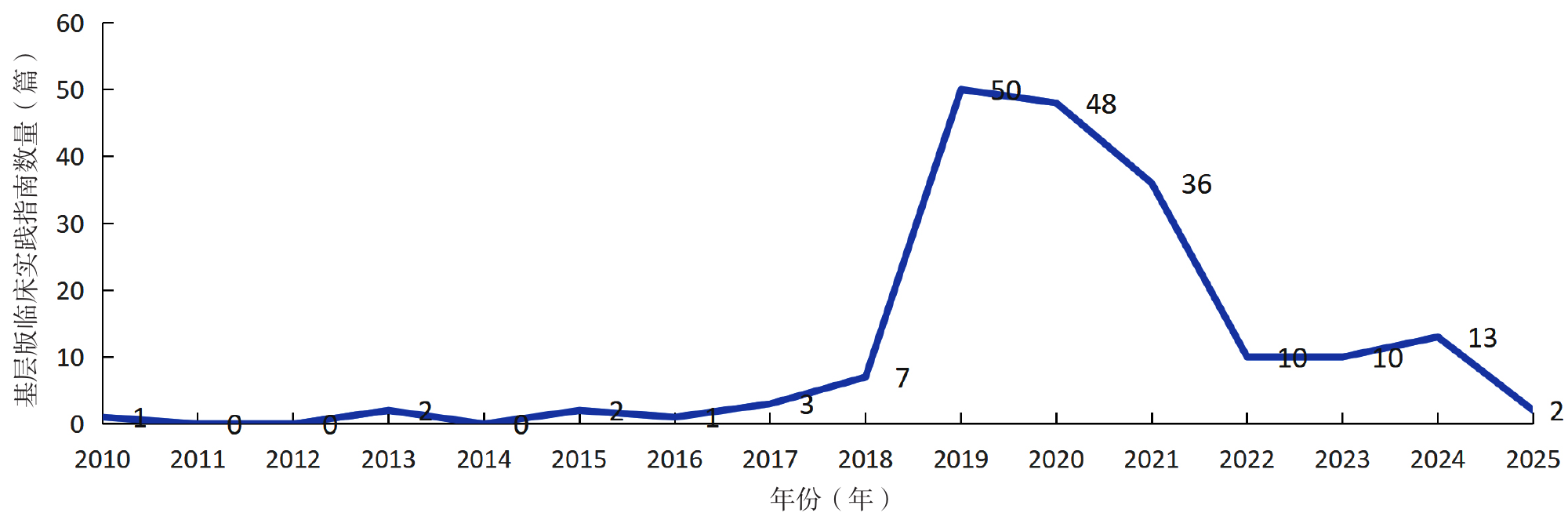
摘要: 背景 基层临床实践指南(以下简称指南)是通过提供循证的临床建议,促进基层医务人员诊疗服务的最佳实践,旨在提升临床服务质量,保证患者安全。十五年来我国基层指南的开发迅速,已覆盖多种基层常见病和多发病,但其在制订质量、病种覆盖、临床适用性及实施支持等方面仍存在改进空间,亟须开展系统梳理与综合评估。 目的 综合评估近十五年来我国基层指南的制订与实施现状,深入探讨其在功能定位、病种覆盖及临床适用性等维度的现存问题与挑战,并结合德尔菲专家共识法,构建其高质量发展对策,为今后优化基层指南的制订与实施提供参考。 方法 以"基层医疗服务""初级卫生保健"等为主题词,系统检索中文数据库自建库至2025年4月发布的基层指南,由2名研究员独立筛选文献并提取数据,分歧由第三方讨论解决。采用Excel 2021提取指南的发表年份、期刊及疾病名称等基本信息;通过系统整合中国临床实践指南评价体系(AGREE-China)、临床实践指南科学性、透明性和适用性的评级工具(STAR)及指南临床适用性评价工具等,构建了一套包含4个维度和31个条目的指南综合评价工具,对基层指南的制订现状、临床适用性等进行全面评价。在此基础上,团队起草中国基层指南高质量发展对策建议初稿,并邀请多学科专家开展两轮专家函询,形成基层指南高质量发展的对策建议。 结果 本研究纳入185篇基层指南,其发布数量随年份呈增长趋势,于2019年达到峰值(50篇)。指南制订主体呈现集中化特征,中华医学会占43.2%(32/74)。覆盖86种疾病,以消化系统、心血管系统和皮肤疾病为主(48种,55.8%)。指南制订流程中,临床问题提出与选择方法较合理(128篇,69.2%),但计划书撰写及公开获取率低、方法学专家参与率较低、基层临床医生参与度不足、缺乏共同设计。内容规范性方面,证据检索、质量评估、共识形成等关键环节科学性欠佳(19篇,10.3%)。推荐意见形成和实施方面,GRADE方法应用率低(20篇,10.8%),共识透明度、经济学评价及实施效果评估和反馈机制均较低。临床适用性方面,推荐意见明晰性、可操作性较高(156篇,84.3%),发布渠道多元且免费获取可能性达100.0%,但对实施障碍及促进因素的分析较弱(80篇,43.2%)。综合评价结果,现有指南存在以下问题:(1)指南制订流程与基层实际脱节。例如未充分纳入基层医务人员和患者的意见,导致指南内容未能契合基层服务覆盖广、医患关系长期稳定等。(2)主题覆盖与基层需求不匹配。虽然目前指南覆盖病种数量显著增加,但对《乡镇卫生院服务能力标准(2022版)》要求的基层常见病覆盖率较低,仅达20.6%,难以满足基层实际需求。(3)科学性与实用性不足。部分指南未采用严格的循证方法,证据级别和推荐强度表述模糊,且仅少数指南包含更新计划,难以适应基层医疗环境的动态变化。(4)推广与培训资源不足。基层医务人员对指南的知晓率和接受度较低,缺乏针对性的培训支持,影响了基层指南的实际应用效果。(5)基层特色体现不足。部分指南内容未能充分涵盖患者教育、健康管理、疾病预防等基层核心职能,推荐意见未能有效结合基层医疗低成本、广覆盖的特点。这些问题凸显了基层指南在制订、推广和实施过程中亟须系统性优化,以更好地满足基层医疗的实际需求。通过两轮德尔菲专家共识,形成了6个核心维度、24个一级条目和58个二级条目的"中国基层指南高质量发展清单",6个核心维度包括:(1)提升指南制订的严谨性;(2)增强指南的临床适用性;(3)突出指南推荐意见的基层特色;(4)提高基层医生指南应用能力;(5)加大卫生行政部门财政投入与政策支持;(6)优化基层指南实施环境。 结论 本研究紧密结合基层医疗卫生机构及基层指南发展的实际需求,以科学性、系统性和可操作性为原则,从指南制订、传播与实施的全流程出发,提出了涵盖6大领域的系统性对策建议,旨在推动我国基层指南向规范化、科学化方向发展,为全面提升基层医疗服务质量提供有力支撑和坚实保障。

关键词: 指南, 初级卫生保健, 全科医生, 临床适应性, 德尔菲法, 实施性研究综合框架

Abstract:

Background

Primary care clinical practice guidelines provide evidence-based recommendations, support best practice in diagnosis and treatment at the primary care level, improve clinical service quality, and promote patient safety. Over the past 15 years, the development of primary care clinical guidelines in China has been rapid, and many common and frequently occurring diseases in primary care have been covered. However, there is still room for improvement in guideline quality, disease coverage, clinical applicability, and implementation support. A systematic review and comprehensive evaluation are therefore needed.

Objective

To comprehensively assess the current status of the development and implementation of primary care clinical guidelines in China over the past 15 years, identify the main problems and challenges in guideline positioning, disease coverage, and clinical applicability, and develop strategies for high-quality development based on Delphi expert consensus.

Methods

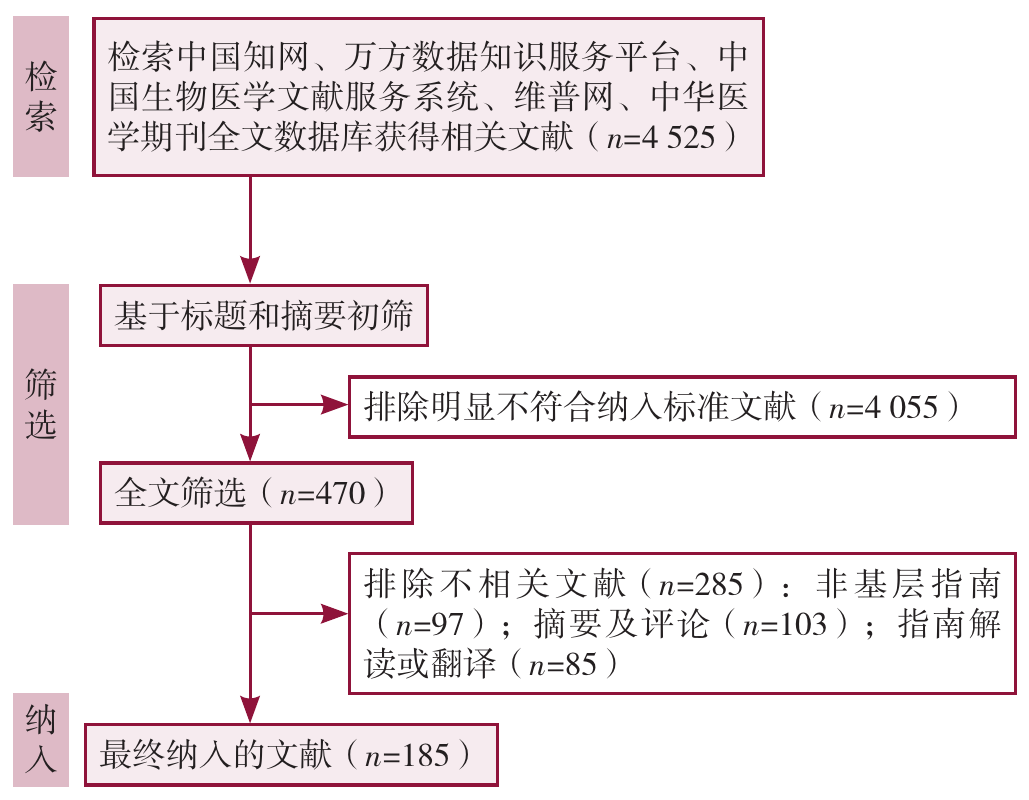
Chinese databases were systematically searched for primary care clinical guidelines published from database inception to April 2025 using terms such as "primary care services" and "primary health care". Two researchers independently screened the literature and extracted data, and disagreements were resolved by discussion with a third researcher. Basic information, including publication year, journal, and disease name, was extracted using Excel 2021. A comprehensive evaluation tool with 4 domains and 31 items was developed by integrating the Appraisal of Guidelines for Research and Evaluation in China (AGREE-China), the Scientificity-Transparency Applicability-Rankings (STAR), and a clinical applicability assessment tool. This tool was used to evaluate the development status and clinical applicability of the guidelines. Based on the results, a preliminary list of strategies for high-quality development was drafted and refined through two rounds of Delphi expert consultation.

Results

A total of 185 primary care clinical guidelines were included; the number of published guidelines increased over time and reached a peak of 50 in 2019. Guideline development was relatively concentrated, with the Chinese Medical Association accounting for 43.2% (32/74) of the development groups. The guidelines covered 86 diseases, mainly digestive, cardiovascular, and skin diseases (48, 55.8%). In the development process, the formulation and selection of clinical questions were relatively reasonable (128, 69.2%), but the rate of protocol development and public availability was low, methodologist participation was low, involvement of primary care clinicians was insufficient, and co-design was lacking. In terms of content quality, key steps such as evidence retrieval, quality assessment, and consensus formation were poorly performed (19, 10.3%). In terms of recommendation development and implementation, the use of the GRADE approach was low (20, 10.8%), and consensus transparency, economic evaluation, and implementation evaluation and feedback mechanisms were all limited. In terms of clinical applicability, recommendations were generally clear and operable (156, 84.3%), dissemination channels were diverse, and free access was possible for 100.0% of the guidelines; however, analysis of implementation barriers and facilitators was weak (80, 43.2%). Based on the comprehensive evaluation, the existing guidelines have the following issues: (1) the guideline development process was disconnected from primary care practice: for example, the opinions of primary care practitioners and patients were not fully incorporated, so that guideline content failed to match the characteristics of primary care services, such as broad coverage and long-term stable doctor–patient relationships; (2) disease coverage did not match primary care needs: although the range of diseases covered by the guidelines had increased substantially, the coverage of common primary care diseases required by the Service Capacity Standard for Township Health Centers (2022 edition) was still low, only 20.6%, making it difficult to meet the actual needs of primary care; (3) scientific rigor and practicality were insufficient: some guidelines did not adopt rigorous evidence-based methods, the levels of evidence and strengths of recommendations were described ambiguously, and only a few guidelines contained update plans, making it difficult to adapt to the dynamic changes in the primary care environment; (4) promotion and training resources were insufficient: the awareness and acceptance of guidelines among primary care practitioners were low, and targeted training support was lacking, which impaired the practical application of primary care guidelines; and (5) primary care characteristics were insufficiently reflected: some guidelines did not adequately cover core primary care functions such as patient education, health management, and disease prevention, and their recommendations were not effectively combined with the low-cost, broad-coverage characteristics of primary care. These problems highlighted the urgent need for systematic optimization of primary care guidelines in their development, dissemination, and implementation to better meet the actual needs of primary care. Through two rounds of Delphi expert consultation, a "checklist for high-quality development of primary care clinical guidelines in China" was developed, comprising 6 core domains, 24 first-level items, and 58 second-level items. The 6 core domains were: (1) improving the rigor of guideline development; (2) enhancing the clinical applicability of guidelines; (3) highlighting the primary care characteristics of recommendations; (4) improving the guideline-use capacity of primary care physicians; (5) increasing government financial input and policy support; and (6) optimizing the implementation environment of primary care guidelines.

Conclusion

Primary care clinical guidelines in China have developed rapidly in number and scope over the past 15 years, but important gaps remain in methodological quality, disease coverage, clinical applicability, and implementation support. This study developed a systematic checklist for high-quality development, which may provide useful support for the future development, dissemination, and implementation of primary care clinical guidelines in China.

Key words: Guidebook, Primary health care, General practitioners, Clinical applicability, Delphi method, Consolidated Framework for Implementation Research