中国全科医学 ›› 2026, Vol. 29 ›› Issue (10): 1286-1293.DOI: 10.12114/j.issn.1007-9572.2024.0668
所属专题: 内分泌代谢性疾病最新文章合辑; 社区卫生服务最新研究合辑; 基本医疗服务功能特征研究最新文章合辑
王琪1, 高欣怡2, 袁蓓蓓2,*( )
)
收稿日期:2025-01-27
修回日期:2025-05-12
出版日期:2026-04-05
发布日期:2026-03-25
通讯作者:
袁蓓蓓
作者贡献:
王琪、袁蓓蓓负责文章的构思与设计、研究资料的收集与整理、论文撰写;高欣怡协助部分研究资料的收集与整理;袁蓓蓓负责论文修订、文章的质量控制及审校、对文章整体负责,监督管理;王琪、高欣怡负责表格的编辑、整理。
基金资助:
WANG Qi1, GAO Xinyi2, YUAN Beibei2,*()
Received:2025-01-27
Revised:2025-05-12
Published:2026-04-05
Online:2026-03-25
Contact:
YUAN Beibei
摘要: 背景 糖尿病已成为全球重要的公共卫生问题,中国糖尿病患病率逐年上升,成为卫生体系资源的重要消耗者。基层医疗卫生体系在糖尿病管理中发挥着关键作用,但目前我国基层卫生服务在糖尿病管理的质量提升和血糖控制方面仍存在不足。 目的 制定政策简报,探讨应用于基层医疗服务提供者并有实证依据支持的2型糖尿病管理服务质量改进干预措施,为政策和实践提供参考。 方法 2024年7—12月通过系统检索PubMed、Epistemonikos和Health System Evidence数据库,筛选近10年的相关系统评价文献,纳入国际已应用的、针对基层医疗卫生机构2型糖尿病管理的质量改进措施,并对应分析其在中国应用的效果。 结果 共纳入33项符合研究质量标准的系统评价及22项中国地区已经应用的原始研究。干预内容分析中使用慢性病管理模式将所有干预分为6个关键策略:以高质量为导向的卫生服务组织综合干预、社区资源链接、自我管理支持、服务提供方式设计、决策支持、信息系统。在糖尿病管理最直接健康结局指标"血糖控制水平"上,两类干预的研究均显示促进作用,包括:以提高质量为导向"优化服务组织"的综合干预、"提供自我管理支持";其他干预的评价效果存在不一致或者缺乏证据等问题。中国研究应用并验证了4类干预策略对血糖控制的正向作用,但"加强社区资源链接""增强决策支持"这两类干预策略在中国还欠缺证据。 结论 该政策简报总结了基层医疗卫生体系在糖尿病管理中的有效干预策略,结合当前最高质量证据的评价结果和我国应用的效果,建议重点推广和应用两类干预策略:(1)以高质量为导向、全系统综合慢性病管理模式;(2)在无法全系统启动整合慢性病管理模式的地区可优先推行患者自我管理支持的相关干预。此外,也建议逐步拓展多部门合作、探索更多"加强社区资源链接"领域的做法;同时,需要对基层医疗卫生机构的医务人员提供更多直接的、可操作的工作指南。
中图分类号:
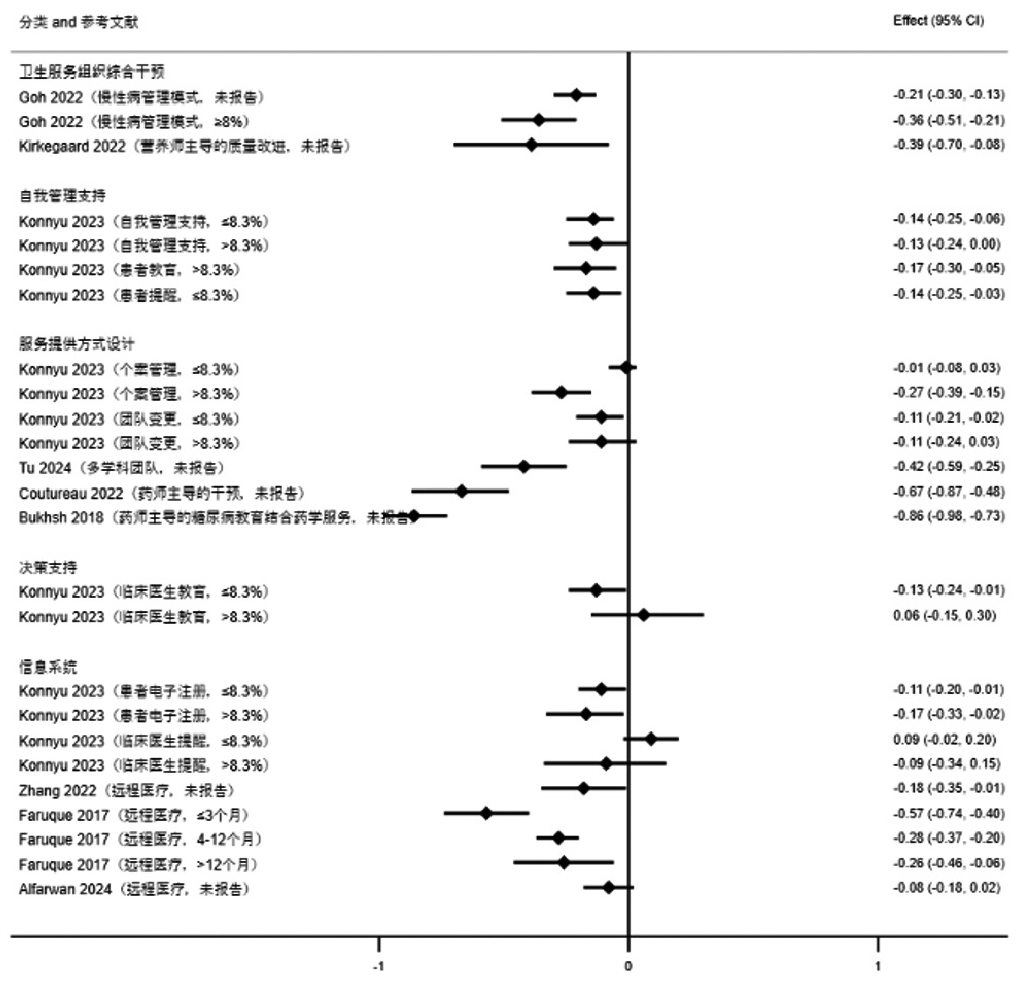
图1 系统评价中不同干预措施在HbA1c结局上的效果汇总注:HbA1c=糖化血红蛋白。
Figure 1 Summary of the effects of different interventions on HbA1c outcomes in systematic reviews
| 关键要素 | 定义或描述 | 特征 | 具体干预措施举例 |
|---|---|---|---|
| 以高质量为导向的卫生服务组织综合干预 | 卫生服务体系所有提供者形成以质量为导向的文化,提供安全和高质量的服务 | (1)决策和领导层的支持;(2)推行系统的改进质量策略;(3)鼓励公开且系统地处理错误和质量问题;(4)基于服务质量提供激励措施;(5)制订促进组织间服务协调的协议或机制 | 系统和提供组织层面的干预措施,包括单项质量改进实践、综合慢性病管理模式的采纳、提高服务绩效相关的激励措施 |
| 社区资源链接 | 动员社区资源并制定政策,以支持卫生体系,帮助慢性病患者维持健康生活方式并保持积极性 | (1)鼓励患者参与有效的社区项目;(2)与社区组织合作,支持和开发填补服务需求缺口的干预措施;(3)提倡改善患者卫生服务的政策 | 社区参与;社区支持 |
| 自我管理支持 | 赋能患者,帮助其有效管理自身健康 | (1)强调患者在健康管理中的核心角色;(2)使用有效的自我管理支持策略,包括评估、目标设定、行动计划、问题解决、监测设备和后续跟进;(3)整合组织内部和社区资源以向患者提供持续的自我管理支持 | 传播和培训自我管理方法;患者健康知识教育;为患者行为改变提供能力、设备和动力支持 |
| 服务提供方式设计 | 确保卫生服务提供过程中的有效和高质量 | (1)定期、主动随访患者,将患者的健康目标纳入管理计划,并由卫生系统提供方统筹管理资源;(2)患者管理通常由多名团队成员共同完成,各团队成员有明确的角色、技能和任务分工;(3)优化服务流程设计以更好地实施基于证据的服务项目;(4)为复杂患者提供个案管理服务;(5)服务管理团队的定期随访;(6)提供患者能够理解并符合其文化背景的服务 | 多学科团队;个案管理;文化适用性干预 |
| 决策支持 | 提供指南促进循证有效且符合患者偏好的服务 | (1)临床医生可以方便地获取最新的慢性病管理循证指南;(2)持续对临床医生进行教育推广以加强这些标准的应用;(3)将循证指南嵌入日常临床实践中;(4)与患者共享循证指南和信息以鼓励其参与;(5)采用经过验证的医务人员教育方法;(6)整合专科服务与初级保健 | 卫生提供者的教育与培训;临床指南 |
| 信息系统 | 利用数据和智能工具以促进高效和有效的服务 | (1)信息系统为医生提供慢性病患者的全面清单(如健康档案或注册表),以便监测患者健康状况并减少并发症;(2)为提供者和患者提供及时的提醒;(3)识别高风险人群以实施主动服务;(4)支持个体化患者服务计划的制订;(5)患者和提供者共享信息以协调各项服务;(6)监测实践团队和服务提供系统的绩效 | 电子健康记录或注册;医务工作者提醒;患者提醒;远程或移动医疗 |
表1 慢性病管理模式(CCM)框架
Table 1 Chronic Care Model(CCM)framework
| 关键要素 | 定义或描述 | 特征 | 具体干预措施举例 |
|---|---|---|---|
| 以高质量为导向的卫生服务组织综合干预 | 卫生服务体系所有提供者形成以质量为导向的文化,提供安全和高质量的服务 | (1)决策和领导层的支持;(2)推行系统的改进质量策略;(3)鼓励公开且系统地处理错误和质量问题;(4)基于服务质量提供激励措施;(5)制订促进组织间服务协调的协议或机制 | 系统和提供组织层面的干预措施,包括单项质量改进实践、综合慢性病管理模式的采纳、提高服务绩效相关的激励措施 |
| 社区资源链接 | 动员社区资源并制定政策,以支持卫生体系,帮助慢性病患者维持健康生活方式并保持积极性 | (1)鼓励患者参与有效的社区项目;(2)与社区组织合作,支持和开发填补服务需求缺口的干预措施;(3)提倡改善患者卫生服务的政策 | 社区参与;社区支持 |
| 自我管理支持 | 赋能患者,帮助其有效管理自身健康 | (1)强调患者在健康管理中的核心角色;(2)使用有效的自我管理支持策略,包括评估、目标设定、行动计划、问题解决、监测设备和后续跟进;(3)整合组织内部和社区资源以向患者提供持续的自我管理支持 | 传播和培训自我管理方法;患者健康知识教育;为患者行为改变提供能力、设备和动力支持 |
| 服务提供方式设计 | 确保卫生服务提供过程中的有效和高质量 | (1)定期、主动随访患者,将患者的健康目标纳入管理计划,并由卫生系统提供方统筹管理资源;(2)患者管理通常由多名团队成员共同完成,各团队成员有明确的角色、技能和任务分工;(3)优化服务流程设计以更好地实施基于证据的服务项目;(4)为复杂患者提供个案管理服务;(5)服务管理团队的定期随访;(6)提供患者能够理解并符合其文化背景的服务 | 多学科团队;个案管理;文化适用性干预 |
| 决策支持 | 提供指南促进循证有效且符合患者偏好的服务 | (1)临床医生可以方便地获取最新的慢性病管理循证指南;(2)持续对临床医生进行教育推广以加强这些标准的应用;(3)将循证指南嵌入日常临床实践中;(4)与患者共享循证指南和信息以鼓励其参与;(5)采用经过验证的医务人员教育方法;(6)整合专科服务与初级保健 | 卫生提供者的教育与培训;临床指南 |
| 信息系统 | 利用数据和智能工具以促进高效和有效的服务 | (1)信息系统为医生提供慢性病患者的全面清单(如健康档案或注册表),以便监测患者健康状况并减少并发症;(2)为提供者和患者提供及时的提醒;(3)识别高风险人群以实施主动服务;(4)支持个体化患者服务计划的制订;(5)患者和提供者共享信息以协调各项服务;(6)监测实践团队和服务提供系统的绩效 | 电子健康记录或注册;医务工作者提醒;患者提醒;远程或移动医疗 |
| 策略类别 | 干预措施 | 中国研究 | 主要结果 |
|---|---|---|---|
| 以高质量为导向的卫生服务体系的组织综合干预 | 慢性病管理模式 | KONG等[ | 改善患者饮酒习惯(OR=0.07)、体力活动(OR=2.92)和饮食习惯(OR=4.30),降低HbA1c(P<0.001),提高生活质量 |
| 强化多因素干预 | YANG等[ | 降低大血管疾病发生率(P<0.05) | |
| 综合管理模式 | SUN等[ | 降低12周和24周HbA1c(均P<0.001),改善空腹血糖、胰岛素水平、血压及体质量管理(均P<0.05) | |
| CHAO等[ | 改善健康知识、心理健康、饮食和体力活动,降低空腹血糖水平,减少住院天数 | ||
| CHAN等[ | 改善血压(P=0.02)和HbA1c(P<0.01) | ||
| 自我管理支持 | 基于"糖尿病对话地图"的教育 | LI等[ | 降低6个月时的糖尿病困扰评分,降低3个月时的HbA1c(P<0.05) |
| 基于奖励的任务设定教育策略 | GUO等[ | 降低HbA1c(-0.97%),提高自我管理能力,减少医疗费用(约159元) | |
| 足部管理教育计划 | LIANG等[ | 提高足部管理知识和行为评分,降低HbA1c、足溃疡发生率和截肢率 | |
| 健康教练主导的干预 | BROWNING等[ | 降低心理压力(P=0.039)和收缩压(P=0.005) | |
| 小组访问模式 | LIU等[ | 增加每周有氧运动时间(约40 min,P=0.001),提高糖尿病管理自我效能评分(平均增加0.71分,P=0.02) | |
| 家庭合作干预服务 | KANG等[ | 提高家庭支持行为评分(P=0.031)和患者的糖尿病知识和态度(P<0.05),但没有降低HbA1c(P=0.46)和血脂(P>0.05) | |
| 服务提供方式设计:个案管理 | 个案管理 | YUAN等[ | 降低6个月内HbA1c(P=0.034),提高24个月时HbA1c≤7.0%的患者比例(P=0.035) |
| 个案管理结合模拟教育 | JI等[ | 改善6个月内HbA1c、空腹血糖和餐后血糖(均P<0.05),提升健康饮食和自我监测行为评分(P<0.001) | |
| 服务提供方式设计:药师或营养师主导的管理服务 | 药师管理服务 | CHAN等[ | 降低冠心病(P=0.013)和卒中风险(P=0.002),改善HbA1c(P<0.001)和低密度脂蛋白(P=0.026),提高患者药物依从性(P<0.001) |
| SHAO等[ | 改善空腹血糖、HbA1c和总胆固醇水平,提高HbA1c和血压的目标达成率(均P<0.05) | ||
| 注册营养师主导的管理 | HUANG等[ | 改善HbA1c(P=0.034)和空腹血糖(P=0.007),减少能量(P<0.001)和碳水化合物摄入(P<0.001) | |
| 信息系统:数字技术干预 | 移动应用程序 | ZHOU等[ | 降低HbA1c(P<0.001),改善患者血糖自我监测、糖尿病知识、自我管理行为,提高患者满意度 |
| YU等[ | 提高24周时HbA1c<7%的患者比例(P<0.05) | ||
| SUN等[ | 降低3个月时的餐后血糖(P<0.05),6个月时餐后血糖和HbA1c(均P<0.05) | ||
| CHAO等[ | 降低HbA1c(P=0.002),改善健康知识和行为 | ||
| 远程医疗干预 | ZHOU等[ | 降低HbA1c和空腹血糖(P<0.05),降低低血糖风险(P=0.044) | |
| 电话同伴支持 | CHAN等[ | 未能改善代谢风险或心理健康状况 | |
| 社区资源链接 | 无研究报告 | 无研究报告 | 无研究报告 |
| 决策支持 | 无研究报告 | 无研究报告 | 无研究报告 |
表2 中国地区2型糖尿病干预措施及其主要结果
Table 2 Type 2 diabetes in China and their key outcomes
| 策略类别 | 干预措施 | 中国研究 | 主要结果 |
|---|---|---|---|
| 以高质量为导向的卫生服务体系的组织综合干预 | 慢性病管理模式 | KONG等[ | 改善患者饮酒习惯(OR=0.07)、体力活动(OR=2.92)和饮食习惯(OR=4.30),降低HbA1c(P<0.001),提高生活质量 |
| 强化多因素干预 | YANG等[ | 降低大血管疾病发生率(P<0.05) | |
| 综合管理模式 | SUN等[ | 降低12周和24周HbA1c(均P<0.001),改善空腹血糖、胰岛素水平、血压及体质量管理(均P<0.05) | |
| CHAO等[ | 改善健康知识、心理健康、饮食和体力活动,降低空腹血糖水平,减少住院天数 | ||
| CHAN等[ | 改善血压(P=0.02)和HbA1c(P<0.01) | ||
| 自我管理支持 | 基于"糖尿病对话地图"的教育 | LI等[ | 降低6个月时的糖尿病困扰评分,降低3个月时的HbA1c(P<0.05) |
| 基于奖励的任务设定教育策略 | GUO等[ | 降低HbA1c(-0.97%),提高自我管理能力,减少医疗费用(约159元) | |
| 足部管理教育计划 | LIANG等[ | 提高足部管理知识和行为评分,降低HbA1c、足溃疡发生率和截肢率 | |
| 健康教练主导的干预 | BROWNING等[ | 降低心理压力(P=0.039)和收缩压(P=0.005) | |
| 小组访问模式 | LIU等[ | 增加每周有氧运动时间(约40 min,P=0.001),提高糖尿病管理自我效能评分(平均增加0.71分,P=0.02) | |
| 家庭合作干预服务 | KANG等[ | 提高家庭支持行为评分(P=0.031)和患者的糖尿病知识和态度(P<0.05),但没有降低HbA1c(P=0.46)和血脂(P>0.05) | |
| 服务提供方式设计:个案管理 | 个案管理 | YUAN等[ | 降低6个月内HbA1c(P=0.034),提高24个月时HbA1c≤7.0%的患者比例(P=0.035) |
| 个案管理结合模拟教育 | JI等[ | 改善6个月内HbA1c、空腹血糖和餐后血糖(均P<0.05),提升健康饮食和自我监测行为评分(P<0.001) | |
| 服务提供方式设计:药师或营养师主导的管理服务 | 药师管理服务 | CHAN等[ | 降低冠心病(P=0.013)和卒中风险(P=0.002),改善HbA1c(P<0.001)和低密度脂蛋白(P=0.026),提高患者药物依从性(P<0.001) |
| SHAO等[ | 改善空腹血糖、HbA1c和总胆固醇水平,提高HbA1c和血压的目标达成率(均P<0.05) | ||
| 注册营养师主导的管理 | HUANG等[ | 改善HbA1c(P=0.034)和空腹血糖(P=0.007),减少能量(P<0.001)和碳水化合物摄入(P<0.001) | |
| 信息系统:数字技术干预 | 移动应用程序 | ZHOU等[ | 降低HbA1c(P<0.001),改善患者血糖自我监测、糖尿病知识、自我管理行为,提高患者满意度 |
| YU等[ | 提高24周时HbA1c<7%的患者比例(P<0.05) | ||
| SUN等[ | 降低3个月时的餐后血糖(P<0.05),6个月时餐后血糖和HbA1c(均P<0.05) | ||
| CHAO等[ | 降低HbA1c(P=0.002),改善健康知识和行为 | ||
| 远程医疗干预 | ZHOU等[ | 降低HbA1c和空腹血糖(P<0.05),降低低血糖风险(P=0.044) | |
| 电话同伴支持 | CHAN等[ | 未能改善代谢风险或心理健康状况 | |
| 社区资源链接 | 无研究报告 | 无研究报告 | 无研究报告 |
| 决策支持 | 无研究报告 | 无研究报告 | 无研究报告 |
| [1] |
|
| [2] |
|
| [3] |
|
| [4] |
|
| [5] |
|
| [6] |
|
| [7] | |
| [8] |
|
| [9] |
|
| [10] |
|
| [11] |
|
| [12] |
|
| [13] |
|
| [14] |
|
| [15] |
|
| [16] |
|
| [17] |
|
| [18] |
|
| [19] |
|
| [20] |
|
| [21] |
|
| [22] |
|
| [23] |
|
| [24] |
|
| [25] |
|
| [26] |
|
| [27] |
|
| [28] |
|
| [29] |
|
| [30] |
|
| [31] |
|
| [32] |
|
| [33] |
|
| [34] |
|
| [35] |
|
| [36] |
|
| [37] |
|
| [38] |
|
| [39] |
|
| [40] |
|
| [41] |
|
| [42] |
|
| [43] |
|
| [44] |
|
| [45] |
|
| [46] |
|
| [47] |
|
| [48] |
|
| [49] |
|
| [50] |
|
| [51] |
|
| [52] |
|
| [53] |
|
| [54] |
|
| [55] |
|
| [56] |
|
| [57] |
|
| [58] |
|
| [59] |
|
| [60] |
|
| [61] |
|
| [62] |
|
| [63] |
|
| [1] | 王洋, 赵诗婷, 陈盈盈, 孙子林, 邱山虎. 2型糖尿病并发症人群的运动干预与实施要点[J]. 中国全科医学, 2026, 29(21): 2989-2994. |
| [2] | 李佳威, 高欣怡, 葛奥淇, 李娟娟, 袁蓓蓓. 2型糖尿病患者的医防融合服务需求及其影响因素研究[J]. 中国全科医学, 2026, 29(21): 3028-3039. |
| [3] | 安艳红, 王世东, 李潇然, 郭家扬, 王哲, 沙培林, 孟怡珺, 李小萱, 石雪, 于泽兴, 肖永华. 糖尿病肾病影响因素及列线图预测模型研究:基于超声造影技术[J]. 中国全科医学, 2026, 29(21): 2995-3003. |
| [4] | 张峥璐, 乌依罕. 全科医学精神卫生亚专长发展的国际经验及对中国的启示[J]. 中国全科医学, 2026, 29(20): 2775-2780. |
| [5] | 葛丹, 王智, 丁群, 郭同兰, 徐同道. 2型糖尿病患者残余胆固醇与非酒精性脂肪性肝病及进展性肝纤维化的关系研究[J]. 中国全科医学, 2026, 29(20): 2854-2859. |
| [6] | 赵欣欣, 孙小婷, 罗欣昊, 孙金, 彭德荣, 郑加麟. 以患者为中心的医疗之家模式中国本土化研究:适配度、挑战与路径分析[J]. 中国全科医学, 2026, 29(19): 2608-2613. |
| [7] | 李亚婵, 杨阳, 徐千婷, 柯亭羽. 中国内脏脂肪指数与2型糖尿病合并左心室舒张功能障碍的关联性研究[J]. 中国全科医学, 2026, 29(18): 2482-2488. |
| [8] | 付铭源, 于潇漪, 葛彩英, 孔慜. 2型糖尿病患者低血糖感知受损现状及影响因素研究[J]. 中国全科医学, 2026, 29(16): 2252-2258. |
| [9] | 金春花, 张雅文, 李连喜. 老年2型糖尿病患者参考范围内血清胆红素与颈动脉斑块的关系研究[J]. 中国全科医学, 2026, 29(15): 1986-1991. |
| [10] | 李静, 季燕, 孙柳, 王菡婷, 巫继东, 刘均娥. 初级卫生保健机构关于老年人听力损失管理的最佳证据总结[J]. 中国全科医学, 2026, 29(13): 1713-1719. |
| [11] | 廖秋红, 陶红, 杨晓辉, 袁勇贵, 林珊珊, 徐微, 李玉秀, 裴育. 2型糖尿病患者抑郁现状及危险因素:一项全国多中心横断面研究[J]. 中国全科医学, 2026, 29(12): 1558-1565. |
| [12] | 陈艺铭, 黄艺铃, 纪菲, 吕凌, 黄钰, 吴泽宇, 杭琪琪, 平凡, 杨萌. 糖肝相依:2型糖尿病与代谢功能障碍相关脂肪性肝病的代谢交互作用与干预新策略[J]. 中国全科医学, 2026, 29(12): 1497-1504. |
| [13] | 李安春, 何智光, 邱珊娇, 陈章, 黄文静. 澳大利亚全科医生学会《全科医学的预防活动指南》解读与讨论:对过度饮酒者的机会式发现策略和简短施助方式[J]. 中国全科医学, 2026, 29(08): 974-981. |
| [14] | 黄文静, 邱珊娇, 陈章, 李安春, 何智光. RACGP《全科医学的预防活动指南》解读与讨论:阿尔茨海默病早期识别路径与基层实践[J]. 中国全科医学, 2026, 29(07): 823-829. |
| [15] | 孔春燕, 赵芳. 分级诊疗视域下基层首诊意愿影响因素的联合实验研究[J]. 中国全科医学, 2026, 29(07): 851-857. |
| 阅读次数 | ||||||
|
全文 |
|
|||||
|
摘要 |
|
|||||