中国全科医学 ›› 2026, Vol. 29 ›› Issue (01): 100-107.DOI: 10.12114/j.issn.1007-9572.2025.0210

所属专题: 内分泌代谢性疾病最新文章合辑

• 论著·医防融合专题研究 • 上一篇    下一篇

"医防融合"中预防类服务的界定和实现路径探讨:以2型糖尿病为例

袁蓓蓓   

  1. 100191 北京市,北京大学中国卫生发展研究中心
  • 收稿日期:2025-07-15 修回日期:2025-10-14 出版日期:2026-01-05 发布日期:2025-12-18
  • 基金资助:
    国家自然科学基金面上项目(72274006)

Defining Preventive Health Services and Exploring Implementation Strategies under the Integrated Care Model: Taking Type 2 Diabetes Care As an Example

YUAN Beibei   

  1. PKU China Center for Health Development Studies, Peking University, Beijing 100191, China
  • Received:2025-07-15 Revised:2025-10-14 Published:2026-01-05 Online:2025-12-18

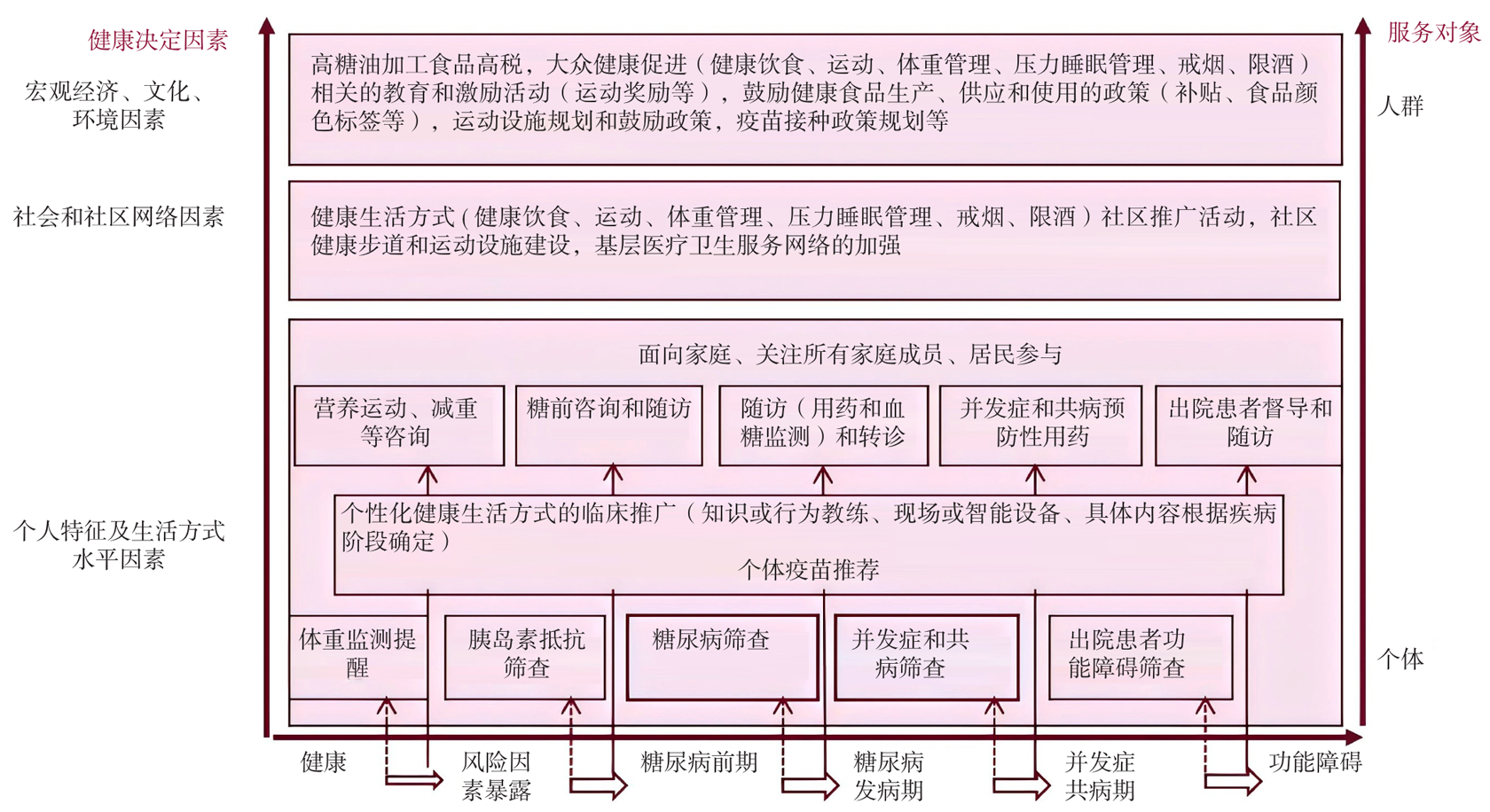
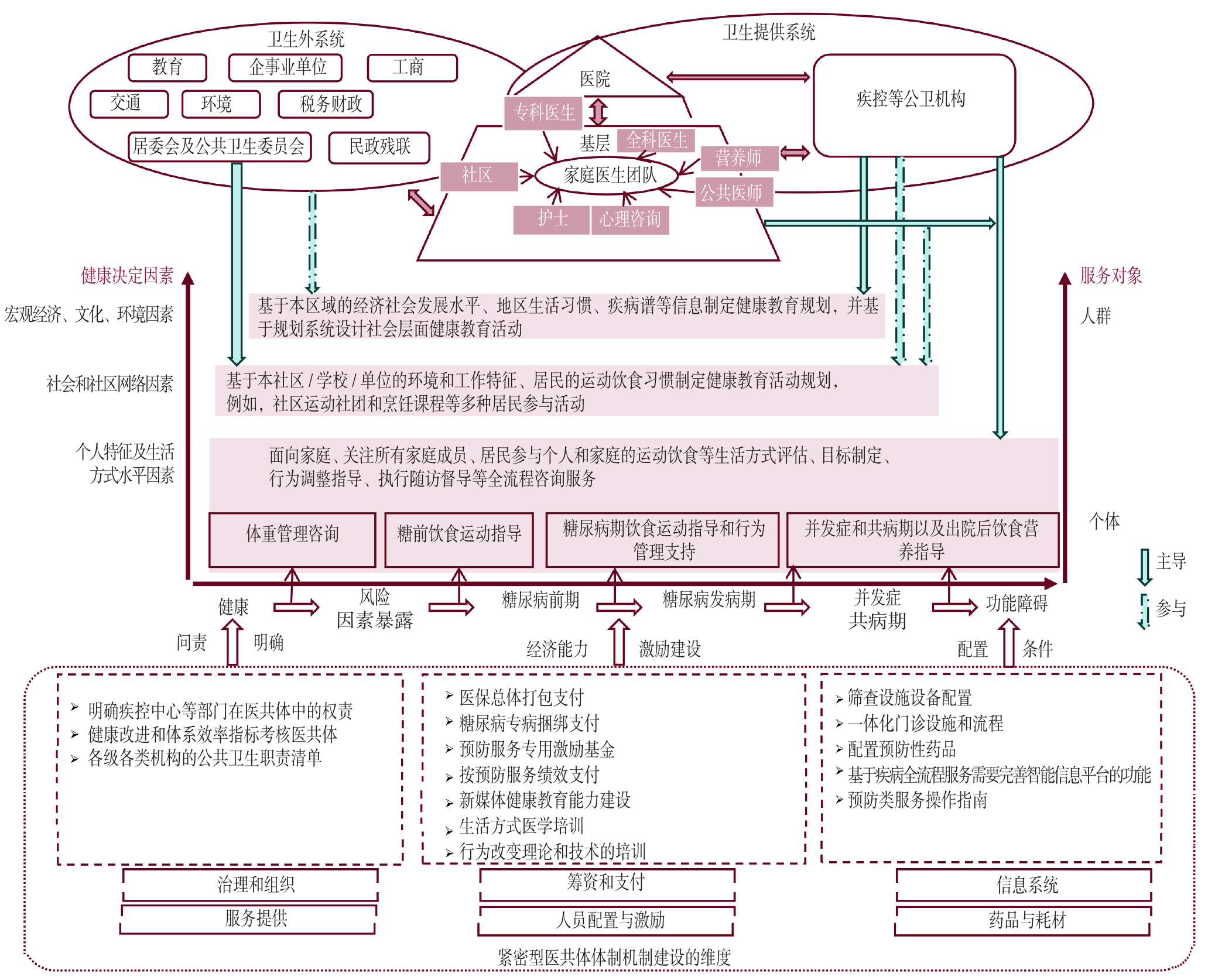
摘要: 背景 "医防融合"的价值已从提高基层慢性病服务质量扩展到推动整个卫生体系从"治疗为中心"转化到"健康为中心",同时贡献卫生体系成本控制和效率提高。但"医防融合"中"预防类服务"的界定尚不明确。 目的 以2型糖尿病为例,具体化"预防类服务"的概念和服务项目,并探讨实现路径。 方法 基于健康的社会决定因素框架、三级预防概念、政策执行理论和"能力+机会+动机-行动"理论(COM-B理论)进行理论演绎推导,同时对已发表研究和指南进行归纳总结,构建2型糖尿病"预防类服务"的界定框架及实现路径。 结果 本研究设计的2型糖尿病"预防类服务"界定框架横纵交叉,覆盖从健康到功能损伤后康复整个疾病流程,并涵盖宏观、社区和个人层面的不同层面干预措施,其中个人层面的预防类服务同时覆盖了家庭视角。在实现路径方面,包括"问责明确""能力建设""经济激励"和"配置条件"4条路径的做法建议。 结论 本研究以2型糖尿病为例,对"预防类项目"进行界定并探讨其在紧密型医共体的政策框架中被采纳和执行的路径。界定为宏观、社区和个人3个层面。同时本研究认为"问责明确""能力建设""经济激励"和"配置条件"有助于在紧密型医共体的政策框架中置入预防服务的实施策略,以期促进从"治疗为中心"到"以预防为主"意识和行为的转变,也为地方能更具体、更有抓手地推进"医防融合"提供思路。

关键词: 糖尿病,2型, 医防融合, 整合服务

Abstract:

Background

The value of "Integration of medical services and preventive services" has been expanded from improving the quality of chronic disease care to driving the transformation of the entire health system from a "treatment-centered" to a "health-centered" approach, while also contributing to cost control and efficiency improvement of the health system. However, the definition of "preventive services" remains unclear.

Objective

Using Type 2 diabetes care as a case, this study aims to conceptualize "preventive services" and specify corresponding service items, while exploring the pathways to implement these services.

Methods

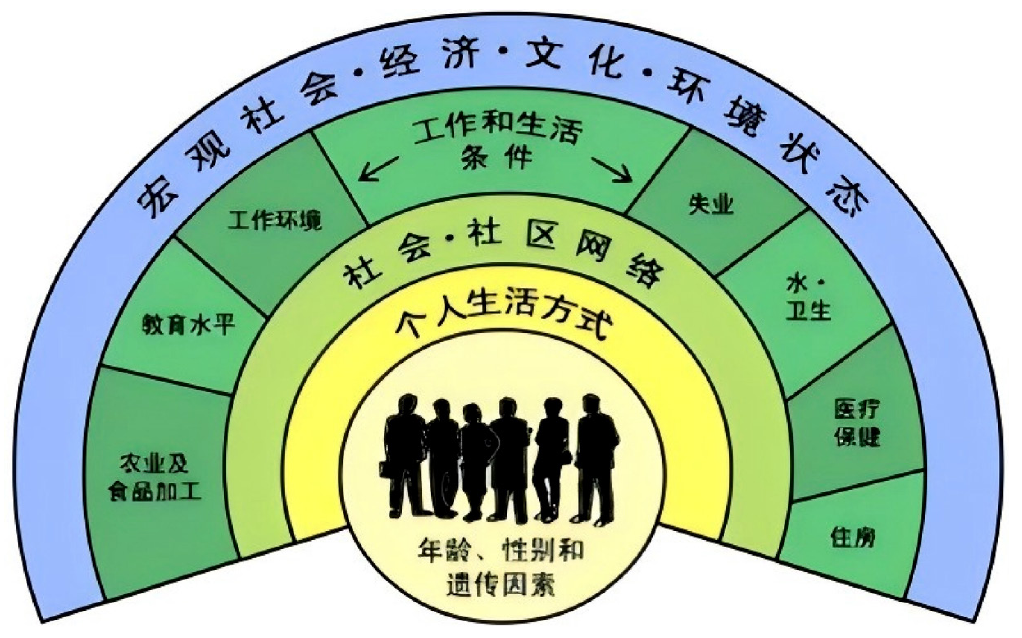
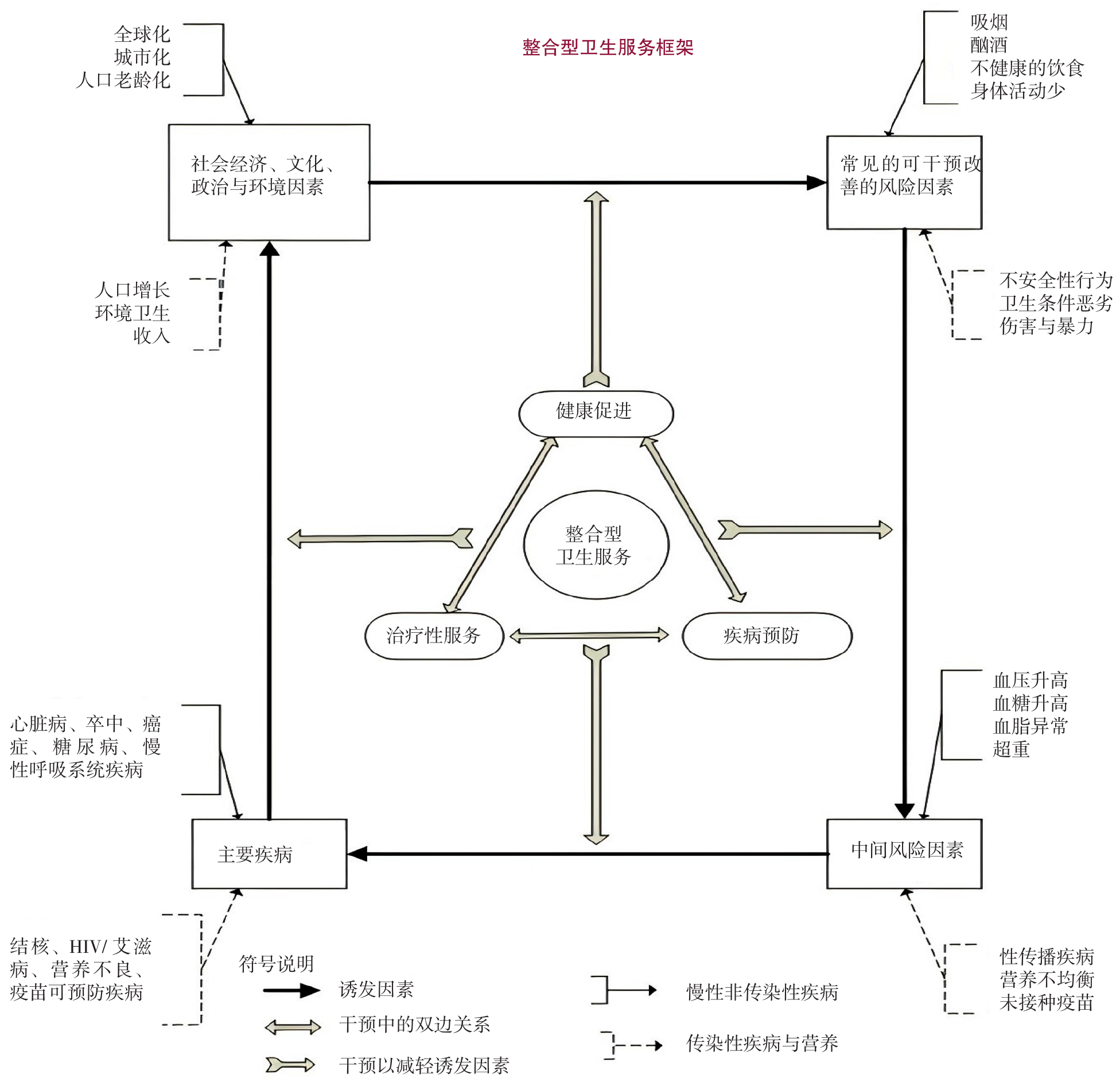
Theoretical deduction was conducted based on the social determinants of health framework, the concept of tertiary prevention, policy implementation theory, and the Capability, Opportunity, Motivation-Behaviour (COM-B) model. Furthermore, a synthesis of published research and guidelines was performed to construct a conceptual framework and implementation pathways for preventive services.

Results

The developed conceptual framework for type 2 diabetes "preventive services" features a cross-cutting structure, encompassing the entire disease continuum from health to rehabilitation after functional impairment, and incorporates interventions at macro, community, and individual levels. Services at the individual level also incorporate a family perspective. Regarding implementation, four key pathways are proposed, including "accountability" "capacity building" "financial incentives" and "resource allocation and enabling conditions".

Conclusion

Using type 2 diabetes as an example, this study defines "preventive service items" and explores pathways for their adoption and execution within the policy framework of a Compact Medical Consortium. The definition spans macro, community, and individual levels. The study posits that "accountability" "capacity building" "financial incentives" and "resource allocation and enabling conditions" can be used in Compact Medical Consortium to facilitate the implementation of preventive services. All these efforts will contribute to foster a shift in mindset and practice from "treatment-centered" to "prevention-centered", and to provide concrete, actionable suggestions to advance "integration of medical and prevention services".

Key words: Diabetes mellitus, type 2, Integration of medical care and prevention, Integrated services