中国全科医学 ›› 2026, Vol. 29 ›› Issue (36): 5393-5400.DOI: 10.12114/j.issn.1007-9572.2026.0114

• 论著 • 上一篇    

瑞舒伐他汀钙对高尿酸血症大鼠炎症因子及动脉损伤的影响及其代谢组学研究

李艳1, 伊丽米努尔·阿卜杜吾甫尔2, 迪丽达尔·希力甫1,*()   

  1. 1.830000 新疆维吾尔自治区乌鲁木齐市,新疆医科大学第一附属医院心脏重症监护室
    2.835000 新疆维吾尔自治区伊犁哈萨克自治州伊宁市,伊犁哈萨克自治州新华医院心血管内一科
  • 收稿日期:2026-04-10 修回日期:2026-09-20 出版日期:2026-12-20 发布日期:2026-10-30
  • 通讯作者: 迪丽达尔·希力甫

  • 作者贡献:

    李艳提出主要研究目标,负责研究的构思与设计,研究的实施,撰写论文;伊丽米努尔·阿卜杜吾甫尔进行数据的收集与整理,统计学处理,图、表的绘制与展示;迪丽达尔·希力甫进行论文的修订,文章的质量控制与审查,对文章整体负责,监督管理。

  • 基金资助:
    新疆维吾尔自治区卫健委"天山英才"医学骨干项目(TSYC202301B075)

Effects of Rosuvastatin Calcium on Inflammatory Factors and Arterial Injury in Hyperuricemic Rats and Its Metabolomics Analysis

LI Yan1, YILIMINUER· Abuduwufuer2, DILIDAER· Xilifu1,*()   

  1. 1. Cardiac Care Unit, the First Affiliated Hospital of Xinjiang Medical University, Urumqi 830000, China
    2. Department of Cardiology (Ward 1), Xinhua Hospital of Ili Kazakh Autonomous Prefecture, Yining 835000, China
  • Received:2026-04-10 Revised:2026-09-20 Published:2026-12-20 Online:2026-10-30
  • Contact: DILIDAER· Xilifu

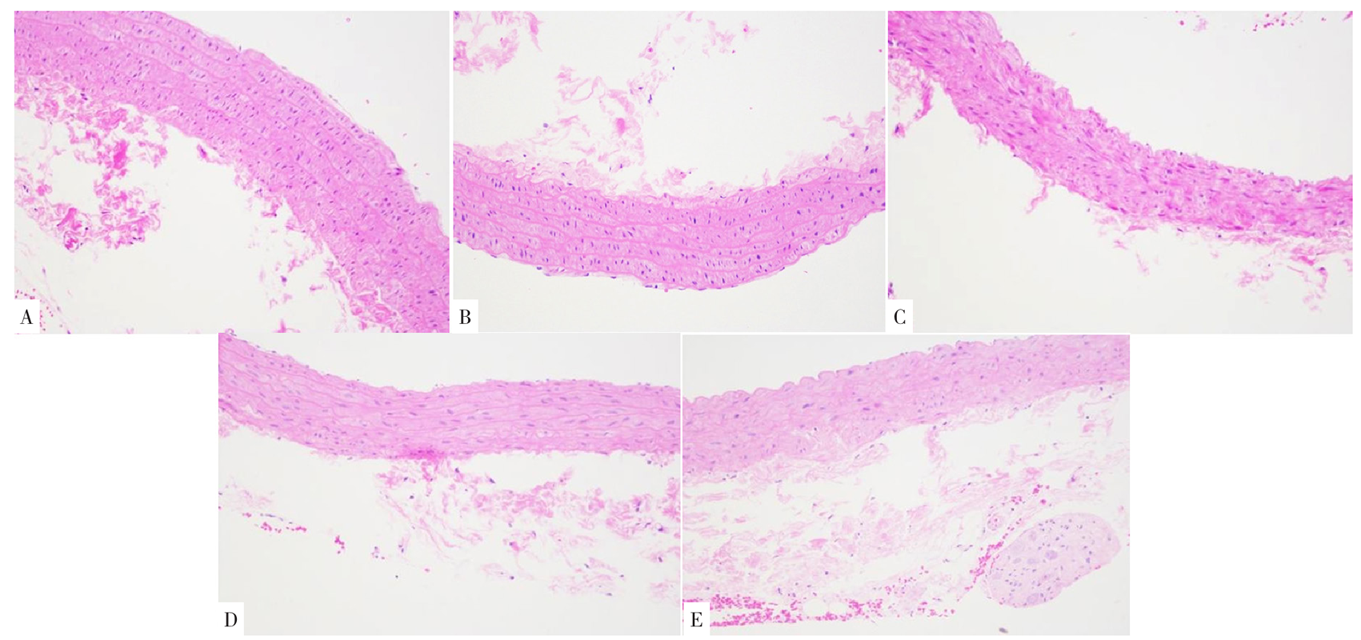
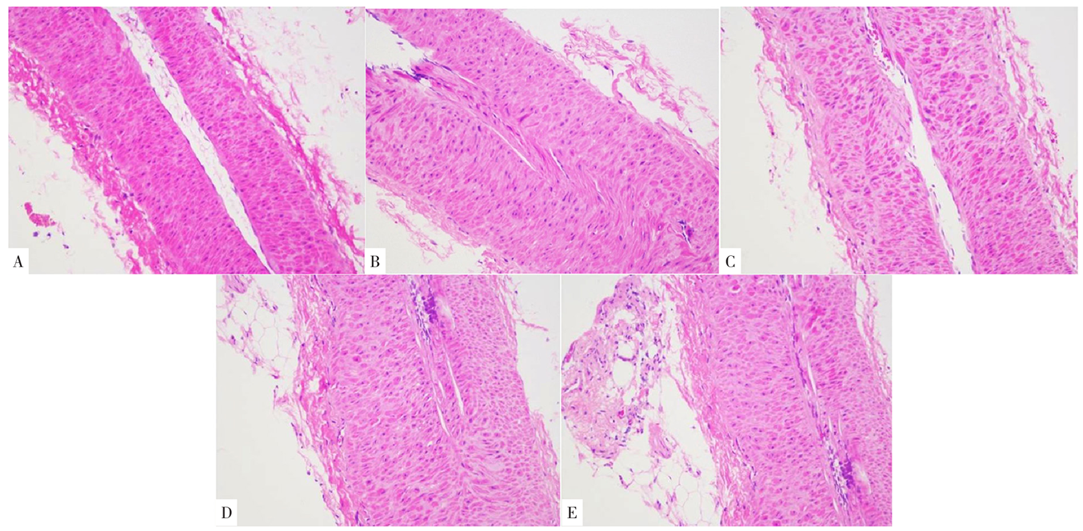
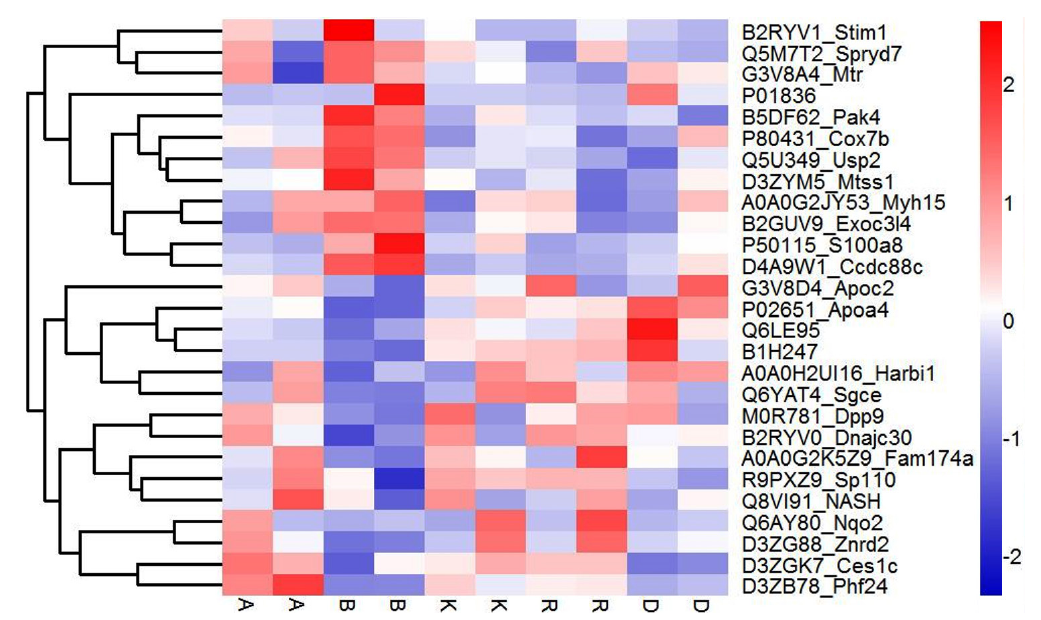
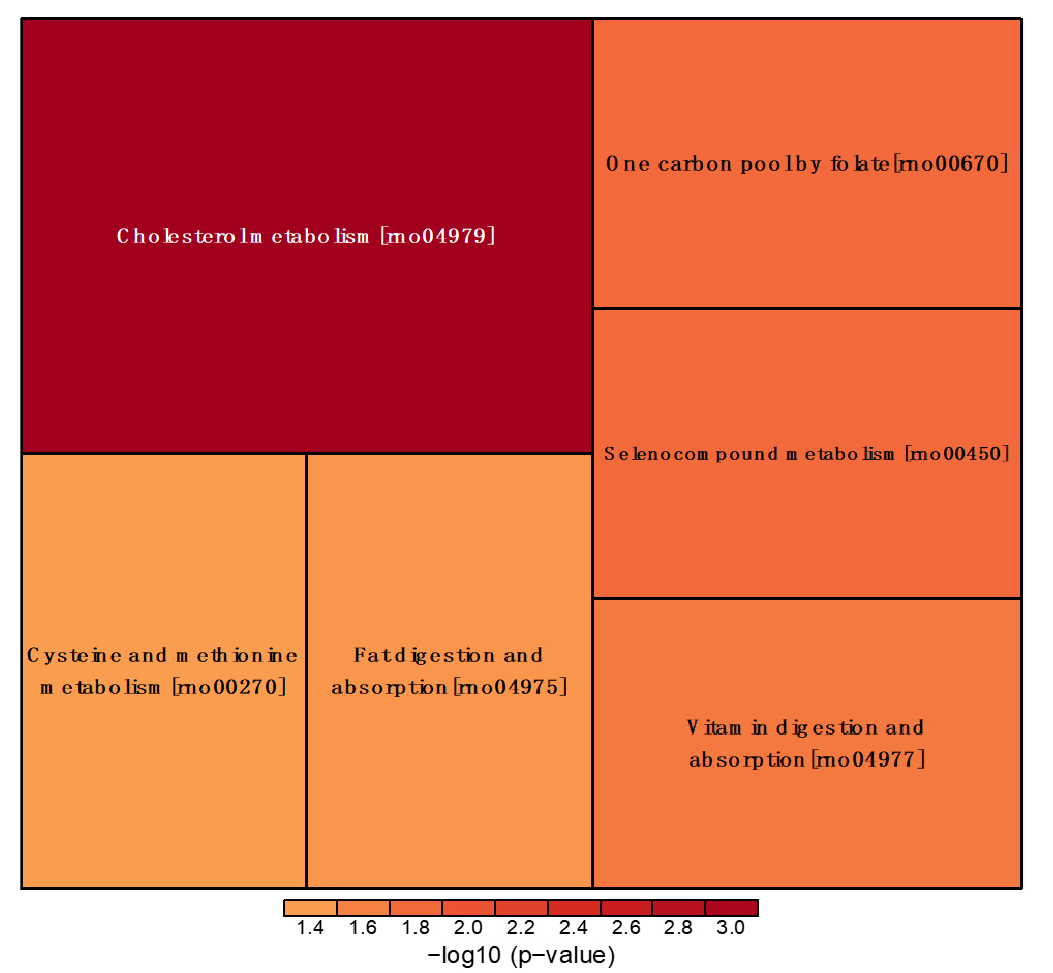
摘要: 背景 高尿酸血症是心血管疾病的重要独立危险因素,可通过激活炎症反应、诱导氧化应激等途径导致血管内皮损伤,但其致血管内皮损伤的具体机制及有效的干预策略尚未完全阐明。 目的 探讨不同剂量瑞舒伐他汀钙对高尿酸血症大鼠肾功能、炎症因子水平及大、小动脉结构的调控作用,为临床防治高尿酸相关血管损伤提供实验依据。 方法 本研究的实验时间为2021年3月—2024年8月。选取60只8周龄SD大鼠,采用随机数字表法分为空白对照组、模型组、瑞舒伐他汀钙低剂量组(5 mg·kg-1 ·d-1 )、瑞舒伐他汀钙高剂量组(10 mg·kg-1 ·d-1 )及阳性对照组(别嘌呤醇,53.57 mg·kg-1 ·d-1 ),共5组,每组12只。除空白对照组外,其余各组通过酵母提取物粉(YEP,21 g·kg-1 ·d-1 )灌胃联合氧嗪酸钾盐(OA,200 mg·kg-1 ·d-1 )腹腔注射构建高尿酸血症模型。自造模第1天起,各药物干预组分别给予对应剂量药物灌胃,连续干预4周。检测大鼠血清尿酸、尿素氮、肌酐、C反应蛋白、肿瘤坏死因子α及白介素6水平,采用组织病理学方法观察腹主动脉、尾动脉等大、小动脉的形态学改变;通过相对和绝对定量同位素标记(iTRAQ)技术筛选各组差异蛋白,结合基因本体论(GO)富集分析与京都基因与基因组百科全书(KEGG)代谢通路分析,探究差异蛋白的功能及相关分子机制。 结果 组别与时间对血清尿酸、尿素氮、肌酐、C反应蛋白、肿瘤坏死因子α、白介素6水平均存在交互作用(P交互<0.05);组别和时间对上述指标的主效应均显著(P组别<0.05,P时间<0.05)。实验第2周,模型组、瑞舒伐他汀钙低剂量组、瑞舒伐他汀钙高剂量组、阳性对照组尿酸高于空白对照组,模型组肌酐水平高于空白对照组、瑞舒伐他汀钙高剂量组、阳性对照组(P<0.05)。实验第4周,模型组上述3项指标均高于其他组,瑞舒伐他汀钙高剂量组上述3项指标均低于瑞舒伐他汀钙低剂量组(P<0.05)。实验第2、4周,模型组C反应蛋白、肿瘤坏死因子α、白介素6水平均高于对照组(P<0.05)。实验第4周,瑞舒伐他汀钙低剂量组C反应蛋白高于瑞舒伐他汀钙高剂量组、阳性对照组,瑞舒伐他汀钙高剂量组C反应蛋白低于阳性对照组;瑞舒伐他汀钙低剂量组与阳性对照组肿瘤坏死因子α高于瑞舒伐他汀钙高剂量组;瑞舒伐他汀钙低剂量组白介素6高于瑞舒伐他汀钙高剂量组、低于阳性对照组,瑞舒伐他汀钙高剂量组白介素6低于阳性对照组(P<0.05)。组织病理学结果显示,模型组大鼠动脉中膜平滑肌细胞增殖、内皮细胞脱落、管腔狭窄,外膜纤维结缔组织增生;瑞舒伐他汀钙高剂量组动脉损伤修复最为明显,血管结构接近空白对照组。蛋白组学分析表明,高剂量瑞舒伐他汀钙干预后大鼠蛋白表达谱与空白对照组最为接近(12个上调、14个下调),GO富集分析显示差异蛋白主要参与脂蛋白调控、磷脂外流等生物学过程,KEGG通路分析提示差异蛋白主要富集于脂质代谢相关通路。 结论 瑞舒伐他汀钙可有效降低高尿酸血症大鼠的血尿酸水平及炎症因子表达,对高尿酸介导的血管损伤具有显著修复作用,且该作用呈剂量依赖性;其机制可能与调控脂质代谢相关蛋白及信号通路有关。

关键词: 高尿酸血症, 瑞舒伐他汀钙, 动脉损伤, 炎症因子, 代谢组学

Abstract:

Background

Hyperuricemia is an important independent risk factor for cardiovascular disease. It can induce vascular endothelial injury through pathways such as activating inflammatory responses and triggering oxidative stress. However, the precise mechanisms of hyperuricemia-induced vascular injury and effective intervention strategies for this condition have not been fully elucidated.

Objective

This study aimed to investigate the regulatory effects of different doses of rosuvastatin calcium on renal function, inflammatory factor levels, and the structure of large and small arteries in hyperuricemic rats, so as to provide an experimental basis for the clinical prevention and treatment of hyperuricemia-related vascular injury.

Methods

The experiments were conducted from March 2021 to August 2024. Sixty 8-week-old Sprague-Dawley (SD) rats were selected and randomly divided into five groups using a random number table, with 12 rats in each group: blank control group, model group, low-dose rosuvastatin calcium group (5 mg·kg-1 ·d-1 ), high-dose rosuvastatin calcium group (10 mg·kg-1 ·d-1 ), and positive control group (allopurinol, 53.57 mg·kg-1 ·d-1 ). Except for the blank control group, hyperuricemia models were established in the remaining groups via intragastric administration of yeast extract powder (YEP, 21 g·kg-1 ·d-1 ) combined with intraperitoneal injection of potassium oxonate (OA, 200 mg·kg-1 ·d-1 ). Starting from the first day of modeling, each drug intervention group received the corresponding dose of drug by gavage daily for 4 consecutive weeks. After intervention, serum levels of uric acid, blood urea nitrogen (BUN), creatinine (Cr), C-reactive protein (CRP), tumor necrosis factor-α (TNF-α), and interleukin-6 (IL-6) were measured. Histopathological examination was performed to observe the morphological changes of large and small arteries, including the abdominal aorta and caudal artery. Isobaric tags for relative and absolute quantitation (iTRAQ)-based proteomics was applied to screen differentially expressed proteins between groups. Gene Ontology (GO) enrichment analysis combined with Kyoto Encyclopedia of Genes and Genomes (KEGG) pathway analysis was then conducted to explore the functions of these differentially expressed proteins and the associated molecular mechanisms.

Results

Significant group-by-time interactions were observed for serum uric acid, BUN, Cr, CRP, TNF-α, and IL-6 (Pinteraction<0.05), and both the main effects of group and time on these indicators were statistically significant (Pgroup<0.05, Ptime<0.05). At week 2, serum uric acid levels in the model group, the low-dose rosuvastatin calcium group, the high-dose rosuvastatin calcium group, and the positive control group were significantly higher than those in the blank control group (P<0.05). Serum creatinine level in the model group was significantly higher than those in the blank control group, the high-dose rosuvastatin calcium group, and the positive control group (P<0.05). At the 4th experimental week, the three above-mentioned indicators in the model group were higher than those in both the blank control group and all drug intervention groups, while all three indicators in the high-dose rosuvastatin calcium group were lower than those in the low-dose rosuvastatin calcium group (P<0.05). At both the 2nd and 4th weeks of the experiment, serum levels of CRP, TNF-α, and IL-6 in the model group were higher than positive control group (P<0.05). At the 4th experimental week, serum CRP in the low-dose rosuvastatin calcium group was higher than that in the high-dose rosuvastatin calcium and positive control groups, and lower in the high-dose rosuvastatin calcium group than in the positive control group. TNF-α levels in both the low-dose rosuvastatin calcium and positive control groups were higher than those in the high-dose rosuvastatin calcium group. IL-6 in the low-dose rosuvastatin calcium group was higher than that in the high-dose rosuvastatin calcium group but lower than that in the positive control group, and lower in the high-dose rosuvastatin calcium group than in the positive control group (all P<0.05). Histopathological results showed that rats in the model group exhibited smooth muscle cell proliferation in the arterial tunica media, endothelial cell exfoliation, luminal narrowing, and fibrous connective tissue hyperplasia in the tunica adventitia. The most pronounced repair of arterial injury was observed in the high-dose rosuvastatin calcium group, where the vascular structure closely resembled that of the blank control group. Proteomic analysis showed that, after high-dose intervention, the protein expression profile of the rats most closely resembled that of the blank control group (12 proteins upregulated and 14 downregulated). GO enrichment analysis showed that the differentially expressed proteins were mainly involved in biological processes such as lipoprotein regulation and phospholipid efflux. KEGG pathway analysis indicated that the differentially expressed proteins were mainly enriched in pathways related to lipid metabolism.

Conclusion

Rosuvastatin calcium can effectively reduce serum uric acid levels and inflammatory factor expression in rats with hyperuricemia and exerts a significant reparative effect against hyperuricemia-mediated vascular injury in a dose-dependent manner; its mechanism may be associated with the regulation of lipid metabolism-related proteins and signaling pathways.

Key words: Hyperuricemia, Rosuvastatin calcium, Arterial injury, Inflammatory factors, Metabolomics

中图分类号: