中国全科医学 ›› 2027, Vol. 30 ›› Issue (03): 423-431.DOI: 10.12114/j.issn.1007-9572.2026.0004

• 论著·重点人群研究·老年健康与照护 • 上一篇    

居家养老失能老人的照护需求现状及影响因素研究:以我国东部发达地区为例

沈伊如1,2, 孙禾奇2,3, 吕军1,2,*(), 孔凡磊4,5,6, 陈刚1,2,*(), 鲁靖7, 洪壮1,2, 樊长佳1,2   

  1. 1.200032 上海市,复旦大学公共卫生学院
    2.200032 上海市,复旦大学中国残疾问题研究中心
    3.200433 上海市,复旦大学老龄研究院
    4.250012 山东省济南市,山东大学齐鲁医学院公共卫生学院
    5.250012 山东省济南市,国家卫生健康委员会卫生经济与政策研究重点实验室(山东大学)
    6.250012 山东省济南市,山东大学卫生管理与政策研究中心(山东省重点新型智库)
    7.215399 江苏省昆山市中医医院
  • 收稿日期:2026-01-25 修回日期:2026-10-30 出版日期:2027-01-20 发布日期:2026-11-26
  • 通讯作者: 吕军, 陈刚

  • 作者贡献:

    沈伊如、孙禾奇负责研究实施、资料整理及统计分析,撰写论文;吕军、孔凡磊、陈刚负责研究设计、文章的质量控制与审查;鲁靖负责组织现场调查实施与可行性分析;沈伊如、孙禾奇、洪壮、樊长佳负责现场资料收集。所有作者确认了论文的最终稿。

  • 基金资助:
    国家社会科学基金重大项目(17ZDA078); 唐仲英基金会"一米暖阳"项目(C32-0201-2401); 国家自然科学基金资助项目(72574130)

Care Needs and Associated Factors among Home-dwelling Older Adults with Disabilities: a Study in Economically Developed Regions of Eastern China

SHEN Yiru1,2, SUN Heqi2,3, LYU Jun1,2,*(), KONG Fanlei4,5,6, CHEN Gang1,2,*(), LU Jing7, HONG Zhuang1,2, FAN Changjia1,2   

  1. 1. School of Public Health, Fudan University, Shanghai 200032, China
    2. Fudan University China Disability Research Center, Shanghai 200032, China
    3. Fudan Institute on Ageing, Shanghai 200433, China
    4. School of Public Health, Cheeloo College of Medicine, Shandong University, Jinan 250012, China
    5. Key Laboratory of Health Economics and Policy Research, National Health Commission (Shandong University), Jinan 250012, China
    6. Shandong University Health Management and Policy Research Center (Shandong Province Key New Think Tank), Jinan 250012, China
    7. Kunshan Hospital of Traditional Chinese Medicine, Kunshan 215399, China
  • Received:2026-01-25 Revised:2026-10-30 Published:2027-01-20 Online:2026-11-26
  • Contact: LYU Jun, CHEN Gang

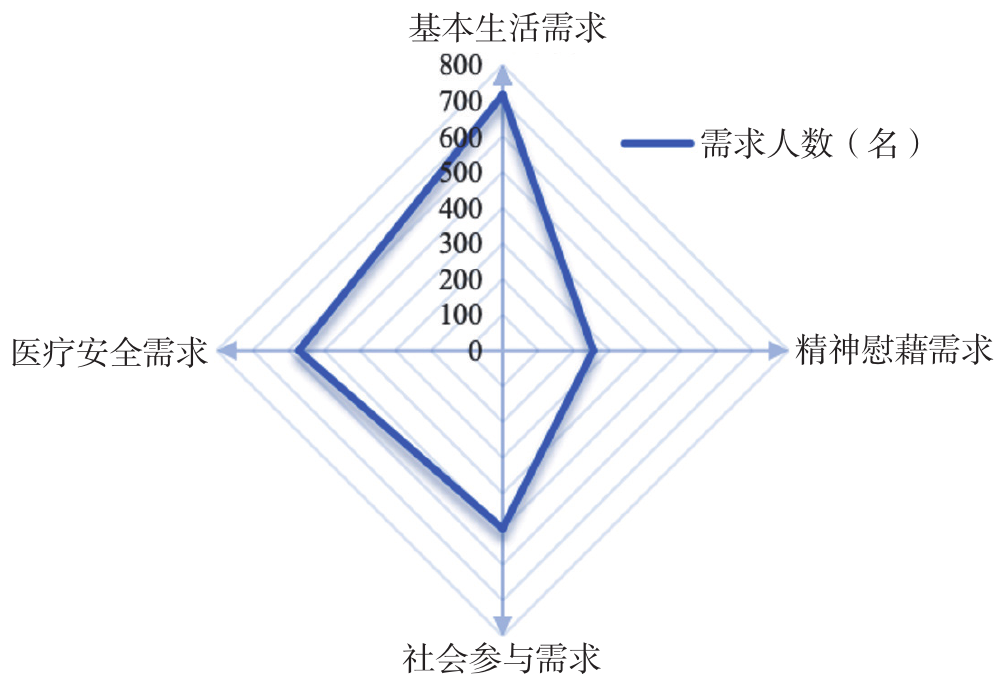
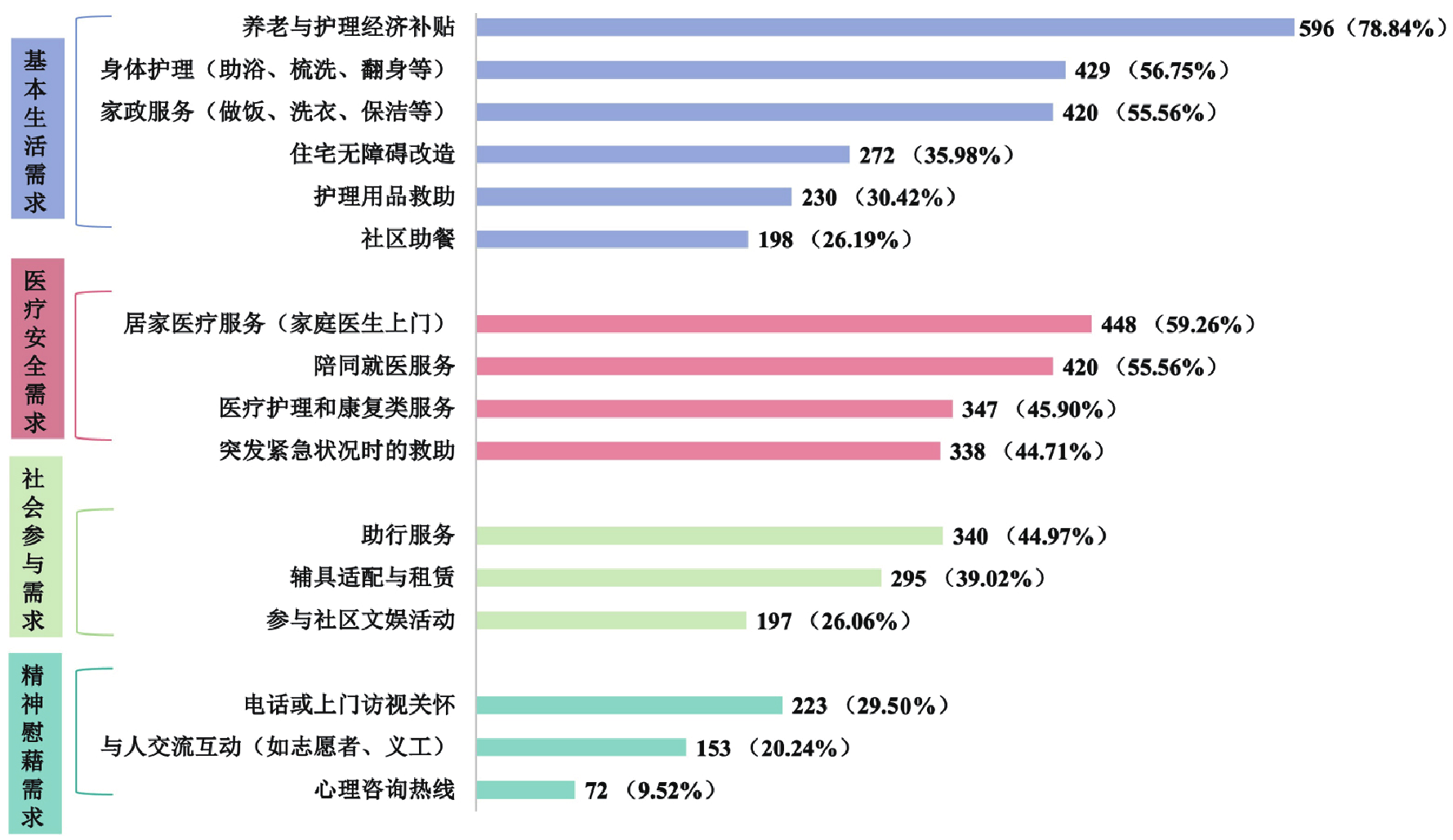
摘要: 背景 我国失能老人数量多、增速快,大多数失能老人依赖家庭照护,其照护需求尚未满足。 目的 以东部发达地区为例,探究居家养老失能老人的照护需求现状及影响因素。 方法 本研究采用混合方法学研究的探索性序列设计,首先于2023年7月及2024年1月通过目的抽样法,选取上海市T镇、苏州市Z镇22名居家养老失能老人开展照护需求的定性访谈;然后根据失能老人照护需求特点及社区服务供给条件,对课题组前期形成的残障人群照护需求评估工具进行优化,采用多阶段分层整群抽样,首先选取上海市T镇、苏州市Z镇,再按行政村/社区居委分层抽样,对抽样点内全部符合条件的失能老人家庭开展调查,2024年1—8月共有756名失能老人完成了问卷调查。分析居家养老失能老人的照护需求现状及影响因素。 结果 东部发达地区居家养老失能老人照护需求呈"三高一低"现状:基本生活(717名,94.84%)、医疗安全(571名,75.53%)、社会参与(499名,66.01%)需求高,精神慰藉(254名,33.60%)需求低。基本生活需求方面:多数家庭依赖配偶相扶或子女轮班,协助移动与如厕等动作被反复提及为高强度环节;医疗安全需求方面:配药需长途往返、缺乏康复护理指导的问题尤为突出;社会参与需求方面:农村样本普遍反映白天见不到年轻人,行动不便致使社区活动止步家门;精神慰藉需求方面:双老人家庭孤独感强烈,部分失能老人存在焦虑或抑郁症状。有长期护理保险服务(OR=0.071,95%CI=0.015~0.341,P=0.001)是失能老人基本生活需求的影响因素;重度失能(OR=4.323,95%CI=2.202~8.487,P<0.001)、同住人口数≥4人(OR=1.747,95%CI=1.123~2.720,P=0.013)、医疗保障类型(城乡居民基本医疗保险:OR=4.422,95%CI=1.525~12.817,P=0.006;城镇职工基本医疗保险:OR=1.841,95%CI=1.113~3.045,P=0.017)是失能老人医疗安全需求的影响因素;重度失能(OR=1.783,95%CI=1.147~2.771,P=0.010)是失能老人社会参与需求的影响因素;在婚(OR=0.693,95%CI=0.495~0.971,P=0.033)、有救助补贴(OR=0.682,95%CI=0.486~0.957,P=0.027)、有邻里帮助情况(OR=0.731,95%CI=0.536~0.996,P=0.047)是失能老人精神慰藉需求的影响因素。 结论 东部发达地区居家养老失能老人对基本生活、医疗安全、社会参与、精神慰藉需求有所差异。长期护理保险服务、失能程度、同住人口数、医疗保障类型、婚姻状况、补贴情况及邻里帮助情况均会影响居家养老失能老人的照护需求,在当前正式照护服务资源有限的情况下,需通过社区支持服务赋能失能老人照护者、激活家庭照护潜力,参照各维度照护需求的影响因素给予相关群体针对性的服务支持,满足其不同的照护需求。

关键词: 居家养老, 寄养家庭照护, 失能老人, 照护需求, 影响因素分析, 东部地区

Abstract:

Background

China has a large and rapidly growing population of older adults with disabilities. Most rely on family care, and their care needs remain unmet.

Objective

This study aims to explore the current situation and influencing factors of care needs among older adults with disabilities receiving home-based care in economically developed Eastern China.

Methods

An exploratory sequential mixed-methods design was employed. First, purposive sampling was used in July 2023 and January 2024 to conduct qualitative interviews with 22 older adults with disabilities in T Town, Shanghai, and Z Town, Suzhou, to explore family caregiving needs. Then, according to the characteristics of the needs of disabled elderly and the supply conditions of community services, the disability population care needs assessment tool formed by the research group in the early stage was optimized. A multi-stage stratified cluster sampling method was adopted. T Town in Shanghai and Z Town in Suzhou were selected, followed by stratified sampling according to administrative villages or community residents' committees. All eligible households of older adults with disabilities at the sampled sites were surveyed. From January to August 2024, 756 older adults with disabilities completed the questionnaire survey. Care needs among home-dwelling older adults with disabilities and associated factors were analyzed.

Results

Care needs among home-based older adults with disabilities in eastern developed regions exhibited a pattern of high needs in three domains and low needs in one: high demand for basic living [94.84%(717)], medical safety [75.53%(571)], and social participation [66.01%(499)], but low demand for psychological comfort [33.60%(254)]. For basic daily living, most households relied on spousal mutual support or a care rotation among adult children, and assistance with mobility and toileting was repeatedly described as the most physically demanding task. Medical safety needs centered on long-distance travel to obtain medications and the lack of guidance on rehabilitation nursing. Regarding social participation, rural respondents commonly reported the daytime absence of younger family members, while impaired mobility confined them to home and precluded involvement in community activities. In terms of psychological comfort, elderly couples living alone experienced pronounced loneliness, and some older adults with functional disability presented symptoms of anxiety or depression. Several factors were associated with care needs. For basic living needs, receiving long-term care insurance was a significant factor (OR=0.071, 95%CI=0.015-0.341, P=0.001). For medical safety needs, significant factors included severe disability (OR=4.323, 95%CI=2.202-8.487, P<0.001), living with four or more people (OR=1.747, 95%CI=1.123-2.720, P=0.013), and the type of medical insurance (basic medical insurance for urban employees: OR=4.422, 95%CI=1.525-12.817, P=0.006; basic medical insurance for rural and non-working urban residents: OR=1.841, 95%CI=1.113-3.045, P=0.017). For social participation needs, severe disability was an influential factor (OR=1.783, 95%CI=1.147~2.771, P=0.010). Finally, for emotional support needs, being married (OR=0.693, 95%CI=0.495-0.971, P=0.033), receiving subsidies (OR=0.682, 95%CI=0.486-0.957, P=0.027), and having neighborhood support (OR=0.731, 95%CI=0.536-0.996, P=0.047) were significant factors.

Conclusion

Needs among home-dwelling older adults with functional disability in economically developed eastern regions varied across the four dimensions of basic daily living, medical safety, social participation, and psychological comfort. Long-term care insurance services, severity of disability, number of co-residing household members, type of health coverage, marital status, receipt of subsidies, and neighborhood assistance all shaped their care needs. Given the limited availability of formal care services, community support should be used to empower family caregivers and mobilize the potential of home-based care, with targeted services allocated to specific groups according to the factors influencing needs in each dimension.

Key words: Aging in place, Foster home care, Disabled elderly, Care needs, Root cause analysis, Eastern regions