
中国全科医学 ›› 2026, Vol. 29 ›› Issue (01): 6-16.DOI: 10.12114/j.issn.1007-9572.2025.0379
所属专题: 卫生政策研究最新文章合辑
• 中国深化医改十五年专题系列研究报告(一) • 上一篇 下一篇
李思思1, 秦江梅2,*( )
)
收稿日期:2025-10-24
修回日期:2025-11-14
出版日期:2026-01-05
发布日期:2025-12-18
通讯作者:
秦江梅
作者贡献:
秦江梅负责论文框架构思,摘要、前言和讨论等方面的撰写及结果描述修改,对文章整体负责;李思思负责政策文件/文献检索和摘录,以及《中国卫生健康统计年鉴》数据摘录、整理分析和结果描述。
LI Sisi1, QIN Jiangmei2,*()
Received:2025-10-24
Revised:2025-11-14
Published:2026-01-05
Online:2025-12-18
Contact:
QIN Jiangmei
摘要: 中国深化医药卫生体制改革(以下简称深化医改)十五年,中央政府层面密集出台了一系列推动全科医生制度发展的政策,在政府的大力支持和指导下,我国全科医学在学科建设、培养培训、全科队伍建设等方面取得积极进展。我国设立全科教学机构的医学院校占比从2010年的21.1%提高到2019年的85.7%,提高了64.6个百分点,开设全科医学课程的医学院校占比从46.1%提高到81.1%,提高了35.0个百分点。多种途径培养的全科医生从2012年的10.98万人增加到2023年的56.18万人,年平均增长速度达到16.00%,远高于全国执业(助理)医师的增长速度(5.64%),全科医生占医生总数的比例从4.20%提高到11.75%,提高了7.55个百分点,其中2010—2024年农村订单定向医学生实际招生数达到8.9万人,中西部农村地区全科医生数得到提升、学历得到优化;全科床位从2009年的30.79万张增加到2023年的48.78万张,年平均增长速度为3.34%;全科门急诊人次从2009年的4.31亿人次增加到2023年的8.48亿人次,占全国门急诊总人次比例维持在13.00%左右,其中基层全科门急诊人次占基层门急诊人次比例从26.32%提升到33.07%;全科住院人次从1 127.52万人增加到1 224.79万人,占全国出院总人数比例从8.47%降低到4.07%,近2年占比有所增加(增加0.39个百分点)。与其他临床二级学科相比,全科医学依然存在着一些需要持续改进的方面,全科医生数量和质量仍然薄弱、科研能力不强,从全国层面看全科医生配置不均衡,高素质全科医生数量不足,全科医生岗位吸引力不够等,并面临老龄化和慢病化叠加带来健康需求增加的挑战。
中图分类号:
| 年份(年) | 文件名称 | 主要内容 |
|---|---|---|
| 2009 | 《关于深化医药卫生体制改革的意见》(中发〔2009〕 6号)[ | 完善全科医生任职资格制度,尽快实现基层医疗卫生机构都有合格的全科医生。加强全科医学教育,完善标准化、规范化的临床医学教育,提高医学教育质量。加强基层医疗卫生人才队伍建设,特别是全科医生的培养培训 |
| 2011 | 《医药卫生中长期人才发展规划(2011-2020年)》(卫人发〔2011〕15号)[ | 到2015年,全科医生达到18万人,到2020年,全科医生达到30万人以上。加强以全科医生为重点的基层医疗卫生人才队伍建设,为农村订单定向免费培养医学生,通过设置全科医生特设岗位等多种形式,鼓励特设岗位医生长期在城乡基层医疗卫生机构工作 |
| 2015 | 关于推进分级诊疗制度建设的指导意见(国办发〔2015〕 70号)[ | 多渠道培养全科医生,逐步向全科医生规范化培养过渡,实现城乡每万名居民有2~3名合格的全科医生。加强全科医生规范化培养基地建设和管理,规范培养内容和方法,提高全科医生的基本医疗和公共卫生服务能力,发挥全科医生的居民健康"守门人"作用。建立全科医生激励机制,在绩效工资分配、岗位设置、教育培训等方面向全科医生倾斜 |
| 2016 | 关于印发"十三五"卫生与健康规划的通知(国发〔2016〕 77号)[ | 鼓励二级以上医院成立全科医学科。推进以全科医生为重点的基层医疗卫生队伍建设。制订优惠政策,为农村订单定向免费培养医学生。启动实施助理全科医生培训。继续实施基层医疗卫生机构全科医生特设岗位计划,优先安排特岗全科医生到集中连片特困地区乡镇卫生院工作 |
| 2017 | 《"十三五"全国卫生计生人才发展规划》[ | 到2020年全科医生达到30万人以上,每万人口全科医生达到2人及以上。加大全科医生培养力度,大力加强全科专业住院医师规范化培训,推进助理全科医生培训,继续实施全科医生转岗培训和农村订单定向医学生免费培养。逐步扩大全科医生特设岗位计划实施范围,提高补助标准,增强吸引力,优先为集中连片特困地区、贫困地区、革命老区的乡镇卫生院招聘特岗全科医生 |
| 2022 | 关于印发"十四五"卫生健康人才发展规划的通知(国卫人发〔2022〕27号)[ | 到2025年全科医生数量达到55万人,每万人口全科医生数达到3.93人。继续加强全科专业住院医师规范化培训,实施助理全科医生转岗培训和农村订单定向医学生免费培养。持续开展中医专业农村订单定向免费医学生培养、中医类别全科医生规范化培训、转岗培训等基层人才计划 |
表1 2009—2024年全科医学学科建设和人才队伍培养综合性文件
Table 1 Comprehensive policy documents for scientific discipline development and talent cultivation from 2009 to 2024
| 年份(年) | 文件名称 | 主要内容 |
|---|---|---|
| 2009 | 《关于深化医药卫生体制改革的意见》(中发〔2009〕 6号)[ | 完善全科医生任职资格制度,尽快实现基层医疗卫生机构都有合格的全科医生。加强全科医学教育,完善标准化、规范化的临床医学教育,提高医学教育质量。加强基层医疗卫生人才队伍建设,特别是全科医生的培养培训 |
| 2011 | 《医药卫生中长期人才发展规划(2011-2020年)》(卫人发〔2011〕15号)[ | 到2015年,全科医生达到18万人,到2020年,全科医生达到30万人以上。加强以全科医生为重点的基层医疗卫生人才队伍建设,为农村订单定向免费培养医学生,通过设置全科医生特设岗位等多种形式,鼓励特设岗位医生长期在城乡基层医疗卫生机构工作 |
| 2015 | 关于推进分级诊疗制度建设的指导意见(国办发〔2015〕 70号)[ | 多渠道培养全科医生,逐步向全科医生规范化培养过渡,实现城乡每万名居民有2~3名合格的全科医生。加强全科医生规范化培养基地建设和管理,规范培养内容和方法,提高全科医生的基本医疗和公共卫生服务能力,发挥全科医生的居民健康"守门人"作用。建立全科医生激励机制,在绩效工资分配、岗位设置、教育培训等方面向全科医生倾斜 |
| 2016 | 关于印发"十三五"卫生与健康规划的通知(国发〔2016〕 77号)[ | 鼓励二级以上医院成立全科医学科。推进以全科医生为重点的基层医疗卫生队伍建设。制订优惠政策,为农村订单定向免费培养医学生。启动实施助理全科医生培训。继续实施基层医疗卫生机构全科医生特设岗位计划,优先安排特岗全科医生到集中连片特困地区乡镇卫生院工作 |
| 2017 | 《"十三五"全国卫生计生人才发展规划》[ | 到2020年全科医生达到30万人以上,每万人口全科医生达到2人及以上。加大全科医生培养力度,大力加强全科专业住院医师规范化培训,推进助理全科医生培训,继续实施全科医生转岗培训和农村订单定向医学生免费培养。逐步扩大全科医生特设岗位计划实施范围,提高补助标准,增强吸引力,优先为集中连片特困地区、贫困地区、革命老区的乡镇卫生院招聘特岗全科医生 |
| 2022 | 关于印发"十四五"卫生健康人才发展规划的通知(国卫人发〔2022〕27号)[ | 到2025年全科医生数量达到55万人,每万人口全科医生数达到3.93人。继续加强全科专业住院医师规范化培训,实施助理全科医生转岗培训和农村订单定向医学生免费培养。持续开展中医专业农村订单定向免费医学生培养、中医类别全科医生规范化培训、转岗培训等基层人才计划 |
| 年份(年) | 文件名称 | 主要内容 |
|---|---|---|
| 2011 | 《关于建立全科医生制度的指导意见》(国发〔2011〕23号)[ | 提出到2020年,在我国初步建立起充满生机和活力的全科医生制度,基本实现城乡每万名居民有2~3名合格的全科医生目标。围绕全科医生的培养模式、执业方式、使用激励等作出和实施了一系列顶层设计,将全科医生培养逐步规范为"5+3"模式,即先接受5年的临床医学(含中医学)本科教育,再接受3年的全科医生规范化培养。设立全科医生津贴、艰苦边远地区补贴和规范全科医生其他诊疗收费的方式,合理体现全科医生劳动价值,鼓励地方对在基层医疗卫生机构工作的全科医生在职称晋升方面予以政策倾斜。加强全科医生培养基地建设,制订临床培养基地、实践基地的建设标准和管理办法。加强全科医学师资队伍建设,依托有条件的高等医学院校建设区域性全科医学师资培训基地 |
| 2018 | 关于改革完善全科医生培养与使用激励机制的意见(国办发〔2018〕 3号)[ | 到2020年,适应行业特点的全科医生培养制度基本建立,城乡每万名居民拥有2~3名合格的全科医生。到2030年,适应行业特点的全科医生培养制度更加健全,使用激励机制更加完善,城乡每万名居民拥有5名合格的全科医生,全科医生队伍基本满足健康中国建设需求。鼓励有条件的高校成立全科医学教研室、全科医学系或全科医学学院,开设全科医学概论等必修课程。2018年起,新增临床医学、中医硕士专业学位研究生招生计划重点向全科等紧缺专业倾斜。力争到2020年全科专业住院医师招收数量达到当年住院医师招收总计划的20%,并逐年增加。完善薪酬制度、绩效分配,落实两个"允许",提升全科医生工资水平使其与当地县区级综合医院同等条件临床医师工资水平相衔接、设置全科医生津贴等。在核定的编制内要保证全科医生的配备,规范化培训合格的全科医生要优先安排,简化招聘程序,可采取面试、组织考察等方式公开招聘,以及与硕士研究生在职业发展、薪资待遇等方面同等对待,中高级专业技术岗位向规范化培训合格的全科医生倾斜,基层工作直接参加中级职称考试,考试通过的直接聘任中级职称等措施 |
表2 2009—2024年全科医生制度相关文件
Table 2 Documents associated with the general practitioner system from 2009 to 2024
| 年份(年) | 文件名称 | 主要内容 |
|---|---|---|
| 2011 | 《关于建立全科医生制度的指导意见》(国发〔2011〕23号)[ | 提出到2020年,在我国初步建立起充满生机和活力的全科医生制度,基本实现城乡每万名居民有2~3名合格的全科医生目标。围绕全科医生的培养模式、执业方式、使用激励等作出和实施了一系列顶层设计,将全科医生培养逐步规范为"5+3"模式,即先接受5年的临床医学(含中医学)本科教育,再接受3年的全科医生规范化培养。设立全科医生津贴、艰苦边远地区补贴和规范全科医生其他诊疗收费的方式,合理体现全科医生劳动价值,鼓励地方对在基层医疗卫生机构工作的全科医生在职称晋升方面予以政策倾斜。加强全科医生培养基地建设,制订临床培养基地、实践基地的建设标准和管理办法。加强全科医学师资队伍建设,依托有条件的高等医学院校建设区域性全科医学师资培训基地 |
| 2018 | 关于改革完善全科医生培养与使用激励机制的意见(国办发〔2018〕 3号)[ | 到2020年,适应行业特点的全科医生培养制度基本建立,城乡每万名居民拥有2~3名合格的全科医生。到2030年,适应行业特点的全科医生培养制度更加健全,使用激励机制更加完善,城乡每万名居民拥有5名合格的全科医生,全科医生队伍基本满足健康中国建设需求。鼓励有条件的高校成立全科医学教研室、全科医学系或全科医学学院,开设全科医学概论等必修课程。2018年起,新增临床医学、中医硕士专业学位研究生招生计划重点向全科等紧缺专业倾斜。力争到2020年全科专业住院医师招收数量达到当年住院医师招收总计划的20%,并逐年增加。完善薪酬制度、绩效分配,落实两个"允许",提升全科医生工资水平使其与当地县区级综合医院同等条件临床医师工资水平相衔接、设置全科医生津贴等。在核定的编制内要保证全科医生的配备,规范化培训合格的全科医生要优先安排,简化招聘程序,可采取面试、组织考察等方式公开招聘,以及与硕士研究生在职业发展、薪资待遇等方面同等对待,中高级专业技术岗位向规范化培训合格的全科医生倾斜,基层工作直接参加中级职称考试,考试通过的直接聘任中级职称等措施 |
| 年份(年) | 文件名称 | 主要内容 |
|---|---|---|
| 2010 | 《以全科医生为重点的基层医疗卫生队伍建设规划》(发改社会〔2010〕561号)[ | 调整高等医学院校招生规模和专业结构,适度提高全科医生和执业医师的比例。到2020年,通过多种途径培养30万名全科医生。逐步实施高等医学院校农村订单定向免费培养项目。加强全科医学学科建设,大力培养全科医学师资。通过转岗培训和规范化培训等途径,加快建立全科医生的培养制度 |
| 2010 | 《关于印发开展农村订单定向医学生免费培养工作实施意见的通知》 (发改社会〔2010〕1198号)[ | 从2010年起,连续三年在高等医学院校开展免费医学生培养工作。免费医学生分5年制本科和3年制专科两种,以5年制本科为主。毕业后到定向单位服务6年,服务期内可在一定范围内在基层医疗卫生机构间流动,并为其提供必要工作生活条件和周转住房等。毕业后未履约应退还已接受的教育减免和补助并缴纳违约金,违约情况将记入个人诚信档案 |
| 2012 | 关于印发《全科医学师资培训实施意见(试行)》的通知(卫办科教发〔2012〕151号)[ | 到"十二五"末,初步形成一支数量适宜、结构合理、分布均衡、胜任全科医生培养工作的师资队伍。"十二五"期间,共培训各类全科医学师资6万人 |
| 2013 | 《关于印发开展全科医生特设岗位计划试点工作暂行办法的通知》 (国卫人发〔2013〕35号)[ | 通过实施全科医生特设岗位计划,引导和鼓励优秀医疗卫生人才到基层医疗卫生机构从事全科医疗工作,力争试点地区每个乡镇卫生院有1名全科医生。特岗全科医生聘期为4年。特岗全科医生聘期满后,鼓励到乡镇卫生院工作,乡镇卫生院可按有关规定将其聘任到领导岗位或纳入常设岗位管理 |
| 2015 | 《关于进一步做好农村订单定向医学生免费培养工作的意见》(教高〔2015〕6号)[ | 要求本科毕业后农村订单定向医学生到必须参加3年规培并计入6年服务期。可在县域内流动、履约情况纳入医师诚信管理并记入人事档案、注册全科医生后可提前一年晋升中级职称,业务培训和绩效工资分配上予以适当倾斜,对服务满6年愿意续约"5+3"定向全科医生在绩效工资分配上予以适当倾斜等 |
| 2017 | 《国务院办公厅关于深化医教协同进一步推进医学教育改革与发展的意见》(国办发〔2017〕63号)[ | 加强以全科医生为重点的基层医疗卫生人才培养,全面落实全科规培,严格履约管理,及时落实就业岗位和薪酬待遇,鼓励各地探索实行"县管乡用"的用人管理制度 |
| 2018 | 《关于印发住院医师规范化培训基地(综合医院)全科医学科设置指导标准(试行)的通知》(国卫办科教发〔2018〕21号)[ | 最迟在2019年12月底前,各地住院医师规范化培训基地(综合医院)均应独立设置全科医学科,人员配备符合标准要求。全科医学科医护人员收入原则上不低于本单位同级别人员收入平均水平,并在职称晋升、岗位聘用等方面加大倾斜力度 |
| 2019 | 《关于做好农村订单定向免费培养医学生就业安置和履约管理工作的通知》 (国卫科教发〔2019〕56号)[ | 农村订单定向医学生本科毕业后需履约6年(含3年规培);违约诚信管理纳入卫生健康信用信息管理平台,严重违约者将通过"信用中国网站"向全国公示,实行失信联合惩戒并退还培养费及违约金等,建立信用信息恢复制度 |
| 2020 | 《关于加快医学教育创新发展的指导意见》(国办发〔2020〕34号)[ | 逐步扩大订单定向免费医学生培养规模,中央财政继续支持为中西部乡镇卫生院培养本科定向医学生。3年内推动医学院校普遍成立全科医学教学组织机构,加强面向全体医学生的全科医学教育,建设100个左右国家全科医学实践教学示范基地。2021年起开展临床医学(全科医学)博士专业学位研究生招生培养工作,扩大临床医学(全科医学)硕士专业学位研究生招生规模 |
| 2024 | 《国务院办公厅关于进一步深化医教协同加强临床医学人才培养的意见》(国办发〔2024〕50号)[ | 稳步扩大农村订单定向免费本科医学生(以下简称定向生)招生规模。完成硕士研究生教育或住培后,须按协议约定到定向就业单位服务。各地可根据实际情况设置不少于6年服务期,并就定向生就住培期间及服务期内不得报考全日制研究生或国有企业、机关事业单位等作出约定 |
表3 2009—2024年中国全科医生培养及队伍建设政策进展
Table 3 Progress in policies on the training and development of general practitioners in China from 2009 to 2024
| 年份(年) | 文件名称 | 主要内容 |
|---|---|---|
| 2010 | 《以全科医生为重点的基层医疗卫生队伍建设规划》(发改社会〔2010〕561号)[ | 调整高等医学院校招生规模和专业结构,适度提高全科医生和执业医师的比例。到2020年,通过多种途径培养30万名全科医生。逐步实施高等医学院校农村订单定向免费培养项目。加强全科医学学科建设,大力培养全科医学师资。通过转岗培训和规范化培训等途径,加快建立全科医生的培养制度 |
| 2010 | 《关于印发开展农村订单定向医学生免费培养工作实施意见的通知》 (发改社会〔2010〕1198号)[ | 从2010年起,连续三年在高等医学院校开展免费医学生培养工作。免费医学生分5年制本科和3年制专科两种,以5年制本科为主。毕业后到定向单位服务6年,服务期内可在一定范围内在基层医疗卫生机构间流动,并为其提供必要工作生活条件和周转住房等。毕业后未履约应退还已接受的教育减免和补助并缴纳违约金,违约情况将记入个人诚信档案 |
| 2012 | 关于印发《全科医学师资培训实施意见(试行)》的通知(卫办科教发〔2012〕151号)[ | 到"十二五"末,初步形成一支数量适宜、结构合理、分布均衡、胜任全科医生培养工作的师资队伍。"十二五"期间,共培训各类全科医学师资6万人 |
| 2013 | 《关于印发开展全科医生特设岗位计划试点工作暂行办法的通知》 (国卫人发〔2013〕35号)[ | 通过实施全科医生特设岗位计划,引导和鼓励优秀医疗卫生人才到基层医疗卫生机构从事全科医疗工作,力争试点地区每个乡镇卫生院有1名全科医生。特岗全科医生聘期为4年。特岗全科医生聘期满后,鼓励到乡镇卫生院工作,乡镇卫生院可按有关规定将其聘任到领导岗位或纳入常设岗位管理 |
| 2015 | 《关于进一步做好农村订单定向医学生免费培养工作的意见》(教高〔2015〕6号)[ | 要求本科毕业后农村订单定向医学生到必须参加3年规培并计入6年服务期。可在县域内流动、履约情况纳入医师诚信管理并记入人事档案、注册全科医生后可提前一年晋升中级职称,业务培训和绩效工资分配上予以适当倾斜,对服务满6年愿意续约"5+3"定向全科医生在绩效工资分配上予以适当倾斜等 |
| 2017 | 《国务院办公厅关于深化医教协同进一步推进医学教育改革与发展的意见》(国办发〔2017〕63号)[ | 加强以全科医生为重点的基层医疗卫生人才培养,全面落实全科规培,严格履约管理,及时落实就业岗位和薪酬待遇,鼓励各地探索实行"县管乡用"的用人管理制度 |
| 2018 | 《关于印发住院医师规范化培训基地(综合医院)全科医学科设置指导标准(试行)的通知》(国卫办科教发〔2018〕21号)[ | 最迟在2019年12月底前,各地住院医师规范化培训基地(综合医院)均应独立设置全科医学科,人员配备符合标准要求。全科医学科医护人员收入原则上不低于本单位同级别人员收入平均水平,并在职称晋升、岗位聘用等方面加大倾斜力度 |
| 2019 | 《关于做好农村订单定向免费培养医学生就业安置和履约管理工作的通知》 (国卫科教发〔2019〕56号)[ | 农村订单定向医学生本科毕业后需履约6年(含3年规培);违约诚信管理纳入卫生健康信用信息管理平台,严重违约者将通过"信用中国网站"向全国公示,实行失信联合惩戒并退还培养费及违约金等,建立信用信息恢复制度 |
| 2020 | 《关于加快医学教育创新发展的指导意见》(国办发〔2020〕34号)[ | 逐步扩大订单定向免费医学生培养规模,中央财政继续支持为中西部乡镇卫生院培养本科定向医学生。3年内推动医学院校普遍成立全科医学教学组织机构,加强面向全体医学生的全科医学教育,建设100个左右国家全科医学实践教学示范基地。2021年起开展临床医学(全科医学)博士专业学位研究生招生培养工作,扩大临床医学(全科医学)硕士专业学位研究生招生规模 |
| 2024 | 《国务院办公厅关于进一步深化医教协同加强临床医学人才培养的意见》(国办发〔2024〕50号)[ | 稳步扩大农村订单定向免费本科医学生(以下简称定向生)招生规模。完成硕士研究生教育或住培后,须按协议约定到定向就业单位服务。各地可根据实际情况设置不少于6年服务期,并就定向生就住培期间及服务期内不得报考全日制研究生或国有企业、机关事业单位等作出约定 |
| 年份(年) | 调查院校数(个) | 设置全科医学教学机构情况 | 开设全科医学选修和必修课程 | 开设毕业实习课程 | |||||
|---|---|---|---|---|---|---|---|---|---|
| 本科设全科医学教学机构高校(个) | 设在校本部的高校(个) | 设在附属医院高校(个) | 设置全科医学教学机构的高校占比(%) | 高校数(个) | 高校占比(%) | 高校数(个) | 高校占比(%) | ||
| 2010 | 128 | 27 | 27 | — | 21.1 | 59 | 46.1 | 18 | 14.1 |
| 2019 | 175 | 150 | 44 | 119 | 85.7 | 142 | 81.1 | 90 | 51.4 |
| 增加百分点(个) | — | — | — | — | 64.6 | — | 35.0 | — | 37.3 |
表4 2010年和2019年我国临床医学高校全科医学教学机构设置、开设全科医学选修、必修和毕业实习课程情况
Table 4 Overview of general practice settings, general elective courses, and graduation internship courses in Chinese medical universities in 2010 vs. 2019
| 年份(年) | 调查院校数(个) | 设置全科医学教学机构情况 | 开设全科医学选修和必修课程 | 开设毕业实习课程 | |||||
|---|---|---|---|---|---|---|---|---|---|
| 本科设全科医学教学机构高校(个) | 设在校本部的高校(个) | 设在附属医院高校(个) | 设置全科医学教学机构的高校占比(%) | 高校数(个) | 高校占比(%) | 高校数(个) | 高校占比(%) | ||
| 2010 | 128 | 27 | 27 | — | 21.1 | 59 | 46.1 | 18 | 14.1 |
| 2019 | 175 | 150 | 44 | 119 | 85.7 | 142 | 81.1 | 90 | 51.4 |
| 增加百分点(个) | — | — | — | — | 64.6 | — | 35.0 | — | 37.3 |
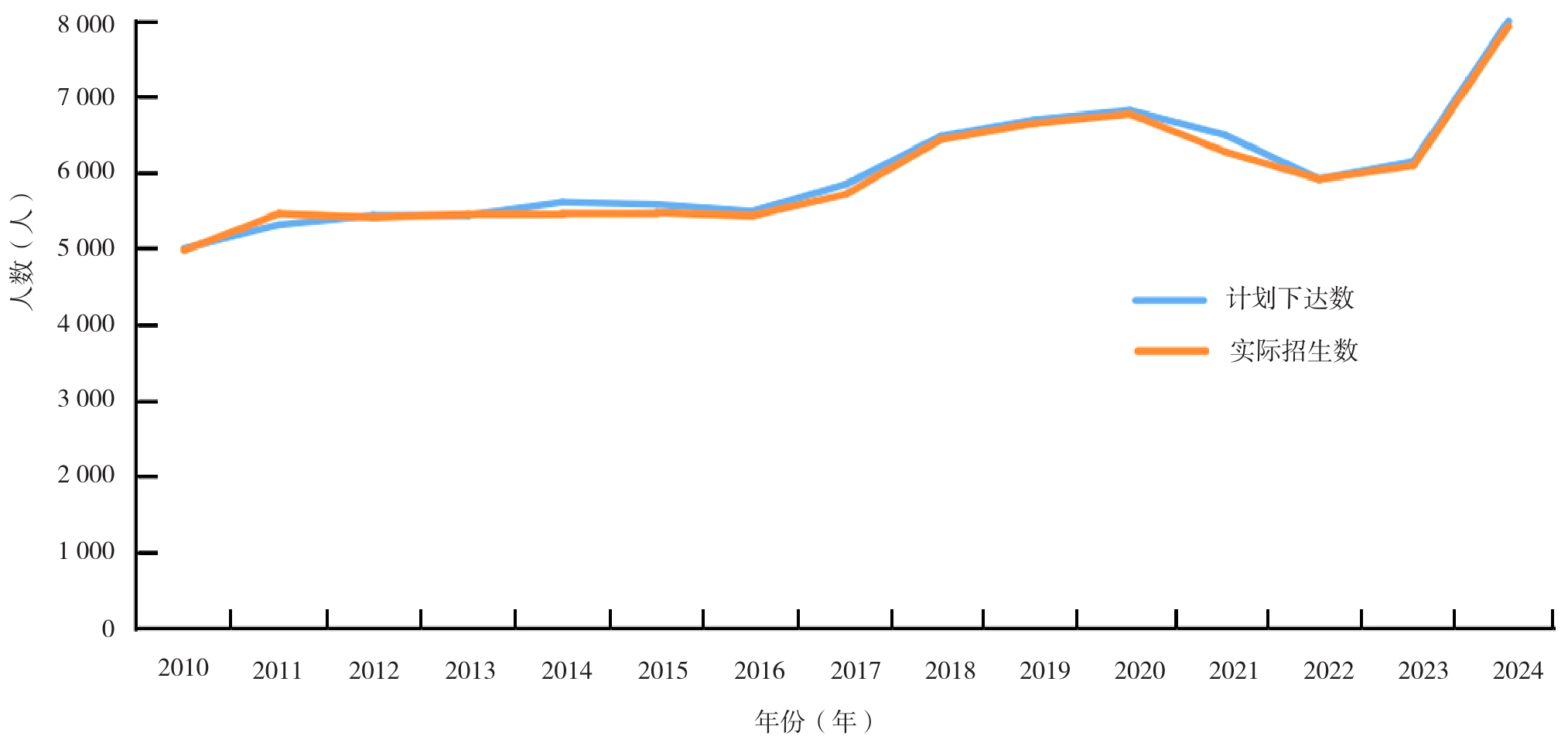
图1 2010—2024年我国农村订单定向医学生计划数和实际招生数
Figure 1 Number of enrolled and actual admissions in China's Rural Targeted Medical Student Program from 2010 to 2024
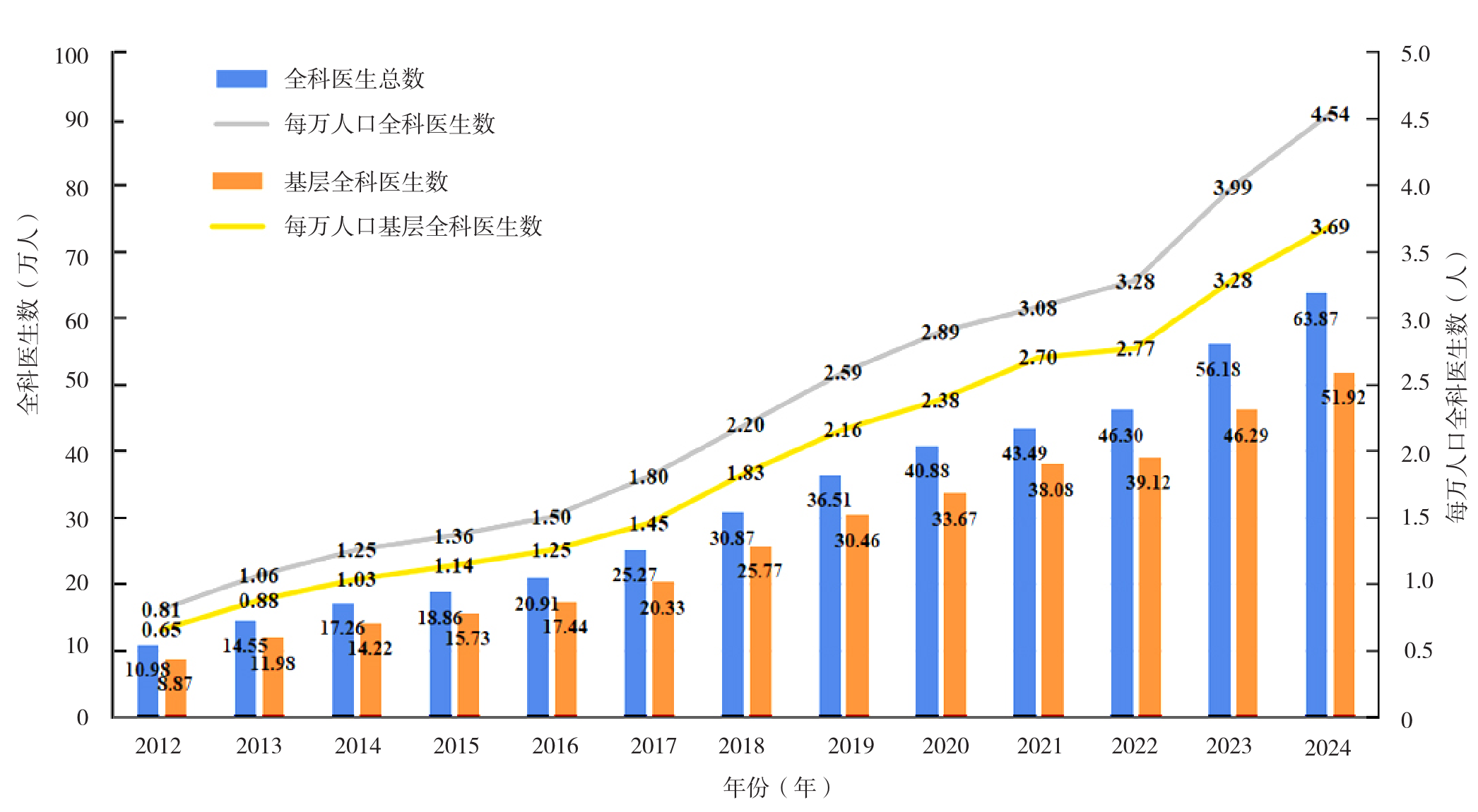
图2 2012—2024年我国全科医生数及每万人口全科医生数
Figure 2 Number of general practitioners in China and per 10 000 population from 2012 to 2024
| 年份(年) | 医疗卫生机构 | 医院 | 乡镇卫生院(社区卫生服务机构) | ||||||
|---|---|---|---|---|---|---|---|---|---|
| 执业(助理)医师(万人) | 全科医生数(万人) | 全科医生占比(%) | 执业(助理)医师(万人) | 全科医生数(万人) | 全科医生占比(%) | 执业(助理)医师(万人) | 全科医生数(万人) | 全科医生占比(%) | |
| 2012 | 261.61 | 10.98 | 4.20 | 140.38 | 2.11 | 1.50 | 59.50 | 8.65 | 14.54 |
| 2013 | 279.48 | 14.55 | 5.21 | 150.32 | 2.58 | 1.72 | 61.17 | 11.70 | 19.13 |
| 2014 | 289.25 | 17.26 | 5.97 | 158.44 | 3.04 | 1.92 | 61.35 | 13.92 | 22.69 |
| 2015 | 303.91 | 18.86 | 6.21 | 169.28 | 3.14 | 1.85 | 62.61 | 15.43 | 24.64 |
| 2016 | 319.10 | 20.91 | 6.55 | 180.35 | 3.47 | 1.92 | 64.65 | 17.11 | 26.47 |
| 2017 | 339.00 | 25.27 | 7.45 | 193.25 | 4.94 | 2.56 | 66.94 | 19.48 | 29.10 |
| 2018 | 360.72 | 30.87 | 8.56 | 205.35 | 5.11 | 2.49 | 69.38 | 23.01 | 33.17 |
| 2019 | 386.69 | 36.51 | 9.44 | 217.43 | 6.05 | 2.78 | 72.86 | 26.55 | 36.44 |
| 2020 | 408.57 | 40.88 | 10.01 | 228.26 | 7.21 | 3.16 | 75.98 | 28.96 | 38.12 |
| 2021 | 428.76 | 43.49 | 10.14 | 239.68 | 5.41 | 2.26 | 77.62 | 28.43 | 36.63 |
| 2022 | 443.47 | 46.30 | 10.44 | 246.99 | 7.19 | 2.91 | 79.75 | 28.00 | 35.11 |
| 2023 | 478.21 | 56.18 | 11.75 | 260.30 | 9.90 | 3.80 | 85.67 | 32.02 | 37.38 |
| 增速(%) | 5.64 | 16.00 | — | 5.77 | 15.09 | — | 3.37 | 12.63 | — |
表5 2012—2023年我国全科医生数及占比
Table 5 Number of general practitioners in China and proportion from 2012 to 2023
| 年份(年) | 医疗卫生机构 | 医院 | 乡镇卫生院(社区卫生服务机构) | ||||||
|---|---|---|---|---|---|---|---|---|---|
| 执业(助理)医师(万人) | 全科医生数(万人) | 全科医生占比(%) | 执业(助理)医师(万人) | 全科医生数(万人) | 全科医生占比(%) | 执业(助理)医师(万人) | 全科医生数(万人) | 全科医生占比(%) | |
| 2012 | 261.61 | 10.98 | 4.20 | 140.38 | 2.11 | 1.50 | 59.50 | 8.65 | 14.54 |
| 2013 | 279.48 | 14.55 | 5.21 | 150.32 | 2.58 | 1.72 | 61.17 | 11.70 | 19.13 |
| 2014 | 289.25 | 17.26 | 5.97 | 158.44 | 3.04 | 1.92 | 61.35 | 13.92 | 22.69 |
| 2015 | 303.91 | 18.86 | 6.21 | 169.28 | 3.14 | 1.85 | 62.61 | 15.43 | 24.64 |
| 2016 | 319.10 | 20.91 | 6.55 | 180.35 | 3.47 | 1.92 | 64.65 | 17.11 | 26.47 |
| 2017 | 339.00 | 25.27 | 7.45 | 193.25 | 4.94 | 2.56 | 66.94 | 19.48 | 29.10 |
| 2018 | 360.72 | 30.87 | 8.56 | 205.35 | 5.11 | 2.49 | 69.38 | 23.01 | 33.17 |
| 2019 | 386.69 | 36.51 | 9.44 | 217.43 | 6.05 | 2.78 | 72.86 | 26.55 | 36.44 |
| 2020 | 408.57 | 40.88 | 10.01 | 228.26 | 7.21 | 3.16 | 75.98 | 28.96 | 38.12 |
| 2021 | 428.76 | 43.49 | 10.14 | 239.68 | 5.41 | 2.26 | 77.62 | 28.43 | 36.63 |
| 2022 | 443.47 | 46.30 | 10.44 | 246.99 | 7.19 | 2.91 | 79.75 | 28.00 | 35.11 |
| 2023 | 478.21 | 56.18 | 11.75 | 260.30 | 9.90 | 3.80 | 85.67 | 32.02 | 37.38 |
| 增速(%) | 5.64 | 16.00 | — | 5.77 | 15.09 | — | 3.37 | 12.63 | — |
| 年份(年) | 医疗卫生机构 | 医院 | 乡镇卫生院(社区卫生中心) | ||||||
|---|---|---|---|---|---|---|---|---|---|
| 总床位数(万张) | 全科床位(万张) | 全科床位占比(%) | 总床位数(万张) | 全科床位(万张) | 全科床位占比(%) | 总床位数(万张) | 全科床位(万张) | 全科床位占比(%) | |
| 2009 | 441.66 | 30.79 | 6.97 | 312.08 | 5.10 | 1.63 | 103.48 | 22.72 | 21.96 |
| 2010 | 478.68 | 33.53 | 7.00 | 338.14 | 5.24 | 1.55 | 113.19 | 25.42 | 22.46 |
| 2011 | 515.99 | 34.65 | 6.71 | 370.51 | 5.31 | 1.43 | 118.36 | 26.73 | 22.58 |
| 2012 | 572.48 | 37.28 | 6.51 | 416.15 | 5.93 | 1.42 | 126.29 | 28.36 | 22.46 |
| 2013 | 618.19 | 37.72 | 6.10 | 457.86 | 6.44 | 1.41 | 130.45 | 29.44 | 22.57 |
| 2014 | 660.12 | 38.81 | 5.88 | 496.12 | 6.75 | 1.36 | 133.90 | 30.35 | 22.67 |
| 2015 | 701.52 | 39.37 | 5.61 | 533.06 | 7.03 | 1.32 | 137.45 | 30.77 | 22.39 |
| 2016 | 741.05 | 40.96 | 5.53 | 568.89 | 7.64 | 1.34 | 140.61 | 31.82 | 22.63 |
| 2017 | 794.03 | 42.90 | 5.40 | 612.05 | 7.71 | 1.26 | 149.07 | 33.61 | 22.55 |
| 2018 | 840.41 | 45.45 | 5.41 | 651.97 | 8.48 | 1.30 | 154.29 | 34.92 | 22.63 |
| 2019 | 880.70 | 46.46 | 5.28 | 686.65 | 8.86 | 1.29 | 158.45 | 36.32 | 22.92 |
| 2020 | 910.07 | 45.51 | 5.00 | 713.12 | 7.96 | 1.12 | 161.58 | 36.49 | 22.58 |
| 2021 | 945.01 | 46.46 | 4.92 | 741.42 | 7.87 | 1.06 | 165.65 | 37.53 | 22.66 |
| 2022 | 974.99 | 48.69 | 4.98 | 766.29 | 8.43 | 1.10 | 170.74 | 39.05 | 22.87 |
| 2023 | 1017.37 | 48.78 | 4.80 | 800.45 | 8.48 | 1.06 | 177.87 | 39.31 | 22.10 |
| 增速(%) | 6.14 | 3.34 | — | 6.96 | 3.70 | — | 3.94 | 3.99 | — |
表6 2009—2023年我国医疗卫生机构全科床位数及占比
Table 6 Number of general practitioner beds and their proportion in China's healthcare institutions from 2009 to 2023
| 年份(年) | 医疗卫生机构 | 医院 | 乡镇卫生院(社区卫生中心) | ||||||
|---|---|---|---|---|---|---|---|---|---|
| 总床位数(万张) | 全科床位(万张) | 全科床位占比(%) | 总床位数(万张) | 全科床位(万张) | 全科床位占比(%) | 总床位数(万张) | 全科床位(万张) | 全科床位占比(%) | |
| 2009 | 441.66 | 30.79 | 6.97 | 312.08 | 5.10 | 1.63 | 103.48 | 22.72 | 21.96 |
| 2010 | 478.68 | 33.53 | 7.00 | 338.14 | 5.24 | 1.55 | 113.19 | 25.42 | 22.46 |
| 2011 | 515.99 | 34.65 | 6.71 | 370.51 | 5.31 | 1.43 | 118.36 | 26.73 | 22.58 |
| 2012 | 572.48 | 37.28 | 6.51 | 416.15 | 5.93 | 1.42 | 126.29 | 28.36 | 22.46 |
| 2013 | 618.19 | 37.72 | 6.10 | 457.86 | 6.44 | 1.41 | 130.45 | 29.44 | 22.57 |
| 2014 | 660.12 | 38.81 | 5.88 | 496.12 | 6.75 | 1.36 | 133.90 | 30.35 | 22.67 |
| 2015 | 701.52 | 39.37 | 5.61 | 533.06 | 7.03 | 1.32 | 137.45 | 30.77 | 22.39 |
| 2016 | 741.05 | 40.96 | 5.53 | 568.89 | 7.64 | 1.34 | 140.61 | 31.82 | 22.63 |
| 2017 | 794.03 | 42.90 | 5.40 | 612.05 | 7.71 | 1.26 | 149.07 | 33.61 | 22.55 |
| 2018 | 840.41 | 45.45 | 5.41 | 651.97 | 8.48 | 1.30 | 154.29 | 34.92 | 22.63 |
| 2019 | 880.70 | 46.46 | 5.28 | 686.65 | 8.86 | 1.29 | 158.45 | 36.32 | 22.92 |
| 2020 | 910.07 | 45.51 | 5.00 | 713.12 | 7.96 | 1.12 | 161.58 | 36.49 | 22.58 |
| 2021 | 945.01 | 46.46 | 4.92 | 741.42 | 7.87 | 1.06 | 165.65 | 37.53 | 22.66 |
| 2022 | 974.99 | 48.69 | 4.98 | 766.29 | 8.43 | 1.10 | 170.74 | 39.05 | 22.87 |
| 2023 | 1017.37 | 48.78 | 4.80 | 800.45 | 8.48 | 1.06 | 177.87 | 39.31 | 22.10 |
| 增速(%) | 6.14 | 3.34 | — | 6.96 | 3.70 | — | 3.94 | 3.99 | — |
| 年份(年) | 医疗卫生机构 | 医院 | 乡镇卫生院(社区卫生服务机构) | ||||||
|---|---|---|---|---|---|---|---|---|---|
| 门急诊人次(亿人次) | 全科门急诊人次(亿人次) | 全科门急诊人次占比(%) | 门急诊人次(亿人次) | 全科门急诊人次(亿人次) | 全科门急诊人次占比(%) | 门急诊人次(亿人次) | 全科门急诊人次(亿人次) | 全科门急诊人次占比(%) | |
| 2009 | 33.49 | 4.31 | 12.88 | 18.75 | 0.49 | 2.61 | 10.98 | 2.89 | 26.32 |
| 2010 | 35.67 | 4.79 | 13.43 | 19.92 | 0.46 | 2.33 | 11.76 | 3.29 | 27.98 |
| 2011 | 38.48 | 5.09 | 13.23 | 22.11 | 0.50 | 2.27 | 12.28 | 3.59 | 29.23 |
| 2012 | 42.20 | 5.51 | 13.05 | 24.83 | 0.49 | 1.97 | 13.66 | 4.05 | 29.65 |
| 2013 | 45.26 | 5.97 | 13.19 | 26.79 | 0.49 | 1.83 | 14.60 | 4.49 | 30.75 |
| 2014 | 48.22 | 6.28 | 13.03 | 29.03 | 0.50 | 1.72 | 15.13 | 4.78 | 31.59 |
| 2015 | 49.87 | 6.50 | 13.03 | 30.17 | 0.49 | 1.62 | 15.63 | 5.04 | 32.25 |
| 2016 | 52.31 | 6.74 | 12.89 | 31.97 | 0.48 | 1.50 | 15.91 | 5.20 | 32.68 |
| 2017 | 55.87 | 7.08 | 12.90 | 33.63 | 0.49 | 1.46 | 16.52 | 5.51 | 33.35 |
| 2018 | 56.58 | 7.37 | 13.02 | 34.95 | 0.50 | 1.44 | 16.82 | 5.78 | 34.36 |
| 2019 | 60.39 | 7.95 | 13.17 | 37.53 | 0.54 | 1.44 | 17.75 | 6.32 | 35.61 |
| 2020 | 52.81 | 6.94 | 13.14 | 32.32 | 0.41 | 1.28 | 16.17 | 5.65 | 34.94 |
| 2021 | 59.95 | 7.43 | 12.39 | 37.82 | 0.47 | 1.25 | 17.39 | 6.04 | 34.73 |
| 2022 | 59.56 | 7.54 | 12.67 | 37.15 | 0.51 | 1.38 | 17.78 | 6.16 | 34.65 |
| 2023 | 67.14 | 8.48 | 12.62 | 41.55 | 0.54 | 1.29 | 20.02 | 6.62 | 33.07 |
| 增速(%) | 5.09 | 4.95 | — | 5.85 | 0.70 | — | 4.38 | 6.10 | — |
表7 2009—2023年我国医疗卫生机构全科门急诊人次及占比
Table 7 Outpatient and emergency visits in China's healthcare institutions and their proportion from 2009 to 2023
| 年份(年) | 医疗卫生机构 | 医院 | 乡镇卫生院(社区卫生服务机构) | ||||||
|---|---|---|---|---|---|---|---|---|---|
| 门急诊人次(亿人次) | 全科门急诊人次(亿人次) | 全科门急诊人次占比(%) | 门急诊人次(亿人次) | 全科门急诊人次(亿人次) | 全科门急诊人次占比(%) | 门急诊人次(亿人次) | 全科门急诊人次(亿人次) | 全科门急诊人次占比(%) | |
| 2009 | 33.49 | 4.31 | 12.88 | 18.75 | 0.49 | 2.61 | 10.98 | 2.89 | 26.32 |
| 2010 | 35.67 | 4.79 | 13.43 | 19.92 | 0.46 | 2.33 | 11.76 | 3.29 | 27.98 |
| 2011 | 38.48 | 5.09 | 13.23 | 22.11 | 0.50 | 2.27 | 12.28 | 3.59 | 29.23 |
| 2012 | 42.20 | 5.51 | 13.05 | 24.83 | 0.49 | 1.97 | 13.66 | 4.05 | 29.65 |
| 2013 | 45.26 | 5.97 | 13.19 | 26.79 | 0.49 | 1.83 | 14.60 | 4.49 | 30.75 |
| 2014 | 48.22 | 6.28 | 13.03 | 29.03 | 0.50 | 1.72 | 15.13 | 4.78 | 31.59 |
| 2015 | 49.87 | 6.50 | 13.03 | 30.17 | 0.49 | 1.62 | 15.63 | 5.04 | 32.25 |
| 2016 | 52.31 | 6.74 | 12.89 | 31.97 | 0.48 | 1.50 | 15.91 | 5.20 | 32.68 |
| 2017 | 55.87 | 7.08 | 12.90 | 33.63 | 0.49 | 1.46 | 16.52 | 5.51 | 33.35 |
| 2018 | 56.58 | 7.37 | 13.02 | 34.95 | 0.50 | 1.44 | 16.82 | 5.78 | 34.36 |
| 2019 | 60.39 | 7.95 | 13.17 | 37.53 | 0.54 | 1.44 | 17.75 | 6.32 | 35.61 |
| 2020 | 52.81 | 6.94 | 13.14 | 32.32 | 0.41 | 1.28 | 16.17 | 5.65 | 34.94 |
| 2021 | 59.95 | 7.43 | 12.39 | 37.82 | 0.47 | 1.25 | 17.39 | 6.04 | 34.73 |
| 2022 | 59.56 | 7.54 | 12.67 | 37.15 | 0.51 | 1.38 | 17.78 | 6.16 | 34.65 |
| 2023 | 67.14 | 8.48 | 12.62 | 41.55 | 0.54 | 1.29 | 20.02 | 6.62 | 33.07 |
| 增速(%) | 5.09 | 4.95 | — | 5.85 | 0.70 | — | 4.38 | 6.10 | — |
| 年份(年) | 医疗卫生机构 | 医院 | 乡镇卫生院(社区卫生服务机构) | ||||||
|---|---|---|---|---|---|---|---|---|---|
| 出院人数(万人) | 全科出院人数(万人) | 全科出院占比(%) | 出院人数(万人) | 全科出院人数(万人) | 全科出院占比(%) | 出院人数(万人) | 全科出院人数(万人) | 全科出院占比(%) | |
| 2009 | 13 312.50 | 1 127.52 | 8.47 | 8 454.26 | 79.69 | 0.94 | 4 002.51 | 970.66 | 24.25 |
| 2010 | 14 137.99 | 1 050.27 | 7.43 | 9 477.94 | 86.92 | 0.92 | 3 855.56 | 918.63 | 23.83 |
| 2011 | 15 264.82 | 1 000.53 | 6.55 | 10 724.23 | 91.57 | 0.85 | 3 686.35 | 868.82 | 23.57 |
| 2012 | 17 840.33 | 1 113.87 | 6.24 | 12 705.96 | 116.96 | 0.92 | 4 177.93 | 963.00 | 23.05 |
| 2013 | 19 119.93 | 1 130.45 | 5.91 | 13 928.64 | 121.56 | 0.87 | 4 215.57 | 987.80 | 23.43 |
| 2014 | 20 365.73 | 1 050.41 | 5.16 | 15 319.07 | 130.74 | 0.85 | 4 008.63 | 905.69 | 22.59 |
| 2015 | 20 955.01 | 1 012.78 | 4.83 | 16 013.90 | 140.46 | 0.88 | 3 959.20 | 855.00 | 21.60 |
| 2016 | 22 603.64 | 1 046.72 | 4.63 | 17 432.64 | 147.79 | 0.85 | 4 090.90 | 880.10 | 21.51 |
| 2017 | 24 315.71 | 1 103.15 | 4.54 | 18 822.67 | 159.78 | 0.85 | 4 370.40 | 921.00 | 21.07 |
| 2018 | 25 384.66 | 1 109.25 | 4.37 | 19 957.96 | 170.97 | 0.86 | 4 316.70 | 918.80 | 21.28 |
| 2019 | 26 502.66 | 1 133.06 | 4.28 | 21 108.17 | 180.47 | 0.85 | 4 233.50 | 935.00 | 22.09 |
| 2020 | 22 980.57 | 923.85 | 4.02 | 18 333.55 | 152.33 | 0.83 | 3 663.50 | 759.30 | 20.73 |
| 2021 | 24 642.15 | 906.12 | 3.68 | 20 067.46 | 161.03 | 0.80 | 3 537.50 | 731.70 | 20.68 |
| 2022 | 24 484.76 | 936.78 | 3.83 | 19 928.09 | 166.32 | 0.83 | 3 543.20 | 756.30 | 21.35 |
| 2023 | 30 126.25 | 1 224.79 | 4.07 | 24 456.21 | 217.95 | 0.89 | 4 460.99 | 983.60 | 22.05 |
| 增速(%) | 6.01 | 0.59 | — | 7.88 | 7.45 | — | 0.78 | 0.09 | — |
表8 2009—2023年我国医疗卫生机构全科出院人数及占比(%)
Table 8 Total discharge numbers and proportions of general practitioners in China's healthcare institutions from 2009 to 2023
| 年份(年) | 医疗卫生机构 | 医院 | 乡镇卫生院(社区卫生服务机构) | ||||||
|---|---|---|---|---|---|---|---|---|---|
| 出院人数(万人) | 全科出院人数(万人) | 全科出院占比(%) | 出院人数(万人) | 全科出院人数(万人) | 全科出院占比(%) | 出院人数(万人) | 全科出院人数(万人) | 全科出院占比(%) | |
| 2009 | 13 312.50 | 1 127.52 | 8.47 | 8 454.26 | 79.69 | 0.94 | 4 002.51 | 970.66 | 24.25 |
| 2010 | 14 137.99 | 1 050.27 | 7.43 | 9 477.94 | 86.92 | 0.92 | 3 855.56 | 918.63 | 23.83 |
| 2011 | 15 264.82 | 1 000.53 | 6.55 | 10 724.23 | 91.57 | 0.85 | 3 686.35 | 868.82 | 23.57 |
| 2012 | 17 840.33 | 1 113.87 | 6.24 | 12 705.96 | 116.96 | 0.92 | 4 177.93 | 963.00 | 23.05 |
| 2013 | 19 119.93 | 1 130.45 | 5.91 | 13 928.64 | 121.56 | 0.87 | 4 215.57 | 987.80 | 23.43 |
| 2014 | 20 365.73 | 1 050.41 | 5.16 | 15 319.07 | 130.74 | 0.85 | 4 008.63 | 905.69 | 22.59 |
| 2015 | 20 955.01 | 1 012.78 | 4.83 | 16 013.90 | 140.46 | 0.88 | 3 959.20 | 855.00 | 21.60 |
| 2016 | 22 603.64 | 1 046.72 | 4.63 | 17 432.64 | 147.79 | 0.85 | 4 090.90 | 880.10 | 21.51 |
| 2017 | 24 315.71 | 1 103.15 | 4.54 | 18 822.67 | 159.78 | 0.85 | 4 370.40 | 921.00 | 21.07 |
| 2018 | 25 384.66 | 1 109.25 | 4.37 | 19 957.96 | 170.97 | 0.86 | 4 316.70 | 918.80 | 21.28 |
| 2019 | 26 502.66 | 1 133.06 | 4.28 | 21 108.17 | 180.47 | 0.85 | 4 233.50 | 935.00 | 22.09 |
| 2020 | 22 980.57 | 923.85 | 4.02 | 18 333.55 | 152.33 | 0.83 | 3 663.50 | 759.30 | 20.73 |
| 2021 | 24 642.15 | 906.12 | 3.68 | 20 067.46 | 161.03 | 0.80 | 3 537.50 | 731.70 | 20.68 |
| 2022 | 24 484.76 | 936.78 | 3.83 | 19 928.09 | 166.32 | 0.83 | 3 543.20 | 756.30 | 21.35 |
| 2023 | 30 126.25 | 1 224.79 | 4.07 | 24 456.21 | 217.95 | 0.89 | 4 460.99 | 983.60 | 22.05 |
| 增速(%) | 6.01 | 0.59 | — | 7.88 | 7.45 | — | 0.78 | 0.09 | — |
| [1] |
秦江梅,林春梅,张艳春,等. 中国初级卫生保健的现状与挑战[J]. 中国全科医学, 2024, 27(16): 1917-1923.
|
| [2] |
杨辉,韩建军,许岩丽. 中国全科医生队伍建设的发展、挑战与展望[J]. 中国全科医学, 2019, 22(19): 2267-2279.
|
| [3] |
范转转,刘园园,姚东明. 政策工具视角下的我国全科医生政策研究[J]. 中国全科医学, 2018, 21(31): 3788-3794.
|
| [4] |
中共中央 国务院关于深化医药卫生体制改革的意见[A/OL]. (2009-03-17)[2025-09-10].
|
| [5] |
卫生部. 医药卫生中长期人才发展规划(2011—2020年)[A/OL]. (2011-02-12)[2025-09-10].
|
| [6] |
国务院办公厅. 关于推进分级诊疗制度建设的指导意见[A/OL]. (2015-09-30)[2025-09-10].
|
| [7] |
国务院. 关于印发"十三五"卫生与健康规划的通知[A/OL]. (2016-12-27)[2025-09-10].
|
| [8] |
中华人民共和国国家卫生健康委员会. "十三五"全国卫生计生人才发展规划[A/OL]. (2017-01-04)[2025-09-10].
|
| [9] |
国家卫生健康委. 关于印发"十四五"卫生健康人才发展规划的通知[A/OL]. (2022-08-03)[2025-09-10].
|
| [10] |
国务院关于建立全科医生制度的指导意见[A/OL]. (2011-07-06)[2025-09-10].
|
| [11] |
国务院办公厅. 关于改革完善全科医生培养与使用激励机制的意见[A/OL]. (2018-01-24)[2025-09-10].
|
| [12] |
以全科医生为重点的基层医疗卫生队伍建设规划[EB/OL]. [2025-09-10].
|
| [13] |
国家卫生健康委. 关于印发开展农村订单定向医学生免费培养工作实施意见的通知[A/OL]. (2010-06-08)[2025-09-10].
|
| [14] |
国家卫生健康委. 关于印发《全科医学师资培训实施意见(试行)》的通知[A/OL]. (2013-01-15)[2025-09-10].
|
| [15] |
国家卫生健康委. 关于开展全科医生特设岗位计划试点工作的暂行办法[A/OL]. (2013-12-05)[2025-09-10].
|
| [16] |
国家卫生健康委. 关于进一步做好农村订单定向医学生免费培养工作的意见[A/OL]. (2015-05-27)[2025-09-10].
|
| [17] |
国家卫生健康委. 国务院办公厅关于深化医教协同进一步推进医学教育改革与发展的意见[A/OL]. (2017-07-11)[2025-09-10].
|
| [18] |
国家卫生健康委. 关于印发住院医师规范化培训基地(综合医院)全科医学科设置指导标准(试行)的通知[A/OL]. (2018-08-27)[2025-09-10].
|
| [19] |
国家卫生健康委. 关于做好农村订单定向免费培养医学生就业安置和履约管理工作的通知[A/OL]. (2019-09-11)[2025-09-10].
|
| [20] |
国务院办公厅. 关于加快医学教育创新发展的指导意见[A/OL]. (2020-09-23)[2025-09-10].
|
| [21] |
国务院办公厅关于进一步深化医教协同加强临床医学人才培养的意见[A/OL]. (2024-12-09)[2025-09-10].
|
| [22] |
|
| [23] |
齐殿君,江南,于晓松. 我国本科生全科医学教育教学情况调查研究[J]. 中国全科医学, 2024, 27(7): 789-793.
|
| [24] |
北京大学医学部. 北京大学医学部专业培养方案汇编[EB/OL]. (2019-11-01)[2025-11-08].
|
| [25] |
齐殿君,江南,于晓松. 我国高校附属医院开展全科医学住院医师规范化培训情况调查[J]. 中华医学教育杂志, 2023, 43(4): 298-302.
|
| [26] |
国家卫生健康委. 对十四届全国人大三次会议第8930号建议的答复 中华人民共和国国家卫生健康委员会[A/OL]. (2025-08-08)[2025-09-10].
|
| [27] |
国家卫生健康委员会网站. 国家卫生健康委员会2022年5月24日新闻发布会介绍党的十八大以来健康扶贫工作成效以及与乡村振兴有效衔接工作进展[A/OL]. (2022-05-24)[2025-09-10].
|
| [28] |
国家统计局人口和就业统计司. 2024年中国人口和就业统计年鉴[M]. 北京: 中国统计出版社, 2024.
|
| [29] |
国家卫生健康委员会. 2024中国卫生健康统计提要[M]. 北京: 中国协和医科大学出版社, 2024.
|
| [30] |
姚弥,张建欣,荆冠宁,等. 以医学高等院校为支撑搭建网络开展全科科研助力学科建设[J]. 中华全科医师杂志, 2023, 22(11): 1118-1124.
|
| [31] |
国家自然科学基金委员会. 2025年度国家自然科学基金项目指南(医学科学部)附录:热点聚焦与申请策略[EB/OL]. (2025-02-14)[2025-09-10].
|
| [32] |
澎湃新闻. 吴浩委员:全科医学在我国是冷门学科,建议纳入国家重点学科[EB/OL]. (2022-03-02)[2025-09-10].
|
| [33] |
OECD. Health at a Glance 2023: OECD Indicators, OECD Publishing, Paris[EB/OL]. [2025-09-10].
|
| [34] |
国家卫生健康委. 对十四届全国人大三次会议第8056号建议的答复[A/OL]. (2025-08-26)[2025-09-10].
|
| [35] |
国务院. 国务院关于《医疗卫生强基工程实施方案》的批复(国函〔2025〕85号)[A/OL]. (2025-09-10)[2025-09-10].
|
| [1] | 汤皓晴, 李明月, 龙仁, 朱胤博, 梁伟欢, 朱萍, 赵炜, 赵洋, 刘晓云. 45岁及以上中老年糖尿病共病的治疗负担:基于6所基层医院患者的横断面调查[J]. 中国全科医学, 2026, 29(32): 4786-4797. |
| [2] | 程玉, 杨荣, 龙仁, 廖晓阳, 赵洋. 社区基本医疗的随机对照试验研究设计、实施和案例解析[J]. 中国全科医学, 2026, 29(31): 4528-4535. |
| [3] | 邓玮, 黄梦婷, 易胜利, 林杨, 许力丹, 任哲学, 朱秀琼, 李烨莎, 任梦鸽, 柯大智, 李桂琼, 吴志勤, 骆傲然, 何发培. AI赋能全科临床思维的培养与实施效果研究[J]. 中国全科医学, 2026, 29(28): 4078-4085. |
| [4] | 李亚慧, 谢坤, 练璐, 张怀平, 陈家应. 基于冰山模型下我国基层医生职业素质现状分析[J]. 中国全科医学, 2026, 29(27): 3891-3898. |
| [5] | 何国枢, 任菁菁, 朱佳宏, 马方晖, 孙文萍, 刘雷, 殷安康, 唐文娟. 基于多中心真实世界数据的全科未分化疾病患者南北地区特征对比研究[J]. 中国全科医学, 2026, 29(26): 3745-3751. |
| [6] | 赵亚文, 王杰萍, 杜雪平, 吴薇, 闫巍, 周晓霞, 关亚杰, 李倩, 李昊东. 北京市某三级综合医院全科医学科门诊就诊患者疾病特征分析[J]. 中国全科医学, 2026, 29(26): 3733-3738. |
| [7] | 赵泽宙, 王杰萍, 杜雪平, 闫巍, 吴薇, 李倩, 赵亚文, 李昊东. 北京市某三级综合医院全科医学科住院患者疾病特征研究[J]. 中国全科医学, 2026, 29(26): 3739-3744. |
| [8] | 张静瑜, 张钰, 陆新喜, 黎敏, 徐露, 郑俊娣, 聂宇贤, 石丘玲, 戴小军. 利益相关者视角下社区肿瘤患者管理现状与需求研究[J]. 中国全科医学, 2026, 29(25): 3664-3669. |
| [9] | 杨信, 王宏, 徐浩枫, 韩建军, 梁万年, 胡丙杰. 国外全科医学定义演进逻辑、核心特征对中国全科医学发展的启示[J]. 中国全科医学, 2026, 29(25): 3553-3562. |
| [10] | 袁成菊, 肖雪, 范腾阳, 刘仕方, 黄念, 张年, 余昌胤. 农村订单定向全科医生继续医学教育指标体系的初步构建[J]. 中国全科医学, 2026, 29(22): 3110-3115. |
| [11] | 汪洋, 邹川, 郭梦若, 何柳华, 陆许航, 桂贤忠, 徐志杰, 林恺, 金花, 姚弥, 杨辉, 于德华. 全科医务人员在人工智能的辅助下提炼高质量研究问题的五个步骤[J]. 中国全科医学, 2026, 29(22): 3094-3102. |
| [12] | 崔珑严, 代高岚歆, 陶红兵. 人力资源管理过程视角下我国医防融合人力资源相关政策文本分析[J]. 中国全科医学, 2026, 29(21): 3012-3019. |
| [13] | 张峥璐, 乌依罕. 全科医学精神卫生亚专长发展的国际经验及对中国的启示[J]. 中国全科医学, 2026, 29(20): 2775-2780. |
| [14] | 吴珍, 郗雅琪, 胡琳琳. 我国体重管理政策的工具选择与组合特征:基于2016—2025年国家政策文本的内容分析[J]. 中国全科医学, 2026, 29(20): 2766-2774. |
| [15] | 赵欣欣, 孙小婷, 罗欣昊, 孙金, 彭德荣, 郑加麟. 以患者为中心的医疗之家模式中国本土化研究:适配度、挑战与路径分析[J]. 中国全科医学, 2026, 29(19): 2608-2613. |
| 阅读次数 | ||||||
|
全文 |
|
|||||
|
摘要 |
|
|||||