中国全科医学 ›› 2026, Vol. 29 ›› Issue (10): 1348-1353.DOI: 10.12114/j.issn.1007-9572.2024.0554

• 数字健康专题研究 • 上一篇    下一篇

线上与线下培训对老年人数字健康素养提升效果的随机对照研究

彭骏1, 丁静林2, 郝辰业2, 吴骋3, 朱荣慧3, 顾春光4, 管文琦5, 万辉6,*()   

  1. 1.511363 广东省广州市,广州商学院管理学院
    2.201318 上海市,上海健康医学院图文信息中心
    3.200433 上海市,海军军医大学卫生勤务学系军队卫生统计学教研室
    4.200082 上海市杨浦区长海社区卫生服务中心
    5.200090 上海市杨浦区中心医院
    6.200433 上海市,海军军医大学医疗管理室
  • 收稿日期:2025-03-15 修回日期:2025-08-12 出版日期:2026-04-05 发布日期:2026-03-25
  • 通讯作者: 万辉

  • 作者贡献:

    彭骏负责研究的构思与设计,研究的实施,撰写论文;丁静林、郝辰业进行数据的收集与整理;吴骋、朱荣慧负责统计设计及处理;顾春光、管文琦组织培训;万辉负责研究的实施,文章的撰写、质量控制与审查,对文章整体负责,监督管理。

  • 基金资助:
    上海"科技创新行动计划"软科学研究项目(23692112100); 海军军医大学社科培育基金(2022SK007)

A Randomized Controlled Study Comparing the Effectiveness of Online and Offline Training on Improving Digital Health Literacy among the Elderly

PENG Jun1, DING Jinglin2, HAO Chenye2, WU Cheng3, ZHU Ronghui3, GU Chunguang4, GUAN Wenqi5, WAN hui6,*()   

  1. 1. School of Management, Guangzhou College of Commerce, Guangzhou 511363, China
    2. Library and Information Center of Shanghai University of Health Sciences, Shanghai 201318, China
    3. Department of Military Health Statistics of Naval Medical University, Shanghai 200433, China
    4. Changhai Community Health Service Center, Shanghai 200082, China
    5. Shanghai Yangpu District Central Hospital, Shanghai 200090, China
    6. Medical Management Office of Naval Medical University, Shanghai 200433, China
  • Received:2025-03-15 Revised:2025-08-12 Published:2026-04-05 Online:2026-03-25
  • Contact: WAN hui

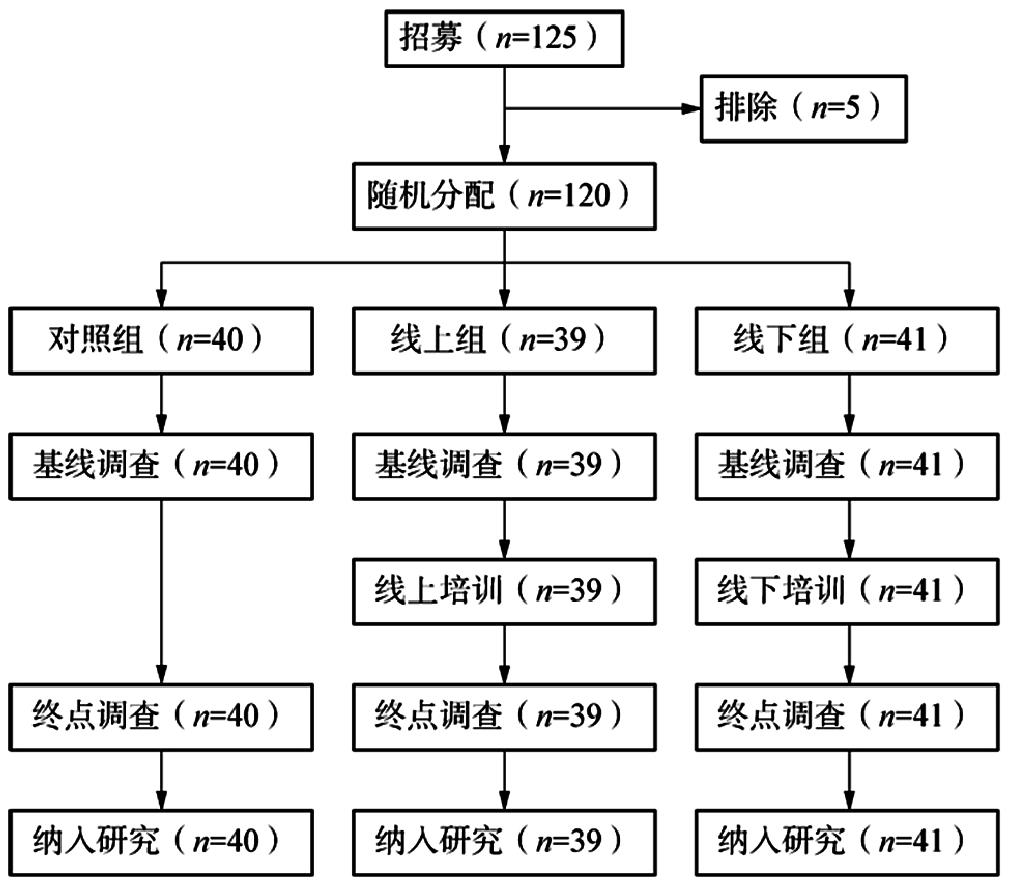
摘要: 背景 随着我国人口老龄化加剧和健康信息数字化进程加速,提升老年人数字健康素养(DHL)已成为实现健康老龄化的重要议题。当前老年群体普遍面临数字鸿沟,DHL水平不高,特别是在健康信息获取、甄别与应用方面存在显著困难,亟须探索科学有效的干预路径。 目的 探讨线上与线下培训提升老年人DHL的效果。 方法 2024年4月,以医生推荐、门诊宣传和病房宣传等方式从上海市某2个社区医院招募125位老年人,实际纳入120位作为研究对象。采用随机数字表法分为线上干预组(简称线上组,n=39)、线下干预组(简称线下组,n=41)和对照组(n=40)。线下组采取线下讲座+现场实操答疑的方式,组织3次线下培训,40 min/次,共计120 min。线上组采取观看视频+在线互动方式,推送3次培训视频,40 min/次,共计120 min。对照组未采取任何干预。围绕"如何查找健康资源信息、如何区分健康资源信息质量、如何自信做出健康信息决定"3个维度开展线上或线下DHL提升培训,比较干预前后电子健康素养量表(eHEALS)得分,观察不同干预的作用效果。 结果 干预前,对照组、线上组、线下组eHEALS总评分比较,差异无统计学意义(P>0.05)。干预后,对照组、线上组、线下组eHEALS总评分比较,差异有统计学意义(P<0.05),其中,线上组eHEALS总评分高于对照组(P<0.05),线下组eHEALS总评分高于对照组(P<0.05),线下组eHEALS总评分高于线上组(P<0.05)。 结论 线上教育和线下教育均有助于提升老年人数字健康素养,且线下教育培训效果优于线上教育。

关键词: 健康素养, 老年人, 数字健康素养, 培训方式, 随机对照试验

Abstract:

Background

Against the backdrop of rapid population aging and digital transformation of health services in China, enhancing digital health literacy (DHL) has emerged as a critical determinant of healthy aging. The current elderly population generally faces a digital divide, with low levels of digital health literacy, especially in terms of obtaining, screening, and applying health information, which presents significant difficulties. It is urgent to explore scientifically effective intervention paths.

Objective

Exploring the effectiveness of online and offline training in enhancing DHL among the elderly.

Methods

In April 2024, 125 elderly people were recruited from two community hospitals in Shanghai as research subjects through physician recommendations, outpatient promotion, and ward promotion, and 120 elderly people were actually included. The participants were randomly divided into an online intervention group, an offline intervention group, and a control group using a random number table method. The offline intervention group adopted a combination of offline lectures and on-site practical Q&A. Three offline training sessions were organized, each lasting 40 minutes, for a total of 120 minutes. The online intervention group adopted a combination of watching videos and online interaction, pushing 3 training videos, 40 minutes each time, for a total of 120 minutes. The control group did not receive any intervention. Conduct online or offline DHL training on three dimensions: how to search for health resource information, how to distinguish the quality of health resource information, and how to confidently make health information decisions. Pre- and post-intervention comparisons utilized the eHEALS scale to evaluate outcomes.

Results

Before intervention, there was no statistically significant difference in the total eHEALS scores among the three groups (P>0.05) . After intervention, there was a statistically significant difference in the total eHEALS scores among the three groups (P<0.05) , with the online group having a higher eHEALS score than the control group (P<0.05) , the offline group having a higher eHEALS score than the control group (P<0.05) , and the offline group having a higher eHEALS score than the online group (P<0.05) .

Conclusion

Both online and offline education can help improve the digital health literacy of the elderly, and offline education and training have better effects than online education.

Key words: Health literacy, Aged, Digital health literacy, Training methods, Randomized controlled trial