
中国全科医学 ›› 2027, Vol. 30 ›› Issue (03): 450-461.DOI: 10.12114/j.issn.1007-9572.2026.0078
• 论著·体重管理 • 上一篇
谢超1, 庄明南1,2, 刘宗楠3, 严瑞祥4, 肖宁坤5, 范志伟6, 邱淑涵7, 王洪塔1, 高子奇8, 高飞1,*( )
收稿日期:2026-03-25
修回日期:2026-06-25
出版日期:2027-01-20
发布日期:2026-11-26
通讯作者:
高飞
谢超、庄明南与刘宗楠为共同第一作者
作者贡献:
谢超负责研究构思与方案设计、数据整理、效应量构建、统计分析实施及结果可视化,并参与检索策略制订、文献筛选、数据提取和论文撰写;庄明南、刘宗楠参与研究设计以及文献检索、筛选、数据提取和论文撰写;严瑞祥参与文献筛选、偏倚风险评估、证据质量分级、数据复核及结果解释;肖宁坤、范志伟、邱淑涵参与文献整理、数据核查、结果讨论及稿件修改;王洪塔参与研究方法学论证与统计学指导,对三水平荟萃分析、异质性探索及结果稳健性分析进行把关;高子奇参与结果讨论、稿件修改与语言润色;高飞负责研究总体设计、学术指导、论文重要内容修订及最终定稿;所有作者已阅读并同意论文最终版本,并同意对论文内容的准确性和完整性负责。
基金资助:
XIE Chao1, ZHUANG Mingnan1,2, LIU Zongnan3, YAN Ruixiang4, XIAO Ningkun5, FAN Zhiwei6, QIU Shuhan7, WANG Hongta1, GAO Ziqi8, GAO Fei1,*()
Received:2026-03-25
Revised:2026-06-25
Published:2027-01-20
Online:2026-11-26
Contact:
GAO Fei
About author:XIE Chao, ZHUANG Mingnan, and LIU Zongnan are co-first authors
摘要: 背景 持续久坐可在急性层面引发外周及中枢血管功能的不利改变,并可能进一步增加心血管疾病发生风险。久坐间断是一种便于融入日常生活和社区健康管理场景的行为干预策略,有可能缓解持续久坐诱发的急性血管不利反应。然而,既往相关证据多来自健康体质量成人,针对超重与肥胖成人血管功能急性效应的研究仍较为零散,尚缺乏系统、高质量的定量综合证据。 目的 本系统综述与荟萃分析旨在探讨久坐间断对超重与肥胖成人血管功能的急性影响,并探索受试者特征及干预参数对干预效应的潜在影响。 方法 系统检索PubMed、Web of Science、Cochrane Library、Scopus、Embase与中国知网(建库至2025年11月)。纳入≥18岁、BMI≥25.0 kg/m2的超重与肥胖成人;研究设计为针对急性干预效应的随机交叉对照试验;干预措施为在持续久坐过程中插入短暂站立/步行或低负荷活动(如快走、抗阻)等"久坐间断"方式。效应量基于受试者内对比构建,采用Hedges'g作为标准化效应量指标,并按预设规则优先选取暴露末端或最接近暴露末端的主时间点。考虑到同一研究可能报告多个血管功能结局、多个测量时间点或多个效应量,本研究采用三水平随机效应模型合并效应量,以处理同一研究内多效应量之间的非独立性。通过亚组分析与元回归分析,探索受试者特征及干预方案参数对干预效应的影响,明确研究间异质性的来源。 结果 共纳入18项随机交叉试验,共包括335名参与者,其中男167名、女168名。单项研究样本量为10~25,受试者年龄范围为21~78岁。与持续久坐相比,久坐间断能急性降低平均动脉压(MAP)(g=-0.45,95%CI=-0.89~-0.01,P=0.04;非常低确定性证据),增加外周血流量(g=0.28,95%CI=0.01~0.55,P=0.04;低确定性证据)及改善血流介导的血管舒张(FMD)(g=0.56,95%CI=0.05~1.06,P=0.03;非常低确定性证据)。对外周剪切应力(g=0.37,95%CI=-0.10~0.84,P=0.12;非常低确定性证据)与中枢血管功能指标(g=0.07,95%CI=-0.32~0.46,P=0.70;低确定性证据)的急性影响证据不确定;外周脉搏波速度(非常低确定性证据)总体未形成明确急性改善结论。预设亚组与探索性元回归分析显示,MAP降低幅度在年龄较大、BMI较高的受试者中更明显,且间断次数较多、总间断持续时间较长时MAP降低幅度更大;外周血流量增加幅度与试验期久坐控制时间呈正相关;FMD改善幅度与间断时间参数及运动强度有关,其中较短间断时间和中等强度间断活动可能对应更明显的FMD改善(P<0.05)。上述探索性结果主要用于提示研究间异质性的可能来源,可为后续研究设计提供参考线索,需谨慎解释。总体证据确定性为低至非常低,主要受偏倚风险、不一致性和不精确性影响。 结论 久坐间断相较持续久坐可能有利于超重与肥胖成人MAP下降、外周血流量增加及FMD改善,但对外周剪切应力、中枢血管功能和外周脉搏波速度的急性影响仍不确定。由于现有证据多为低至非常低确定性,且结局均为急性血管功能替代指标,当前结果不能直接推断长期心血管临床获益。预设亚组和探索性元回归结果仅可作为后续研究设计的参考线索。
中图分类号:
| 步骤 | 检索式 |
|---|---|
| #1 | Search strategy for "Sedentary breaks" "Sedentary Behavior" OR sedentary behavio* OR sitting OR "prolonged sitting" OR "interrupt* sitting" OR "breaking up sitting" OR "sedentary break*" OR "activity break*" OR sit-stand OR "exercise snacks" OR "short bouts of exercise" OR "simple resistance exercise" OR "low-intensity exercise" OR "breaks" OR "intervals" OR "breaking" OR "break" OR "intermittent" OR "interrupting" OR "short bouts" OR "alternating" OR "exercise" OR "walking" OR "standing" OR "physical activity" |
| #2 | Search strategy for "Adults/older adults and overweight/obesity" "adults" OR "elderly" OR "older adults" OR "Obesity"[Mesh] OR obese* OR overweight OR adiposity OR "high BMI" |
| #3 | Search strategy for "Acute endothelial and vascular function" "Endothelium, Vascular/physiology" OR "Vasodilation"[Mesh] OR "Blood Flow Velocity" OR "Arterial Stiffness" OR "Blood Pressure" OR "vascular function" OR "endothelial function" OR "flow-mediated dilation" OR FMD OR "peripheral blood flow" OR "peripheral shear stress" OR "shear rate" OR "pulse wave velocity" OR PWV OR "central arterial blood flow" OR "mean arterial pressure" OR MAP AND (acute OR "short-term" OR immediate) |
| #4 | #1 AND #2 AND #3 |
表1 PubMed数据库文献检索策略
Table 1 Literature search strategy of PubMed database
| 步骤 | 检索式 |
|---|---|
| #1 | Search strategy for "Sedentary breaks" "Sedentary Behavior" OR sedentary behavio* OR sitting OR "prolonged sitting" OR "interrupt* sitting" OR "breaking up sitting" OR "sedentary break*" OR "activity break*" OR sit-stand OR "exercise snacks" OR "short bouts of exercise" OR "simple resistance exercise" OR "low-intensity exercise" OR "breaks" OR "intervals" OR "breaking" OR "break" OR "intermittent" OR "interrupting" OR "short bouts" OR "alternating" OR "exercise" OR "walking" OR "standing" OR "physical activity" |
| #2 | Search strategy for "Adults/older adults and overweight/obesity" "adults" OR "elderly" OR "older adults" OR "Obesity"[Mesh] OR obese* OR overweight OR adiposity OR "high BMI" |
| #3 | Search strategy for "Acute endothelial and vascular function" "Endothelium, Vascular/physiology" OR "Vasodilation"[Mesh] OR "Blood Flow Velocity" OR "Arterial Stiffness" OR "Blood Pressure" OR "vascular function" OR "endothelial function" OR "flow-mediated dilation" OR FMD OR "peripheral blood flow" OR "peripheral shear stress" OR "shear rate" OR "pulse wave velocity" OR PWV OR "central arterial blood flow" OR "mean arterial pressure" OR MAP AND (acute OR "short-term" OR immediate) |
| #4 | #1 AND #2 AND #3 |
| 纳入标准: |
| P:受试者为≥18岁的成年人且符合WHO定义的超重(BMI 25.0~29.9 kg/m2)或肥胖标准(BMI≥30.0 kg/m2) |
| I:干预方式包括在长时间的坐姿中加入间歇或打断,例如:坐-站(交替)、步行、站立等形式 |
| C:对照组必须是连续、不间断的久坐 |
| O:结局指标至少包含1项与血管功能相关的指标,例如:外周血流量、外周脉搏波速度和外周血管舒张功能等指标 |
| S:研究设计为针对急性干预效应的随机交叉对照试验 |
| 排除标准: |
| A:并未在长时间的久坐过程中加入跑步、站立和步行等打断形式 |
| B:结局指标未报告与血管相关的指标或虽有相关指标,但数据不完整、无法提取或无法转换效应量 |
| C:研究设计为非随机对照试验、长期随访研究、横截面研究等非交叉设计 |
| D:排除非人类研究 |
| E:排除定型综述、动物实验和空白文献 |
| F:实验之间无明确洗脱期信息的交叉实验 |
表2 文献纳入与排除标准
Table 2 Inclusion and exclusion criteria
| 纳入标准: |
| P:受试者为≥18岁的成年人且符合WHO定义的超重(BMI 25.0~29.9 kg/m2)或肥胖标准(BMI≥30.0 kg/m2) |
| I:干预方式包括在长时间的坐姿中加入间歇或打断,例如:坐-站(交替)、步行、站立等形式 |
| C:对照组必须是连续、不间断的久坐 |
| O:结局指标至少包含1项与血管功能相关的指标,例如:外周血流量、外周脉搏波速度和外周血管舒张功能等指标 |
| S:研究设计为针对急性干预效应的随机交叉对照试验 |
| 排除标准: |
| A:并未在长时间的久坐过程中加入跑步、站立和步行等打断形式 |
| B:结局指标未报告与血管相关的指标或虽有相关指标,但数据不完整、无法提取或无法转换效应量 |
| C:研究设计为非随机对照试验、长期随访研究、横截面研究等非交叉设计 |
| D:排除非人类研究 |
| E:排除定型综述、动物实验和空白文献 |
| F:实验之间无明确洗脱期信息的交叉实验 |
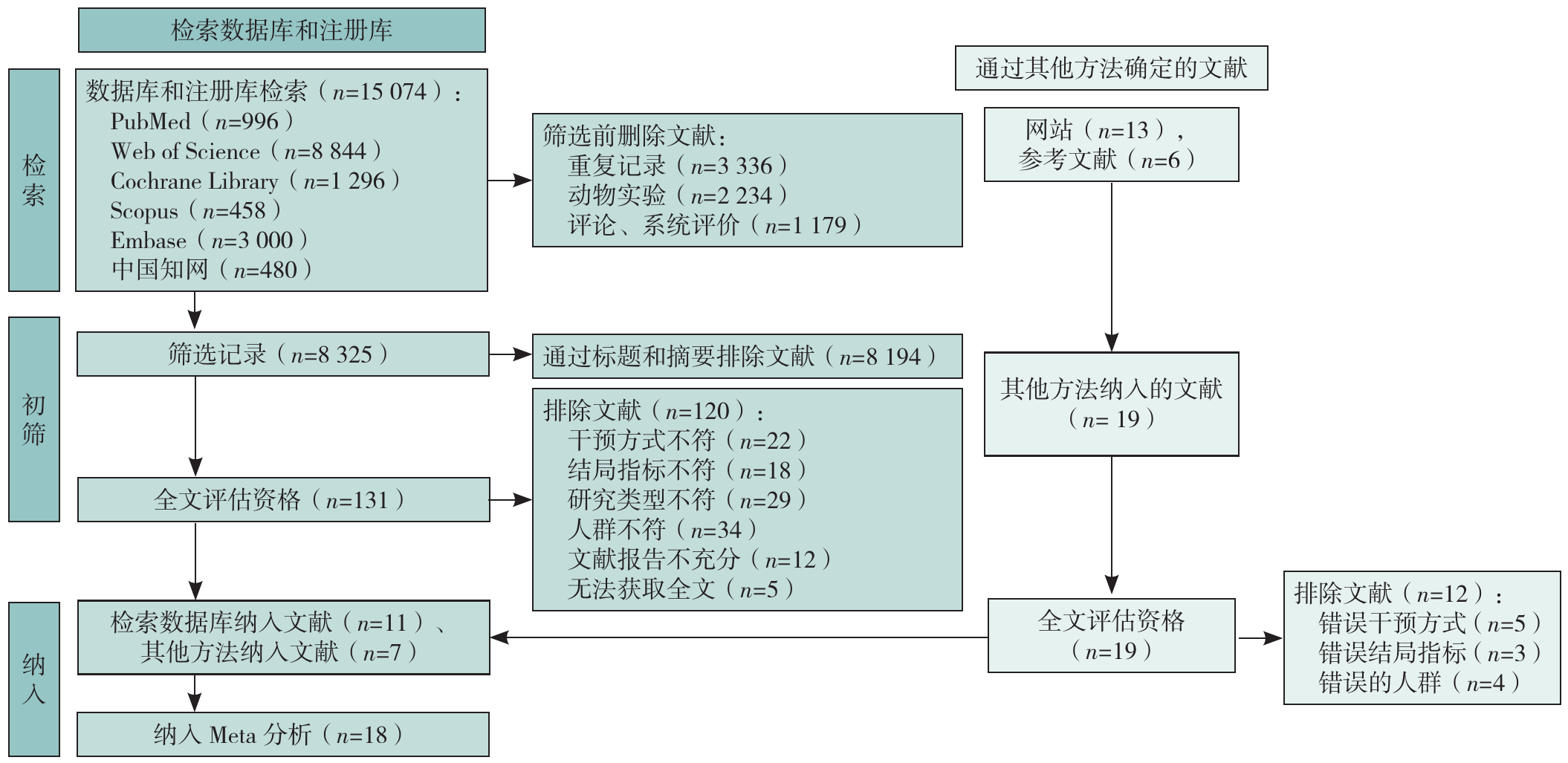
图1 PRISMA文献筛选流程图
Figure 1 PRISMA flow diagram of study selection
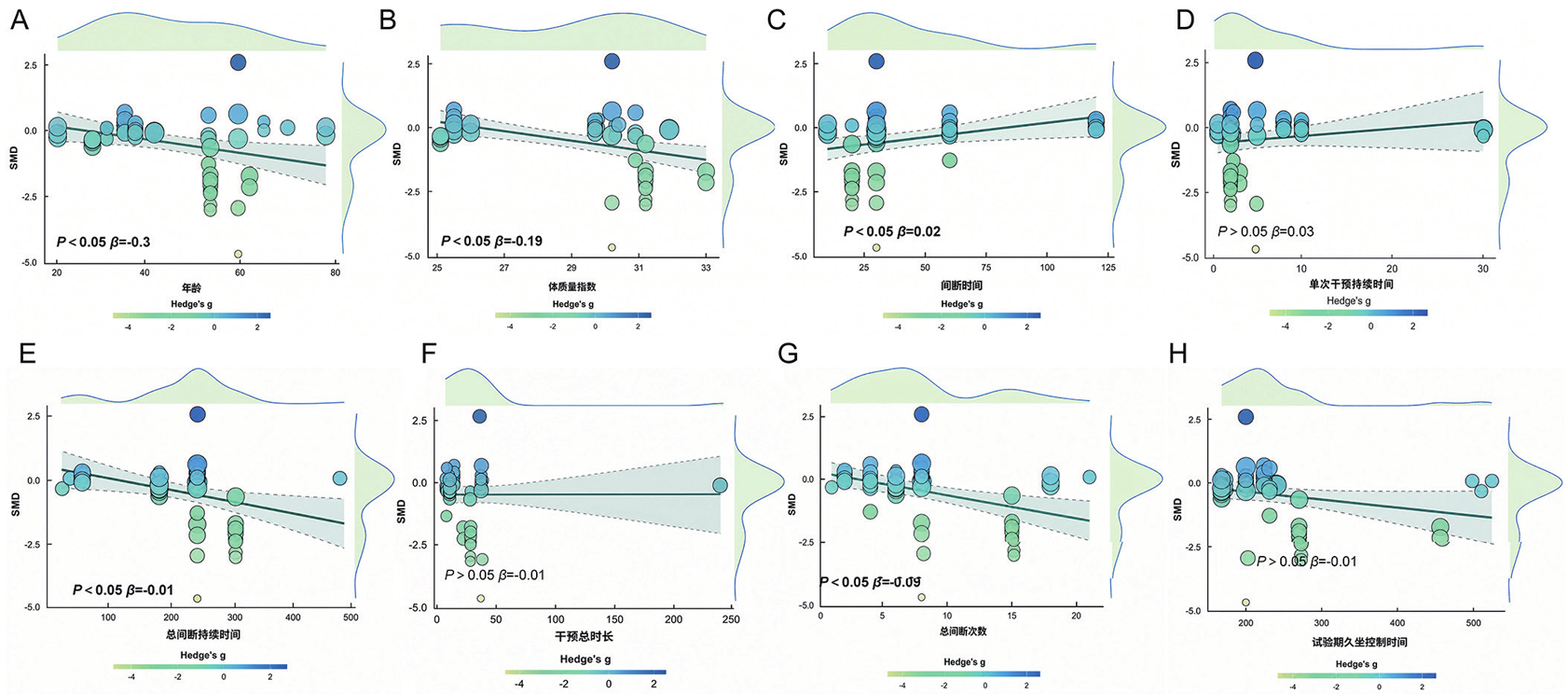
图2 平均动脉压回归分析汇总图注:A为年龄,B为BMI,C为间断时间,D为单次干预持续时间,E为总间断持续时间,F为干预总时长,G为总间断次数,H为试验期久坐控制时间。
Figure 2 Summary of regression analysis for mean arterial pressure
| [1] |
|
| [2] |
|
| [3] |
|
| [4] |
|
| [5] |
|
| [6] |
|
| [7] |
|
| [8] |
Collaborators the GBD Obesity. Health effects of overweight and obesity in 195 countries over 25 years[J]. N Engl J Med, 2017, 377(1): 13-27. DOI: 10.1056/nejmoa1614362.
|
| [9] |
|
| [10] |
|
| [11] |
|
| [12] |
|
| [13] |
|
| [14] |
|
| [15] |
|
| [16] |
|
| [17] |
|
| [18] |
|
| [19] |
World Health Organization. WHO guidelines on physical activity and sedentary behaviour[M]. World Health Organization, 2020.
|
| [20] |
|
| [21] |
|
| [22] |
|
| [23] |
|
| [24] |
|
| [25] |
|
| [26] |
|
| [27] |
|
| [28] |
|
| [29] |
JCGM. Evaluation of measurement data——guide to the expression of uncertainty in measurement: JCGM 100:2008[S/OL]. [2026-01-20].
|
| [30] |
|
| [31] |
Cochrane Collaboration. Cochrane handbook for systematic reviews of interventions[M]. Cochrane Collaboration, 2008.
|
| [32] |
|
| [33] |
|
| [34] |
|
| [35] |
|
| [36] |
|
| [37] |
|
| [38] |
|
| [39] |
|
| [40] |
|
| [41] |
|
| [42] |
|
| [43] |
|
| [44] |
|
| [45] |
|
| [46] |
|
| [47] |
|
| [48] |
|
| [49] |
|
| [50] |
|
| [51] |
|
| [52] |
|
| [53] |
|
| [54] |
|
| [55] |
|
| [56] |
|
| [57] |
|
| [58] |
|
| [59] |
|
| [60] |
|
| [61] |
|
| [62] |
|
| [63] |
|
| [64] |
|
| [65] |
|
| [66] |
|
| [67] |
|
| [68] |
|
| [69] |
|
| [70] |
|
| [71] |
|
| [72] |
|
| [73] |
|
| [74] |
|
| [75] |
|
| [76] |
|
| [77] |
|
| [78] |
|
| [79] |
|
| [80] |
|
| [81] |
|
| [82] |
|
| [1] | 宋可心, 冉利梅, 冯绍会, 卢然, 朱焱, 黄月, 吴燕玲, 吴汶璟, 张丹丹. 中老年女性血浆致动脉粥样硬化指数与低肌肉含量的关联性研究[J]. 中国全科医学, 2027, 30(03): 401-406. |
| [2] | 朱涵菲, 许勤, 赵康, 施雯冰, 徐艺菲, 朱子怡, 严茗钰, 尤晨歌. 家庭动态对学龄儿童饮食行为的影响:对超重/肥胖儿童家长的质性研究[J]. 中国全科医学, 2027, 30(03): 441-449. |
| [3] | 缪乐瑶, 吴雪柠, 卢茜, 陈燕婷, 孔祥杰, 崔艺冰, 林达岑. BMI和腰围与衰弱轨迹的"J"形关联:基于中国中老年人的纵向研究[J]. 中国全科医学, 2027, 30(01): 111-118. |
| [4] | 吴利霞, 陈红洁, 杨义. 三圈理论视角下医学营养减重门诊的效果及发展策略分析[J]. 中国全科医学, 2026, 29(36): 5348-5353. |
| [5] | 王依夕, Choi Tammie S T, Kellow Nicole J, 杨辉. 居澳华裔超重肥胖者体重管理困境:一项结合图片引谈法的半结构访谈质性研究[J]. 中国全科医学, 2026, 29(36): 5332-5339. |
| [6] | 李金婷, 高爱菊. 中国中老年人群体质量调整腰围指数与抑郁发生风险的关联研究[J]. 中国全科医学, 2026, 29(34): 5071-5077. |
| [7] | 胡若萌, 刘志栋, 陈俊岚, 王淼, 周时高. 代谢方联合二甲双胍干预2型糖尿病合并肥胖患者的多中心、双盲随机对照研究[J]. 中国全科医学, 2026, 29(33): 4854-4860. |
| [8] | 李纪新, 邱林杰, 任燕, 李美洁, 邹姹姹, 吴梓敬, 王文茹, 杨振宇, 刘峰兆, 张晋. 相位角与超重/肥胖患者糖脂代谢异常的相关性及其预测价值研究[J]. 中国全科医学, 2026, 29(33): 4876-4884. |
| [9] | 李梓涵, 刘蕾, 王嘉钰, 朱薪觎, 田钰. 虚拟现实技术在儿童青少年肥胖管理中应用的研究进展[J]. 中国全科医学, 2026, 29(33): 4943-4950. |
| [10] | 李兰, 刘力滴, 张鹏, 李东泽, 杨梓钰, 程永浪, 廖晓阳, 万智. 基于生活方式干预措施的体重管理:2025版NICE《超重和肥胖的管理(NG246)》指南部分更新亮点解读[J]. 中国全科医学, 2026, 29(30): 4353-4359. |
| [11] | 付晓雅, 杨菲, 顾可羿, 顾瀚东, 王为强. 心血管代谢共病患者相对脂肪质量指数与估算肾小球滤过率下降的相关性探究[J]. 中国全科医学, 2026, 29(28): 4187-4192. |
| [12] | 张涵, 蔡根深, 冯郑文, 张恺悦, 廉东波, 张华, 张晶. 分级诊疗背景下北京市肥胖症共病相关卫生服务可得性评估:基于医疗机构的调查研究[J]. 中国全科医学, 2026, 29(28): 4117-4124. |
| [13] | 张颖, 唐以俊, 刘力滴, 蒋莉华, 贾禹, 杨荣, 杨梓钰, 廖晓阳. 中国肥胖儿童青少年心血管代谢风险管理:基于2024年意大利儿科内分泌学和糖尿病学会《肥胖儿童和青少年的心血管代谢风险》立场文件[J]. 中国全科医学, 2026, 29(27): 3879-3887. |
| [14] | 庄明南, 严亨豪, 肖宁坤, 殷明越, 范志伟, 刘超辉, 邹欣彤, 周跃华, 毕志远, 邓恒治, 吴碧泰, 宋智全, 史东林. 间歇训练和持续训练对健康个体认知功能的应用效果及调节因素:一项系统综述和三水平荟萃分析[J]. 中国全科医学, 2026, 29(26): 3816-3828. |
| [15] | 《中国儿童肥胖的评估、治疗和预防指南》专家组, 中国妇幼健康研究会妇女儿童肥胖控制专业委员会. 中国儿童肥胖的评估、治疗和预防指南(第二版)[J]. 中国全科医学, 2026, 29(23): 3233-3252. |
| 阅读次数 | ||||||
|
全文 |
|
|||||
|
摘要 |
|
|||||