
中国全科医学 ›› 2027, Vol. 30 ›› Issue (01): 111-118.DOI: 10.12114/j.issn.1007-9572.2026.0233
• 论著·重点人群研究·老年衰弱 • 上一篇
缪乐瑶1, 吴雪柠1, 卢茜1, 陈燕婷1, 孔祥杰1, 崔艺冰1, 林达岑1,2,3,*( )
收稿日期:2026-09-02
修回日期:2026-10-18
出版日期:2027-01-05
发布日期:2026-11-17
通讯作者:
林达岑
缪乐瑶、吴雪柠、卢茜为共同第一作者
作者贡献:
缪乐瑶负责研究构思、研究设计、数据整理、统计学分析、方法学设计、软件实现、图表绘制与论文初稿撰写;吴雪柠负责研究构思、研究设计、数据整理、统计学分析、方法学设计与论文初稿撰写;卢茜负责数据整理、统计学分析、调查研究与软件实现;陈燕婷负责研究构思、数据整理与调查研究;孔祥杰负责研究构思、软件开发、图表可视化与结果验证;崔艺冰负责研究构思、数据整理与方法学指导;林达岑负责研究构思、经费获取、方法学指导、项目管理、研究监督、结果验证及论文审阅与修订,并对文章整体负责。作者均阅读并同意最终稿。
基金资助:
MIAO Leyao1, WU Xuening1, LU Xi1, CHEN Yanting1, KONG Xiangjie1, CUI Yibing1, LIN Dacen1,2,3,*()
Received:2026-09-02
Revised:2026-10-18
Published:2027-01-05
Online:2026-11-17
Contact:
LIN Dacen
About author:MIAO Leyao, WU Xuening and LU Xi are co-first authors
摘要: 背景 随着人口老龄化进程的加速,衰弱已成为影响中老年人健康寿命的重要老年综合征。肥胖及中心型肥胖可能参与衰弱的发生与发展,但BMI、腰围(WC)与衰弱动态轨迹之间的纵向关联及非线性关系仍需进一步明确。 目的 探讨中国中老年人BMI、WC与衰弱轨迹的关联,并分析二者与衰弱进展风险之间的非线性关系。 方法 基于中国健康与养老追踪调查(CHARLS)2011—2018年数据,纳入基线非衰弱且完成4轮随访的45岁及以上中老年人4 395名。采用40项衰弱指数(FI-40)评价衰弱状态,并通过群组轨迹模型(GBTM)识别衰弱轨迹。采用多因素Cox回归模型分析BMI、WC与衰弱轨迹的关联,采用限制性立方样条(RCS)分析非线性关系,并开展敏感性分析。 结果 共识别出2类衰弱轨迹:低风险稳定型(3 169名,72.10%)和高风险快速进展型(1 226名,27.90%)。BMI与衰弱进展风险呈"J"形关联,最低风险位置约为22.27 kg/m2(P非线性<0.001);不同性别WC与衰弱进展风险亦呈"J"形关联,男性和女性最低风险位置分别约为78.87 cm和79.50 cm(P非线性<0.01);高于相应最低风险位置后,衰弱进展风险随BMI和WC升高而逐渐增加。多因素Cox回归模型分析显示,肥胖者的衰弱进展风险更高(HR=1.72,95%CI=1.48~1.99),中心型肥胖者的衰弱进展风险亦升高(HR=1.42,95%CI=1.27~1.58)。敏感性分析支持结果稳健。 结论 基于纵向轨迹分析,本研究发现肥胖和中心型肥胖与中国中老年人群衰弱加速进展风险升高相关。加强BMI和WC管理,尤其是开展中心型肥胖的早期识别和干预,可能有助于延缓衰弱进展,促进健康老龄化。
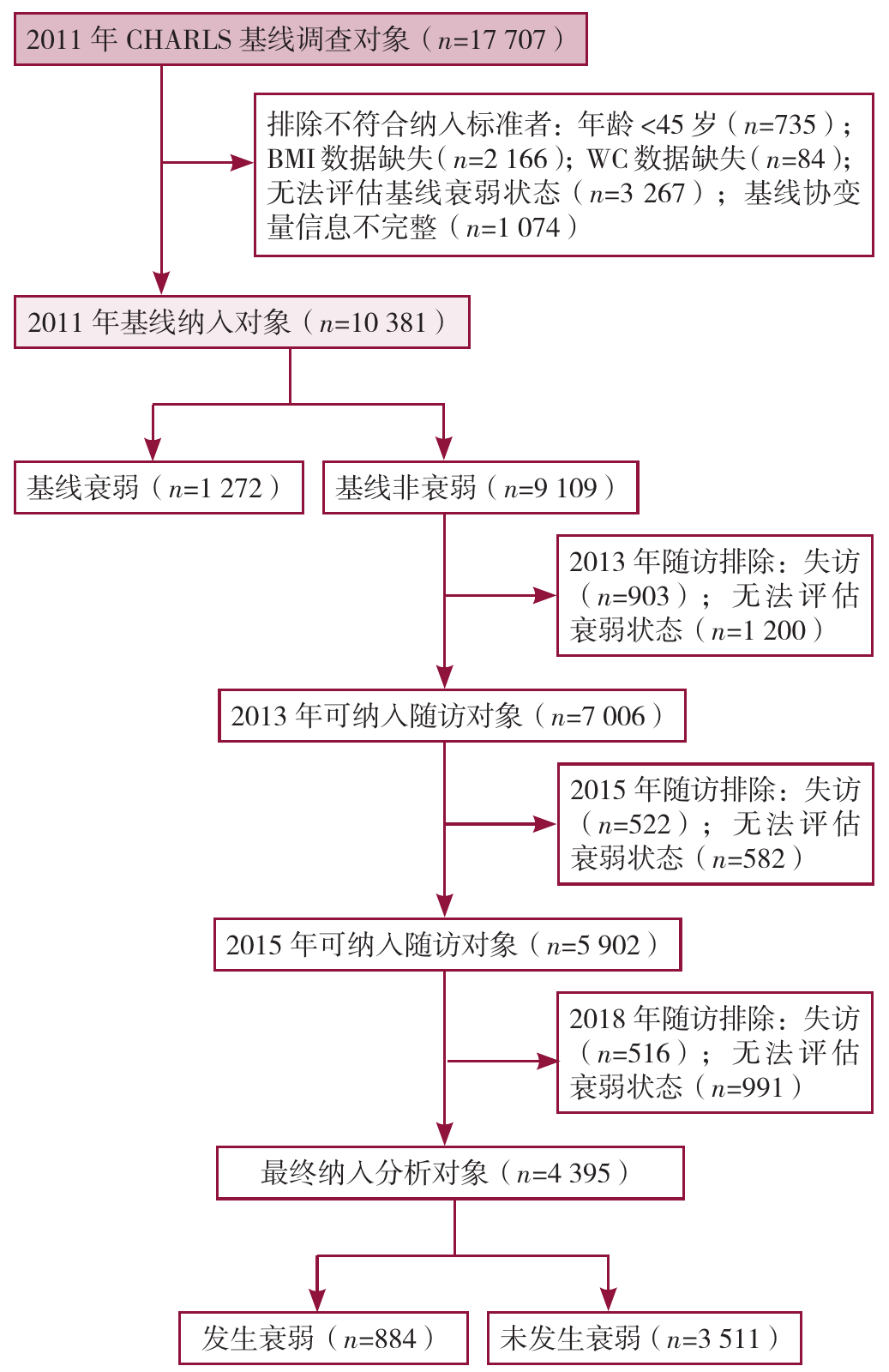
图1 研究对象纳入流程图注:CHARLS=中国健康与养老追踪调查,WC=腰围。
Figure 1 Flowchart of participant selection
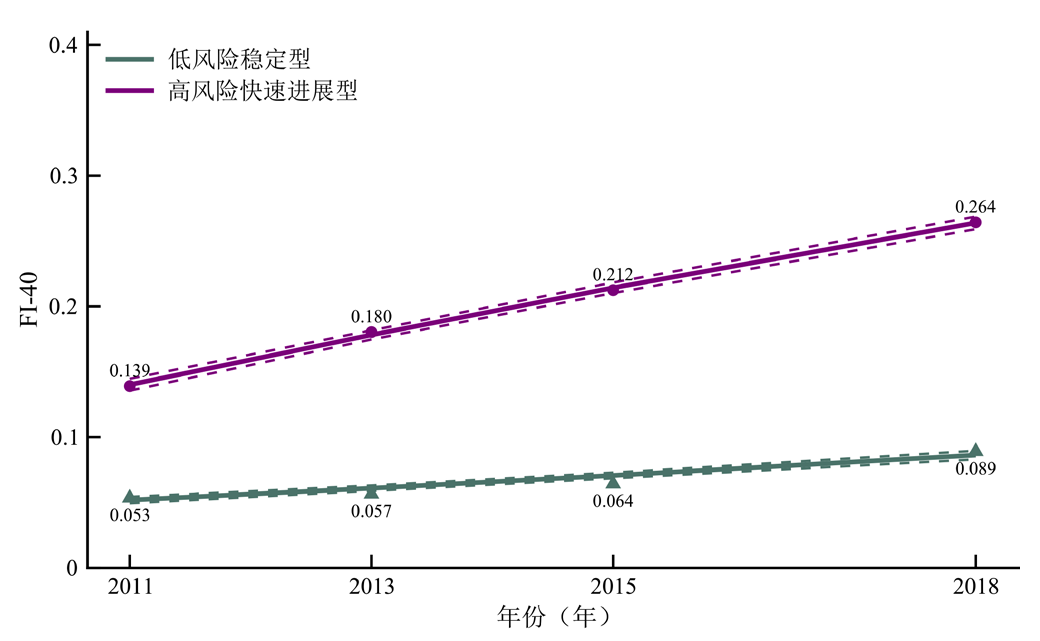
图2 基于GBTM的衰弱轨迹识别注:GBTM=群组轨迹模型,FI-40=40项衰弱指数。
Figure 2 Identification of frailty trajectories based on group-based trajectory modeling
| 特征 | 合计(n=4 395) | 低风险稳定轨迹组(n=3 169) | 高风险快速进展轨迹组(n=1 226) | χ2(t)值 | P值 |
|---|---|---|---|---|---|
| 年龄[例(%)] | 28.28 | <0.001 | |||
| <65岁 | 3 689(83.94) | 2 718(85.77) | 971(79.20) | ||
| ≥65岁 | 706(16.06) | 451(14.23) | 255(20.80) | ||
| 性别[例(%)] | 95.08 | <0.001 | |||
| 男 | 2 403(54.68) | 1 877(59.23) | 526(42.90) | ||
| 女 | 1 992(45.32) | 1 292(40.77) | 700(57.10) | ||
| 居住地[例(%)] | 0.79 | 0.374 | |||
| 城市 | 3 958(90.06) | 2 846(89.81) | 1 112(90.70) | ||
| 农村 | 437(9.94) | 323(10.19) | 114(9.30) | ||
| 受教育程度[例(%)] | 103.69 | <0.001 | |||
| 未受过教育 | 478(10.88) | 292(9.21) | 186(15.17) | ||
| 小学及以下 | 1 889(42.98) | 1 269(40.04) | 620(50.57) | ||
| 初中及以上 | 2 028(46.14) | 1 608(50.74) | 420(34.26) | ||
| 婚姻状况[例(%)] | 27.28 | <0.001 | |||
| 已婚 | 4 053(92.22) | 2 964(93.53) | 1 089(88.83) | ||
| 非已婚 | 342(7.78) | 205(6.47) | 137(11.17) | ||
| 吸烟状况[例(%)] | 23.28 | <0.001 | |||
| 否 | 2 513(57.18) | 1 741(54.94) | 772(62.97) | ||
| 是 | 1 882(42.82) | 1 428(45.06) | 454(37.03) | ||
| 饮酒状况[例(%)] | 25.65 | <0.001 | |||
| 否 | 2 544(57.88) | 1 760(55.54) | 784(63.95) | ||
| 是 | 1 851(42.12) | 1 409(44.46) | 442(36.05) | ||
| 夜间睡眠时间[例(%)] | 72.60 | <0.001 | |||
| 短 | 498(11.33) | 293(9.25) | 205(16.72) | ||
| 中 | 1 567(35.65) | 1 090(34.40) | 477(38.91) | ||
| 长 | 2 330(53.01) | 1 786(56.36) | 544(44.37) | ||
| 握力[例(%)] | 25.09 | <0.001 | |||
| 高 | 3 333(75.84) | 2 467(77.85) | 866(70.64) | ||
| 低 | 1 062(24.16) | 702(22.15) | 360(29.36) | ||
| 社会参与[例(%)] | 4.08 | 0.043 | |||
| 否 | 1 965(44.71) | 1 387(43.77) | 578(47.15) | ||
| 是 | 2 430(55.29) | 1 782(56.23) | 648(52.85) | ||
| BMI( | 23.7±3.4 | 23.6±3.3 | 24.2±3.8 | -4.67b | <0.001 |
| BMI分级[例(%)] | 37.48 | <0.001 | |||
| 体质量过低/正常 | 2 489(56.63) | 1 857(58.60) | 632(51.55) | ||
| 超重 | 1 385(31.51) | 992(31.30) | 393(32.06) | ||
| 肥胖 | 521(11.85) | 320(10.10) | 201(16.39) | ||
| WC( | |||||
| 男 | 85.72±9.71 | 85.43±9.39 | 86.76±10.70 | -2.58b | 0.010 |
| 女 | 86.10±9.69 | 85.20±9.09 | 87.76±10.53 | -5.43b | <0.001 |
| 中心型肥胖[例(%)] | 45.95 | <0.001 | |||
| 否 | 2 512(57.16) | 1 911(60.30) | 601(49.02) | ||
| 是 | 1 883(42.84) | 1 258(39.70) | 625(50.98) |
表1 不同衰弱轨迹组中老年人的基线特征比较
Table 1 Comparison of baseline characteristics of middle-aged and older adults across different frailty trajectory groups
| 特征 | 合计(n=4 395) | 低风险稳定轨迹组(n=3 169) | 高风险快速进展轨迹组(n=1 226) | χ2(t)值 | P值 |
|---|---|---|---|---|---|
| 年龄[例(%)] | 28.28 | <0.001 | |||
| <65岁 | 3 689(83.94) | 2 718(85.77) | 971(79.20) | ||
| ≥65岁 | 706(16.06) | 451(14.23) | 255(20.80) | ||
| 性别[例(%)] | 95.08 | <0.001 | |||
| 男 | 2 403(54.68) | 1 877(59.23) | 526(42.90) | ||
| 女 | 1 992(45.32) | 1 292(40.77) | 700(57.10) | ||
| 居住地[例(%)] | 0.79 | 0.374 | |||
| 城市 | 3 958(90.06) | 2 846(89.81) | 1 112(90.70) | ||
| 农村 | 437(9.94) | 323(10.19) | 114(9.30) | ||
| 受教育程度[例(%)] | 103.69 | <0.001 | |||
| 未受过教育 | 478(10.88) | 292(9.21) | 186(15.17) | ||
| 小学及以下 | 1 889(42.98) | 1 269(40.04) | 620(50.57) | ||
| 初中及以上 | 2 028(46.14) | 1 608(50.74) | 420(34.26) | ||
| 婚姻状况[例(%)] | 27.28 | <0.001 | |||
| 已婚 | 4 053(92.22) | 2 964(93.53) | 1 089(88.83) | ||
| 非已婚 | 342(7.78) | 205(6.47) | 137(11.17) | ||
| 吸烟状况[例(%)] | 23.28 | <0.001 | |||
| 否 | 2 513(57.18) | 1 741(54.94) | 772(62.97) | ||
| 是 | 1 882(42.82) | 1 428(45.06) | 454(37.03) | ||
| 饮酒状况[例(%)] | 25.65 | <0.001 | |||
| 否 | 2 544(57.88) | 1 760(55.54) | 784(63.95) | ||
| 是 | 1 851(42.12) | 1 409(44.46) | 442(36.05) | ||
| 夜间睡眠时间[例(%)] | 72.60 | <0.001 | |||
| 短 | 498(11.33) | 293(9.25) | 205(16.72) | ||
| 中 | 1 567(35.65) | 1 090(34.40) | 477(38.91) | ||
| 长 | 2 330(53.01) | 1 786(56.36) | 544(44.37) | ||
| 握力[例(%)] | 25.09 | <0.001 | |||
| 高 | 3 333(75.84) | 2 467(77.85) | 866(70.64) | ||
| 低 | 1 062(24.16) | 702(22.15) | 360(29.36) | ||
| 社会参与[例(%)] | 4.08 | 0.043 | |||
| 否 | 1 965(44.71) | 1 387(43.77) | 578(47.15) | ||
| 是 | 2 430(55.29) | 1 782(56.23) | 648(52.85) | ||
| BMI( | 23.7±3.4 | 23.6±3.3 | 24.2±3.8 | -4.67b | <0.001 |
| BMI分级[例(%)] | 37.48 | <0.001 | |||
| 体质量过低/正常 | 2 489(56.63) | 1 857(58.60) | 632(51.55) | ||
| 超重 | 1 385(31.51) | 992(31.30) | 393(32.06) | ||
| 肥胖 | 521(11.85) | 320(10.10) | 201(16.39) | ||
| WC( | |||||
| 男 | 85.72±9.71 | 85.43±9.39 | 86.76±10.70 | -2.58b | 0.010 |
| 女 | 86.10±9.69 | 85.20±9.09 | 87.76±10.53 | -5.43b | <0.001 |
| 中心型肥胖[例(%)] | 45.95 | <0.001 | |||
| 否 | 2 512(57.16) | 1 911(60.30) | 601(49.02) | ||
| 是 | 1 883(42.84) | 1 258(39.70) | 625(50.98) |
| 自变量 | 模型1 | 模型2 | 模型3 | |||
|---|---|---|---|---|---|---|
| HR(95%CI) | P值 | HR(95%CI) | P值 | HR(95%CI) | P值 | |
| BMI分级(以体质量过低/正常为参照) | ||||||
| 超重 | 1.12(0.99~1.25) | 0.067 | 1.07(0.95~1.20) | 0.260 | 1.19(1.06~1.34) | 0.004 |
| 肥胖 | 1.60(1.38~1.85) | <0.001 | 1.52(1.32~1.76) | <0.001 | 1.72(1.48~1.99) | <0.001 |
| 中心型肥胖(以否为参照) | ||||||
| 是 | 1.43(1.28~1.58) | <0.001 | 1.29(1.16~1.44) | <0.001 | 1.42(1.27~1.58) | <0.001 |
表2 BMI、WC与衰弱进展风险关联的Cox回归分析
Table 2 Cox regression analysis of the associations of BMI and WC with frailty progression risk
| 自变量 | 模型1 | 模型2 | 模型3 | |||
|---|---|---|---|---|---|---|
| HR(95%CI) | P值 | HR(95%CI) | P值 | HR(95%CI) | P值 | |
| BMI分级(以体质量过低/正常为参照) | ||||||
| 超重 | 1.12(0.99~1.25) | 0.067 | 1.07(0.95~1.20) | 0.260 | 1.19(1.06~1.34) | 0.004 |
| 肥胖 | 1.60(1.38~1.85) | <0.001 | 1.52(1.32~1.76) | <0.001 | 1.72(1.48~1.99) | <0.001 |
| 中心型肥胖(以否为参照) | ||||||
| 是 | 1.43(1.28~1.58) | <0.001 | 1.29(1.16~1.44) | <0.001 | 1.42(1.27~1.58) | <0.001 |
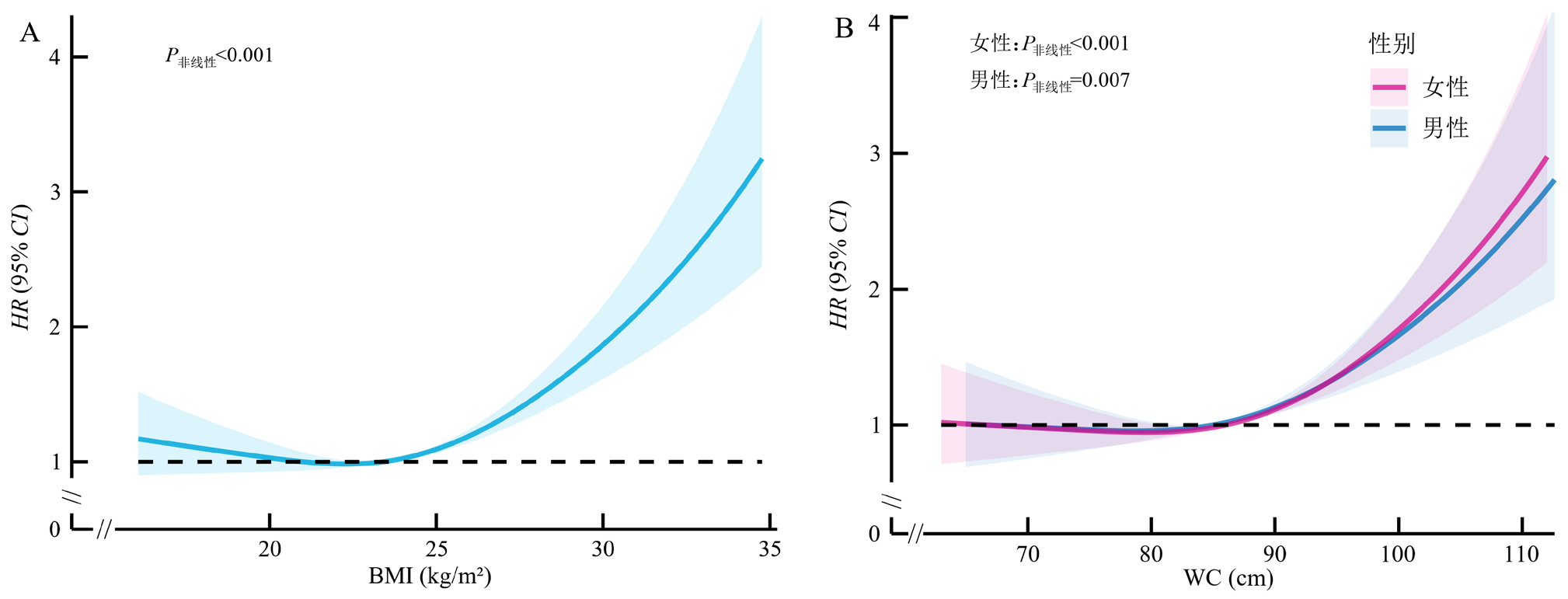
图3 限制性立方样条分析BMI、WC与衰弱进展风险的非线性关联注:图A为BMI与衰弱进展风险的非线性关联,图B为WC与衰弱进展风险的非线性关联;图中实线为风险比(HR)的拟合曲线,阴影表示95%CI;采用含3个节点的限制性立方样条(RCS)拟合,调整混杂因素包括年龄、性别、居住地、受教育程度、婚姻状况、吸烟状况、饮酒状况、夜间睡眠时间、握力、社会参与情况。
Figure 3 Restricted cubic spline analysis of nonlinear associations of BMI and WC with frailty progression risk
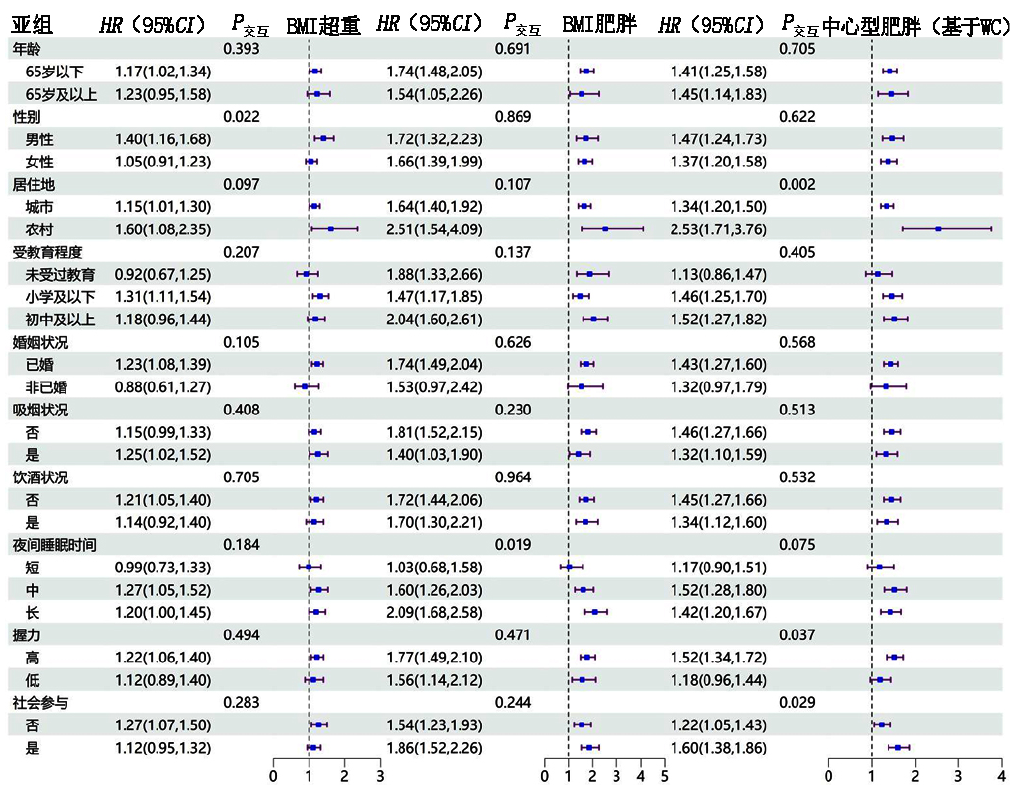
图4 BMI、WC与衰弱轨迹关联的亚组分析注:BMI分析以体质量过低/正常为参照,中心型肥胖以否为参照。多变量模型调整年龄、性别、居住地、受教育程度、婚姻状况、吸烟状况、饮酒状况、夜间睡眠时间、握力、社会参与情况。
Figure 4 Subgroup analyses of the associations of BMI and WC with frailty trajectories
| 方法 | 类别 | 模型1 | 模型2 | 模型3 | |||
|---|---|---|---|---|---|---|---|
| HR(95%CI) | P值 | HR(95%CI) | P值 | HR(95%CI) | P值 | ||
| M1 | BMI(以体质量过低/正常为参照) | ||||||
| 超重 | 1.12(0.98~1.28) | 0.099 | 1.07(0.93~1.22) | 0.338 | 1.20(1.05~1.37) | 0.009 | |
| 肥胖 | 1.72(1.46~2.02) | <0.001 | 1.61(1.36~1.89) | <0.001 | 1.83(1.55~2.16) | <0.001 | |
| 中心型肥胖(以否为参照) | |||||||
| 是 | 1.49(1.32~1.67) | <0.001 | 1.34(1.19~1.51) | <0.001 | 1.49(1.32~1.68) | <0.001 | |
| M2 | BMI(以体质量过低/正常为参照) | ||||||
| 超重 | 1.15(1.01~1.31) | 0.037 | 1.11(0.97~1.26) | 0.130 | 1.22(1.07~1.39) | 0.003 | |
| 肥胖 | 1.58(1.35~1.86) | <0.001 | 1.52(1.29~1.79) | <0.001 | 1.69(1.43~2.00) | <0.001 | |
| 中心型肥胖(以否为参照) | |||||||
| 是 | 1.46(1.30~1.64) | <0.001 | 1.34(1.19~1.50) | <0.001 | 1.45(1.29~1.64) | <0.001 | |
| M3 | BMI-WC联合指标(以非肥胖为参照) | ||||||
| 肥胖 | 1.42(1.28~1.58) | <0.001 | 1.29(1.16~1.43) | <0.001 | 1.41(1.27~1.57) | <0.001 | |
表3 BMI或WC与衰弱轨迹关联的敏感性分析
Table 3 Sensitivity analysis for the relationship between BMI or WC and frailty trajectories
| 方法 | 类别 | 模型1 | 模型2 | 模型3 | |||
|---|---|---|---|---|---|---|---|
| HR(95%CI) | P值 | HR(95%CI) | P值 | HR(95%CI) | P值 | ||
| M1 | BMI(以体质量过低/正常为参照) | ||||||
| 超重 | 1.12(0.98~1.28) | 0.099 | 1.07(0.93~1.22) | 0.338 | 1.20(1.05~1.37) | 0.009 | |
| 肥胖 | 1.72(1.46~2.02) | <0.001 | 1.61(1.36~1.89) | <0.001 | 1.83(1.55~2.16) | <0.001 | |
| 中心型肥胖(以否为参照) | |||||||
| 是 | 1.49(1.32~1.67) | <0.001 | 1.34(1.19~1.51) | <0.001 | 1.49(1.32~1.68) | <0.001 | |
| M2 | BMI(以体质量过低/正常为参照) | ||||||
| 超重 | 1.15(1.01~1.31) | 0.037 | 1.11(0.97~1.26) | 0.130 | 1.22(1.07~1.39) | 0.003 | |
| 肥胖 | 1.58(1.35~1.86) | <0.001 | 1.52(1.29~1.79) | <0.001 | 1.69(1.43~2.00) | <0.001 | |
| 中心型肥胖(以否为参照) | |||||||
| 是 | 1.46(1.30~1.64) | <0.001 | 1.34(1.19~1.50) | <0.001 | 1.45(1.29~1.64) | <0.001 | |
| M3 | BMI-WC联合指标(以非肥胖为参照) | ||||||
| 肥胖 | 1.42(1.28~1.58) | <0.001 | 1.29(1.16~1.43) | <0.001 | 1.41(1.27~1.57) | <0.001 | |
| [1] |
|
| [2] |
|
| [3] |
|
| [4] |
|
| [5] |
|
| [6] |
|
| [7] |
|
| [8] |
|
| [9] |
|
| [10] |
|
| [11] |
|
| [12] |
|
| [13] |
|
| [14] |
|
| [15] |
|
| [16] |
|
| [17] |
|
| [18] |
|
| [19] |
|
| [20] |
国家卫生健康委员会. 体重管理指导原则(2024年版)[EB/OL]. [2026-07-16].
|
| [21] |
|
| [22] |
|
| [23] |
|
| [24] |
|
| [25] |
|
| [26] |
|
| [27] |
|
| [28] |
|
| [29] |
|
| [30] |
|
| [31] |
|
| [32] |
|
| [33] |
|
| [34] |
|
| [35] |
|
| [36] |
|
| [37] |
|
| [38] |
|
| [39] |
|
| [40] |
|
| [41] |
|
| [42] |
|
| [43] |
|
| [1] | 吴利霞, 陈红洁, 杨义. 三圈理论视角下医学营养减重门诊的效果及发展策略分析[J]. 中国全科医学, 2026, 29(36): 5348-5353. |
| [2] | 王依夕, Choi Tammie S T, Kellow Nicole J, 杨辉. 居澳华裔超重肥胖者体重管理困境:一项结合图片引谈法的半结构访谈质性研究[J]. 中国全科医学, 2026, 29(36): 5332-5339. |
| [3] | 李金婷, 高爱菊. 中国中老年人群体质量调整腰围指数与抑郁发生风险的关联研究[J]. 中国全科医学, 2026, 29(34): 5071-5077. |
| [4] | 胡若萌, 刘志栋, 陈俊岚, 王淼, 周时高. 代谢方联合二甲双胍干预2型糖尿病合并肥胖患者的多中心、双盲随机对照研究[J]. 中国全科医学, 2026, 29(33): 4854-4860. |
| [5] | 李纪新, 邱林杰, 任燕, 李美洁, 邹姹姹, 吴梓敬, 王文茹, 杨振宇, 刘峰兆, 张晋. 相位角与超重/肥胖患者糖脂代谢异常的相关性及其预测价值研究[J]. 中国全科医学, 2026, 29(33): 4876-4884. |
| [6] | 李梓涵, 刘蕾, 王嘉钰, 朱薪觎, 田钰. 虚拟现实技术在儿童青少年肥胖管理中应用的研究进展[J]. 中国全科医学, 2026, 29(33): 4943-4950. |
| [7] | 庞姝, 李星明, 白红梅, 姜春燕. 社区衰弱前期老年人对衰弱前期的概念认知及筛查管理观点:一项半结构式访谈研究[J]. 中国全科医学, 2026, 29(31): 4600-4608. |
| [8] | 贺洋, 杨荣, 沈灿, 易珊烨, 刘力滴, 赵茜, 万智, 廖晓阳. 衰弱轨迹及其影响因素研究进展[J]. 中国全科医学, 2026, 29(30): 4372-4378. |
| [9] | 王帅航, 曹业迪, 陈飞, 朱赛楠, 高莹. 体质量调整腰围指数与甲状腺功能和自身免疫的关系:基于NHANES数据[J]. 中国全科医学, 2026, 29(30): 4406-4414. |
| [10] | 李兰, 刘力滴, 张鹏, 李东泽, 杨梓钰, 程永浪, 廖晓阳, 万智. 基于生活方式干预措施的体重管理:2025版NICE《超重和肥胖的管理(NG246)》指南部分更新亮点解读[J]. 中国全科医学, 2026, 29(30): 4353-4359. |
| [11] | 付晓雅, 杨菲, 顾可羿, 顾瀚东, 王为强. 心血管代谢共病患者相对脂肪质量指数与估算肾小球滤过率下降的相关性探究[J]. 中国全科医学, 2026, 29(28): 4187-4192. |
| [12] | 余新艳, 张芳, 顾志乐, 王艳芳, 苏鹏, 张海澄. 社区老年人空腹血糖与体质指数及腰围的相关性研究[J]. 中国全科医学, 2026, 29(28): 4132-4140. |
| [13] | 张涵, 蔡根深, 冯郑文, 张恺悦, 廉东波, 张华, 张晶. 分级诊疗背景下北京市肥胖症共病相关卫生服务可得性评估:基于医疗机构的调查研究[J]. 中国全科医学, 2026, 29(28): 4117-4124. |
| [14] | 张颖, 唐以俊, 刘力滴, 蒋莉华, 贾禹, 杨荣, 杨梓钰, 廖晓阳. 中国肥胖儿童青少年心血管代谢风险管理:基于2024年意大利儿科内分泌学和糖尿病学会《肥胖儿童和青少年的心血管代谢风险》立场文件[J]. 中国全科医学, 2026, 29(27): 3879-3887. |
| [15] | 《中国儿童肥胖的评估、治疗和预防指南》专家组, 中国妇幼健康研究会妇女儿童肥胖控制专业委员会. 中国儿童肥胖的评估、治疗和预防指南(第二版)[J]. 中国全科医学, 2026, 29(23): 3233-3252. |
| 阅读次数 | ||||||
|
全文 |
|
|||||
|
摘要 |
|
|||||