中国全科医学 ›› 2026, Vol. 29 ›› Issue (34): 5113-5120.DOI: 10.12114/j.issn.1007-9572.2025.0510

• 论著·全科医学教育研究 • 上一篇    

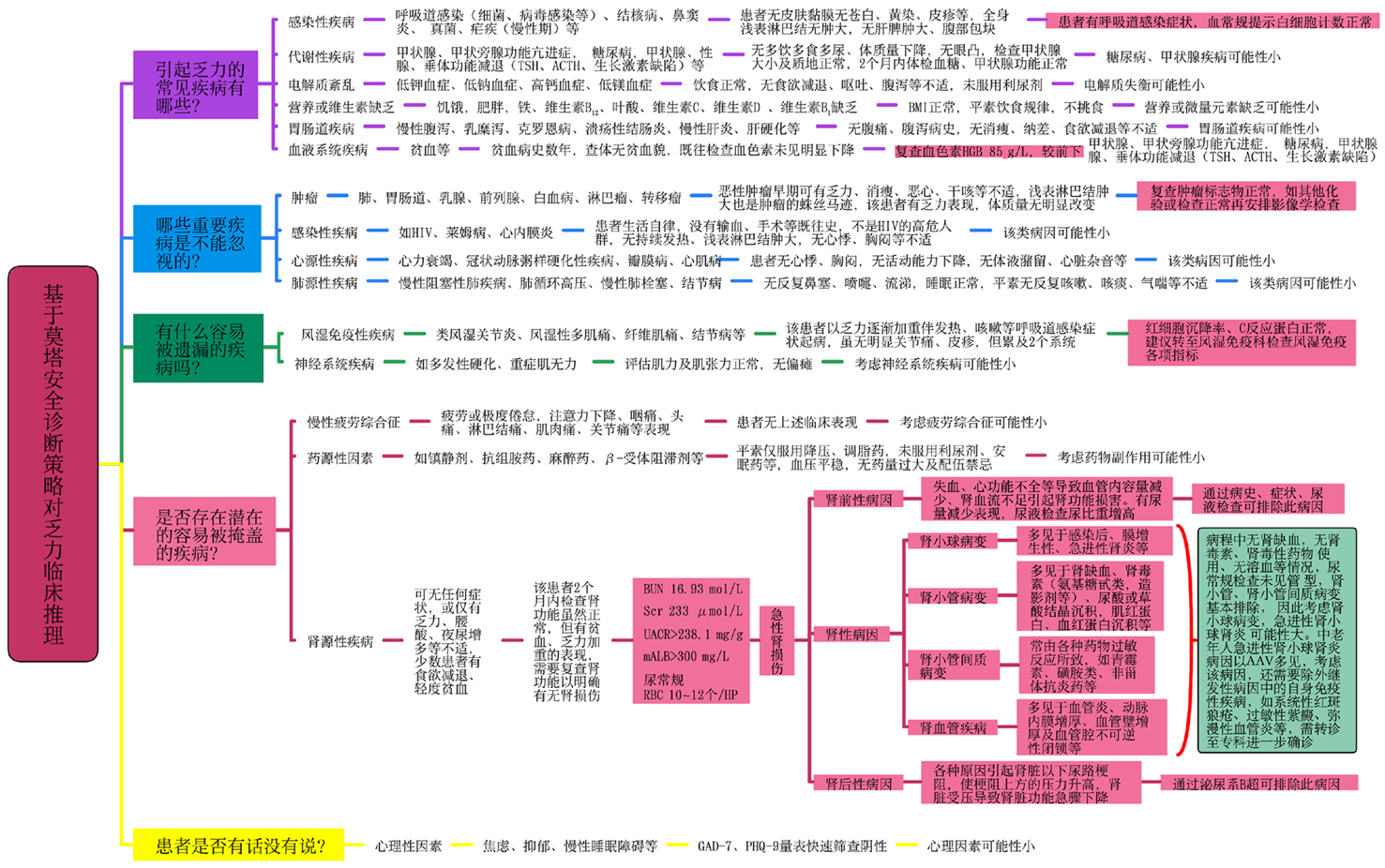
莫塔安全诊断策略在基层全科教学门诊中的应用研究

杨玲*(), 刘卡丽, 边立立, 于溯, 李肖肖, 徐立涛   

  1. 100045 北京市西城区首都医科大学附属复兴医院月坛社区卫生服务中心
  • 收稿日期:2026-03-09 修回日期:2026-07-24 出版日期:2026-12-05 发布日期:2026-10-26
  • 通讯作者: 杨玲

  • 作者贡献:

    杨玲负责文章的构思与设计、研究可行性分析、论文起草及终稿修订工作,对整篇论文的内容与质量负责;刘卡丽、于溯、徐立涛负责文献检索、研究数据收集与整理;杨玲、边立立、李肖肖负责文章的质量把控、审校及全程监督管理工作。

  • 基金资助:
    首都医科大学教育教学改革研究课题(2024JYY066)

Research on the Application of Murtagh Safe Diagnostic Strategy in Primary General Practice Teaching Clinics

YANG Ling*(), LIU Kali, BIAN Lili, YU Su, LI Xiaoxiao, XU Litao   

  1. Yuetan Community Health Service Center, Fuxing Hospital, Capital Medical University, Xicheng District, Beijing 100045, China
  • Received:2026-03-09 Revised:2026-07-24 Published:2026-12-05 Online:2026-10-26
  • Contact: YANG Ling

摘要: 背景 基层教学门诊是全科专业住院医师规范化培训(简称全科住培)医师临床思维培养的关键载体,目前存在师资水平参差不齐、缺乏系统化教学方法等问题;莫塔安全诊断策略有助于训练医生的全科临床思维,但与原有内容存在重叠,需结合基层教学门诊场景进行优化改良。 目的 优化莫塔安全诊断策略并将其应用于基层全科教学门诊,收集师生反馈,评价该策略的教学成效。 方法 采用目的性抽样方法,选取北京市西城区首都医科大学附属复兴医院月坛社区卫生服务中心2024年7月—2025年6月承担24次教学门诊的24名师资和参与培训的18名全科住培医师。针对师资开展莫塔安全诊断策略专项培训与门诊实操示范,搭配思维导图开展临床推理教学。通过问卷调查法和专题小组讨论法了解师资在基层全科教学门诊中使用莫塔安全诊断策略情况及反馈,通过问卷调查法了解全科住培医师对莫塔安全诊断策略的认知情况和反馈。 结果 100.0%(24/24)的全科师资认可莫塔安全诊断策略适用于基层教学门诊,但仅66.7%(16/24)的师资在教学门诊中实际使用该策略,主要应用于症状待查病例。全科师资认为,师资自身的教学能力与经验、住培医师的临床推理能力,是莫塔安全诊断策略在基层教学门诊应用的主要制约因素。16名(16/18)全科住培医师表示非常熟悉莫塔安全诊断策略,14名(14/18)会在临床工作中经常主动使用该策略,15名(15/18)全科住培医师认为该策略可促进全科临床思维培养。全科住培医师认为,缺乏系统培训(13名)、门诊任务重(11名)是推广该策略的主要障碍,希望通过专题讲座(15名)、病例讨论与角色扮演(13名)、教学门诊实操/演示(13名)的形式强化学习。 结论 莫塔安全诊断策略的教学价值得到师生认可,有助于培养住培医师的临床思维,但实际应用率偏低,师资能力、学员基础、门诊压力及基层诊疗条件均对其推广形成制约;相较于社区常见慢性病及并发症的管理,该策略更多用于多系统受累、症状不明等需要临床推理的病例教学;依托常态化师资培训、病例实操及数字化教学工具,可推动该策略规范化应用。

关键词: 教育,医学, 全科医学, 基层实践基地, 莫塔安全诊断策略, 临床思维, 教学门诊, 住院医师规范化培训

Abstract:

Background

Primary teaching clinics serve as a key platform for cultivating clinical thinking among residents undergoing standardized training in general practice. However, multiple challenges persist, including uneven faculty competency and a lack of systematic teaching approaches. The Murtagh Safe Diagnostic Strategy facilitates the training of general practice clinical thinking, yet its original framework contains redundant content and requires optimization and adaptation to fit the context of primary teaching clinics.

Objective

Optimize the Murtagh Safe Diagnostic Strategy and apply it to primary general practice teaching clinics, then collect feedback from instructors and residents to evaluate its teaching effectiveness.

Methods

Twenty-four teaching faculty members and 18 residents who participated in a total of 24 teaching clinics at Yuetan Community Health Service Center from July 2024 to June 2025 were selected by the means of purposive sampling. Specialized training on the strategy and on-site practical demonstrations in clinics were provided for teaching staff, combined with mind maps to deliver clinical reasoning teaching. Questionnaires and focus group discussions were adopted to investigate instructors' practical application and feedback on the strategy in primary general practice teaching clinics, while questionnaires were used to assess general practice residents' cognition and feedback regarding the strategy.

Results

All 24 (100.0%) instructors recognized that the Murtagh Safe Diagnostic Strategy was applicable to primary general practice teaching clinics. Nevertheless, only 16 (66.7%) instructors actually adopted this strategy in teaching clinics, mostly for cases of unknown etiology. According to instructors, instructors' own teaching competence and experience, as well as residents' clinical reasoning ability, constituted the major limiting factors for implementing Murtagh Safe Diagnostic Strategy in primary general practice teaching clinics. Among 18 general practice residents, 16 (16/18) reported high familiarity with the Murtagh Safe Diagnostic Strategy, 14 (14/18) frequently and proactively applied it in clinical practice, and 15 (15/18) believed that the strategy could foster general practice clinical thinking. Residents identified insufficient systematic training (n=13) and heavy outpatient workload (n=11) as major barriers to strategy promotion. They expected to strengthen learning via special lectures (n=15), case discussions combined with role-play (n=13), and hands-on practice or demonstration in teaching outpatient clinics (n=13).

Conclusion

The teaching value of the Murtagh Safe Diagnostic Strategy has been recognized by both instructors and residents, as it helps foster residents' clinical thinking. Nevertheless, its actual application rate remains relatively low, and its widespread promotion is constrained by instructors' competence, residents' foundational knowledge, heavy outpatient workload and primary care service conditions. Compared with the management of common chronic diseases and their complications in community settings, this strategy is more frequently adopted in teaching cases requiring clinical reasoning, such as those involving multi-system involvement and unexplained symptoms. Routine specialized training for instructors, case-based practical training and digital teaching tools can facilitate standardized application of the strategy.

Key words: Education, medicine, General practice, Primary care training base, Murtagh Safe Diagnostic Strategy, Clinical thinking, Teaching clinic, Standardized residency training

中图分类号: