
中国全科医学 ›› 2026, Vol. 29 ›› Issue (05): 559-567.DOI: 10.12114/j.issn.1007-9572.2024.0135
所属专题: 社区卫生服务最新研究合辑
靳惠子1, 许鑫2, 李智婧1, 高冰3, 麻永怀2,*( ), 纪颖1,*()
收稿日期:2024-07-15
修回日期:2024-12-05
出版日期:2026-02-15
发布日期:2026-01-05
通讯作者:
麻永怀, 纪颖
作者贡献:
靳惠子负责研究的实施,统计学处理,图、表的绘制与展示,撰写论文;许鑫、李智婧、高冰进行数据的收集与整理、论文的修订;麻永怀、纪颖负责研究的构思与设计,文章的质量控制与审查,对文章整体负责,监督管理。
基金资助:
JIN Huizi1, XU Xin2, LI Zhijing1, GAO Bing3, MA Yonghuai2,*(), JI Ying1,*()
Received:2024-07-15
Revised:2024-12-05
Published:2026-02-15
Online:2026-01-05
Contact:
MA Yonghuai, JI Ying
摘要: 背景 近年来,新型呼吸道传染病为我国带来了严重的疾病与经济负担。社区卫生服务中心在呼吸道传染病的防控中逐渐受到重视,因此社区卫生服务中心的医护人员需要具备一定的呼吸道传染病卫生应急能力以应对增多的呼吸道传染病防控工作。但目前针对社区医护人员呼吸道传染病的应急能力及其相关因素的研究较少。 目的 调查并分析社区医护人员不同维度的呼吸道传染病卫生应急能力,探究其相关因素,为社区医护人员呼吸道传染病卫生应急能力评价与培训提供依据。 方法 2023年11月采用分阶段方便抽样法,从北京市的中心城区、城区和近郊区中抽取西城区、丰台区、大兴区3个区,每个区抽取3个社区卫生服务中心,每个社区卫生服务中心招募50名左右的医护人员作为调查对象。本研究采用课题组自行开发的社区医护人员呼吸道传染病卫生应急能力调查问卷进行调查。 结果 本研究共调查509名社区医护人员,剔除工作科室为非业务科室,以及工作科室为业务科室但工作内容与科室业务无关的2份问卷后,得到有效问卷507份。本研究中社区医护人员应急能力平均得分为(0.598±0.136)分。2个一级指标中,医护人员的应对能力平均得分情况为(0.602±0.152)分,知识准备的平均得分情况为(0.590±0.173)分。多元线性回归分析结果显示:医生(β=0.322,P<0.001)、正高级职称(β=0.118,P=0.012)、过去1年参与呼吸道传染病培训与应急演练次数6次及以上(β=0.225,P<0.001)的人员呼吸道传染病卫生应急能力得分较高;临床医学背景(β=-0.210,P=0.015)的医护人员应急能力得分较低。 结论 北京市社区医护人员呼吸道传染病卫生应急能力有待提升。应针对"法律法规及标准""监测预警""报告"等得分较低的能力对社区医护人员加强培训,同时关注职业为护士、医技与药师、职称较低、参与培训与应急演练次数较少的人员。
中图分类号:
| 指标 | 组合权重 | 包含题目数(道) | |
|---|---|---|---|
| 知识准备 | 0.333 | ||
| 法律法规及标准 | 0.041 | ||
| 熟悉《中华人民共和国基本医疗卫生与健康促进法》《中华人民共和国传染病防治法》《中华人民共和国突发事件应对法》等相关法律法规的一般要求 | 0.014 | 1 | |
| 掌握WS/T-311《医院隔离技术规范》、WS/T-313《医务人员手卫生规范》、WST-774《新冠肺炎疫情期间现场消毒评价标准》、WS/T-524《医院感染暴发控制指南》等相关标准、规范 | 0.027 | 1 | |
| 应急预案 | 0.107 | ||
| 掌握《突发公共卫生事件应急条例》《国家突发公共卫生事件应急预案》等法律法规的相关要求 | 0.027 | 1 | |
| 掌握本社区的应急预案相关要求 | 0.080 | 1 | |
| 呼吸道传染病防治基本知识与技能 | 0.186 | ||
| (甲、乙类)呼吸道传染病的潜伏期、传染期、隐性感染、显性感染等概念及其意义与症状、检测方法等基本知识 | 0.037 | 4 | |
| 呼吸道传染病的传播过程(传染源、传播途径、易感人群等基本知识) | 0.058 | 3 | |
| 呼吸道传染病的预防控制原则(疫苗、隔离原则、隔离场所的设置、污染物与医疗废弃物的处理等基本知识) | 0.091 | 3 | |
| 应对能力 | 0.667 | ||
| 监测预警 | 0.160 | ||
| 突发公共卫生事件的分类 | 0.040 | 1 | |
| 根据既定的传染病诊断和治疗标准对患者进行识别和分类(发现和诊断)的能力 | 0.120 | 2 | |
| 报告 | 0.123 | ||
| 法定呼吸道传染病的上报时限 | 0.061 | 1 | |
| 如何填写《中华人民共和国传染病报告卡》 | 0.031 | 1 | |
| 突发公共卫生事件的报告流程 | 0.031 | 1 | |
| 卫生应对 | 0.226 | ||
| 发热门诊、发热哨点、发热诊室的概念 | 0.018 | 1 | |
| 呼吸道传染病相关的防护能力(包括各类传播途径的防护要求、正确穿脱防护装备、职业暴露后的应急处理方法等) | 0.103 | 2 | |
| 呼吸道传染病患者标本的采集、保存、运输的注意事项 | 0.065 | 3 | |
| 初步的流行病学调查能力 | 0.040 | 1 | |
| 社区动员和处置能力 | 0.094 | ||
| 协助进行社区防控管理的能力(如疫苗接种、核酸采集、居家管理、消毒隔离等呼吸道传染病防控的专业技能,以及指导新冠疫苗接种点、核酸检测点、隔离观察点建立、获取正确信息、阻止不实言论传播的能力) | 0.029 | 3 | |
| 对患者与居民进行心理疏导的能力 | 0.019 | 1 | |
| 制定并实施预防呼吸道传染病的健康教育方案(如对社区居民开展自救、互救等个人防护技能的培训等) | 0.046 | 1 | |
| 职业素养 | 0.064 | ||
| 职业认同(如是否会在疫情期间拒诊疑似患者) | 0.026 | 1 | |
| 自我心理调适的方法或及时获得帮助的能力 | 0.026 | 1 | |
| 人际沟通能力(与领导、其他部门、居民等) | 0.013 | 2 | |
表1 社区医护人员呼吸道传染病卫生应急能力指标体系
Table 1 Indicator system for emergency health capacities of community medical staff for respiratory infectious diseases
| 指标 | 组合权重 | 包含题目数(道) | |
|---|---|---|---|
| 知识准备 | 0.333 | ||
| 法律法规及标准 | 0.041 | ||
| 熟悉《中华人民共和国基本医疗卫生与健康促进法》《中华人民共和国传染病防治法》《中华人民共和国突发事件应对法》等相关法律法规的一般要求 | 0.014 | 1 | |
| 掌握WS/T-311《医院隔离技术规范》、WS/T-313《医务人员手卫生规范》、WST-774《新冠肺炎疫情期间现场消毒评价标准》、WS/T-524《医院感染暴发控制指南》等相关标准、规范 | 0.027 | 1 | |
| 应急预案 | 0.107 | ||
| 掌握《突发公共卫生事件应急条例》《国家突发公共卫生事件应急预案》等法律法规的相关要求 | 0.027 | 1 | |
| 掌握本社区的应急预案相关要求 | 0.080 | 1 | |
| 呼吸道传染病防治基本知识与技能 | 0.186 | ||
| (甲、乙类)呼吸道传染病的潜伏期、传染期、隐性感染、显性感染等概念及其意义与症状、检测方法等基本知识 | 0.037 | 4 | |
| 呼吸道传染病的传播过程(传染源、传播途径、易感人群等基本知识) | 0.058 | 3 | |
| 呼吸道传染病的预防控制原则(疫苗、隔离原则、隔离场所的设置、污染物与医疗废弃物的处理等基本知识) | 0.091 | 3 | |
| 应对能力 | 0.667 | ||
| 监测预警 | 0.160 | ||
| 突发公共卫生事件的分类 | 0.040 | 1 | |
| 根据既定的传染病诊断和治疗标准对患者进行识别和分类(发现和诊断)的能力 | 0.120 | 2 | |
| 报告 | 0.123 | ||
| 法定呼吸道传染病的上报时限 | 0.061 | 1 | |
| 如何填写《中华人民共和国传染病报告卡》 | 0.031 | 1 | |
| 突发公共卫生事件的报告流程 | 0.031 | 1 | |
| 卫生应对 | 0.226 | ||
| 发热门诊、发热哨点、发热诊室的概念 | 0.018 | 1 | |
| 呼吸道传染病相关的防护能力(包括各类传播途径的防护要求、正确穿脱防护装备、职业暴露后的应急处理方法等) | 0.103 | 2 | |
| 呼吸道传染病患者标本的采集、保存、运输的注意事项 | 0.065 | 3 | |
| 初步的流行病学调查能力 | 0.040 | 1 | |
| 社区动员和处置能力 | 0.094 | ||
| 协助进行社区防控管理的能力(如疫苗接种、核酸采集、居家管理、消毒隔离等呼吸道传染病防控的专业技能,以及指导新冠疫苗接种点、核酸检测点、隔离观察点建立、获取正确信息、阻止不实言论传播的能力) | 0.029 | 3 | |
| 对患者与居民进行心理疏导的能力 | 0.019 | 1 | |
| 制定并实施预防呼吸道传染病的健康教育方案(如对社区居民开展自救、互救等个人防护技能的培训等) | 0.046 | 1 | |
| 职业素养 | 0.064 | ||
| 职业认同(如是否会在疫情期间拒诊疑似患者) | 0.026 | 1 | |
| 自我心理调适的方法或及时获得帮助的能力 | 0.026 | 1 | |
| 人际沟通能力(与领导、其他部门、居民等) | 0.013 | 2 | |
| 指标 | 包含三级指标数(个) | 组合权重 | 得分情况( | 得分( |
|---|---|---|---|---|
| 知识准备 | 7 | 0.333 | 0.590±0.173 | 0.197±0.058 |
| 法律法规及标准 | 2 | 0.041 | 0.154±0.270 | 0.006±0.011 |
| 应急预案 | 2 | 0.107 | 0.786±0.344 | 0.084±0.037 |
| 呼吸道传染病防治基本知识与技能 | 3 | 0.186 | 0.573±0.177 | 0.106±0.033 |
| 应对能力 | 15 | 0.667 | 0.602±0.152 | 0.402±0.101 |
| 监测预警 | 2 | 0.160 | 0.501±0.221 | 0.080±0.035 |
| 报告 | 3 | 0.123 | 0.575±0.304 | 0.071±0.037 |
| 卫生应对 | 4 | 0.226 | 0.667±0.229 | 0.151±0.052 |
| 社区动员和处置能力 | 3 | 0.094 | 0.646±0.270 | 0.061±0.025 |
| 职业素养 | 3 | 0.064 | 0.618±0.337 | 0.039±0.022 |
表2 医护人员呼吸道传染病卫生应急能力一、二级指标得分
Table 2 Scores of primary and secondary indicators of health emergency capacities for respiratory infectious diseases of medical staff
| 指标 | 包含三级指标数(个) | 组合权重 | 得分情况( | 得分( |
|---|---|---|---|---|
| 知识准备 | 7 | 0.333 | 0.590±0.173 | 0.197±0.058 |
| 法律法规及标准 | 2 | 0.041 | 0.154±0.270 | 0.006±0.011 |
| 应急预案 | 2 | 0.107 | 0.786±0.344 | 0.084±0.037 |
| 呼吸道传染病防治基本知识与技能 | 3 | 0.186 | 0.573±0.177 | 0.106±0.033 |
| 应对能力 | 15 | 0.667 | 0.602±0.152 | 0.402±0.101 |
| 监测预警 | 2 | 0.160 | 0.501±0.221 | 0.080±0.035 |
| 报告 | 3 | 0.123 | 0.575±0.304 | 0.071±0.037 |
| 卫生应对 | 4 | 0.226 | 0.667±0.229 | 0.151±0.052 |
| 社区动员和处置能力 | 3 | 0.094 | 0.646±0.270 | 0.061±0.025 |
| 职业素养 | 3 | 0.064 | 0.618±0.337 | 0.039±0.022 |
| 特征 | 例数 | 总分 | F(t)值 | P值 | 知识准备得分 | F(t)值 | P值 | 应对能力得分 | F(t)值 | P值 |
|---|---|---|---|---|---|---|---|---|---|---|
| 性别 | 0.292a | 0.770 | 0.606a | 0.544 | 0.040a | 0.968 | ||||
| 女 | 447 | 0.599±0.133 | 0.197±0.058 | 0.402±0.098 | ||||||
| 男 | 60 | 0.593±0.157 | 0.192±0.052 | 0.401±0.121 | ||||||
| 年龄 | 2.361 | 0.071 | 0.667 | 0.572 | 2.648 | 0.048 | ||||
| <25岁 | 58 | 0.568±0.144 | 0.190±0.064 | 0.378±0.102 | ||||||
| 25~34岁 | 135 | 0.583±0.136 | 0.193±0.058 | 0.390±0.102 | ||||||
| 35~44岁 | 229 | 0.611±0.134 | 0.200±0.055 | 0.411±0.099 | ||||||
| ≥45岁 | 85 | 0.607±0.132 | 0.196±0.060 | 0.411±0.101 | ||||||
| 文化程度 | 9.120 | <0.001 | 3.792 | 0.025 | 8.512 | <0.001 | ||||
| 大专及以下 | 137 | 0.562±0.140 | 0.187±0.061 | 0.375±0.104 | ||||||
| 本科 | 321 | 0.607±0.135 | 0.199±0.057 | 0.409±0.101 | ||||||
| 硕士或博士 | 49 | 0.640±0.103 | 0.210±0.046 | 0.430±0.077 | ||||||
| 专业背景 | 4.204 | 0.015 | 2.520 | 0.081 | 3.472 | 0.032 | ||||
| 其他专业 | 345 | 0.595±0.137 | 0.196±0.057 | 0.399±0.102 | ||||||
| 临床医学 | 131 | 0.591±0.131 | 0.193±0.061 | 0.398±0.098 | ||||||
| 预防医学(公共卫生) | 31 | 0.666±0.125 | 0.218±0.043 | 0.448±0.098 | ||||||
| 职业 | 6.123 | 0.003 | 2.967 | 0.052 | 5.260 | 0.006 | ||||
| 医生 | 197 | 0.620±0.119 | 0.203±0.054 | 0.417±0.091 | ||||||
| 护士 | 227 | 0.594±0.140 | 0.196±0.060 | 0.398±0.101 | ||||||
| 医技或药师 | 83 | 0.558±0.151 | 0.185±0.059 | 0.374±0.118 | ||||||
| 工作年限 | 3.719 | 0.025 | 1.819 | 0.163 | 3.776 | 0.024 | ||||
| <3年 | 91 | 0.564±0.147 | 0.188±0.063 | 0.375±0.107 | ||||||
| 3~14年 | 269 | 0.608±0.131 | 0.201±0.054 | 0.407±0.099 | ||||||
| ≥15年 | 147 | 0.601±0.134 | 0.194±0.059 | 0.407±0.099 | ||||||
| 职称 | 8.526 | <0.001 | 3.977 | 0.008 | 8.015 | <0.001 | ||||
| 初级 | 212 | 0.571±0.143 | 0.190±0.059 | 0.380±0.105 | ||||||
| 中级 | 248 | 0.610±0.126 | 0.199±0.056 | 0.411±0.095 | ||||||
| 副高级 | 38 | 0.645±0.118 | 0.206±0.059 | 0.438±0.089 | ||||||
| 正高级 | 9 | 0.737±0.121 | 0.250±0.042 | 0.488±0.101 | ||||||
| 过去1年参与呼吸道传染病培训与应急演练次数 | 14.356 | <0.001 | 17.699 | <0.001 | 8.478 | <0.001 | ||||
| 未参加过 | 84 | 0.552±0.127 | 0.172±0.061 | 0.380±0.095 | ||||||
| 1~5次 | 352 | 0.596±0.137 | 0.197±0.057 | 0.398±0.102 | ||||||
| ≥6次 | 71 | 0.666±0.116 | 0.222±0.044 | 0.444±0.092 | ||||||
表3 不同人口学特征的医护人员的呼吸道传染病卫生应急能力总分与一级指标得分比较(±s,分)
Table 3 Total scores of health emergency capacities for respiratory infectious diseases and weighted scores for primary indicators among medical staff with different demographic characteristics
| 特征 | 例数 | 总分 | F(t)值 | P值 | 知识准备得分 | F(t)值 | P值 | 应对能力得分 | F(t)值 | P值 |
|---|---|---|---|---|---|---|---|---|---|---|
| 性别 | 0.292a | 0.770 | 0.606a | 0.544 | 0.040a | 0.968 | ||||
| 女 | 447 | 0.599±0.133 | 0.197±0.058 | 0.402±0.098 | ||||||
| 男 | 60 | 0.593±0.157 | 0.192±0.052 | 0.401±0.121 | ||||||
| 年龄 | 2.361 | 0.071 | 0.667 | 0.572 | 2.648 | 0.048 | ||||
| <25岁 | 58 | 0.568±0.144 | 0.190±0.064 | 0.378±0.102 | ||||||
| 25~34岁 | 135 | 0.583±0.136 | 0.193±0.058 | 0.390±0.102 | ||||||
| 35~44岁 | 229 | 0.611±0.134 | 0.200±0.055 | 0.411±0.099 | ||||||
| ≥45岁 | 85 | 0.607±0.132 | 0.196±0.060 | 0.411±0.101 | ||||||
| 文化程度 | 9.120 | <0.001 | 3.792 | 0.025 | 8.512 | <0.001 | ||||
| 大专及以下 | 137 | 0.562±0.140 | 0.187±0.061 | 0.375±0.104 | ||||||
| 本科 | 321 | 0.607±0.135 | 0.199±0.057 | 0.409±0.101 | ||||||
| 硕士或博士 | 49 | 0.640±0.103 | 0.210±0.046 | 0.430±0.077 | ||||||
| 专业背景 | 4.204 | 0.015 | 2.520 | 0.081 | 3.472 | 0.032 | ||||
| 其他专业 | 345 | 0.595±0.137 | 0.196±0.057 | 0.399±0.102 | ||||||
| 临床医学 | 131 | 0.591±0.131 | 0.193±0.061 | 0.398±0.098 | ||||||
| 预防医学(公共卫生) | 31 | 0.666±0.125 | 0.218±0.043 | 0.448±0.098 | ||||||
| 职业 | 6.123 | 0.003 | 2.967 | 0.052 | 5.260 | 0.006 | ||||
| 医生 | 197 | 0.620±0.119 | 0.203±0.054 | 0.417±0.091 | ||||||
| 护士 | 227 | 0.594±0.140 | 0.196±0.060 | 0.398±0.101 | ||||||
| 医技或药师 | 83 | 0.558±0.151 | 0.185±0.059 | 0.374±0.118 | ||||||
| 工作年限 | 3.719 | 0.025 | 1.819 | 0.163 | 3.776 | 0.024 | ||||
| <3年 | 91 | 0.564±0.147 | 0.188±0.063 | 0.375±0.107 | ||||||
| 3~14年 | 269 | 0.608±0.131 | 0.201±0.054 | 0.407±0.099 | ||||||
| ≥15年 | 147 | 0.601±0.134 | 0.194±0.059 | 0.407±0.099 | ||||||
| 职称 | 8.526 | <0.001 | 3.977 | 0.008 | 8.015 | <0.001 | ||||
| 初级 | 212 | 0.571±0.143 | 0.190±0.059 | 0.380±0.105 | ||||||
| 中级 | 248 | 0.610±0.126 | 0.199±0.056 | 0.411±0.095 | ||||||
| 副高级 | 38 | 0.645±0.118 | 0.206±0.059 | 0.438±0.089 | ||||||
| 正高级 | 9 | 0.737±0.121 | 0.250±0.042 | 0.488±0.101 | ||||||
| 过去1年参与呼吸道传染病培训与应急演练次数 | 14.356 | <0.001 | 17.699 | <0.001 | 8.478 | <0.001 | ||||
| 未参加过 | 84 | 0.552±0.127 | 0.172±0.061 | 0.380±0.095 | ||||||
| 1~5次 | 352 | 0.596±0.137 | 0.197±0.057 | 0.398±0.102 | ||||||
| ≥6次 | 71 | 0.666±0.116 | 0.222±0.044 | 0.444±0.092 | ||||||
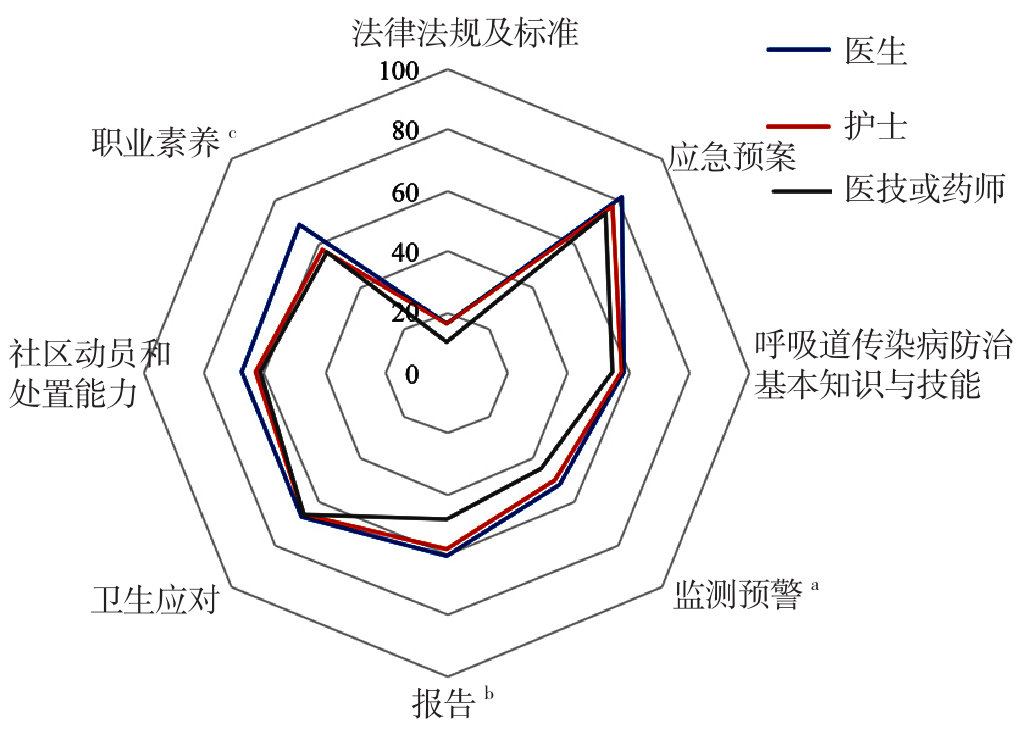
图1 不同职业社区医护人员二级指标得分情况比较注:a表示该维度医生的得分高于医技或药师,b表示该维度医生和护士的得分高于医技或药师,c表示该维度医生的得分高于护士与医技或药师。
Figure 1 Comparison of scores situation on secondary indicators among community medical staff of different occupations
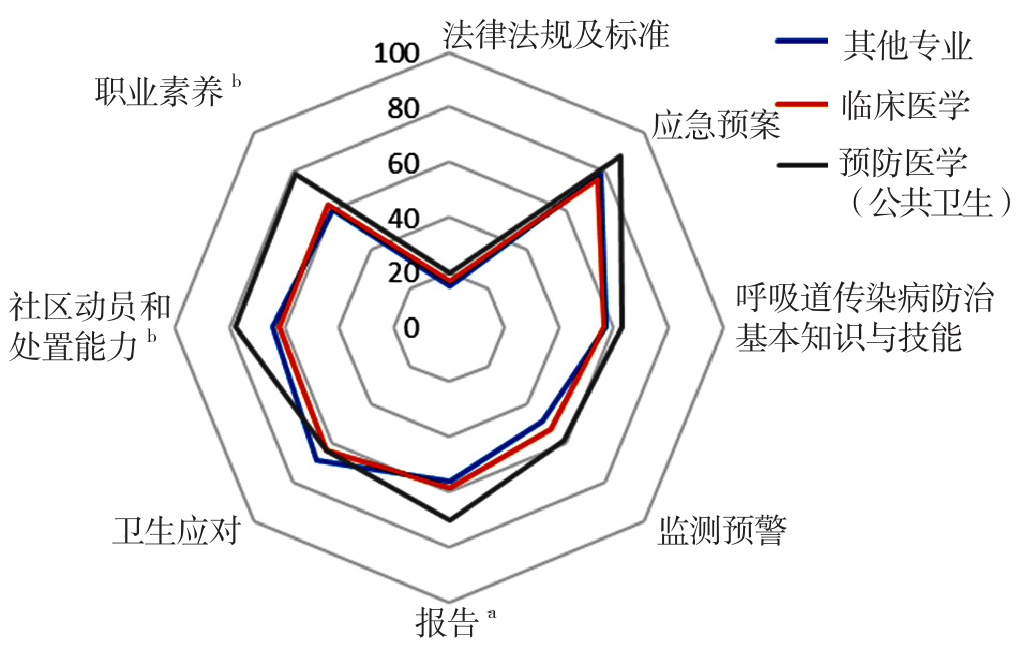
图2 不同专业背景的社区医护人员二级指标得分情况比较注:a表示该维度预防医学背景的医护人员的得分高于其他专业背景的医护人员,b表示该维度预防医学背景的医护人员的得分高于临床医学与其他专业背景的医护人员。
Figure 2 Comparison of scores situation on secondary indicators among community medical staff from different professional backgrounds
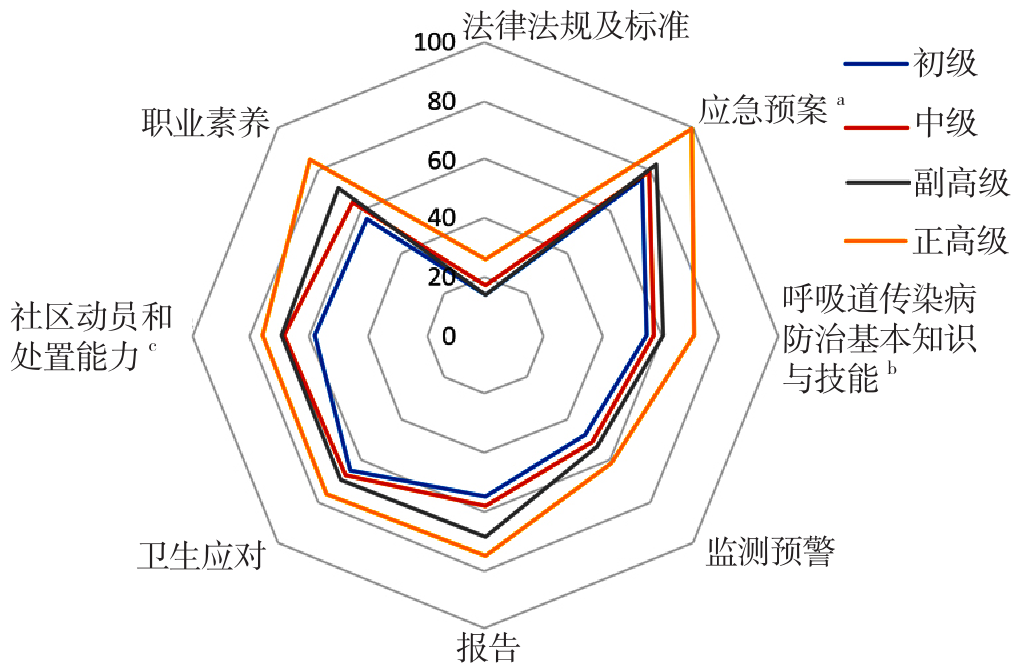
图3 不同职称的社区医护人员二级指标得分情况比较注:a表示该维度正高级职称的医护人员得分高于初级与中级职称的医护人员,b表示该维度正高级职称的医护人员得分高于初级职称的医护人员,c表示该维度中级职称的医护人员得分高于初级职称的医护人员。
Figure 3 Comparison of scores situation on secondary indicators among community medical staff with different professional titles
| 变量 | 总分 | 知识准备 | 应对能力 | ||||||
|---|---|---|---|---|---|---|---|---|---|
| β | t值 | P值 | β | t值 | P值 | β | t值 | P值 | |
| 性别(以男为参照) | -0.020 | -0.435 | 0.664 | -0.044 | -0.940 | 0.348 | -0.002 | -0.039 | 0.969 |
| 年龄(以<25岁为参照) | |||||||||
| 25~34岁 | -0.120 | -1.468 | 0.143 | -0.108 | -1.304 | 0.193 | -0.099 | -1.199 | 0.231 |
| 35~44岁 | -0.070 | -0.724 | 0.470 | -0.067 | -0.674 | 0.500 | -0.057 | -0.573 | 0.567 |
| ≥45岁 | -0.076 | -0.962 | 0.336 | -0.081 | -1.003 | 0.316 | -0.056 | -0.701 | 0.483 |
| 文化程度(以大专及以下为参照) | |||||||||
| 本科 | 0.080 | 1.422 | 0.156 | 0.021 | 0.371 | 0.711 | 0.095 | 1.671 | 0.095 |
| 硕士或博士 | 0.037 | 0.602 | 0.548 | 0.006 | 0.096 | 0.923 | 0.046 | 0.742 | 0.458 |
| 专业背景(以预防医学为参照) | |||||||||
| 临床医学 | -0.210 | -2.442 | 0.015 | -0.156 | -1.791 | 0.074 | -0.193 | -2.211 | 0.027 |
| 其他专业 | -0.036 | -0.384 | 0.701 | 0.008 | -0.087 | 0.931 | -0.044 | -0.459 | 0.646 |
| 职业(以医技或药师为参照) | |||||||||
| 医生 | 0.322 | 3.798 | <0.001 | 0.257 | 2.974 | 0.003 | 0.287 | 3.331 | 0.001 |
| 护士 | 0.115 | 1.787 | 0.075 | 0.082 | 1.247 | 0.213 | 0.108 | 1.654 | 0.099 |
| 工作年限(以<3年为参照) | |||||||||
| 3~14年 | 0.096 | 1.365 | 0.173 | 0.038 | 0.534 | 0.594 | 0.107 | 1.503 | 0.134 |
| ≥15年 | 0.016 | 0.213 | 0.832 | -0.049 | -0.635 | 0.526 | 0.050 | 0.644 | 0.520 |
| 职称(以初级为参照) | |||||||||
| 中级 | 0.054 | 0.991 | 0.322 | -0.008 | -0.143 | 0.886 | 0.077 | 1.394 | 0.164 |
| 副高级 | 0.065 | 1.257 | 0.209 | 0.019 | 0.353 | 0.724 | 0.077 | 1.463 | 0.144 |
| 正高级 | 0.118 | 2.522 | 0.012 | 0.107 | 2.243 | 0.025 | 0.098 | 2.059 | 0.040 |
| 过去1年参与呼吸道传染病培训与应急演练次数(以未参加过为参照) | |||||||||
| 1~5次 | 0.074 | 1.228 | 0.220 | 0.199 | 3.259 | 0.001 | -0.014 | -0.234 | 0.815 |
| ≥6次 | 0.225 | 3.848 | <0.001 | 0.297 | 4.991 | <0.001 | 0.133 | 2.246 | 0.025 |
表4 社区医护人员呼吸道传染病卫生应急能力、知识准备与应对能力相关因素的多元线性回归分析
Table 4 Multiple linear regression analyses of factors associated with community medical staff's health emergency capacities, knowledge preparation and response capacities for respiratory infectious diseases
| 变量 | 总分 | 知识准备 | 应对能力 | ||||||
|---|---|---|---|---|---|---|---|---|---|
| β | t值 | P值 | β | t值 | P值 | β | t值 | P值 | |
| 性别(以男为参照) | -0.020 | -0.435 | 0.664 | -0.044 | -0.940 | 0.348 | -0.002 | -0.039 | 0.969 |
| 年龄(以<25岁为参照) | |||||||||
| 25~34岁 | -0.120 | -1.468 | 0.143 | -0.108 | -1.304 | 0.193 | -0.099 | -1.199 | 0.231 |
| 35~44岁 | -0.070 | -0.724 | 0.470 | -0.067 | -0.674 | 0.500 | -0.057 | -0.573 | 0.567 |
| ≥45岁 | -0.076 | -0.962 | 0.336 | -0.081 | -1.003 | 0.316 | -0.056 | -0.701 | 0.483 |
| 文化程度(以大专及以下为参照) | |||||||||
| 本科 | 0.080 | 1.422 | 0.156 | 0.021 | 0.371 | 0.711 | 0.095 | 1.671 | 0.095 |
| 硕士或博士 | 0.037 | 0.602 | 0.548 | 0.006 | 0.096 | 0.923 | 0.046 | 0.742 | 0.458 |
| 专业背景(以预防医学为参照) | |||||||||
| 临床医学 | -0.210 | -2.442 | 0.015 | -0.156 | -1.791 | 0.074 | -0.193 | -2.211 | 0.027 |
| 其他专业 | -0.036 | -0.384 | 0.701 | 0.008 | -0.087 | 0.931 | -0.044 | -0.459 | 0.646 |
| 职业(以医技或药师为参照) | |||||||||
| 医生 | 0.322 | 3.798 | <0.001 | 0.257 | 2.974 | 0.003 | 0.287 | 3.331 | 0.001 |
| 护士 | 0.115 | 1.787 | 0.075 | 0.082 | 1.247 | 0.213 | 0.108 | 1.654 | 0.099 |
| 工作年限(以<3年为参照) | |||||||||
| 3~14年 | 0.096 | 1.365 | 0.173 | 0.038 | 0.534 | 0.594 | 0.107 | 1.503 | 0.134 |
| ≥15年 | 0.016 | 0.213 | 0.832 | -0.049 | -0.635 | 0.526 | 0.050 | 0.644 | 0.520 |
| 职称(以初级为参照) | |||||||||
| 中级 | 0.054 | 0.991 | 0.322 | -0.008 | -0.143 | 0.886 | 0.077 | 1.394 | 0.164 |
| 副高级 | 0.065 | 1.257 | 0.209 | 0.019 | 0.353 | 0.724 | 0.077 | 1.463 | 0.144 |
| 正高级 | 0.118 | 2.522 | 0.012 | 0.107 | 2.243 | 0.025 | 0.098 | 2.059 | 0.040 |
| 过去1年参与呼吸道传染病培训与应急演练次数(以未参加过为参照) | |||||||||
| 1~5次 | 0.074 | 1.228 | 0.220 | 0.199 | 3.259 | 0.001 | -0.014 | -0.234 | 0.815 |
| ≥6次 | 0.225 | 3.848 | <0.001 | 0.297 | 4.991 | <0.001 | 0.133 | 2.246 | 0.025 |
| [1] |
李玉莲, 蔡益民. 新发呼吸道传染病流行特点及应对策略[J]. 重庆医学, 2020, 49(15): 2455-2458. DOI: 10.3969/j.issn.1671-8348.2020.15.009.
|
| [2] |
WHO. Coronavirus disease(COVID-19)[EB/OL].(2023-12-12)[2023-12-12].
|
| [3] |
中国疾病预防控制中心.国家卫生健康委员会2023年11月13日新闻发布会文字实录[EB/OL].(2023-11-13)[2023-12-20].
|
| [4] |
中国疾病预防控制中心.全国新型冠状病毒感染疫情情况[EB/OL].(2023-12-20)[2023-12-20].
|
| [5] |
沙瑞芹, 田莹, 王赟, 等. 护士突发公共卫生事件应对能力评估工具的研究进展[J]. 循证护理, 2022, 8(14): 1892-1895.
|
| [6] |
阚庭. 医护人员传染病突发事件应对能力培训项目的开发与评价[D]. 上海: 中国人民解放军海军军医大学, 2018.
|
| [7] |
王凯, 于丽. 社区卫生服务在SARS防治工作中的作用与思考[J]. 中华全科医师杂志, 2003, 2(5): 275-276. DOI: 10.3760/cma.j.issn.1671-7368.2003.05.109.
|
| [8] |
陈丽芬. 甲型H1N1流感社区防控措施的决策与效果评价 [J]. 中国卫生产业, 2012, 9(3): 96-98. DOI: 10.16659/j.cnki.1672-5654.2012.03.023
|
| [9] |
赵开栋, 姚有华, 张郦赟. 社区卫生服务中心在疫情防控中的作用探析[J]. 党政论坛, 2021(3): 49-51. DOI: 10.3969/j.issn.1006-1754.2021.03.014.
|
| [10] |
黄蛟灵, 傅玄琴, 王黎强, 等. 基层医疗卫生机构在疫情防控中的功能定位与作用路径研究:以上海市W社区卫生服务中心为例[J]. 中国全科医学, 2021, 24(13): 1596-1601. DOI: 10.12114/j.issn.1007-9572.2021.00.187.
|
| [11] |
|
| [12] |
黄广成, 江冰, 张远妮, 等. 新冠疫情背景下社区医护人员公共卫生应急能力自我认知调查[J]. 现代预防医学, 2022, 49(19): 3644-3648. DOI: 10.20043/j.cnki.MPM.202203373.
|
| [13] |
|
| [14] |
医师资格考试指导用书专家编写组. 2021公共卫生执业医师资格考试模拟试题解析[M]. 北京: 人民卫生出版社, 2020.
|
| [15] |
王志龙. 河南某部队医务人员突发公共卫生事件应对能力调查研究[D]. 郑州: 郑州大学, 2014.
|
| [16] |
民政部,国家卫生健康委.《民政部 国家卫生健康委关于深入学习贯彻习近平总书记重要指示精神 进一步做好城乡社区疫情防控工作的通知》[EB/OL].[2024-12-11].
|
| [17] |
娄婷, 王霞, 王建宁, 等. 护理人员应对突发公共卫生事件知识现状调查[J]. 护士进修杂志, 2011, 26(9): 822-823. DOI: 10.3969/j.issn.1002-6975.2011.09.027.
|
| [18] |
侯静涛, 杨慧玲, 许娟, 等. 西安地区医务人员重大传染病疫情应急能力状况及影响因素调查分析[J]. 华南预防医学, 2023, 49(9): 1103-1108.
|
| [19] |
孔德华, 冯霞, 马茹兰, 等. 综合性医院医护人员传染病突发事件应对能力的现状分析[J]. 解放军预防医学杂志, 2020, 38(10): 9-12. DOI: 10.13704/j.cnki.jyyx.2020.10.004.
|
| [20] |
|
| [21] |
北京市卫生健康委员会. 2021年北京卫生健康事业发展统计公报[EB/OL].(2023-03-20)[2023-12-17].
|
| [22] |
赵瑞芳, 胡方舟, 陈金京, 等. 郑州市社区医护人员新发传染病相关知识、态度、应急能力研究[J]. 华南预防医学, 2022, 48(7): 899-902. DOI: 10.12183/j.scjpm.2022.0899.
|
| [23] |
马衣努尔·托合提, 马尔哈巴·吾买尔, 李萍. 新疆基层医院少数民族护士突发公共卫生事件应急能力现状调查[J]. 护理学杂志, 2018, 33(5): 56-58. DOI: 10.3870/j.issn.1001-4152.2018.05.056.
|
| [24] |
王文慧, 鲁桂兰, 徐丽, 等. 传染病专科医院护士重大传染病疫情应急能力与应急知识、应急态度相关性分析[J]. 护理实践与研究, 2021, 18(17): 2529-2534. DOI: 10.3969/j.issn.1672-9676.2021.17.001.
|
| [25] |
|
| [26] |
柯丹丹, 贾楠, 崔埔安, 等. 后疫情时代我国基层医疗卫生服务发展现状、挑战及建议[J]. 协和医学杂志, 2024, 15(1): 45-51. DOI: 10.12290/xhyxzz.2023-0290.
|
| [27] |
吕锦红, 黄勇, 丁列平, 等. 某基层医院医护人员对突发传染病的认知与应对能力调查[J]. 中医药管理杂志, 2020, 28(22): 55-57. DOI: 10.16690/j.cnki.1007-9203.2020.22.019.
|
| [28] |
王冬叶, 张万里, 项少梅, 等. 温州市社区护士突发公共卫生事件应急能力调查分析[J]. 护理学杂志, 2016, 31(4): 82-84. DOI: 10.3870/j.issn.1001-4152.2016.04.082.
|
| [29] |
卫生部.《卫生部办公厅关于印发〈全国卫生应急工作培训大纲(2011-2015年)〉的通知》[EB/OL].(2011-11-17)[2024-11-23].
|
| [30] |
北京市卫生健康委员会. 北京市医防融合培训方案(2023年版)[Z]. 北京: 北京市卫生健康委员会, 2023.
|
| [1] | 闫云云, 顾洁, 钱婵莉, 朱志宁, 苏瑾, 杜兆辉, 黄延焱, 应晓华. 上海市基层医疗卫生机构发热诊室运行情况与反思:一项混合性研究[J]. 中国全科医学, 2026, 29(05): 574-582. |
| [2] | 李希, 刘珏. 人工智能赋能基层医疗卫生服务:进展与挑战[J]. 中国全科医学, 2026, 29(04): 436-443. |
| [3] | 王佳欣, 吴浩, 赵亚利. 北京市基层医疗卫生机构重大传染病疫情应急能力评价指标体系的构建研究:基于应急管理理论与韧性理念[J]. 中国全科医学, 2026, 29(02): 162-169. |
| [4] | 苏宁, 刘平平, 郭宇濛, 芦明月, 朱瑞, 于建平. 2019—2022年北京市基层传染病防控能力及影响因素研究[J]. 中国全科医学, 2025, 28(35): 4473-4478. |
| [5] | 罗京, 付强, 刘娟, 况建华, 周娟, 罗艳青. 川东北儿童非细菌性呼吸道病原体流行病学研究[J]. 中国全科医学, 2025, 28(33): 4172-4179. |
| [6] | 张小娟, 刘阳, 彭博, 曹晓琳, 叶媛, 朱坤. 基层医疗卫生机构儿科建设与服务提供研究[J]. 中国全科医学, 2025, 28(10): 1228-1235. |
| [7] | 马晓霞, 石济顺, 钮利华, 陈宁清, 丁焱. 新形势下上海市社区母婴保健服务开展现状的质性研究[J]. 中国全科医学, 2024, 27(28): 3529-3534. |
| [8] | 刘珏, 梁万年. 科技创新应对健康挑战[J]. 中国全科医学, 2024, 27(28): 0-C4. |
| [9] | 马乐, 金花, 史玲, 易春涛, 侯进, 陈晨, 宦红梅, 倪衡如, 于德华. 上海市社区卫生服务机构幽门螺杆菌感染诊疗质量分析[J]. 中国全科医学, 2024, 27(19): 2401-2408. |
| [10] | 胥梓薇, 程康耀, 桂莉. 突发重大传染病事件背景下过负荷医院管理研究的范围综述[J]. 中国全科医学, 2024, 27(16): 2039-2044. |
| [11] | 张欣怡, 王茜, 王丹, 段立霞, 林如娇, 刘晨曦. 公众上呼吸道感染症状的潜在模式及其对抗生素使用行为的影响研究[J]. 中国全科医学, 2024, 27(05): 527-534. |
| [12] | 马云笛, 任菁菁, 邱艳. 我国全科医师在社区传染病防治工作中的现状及展望[J]. 中国全科医学, 2024, 27(02): 138-143. |
| [13] | 王婕, 李仕明, 魏士飞, 王宁利. 重视基层卫生服务在儿童近视防控行为干预中的作用[J]. 中国全科医学, 2023, 26(33): 4213-4217. |
| [14] | 刘锐, 曹宇, 褚爱群, 吴欢云. 上海市社区药学服务开展现状及药师融入家庭医生团队情况研究[J]. 中国全科医学, 2023, 26(31): 3922-3929. |
| [15] | 高荣建, 吴海丽, 毕鑑红, 康凯, 郭星, 刘娟, 李晓丽, 孟存英. 胃黏膜病变内镜黏膜下剥离术后病理升级的相关因素分析[J]. 中国全科医学, 2023, 26(26): 3325-3329. |
| 阅读次数 | ||||||
|
全文 |
|
|||||
|
摘要 |
|
|||||