
Chinese General Practice ›› 2026, Vol. 29 ›› Issue (27): 3924-3930.DOI: 10.12114/j.issn.1007-9572.2025.0449
• Article • Previous Articles Next Articles
Received:2025-10-21
Revised:2026-03-17
Published:2026-09-20
Online:2026-08-11
Contact:
LU Meijuan
通讯作者:
路美娟
作者简介:作者贡献:
郭俊池提出主要研究目标,负责研究构思与设计、研究实施、数据收集与整理、统计学分析及图表绘制,撰写论文初稿;张明妍参与数据整理、变量定义及表格绘制,负责中英文校对;秦广宁参与论文修订,并对"湿浊痰饮类病"理论相关内容进行补充完善;徐强负责模型设计与统计学分析指导,参与论文修订;路美娟负责研究总体设计与学术指导,对论文进行质量控制与审校,对文章整体负责。
基金资助:
Add to citation manager EndNote|Ris|BibTeX
URL: https://www.chinagp.net/EN/10.12114/j.issn.1007-9572.2025.0449
| 特征类别 | NHANES模块 | 变量名称 |
|---|---|---|
| 超重 | Examination data | BMXBMI(BMI) |
| 血脂异常 | Laboratory data | LBDLDL(LDL-C)、LBXTR(TG) |
| 代谢紊乱 | Laboratory data | LBXGLU(FPG)、LBXGH(HbA1c) |
| 饮食偏嗜 | Dietary data | DR1ITFAT |
| 运动量偏少 | Physical Activity Questionnaire | PAD020/PAQ635 |
Table 1 NHANES data modules and variables corresponding to the construction of TANS01
| 特征类别 | NHANES模块 | 变量名称 |
|---|---|---|
| 超重 | Examination data | BMXBMI(BMI) |
| 血脂异常 | Laboratory data | LBDLDL(LDL-C)、LBXTR(TG) |
| 代谢紊乱 | Laboratory data | LBXGLU(FPG)、LBXGH(HbA1c) |
| 饮食偏嗜 | Dietary data | DR1ITFAT |
| 运动量偏少 | Physical Activity Questionnaire | PAD020/PAQ635 |
| 组别 | 例数 | 年龄( | 年龄[例(%)] | 性别(男/女) | 吸烟[例(%)] | 饮酒[例(%)] | 高血压[例(%)] | 超重[例(%)] | 血脂异常[例(%)] | |
|---|---|---|---|---|---|---|---|---|---|---|
| ≥60岁 | <60岁 | |||||||||
| 非痰湿体质人群 | 6 437 | 43.1±17.1 | 1 649(19.4) | 4 788(80.6) | 2 857/3 580 | 2 822(44.8) | 4 693(78.0) | 1 556(21.4) | 2 685(40.8) | 1 278(19.8) |
| 痰湿体质人群 | 8 842 | 50.9±15.9 | 3 501(31.4) | 5 341(68.6) | 4 667/4 175 | 4 222(48.1) | 6 171(74.6) | 3 944(41.5) | 8 056(91.8) | 6 047(70.0) |
| χ2(t)值 | 21.176a | 325.702 | 170.420 | 16.844 | 23.888 | 694.550 | 4 592.400 | 3 819.300 | ||
| P值 | <0.001 | <0.001 | <0.001 | <0.001 | <0.001 | <0.001 | <0.001 | <0.001 | ||
| 组别 | 血糖代谢紊乱[例(%)] | 饮食偏嗜[例(%)] | 运动偏少[例(%)] | 心力衰竭[例(%)] | 冠心病[例(%)] | 心绞痛[例(%)] | BMI( | WBC( | RBC( | |
| 非痰湿体质人群 | 1 752(23.3) | 440(6.3) | 3 625(58.8) | 119(1.3) | 175(2.2) | 98(1.3) | 25.58±5.62 | 6.54±2.27 | 4.64±0.48 | |
| 痰湿体质人群 | 7 118(77.4) | 1 790(19.3) | 7 725(88.8) | 381(3.5) | 446(4.4) | 293(2.9) | 31.45±6.53 | 7.07±2.29 | 4.79±0.48 | |
| χ2(t)值 | 4 434.000 | 548.940 | 1 835.000 | 70.890 | 55.298 | 46.202 | 42.889a | 12.438a | 16.238a | |
| P值 | <0.001 | <0.001 | <0.001 | <0.001 | <0.001 | <0.001 | <0.001 | <0.001 | <0.001 | |
| 组别 | Hb( | HbA1c ( | FPG( | LDL-C( | TG( | AST( | ALT( | UA( | Cr( | |
| 非痰湿体质人群 | 14.22±1.45 | 5.30±0.57 | 95.51±17.47 | 104.29±29.87 | 97.37±73.81 | 24.49±14.41 | 22.64±15.01 | 299.87±74.88 | 0.86±0.38 | |
| 痰湿体质人群 | 14.52±1.50 | 5.82±1.09 | 113.0±36.16 | 123.91±36.73 | 158.36±125.50 | 26.50±21.43 | 28.21±22.26 | 345.80±83.03 | 0.91±0.39 | |
| χ2(t)值 | 10.499a | 31.605a | 30.490a | 31.992a | 29.265a | 6.768a | 17.576a | 25.774a | 6.779a | |
| P值 | <0.001 | <0.001 | <0.001 | <0.001 | <0.001 | <0.001 | <0.001 | <0.001 | <0.001 | |
Table 2 Baseline characteristics of the study population stratified by phlegm-damp constitution
| 组别 | 例数 | 年龄( | 年龄[例(%)] | 性别(男/女) | 吸烟[例(%)] | 饮酒[例(%)] | 高血压[例(%)] | 超重[例(%)] | 血脂异常[例(%)] | |
|---|---|---|---|---|---|---|---|---|---|---|
| ≥60岁 | <60岁 | |||||||||
| 非痰湿体质人群 | 6 437 | 43.1±17.1 | 1 649(19.4) | 4 788(80.6) | 2 857/3 580 | 2 822(44.8) | 4 693(78.0) | 1 556(21.4) | 2 685(40.8) | 1 278(19.8) |
| 痰湿体质人群 | 8 842 | 50.9±15.9 | 3 501(31.4) | 5 341(68.6) | 4 667/4 175 | 4 222(48.1) | 6 171(74.6) | 3 944(41.5) | 8 056(91.8) | 6 047(70.0) |
| χ2(t)值 | 21.176a | 325.702 | 170.420 | 16.844 | 23.888 | 694.550 | 4 592.400 | 3 819.300 | ||
| P值 | <0.001 | <0.001 | <0.001 | <0.001 | <0.001 | <0.001 | <0.001 | <0.001 | ||
| 组别 | 血糖代谢紊乱[例(%)] | 饮食偏嗜[例(%)] | 运动偏少[例(%)] | 心力衰竭[例(%)] | 冠心病[例(%)] | 心绞痛[例(%)] | BMI( | WBC( | RBC( | |
| 非痰湿体质人群 | 1 752(23.3) | 440(6.3) | 3 625(58.8) | 119(1.3) | 175(2.2) | 98(1.3) | 25.58±5.62 | 6.54±2.27 | 4.64±0.48 | |
| 痰湿体质人群 | 7 118(77.4) | 1 790(19.3) | 7 725(88.8) | 381(3.5) | 446(4.4) | 293(2.9) | 31.45±6.53 | 7.07±2.29 | 4.79±0.48 | |
| χ2(t)值 | 4 434.000 | 548.940 | 1 835.000 | 70.890 | 55.298 | 46.202 | 42.889a | 12.438a | 16.238a | |
| P值 | <0.001 | <0.001 | <0.001 | <0.001 | <0.001 | <0.001 | <0.001 | <0.001 | <0.001 | |
| 组别 | Hb( | HbA1c ( | FPG( | LDL-C( | TG( | AST( | ALT( | UA( | Cr( | |
| 非痰湿体质人群 | 14.22±1.45 | 5.30±0.57 | 95.51±17.47 | 104.29±29.87 | 97.37±73.81 | 24.49±14.41 | 22.64±15.01 | 299.87±74.88 | 0.86±0.38 | |
| 痰湿体质人群 | 14.52±1.50 | 5.82±1.09 | 113.0±36.16 | 123.91±36.73 | 158.36±125.50 | 26.50±21.43 | 28.21±22.26 | 345.80±83.03 | 0.91±0.39 | |
| χ2(t)值 | 10.499a | 31.605a | 30.490a | 31.992a | 29.265a | 6.768a | 17.576a | 25.774a | 6.779a | |
| P值 | <0.001 | <0.001 | <0.001 | <0.001 | <0.001 | <0.001 | <0.001 | <0.001 | <0.001 | |
| 因变量 | 模型1 | 模型2 | 模型3 | |||
|---|---|---|---|---|---|---|
| OR(95%CI) | P值 | OR(95%CI) | P值 | OR(95%CI) | P值 | |
| 心力衰竭 | 2.67(2.04~3.49) | <0.05 | 1.87(1.43~2.44) | <0.05 | 1.85(1.42~2.41) | <0.05 |
| 冠心病 | 2.04(1.66~2.51) | <0.05 | 1.37(1.10~1.70) | <0.05 | 1.36(1.09~1.69) | <0.05 |
| 心绞痛 | 2.29(1.72~3.03) | <0.05 | 1.59(1.20~2.11) | <0.05 | 1.57(1.18~2.09) | <0.05 |
| 因变量 | 模型4 | 模型5 | 模型6 | |||
| OR(95%CI) | P值 | OR(95%CI) | P值 | OR(95%CI) | P值 | |
| 心力衰竭 | 1.58(1.21~2.06) | <0.05 | 1.35(1.03~1.78) | <0.05 | 1.23(0.93~1.63) | 0.14 |
| 冠心病 | 1.18(0.94~1.48) | 0.15 | 1.06(0.84~1.33) | 0.62 | 1.02(0.83~1.28) | 0.79 |
| 心绞痛 | 1.36(1.01~1.83) | <0.05 | 1.19(0.88~1.61) | 0.24 | 1.12(0.83~1.53) | 0.45 |
Table 3 Results of univariate and multivariate Logistic regression analysis for predicting CVD by TANS01
| 因变量 | 模型1 | 模型2 | 模型3 | |||
|---|---|---|---|---|---|---|
| OR(95%CI) | P值 | OR(95%CI) | P值 | OR(95%CI) | P值 | |
| 心力衰竭 | 2.67(2.04~3.49) | <0.05 | 1.87(1.43~2.44) | <0.05 | 1.85(1.42~2.41) | <0.05 |
| 冠心病 | 2.04(1.66~2.51) | <0.05 | 1.37(1.10~1.70) | <0.05 | 1.36(1.09~1.69) | <0.05 |
| 心绞痛 | 2.29(1.72~3.03) | <0.05 | 1.59(1.20~2.11) | <0.05 | 1.57(1.18~2.09) | <0.05 |
| 因变量 | 模型4 | 模型5 | 模型6 | |||
| OR(95%CI) | P值 | OR(95%CI) | P值 | OR(95%CI) | P值 | |
| 心力衰竭 | 1.58(1.21~2.06) | <0.05 | 1.35(1.03~1.78) | <0.05 | 1.23(0.93~1.63) | 0.14 |
| 冠心病 | 1.18(0.94~1.48) | 0.15 | 1.06(0.84~1.33) | 0.62 | 1.02(0.83~1.28) | 0.79 |
| 心绞痛 | 1.36(1.01~1.83) | <0.05 | 1.19(0.88~1.61) | 0.24 | 1.12(0.83~1.53) | 0.45 |
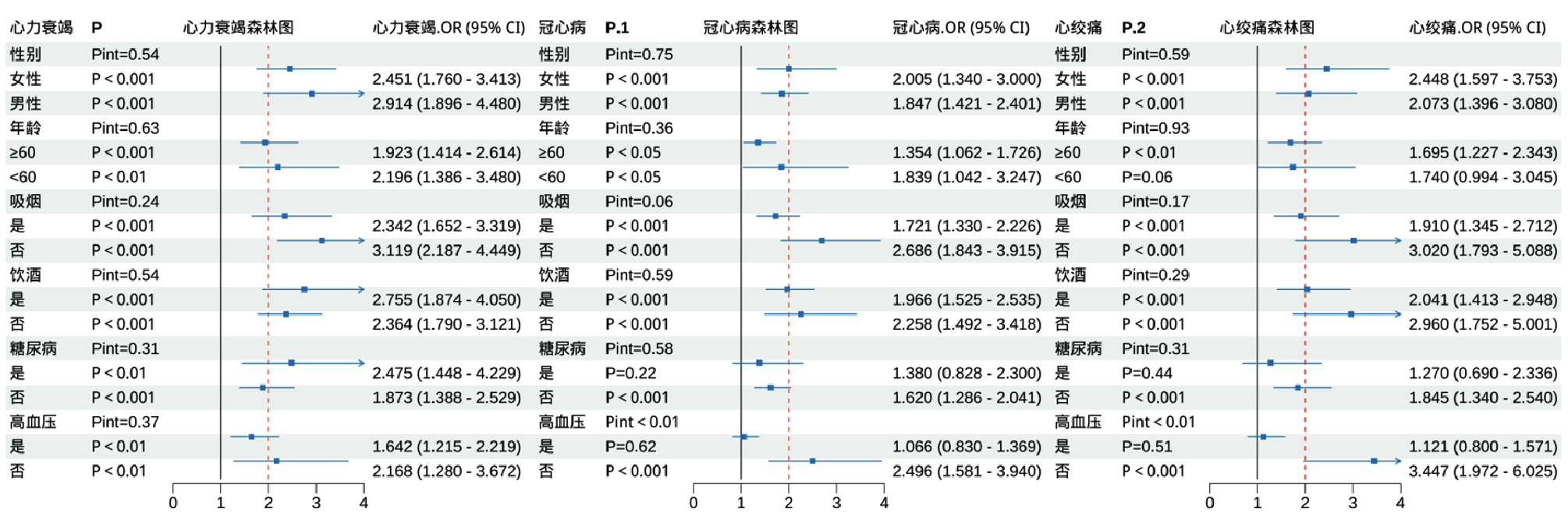
Figure 1 Subgroup analysis of the predictive ability of TANS01 for cardiovascular diseases
| [1] |
|
| [2] |
|
| [3] |
|
| [4] |
|
| [5] |
朱晶晶,张扬,龚小会, 等. 基于人工智能算法与中医体质类型的老年糖尿病患者合并心血管疾病预测模型[J]. 上海中医药杂志, 2025, 59(3): 1-6. DOI: 10.16305/j.1007-1334.2025.z20240801001.
|
| [6] |
施甜. 青少年中医体质类型与心血管危险因素的相关性及其防治的研究[J]. 心血管病防治知识, 2024, 14(11): 15-17, 21.
|
| [7] |
李霄,金鑫瑶,吕玲, 等. 张伯礼"湿浊痰饮类病证治"学术思想撮要[J]. 中医杂志, 2022, 63(17): 1620-1624. DOI: 10.13288/j.11-2166/r.2022.17.005.
|
| [8] |
秦广宁,金鑫瑶,刘耀远, 等. 基于张伯礼"湿浊痰饮类病"学说浅析射血分数保留的心力衰竭治疗策略[J]. 中医杂志, 2024, 65(1): 35-38, 43. DOI: 10.13288/j.11-2166/r.2024.01.007.
|
| [9] |
马艳苗,刘明燃,宋博, 等. 中医气象-地理-体质学说述略[J]. 中华中医药杂志, 2024, 39(9): 4572-4576.
|
| [10] |
|
| [11] |
刘兴,王琦,李炜, 等. 痰湿体质知识图谱构建研究初探[J]. 北京中医药大学学报, 2022, 45(9): 949-955.
|
| [12] |
罗悦,周娟. 基于随机森林的中医痰湿体质预测模型研究[J]. 世界科学技术-中医药现代化, 2024, 26(7): 1906-1915. DOI: 10.11842/wst.20230605004.
|
| [13] |
王怀玉,赵彤,王济, 等. 中医药跨学科交叉研究模式探讨——以痰湿体质血脂异常未病状态的客观表征为例[J]. 中医杂志, 2024, 65(6): 553-556. DOI: 10.13288/j.11-2166/r.2024.06.001.
|
| [14] |
|
| [15] |
|
| [16] |
|
| [17] |
Global Burden of Disease 2023 Risk Factors Collaborators. Global, regional, and national burden of cardiovascular diseases and risk factors in 204 countries and territories, 1990-2023[J]. J Am Coll Cardiol, 2025, 86(22): 2167-2243. DOI: 10.1016/j.jacc.2025.08.015.
|
| [18] |
王琦. 中医体质学对共病诊疗的理论创新与实践[J]. 北京中医药大学学报, 2025, 48(11): 1481-1486. DOI: 10.3969/j.issn.1006-2157.2025.11.001.
|
| [19] |
|
| [20] |
|
| [21] |
|
| [22] |
曹凤娇,易文明,吴梦玮, 等. 基于痰湿体质的高尿酸血症防治策略研究进展[J]. 中国医药科学, 2025, 15(13): 42-45. DOI: 10.20116/j.issn2095-0616.2025.13.08.
|
| [23] |
朱倩倩,王澜,姜楠, 等. 基于深度学习的痰湿体质高血压舌象识别[J]. 中国医学物理学杂志, 2025, 42(4): 534-541. DOI: 10.3969/j.issn.1005-202X.2025.04.016.
|
| [24] |
郭俊池,张明妍,徐强, 等. "湿浊痰饮类病"理论整合转录组学与孟德尔随机化构建痰湿体质人群心力衰竭风险中的核心基因模型[J]. 天津中医药大学学报, 2025, 44(8): 673-678. DOI: 10.11656/j.issn.1673-9043.2025.08.01.
|
| [25] |
|
| [26] |
|
| [27] |
|
| [28] |
|
| [29] |
|
| [30] |
|
| [31] |
吕蕊婷,艾彦伶,杨忠奇, 等. "治未病"中药新药研发与中药创新[J]. 中国中药杂志, 2025, 50(13): 3589-3595. DOI: 10.19540/j.cnki.cjcmm.20250310.603.
|
| [1] | YI Shanye, YANG Rong, LIAO Xiaoyang, ZHOU Yiheng, LIU Lidi, YANG Ziyu, BAI Jiaxin, JIA Yu, ZHANG Xin. Interpretation of the 2024 Blood Pressure Measurement and Assessment of Arterial Structure and Function: an Expert Group Position Paper [J]. Chinese General Practice, 2026, 29(32): 4690-4694. |
| [2] | YANG Yuqing, LI Wenzhe, ZHU Lijie, YANG Tingjie, GUO Yiming, CHEN Lulin, CAO Yudong, YUAN Jiangshu, YANG Honghui. Correlation between Neutrophil Percentage to Albumin Ratio and Coronary Artery Calcification in Patients with Coronary Heart Disease [J]. Chinese General Practice, 2026, 29(30): 4390-4396. |
| [3] | WANG Wei, YU Fei, YAN Xiaohong. Application and Mechanisms of Sodium-glucose Cotransporter 2 Inhibitors in Heart Failure with Different Etiologies: Evidence from Ischemic and Non-ischemic Heart Failure [J]. Chinese General Practice, 2026, 29(27): 3976-3984. |
| [4] | ZHAO Yuanyuan, LIU Pulin, DAI Juan, ZHANG Gang, ZHANG Wei, ZHANG Xiaoxia, DENG Qing, YAN Yaqiong. Association Study between Chinese Visceral Adiposity Index and Risk of All-cause and Cause-specific Mortality in the Elderly [J]. Chinese General Practice, 2026, 29(26): 3781-3787. |
| [5] | YANG Rui, LIAO Xiaoyang, HUANG Chuanying, YANG Ziyu, SHEN Can, JIA Yu, LIU Lidi, YANG Rong. Interpretation of the 2024 British and Irish Hypertension Society Position Statement: Investigation and Management of Hypertension in Young People [J]. Chinese General Practice, 2026, 29(26): 3726-3732. |
| [6] | ZHAO Yiru, HAO Xinyu, ZHAO Lei, ZHANG Caihui, WANG Zhaoxia, ZHANG Yueying. Summary of the Best Evidence for the Management of Diuretic Resistance in Patients with Heart Failure [J]. Chinese General Practice, 2026, 29(25): 3694-3703. |
| [7] | LI Jia, HE Jun, ZHU Jinmei, LIU Fuming, WU Yuan, DING Yuquan, QIAN Hua, XU Xinyu. Effects of Low-volume High-intensity Interval Training Combined with Virtual Reality Technology on Cardiac Rehabilitation in Patients with Coronary Heart Disease [J]. Chinese General Practice, 2026, 29(25): 3640-3649. |
| [8] | LI Xueni, LIU Gejing, LIU Yongming. Efficacy and Safety of Semaglutide in Patients with Heart Failure: a Meta-Analysis [J]. Chinese General Practice, 2026, 29(24): 3509-3519. |
| [9] | SUN Qinyu, YANG Tianxiao, DENG Yifan, FANG Zhen, JI Jun, HE Shenghu, ZHANG Jing. Analysis of the Correlation between Different Surrogate Indicators of Insulin Resistance and the Occurrence of MACEs after PCI in Patients with Metabolic Dysfunction-associated Steatotic Liver Disease and Coronary Heart Disease [J]. Chinese General Practice, 2026, 29(22): 3146-3153. |
| [10] | LI Shilong, WANG He, ZHOU Xiaoyu, FU Lei, ZHAO Zhuo, HUA Chengjun, SI Chunying. Advances in the Study of Cardiac Macrophages in Heart Failure with Preserved Ejection Fraction [J]. Chinese General Practice, 2026, 29(15): 2084-2091. |
| [11] | YANG Xu, FAN Jieting, SONG Hongyan, FENG Panpan, HAO Jingyu, YAO Mi. Risk Assessment and Communication Strategies for Cardiovascular Diseases in Primary Care [J]. Chinese General Practice, 2026, 29(10): 1294-1299. |
| [12] | PEI Zhiyi, ZHANG Xiaoxin, LIN Jiayi, ZHANG Xiangyi, KANG Xiaofeng. Systematic Review of the Quality and Application of Patient Decision Aids in Cardiovascular Disease Based on IPDAS 4.0 Criteria [J]. Chinese General Practice, 2026, 29(07): 945-952. |
| [13] | WANG Yiheng, XU Xiaoming, XIA Yunlong, XIA Linying, HAN Xue, GUO Yongzhen, LIU Quanchi, YAN Wenjun. Progress in Pharmacotherapy of Heart Failure with Preserved Ejection Fraction [J]. Chinese General Practice, 2026, 29(03): 403-408. |
| [14] | JIANG Xiaorui, YAN Yuyao, WEI Jingjing, QIAO Lijie, PENG Guangcao, ZHU Mingjun. Systematic Review of Risk Prediction Models for Concurrent Heart Failure with Coronary Heart Disease [J]. Chinese General Practice, 2026, 29(03): 393-402. |
| [15] | ZHANG Yunqiu, LI Yangxue, LIU Haoyang, CHEN Peixuan, WANG Xingyue, CUI Jingya. Research on Comorbidity Conditions and Comorbidity Patterns in Patients with Premature Coronary Heart Disease [J]. Chinese General Practice, 2026, 29(02): 226-231. |
| Viewed | ||||||
|
Full text |
|
|||||
|
Abstract |
|
|||||
