
中国全科医学 ›› 2026, Vol. 29 ›› Issue (20): 2766-2774.DOI: 10.12114/j.issn.1007-9572.2025.0552
吴珍, 郗雅琪, 胡琳琳*( )
)
收稿日期:2026-04-03
修回日期:2026-05-13
出版日期:2026-07-15
发布日期:2026-06-05
通讯作者:
胡琳琳
作者贡献:
吴珍负责提出研究思路,设计研究方案,执行政策文本的检索、筛选与编码工作,负责数据的收集、清洗、统计学分析及图表绘制,起草论文初稿;吴珍、郗雅琪共同完成政策文本的独立编码比对与一致性检验,协助进行数据的整理与核查;胡琳琳负责研究命题的提出与总体指导,对论文进行关键性审阅、质量控制及最终版本修订,对论文整体负责,监督管理。
基金资助:
WU Zhen, XI Yaqi, HU Linlin*()
Received:2026-04-03
Revised:2026-05-13
Published:2026-07-15
Online:2026-06-05
Contact:
HU Linlin
摘要: 背景 在超重肥胖问题日益严峻的背景下,我国已出台多项体重管理政策,但政策工具的选择偏好、组合结构及其与利益相关者的耦合特征尚缺少系统性解析。 目的 系统解析我国体重管理政策的工具选择偏好与组合特征,识别当前政策体系的结构性失衡,为完善我国肥胖综合防控策略提供循证参考。 方法 于2025年11月,以2016-01-01至2025-10-31国家层面发布的11份核心体重管理政策文件为研究对象,构建"政策工具-利益相关者"二维分析框架,运用内容分析法对政策文本进行编码、频数统计与交叉分析。 结果 对11份核心政策文本共提取政策工具编码454条、利益相关者编码538条。在政策工具维度,命令规制型工具占比最高[182条(40.09%)],其次为信息劝诫型[101条(22.25%)]与能力建设型[91条(20.04%)],激励引导型[43条(9.47%)]与系统变革型[37条(8.15%)]占比偏低。在利益相关者维度,政府部门[204条(37.92%)]和医疗卫生机构[139条(25.84%)]是核心作用对象,健康相关产业[34条(6.32%)]与社会组织[39条(7.25%)]的政策关注度较低。 结论 我国体重管理政策体系在工具配置上存在显著的结构性失衡,呈现以行政主导和医疗干预为核心的"中心-边缘"治理结构,干预逻辑侧重微观个体行为规制与健康教育,对致胖环境的结构性干预与多元主体协同机制关注不足。未来亟须补齐财税激励与法律规制短板,强化跨部门协同与社会力量动员机制,推动政策体系向法治化、激励化与协同治理方向转型。
| 序号 | 政策文件 | 发文字号 | 发文时间 |
|---|---|---|---|
| 1 | 全国爱卫会关于将健康体重管理行动等3个行动纳入健康中国行动的通知 | 全爱卫发〔2025〕2号 | 2025-04-02 |
| 2 | 关于做好健康体重管理门诊设置与管理工作的通知 | 国卫办医政函〔2025〕113号 | 2025-03-25 |
| 3 | 国家卫生健康委办公厅关于印发肥胖症诊疗指南(2024年版)的通知 | 国卫办医政函〔2024〕382号 | 2024-10-12 |
| 4 | 关于印发健康中国行动——糖尿病防治行动实施方案(2024—2030年)的通知 | 国卫医急发〔2024〕23号 | 2024-07-15 |
| 5 | 关于印发中小学生超重肥胖公共卫生综合防控技术导则的通知 | 国疾控综卫免函〔2024〕223号 | 2024-07-12 |
| 6 | 国家卫生健康委办公厅关于印发居民体重管理核心知识(2024年版)的通知 | 国卫办医急函〔2024〕240号 | 2024-06-27 |
| 7 | 关于印发"体重管理年"活动实施方案的通知 | 国卫医急发〔2024〕21号 | 2024-06-06 |
| 8 | 关于印发儿童青少年肥胖防控实施方案的通知 | 国卫办疾控发〔2020〕16号 | 2020-10-16 |
| 9 | 健康中国行动(2019—2030年) | 国健推委发〔2019〕1号 | 2019-07-09 |
| 10 | 国务院办公厅关于印发中国防治慢性病中长期规划(2017—2025年)的通知 | 国办发〔2017〕12号 | 2017-01-22 |
| 11 | "健康中国2030"规划纲要 | 中发〔2016〕23号 | 2016-10-25 |
表1 我国体重管理核心政策文件清单(2016—2025年)
Table 1 List of key national policy documents on weight management in China (2016-2025)
| 序号 | 政策文件 | 发文字号 | 发文时间 |
|---|---|---|---|
| 1 | 全国爱卫会关于将健康体重管理行动等3个行动纳入健康中国行动的通知 | 全爱卫发〔2025〕2号 | 2025-04-02 |
| 2 | 关于做好健康体重管理门诊设置与管理工作的通知 | 国卫办医政函〔2025〕113号 | 2025-03-25 |
| 3 | 国家卫生健康委办公厅关于印发肥胖症诊疗指南(2024年版)的通知 | 国卫办医政函〔2024〕382号 | 2024-10-12 |
| 4 | 关于印发健康中国行动——糖尿病防治行动实施方案(2024—2030年)的通知 | 国卫医急发〔2024〕23号 | 2024-07-15 |
| 5 | 关于印发中小学生超重肥胖公共卫生综合防控技术导则的通知 | 国疾控综卫免函〔2024〕223号 | 2024-07-12 |
| 6 | 国家卫生健康委办公厅关于印发居民体重管理核心知识(2024年版)的通知 | 国卫办医急函〔2024〕240号 | 2024-06-27 |
| 7 | 关于印发"体重管理年"活动实施方案的通知 | 国卫医急发〔2024〕21号 | 2024-06-06 |
| 8 | 关于印发儿童青少年肥胖防控实施方案的通知 | 国卫办疾控发〔2020〕16号 | 2020-10-16 |
| 9 | 健康中国行动(2019—2030年) | 国健推委发〔2019〕1号 | 2019-07-09 |
| 10 | 国务院办公厅关于印发中国防治慢性病中长期规划(2017—2025年)的通知 | 国办发〔2017〕12号 | 2017-01-22 |
| 11 | "健康中国2030"规划纲要 | 中发〔2016〕23号 | 2016-10-25 |
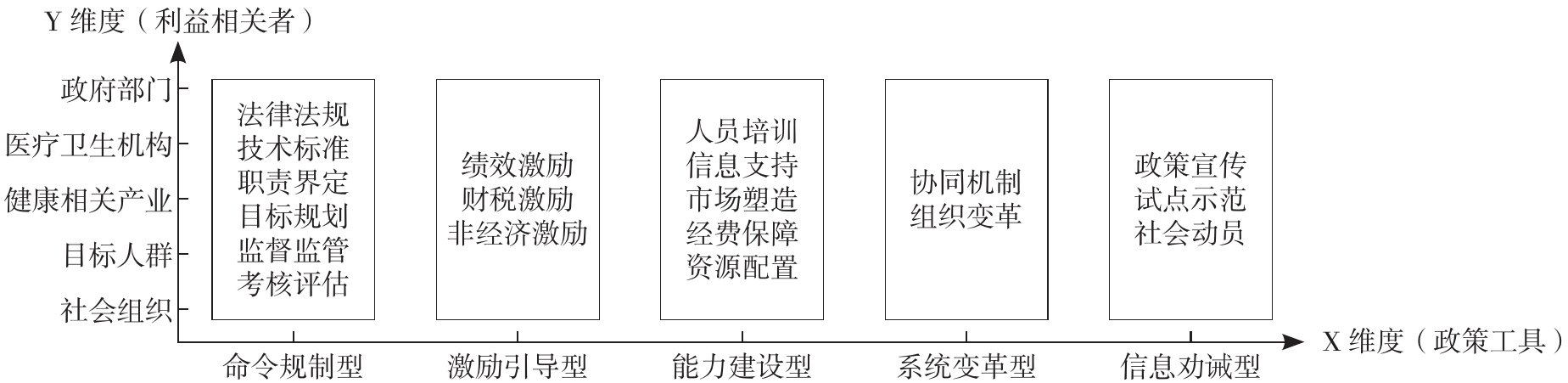
图1 我国体重管理政策"政策工具-利益相关者"二维分析框架
Figure 1 The "policy instrument-stakeholder" two-dimensional analytical framework for weight management policies in China
| 类型 | 工具名称 | 含义 |
|---|---|---|
| 命令规制型 | 法律法规 | 制定具有最高法律效力的规范性文件,为体重管理工作提供根本性制度保障 |
| 技术标准 | 政府通过设定强制性技术规范来塑造健康的物理环境 | |
| 职责界定 | 明确各级政府及相关部门在体重管理工作中的法定职责与分工 | |
| 目标规划 | 在国家或区域发展规划中设定与体重管理相关的约束性或预期性目标 | |
| 监督监管 | 对政策执行过程和相关市场行为进行监督、检查与管理 | |
| 考核评估 | 将体重管理相关指标纳入对下级政府或相关机构的绩效考核体系 | |
| 激励引导型 | 绩效激励 | 通过与绩效挂钩的奖励机制,引导服务提供方优化行为 |
| 财税激励 | 运用价格杠杆、税收优惠、财政补贴等经济手段引导生产者和消费者的行为 | |
| 非经济激励 | 通过荣誉、认证、积分等非物质性奖励,激发参与主体的内在动力 | |
| 能力建设型 | 人员培训 | 提升体重管理相关从业人员的专业知识与服务技能 |
| 信息支持 | 构建信息系统、开发技术工具以支撑体重管理服务的精准供给 | |
| 市场塑造 | 引导和培育健康产业市场,丰富健康产品与服务的供给 | |
| 经费保障 | 为体重管理相关工作提供直接的财政资金支持 | |
| 资源配置 | 配置和优化开展体重管理所必需的物质资源与基础设施 | |
| 系统变革型 | 协同机制 | 建立跨部门、跨领域的常态化合作与协调机制 |
| 组织变革 | 调整或创建新的组织架构以适应体重管理工作的系统性需求 | |
| 信息劝诫型 | 政策宣传 | 通过官方渠道对相关政策进行解读和推广,提升政策知晓率 |
| 试点示范 | 选择特定区域或单位先行先试,探索有效模式并加以推广 | |
| 社会动员 | 通过大型宣传活动、健康教育等方式,营造社会氛围,提升公众健康素养 |
表2 体重管理政策工具分类及内涵界定
Table 2 Classification and definitions of policy instruments for weight management
| 类型 | 工具名称 | 含义 |
|---|---|---|
| 命令规制型 | 法律法规 | 制定具有最高法律效力的规范性文件,为体重管理工作提供根本性制度保障 |
| 技术标准 | 政府通过设定强制性技术规范来塑造健康的物理环境 | |
| 职责界定 | 明确各级政府及相关部门在体重管理工作中的法定职责与分工 | |
| 目标规划 | 在国家或区域发展规划中设定与体重管理相关的约束性或预期性目标 | |
| 监督监管 | 对政策执行过程和相关市场行为进行监督、检查与管理 | |
| 考核评估 | 将体重管理相关指标纳入对下级政府或相关机构的绩效考核体系 | |
| 激励引导型 | 绩效激励 | 通过与绩效挂钩的奖励机制,引导服务提供方优化行为 |
| 财税激励 | 运用价格杠杆、税收优惠、财政补贴等经济手段引导生产者和消费者的行为 | |
| 非经济激励 | 通过荣誉、认证、积分等非物质性奖励,激发参与主体的内在动力 | |
| 能力建设型 | 人员培训 | 提升体重管理相关从业人员的专业知识与服务技能 |
| 信息支持 | 构建信息系统、开发技术工具以支撑体重管理服务的精准供给 | |
| 市场塑造 | 引导和培育健康产业市场,丰富健康产品与服务的供给 | |
| 经费保障 | 为体重管理相关工作提供直接的财政资金支持 | |
| 资源配置 | 配置和优化开展体重管理所必需的物质资源与基础设施 | |
| 系统变革型 | 协同机制 | 建立跨部门、跨领域的常态化合作与协调机制 |
| 组织变革 | 调整或创建新的组织架构以适应体重管理工作的系统性需求 | |
| 信息劝诫型 | 政策宣传 | 通过官方渠道对相关政策进行解读和推广,提升政策知晓率 |
| 试点示范 | 选择特定区域或单位先行先试,探索有效模式并加以推广 | |
| 社会动员 | 通过大型宣传活动、健康教育等方式,营造社会氛围,提升公众健康素养 |
| 政策工具 | 子工具 | 政策编码 | 编码频数(条) | 百分比(%) |
|---|---|---|---|---|
| 命令规制型 | 法律法规 | 8-3-4-2-2、8-3-4-2-3 | 2 | 0.44 |
| 技术标准 | 2-3-2、4-2-1-3……9-3-6-3-1 | 49 | 10.79 | |
| 职责界定 | 4-1-1-2、4-2-1-4……8-4-1-1-2 | 55 | 12.11 | |
| 目标规划 | 1-1-2、2-1-2……10-3-1-1-4 | 30 | 6.61 | |
| 监督监管 | 2-3-3、4-2-4-3……3-2-3-2-1 | 25 | 5.51 | |
| 考核评估 | 2-4-2-1、3-2-1-1-2……11-6-3-5 | 21 | 4.63 | |
| 激励引导型 | 绩效激励 | 2-4-2、5-6-2……11-22-2 | 4 | 0.88 |
| 财税激励 | 8-4-3、9-3-1……11-11-3 | 17 | 3.74 | |
| 非经济激励 | 5-2-3、5-2-4-1……9-4-5-3 | 22 | 4.85 | |
| 能力建设型 | 人员培训 | 2-2-4、2-3-1……9-3-2-2-1 | 26 | 5.73 |
| 信息支持 | 2-3-4、3-1-1……11-4-2-2 | 25 | 5.51 | |
| 市场塑造 | 4-2-2、4-4-8、5-6-15 | 3 | 0.66 | |
| 经费保障 | 2-4-1 | 1 | 0.22 | |
| 资源配置 | 2-1-2、4-3-1……11-6-4-2 | 36 | 7.93 | |
| 系统变革型 | 协同机制 | 2-2-1、2-2-4……8-4-3-2 | 29 | 6.39 |
| 组织变革 | 2-2-3、3-1-3-3……11-6-1-4 | 8 | 1.76 | |
| 信息劝诫型 | 政策宣传 | 2-4-3、4-2-1-1……10-3-1-2-2 | 35 | 7.71 |
| 试点示范 | 4-2-2-3、4-2-2-5……5-7-3 | 6 | 1.32 | |
| 社会动员 | 2-1-1、2-1-4……10-3-6-1-3 | 60 | 13.22 |
表3 我国体重管理政策工具维度分布情况(n=454)
Table 3 Distribution of policy instruments in weight management policies in China
| 政策工具 | 子工具 | 政策编码 | 编码频数(条) | 百分比(%) |
|---|---|---|---|---|
| 命令规制型 | 法律法规 | 8-3-4-2-2、8-3-4-2-3 | 2 | 0.44 |
| 技术标准 | 2-3-2、4-2-1-3……9-3-6-3-1 | 49 | 10.79 | |
| 职责界定 | 4-1-1-2、4-2-1-4……8-4-1-1-2 | 55 | 12.11 | |
| 目标规划 | 1-1-2、2-1-2……10-3-1-1-4 | 30 | 6.61 | |
| 监督监管 | 2-3-3、4-2-4-3……3-2-3-2-1 | 25 | 5.51 | |
| 考核评估 | 2-4-2-1、3-2-1-1-2……11-6-3-5 | 21 | 4.63 | |
| 激励引导型 | 绩效激励 | 2-4-2、5-6-2……11-22-2 | 4 | 0.88 |
| 财税激励 | 8-4-3、9-3-1……11-11-3 | 17 | 3.74 | |
| 非经济激励 | 5-2-3、5-2-4-1……9-4-5-3 | 22 | 4.85 | |
| 能力建设型 | 人员培训 | 2-2-4、2-3-1……9-3-2-2-1 | 26 | 5.73 |
| 信息支持 | 2-3-4、3-1-1……11-4-2-2 | 25 | 5.51 | |
| 市场塑造 | 4-2-2、4-4-8、5-6-15 | 3 | 0.66 | |
| 经费保障 | 2-4-1 | 1 | 0.22 | |
| 资源配置 | 2-1-2、4-3-1……11-6-4-2 | 36 | 7.93 | |
| 系统变革型 | 协同机制 | 2-2-1、2-2-4……8-4-3-2 | 29 | 6.39 |
| 组织变革 | 2-2-3、3-1-3-3……11-6-1-4 | 8 | 1.76 | |
| 信息劝诫型 | 政策宣传 | 2-4-3、4-2-1-1……10-3-1-2-2 | 35 | 7.71 |
| 试点示范 | 4-2-2-3、4-2-2-5……5-7-3 | 6 | 1.32 | |
| 社会动员 | 2-1-1、2-1-4……10-3-6-1-3 | 60 | 13.22 |
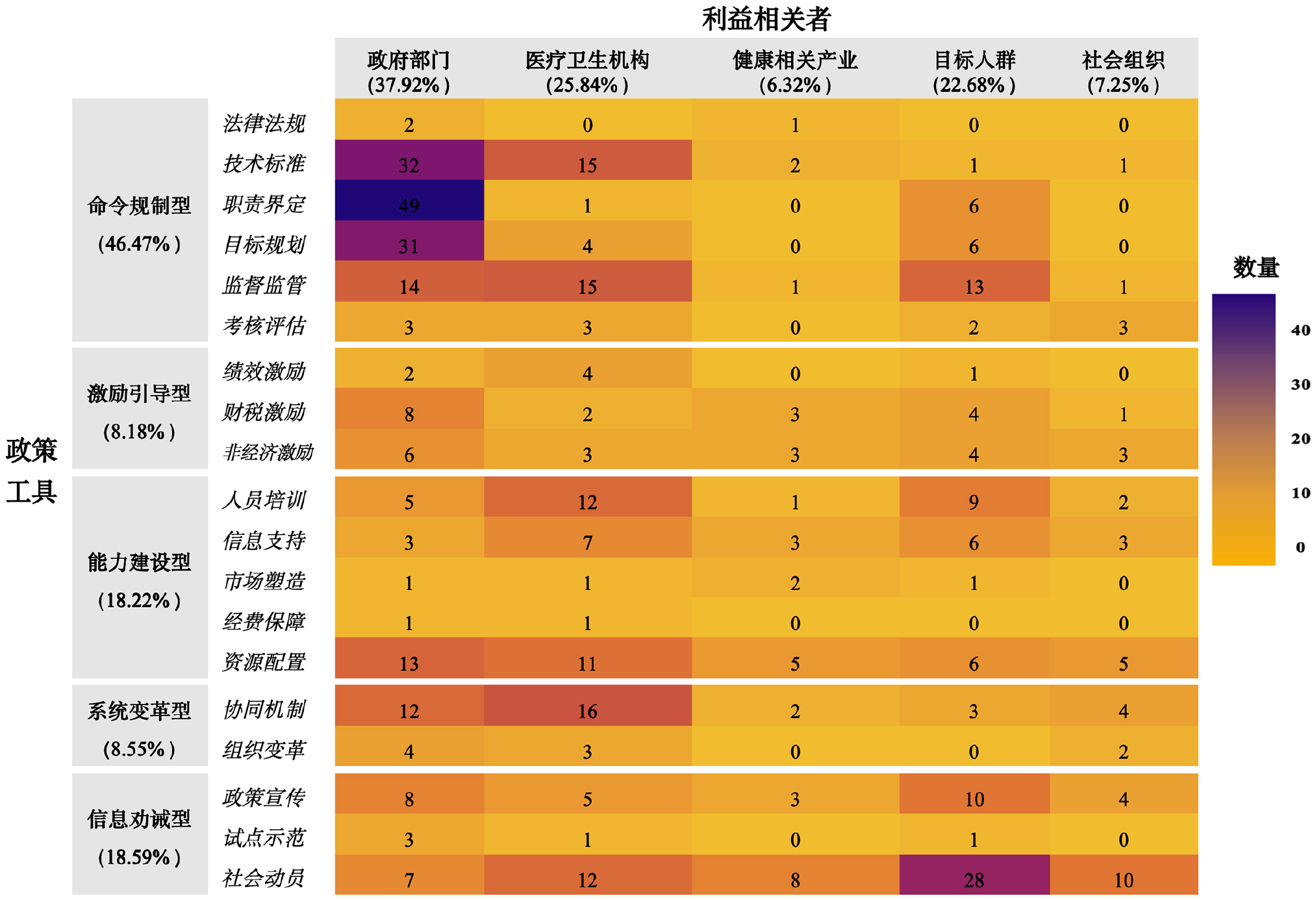
图2 我国体重管理政策工具与利益相关者二维交叉分布热力图注:热力图颜色越深,表示该交叉项的编码频次越高,即政策工具与利益相关者的耦合关系越强。图中政策工具维度百分比基于利益相关者编码总数(n=538)计算,因同一政策工具条目可能涉及多个利益相关者,故与基于政策工具编码总数(n=454)的百分比存在差异。
Figure 2 Heatmap of the cross-distribution of policy instruments and stakeholders in weight management policies
| [1] |
中国居民营养与慢性病状况报告编写组. 中国居民营养与慢性病状况报告(2020年)[J]. 营养学报, 2020, 42(6):521.
|
| [2] |
陈妍春, 杨洪喜, 张馨予, 等. 中老年人群超重肥胖联合代谢综合征与心血管疾病发病风险的关联研究[J]. 中国慢性病预防与控制, 2023, 31(11): 812-816, 821. DOI: 10.16386/j.cjpccd.issn.1004-6194.2023.11.003.
|
| [3] |
|
| [4] |
国家卫生健康委医疗应急司, 中华医学会, 中国疾病预防控制中心, 等. 肥胖症诊疗指南(2024年版)[J]. 中国循环杂志, 2025, 40(1): 6-30.
|
| [5] |
中共中央 国务院印发《"健康中国2030"规划纲要》[A/OL]. (2016-10-25) [2025-10-31].
|
| [6] |
国家卫生健康委, 全国爱卫办, 教育部, 等. 关于印发"体重管理年"活动实施方案的通知[A/OL]. (2024-06-06)[2025-10-31].
|
| [7] |
程真华, 赵晨, 吴根秀. 食品交换份平衡膳食跟踪指导在超重肥胖学龄前儿童体重管理中的应用效果[J]. 中国当代医药, 2025, 32(7): 92-96.
|
| [8] |
张燕, 张广意, 马嫔, 等. 妊娠期孕妇体重管理行为特征及影响因素研究[J]. 中华护理杂志, 2023, 58(18): 2245-2252. DOI: 10.3761/j.issn.0254-1769.2023.18.010.
|
| [9] |
|
| [10] |
付城, 刘媛, 周付军. 中国科技扶贫政策工具的选择与优化:基于1985—2019年政策文本的量化分析[J]. 世界农业, 2020(11): 91-100. DOI: 10.13856/j.cn11-1097/s.2020.11.011.
|
| [11] |
胡晓洁, 王凡, 刘春平. 基于政策工具的我国医养结合政策文本分析[J]. 中国医院管理, 2022, 42(11): 40-43.
|
| [12] |
|
| [13] |
张剑, 李鑫. 复杂情境下系统性政策问题的应对:政策组合理论的研究评述[J]. 公共管理与政策评论, 2022, 11(3): 155-168. DOI: 10.3969/j.issn.2095-4026.2022.03.013.
|
| [14] |
李玥茗, 卓丽军, 朱静佳, 等. 基于政策工具的我国中医药科技创新政策文本分析[J]. 中国卫生政策研究, 2024, 17(1): 36-42. DOI: 10.3969/j.issn.1674-2982.2024.01.005.
|
| [15] |
朱晓丽, 黄心悦, 王玙珩. 政策工具视角下我国基本医保市级统筹推进的政策文本分析与启示[J]. 中国卫生政策研究, 2024, 17(5): 25-32. DOI: 10.3969/j.issn.1674-2982.2024.05.004.
|
| [16] |
姚意, 徐水源, 方杏村. 政策工具视角下我国儿童青少年肥胖防控政策文本量化评价-基于2016年10月以来国家层面政策文本数据[J]. 中国妇幼卫生杂志, 2024, 15(6): 1-12.
|
| [17] |
|
| [18] |
韦彩玲, 杨臣. 政策工具理论的研究状况及其在我国的应用前景:以国内外文献为研究对象[J]. 江西社会科学, 2012, 32(8): 230-235. DOI: 10.3969/j.issn.1004-518X.2012.08.045.
|
| [19] |
周苑, 田帝, 吴烨, 等. 基于政策工具的我国国家级试点城市长期护理保险政策分析[J]. 中国卫生经济, 2021, 40(2): 14-17.
|
| [20] |
|
| [21] |
江国虹. 科学设计与综合评价健康策略:以"体重管理年"活动为例[J]. 中国慢性病预防与控制, 2025, 33(10): 721-724. DOI: 10.16386/j.cjpccd.issn.1004-6194.20250730.0011.
|
| [22] |
方鹏骞, 田翀, 张霄艳. 健康中国视角下的人群体重管理内涵演化、发展方向与政策响应[J]. 中国卫生事业管理, 2025, 42(9): 961-963, 968. DOI: 10.3969/j.issn.1004-4663.2025.09.001.
|
| [23] |
宋佳, 范成鑫, 王婉晨, 等. 利益相关者视角下我国药品集中带量采购政策研究:基于政策工具的文本分析[J]. 中国卫生政策研究, 2022, 15(2): 11-17. DOI: 10.3969/j.issn.1674-2982.2022.02.002.
|
| [24] |
|
| [25] |
|
| [26] |
|
| [27] |
|
| [28] |
World Health Organization. Obesity and overweight[EB/OL]. (2025-05-07) [2025-10-31].
|
| [29] |
|
| [30] |
刘露, 陈志钢. 含糖饮料税影响消费的机制研究[J]. 税务与经济, 2024(3): 51-59.
|
| [31] |
|
| [32] |
|
| [33] |
|
| [34] |
|
| [35] |
贾梦涵, 陈培, 李鑫, 等. 食品环境与肥胖的相关性研究进展[J]. 预防医学, 2026, 38(1): 43-47. DOI: 10.19485/j.cnki.issn2096-5087.2026.01.008.
|
| [36] |
程国强. 粮食安全与健康福祉的交汇:评《作物营养强化对改善人口健康的影响及经济评价》[J]. 农业经济问题, 2025(10): 封3.
|
| [37] |
|
| [38] |
何雪吟. 一劳非永逸:基层医疗卫生体系科层化的效果及其限度[J]. 社会学评论, 2025, 13(1): 145-171. DOI: 10.3969/j.issn.2095-5154.2025.01.018.
|
| [39] |
刘明康, 林思颖, 江剑平. 政策驱动下我国居民体重健康管理困境与应对策略[J]. 福建师范大学学报(自然科学版), 2025, 41(4): 73-77. DOI: 10.12046/j.issn.1000-5277.2025040040.
|
| [40] |
|
| [41] |
方鹏骞, 闵锐, 俞玉洁, 等. 主动健康理念下医院体重管理服务生态体系建设研究[J]. 中国医院管理, 2025, 45(9): 1-5, 21.
|
| [42] |
林依溪, 潘莎莎, 张有捷. 初中生肥胖防控资源评估的质性研究[J]. 中国全科医学, 2024, 27(33): 4176-4181. DOI: 10.12114/j.issn.1007-9572.2024.0143.
|
| [43] |
|
| [44] |
王烨, 于欣平, 毕烨, 等. 大数据时代超重肥胖社会防控的新战略[J]. 中国食物与营养, 2020, 26(2): 5-9.
|
| [45] |
|
| [46] |
|
| [47] |
王瑛瑶, 赵佳, 梁培文, 等. 预包装食品正面营养标签应用现状及效果[J]. 营养学报, 2021, 43(2): 111-114. DOI: 10.3969/j.issn.0512-7955.2021.02.002.
|
| [48] |
黄泽颖. 美国营养标签发展特征及其对我国食品营养标签制度的启示[J]. 食品安全质量检测学报, 2021, 12(15): 6222-6227.
|
| [49] |
|
| [50] |
王耀羚, 杨畅, 顾雪非, 等. 日本、韩国、新加坡健康体重管理政策的经验及启示:基于ICCC框架[J]. 中国卫生政策研究, 2025, 18(7): 27-34. DOI: 10.3969/j.issn.1674-2982.2025.07.004.
|
| [51] |
应飞虎. 行为经济学视野下的FOP营养标示制度[J]. 政法论丛, 2022(4): 27-38.
|
| [52] |
李可, 张滨. 食品安全法惩罚性赔偿条款适用研究:以食品营养标签标示错误行为为例[J]. 湖南社会科学, 2022(6): 124-133.
|
| [53] |
|
| [54] |
|
| [55] |
潘莎莎, 林依溪, 张有捷. 初中生肥胖防控利益相关者分析[J]. 中国学校卫生, 2024, 45(9): 1269-1274. DOI: 10.16835/j.cnki.1000-9817.2024268.
|
| [56] |
|
| [57] |
|
| [58] |
洪延青. 公共卫生法制的视角转换:基于控烟和肥胖防控等新兴公共卫生措施的讨论[J]. 环球法律评论, 2012, 34(1): 23-38. DOI: 10.3969/j.issn.1009-6728.2012.01.004.
|
| [59] |
张立彦. 含糖饮料税制度的国际比较与借鉴[J]. 税务与经济, 2022(3): 34-41.
|
| [60] |
缐孟瑶, 张璇斐, 李夏清, 等. 基于ELES模型的我国居民含糖饮料消费价格弹性分析[J]. 中国食物与营养, 2023, 29(9): 46-49, 55. DOI: 10.3969/j.issn.1006-9577.2023.09.009.
|
| [61] |
缐孟瑶, 徐海泉, 孙君茂. 含糖饮料征税与儿童肥胖的循证研究[J]. 中国学校卫生, 2021, 42(11): 1616-1619. DOI: 10.16835/j.cnki.1000-9817.2021.11.005.
|
| [62] |
张霄艳, 韩冬阳, 方鹏骞. 战略购买理念下医院体重管理服务医保支付优化路径分析[J]. 中国医院管理, 2025, 45(9): 27-30.
|
| [63] |
葛懿夫, 何仲禹, 杨海峰. 巴尔的摩区划健康影响评估及其对我国的启示[J]. 现代城市研究, 2023(2): 7-13. DOI: 10.3969/j.issn.1009-6000.2023.02.002.
|
| [64] |
邵诗颖. 要想血糖稳稳的,吃喝牢记"手掌法" [J]. 大众健康, 2021(12): 80-81.
|
| [65] |
白描, 苑鹏. 现代化进程中我国农民全面发展的制约因素与推进路径[J]. 改革, 2021(12): 116-126.
|
| [66] |
陶建杰, 尹子伊. 数字乡村背景下农村居民数字化渠道选择[J]. 华南农业大学学报(社会科学版), 2022, 21(1): 33-42.
|
| [67] | |
| [68] |
彭雯, 刘时雨, 李铁梅, 等. 《2024世界肥胖报告》解读及对中国相关工作的启示[J]. 中国预防医学杂志, 2024, 25(4): 388-394. DOI: 10.16506/j.1009-6639.2024.04.002.
|
| [69] |
郑欣怡, 夏雯琪, 马靖茹, 等. 肥胖流行对中国人口发展的影响及应对思路[J]. 中国预防医学杂志, 2024, 25(4): 419-427. DOI: 10.16506/j.1009-6639.2024.04.006.
|
| [1] | 崔珑严, 代高岚歆, 陶红兵. 人力资源管理过程视角下我国医防融合人力资源相关政策文本分析[J]. 中国全科医学, 2026, 29(21): 3012-3019. |
| [2] | 陈向阳, 黄红梅, 李舍予. 成人肥胖的预防与管理:从六大关键词看2025年度进展与趋势[J]. 中国全科医学, 2026, 29(20): 2753-2758. |
| [3] | 陈小龙, 金晶, 华佳禄, 栗玉玉, 潘有加, 潘奇, 涂春景, 王平. 预防大学生肥胖的24 h活动行为最佳时间组合研究[J]. 中国全科医学, 2026, 29(12): 1525-1532. |
| [4] | 杨蕾, 关华. 生成式人工智能在体重管理中的应用进展[J]. 中国全科医学, 2026, 29(12): 1533-1540. |
| [5] | 何智光, 邱珊娇, 陈章, 李安春, 黄文静. 澳大利亚全科医生学会《全科医学的预防活动指南》解读与讨论:体质量问题的筛查和全科预防策略[J]. 中国全科医学, 2026, 29(12): 1505-1510. |
| [6] | 孙侠, 沈雯, 汤翔, 仲威, 王凯琳, 戴芝银, 张朝普, 袁伟, 袁国跃. 不同体重状态扩张型心肌病患者的临床特征及体重管理对患者预后的影响研究[J]. 中国全科医学, 2026, 29(11): 1448-1455. |
| [7] | 张薇, 贾月骁, 唐宏伟, 薛新, 雷颖, 杜娜, 王雨萌, 袁纪昀, 刘欢. 限能量的间歇性禁食饮食模式联合线上干预对超重及肥胖人群体质量管理效果研究[J]. 中国全科医学, 2026, 29(03): 355-360. |
| [8] | 黎娴菁, 黄丹琪, 彭蓉, 冯启明, 徐婷婷. 政策工具视角下我国村卫生室建设相关政策文本分析[J]. 中国全科医学, 2026, 29(01): 35-41. |
| [9] | 胡哲涛, 潘小毅. 连续性卫生服务视角下我国居家社区医养结合政策效力量化研究[J]. 中国全科医学, 2026, 29(01): 42-49. |
| [10] | 李思思, 秦江梅. 中国深化医药卫生体制改革十五年以来出台的全科政策及效果研究[J]. 中国全科医学, 2026, 29(01): 6-16. |
| [11] | 敖文华, 林春梅, 张艳春, 张丽芳, 李思思, 秦江梅. 我国农村订单定向全科医生使用与激励相关政策进展及实践[J]. 中国全科医学, 2025, 28(34): 4282-4289. |
| [12] | 高红霞, 刘素薇, 麻磊, 张研. 基于动态主题模型的我国中央层面家庭医生签约服务政策主题热点与演化分析[J]. 中国全科医学, 2025, 28(31): 3890-3896. |
| [13] | 张研, 艾云杰, 王晨舟, 高红霞. 家庭医生签约服务高质量发展的政策价值与实践挑战[J]. 中国全科医学, 2025, 28(31): 3879-3883. |
| [14] | 张鹏, 刘力滴, 张颖, 杨梓钰, 刘长明, 唐以俊, 廖晓阳, 贾禹. 2024意大利《成人超重、肥胖和代谢合并症行为治疗抵抗的管理指南》解读与启示[J]. 中国全科医学, 2025, 28(30): 3747-3752. |
| [15] | 罗金萍, 孙嘉颖, 牟艺帆, 耿铭慧, 张宝轩, 王康, 尹文强, 陈钟鸣, 马东平. 我国儿童用药政策的量化评价:基于政策建模一致性指数模型[J]. 中国全科医学, 2025, 28(21): 2652-2660. |
| 阅读次数 | ||||||
|
全文 |
|
|||||
|
摘要 |
|
|||||