中国全科医学 ›› 2026, Vol. 29 ›› Issue (34): 5085-5093.DOI: 10.12114/j.issn.1007-9572.2023.0315
• 论著 • 上一篇
彭杨杨1, 刘怀磊2, 张含之1,3,4,*( ), 于德华1,3,4,5
收稿日期:2025-06-09
修回日期:2026-01-10
出版日期:2026-12-05
发布日期:2026-10-26
通讯作者:
张含之
作者贡献:
彭杨杨、张含之进行文章的构思与设计;张含之、于德华进行研究的可行性分析;彭杨杨、刘怀磊进行数据收集、数据整理;彭杨杨进行统计学处理、结果分析、论文撰写;张含之进行论文修订,文章质量控制及审校,并对文章整体负责,监督管理。
基金资助:
PENG Yangyang1, LIU Huailei2, ZHANG Hanzhi1,3,4,*(), YU Dehua1,3,4,5
Received:2025-06-09
Revised:2026-01-10
Published:2026-12-05
Online:2026-10-26
Contact:
ZHANG Hanzhi
摘要: 背景 心身疾病高发、疾病负担重,然而目前心身医学临床实践不足,心身疾病的诊治管理现况不佳。 目的 探索国内外基于心身医学的疾病诊治管理研究进展,提升心身疾病的防治水平,为我国开展心身医学研究提供依据。 方法 2022年6—11月,在中国知网、维普网分别主题检索"心身医学"与"疾病","心身医学"与"治疗","心身医学"与"管理","心身医学"与"策略",在PubMed、Web of Science数据库主题检索("psychosomatic medicine")and("diseases"or"management"or"treatment"or"strategy")获得发表时间为2012年1月—2022年11月的文献。剔除重复、未能获取和不相关文献,纳入涉及心身医学诊治管理的文献进行系统分析。 结果 共检索到2 167篇文献,经过筛选,最终得到97篇相关文献。7篇文献涉及心身医学的意义,提到了其是有用的启发式临床工具,可更好地描述医疗过程和疾病行为等,但未被充分应用至临床实践工作。4篇文献涉及心身医学的应用,分别与姑息医学、重症医学、神经病学、行为医学结合,有助于理解心身现象,但实际应用效果有待进一步研究。有关各种人群的心身疾病或问题的文献共46篇,涉及成年人、妇女、儿童、青少年等,表明其普遍存在。心身评估的文献18篇,其中心身研究诊断标准(DCPR)和影响因素研究最多,为综合评估提供了一定依据,但是没有转化为实际操作工具。涉及诊治管理实践和建议的文献41篇,主要提到了多学科或心身综合管理、社会心理因素和不良行为管理、加强临床医生心身知识培训、提倡全科医生管理等,但在实际工作中的具体开展情况和措施尚需进一步探索。 结论 目前存在医学服务中的心理社会因素考虑和诊治能力不足、诊治管理方法和制度不健全、患者心身困扰多影响就医和治疗等障碍。而多学科或心身综合管理、心身住院模式提供了心身医学疾病诊治管理的系统性策略,DCPR和心身影响因素研究为诊疗思路提供了依据。建议持续开展心身医学研究和知识培训、多学科协作,完善并落实社区心理卫生政策和举措,发挥全科医生职能优势。
中图分类号:
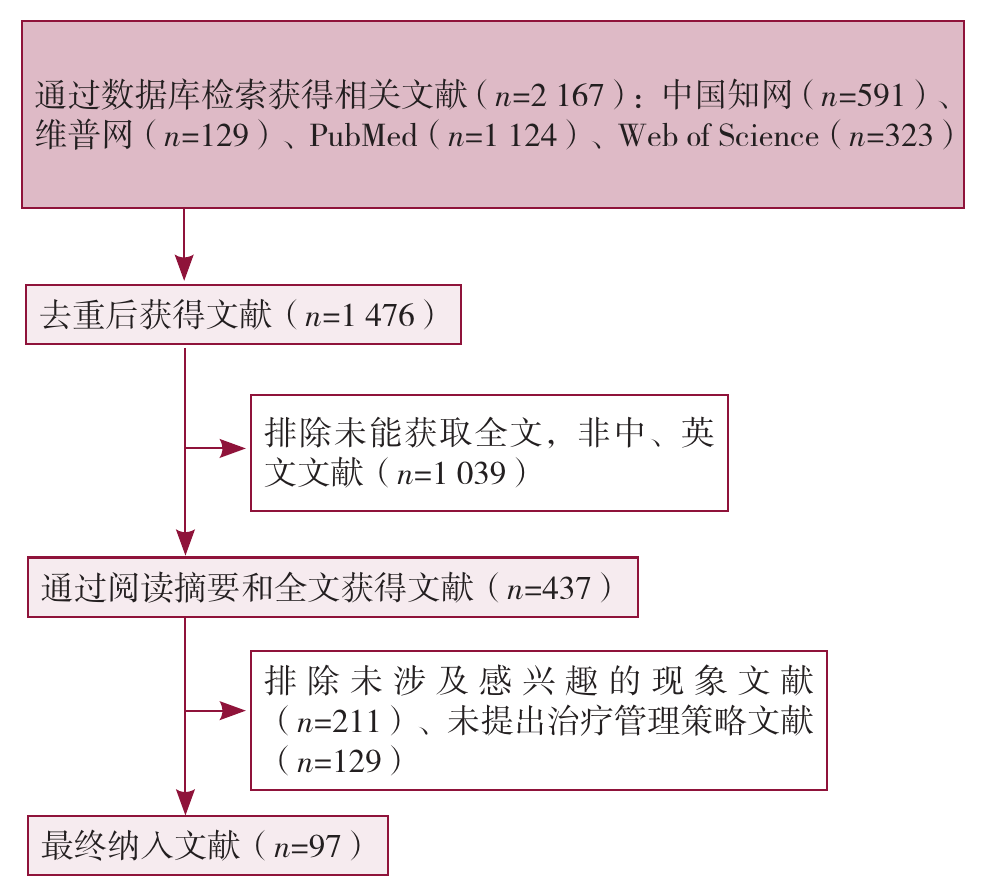
图1 文献检索流程图
Figure 1 Flow chart of information retrieval
| 第一作者 | 年份(年) | 国家 | 研究方法 | 研究对象/模式/问题 | 感兴趣的现象 | 主要结果 |
|---|---|---|---|---|---|---|
| 袁勇贵[ | 2021 | 中国 | 扎根理论 | 心身障碍诊疗模式 | 思考中国诊疗模式的发展 | 开展心身医学研究,形成特色模式 |
| Stumpf[ | 2018 | 德国 | 现象学研究 | 瘙痒 | 探讨影响瘙痒的心理因素 | 心理因素在瘙痒发展和持续中起重要作用 |
| Tey[ | 2013 | 美国 | 现象学研究 | 瘙痒 | 探讨瘙痒和情绪相互作用 | 瘙痒和情绪交织影响 |
| Kwon[ | 2018 | 英国 | 现象学研究 | 银屑病 | 银屑病生理和心理因素间的作用 | 银屑病受污名化、焦虑和抑郁显著影响 |
| Chung[ | 2012 | 新加坡 | 扎根理论 | 皮肤病 | 心身因素在皮肤病中有重要作用 | 管理心理皮肤疾病是一项挑战 |
| Cupertino[ | 2017 | 巴西 | 现象学研究 | 白癜风 | 考虑白癜风的心身因素 | 医务人员应与患者交谈疾病应对和感受 |
| Arntz[ | 2019 | 智利 | 现象学研究 | 不明原因眼部不适 | 描述不明原因眼部症状,并评估心理困扰 | 患者心理困扰频率高,眼科心身现象诊断不足 |
| Pop-Jordanova[ | 2020 | 马其顿 | 现象学研究 | 牙科心身问题 | 概述牙科实践中常见的心身问题 | 口腔问题在其病因中具有心理成分 |
| Toyofuku[ | 2016 | 日本 | 现象学研究 | 不明口腔不适 | 描述具有代表性的口腔心身疾病 | 患者认知扭曲,反复寻求帮助和疾病担忧持续存在 |
| Gondivkar[ | 2021 | 印度 | 扎根理论 | 口腔癌照顾者 | 调查口腔癌照顾者是否存在心身障碍 | 照顾者心身障碍患病率高,与抑郁、焦虑相关 |
| Diercke[ | 2013 | 德国 | 现象学研究 | 牙医 | 调查牙医的心身医学知识 | 较少使用放松和催眠技术,心身实践不足 |
| Matsuoka[ | 2017 | 日本 | 现象学研究 | 牙科心身问题 | 认知行为疗法(CBT)在牙科心身问题中的应用 | CBT有效,但应用较少 |
| Harth[ | 2013 | 德国 | 现象学研究 | 毛发心身疾病 | 概述毛发心身疾病 | 需考虑生物-心理-社会发病机制 |
| Mulinari-Brenner[ | 2018 | 巴西 | 现象学研究 | 斑秃 | 认识斑秃与心理因素间的关系 | 其心理、社会影响比生物学意义更重要 |
| Cui[ | 2022 | 中国 | 现象学研究 | 妊娠剧烈呕吐 | 检验生物反馈法对伴心身症状的妊娠剧吐患者的疗效 | 生物反馈法改善心身症状 |
| Tavel[ | 2015 | 美国 | 现象学研究 | 躯体症状障碍 | 躯体症状障碍疾病的管理具有挑战性 | 积极寻找潜在心理因素 |
| Nakamura[ | 2017 | 日本 | 扎根理论 | 躯体化患者 | 探索心身症状的特点 | 大多躯体化症状与情绪有关 |
| Wortman[ | 2016 | 荷兰 | 扎根理论 | 医学上无法解释的症状 | 检测简易多模式心身治疗(BMPT)的疗效 | BMPT在基层医疗中有效、可行 |
| Kwak[ | 2020 | 韩国 | 扎根理论 | "火综合征" | 情绪自由技术和肌肉放松技术疗效 | 是有效的自我治疗 |
| Zipfel[ | 2015 | 德国 | 现象学研究 | 神经性厌食 | 了解神经性厌食症的病因 | 心理、社会和人际因素触发发病 |
| Purdy[ | 2013 | 美国 | 现象学研究 | 慢性疾病 | 了解慢性疾病的潜在病因和心理生理学方法 | 要识别和处理心理风险问题 |
| Wild[ | 2019 | 德国 | 扎根理论 | 老年人 | 评估心身护理干预效果 | 心身家访干预减少医疗需求 |
| Zhang[ | 2020 | 中国 | 扎根理论 | 高血压 | 了解正念疗法在高血压伴焦虑和抑郁中的作用 | 具有独特的作用 |
| Hopp[ | 2012 | 美国 | 现象学研究 | 心理神经疾病 | 了解认知行为疗法在心理神经疾病中的作用 | 有利于治疗 |
| Koyama[ | 2018 | 日本 | 扎根理论 | 典型案例 | 阐明心身医学误诊因素 | 包括医生诊断和患者求医 |
| Colaianni[ | 2016 | 比利时 | 现象学研究 | 典型案例 | 帮助患者将躯体症状与情绪相互联系 | 应借助心身医学有关技巧 |
| Fritzsche[ | 2012 | 德国 | 现象学研究 | 临床医生 | 探讨心身医学培训对医疗活动的影响 | 培训后改善医生诊疗现况 |
| Bullington[ | 2018 | 瑞典 | 现象学研究 | 临床医生 | 探索群体监督是否促进对心身问题的了解 | 监督改善了其对心身问题的理解 |
| Baessler[ | 2020 | 美国 | 现象学研究 | 精神科医生 | 探讨教育研讨会能否提高对心身医学的认识 | 教育干预改变了其看法和态度 |
| Haghighatdoost[ | 2020 | 伊朗 | 扎根理论 | 不同饮食模式 | 调查饮食模式与心身疾病的关系 | 健康的饮食模式与疾病风险成反比 |
| Knapen[ | 2015 | 比利时 | 现象学研究 | 不同运动方式 | 体育锻炼对抑郁症患者的心身影响 | 运动是有效方法,可改善应对压力的策略 |
| Steinert[ | 2019 | 德国 | 扎根理论 | 住院患者 | 评估心理动力学导向的多模式心身治疗效果 | 大多数患者均受益 |
| Wunner[ | 2014 | 德国 | 现象学研究 | 老年患者 | 在日间医院中应用评估多模式治疗效果 | 焦虑、抑郁、躯体不适和人际行为均改善 |
| Sadlonova[ | 2022 | 德国 | 扎根理论 | 住院患者 | 评估接受心身住院治疗的心理和躯体功能变化 | 心理、躯体不适和生活质量显著改善 |
| Parth[ | 2016 | 奥地利 | 扎根理论 | 住院患者 | 调查为期8周的心身住院治疗效果 | 多专业和跨学科的干预提高患者自我调节能力 |
| Linden[ | 2014 | 德国 | 现象学研究 | 心身康复医院模式 | 了解心身康复医院的有效性 | 对心身健康做出了重要贡献 |
| Thiel[ | 2021 | 德国 | 现象学研究 | 心身康复日记模式 | 评估心身门诊康复治疗日记的有效性和实施潜力 | 日记让患者了解自我想法行为,适合实际使用 |
| Kjellström[ | 2017 | 瑞典 | 现象学研究 | 青少年 | 探讨父母和教师的支持对青少年心身不适的影响 | 支持有效,还需考虑青少年性别和年龄因素 |
| Watanabe[ | 2016 | 日本 | 扎根理论 | 青少年 | 评估基于学校的青少年家庭协作生活方式教育计划减少不良主观心身症状(SPS)的有效性 | 方案有效,家长参与可能获得更有利的效果 |
| Watanabe[ | 2022 | 日本 | 扎根理论 | 青少年 | 评估基于学校的家庭协作饮食和生活方式教育计(SPRAT)减少心身症状和改善饮食行为的有效性 | 方案有效,改善青少年心身症状,促进饮食行为 |
| Tesler[ | 2018 | 以色列 | 现象学研究 | 青少年 | 评价城市森林健康干预计划对心身症状和生活满意度的影响 | 应鼓励城市森林健康干预计划 |
表1 纳入与心身管理和治疗策略有关文献的基本情况
Table 1 Basic information of the included literature related to specific psychosomatic management and treatment strategies
| 第一作者 | 年份(年) | 国家 | 研究方法 | 研究对象/模式/问题 | 感兴趣的现象 | 主要结果 |
|---|---|---|---|---|---|---|
| 袁勇贵[ | 2021 | 中国 | 扎根理论 | 心身障碍诊疗模式 | 思考中国诊疗模式的发展 | 开展心身医学研究,形成特色模式 |
| Stumpf[ | 2018 | 德国 | 现象学研究 | 瘙痒 | 探讨影响瘙痒的心理因素 | 心理因素在瘙痒发展和持续中起重要作用 |
| Tey[ | 2013 | 美国 | 现象学研究 | 瘙痒 | 探讨瘙痒和情绪相互作用 | 瘙痒和情绪交织影响 |
| Kwon[ | 2018 | 英国 | 现象学研究 | 银屑病 | 银屑病生理和心理因素间的作用 | 银屑病受污名化、焦虑和抑郁显著影响 |
| Chung[ | 2012 | 新加坡 | 扎根理论 | 皮肤病 | 心身因素在皮肤病中有重要作用 | 管理心理皮肤疾病是一项挑战 |
| Cupertino[ | 2017 | 巴西 | 现象学研究 | 白癜风 | 考虑白癜风的心身因素 | 医务人员应与患者交谈疾病应对和感受 |
| Arntz[ | 2019 | 智利 | 现象学研究 | 不明原因眼部不适 | 描述不明原因眼部症状,并评估心理困扰 | 患者心理困扰频率高,眼科心身现象诊断不足 |
| Pop-Jordanova[ | 2020 | 马其顿 | 现象学研究 | 牙科心身问题 | 概述牙科实践中常见的心身问题 | 口腔问题在其病因中具有心理成分 |
| Toyofuku[ | 2016 | 日本 | 现象学研究 | 不明口腔不适 | 描述具有代表性的口腔心身疾病 | 患者认知扭曲,反复寻求帮助和疾病担忧持续存在 |
| Gondivkar[ | 2021 | 印度 | 扎根理论 | 口腔癌照顾者 | 调查口腔癌照顾者是否存在心身障碍 | 照顾者心身障碍患病率高,与抑郁、焦虑相关 |
| Diercke[ | 2013 | 德国 | 现象学研究 | 牙医 | 调查牙医的心身医学知识 | 较少使用放松和催眠技术,心身实践不足 |
| Matsuoka[ | 2017 | 日本 | 现象学研究 | 牙科心身问题 | 认知行为疗法(CBT)在牙科心身问题中的应用 | CBT有效,但应用较少 |
| Harth[ | 2013 | 德国 | 现象学研究 | 毛发心身疾病 | 概述毛发心身疾病 | 需考虑生物-心理-社会发病机制 |
| Mulinari-Brenner[ | 2018 | 巴西 | 现象学研究 | 斑秃 | 认识斑秃与心理因素间的关系 | 其心理、社会影响比生物学意义更重要 |
| Cui[ | 2022 | 中国 | 现象学研究 | 妊娠剧烈呕吐 | 检验生物反馈法对伴心身症状的妊娠剧吐患者的疗效 | 生物反馈法改善心身症状 |
| Tavel[ | 2015 | 美国 | 现象学研究 | 躯体症状障碍 | 躯体症状障碍疾病的管理具有挑战性 | 积极寻找潜在心理因素 |
| Nakamura[ | 2017 | 日本 | 扎根理论 | 躯体化患者 | 探索心身症状的特点 | 大多躯体化症状与情绪有关 |
| Wortman[ | 2016 | 荷兰 | 扎根理论 | 医学上无法解释的症状 | 检测简易多模式心身治疗(BMPT)的疗效 | BMPT在基层医疗中有效、可行 |
| Kwak[ | 2020 | 韩国 | 扎根理论 | "火综合征" | 情绪自由技术和肌肉放松技术疗效 | 是有效的自我治疗 |
| Zipfel[ | 2015 | 德国 | 现象学研究 | 神经性厌食 | 了解神经性厌食症的病因 | 心理、社会和人际因素触发发病 |
| Purdy[ | 2013 | 美国 | 现象学研究 | 慢性疾病 | 了解慢性疾病的潜在病因和心理生理学方法 | 要识别和处理心理风险问题 |
| Wild[ | 2019 | 德国 | 扎根理论 | 老年人 | 评估心身护理干预效果 | 心身家访干预减少医疗需求 |
| Zhang[ | 2020 | 中国 | 扎根理论 | 高血压 | 了解正念疗法在高血压伴焦虑和抑郁中的作用 | 具有独特的作用 |
| Hopp[ | 2012 | 美国 | 现象学研究 | 心理神经疾病 | 了解认知行为疗法在心理神经疾病中的作用 | 有利于治疗 |
| Koyama[ | 2018 | 日本 | 扎根理论 | 典型案例 | 阐明心身医学误诊因素 | 包括医生诊断和患者求医 |
| Colaianni[ | 2016 | 比利时 | 现象学研究 | 典型案例 | 帮助患者将躯体症状与情绪相互联系 | 应借助心身医学有关技巧 |
| Fritzsche[ | 2012 | 德国 | 现象学研究 | 临床医生 | 探讨心身医学培训对医疗活动的影响 | 培训后改善医生诊疗现况 |
| Bullington[ | 2018 | 瑞典 | 现象学研究 | 临床医生 | 探索群体监督是否促进对心身问题的了解 | 监督改善了其对心身问题的理解 |
| Baessler[ | 2020 | 美国 | 现象学研究 | 精神科医生 | 探讨教育研讨会能否提高对心身医学的认识 | 教育干预改变了其看法和态度 |
| Haghighatdoost[ | 2020 | 伊朗 | 扎根理论 | 不同饮食模式 | 调查饮食模式与心身疾病的关系 | 健康的饮食模式与疾病风险成反比 |
| Knapen[ | 2015 | 比利时 | 现象学研究 | 不同运动方式 | 体育锻炼对抑郁症患者的心身影响 | 运动是有效方法,可改善应对压力的策略 |
| Steinert[ | 2019 | 德国 | 扎根理论 | 住院患者 | 评估心理动力学导向的多模式心身治疗效果 | 大多数患者均受益 |
| Wunner[ | 2014 | 德国 | 现象学研究 | 老年患者 | 在日间医院中应用评估多模式治疗效果 | 焦虑、抑郁、躯体不适和人际行为均改善 |
| Sadlonova[ | 2022 | 德国 | 扎根理论 | 住院患者 | 评估接受心身住院治疗的心理和躯体功能变化 | 心理、躯体不适和生活质量显著改善 |
| Parth[ | 2016 | 奥地利 | 扎根理论 | 住院患者 | 调查为期8周的心身住院治疗效果 | 多专业和跨学科的干预提高患者自我调节能力 |
| Linden[ | 2014 | 德国 | 现象学研究 | 心身康复医院模式 | 了解心身康复医院的有效性 | 对心身健康做出了重要贡献 |
| Thiel[ | 2021 | 德国 | 现象学研究 | 心身康复日记模式 | 评估心身门诊康复治疗日记的有效性和实施潜力 | 日记让患者了解自我想法行为,适合实际使用 |
| Kjellström[ | 2017 | 瑞典 | 现象学研究 | 青少年 | 探讨父母和教师的支持对青少年心身不适的影响 | 支持有效,还需考虑青少年性别和年龄因素 |
| Watanabe[ | 2016 | 日本 | 扎根理论 | 青少年 | 评估基于学校的青少年家庭协作生活方式教育计划减少不良主观心身症状(SPS)的有效性 | 方案有效,家长参与可能获得更有利的效果 |
| Watanabe[ | 2022 | 日本 | 扎根理论 | 青少年 | 评估基于学校的家庭协作饮食和生活方式教育计(SPRAT)减少心身症状和改善饮食行为的有效性 | 方案有效,改善青少年心身症状,促进饮食行为 |
| Tesler[ | 2018 | 以色列 | 现象学研究 | 青少年 | 评价城市森林健康干预计划对心身症状和生活满意度的影响 | 应鼓励城市森林健康干预计划 |
| 人群 | 心身问题或疾病类型 |
|---|---|
| 妇女 | 虚假妊娠和否认妊娠[ |
| 儿童、青少年 | 偏头痛[ |
| 成年人 | 皮肤科[ |
| 毛发疾病[ | |
| 牙科[ | |
| 眼科[ | |
| 其他:躯体症状障碍[ | |
| 存在较多心身症状的人群:大学生[ |
表2 不同人群心身问题或疾病类型
Table 2 Types of psychosomatic problems or diseases in different populations
| 人群 | 心身问题或疾病类型 |
|---|---|
| 妇女 | 虚假妊娠和否认妊娠[ |
| 儿童、青少年 | 偏头痛[ |
| 成年人 | 皮肤科[ |
| 毛发疾病[ | |
| 牙科[ | |
| 眼科[ | |
| 其他:躯体症状障碍[ | |
| 存在较多心身症状的人群:大学生[ |
| 治疗管理策略 | 文献篇数(篇) |
|---|---|
| 多学科模式或心身综合管理 | 13 |
| 社会心理因素及行为管理 | 11 |
| 心身医学知识培训 | 7 |
| 全科医生管理 | 5 |
| 饮食管理 | 3 |
| 运动管理 | 2 |
表3 纳入的心身管理治疗相关文献涉及策略情况
Table 3 Summary of the strategies involved in the included psychosomatic management and treatment related literature
| 治疗管理策略 | 文献篇数(篇) |
|---|---|
| 多学科模式或心身综合管理 | 13 |
| 社会心理因素及行为管理 | 11 |
| 心身医学知识培训 | 7 |
| 全科医生管理 | 5 |
| 饮食管理 | 3 |
| 运动管理 | 2 |
| [1] |
|
| [2] |
赵旭东. 临床心身医学服务模式介绍[J]. 中华全科医师杂志, 2007, 6(8): 504-505.
|
| [3] |
卓峻青. 中西医结合治疗心身疾病的探索[J]. 中国社区医师, 2018, 34(12): 79-81.
|
| [4] |
刘晓云,胡嘉滢,吴爱勤,等. 心身相关障碍的分类与处置[J]. 实用老年医学, 2017, 31(10): 903-905.
|
| [5] |
巴亚玛,木日根吉雅. 浅谈全新模式的团体心理治疗——蒙医心身互动疗法[J]. 中国民族医药杂志, 2018, 24(9): 27-28.
|
| [6] |
|
| [7] |
杨树伟,张会敏. 心身疾病现阶段诊断及防治研究[J]. 继续医学教育, 2014, 28(7): 64-66.
|
| [8] |
李方澜,林红,龙先东,等. 综合医院的疾病诊治和管理模式需转变——基于心身疾病和医学模式的观点[J]. 医学与哲学, 2012, 33(6): 5-7.
|
| [9] |
豆丽园,黄娟,叶森,等. 社区老年慢性病共存患者治疗负担现状及影响因素研究[J]. 中国全科医学, 2021, 24(13): 1671-1675.
|
| [10] |
曹阳,季若桐,吴琳. 口腔心身疾病的研究进展[J]. 心理月刊, 2021, 16(2): 215-218.
|
| [11] |
陆璐,王建玉,郑悦,等. 心身疾病新模式科普的效果及其影响因素初探[J]. 中国健康心理学杂志, 2017, 25(10): 1483-1487.
|
| [12] |
|
| [13] |
袁勇贵. 中国心身医学诊疗模式何去何从?[J]. 心理学通讯, 2021, 4(4): 200-204.
|
| [14] | |
| [15] |
袁勇贵,辛晓芸. 中国心身医学领域研究新进展[J]. 中华医学信息导报, 2020, 35(9): 18-19.
|
| [16] |
袁勇贵,岳莹莹. 中国心身医学学科发展方向和机遇[J]. 东南大学学报(医学版), 2020, 39(5): 557-561.
|
| [17] |
黄蕾,李清伟,靳令经,等. 关于我国全科医师心身医学能力培训的思考[J]. 中华全科医师杂志, 2019, 18(2): 110-113.
|
| [18] |
郑楠. 四类心身疾病患者心理健康状况特征调查研究[J]. 人人健康, 2017(2): 20-21.
|
| [19] |
丁荣晶. 老年双心疾病的研究进展[J]. 实用老年医学, 2016, 30(9): 711-714.
|
| [20] |
卢文婷,王学义,崔丽娟,等. 部分干部群体常见心身疾病与人格特质相关性的调查研究[J]. 河北医科大学学报, 2017, 38(12): 1388-1391.
|
| [21] |
李娜,施利承,戴家隽. 海员心身疾病现状、影响因素及心身健康的管理[J]. 交通医学, 2013, 27(2): 134-137.
|
| [22] |
曹建新,张巧丽. 新版心身研究诊断标准及其临床应用[J]. 中华诊断学电子杂志, 2018, 6(1): 12-19.
|
| [23] |
吴爱勤. 心身疾病新的评估策略:心身医学研究诊断标准[J]. 医学与哲学, 2012, 33(1): 8-10.
|
| [24] |
曹建新,张巧丽. 心身医学诊断用半结构式问诊修订版及其临床应用[J]. 中华诊断学电子杂志, 2018, 6(3): 160-166.
|
| [25] |
|
| [26] |
|
| [27] |
|
| [28] |
|
| [29] |
|
| [30] |
|
| [31] |
|
| [32] |
|
| [33] |
|
| [34] |
|
| [35] |
|
| [36] |
|
| [37] |
|
| [38] |
|
| [39] |
|
| [40] |
|
| [41] |
|
| [42] |
|
| [43] |
|
| [44] |
|
| [45] |
|
| [46] |
|
| [47] |
|
| [48] |
|
| [49] |
|
| [50] |
|
| [51] |
|
| [52] |
|
| [53] |
|
| [54] |
|
| [55] |
|
| [56] |
|
| [57] |
|
| [58] |
|
| [59] |
|
| [60] |
|
| [61] |
|
| [62] |
|
| [63] |
|
| [64] |
|
| [65] |
|
| [66] |
|
| [67] |
|
| [68] |
|
| [69] |
|
| [70] |
|
| [71] |
|
| [72] |
|
| [73] |
|
| [74] |
|
| [75] |
|
| [76] |
|
| [77] |
|
| [78] |
|
| [79] |
|
| [80] |
|
| [81] |
|
| [82] |
|
| [83] |
|
| [84] |
|
| [85] |
|
| [86] |
|
| [87] |
|
| [88] |
|
| [89] |
|
| [90] |
|
| [91] |
|
| [92] |
|
| [93] |
|
| [94] |
|
| [95] |
|
| [96] |
|
| [97] |
|
| [98] |
|
| [99] |
|
| [100] |
|
| [101] |
|
| [102] |
|
| [103] |
|
| [104] |
|
| [105] |
|
| [106] |
|
| [107] |
|
| [108] |
|
| [109] |
|
| [110] |
王向群. 我国心身医学实践的现状与发展[C]//中国心理卫生协会成立30周年纪念活动暨第八次全国心理卫生学术大会,中国北京, 2015.
|
| [111] |
肖潇,王祖红,李丽,等. 近十年针灸治疗心身疾病的研究概况[J]. 湖南中医杂志, 2020, 36(12): 163-164.
|
| [112] |
|
| [1] | 贾思锋, 张卓, 段昱宇, 颜克秋, 左新河, 李扬, 赵勇. 饮食模式干预在自身免疫性甲状腺炎中的应用:综述与个体化治疗策略[J]. 中国全科医学, 2026, 29(33): 4981-4992. |
| [2] | 李永斌, 汪文新, 杨肖光, 石慧. 从疾病治疗到全生命周期健康管理医疗范式的转型[J]. 中国全科医学, 2026, 29(33): 4907-4913. |
| [3] | 兰博, 王振伟, 李想, 张金盈, 唐俊楠. 老年心力衰竭合并2型糖尿病共病的研究进展[J]. 中国全科医学, 2026, 29(33): 4973-4980. |
| [4] | 张楚, 孔为民, 邓波儿. 复发或转移性宫颈癌的药物治疗进展[J]. 中国全科医学, 2026, 29(32): 4815-4820. |
| [5] | 汤皓晴, 李明月, 龙仁, 朱胤博, 梁伟欢, 朱萍, 赵炜, 赵洋, 刘晓云. 45岁及以上中老年糖尿病共病的治疗负担:基于6所基层医院患者的横断面调查[J]. 中国全科医学, 2026, 29(32): 4786-4797. |
| [6] | 王诗怡, 范小静, 司亚飞, 周忠良. 健康老龄化背景下老年人内在能力关键测量技术的研究进展[J]. 中国全科医学, 2026, 29(31): 4662-4666. |
| [7] | 韩乐阳, 郑汇娴, 田宜冉, 汤皓晴, 龙仁, 李岱汉, 刘晓云. 基于形成性测量理论的农村慢性病患者整合服务测量研究[J]. 中国全科医学, 2026, 29(31): 4543-4550. |
| [8] | 田向阳, 周迎生, 高莹. 糖尿病行为与生活方式干预展望[J]. 中国全科医学, 2026, 29(31): 4513-4520. |
| [9] | 匡莉, 丁欣欣, 马远珠. 动机式访谈在基层慢性病管理医患沟通中的应用:从原理到实践[J]. 中国全科医学, 2026, 29(31): 4536-4542. |
| [10] | 魏学娟, 王利华, 王丽, 任静林, 闫海青, 于海洋, 刘景峰. 智能语音外呼辅助传统干预对社区老年"三高"共病患者健康管理的效果研究:一项随机对照试验[J]. 中国全科医学, 2026, 29(31): 4635-4640. |
| [11] | 魏秋实. 非创伤性股骨头坏死塌陷评估及保髋治疗进展与挑战[J]. 中国全科医学, 2026, 29(30): 4379-4389. |
| [12] | 张壹品, 张育康, 谷欣宇, 钱群群, 程露露, 李冬静, 陈朝晖. 理筋正骨手法联合动态神经肌肉稳定技术治疗慢性非特异性腰痛的临床疗效及神经机制初探:一项随机对照研究[J]. 中国全科医学, 2026, 29(30): 4445-4452. |
| [13] | 李喜玲, 张帆, 杨欣月, 杨姮. "零食式锻炼"在慢性病管理中应用的范围综述[J]. 中国全科医学, 2026, 29(30): 4472-4479. |
| [14] | 叶子奇, 周昱君, 刘浏, 张燕芳, 洪昀, 饶跃峰. 间变性淋巴瘤激酶抑制剂用于间变性淋巴瘤激酶阳性晚期非小细胞肺癌患者一线治疗的临床综合评价研究[J]. 中国全科医学, 2026, 29(29): 4258-4264. |
| [15] | 李晓云, 戴美芬, 蔡舒. 基于Triangle分级管理模型的妊娠期高血糖患者分级管理指标体系构建研究[J]. 中国全科医学, 2026, 29(29): 4303-4309. |
| 阅读次数 | ||||||
|
全文 |
|
|||||
|
摘要 |
|
|||||