
Chinese General Practice ›› 2026, Vol. 29 ›› Issue (28): 4187-4192.DOI: 10.12114/j.issn.1007-9572.2025.0345
• Original Research·Multimorbidity Section • Previous Articles
Received:2025-12-13
Revised:2026-06-16
Published:2026-10-05
Online:2026-09-02
Contact:
WANG Weiqiang
通讯作者:
王为强
作者简介:作者贡献:
付晓雅负责整体研究设计、数据收集与分析以及论文初稿的撰写与修改;王为强指导研究方向、提供经费支持,并对论文框架和学术内容进行把关;杨菲、顾可羿、顾瀚东参与数据验证及结果讨论及论文格式校对。所有作者审阅并认可最终稿件。
CLC Number:
Add to citation manager EndNote|Ris|BibTeX
URL: https://www.chinagp.net/EN/10.12114/j.issn.1007-9572.2025.0345
| 组别 | 例数 | 性别[例(%)] | 吸烟[例(%)] | 饮酒[例(%)] | 高中以上学历[例(%)] | 高血压病史[例(%)] | 糖尿病病史[例(%)] | 血脂异常病史[例(%)] | 脑卒中病史[例(%)] | 冠心病病史[例(%)] | 年龄( | |
|---|---|---|---|---|---|---|---|---|---|---|---|---|
| 男 | 女 | |||||||||||
| eGFR正常组 | 1 887 | 746(39.53) | 1 141(60.47) | 355(18.81) | 314(16.64) | 253(13.41) | 78(4.13) | 932(49.39) | 997(52.84) | 467(24.75) | 116(6.15) | 59.8±9.3 |
| eGFR下降组 | 534 | 69(12.92) | 465(87.08) | 83(15.54) | 73(13.67) | 66(12.36) | 19(3.56) | 279(52.25) | 280(52.43) | 117(21.91) | 36(6.74) | 64.0±8.1 |
| χ2(t)值 | 131.999 | 12.759 | 11.516 | 1.624 | 1.444 | 8.801 | 2.599 | 0.098 | 7.791 | 42.789a | ||
| P值 | <0.010 | <0.010 | <0.010 | 0.203 | 0.230 | 0.003 | 0.107 | 0.754 | 0.005 | <0.010 | ||
| 组别 | BMI( | 腰围( | FPG( | TC( | HDL-C( | TG( | LDL-C( | RFM ( | C-index ( | ABSI ( | BRI ( | |
| eGFR正常组 | 24.97±3.37 | 85.11±9.24 | 6.95±2.25 | 5.36±1.44 | 1.48±0.40 | 1.96±0.98 | 3.09±1.36 | 33.45±7.47 | 123.41±17.62 | 0.05±0.02 | 4.11±1.20 | |
| eGFR下降组 | 25.30±3.49 | 85.57±9.45 | 7.07±2.36 | 5.42±1.41 | 1.47±0.39 | 2.00±0.97 | 3.17±1.29 | 37.62±5.42 | 132.28±18.94 | 0.06±0.01 | 4.40±1.26 | |
| χ2(t)值 | 1.623a | 0.198a | 0.113a | 0.368a | 0.199a | 0.197a | 2.090a | 158.908a | 1.542a | 749.546a | 1.307a | |
| P值 | 0.203 | 0.656 | 0.737 | 0.544 | 0.656 | 0.657 | 0.148 | <0.010 | 0.214 | <0.010 | 0.253 | |
Table 1 Comparison of baseline data between normal eGFR group and decreased eGFR group
| 组别 | 例数 | 性别[例(%)] | 吸烟[例(%)] | 饮酒[例(%)] | 高中以上学历[例(%)] | 高血压病史[例(%)] | 糖尿病病史[例(%)] | 血脂异常病史[例(%)] | 脑卒中病史[例(%)] | 冠心病病史[例(%)] | 年龄( | |
|---|---|---|---|---|---|---|---|---|---|---|---|---|
| 男 | 女 | |||||||||||
| eGFR正常组 | 1 887 | 746(39.53) | 1 141(60.47) | 355(18.81) | 314(16.64) | 253(13.41) | 78(4.13) | 932(49.39) | 997(52.84) | 467(24.75) | 116(6.15) | 59.8±9.3 |
| eGFR下降组 | 534 | 69(12.92) | 465(87.08) | 83(15.54) | 73(13.67) | 66(12.36) | 19(3.56) | 279(52.25) | 280(52.43) | 117(21.91) | 36(6.74) | 64.0±8.1 |
| χ2(t)值 | 131.999 | 12.759 | 11.516 | 1.624 | 1.444 | 8.801 | 2.599 | 0.098 | 7.791 | 42.789a | ||
| P值 | <0.010 | <0.010 | <0.010 | 0.203 | 0.230 | 0.003 | 0.107 | 0.754 | 0.005 | <0.010 | ||
| 组别 | BMI( | 腰围( | FPG( | TC( | HDL-C( | TG( | LDL-C( | RFM ( | C-index ( | ABSI ( | BRI ( | |
| eGFR正常组 | 24.97±3.37 | 85.11±9.24 | 6.95±2.25 | 5.36±1.44 | 1.48±0.40 | 1.96±0.98 | 3.09±1.36 | 33.45±7.47 | 123.41±17.62 | 0.05±0.02 | 4.11±1.20 | |
| eGFR下降组 | 25.30±3.49 | 85.57±9.45 | 7.07±2.36 | 5.42±1.41 | 1.47±0.39 | 2.00±0.97 | 3.17±1.29 | 37.62±5.42 | 132.28±18.94 | 0.06±0.01 | 4.40±1.26 | |
| χ2(t)值 | 1.623a | 0.198a | 0.113a | 0.368a | 0.199a | 0.197a | 2.090a | 158.908a | 1.542a | 749.546a | 1.307a | |
| P值 | 0.203 | 0.656 | 0.737 | 0.544 | 0.656 | 0.657 | 0.148 | <0.010 | 0.214 | <0.010 | 0.253 | |
| RFM | 模型1 | 模型2 | 模型3 | |||
|---|---|---|---|---|---|---|
| OR(95%CI) | P值 | OR(95%CI) | P值 | OR(95%CI) | P值 | |
| 连续变量 | 1.113(1.095~1.130) | <0.01 | 1.046(1.019~1.072) | <0.01 | 1.032(1.004~1.061) | 0.02 |
| 分类变量 | ||||||
| Q1组 | 1.000 | 1.000 | 1.000 | |||
| Q2组 | 4.123(2.636~6.451) | <0.01 | 3.152(1.898~5.232) | <0.01 | 2.861(1.716~4.770) | <0.01 |
| Q3组 | 8.297(5.376~12.804) | <0.01 | 4.241(2.313~7.776) | <0.01 | 3.658(1.978~6.767) | <0.01 |
| Q4组 | 10.933(7.179~16.650) | <0.01 | 4.601(2.530~8.368) | <0.01 | 3.714(2.001~6.892) | <0.01 |
Table 2 Multivariate Logistic regression analysis of RFM and eGFR decline risk
| RFM | 模型1 | 模型2 | 模型3 | |||
|---|---|---|---|---|---|---|
| OR(95%CI) | P值 | OR(95%CI) | P值 | OR(95%CI) | P值 | |
| 连续变量 | 1.113(1.095~1.130) | <0.01 | 1.046(1.019~1.072) | <0.01 | 1.032(1.004~1.061) | 0.02 |
| 分类变量 | ||||||
| Q1组 | 1.000 | 1.000 | 1.000 | |||
| Q2组 | 4.123(2.636~6.451) | <0.01 | 3.152(1.898~5.232) | <0.01 | 2.861(1.716~4.770) | <0.01 |
| Q3组 | 8.297(5.376~12.804) | <0.01 | 4.241(2.313~7.776) | <0.01 | 3.658(1.978~6.767) | <0.01 |
| Q4组 | 10.933(7.179~16.650) | <0.01 | 4.601(2.530~8.368) | <0.01 | 3.714(2.001~6.892) | <0.01 |
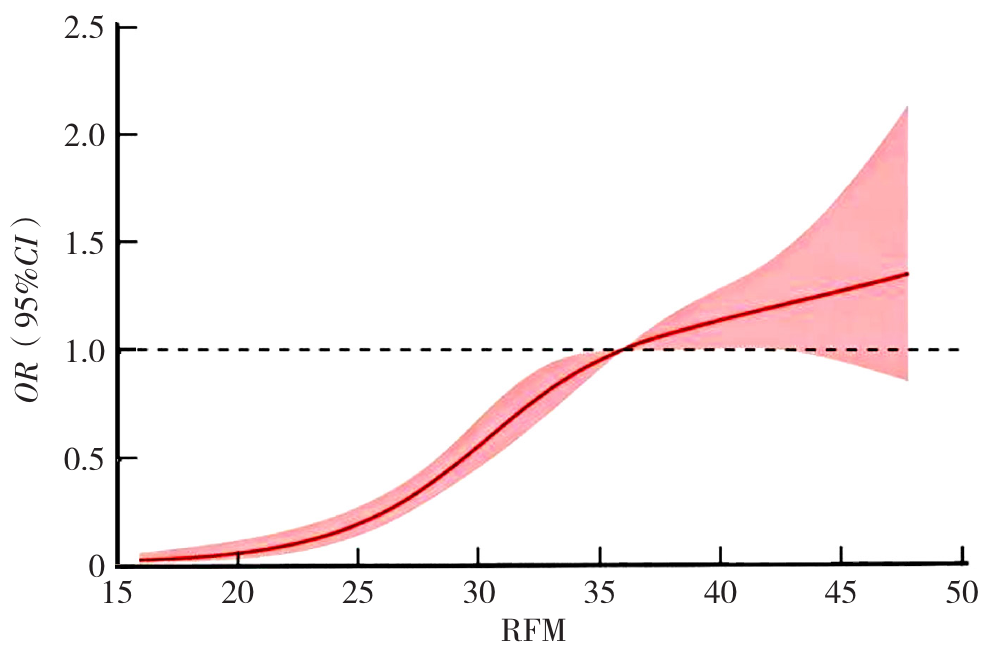
Figure 1 Restricted cubic spline plots evaluated the relationship between RFM and the risk of eGFR decline
| 项目 | AUC(95%CI) | Z值 | P值 |
|---|---|---|---|
| RFM | 0.686(0.671~0.701) | ||
| BMI | 0.530(0.502~0.558) | 2.143 | <0.01 |
| C-index | 0.622(0.605~0.639) | 10.538 | <0.01 |
| ABSI | 0.670(0.654~0.686) | 11.308 | <0.01 |
| BRI | 0.591(0.573~0.608) | 4.929 | <0.01 |
Table 3 ROC curve results of RFM,BMI,BRI,ABSI and C-index in predicting eGFR decline in CMM patients
| 项目 | AUC(95%CI) | Z值 | P值 |
|---|---|---|---|
| RFM | 0.686(0.671~0.701) | ||
| BMI | 0.530(0.502~0.558) | 2.143 | <0.01 |
| C-index | 0.622(0.605~0.639) | 10.538 | <0.01 |
| ABSI | 0.670(0.654~0.686) | 11.308 | <0.01 |
| BRI | 0.591(0.573~0.608) | 4.929 | <0.01 |
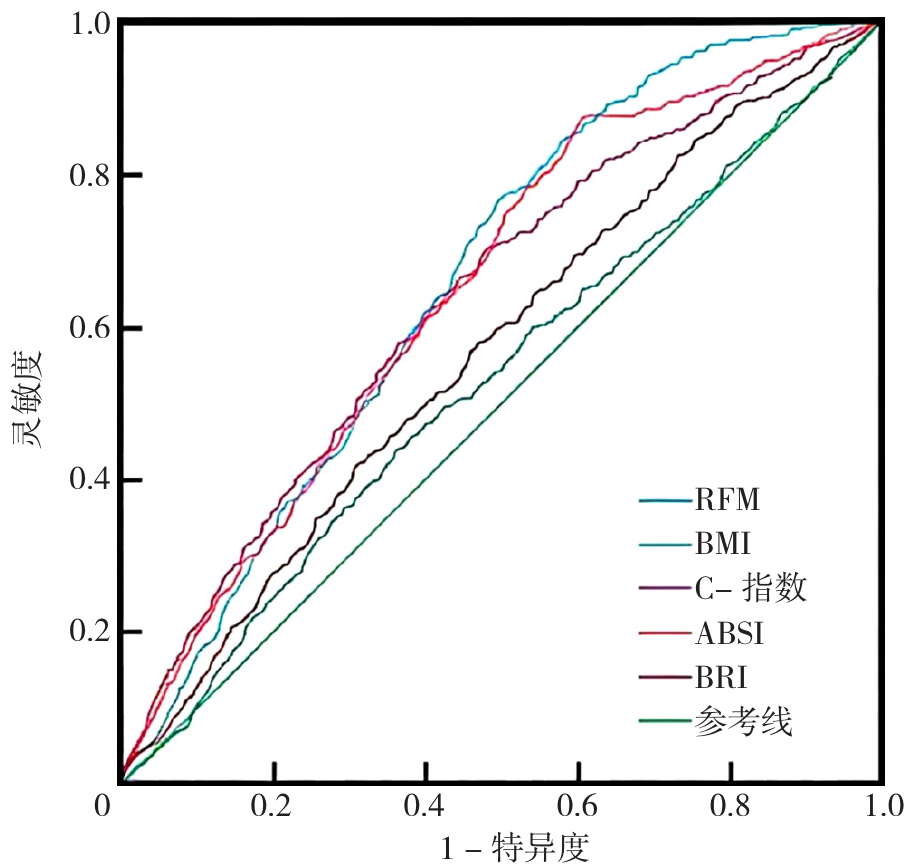
Figure 2 The ROC curves of RFM,BMI,BRI,ABSI and C-index in predicting eGFR decline in CMM patients
| [1] |
韩正,傅方琳,孙梦, 等. ≥60岁人群中国内脏肥胖指数与心血管代谢性共病关系的横断面研究[J]. 中国全科医学, 2026, 29(6): 693-698, 709. DOI: 10.12114/j.issn.1007-9572.2024.0391.
|
| [2] |
|
| [3] |
|
| [4] |
|
| [5] |
|
| [6] |
|
| [7] |
|
| [8] |
|
| [9] |
|
| [10] |
|
| [11] |
|
| [12] |
|
| [13] |
|
| [14] |
|
| [15] |
曾汉杰,黄敏,张倩, 等. 5种肾小球滤过率估算公式评估危重患者肾功能的精确度与准确度[J]. 实用医学杂志, 2025, 41(8): 1243-1252. DOI: 10.3969/j.issn.1006-5725.2025.08.023.
|
| [16] |
中国高血压防治指南修订委员会,高血压联盟(中国),中华医学会心血管病学分会, 等. 中国高血压防治指南(2018年修订版[J]. 中国心血管杂志, 2019, 24(1): 24-56.
|
| [17] |
中华医学会糖尿病学分会. 中国2型糖尿病防治指南(2017年版)[J]. 中华糖尿病杂志, 2018, 10(1): 4-67.
|
| [18] |
中华医学会心血管病学分会介入心脏病学组,中华医学会心血管病学分会动脉粥样硬化与冠心病学组,中国医师协会心血管内科医师分会血栓防治专业委员会, 等.稳定性冠心病诊断与治疗指南[J]. 中华心血管病杂志, 2018, 46(9): 680-694.
|
| [19] |
中国成人血脂异常防治指南修订联合委员会. 中国成人血脂异常防治指南(2016年修订版)[J]. 中国循环杂志, 2016, 31(10): 937-950. DOI: 10.3969/j.issn.1000-3614.2016.10.001.
|
| [20] |
中华医学会神经病学分会,中华医学会神经病学分会脑血管病学组.中国脑血管病一级预防指南2019[J]. 中华神经科杂志, 2019, 52(9): 684-709.
|
| [21] |
|
| [22] |
|
| [23] |
|
| [24] |
罗文婷,唐诗韵,肖湘, 等. 糖尿病肾病动物模型的研究进展[J]. 成都医学院学报, 2023, 18(5): 650-657.
|
| [25] |
张露,李娜娜. 2型糖尿病患者胰岛素抵抗血尿酸及血脂水平与肾脏损害的相关性[J]. 公共卫生与预防医学, 2025, 36(2): 135-138. DOI: 10.3969/j.issn.1006-2483.2025.02.030.
|
| [26] |
彭少林,杨水冰,杨井金, 等. 心血管-肾脏-代谢综合征的病理生理机制研究进展[J]. 中国慢性病预防与控制, 2025, 33(1): 61-65. DOI: 10.16386/j.cjpccd.issn.1004-6194.20240528.0391.
|
| [27] |
|
| [28] |
|
| [29] |
易建华,李雯. 脂多糖诱导的急性炎症小鼠模型血清促炎因子与抑炎因子表达研究[J]. 陕西医学杂志, 2023, 52(4): 395-398, 403. DOI: 10.3969/j.issn.1000-7377.2023.04.007.
|
| [30] | |
| [31] |
|
| [32] |
闫林,徐莹莹,胡万祥. 相对脂肪质量指数(RFM)评定中国老年人肥胖程度可行性研究[J]. 牡丹江师范学院学报(自然科学版), 2020(1): 59-61, 71. DOI: 10.13815/j.cnki.jmtc(ns).2020.01.013.
|
| [1] | LI Lan, LIU Lidi, ZHANG Peng, LI Dongze, YANG Ziyu, CHENG Yonglang, LIAO Xiaoyang, WAN Zhi. Lifestyle Intervention-based Weight Management: an Analysis of Key Highlights from the Partial Update of the 2025 NICE Guideline Overweight and Obesity Management (NG246) [J]. Chinese General Practice, 2026, 29(30): 4353-4359. |
| [2] | LU Hongrun, ZHANG Rui, ZHAO Yu, LI Jiazhen, WANG Weiqiang. Association of Cardiometabolic Comorbidity with Estimated Glomerular Filtration Rate [J]. Chinese General Practice, 2026, 29(28): 4179-4186. |
| [3] | ZHANG Han, CAI Genshen, FENG Zhengwen, ZHANG Kaiyue, LIAN Dongbo, ZHANG Hua, ZHANG Jing. Evaluating the Availability of Health Services for Obesity Comorbidities under Hierarchical Diagnosis and Treatment in Beijing: a Healthcare Institution Survey Study [J]. Chinese General Practice, 2026, 29(28): 4117-4124. |
| [4] | JIANG Huajie, ZHUO Lin, LI Xinyue, JIN Rui, MA Yue, CUI Jingqiu, WANG Xiuying. Related Factors and Preventive Measures of Hyperuricemia in Elderly Men [J]. Chinese General Practice, 2026, 29(27): 3915-3923. |
| [5] | ZHANG Ying, TANG Yijun, LIU Lidi, JIANG Lihua, JIA Yu, YANG Rong, YANG Ziyu, LIAO Xiaoyang. Management of Cardiovascular Metabolic Risks in Obese Children and Adolescents in China: Based on the 2024 Italian Society of Pediatric Endocrinology and Diabetes Position Paper on Cardiometabolic Risk in Children and Adolescents with Obesity [J]. Chinese General Practice, 2026, 29(27): 3879-3887. |
| [6] | GAO Min, DING Ying, HAN Shanshan, XU Yan, WU Ruihong, LI Yudi. Correlation of Selected Blood Biomarkers with 24-hour Urine Protein Excretion in 3 774 Pediatric Patients with IgA Vasculitis Nephritis [J]. Chinese General Practice, 2026, 29(23): 3320-3328. |
| [7] | Expert Group on Guidelines for the Assessment, Treatment, and Prevention of Childhood Obesity in China, Professional Committee on Obesity Control in Women and Children, China Maternal and Child Health Research Association. Guidelines for the Assessment, Treatment, and Prevention of Childhood Obesity in China (Second Edition) [J]. Chinese General Practice, 2026, 29(23): 3233-3252. |
| [8] | HAN Congcong, QIU Xinyu, SHAN Chunfang, SONG Ning, CHEN Qingjie, MULADILI· Abudureheman, LI Xiaomei, YANG Yining, ZHAO Qian. Impact of Metabolic Obesity Phenotype on Long-term Prognosis after Percutaneous Coronary Intervention in Patients with Acute Coronary Syndrome [J]. Chinese General Practice, 2026, 29(21): 2950-2958. |
| [9] | ZHANG Ke, ZENG Xianchang, ZOLZAYA Enkhzaya, ZHU Yelin, HUANG Yiwen, LIU Zhenxiu, TAO Feng. Effect of Xiere Xingpi Yin on Eating Behaviors and Weight-related Outcomes in Patients with Obesity: a Randomized Controlled Trial [J]. Chinese General Practice, 2026, 29(20): 2759-2765. |
| [10] | REYILAI· Maimaiti, ZHOU Yiran, WU Yun, LIU Zhencheng, LU Yaoqin, WU Haiyan. Association between Novel Obesity Indicators and Cardiovascular Disease Risk in Hypertensive Patients [J]. Chinese General Practice, 2026, 29(20): 2836-2845. |
| [11] | WU Zhen, XI Yaqi, HU Linlin. Characteristics of Policy Instrument Selection and Combination for Weight Management in China: a Content Analysis of National Policy Documents (2016-2025) [J]. Chinese General Practice, 2026, 29(20): 2766-2774. |
| [12] | CHEN Xiangyang, HUANG Hongmei, LI Sheyu. Prevention and Management of Adult Obesity: Progress and Trends from Six Keywords in 2025 [J]. Chinese General Practice, 2026, 29(20): 2753-2758. |
| [13] | TANG Lijuan, QI Qi, ZHANG Fan, GAO Yifu, CAO Yajing, YUE Fujuan, GAO Jinchai, LIU Xiaoli. Characterisation of the Prevalence of Overweight/Obesity among Residents Aged 18-44 Years in Hebei Province in 2013 and 2020 [J]. Chinese General Practice, 2026, 29(19): 2695-2704. |
| [14] | LI Yachan, YANG Yang, XU Qianting, KE Tingyu. Association between the Chinese Visceral Adiposity Index and Left Ventricular Diastolic Dysfunction in Type 2 Diabetes Mellitus [J]. Chinese General Practice, 2026, 29(18): 2482-2488. |
| [15] | LI Simin, ZHANG Tingting, WANG Kunbo, YANG Jianzhou, PING Weiwei. Effects of Exercise Dosage on Elderly Patients with Sarcopenia: a Meta-analysis [J]. Chinese General Practice, 2026, 29(17): 2400-2409. |
| Viewed | ||||||
|
Full text |
|
|||||
|
Abstract |
|
|||||
