
Chinese General Practice ›› 2026, Vol. 29 ›› Issue (21): 2982-2988.DOI: 10.12114/j.issn.1007-9572.2025.0335
Special Issue: 内分泌代谢性疾病最新文章合辑; 神经/行为/心理最新文章合辑
• Article·Specific Research·Diabetes • Previous Articles Next Articles
Received:2025-04-10
Revised:2025-11-20
Published:2026-07-20
Online:2026-06-03
Contact:
HU Yin
通讯作者:
胡阴
作者简介:作者贡献:
潘茈云、殷豪负责文章的构思与设计、论文撰写;林至柔、毛靖仪、黄艳、罗艳华、肖家福负责论文修订、文章质量控制及审校;胡阴负责论文指导、文章修改与审阅。
基金资助:CLC Number:
Add to citation manager EndNote|Ris|BibTeX
URL: https://www.chinagp.net/EN/10.12114/j.issn.1007-9572.2025.0335
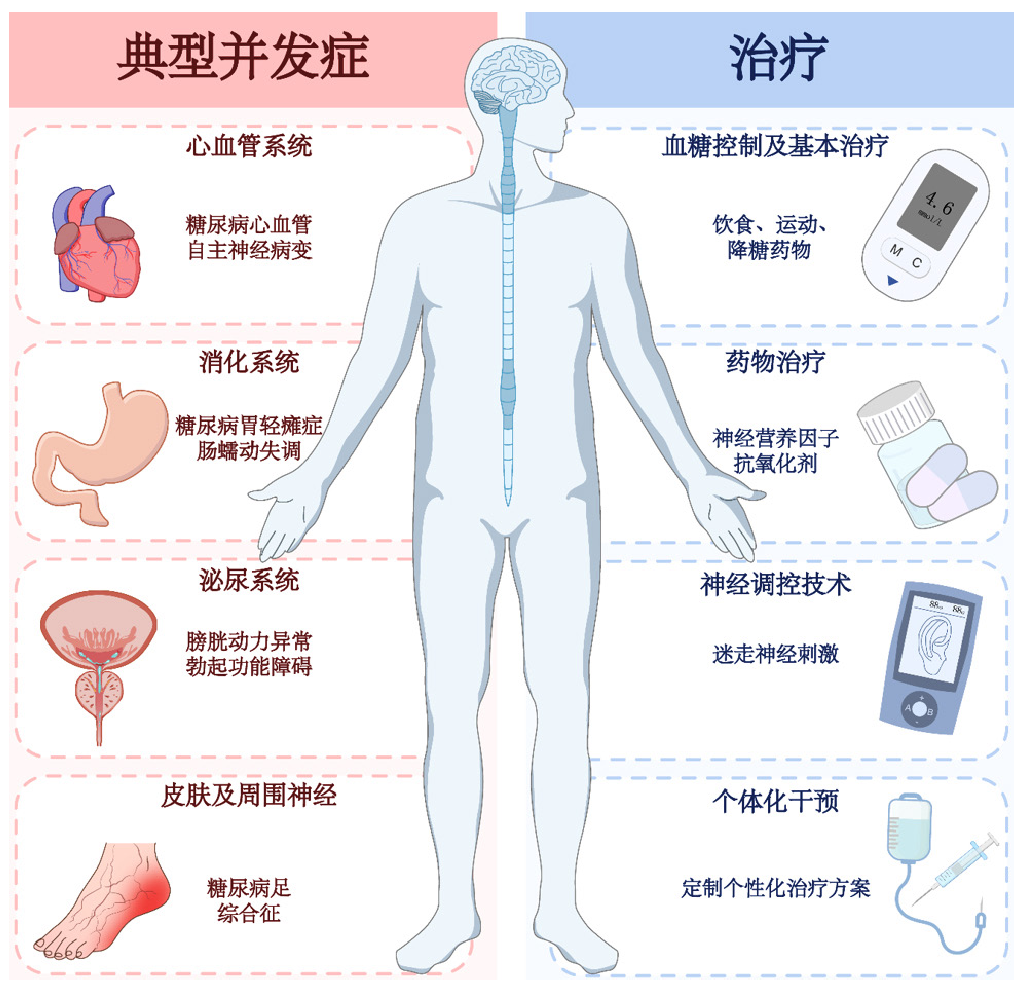
Figure 1 Diagram of diabetic autonomic neuropathy and treatment strategies in multiple organ systems
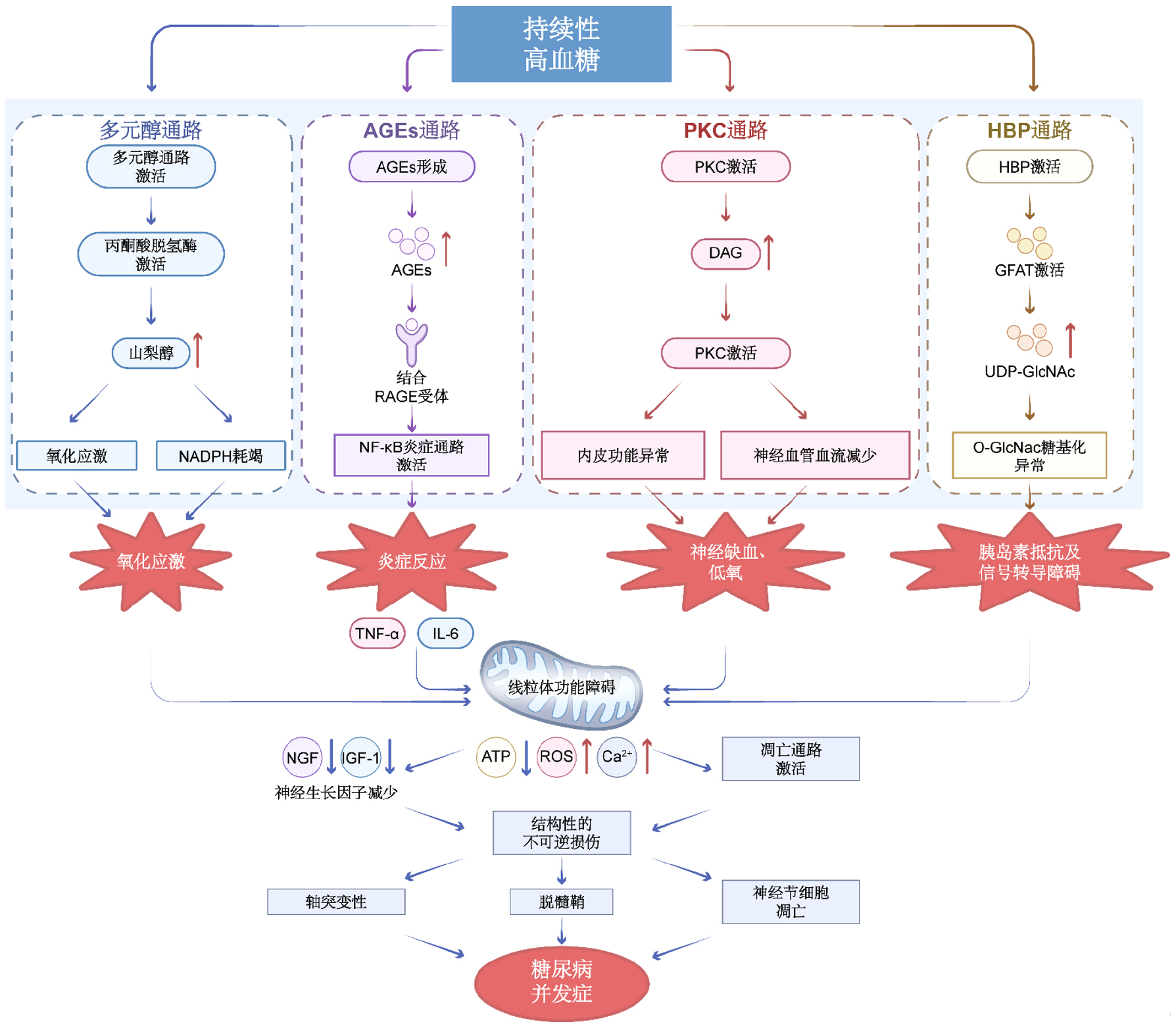
Figure 2 Schematic diagram of the signaling pathways of diabetic autonomic neuropathy
| 神经病变 | 临床表现 | 筛查与诊断方法 |
|---|---|---|
| 心血管自主神经病变 | 心悸、头晕、虚弱无力、视力障碍、晕厥、直立性低血压、静息心动过速、HRV下降 | 卧立位血压试验:收缩压降低≥20 mmHg(1 mmHg=0.133 kPa)、24 h动态血压监测、静息心率检测、HRV的检测(深呼吸HRV、卧立位HRV、Valsalva动作HRV) |
| 胃肠道自主神经病变 | 食管动力障碍、胃食管反流、胃轻瘫、腹泻、大便失禁、便秘 | 胃排空核素显像检查、胃电图、胃排空呼气试验、无线动力胶囊、上消化道内镜、食管24 h动态pH值监测 |
| 泌尿生殖系统自主神经病变 | 膀胱功能障碍:夜尿、尿频、尿急、尿潴留、尿道感染 性功能障碍:男性表现为勃起功能障碍或逆行射精,女性表现为性欲降低、阴道润滑不良 | 超声检查、全面尿流动力学检查、膀胱功能评估 性激素水平测定,男性:评估夜间阴茎肿胀、阴茎-球海绵体反射、阴茎背侧感觉神经传导、阴茎多普勒超声、阴茎交感皮肤反应;女性:会阴部感觉检查 |
| 皮肤和周围系统 | 泌汗功能障碍:多汗症或无汗症 | 皮肤交感反应、定量泌汗轴突反射、电化学皮肤电导、热调节发汗试验 |
| 无症状低血糖 | 低血糖无感知功能 | 血糖监测、低血糖感知问卷 |
| 瞳孔功能异常 | 水平瞳孔直径减小、瞳孔大小不均等、可卡因与磷脂酰胆碱反应减弱 | 对光反射、裂隙灯检查、瞳孔测量法、低浓度毛果芸香碱试验 |
Table 1 Clinical manifestations and diagnostic methods related to diabetic autonomic neuropathy
| 神经病变 | 临床表现 | 筛查与诊断方法 |
|---|---|---|
| 心血管自主神经病变 | 心悸、头晕、虚弱无力、视力障碍、晕厥、直立性低血压、静息心动过速、HRV下降 | 卧立位血压试验:收缩压降低≥20 mmHg(1 mmHg=0.133 kPa)、24 h动态血压监测、静息心率检测、HRV的检测(深呼吸HRV、卧立位HRV、Valsalva动作HRV) |
| 胃肠道自主神经病变 | 食管动力障碍、胃食管反流、胃轻瘫、腹泻、大便失禁、便秘 | 胃排空核素显像检查、胃电图、胃排空呼气试验、无线动力胶囊、上消化道内镜、食管24 h动态pH值监测 |
| 泌尿生殖系统自主神经病变 | 膀胱功能障碍:夜尿、尿频、尿急、尿潴留、尿道感染 性功能障碍:男性表现为勃起功能障碍或逆行射精,女性表现为性欲降低、阴道润滑不良 | 超声检查、全面尿流动力学检查、膀胱功能评估 性激素水平测定,男性:评估夜间阴茎肿胀、阴茎-球海绵体反射、阴茎背侧感觉神经传导、阴茎多普勒超声、阴茎交感皮肤反应;女性:会阴部感觉检查 |
| 皮肤和周围系统 | 泌汗功能障碍:多汗症或无汗症 | 皮肤交感反应、定量泌汗轴突反射、电化学皮肤电导、热调节发汗试验 |
| 无症状低血糖 | 低血糖无感知功能 | 血糖监测、低血糖感知问卷 |
| 瞳孔功能异常 | 水平瞳孔直径减小、瞳孔大小不均等、可卡因与磷脂酰胆碱反应减弱 | 对光反射、裂隙灯检查、瞳孔测量法、低浓度毛果芸香碱试验 |
| [1] |
|
| [2] |
中华医学会糖尿病学分会神经并发症学组. 糖尿病神经病变诊治专家共识(2021年版)[J]. 中华糖尿病杂志, 2021, 13(6): 540-557. DOI: 10.3760/cma.j.cn115791-20210310-00143.
|
| [3] |
|
| [4] |
|
| [5] |
|
| [6] |
|
| [7] |
|
| [8] |
|
| [9] |
|
| [10] |
|
| [11] |
|
| [12] |
|
| [13] |
|
| [14] |
|
| [15] |
|
| [16] |
|
| [17] |
|
| [18] |
|
| [19] |
|
| [20] |
|
| [21] |
|
| [22] |
|
| [23] |
|
| [24] |
|
| [25] |
|
| [26] |
|
| [27] |
|
| [28] |
|
| [29] |
|
| [30] |
|
| [31] |
|
| [32] |
|
| [33] |
|
| [34] |
|
| [35] |
|
| [36] |
|
| [37] |
|
| [38] |
|
| [39] |
|
| [40] |
|
| [41] |
|
| [42] |
|
| [43] |
|
| [44] |
|
| [45] |
Diabetes Control And Complications Trial Research Group,
|
| [46] |
|
| [47] |
|
| [48] |
|
| [49] |
|
| [50] |
|
| [51] |
|
| [52] |
张斌. 依帕司他联合α-硫辛酸静脉滴注治疗糖尿病周围神经病变的效果研究[J]. 中国实用医药, 2025, 20(3): 30-33. DOI: 10.14163/j.cnki.11-5547/r.2025.03.007.
|
| [53] |
|
| [54] |
|
| [55] |
|
| [56] |
|
| [57] |
|
| [58] |
|
| [59] |
|
| [60] |
|
| [61] |
|
| [62] |
|
| [63] |
|
| [1] | WANG Yang, ZHAO Shiting, CHEN Yingying, SUN Zilin, QIU Shanhu. Key Points of Exercise Intervention and Implementation for People with Complications of Type 2 Diabetes Mellitus [J]. Chinese General Practice, 2026, 29(21): 2989-2994. |
| [2] | LI Jiawei, GAO Xinyi, GE Aoqi, LI Juanjuan, YUAN Beibei. Demand and Associated Factors for Integrated Medical Care and Preventive Services among Patients with Type 2 Diabetes [J]. Chinese General Practice, 2026, 29(21): 3028-3039. |
| [3] | AN Yanhong, WANG Shidong, LI Xiaoran, GUO Jiayang, WANG Zhe, SHA Peilin, MENG Yijun, LI Xiaoxuan, SHI Xue, YU Zexing, XIAO Yonghua. Study on Risk Factors and Nomogram Prediction Model for Diabetic Kidney Disease: Based on Contrast-enhanced Ultrasound Technology [J]. Chinese General Practice, 2026, 29(21): 2995-3003. |
| [4] | GE Dan, WANG Zhi, DING Qun, GUO Tonglan, XU Tongdao. Relationship between Remnant Cholesterol and Non-alcoholic Fatty Liver Disease as well as Progressive Liver Fibrosis in Patients with Type 2 Diabetes Mellitus [J]. Chinese General Practice, 2026, 29(20): 2854-2859. |
| [5] | YAN Wen, ZHANG Hanzhi, JIN Hua, QIAN Jie, YU Dehua. Study on the Diagnosis and Treatment Capacity for Depressive Disorders in Community Health Service Institutions in Shanghai [J]. Chinese General Practice, 2026, 29(20): 2790-2799. |
| [6] | ZHANG Xiaojuan, LIU Yang, PENG Bo, YE Yuan, ZHU Kun. Study on the Prevention and Treatment of Hypertension and Diabetes Mellitus in Community Hospital [J]. Chinese General Practice, 2026, 29(19): 2614-2620. |
| [7] | CHEN Yiping, ZHANG Jianmei, LI Yanhu, LI Rui, ZHANG Ruiping, YANG Ping. Advances in the Diagnosis and Treatment of Post-COVID-19 Condition of Myocardial Injury [J]. Chinese General Practice, 2026, 29(18): 2585-2592. |
| [8] | JIAN Yingchun, ZENG Yongqin, ZHANG Haiping, WANG Zhengdi, AN Ke, YAN Rui. Recent Advances in Mitochondrial Dysfunction in Chronic Metabolic Diseases [J]. Chinese General Practice, 2026, 29(18): 2577-2584. |
| [9] | AN Xian, HUANG Peng, REN Jingjing. Investigation on the Cognition and Current Status of General Practitioners in the Multidisciplinary Diagnosis and Treatment of Medically Unexplained Symptoms [J]. Chinese General Practice, 2026, 29(18): 2472-2481. |
| [10] | LI Yachan, YANG Yang, XU Qianting, KE Tingyu. Association between the Chinese Visceral Adiposity Index and Left Ventricular Diastolic Dysfunction in Type 2 Diabetes Mellitus [J]. Chinese General Practice, 2026, 29(18): 2482-2488. |
| [11] | FAN Meixiang, YAN Yunyun, HUANG Yanyan. Interpretation and Discussion of Guidelines for Preventive Activities in General Practice: Bladder Cancer [J]. Chinese General Practice, 2026, 29(18): 2450-2453. |
| [12] | General Practice Branch of Cross-straits Medicine Exchange Association, General Practice Branch of Zhejiang Medical Association, General Undifferentiated Disease Professional Committee of Zhejiang Society of Mathematical Medicine, Chinese Geriatrics Society. Expert Consensus on the Diagnosis, Treatment, and Management of Numbness (2025) [J]. Chinese General Practice, 2026, 29(18): 2433-2449. |
| [13] | LI Menglin, DING Fang, QIAN Yu, PU Dong, DU Qianqian, GUAN Tianhang, HE Yilin. Study on Glycemic Control Status and Influencing Factors among Community Diabetic Patients [J]. Chinese General Practice, 2026, 29(17): 2334-2339. |
| [14] | LUAN Xiaoqing, SUN Jingjing, LI Xiaoling, WANG Manxia. Research Progress on Potential Biomarkers of Neuromyelitis Optica Spectrum Disorder [J]. Chinese General Practice, 2026, 29(17): 2418-2424. |
| [15] | WANG Rui, LUO Dan, YANG Cuicui, WENG Xinyi, WANG Yubing, XU Jingjing. Complex Network Analysis of Resilience in Adolescents with Type 1 Diabetes Mellitus Based on Multi-sourced Stigma [J]. Chinese General Practice, 2026, 29(16): 2264-2272. |
| Viewed | ||||||
|
Full text |
|
|||||
|
Abstract |
|
|||||
