
Chinese General Practice ›› 2026, Vol. 29 ›› Issue (17): 2376-2381.DOI: 10.12114/j.issn.1007-9572.2025.0136
Special Issue: 呼吸疾病文章合辑
• Article • Previous Articles Next Articles
Received:2025-03-27
Revised:2025-07-16
Published:2026-06-15
Online:2026-05-21
Contact:
ZHANG Dong
通讯作者:
张栋
作者简介:作者贡献:
王筝参与实验研究、数据采集、数据分析并起草及撰写文章;张栋设计课题实验,参与文章撰写,并对研究设计审阅指导;高志华参与设计文章的研究思路、整体监督管理、审校和质量控制。
基金资助:CLC Number:
Add to citation manager EndNote|Ris|BibTeX
URL: https://www.chinagp.net/EN/10.12114/j.issn.1007-9572.2025.0136
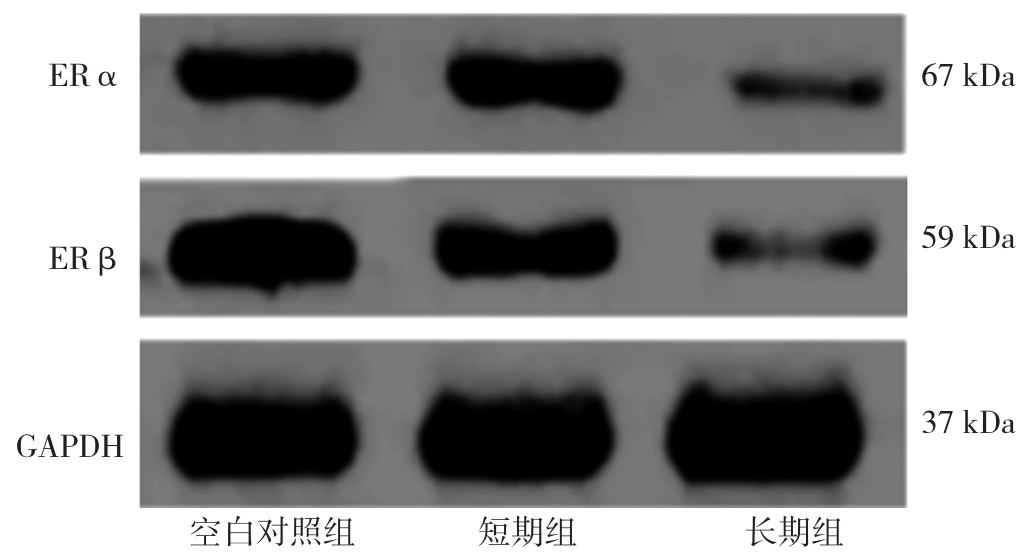
Figure 1 Band diagram of ERα and ERβ expression in ovarian tissue of three groups of rats
| 组别 | 只数 | ERα表达量 | ERβ表达量 |
|---|---|---|---|
| 空白对照组 | 5 | 1.02±0.14 | 1.00±0.12 |
| 短期组 | 5 | 0.65±0.07a | 0.62±0.08a |
| 长期组 | 5 | 0.12±0.04ab | 0.39±0.03ab |
| F值 | 117.609 | 65.630 | |
| P值 | <0.001 | <0.001 |
Table 1 Comparison of ERα and ERβ expression levels in ovarian tissues of three groups of rats
| 组别 | 只数 | ERα表达量 | ERβ表达量 |
|---|---|---|---|
| 空白对照组 | 5 | 1.02±0.14 | 1.00±0.12 |
| 短期组 | 5 | 0.65±0.07a | 0.62±0.08a |
| 长期组 | 5 | 0.12±0.04ab | 0.39±0.03ab |
| F值 | 117.609 | 65.630 | |
| P值 | <0.001 | <0.001 |
| 组别 | 只数 | 原始卵泡 | 初级卵泡 | 窦状卵泡 | 闭锁卵泡 |
|---|---|---|---|---|---|
| 空白对照组 | 5 | 8.76±0.20 | 6.51±0.31 | 3.24±0.21 | 3.54±0.34 |
| 短期组 | 5 | 5.64±0.39a | 4.00±0.23a | 2.54±0.10a | 7.86±0.45a |
| 长期组 | 5 | 3.42±0.24ab | 3.02±0.18ab | 1.97±0.12ab | 8.97±0.67ab |
| F值 | 432.320 | 267.910 | 88.619 | 160.936 | |
| P值 | <0.001 | <0.001 | <0.001 | <0.001 |
Table 2 Comparison of follicle numbers in ovarian tissues of three groups of rats
| 组别 | 只数 | 原始卵泡 | 初级卵泡 | 窦状卵泡 | 闭锁卵泡 |
|---|---|---|---|---|---|
| 空白对照组 | 5 | 8.76±0.20 | 6.51±0.31 | 3.24±0.21 | 3.54±0.34 |
| 短期组 | 5 | 5.64±0.39a | 4.00±0.23a | 2.54±0.10a | 7.86±0.45a |
| 长期组 | 5 | 3.42±0.24ab | 3.02±0.18ab | 1.97±0.12ab | 8.97±0.67ab |
| F值 | 432.320 | 267.910 | 88.619 | 160.936 | |
| P值 | <0.001 | <0.001 | <0.001 | <0.001 |
| 组别 | 只数 | DCs迁徙比例(%) | MLR |
|---|---|---|---|
| 空白对照组 | 10 | 0.58±0.06 | 1.31±0.11 |
| 短期组 | 10 | 0.46±0.04a | 1.89±0.17a |
| 长期组 | 10 | 0.37±0.05ab | 2.24±0.26ab |
| F值 | 43.246 | 60.953 | |
| P值 | <0.001 | <0.001 |
Table 3 Comparison of DCs migration ability and MLR ability among three groups of rats
| 组别 | 只数 | DCs迁徙比例(%) | MLR |
|---|---|---|---|
| 空白对照组 | 10 | 0.58±0.06 | 1.31±0.11 |
| 短期组 | 10 | 0.46±0.04a | 1.89±0.17a |
| 长期组 | 10 | 0.37±0.05ab | 2.24±0.26ab |
| F值 | 43.246 | 60.953 | |
| P值 | <0.001 | <0.001 |
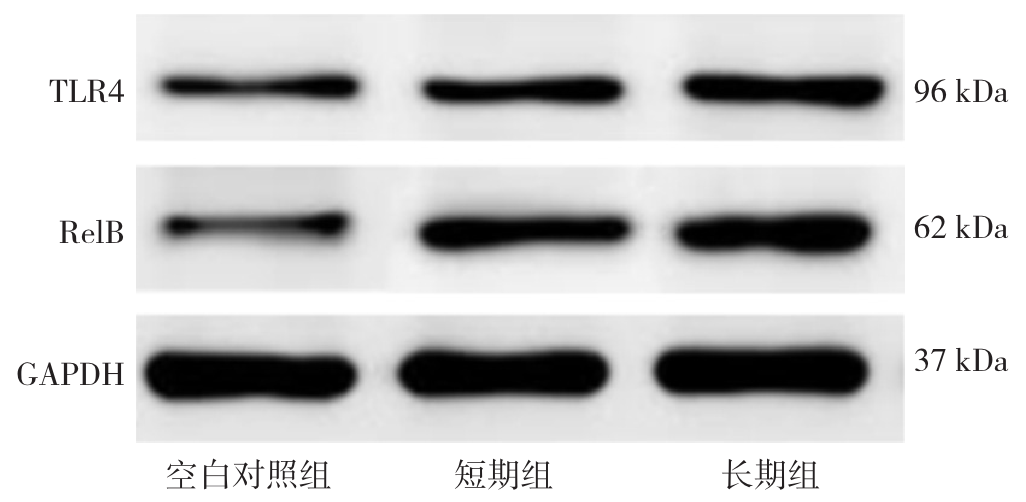
Figure 2 Band diagram of TLR4 and RelB expression in DCs of three groups of rats
| 组别 | 只数 | TLR4 | RelB |
|---|---|---|---|
| 空白对照组 | 10 | 1.02±0.11 | 1.04±0.12 |
| 短期组 | 10 | 1.56±0.21a | 1.72±0.23a |
| 长期组 | 10 | 1.97±0.36ab | 2.24±0.45ab |
| F值 | 36.660 | 40.270 | |
| P值 | <0.001 | <0.001 |
Table 4 Comparison of TLR4 and RelB expression levels in DCs of three groups of rats
| 组别 | 只数 | TLR4 | RelB |
|---|---|---|---|
| 空白对照组 | 10 | 1.02±0.11 | 1.04±0.12 |
| 短期组 | 10 | 1.56±0.21a | 1.72±0.23a |
| 长期组 | 10 | 1.97±0.36ab | 2.24±0.45ab |
| F值 | 36.660 | 40.270 | |
| P值 | <0.001 | <0.001 |
| 组别 | 只数 | 交配率 | 妊娠率 | 活产率 |
|---|---|---|---|---|
| 空白对照组 | 5 | 5/5 | 5/5 | 5/5 |
| 短期组 | 5 | 5/5 | 2/5 | 2/5 |
| 长期组 | 5 | 5/5 | 1/5a | 1/5a |
| χ2值 | 0 | 7.066 | 7.066 | |
| P值 | 1.000 | 0.029 | 0.029 |
Table 5 Comparison of fertility indicators among three groups of rats
| 组别 | 只数 | 交配率 | 妊娠率 | 活产率 |
|---|---|---|---|---|
| 空白对照组 | 5 | 5/5 | 5/5 | 5/5 |
| 短期组 | 5 | 5/5 | 2/5 | 2/5 |
| 长期组 | 5 | 5/5 | 1/5a | 1/5a |
| χ2值 | 0 | 7.066 | 7.066 | |
| P值 | 1.000 | 0.029 | 0.029 |
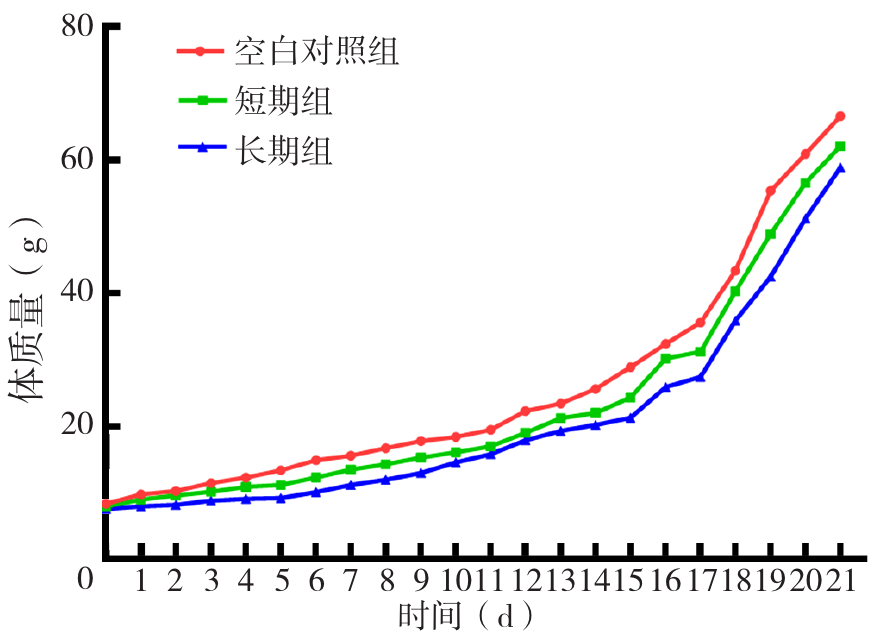
Figure 3 The changes in body weight of 21-day-old live-born offspring mice in 3 groups
| [1] |
|
| [2] |
|
| [3] |
罗梦倩, 丁晓华, 贺清, 等. 辅助生殖技术助孕女性睡眠质量研究进展[J]. 护士进修杂志, 2024, 39(21): 2253-2257. DOI: 10.16821/j.cnki.hsjx.2024.21.003.
|
| [4] |
陈阳, 章小娟, 王菁, 等. 揿针治疗女性辅助生殖患者睡眠障碍与妊娠结局临床研究[J]. 湖北中医药大学学报, 2023, 25(4): 89-91.
|
| [5] |
|
| [6] |
|
| [7] |
许雅琦, 金治平, 张倩, 等. 睡眠剥夺致雌性大鼠生育力下降及其机制[J]. 中山大学学报(自然科学版)(中英文), 2023, 62(2): 51-59. DOI: 10.13471/j.cnki.acta.snus.2022e014.
|
| [8] |
|
| [9] |
李银丹, 郭敏, 侯海燕. 女性性激素水平与睡眠障碍的关系[J]. 发育医学电子杂志, 2024, 12(3): 235-240.
|
| [10] |
宗嬿, 陈宜爽, 徐莲薇. 围绝经期睡眠障碍的发病机制[J]. 国际生殖健康/计划生育杂志, 2024, 43(2): 166-171.
|
| [11] |
马菱蔚, 冯源原, 孙鑫萌, 等. 性激素在绝经激素治疗中的应用及展望[J]. 世界临床药物, 2024, 45(2): 107-111. DOI: 10.13683/j.wph.2024.02.001.
|
| [12] |
陈玥, 陈思, 张蕾, 等. 基于雌激素受体途径探讨补肾活血汤干预免疫性卵巢早衰小鼠模型机制研究[J]. 陕西中医, 2023, 44(5): 556-561. DOI: 10.3969/j.issn.1000-7369.2023.05.003.
|
| [13] |
付温爽, 徐桂萍, 郑嘉琪, 等. 雌激素对雌性小鼠社会行为及脑内催产素系统的调节作用[J]. 中国药学杂志, 2023, 58(5): 410-418. DOI: 10.11669/cpj.2023.05.005.
|
| [14] |
缪晨韵, 赵颖, 陈赟, 等. 何氏养巢方通过ERβ/PCG1α/TFAM通路提高颗粒细胞线粒体生物发生以改善早发性卵巢功能不全[J]. 浙江大学学报(医学版), 2024, 53(3): 358-367.
|
| [15] |
|
| [16] |
李诗琪, 张柳, 李庆云. 阻塞性睡眠呼吸暂停对免疫功能的影响[J]. 中华结核和呼吸杂志, 2021, 44(5): 500-504. DOI: 10.3760/cma.j.cn112147-20200715-00809.
|
| [17] |
|
| [18] |
|
| [19] |
胡柯, 杨宇, 王光伟, 等. ROS/TLR4/RelB、P38通路激活在间歇低氧致树突状细胞表型以及功能改变中的作用[J]. 免疫学杂志, 2016, 32(6): 468-473. DOI: 10.13431/j.cnki.immunol.j.20160092.
|
| [20] |
胡柯, 王光伟, 杨宇, 等. 间歇性低氧致树突状细胞迁徙能力改变及其通路机制探讨[J]. 重庆医学, 2016, 45(30): 4200-4202, 4206. DOI: 10.3969/j.issn.1671-8348.2016.30.008.
|
| [1] | QIN Han, YANG Mei, LIU Yingcun, LIU Yazhen, XIE Junhao, CHEN Xiaojie, LIU Juan. Comparative Study of Cardiac Structure and Function in Obstructive Sleep Apnea Patients Based on the Classification of Hypopnea/Apnea Ratio [J]. Chinese General Practice, 2026, 29(19): 2656-2663. |
| [2] | GUAN Yanping, WU Yunxiao, XU Zhifei. Correlation between Obstructive Sleep Apnea Syndrome and Emotional-behavioural Problems in Preschool Children [J]. Chinese General Practice, 2026, 29(09): 1155-1160. |
| [3] | ZHANG Meihong, YANG Jing, ZHONG Wenqian, WANG Shuang, GENG Ying, WU Bin, LU Zhenzhang. Correlation Analysis between Body Roundness Index and Obstructive Sleep Apnea and Its Predictive Value Evaluation [J]. Chinese General Practice, 2026, 29(08): 1013-1019. |
| [4] | YANG Xin, XU Haofeng, PAN Xuanda, LI Shaoqiang, HU Bingjie. Current Status of Diagnosis and Treatment of Obstructive Sleep Apnea Along with Its Challenges and Prospects in the Context of Deep Integration of General Practice and Artificial Intelligence [J]. Chinese General Practice, 2026, 29(02): 247-255. |
| [5] | HE Yan, CUI Saixian, HU Yang, NI Qing, GAN Lulu, LIU Qian, DAI Anni, LIU Shijie, YANG Li. Influencing Factors on Urinary Sodium Excretion in Patients with Obstructive Sleep Apnea-Associated Hypertension [J]. Chinese General Practice, 2025, 28(18): 2222-2227. |
| [6] | Chinese Academy Society of Sleep Medicine, Chinese Medical Doctor Association, Sleep Medicine Group, China Neurologist Association. Chinese Guideline for Diagnosis and Treatment of Co-morbid Insomnia and Obstructive Sleep Apnea (2024) [J]. Chinese General Practice, 2025, 28(11): 1289-1303. |
| [7] | YANG Jianuo, WANG Guanli, YANG Jiafu, HE Jiahao, CHEN Shumin, SHEN Yi, LI Juan, REN Ni, LIU Chunli, DENG Fangge. New Progress in the Application of Infrared Thermal Imaging in Pulmonary Diseases [J]. Chinese General Practice, 2025, 28(08): 1012-1016. |
| [8] | ZHANG Ming, WANG Wenjuan, HAO Wen, CHEN Jibin, XIA Wei, SHAO Yibing, WANG Bin. Clinical Research of Obstructive Sleep Apnea and Acute Coronary Syndrome: Current Status and Future Direction [J]. Chinese General Practice, 2025, 28(03): 257-261. |
| [9] | DONG Menglong, LIN Zhifeng, FAN Mengmeng, XUE Shengwen, LIU Yuhang, WANG Yi, CHENG Jinxiang. Advance in Evaluation of the Clinical Efficacy of Non-benzodiazepine Drugs in Treating Comorbid Insomnia and Sleep Apnea [J]. Chinese General Practice, 2024, 27(35): 4388-4396. |
| [10] | Chinese Association of Geriatric Sleep Medicine, Chinese Geriatrics Society. Chinese Consensus on Application Speifications for Noninvasive Positive Pressure Ventilation of Elderly Patients with Obstructive Sleep Apnea [J]. Chinese General Practice, 2024, 27(31): 3841-3849. |
| [11] | CHANG Yuan, LIU Shuang, GAO Yinghui, ZHANG Wei, HAN Fang. The Correlation between Red Blood Cell Distribution Width Level and Hypertension in Patients with Obstructive Sleep Apnea [J]. Chinese General Practice, 2024, 27(26): 3255-3263. |
| [12] | ZHU Yaming, DU Li, WANG Huanhui, WANG Peipei. Obstructive Sleep Apnea-hypopnea Syndrome and Severe Asthma: Advances and Challenges [J]. Chinese General Practice, 2024, 27(25): 3192-3196. |
| [13] | LIU Yihan, ZHU Ning, XUE Mengzhou. Effects of Threshold Inspiratory Muscle Training Combined with Continuous Positive Airway Pressure on Sleep and Respiratory Function in Stroke Patients with Obstructive Sleep Apnea-hypopnea Syndrome: a Randomized Controlled Trial [J]. Chinese General Practice, 2024, 27(17): 2077-2082. |
| [14] | WANG Jianying, REN Shouan. Significance of Duration of Respiratory Events in Nocturnal Hypoxemia in Adults with Obstructive Sleep Apnea [J]. Chinese General Practice, 2024, 27(14): 1699-1707. |
| [15] | ZENG Lingfeng, ZHANG Hui, LEI Si, ZHUO Hui, YE Yun, XU Yan, LUO Yingquan. Obstructive Sleep Apnea in Adults Screening: Interpretation of the U.S. Preventive Services Task Force Recommendation Statement [J]. Chinese General Practice, 2024, 27(12): 1412-1416. |
| Viewed | ||||||
|
Full text |
|
|||||
|
Abstract |
|
|||||
