
Chinese General Practice ›› 2027, Vol. 30 ›› Issue (03): 394-400.DOI: 10.12114/j.issn.1007-9572.2025.0156
• Original Research • Previous Articles
Received:2025-03-10
Revised:2025-09-20
Published:2027-01-20
Online:2026-11-26
Contact:
LIU Liping
通讯作者:
刘利平
作者简介:作者贡献:
闫晓慧负责现场数据收集与整理、研究的实施和设计、统计学分析、绘制图表以及论文起草、现场数据收集、初步处理;刘利平负责研究的构思,对文章进行质量控制与审查,并负责最终版本修订,对论文负责。
CLC Number:
Add to citation manager EndNote|Ris|BibTeX
URL: https://www.chinagp.net/EN/10.12114/j.issn.1007-9572.2025.0156
| CEUS增强特征 | 良性组(n=54) | 恶性组(n=57) | χ2值 | P值 |
|---|---|---|---|---|
| 增强环 | 38.612 | <0.001 | ||
| 无 | 11(20.4) | 34(59.6) | ||
| 不完整 | 2(3.7) | 13(22.8) | ||
| 完整 | 41(75.9) | 10(17.5) | ||
| 增强均匀性 | 0.696 | 0.404 | ||
| 均匀 | 27(50.0) | 24(42.1) | ||
| 不均匀 | 27(50.0) | 33(57.9) | ||
| 岛样增强 | 12.898 | <0.001 | ||
| 是 | 18(33.3) | 8(14.0) | ||
| 否 | 36(66.7) | 49(86.0) | ||
| 增强时间 | 24.270 | <0.001 | ||
| 晚 | 13(24.1) | 25(43.9) | ||
| 同步 | 18(33.3) | 22(38.6) | ||
| 快 | 23(42.6) | 10(17.5) | ||
| 消退时间 | 20.667 | <0.001 | ||
| 晚 | 5(9.3) | 5(8.8) | ||
| 同步 | 28(51.9) | 13(22.8) | ||
| 快 | 21(38.9) | 39(68.4) | ||
| 增强程度 | 5.503 | 0.064 | ||
| 低增强 | 12(22.2) | 24(42.1) | ||
| 等增强 | 22(40.7) | 20(35.1) | ||
| 高增强 | 20(37.1) | 13(22.8) | ||
| 增强后结节边界a | 23.268 | <0.001 | ||
| 清 | 51(87.9) | 26(45.6) | ||
| 不清 | 7(12.1) | 31(54.4) | ||
| 增强后实性部分大小改变a | 17.253 | <0.001 | ||
| 减小 | 18(31.0) | 5(8.8) | ||
| 不变 | 36(62.1) | 33(57.9) | ||
| 增大 | 4(6.9) | 19(33.3) | ||
| 稀疏低/无增强a | 15.340 | <0.001 | ||
| 是 | 20(34.5) | 3(5.3) | ||
| 否 | 38(65.5) | 54(94.7) | ||
Table 1 Comparison of CEUS enhancement characteristics between benign and malignant nodules
| CEUS增强特征 | 良性组(n=54) | 恶性组(n=57) | χ2值 | P值 |
|---|---|---|---|---|
| 增强环 | 38.612 | <0.001 | ||
| 无 | 11(20.4) | 34(59.6) | ||
| 不完整 | 2(3.7) | 13(22.8) | ||
| 完整 | 41(75.9) | 10(17.5) | ||
| 增强均匀性 | 0.696 | 0.404 | ||
| 均匀 | 27(50.0) | 24(42.1) | ||
| 不均匀 | 27(50.0) | 33(57.9) | ||
| 岛样增强 | 12.898 | <0.001 | ||
| 是 | 18(33.3) | 8(14.0) | ||
| 否 | 36(66.7) | 49(86.0) | ||
| 增强时间 | 24.270 | <0.001 | ||
| 晚 | 13(24.1) | 25(43.9) | ||
| 同步 | 18(33.3) | 22(38.6) | ||
| 快 | 23(42.6) | 10(17.5) | ||
| 消退时间 | 20.667 | <0.001 | ||
| 晚 | 5(9.3) | 5(8.8) | ||
| 同步 | 28(51.9) | 13(22.8) | ||
| 快 | 21(38.9) | 39(68.4) | ||
| 增强程度 | 5.503 | 0.064 | ||
| 低增强 | 12(22.2) | 24(42.1) | ||
| 等增强 | 22(40.7) | 20(35.1) | ||
| 高增强 | 20(37.1) | 13(22.8) | ||
| 增强后结节边界a | 23.268 | <0.001 | ||
| 清 | 51(87.9) | 26(45.6) | ||
| 不清 | 7(12.1) | 31(54.4) | ||
| 增强后实性部分大小改变a | 17.253 | <0.001 | ||
| 减小 | 18(31.0) | 5(8.8) | ||
| 不变 | 36(62.1) | 33(57.9) | ||
| 增大 | 4(6.9) | 19(33.3) | ||
| 稀疏低/无增强a | 15.340 | <0.001 | ||
| 是 | 20(34.5) | 3(5.3) | ||
| 否 | 38(65.5) | 54(94.7) | ||
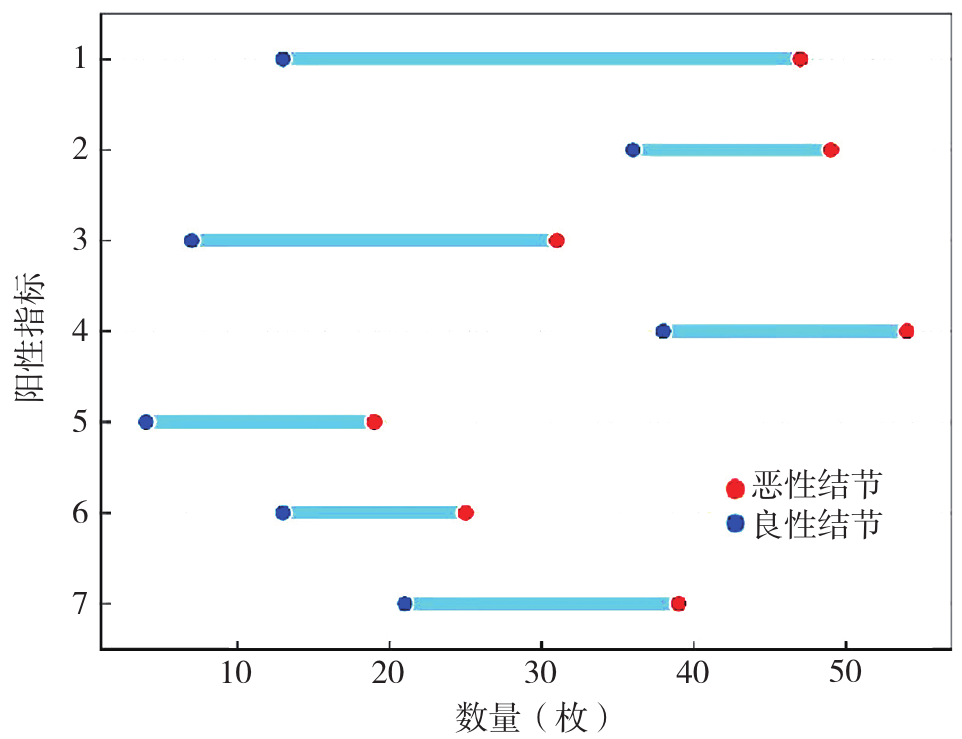
Figure 1 Distribution of CEUS positive indicators in benign and malignant nodules: dumbbell plot
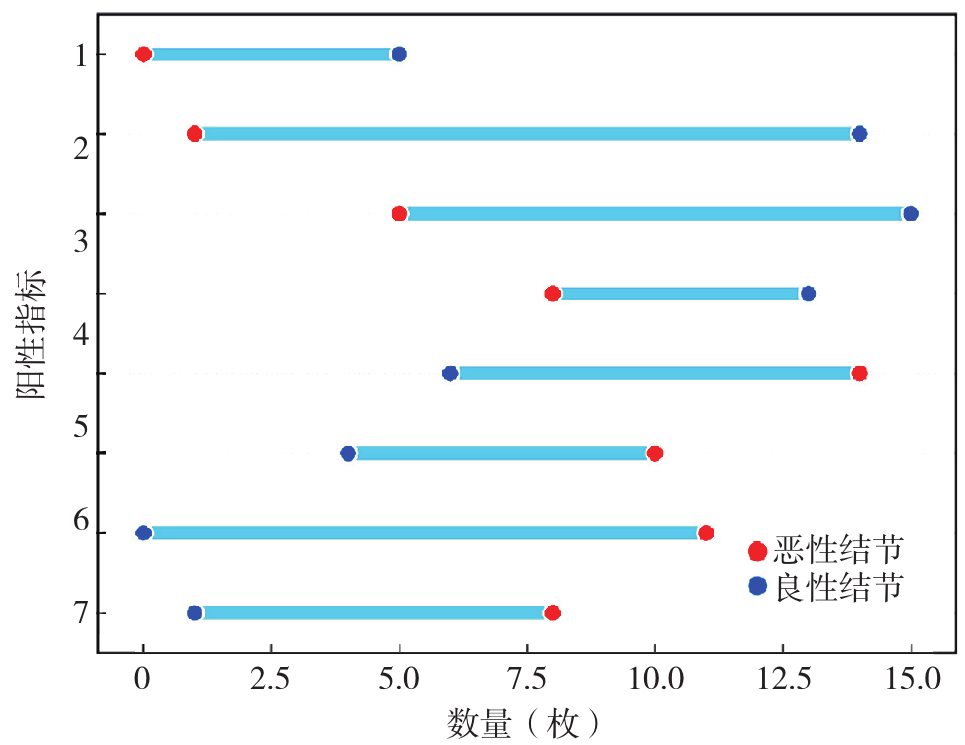
Figure 2 Distribution of benign and malignant nodules by CEUS score: dumbbell plot
| 诊断方法 | 灵敏度(%) | 特异度(%) | 准确度(%) | 阳性预测值(%) | 阴性预测值(%) | ROC曲线下面积 | 最佳截断值(分) |
|---|---|---|---|---|---|---|---|
| CEUS评分系统 | 75.4 | 81.0 | 78.3 | 79.6 | 77.0 | 0.849 | 3 |
| 人工智能系统 | 82.5 | 67.2 | 74.8 | 71.2 | 79.6 | 0.755 | 4 |
| 医师采用ACR TI-RADS | 84.2 | 82.8b | 83.5 | 82.8b | 84.2 | 0.880b | 5 |
| 人工智能辅助医师 | 91.2 | 86.2b | 88.7b | 86.7 | 90.9b | 0.929bc | 5 |
| 二者联合 | 91.2a | 84.5 | 88.7 | 85.2 | 90.7a | 0.914abc | |
| 三者联合 | 94.7ab | 87.9b | 88.7b | 88.5ab | 94.4ab | 0.941abc | |
| χ2(Z)值 | 3.07 | 4.08 | 2.01 | 0.80 | 2.10 | 2.63d | |
| P值 | <0.05 | <0.05 | <0.05 | <0.05 | <0.05 | <0.05 |
Table 2 Diagnostic performance and comparison of different methods for PCTNs
| 诊断方法 | 灵敏度(%) | 特异度(%) | 准确度(%) | 阳性预测值(%) | 阴性预测值(%) | ROC曲线下面积 | 最佳截断值(分) |
|---|---|---|---|---|---|---|---|
| CEUS评分系统 | 75.4 | 81.0 | 78.3 | 79.6 | 77.0 | 0.849 | 3 |
| 人工智能系统 | 82.5 | 67.2 | 74.8 | 71.2 | 79.6 | 0.755 | 4 |
| 医师采用ACR TI-RADS | 84.2 | 82.8b | 83.5 | 82.8b | 84.2 | 0.880b | 5 |
| 人工智能辅助医师 | 91.2 | 86.2b | 88.7b | 86.7 | 90.9b | 0.929bc | 5 |
| 二者联合 | 91.2a | 84.5 | 88.7 | 85.2 | 90.7a | 0.914abc | |
| 三者联合 | 94.7ab | 87.9b | 88.7b | 88.5ab | 94.4ab | 0.941abc | |
| χ2(Z)值 | 3.07 | 4.08 | 2.01 | 0.80 | 2.10 | 2.63d | |
| P值 | <0.05 | <0.05 | <0.05 | <0.05 | <0.05 | <0.05 |
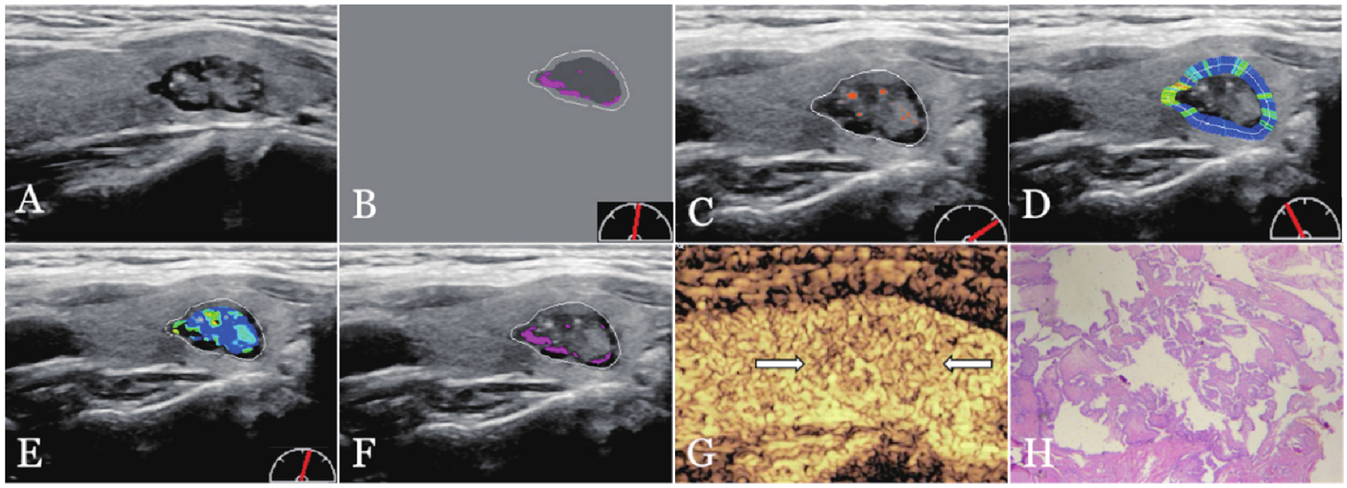
Figure 3 A case of cystic-solid thyroid nodule on ultrasound, AI, CEUS, and pathological findings
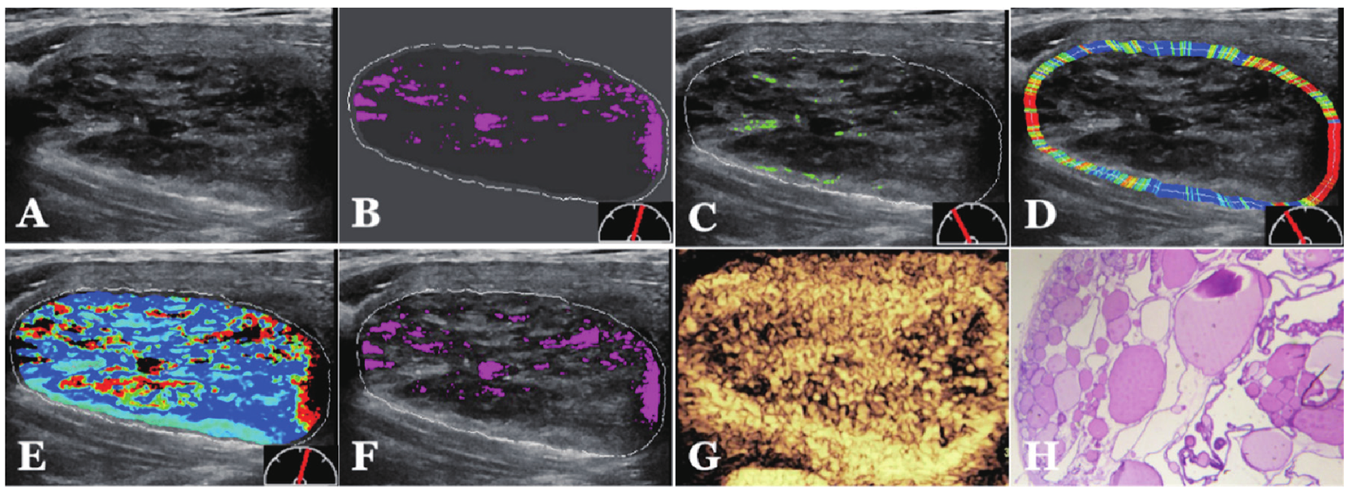
Figure 4 Another case of cystic-solid thyroid nodule on ultrasound, AI, CEUS, and pathological findings
| [1] |
|
| [2] |
|
| [3] |
|
| [4] |
|
| [5] |
许翔,杨新,赵瑞娜, 等. 甲状腺未分化癌和乳头状癌超声成像特征的差异[J]. 中国医学科学院学报, 2015, 37(1): 71-74. DOI: 10.3881/j.issn.1000-503X.2015.01.013.
|
| [6] |
汤靖岚,侯春杰,范小明. 甲状腺囊实性结节良恶性鉴别中超声分组系统的应用[J]. 浙江医学, 2014, 36(18): 1518-1520.
|
| [7] |
|
| [8] |
|
| [9] |
|
| [10] |
马策,刘昕,穆维娜. 超声造影评分在ACR甲状腺影像报告和数据系统分类中的应用[J]. 中国医学影像学杂志, 2019, 27(7): 547-551.
|
| [11] |
|
| [12] |
|
| [13] |
|
| [14] |
巴黎,刘千琪,田洁, 等. 计算机辅助检测和诊断系统鉴别甲状腺良恶性结节的价值研究[J]. 中国超声医学杂志, 2018, 34(2): 108-111.
|
| [15] |
|
| [16] |
|
| [17] |
宋青,田晓琦,兰雨, 等. 常规超声联合超声造影诊断部分囊性甲状腺结节良恶性的价值[J]. 中国医学影像学杂志, 2020, 28(3): 189-193.
|
| [18] |
|
| [19] |
|
| [20] |
王爱珠,黄旴宁,王乐华, 等. 常规超声及超声造影诊断囊实性甲状腺乳头状癌[J]. 中国医学影像技术, 2025, 41(1): 60-64. DOI: 10.13929/j.issn.1003-3289.2025.01.013.
|
| [21] |
|
| [22] |
庞丽娜,秦伟栋,杨晓, 等. CEUS灌注模式鉴别诊断甲状腺良恶性结节[J]. 中国医学影像技术, 2019, 35(7): 989-992. DOI: 10.13929/j.1003-3289.201811044.
|
| [23] |
|
| [24] |
|
| [25] |
|
| [26] |
孙鑫,周平,赵永峰, 等. AmCAD-UT Detection在甲状腺结节超声诊断中的应用[J]. 中国医学影像技术, 2020, 36(5): 749-753. DOI: 10.13929/j.issn.1003-3289.2020.05.026.
|
| [27] |
李鑫,杜联芳,李凡, 等. CEUS定性分析诊断不同大小甲状腺良恶性结节[J]. 中国医学影像技术, 2018, 34(10): 1469-1473. DOI: 10.13929/j.1003-3289.201803110.
|
| [28] |
王琰,崔可飞,付超, 等. 超声造影评分法联合TI-RADS分类标准对甲状腺良恶性结节的诊断价值[J]. 中国临床医学影像杂志, 2016, 27(6): 439-441.
|
| [1] | YANG Hui. Challenges and Breakthroughs in International General Practice Research and Discipline Development [J]. Chinese General Practice, 2027, 30(01): 1-7. |
| [2] | WU Li, WANG Haoyi, QIU Xiangyang, YUAN Jing, CHEN Runan. Progress of Artificial Intelligence in Children with Attention Deficit Hyperactivity Disorder [J]. Chinese General Practice, 2026, 29(36): 5466-5472. |
| [3] | WANG Zhenyu, GUO Pengfei, HAO Wenhui. Research on Artificial Intelligence Ethics Literacy among Medical School Teachers [J]. Chinese General Practice, 2026, 29(33): 4914-4921. |
| [4] | TIAN Xiangyang, ZHOU Yingsheng, GAO Ying. Prospects of Behavioral and Lifestyle Interventions for Diabetes Mellitus [J]. Chinese General Practice, 2026, 29(31): 4513-4520. |
| [5] | XIE Yuanling, CHENG Li, LONG Xiangyu, SU Zhengxin, SU Yiyi, ZHANG Renyue, SUN Guoqiang, CHEN Xuxia, ZHOU Jilan. Effectiveness of an AI-powered Ophthalmic Telemedicine Diagnostic Platform in Community Eye Health Screening [J]. Chinese General Practice, 2026, 29(31): 4641-4649. |
| [6] | WEI Xuejuan, WANG Lihua, WANG Li, REN Jinglin, YAN Haiqing, YU Haiyang, LIU Jingfeng. Effectiveness of an Intelligent Voice Outbound Call System as an Adjunct to Usual Care for Health Management in Older Community-dwelling Patients with "Three Highs" Multimorbidity: a Randomized Controlled Trial [J]. Chinese General Practice, 2026, 29(31): 4635-4640. |
| [7] | MU Hongyu, LI Qianqian, LIU Lu, SUN Xinru, ZHANG Jiaqi, DUAN Yeqing, LI Bin. Research Progress and Challenges of Cognitive Digital Therapeutics in the Intervention of Mild Cognitive Impairment [J]. Chinese General Practice, 2026, 29(29): 4211-4216. |
| [8] | HUANG Mu, ZHANG Daochun, YANG Wei, ZHONG Liming, YUAN Wenjing, JIA Ziqi, TAN Xiangliang, DUAN Xiaohui, LIU Xian, CHEN Weicui. Automatic Segmentation of Colorectal Cancer Lesions in Abdominal CT Images Using a Deep Learning Network Based on Fused 3D U-Net and Transformer: a Multicenter and Multidevice Study [J]. Chinese General Practice, 2026, 29(29): 4281-4287. |
| [9] | CHEN Yujing, WANG Yan, LI Guang, DONG Benchao, YANG Peichuan, MA Jianxiong. Digital Technologies in the Management of Sarcopenia among Older Adults in Asia: a Scoping Review [J]. Chinese General Practice, 2026, 29(29): 4200-4210. |
| [10] | CHEN Cheng, CHEN Kaiyuan, SUN Nailing, ZENG Huatang, LEI Suwen, LIANG Wannian. Status and Suggestions on Standardization Construction of Artificial Intelligence-enabled Disease Prevention and Control [J]. Chinese General Practice, 2026, 29(29): 4193-4199. |
| [11] | DENG Wei, HUANG Mengting, YI Shengli, LIN Yang, XU Lidan, REN Zhexue, ZHU Xiuqiong, LI Yesha, REN Mengge, KE Dazhi, LI Guiqiong, WU Zhiqin, LUO Aoran, HE Fapei. Training and Effectiveness of AI-enabled Clinical Reasoning in General Practice [J]. Chinese General Practice, 2026, 29(28): 4078-4085. |
| [12] | XIE Xiaoyun, LIU Chenxi, LIU Yushu, ZHOU Yihan. Artificial Intelligence Research Practices in Primary Healthcare Institutions in China and the Potential Issue of Data Poverty: a Scoping Review [J]. Chinese General Practice, 2026, 29(28): 4067-4077. |
| [13] | ZHOU Yuhan, MIN Yuqi, GUO Zhou, YANG Min, YUE Lu, HE Meichen, ZHOU Hairong, WANG Yongchen. Opportunities and Challenges for General Practitioners in the Age of Artificial Intelligence [J]. Chinese General Practice, 2026, 29(25): 3563-3568. |
| [14] | WANG Hongchuan, ZHANG Jianbo, MA Wei, ZHAO Sidi. Governance Logic and Ecosystem Construction of Healthcare Data Space Led by Digital Policies: an Analytical Framework Based on "Technology-Management-Law" [J]. Chinese General Practice, 2026, 29(24): 3416-3422. |
| [15] | OUYANG Weina, WANG Lu, ZHANG Xuan, TANG Wei, FAN Yongmei. Research on Atrial Fibrillation Screening Based on Dynamic Multi-scale Feature Fusion and Attention Mechanism [J]. Chinese General Practice, 2026, 29(23): 3281-3286. |
| Viewed | ||||||
|
Full text |
|
|||||
|
Abstract |
|
|||||
