
Chinese General Practice ›› 2025, Vol. 28 ›› Issue (13): 1614-1621.DOI: 10.12114/j.issn.1007-9572.2024.0298
Special Issue: 儿科最新文章合辑; 心理健康最新文章合辑; 神经/行为/心理最新文章合辑
• Original Research • Previous Articles Next Articles
Received:2024-08-12
Revised:2024-11-18
Published:2025-05-05
Online:2025-03-17
Contact:
LIU Huanzhong
通讯作者:
刘寰忠
作者简介:作者贡献:
赵丽丽负责研究设计、论文撰写与修改;刘乐伟负责研究设计、论文选题和修改;耿峰、莫大明负责研究实施、论文修改;刘寰忠负责研究设计、论文选题、论文修改、经费获取,对文章整体负责。
基金资助:
Add to citation manager EndNote|Ris|BibTeX
URL: https://www.chinagp.net/EN/10.12114/j.issn.1007-9572.2024.0298
| 组别 | 人数 | 性别(男/女) | 年龄( | BMI( | CTQ得分( | CES-D得分( | PANSI得分( | 25(OH)D水平( | |||||
|---|---|---|---|---|---|---|---|---|---|---|---|---|---|
| 情感虐待 | 躯体虐待 | 性虐待 | 情感忽视 | 躯体忽视 | 总得分 | ||||||||
| 对照组 | 89 | 56/33 | 15.0±1.7 | 21.0±4.3 | 6.5±1.9 | 5.4±1.3 | 5.1±0.8 | 9.7±3.9 | 7.8±2.9 | 45.0±5.8 | 7.7±7.5 | 20.0±5.5 | 22.4±7.1 |
| 抑郁障碍组 | 168 | 46/122 | 15.4±1.6 | 21.0±4.2 | 11.7±4.5 | 7.3±3.0 | 5.9±2.3 | 15.9±5.1 | 10.7±3.3 | 51.4±12.8 | 37.7±12.0 | 48.6±12.7 | 15.0±4.7 |
| t(χ2)值 | 30.700a | -1.880 | 0.105 | -13.178 | -6.846 | -3.700 | -10.692 | -6.897 | -5.501 | -24.675 | -25.096 | 8.798 | |
| P值 | <0.001 | 0.061 | 0.916 | <0.001 | <0.001 | <0.001 | <0.001 | <0.001 | <0.001 | <0.001 | <0.001 | <0.001 | |
Table 1 Comparison of clinical data between adolescent patients with depressive disorder and control group
| 组别 | 人数 | 性别(男/女) | 年龄( | BMI( | CTQ得分( | CES-D得分( | PANSI得分( | 25(OH)D水平( | |||||
|---|---|---|---|---|---|---|---|---|---|---|---|---|---|
| 情感虐待 | 躯体虐待 | 性虐待 | 情感忽视 | 躯体忽视 | 总得分 | ||||||||
| 对照组 | 89 | 56/33 | 15.0±1.7 | 21.0±4.3 | 6.5±1.9 | 5.4±1.3 | 5.1±0.8 | 9.7±3.9 | 7.8±2.9 | 45.0±5.8 | 7.7±7.5 | 20.0±5.5 | 22.4±7.1 |
| 抑郁障碍组 | 168 | 46/122 | 15.4±1.6 | 21.0±4.2 | 11.7±4.5 | 7.3±3.0 | 5.9±2.3 | 15.9±5.1 | 10.7±3.3 | 51.4±12.8 | 37.7±12.0 | 48.6±12.7 | 15.0±4.7 |
| t(χ2)值 | 30.700a | -1.880 | 0.105 | -13.178 | -6.846 | -3.700 | -10.692 | -6.897 | -5.501 | -24.675 | -25.096 | 8.798 | |
| P值 | <0.001 | 0.061 | 0.916 | <0.001 | <0.001 | <0.001 | <0.001 | <0.001 | <0.001 | <0.001 | <0.001 | <0.001 | |
| 组别 | 人数 | CTQ得分(分) | CES-D得分(分) | PANSI得分(分) | 25(OH)D水平(μg/L) | |||||
|---|---|---|---|---|---|---|---|---|---|---|
| 情感虐待 | 躯体虐待 | 性虐待 | 情感忽视 | 躯体忽视 | 总得分 | |||||
| 对照组 | 89 | 6.6±0.4 | 5.5±0.3 | 5.2±0.2 | 9.9±0.5 | 7.8±0.4 | 45.4±1.2 | 8.5±1.2 | 21.2±1.2 | 21.8±0.6 |
| 抑郁障碍组 | 168 | 11.6±0.3 | 7.3±0.2 | 5.8±0.2 | 15.8±0.4 | 10.7±0.3 | 51.2±0.9 | 37.3±0.8 | 48.0±0.8 | 15.3±0.4 |
| t值 | -9.428 | -4.887 | -2.377 | -8.894 | -6.430 | -3.778 | -19.538 | -18.482 | 8.718 | |
| P值 | <0.001 | <0.001 | 0.018 | <0.001 | <0.001 | <0.001 | <0.001 | <0.001 | <0.001 | |
Table 2 Comparison of clinical data between adolescent patients with depressive disorder and control group after adjusting for covariates
| 组别 | 人数 | CTQ得分(分) | CES-D得分(分) | PANSI得分(分) | 25(OH)D水平(μg/L) | |||||
|---|---|---|---|---|---|---|---|---|---|---|
| 情感虐待 | 躯体虐待 | 性虐待 | 情感忽视 | 躯体忽视 | 总得分 | |||||
| 对照组 | 89 | 6.6±0.4 | 5.5±0.3 | 5.2±0.2 | 9.9±0.5 | 7.8±0.4 | 45.4±1.2 | 8.5±1.2 | 21.2±1.2 | 21.8±0.6 |
| 抑郁障碍组 | 168 | 11.6±0.3 | 7.3±0.2 | 5.8±0.2 | 15.8±0.4 | 10.7±0.3 | 51.2±0.9 | 37.3±0.8 | 48.0±0.8 | 15.3±0.4 |
| t值 | -9.428 | -4.887 | -2.377 | -8.894 | -6.430 | -3.778 | -19.538 | -18.482 | 8.718 | |
| P值 | <0.001 | <0.001 | 0.018 | <0.001 | <0.001 | <0.001 | <0.001 | <0.001 | <0.001 | |
| 变量 | 年龄 | 性别 | CTQ总得分 | CTQ情感虐待分量表得分 | CTQ躯体虐待分量表得分 | CTQ性虐待分量表得分 | CTQ情感忽视分量表得分 | CTQ躯体忽视分量表得分 | PANSI得分 | CES-D得分 | 25(OH)D水平 |
|---|---|---|---|---|---|---|---|---|---|---|---|
| 年龄 | 1.000 | — | — | — | — | — | — | — | — | — | — |
| 性别 | 0.192a | 1.000 | — | — | — | — | — | — | — | — | — |
| CTQ总得分 | -0.147 | -0.137 | 1.000 | — | — | — | — | — | — | — | — |
| CTQ情感虐待分量表得分 | -0.155a | -0.181a | 0.814a | 1.000 | — | — | — | — | — | — | — |
| CTQ躯体虐待分量表得分 | 0.059 | 0.053 | 0.581a | 0.433a | 1.000 | — | — | — | — | — | — |
| CTQ性虐待分量表得分 | -0.004 | -0.107 | 0.321a | 0.173a | 0.109 | 1.000 | — | — | — | — | — |
| CTQ情感忽视分量表得分 | -0.155a | -0.121 | 0.815a | 0.526a | 0.283a | 0.041 | 1.000 | — | — | — | — |
| CTQ躯体忽视分量表得分 | -0.169a | -0.071 | 0.744a | 0.463a | 0.231a | 0.147 | 0.600a | 1.000 | — | — | — |
| PANSI得分 | -0.269a | -0.311a | 0.458a | 0.379a | 0.207a | 0.152a | 0.372a | 0.387a | 1.000 | — | — |
| CES-D得分 | -0.227a | -0.255a | 0.390a | 0.300a | 0.141 | 0.128 | 0.334a | 0.364a | 0.802a | 1.000 | — |
| 25(OH)D水平 | 0.217a | 0.275a | -0.243a | -0.241a | -0.136 | -0.012 | -0.180a | -0.202a | -0.258a | -0.168a | 1.000 |
Table 3 Correlation analysis of CTQ scores,CES-D scores,PANSI scores and 25(OH)levels in adolescents with depressive disorders
| 变量 | 年龄 | 性别 | CTQ总得分 | CTQ情感虐待分量表得分 | CTQ躯体虐待分量表得分 | CTQ性虐待分量表得分 | CTQ情感忽视分量表得分 | CTQ躯体忽视分量表得分 | PANSI得分 | CES-D得分 | 25(OH)D水平 |
|---|---|---|---|---|---|---|---|---|---|---|---|
| 年龄 | 1.000 | — | — | — | — | — | — | — | — | — | — |
| 性别 | 0.192a | 1.000 | — | — | — | — | — | — | — | — | — |
| CTQ总得分 | -0.147 | -0.137 | 1.000 | — | — | — | — | — | — | — | — |
| CTQ情感虐待分量表得分 | -0.155a | -0.181a | 0.814a | 1.000 | — | — | — | — | — | — | — |
| CTQ躯体虐待分量表得分 | 0.059 | 0.053 | 0.581a | 0.433a | 1.000 | — | — | — | — | — | — |
| CTQ性虐待分量表得分 | -0.004 | -0.107 | 0.321a | 0.173a | 0.109 | 1.000 | — | — | — | — | — |
| CTQ情感忽视分量表得分 | -0.155a | -0.121 | 0.815a | 0.526a | 0.283a | 0.041 | 1.000 | — | — | — | — |
| CTQ躯体忽视分量表得分 | -0.169a | -0.071 | 0.744a | 0.463a | 0.231a | 0.147 | 0.600a | 1.000 | — | — | — |
| PANSI得分 | -0.269a | -0.311a | 0.458a | 0.379a | 0.207a | 0.152a | 0.372a | 0.387a | 1.000 | — | — |
| CES-D得分 | -0.227a | -0.255a | 0.390a | 0.300a | 0.141 | 0.128 | 0.334a | 0.364a | 0.802a | 1.000 | — |
| 25(OH)D水平 | 0.217a | 0.275a | -0.243a | -0.241a | -0.136 | -0.012 | -0.180a | -0.202a | -0.258a | -0.168a | 1.000 |
| 变量 | 年龄 | 性别 | CTQ总得分 | CTQ情感虐待分量表得分 | CTQ躯体虐待分量表得分 | CTQ性虐待分量表得分 | CTQ情感忽视分量表得分 | CTQ躯体忽视分量表得分 | PANSI得分 | CES-D得分 | 25(OH)D水平 |
|---|---|---|---|---|---|---|---|---|---|---|---|
| 年龄 | 1.000 | — | — | — | — | — | — | — | — | — | — |
| 性别 | -0.116 | 1.000 | — | — | — | — | — | — | — | — | — |
| CTQ总得分 | 0.194 | 0.003 | 1.000 | — | — | — | — | — | — | — | — |
| CTQ情感虐待分量表得分 | 0.112 | -0.034 | 0.583a | 1.000 | — | — | — | — | — | — | — |
| CTQ躯体虐待分量表得分 | -0.002 | -0.017 | 0.464a | 0.389a | 1.000 | — | — | — | — | — | — |
| CTQ性虐待分量表得分 | 0.091 | 0.088 | 0.404a | 0.615a | 0.112 | 1.000 | — | — | — | — | — |
| CTQ情感忽视分量表得分 | 0.088 | -0.030 | 0.622a | 0.012 | 0.172 | -0.055 | 1.000 | — | — | — | — |
| CTQ躯体忽视分量表得分 | 0.206 | 0.063 | 0.629a | 0.191 | -0.002 | 0.189 | 0.275a | 1.000 | — | — | — |
| PANSI得分 | 0.231a | -0.125 | 0.446a | 0.235a | 0.338a | -0.009 | 0.390a | 0.253a | 1.000 | — | — |
| CES-D得分 | 0.213a | -0.017 | 0.479a | 0.399a | 0.340a | 0.156 | 0.345a | 0.154 | 0.718a | 1.000 | — |
| 25(OH)D水平 | 0.266a | 0.273a | 0.192 | 0.069 | -0.136 | 0.001 | -0.219a | 0.160 | 0.092 | 0.089 | 1.000 |
Table 4 Correlation analysis of CTQ scores,CES-D scores,PANSI scores and 25(OH)levels in control group
| 变量 | 年龄 | 性别 | CTQ总得分 | CTQ情感虐待分量表得分 | CTQ躯体虐待分量表得分 | CTQ性虐待分量表得分 | CTQ情感忽视分量表得分 | CTQ躯体忽视分量表得分 | PANSI得分 | CES-D得分 | 25(OH)D水平 |
|---|---|---|---|---|---|---|---|---|---|---|---|
| 年龄 | 1.000 | — | — | — | — | — | — | — | — | — | — |
| 性别 | -0.116 | 1.000 | — | — | — | — | — | — | — | — | — |
| CTQ总得分 | 0.194 | 0.003 | 1.000 | — | — | — | — | — | — | — | — |
| CTQ情感虐待分量表得分 | 0.112 | -0.034 | 0.583a | 1.000 | — | — | — | — | — | — | — |
| CTQ躯体虐待分量表得分 | -0.002 | -0.017 | 0.464a | 0.389a | 1.000 | — | — | — | — | — | — |
| CTQ性虐待分量表得分 | 0.091 | 0.088 | 0.404a | 0.615a | 0.112 | 1.000 | — | — | — | — | — |
| CTQ情感忽视分量表得分 | 0.088 | -0.030 | 0.622a | 0.012 | 0.172 | -0.055 | 1.000 | — | — | — | — |
| CTQ躯体忽视分量表得分 | 0.206 | 0.063 | 0.629a | 0.191 | -0.002 | 0.189 | 0.275a | 1.000 | — | — | — |
| PANSI得分 | 0.231a | -0.125 | 0.446a | 0.235a | 0.338a | -0.009 | 0.390a | 0.253a | 1.000 | — | — |
| CES-D得分 | 0.213a | -0.017 | 0.479a | 0.399a | 0.340a | 0.156 | 0.345a | 0.154 | 0.718a | 1.000 | — |
| 25(OH)D水平 | 0.266a | 0.273a | 0.192 | 0.069 | -0.136 | 0.001 | -0.219a | 0.160 | 0.092 | 0.089 | 1.000 |
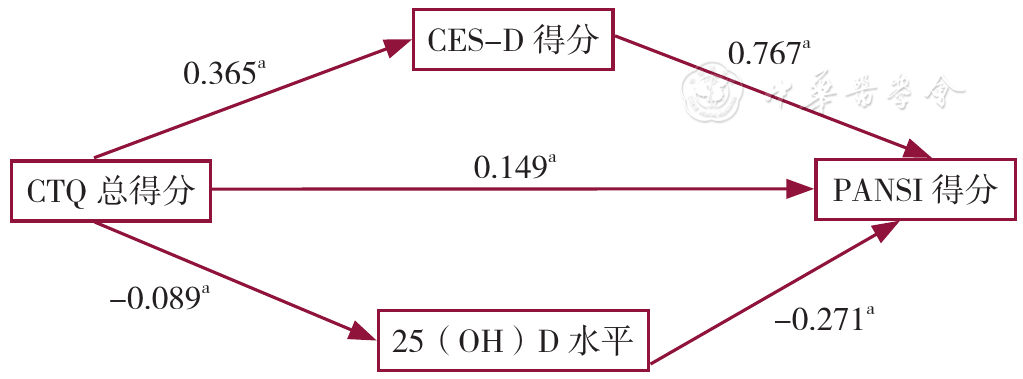
Figure 1 Mediating effects of CES-D scores and 25(OH)D level in the relationship between CTQ scores and PANSI scores in adolescent depressive disorder
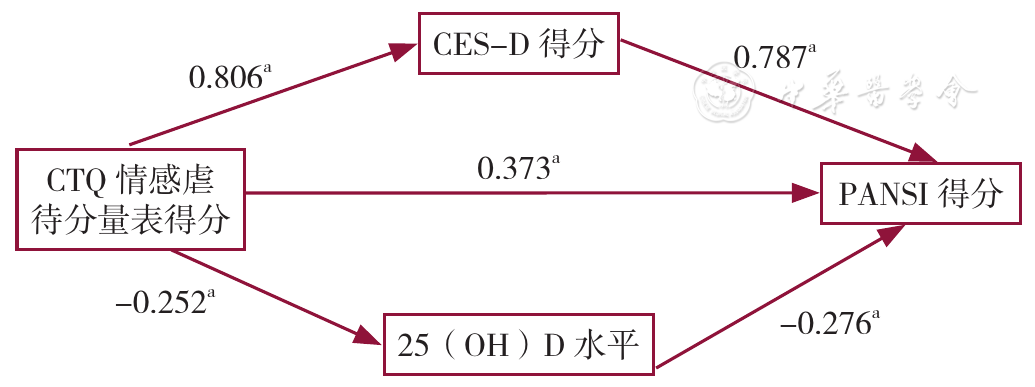
Figure 2 Mediating effects of CES-D scores and 25(OH)D level in the relationship between emotional abuse scores and PANSI scores in adolescent depressive disorder
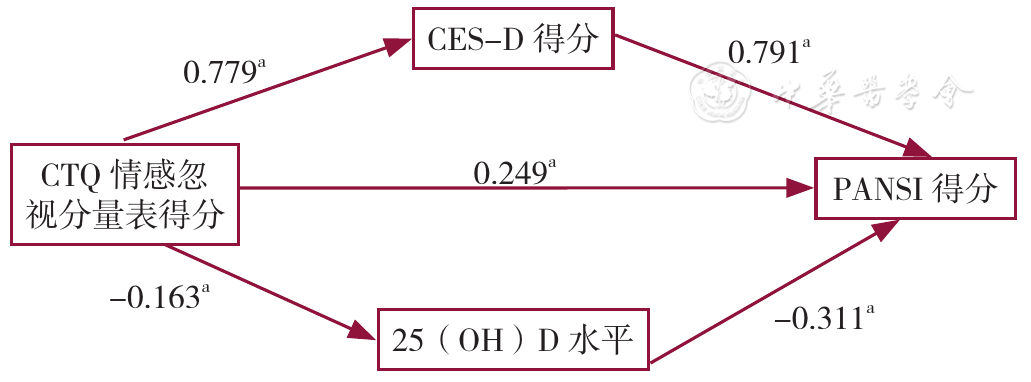
Figure 3 Mediating effects of CES-D scores and 25(OH)D level in the relationship between emotional neglect scores and PANSI scores in adolescent depressive disorder
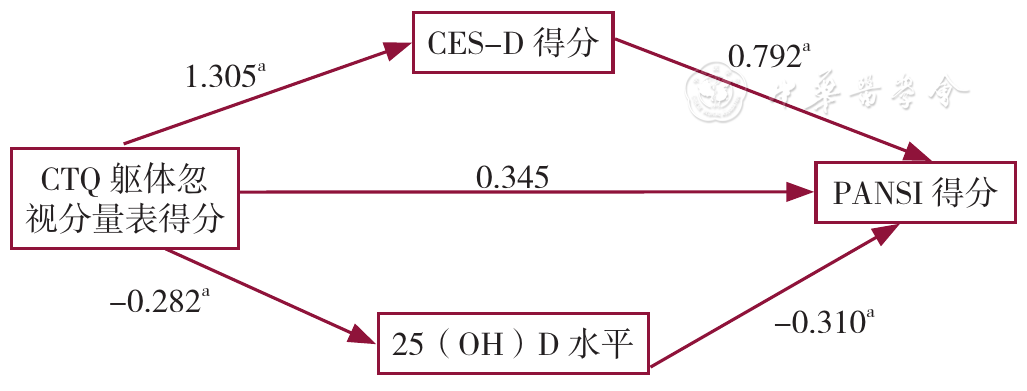
Figure 4 Mediating effects of CES-D scores and 25(OH)D level in the relationship between physical neglect scores and PANSI scores in adolescent depressive disorder
| 模型 | 项目 | 效应值 | 95%CI | 标准误 | 效应占比(%) |
|---|---|---|---|---|---|
| 模型1 | 总效应 | 0.453 | 0.318~0.588 | 0.068 | — |
| 直接效应 | 0.149 | 0.054~0.245 | 0.049 | 32.9 | |
| 总间接效应 | 0.304 | 0.183~0.429 | 0.063 | 67.1 | |
| CTQ总得分→CES-D得分→PANSI得分 | 0.280 | 0.161~0.407 | 0.063 | 61.8 | |
| CTQ总得分→25(OH)D水平→PANSI得分 | 0.024 | 0.003~0.054 | 0.013 | 5.3 | |
| 模型2 | 总效应 | 1.077 | 0.674~1.480 | 0.204 | — |
| 直接效应 | 0.373 | 0.105~0.640 | 0.136 | 34.6 | |
| 总间接效应 | 0.704 | 0.363~1.059 | 0.175 | 65.4 | |
| CTQ情感虐待分量表得分→CES-D得分→PANSI得分 | 0.634 | 0.295~0.987 | 0.176 | 58.9 | |
| CTQ情感虐待分量表得分→25(OH)D水平→PANSI得分 | 0.070 | 0.008~0.151 | 0.038 | 6.5 | |
| 模型3 | 总效应 | 0.916 | 0.565~1.266 | 0.178 | — |
| 直接效应 | 0.249 | 0.014~0.483 | 0.119 | 27.2 | |
| 总间接效应 | 0.667 | 0.355~0.995 | 0.165 | 72.8 | |
| CTQ情感忽视分量表得分→CES-D得分→PANSI得分 | 0.616 | 0.306~0.941 | 0.161 | 67.2 | |
| CTQ情感忽视分量表得分→25(OH)D水平→PANSI得分 | 0.051 | 0.003~0.120 | 0.031 | 5.6 | |
| 模型4 | 总效应 | 1.466 | 0.931~2.002 | 0.271 | — |
| 直接效应 | 0.345 | -0.022~0.713 | 0.186 | — | |
| 总间接效应 | 1.121 | 0.711~1.583 | 0.223 | 100.0 | |
| CTQ躯体忽视分量表得分→CES-D得分→PANSI得分 | 1.034 | 0.629~1.496 | 0.219 | 92.2 | |
| CTQ躯体忽视分量表得分→25(OH)D水平→PANSI得分 | 0.087 | 0.012~0.203 | 0.049 | 7.8 |
Table 5 Double mediating effects of CES-D scores and 25(OH)D levels in the relationship between CTQ scores and PANSI scores in adolescent depressive disorder
| 模型 | 项目 | 效应值 | 95%CI | 标准误 | 效应占比(%) |
|---|---|---|---|---|---|
| 模型1 | 总效应 | 0.453 | 0.318~0.588 | 0.068 | — |
| 直接效应 | 0.149 | 0.054~0.245 | 0.049 | 32.9 | |
| 总间接效应 | 0.304 | 0.183~0.429 | 0.063 | 67.1 | |
| CTQ总得分→CES-D得分→PANSI得分 | 0.280 | 0.161~0.407 | 0.063 | 61.8 | |
| CTQ总得分→25(OH)D水平→PANSI得分 | 0.024 | 0.003~0.054 | 0.013 | 5.3 | |
| 模型2 | 总效应 | 1.077 | 0.674~1.480 | 0.204 | — |
| 直接效应 | 0.373 | 0.105~0.640 | 0.136 | 34.6 | |
| 总间接效应 | 0.704 | 0.363~1.059 | 0.175 | 65.4 | |
| CTQ情感虐待分量表得分→CES-D得分→PANSI得分 | 0.634 | 0.295~0.987 | 0.176 | 58.9 | |
| CTQ情感虐待分量表得分→25(OH)D水平→PANSI得分 | 0.070 | 0.008~0.151 | 0.038 | 6.5 | |
| 模型3 | 总效应 | 0.916 | 0.565~1.266 | 0.178 | — |
| 直接效应 | 0.249 | 0.014~0.483 | 0.119 | 27.2 | |
| 总间接效应 | 0.667 | 0.355~0.995 | 0.165 | 72.8 | |
| CTQ情感忽视分量表得分→CES-D得分→PANSI得分 | 0.616 | 0.306~0.941 | 0.161 | 67.2 | |
| CTQ情感忽视分量表得分→25(OH)D水平→PANSI得分 | 0.051 | 0.003~0.120 | 0.031 | 5.6 | |
| 模型4 | 总效应 | 1.466 | 0.931~2.002 | 0.271 | — |
| 直接效应 | 0.345 | -0.022~0.713 | 0.186 | — | |
| 总间接效应 | 1.121 | 0.711~1.583 | 0.223 | 100.0 | |
| CTQ躯体忽视分量表得分→CES-D得分→PANSI得分 | 1.034 | 0.629~1.496 | 0.219 | 92.2 | |
| CTQ躯体忽视分量表得分→25(OH)D水平→PANSI得分 | 0.087 | 0.012~0.203 | 0.049 | 7.8 |
| 模型 | 项目 | 效应值 | 95%CI | 标准误 | 效应占比(%) |
|---|---|---|---|---|---|
| 模型1 | 总效应 | 0.423 | 0.242~0.604 | 0.091 | — |
| 直接效应 | 0.124 | -0.039~0.286 | 0.082 | — | |
| 总间接效应 | 0.299 | 0.144~0.511 | 0.094 | — | |
| CTQ总得分→CES-D得分→PANSI得分 | 0.298 | 0.136~0.512 | 0.097 | — | |
| CTQ总得分→25(OH)D水平→PANSI得分 | 0.002 | -0.022~0.032 | 0.013 | — | |
| 模型2 | 总效应 | 0.681 | 0.080~1.282 | 0.302 | — |
| 直接效应 | -0.182 | -0.655~0.291 | 0.238 | — | |
| 总间接效应 | 0.863 | 0.386~1.684 | 0.336 | — | |
| CTQ情感虐待分量表得分→CES-D得分→PANSI得分 | 0.857 | 0.372~1.691 | 0.340 | — | |
| CTQ情感虐待分量表得分→25(OH)D水平→PANSI得分 | 0.006 | -0.035~0.055 | 0.021 | — | |
| 模型3 | 总效应 | 0.550 | 0.273~0.826 | 0.139 | — |
| 直接效应 | 0.228 | 0.003~0.453 | 0.113 | 41.5 | |
| 总间接效应 | 0.322 | 0.109~0.659 | 0.141 | 58.5 | |
| CTQ情感忽视分量表得分→CES-D得分→PANSI得分 | 0.322 | 0.103~0.663 | 0.143 | 58.5 | |
| CTQ情感忽视分量表得分→25(OH)D水平→PANSI得分 | -0.001 | -0.043~0.045 | 0.021 | — | |
| 模型4 | 总效应 | 0.479 | 0.089~0.869 | 0.196 | — |
| 直接效应 | 0.274 | -0.010~0.559 | 0.143 | — | |
| 总间接效应 | 0.205 | -0.047~0.539 | 0.148 | — | |
| CTQ躯体忽视分量表得分→CES-D得分→PANSI得分 | 0.202 | -0.043~0.536 | 0.146 | — | |
| CTQ躯体忽视分量表得分→25(OH)D水平→PANSI得分 | 0.002 | -0.041~0.051 | 0.021 | — |
Table 6 Double mediating effects of CES-D scores and 25(OH)D levels in the relationship between CTQ scores and PANSI scores in control group
| 模型 | 项目 | 效应值 | 95%CI | 标准误 | 效应占比(%) |
|---|---|---|---|---|---|
| 模型1 | 总效应 | 0.423 | 0.242~0.604 | 0.091 | — |
| 直接效应 | 0.124 | -0.039~0.286 | 0.082 | — | |
| 总间接效应 | 0.299 | 0.144~0.511 | 0.094 | — | |
| CTQ总得分→CES-D得分→PANSI得分 | 0.298 | 0.136~0.512 | 0.097 | — | |
| CTQ总得分→25(OH)D水平→PANSI得分 | 0.002 | -0.022~0.032 | 0.013 | — | |
| 模型2 | 总效应 | 0.681 | 0.080~1.282 | 0.302 | — |
| 直接效应 | -0.182 | -0.655~0.291 | 0.238 | — | |
| 总间接效应 | 0.863 | 0.386~1.684 | 0.336 | — | |
| CTQ情感虐待分量表得分→CES-D得分→PANSI得分 | 0.857 | 0.372~1.691 | 0.340 | — | |
| CTQ情感虐待分量表得分→25(OH)D水平→PANSI得分 | 0.006 | -0.035~0.055 | 0.021 | — | |
| 模型3 | 总效应 | 0.550 | 0.273~0.826 | 0.139 | — |
| 直接效应 | 0.228 | 0.003~0.453 | 0.113 | 41.5 | |
| 总间接效应 | 0.322 | 0.109~0.659 | 0.141 | 58.5 | |
| CTQ情感忽视分量表得分→CES-D得分→PANSI得分 | 0.322 | 0.103~0.663 | 0.143 | 58.5 | |
| CTQ情感忽视分量表得分→25(OH)D水平→PANSI得分 | -0.001 | -0.043~0.045 | 0.021 | — | |
| 模型4 | 总效应 | 0.479 | 0.089~0.869 | 0.196 | — |
| 直接效应 | 0.274 | -0.010~0.559 | 0.143 | — | |
| 总间接效应 | 0.205 | -0.047~0.539 | 0.148 | — | |
| CTQ躯体忽视分量表得分→CES-D得分→PANSI得分 | 0.202 | -0.043~0.536 | 0.146 | — | |
| CTQ躯体忽视分量表得分→25(OH)D水平→PANSI得分 | 0.002 | -0.041~0.051 | 0.021 | — |
| [1] |
|
| [2] |
|
| [3] |
|
| [4] |
|
| [5] |
|
| [6] |
|
| [7] |
|
| [8] |
|
| [9] |
|
| [10] |
|
| [11] |
|
| [12] |
张敏. 中文版儿童期虐待问卷信度及效度评价[J]. 中国公共卫生,2011,27(5):669-670.
|
| [13] |
|
| [14] |
|
| [15] |
陈祉妍,杨小冬,李新影. 流调中心抑郁量表在我国青少年中的试用[J]. 中国临床心理学杂志,2009,17(4):443-445.
|
| [16] |
王学志,宫火良,康晓然,等. 青少年自杀意念量表中文版在高中生应用的信效度分析[J]. 中国健康心理学杂志,2011,19(8):964-966. DOI:10.13342/j.cnki.cjhp.2011.08.014.
|
| [17] |
赵娟娟,熊祖平,王昆,等. 青少年抑郁症患者自杀态度、意念及其与家庭环境的关系[J]. 中国儿童保健杂志,2024,32(3):334-338,343.
|
| [18] |
|
| [19] |
|
| [20] |
|
| [21] |
|
| [22] |
|
| [23] |
|
| [24] |
|
| [25] |
|
| [26] |
|
| [27] |
|
| [28] |
|
| [29] |
|
| [30] |
|
| [31] |
|
| [32] |
|
| [33] |
|
| [34] |
|
| [35] |
|
| [36] |
|
| [37] |
|
| [38] |
|
| [1] | YANG Caiyi, HU Xiaohai, ZHU Hongjun, XU Yifan. Therapeutic Effect of Chaigu Decoction Combined with Western Medicine on Hypertension with Liver Depression and Blood Deficiency Pattern and Its Serum Metabolomics Analysis [J]. Chinese General Practice, 2026, 29(31): 4589-4599. |
| [2] | ZHANG Ying, TANG Yijun, LIU Lidi, JIANG Lihua, JIA Yu, YANG Rong, YANG Ziyu, LIAO Xiaoyang. Management of Cardiovascular Metabolic Risks in Obese Children and Adolescents in China: Based on the 2024 Italian Society of Pediatric Endocrinology and Diabetes Position Paper on Cardiometabolic Risk in Children and Adolescents with Obesity [J]. Chinese General Practice, 2026, 29(27): 3879-3887. |
| [3] | WANG Rong, DI Yunzheng, XU Yaxin, XU Jun, YAO Ting, CHEN Yamei. Summary of the Best Evidence for Managing the Transition of Adolescent Inflammatory Bowel Disease Patients to Adult Medical Care [J]. Chinese General Practice, 2026, 29(25): 3704-3712. |
| [4] | ZHANG Boyu, XU Bo, LI Jianguo, YIN He, LUO Pengren, WANG Haojie, JIN Zhefeng, ZHU Liguo. Research on the Diagnostic Value of Rasterstereography for Angles Related to Adolescent Idiopathic Scoliosis [J]. Chinese General Practice, 2026, 29(24): 3434-3439. |
| [5] | XU Xiliang, LIU Mingfan, CHENG Guo, YANG Lihao. Study on the Relationship between Negative Attention Bias, Interpretation Bias and Depression in College Students [J]. Chinese General Practice, 2026, 29(24): 3486-3492. |
| [6] | Nanjing Drum Tower Hospital, the Affiliated Hospital of Nanjing University Medicine School, China Rehabilitation Science Institute, China Rehabilitation Research Center, Professional Committee on Integrative Nutrition Management, Jiangsu Integrative Medicine Research Society, Specialty Committee of Rehabilitation Engineering and Industry, China Association of Rehabilitation Medicine, Regenerative Repair and Anti-Aging Branch of Guangdong Association for the Development of Rehabilitation Medicine. Expert Consensus on Nutritional Rehabilitation Management of Adolescent Idiopathic Scoliosis [J]. Chinese General Practice, 2026, 29(24): 3393-3408. |
| [7] | Expert Group on Guidelines for the Assessment, Treatment, and Prevention of Childhood Obesity in China, Professional Committee on Obesity Control in Women and Children, China Maternal and Child Health Research Association. Guidelines for the Assessment, Treatment, and Prevention of Childhood Obesity in China (Second Edition) [J]. Chinese General Practice, 2026, 29(23): 3233-3252. |
| [8] | LI Feng, HU Changhao, LUO Xu. Progress in the Study of Influencing Factors and Intervention Strategies of Mental Health in Elderly Patients with Multiple Chronic Conditions [J]. Chinese General Practice, 2026, 29(20): 2816-2828. |
| [9] | WANG Rui, LUO Dan, YANG Cuicui, WENG Xinyi, WANG Yubing, XU Jingjing. Complex Network Analysis of Resilience in Adolescents with Type 1 Diabetes Mellitus Based on Multi-sourced Stigma [J]. Chinese General Practice, 2026, 29(16): 2264-2272. |
| [10] | YAN Beibei, XU Huaifu. Children's Type 1 Diabetes-specific Self-reported Outcomes Scales: Measurement Properties Evaluation Based on COSMIN Guidelines [J]. Chinese General Practice, 2026, 29(12): 1624-1632. |
| [11] | LIAO Qiuhon, TAO Hong, YANG Xiaohui, YUAN Yonggui, LIN Shanshan, XU Wei, LI Yuxiu, PEI Yu. Prevalence of Depression and the Influencing Factors in Patients with Type 2 Diabetes Mellitus: a National Multicenter Cross-sectional Study [J]. Chinese General Practice, 2026, 29(12): 1558-1565. |
| [12] | LI Li, XU Tianchao, DONG Xiaomei, HUANG Hongfei, CUI Gang, LI Dongdong, ZHANG Ou, FAN Lin, WANG Qi. The Effect of Kidney Tonifying and Brain Strengthening Acupuncture Combined with Sertraline in the Treatment of Elderly Depression: a Randomized Controlled Trial [J]. Chinese General Practice, 2026, 29(11): 1399-1404. |
| [13] | YU Xinyan, MA Zhong, CAO Fan, SU Peng, LIN Ying, ZHANG Haicheng. Predicting the Risk of Depression in Elderly Patients with Cardiovascular Metabolic Diseases Using Single-lead Wearable Electrocardiography at the Community Level [J]. Chinese General Practice, 2026, 29(10): 1300-1310. |
| [14] | JIANG Xuan, CHEN Yinhai, LU Yuanwei, ZHANG Jiali, LIN Congxuan, KE Xiong. Impact of Childhood Adverse Experiences on Health-related Quality of Life in Adulthood: a Mediating Role of the Number of Chronic Diseases [J]. Chinese General Practice, 2026, 29(07): 893-899. |
| [15] | LI Juexi, LI Liyuan, GUO Yuxuan, XIAO Xiaoqiang, TANG Peiqi, PU Ting, ZUO Haixi, YANG Ting, FAN Xiaoxia, ZHOU Bo. The Childhood Trauma and Adolescent Internet Addiction: the Chain Mediation of Depression Symptoms and Academic Burnout and the Moderating Role of Gender [J]. Chinese General Practice, 2026, 29(07): 900-906. |
| Viewed | ||||||
|
Full text |
|
|||||
|
Abstract |
|
|||||
