
Chinese General Practice ›› 2026, Vol. 29 ›› Issue (26): 3838-3843.DOI: 10.12114/j.issn.1007-9572.2025.0460
• Article·Epidemiological Study • Previous Articles Next Articles
Received:2025-10-13
Revised:2026-02-25
Published:2026-09-15
Online:2026-08-11
Contact:
JIANG Shuai
通讯作者:
蒋帅
作者简介:作者贡献:
王言研负责文章构思与设计、数据分析和论文撰写;董晓雪负责数据处理、图表绘制及文章修订;孔今晨、陈昱彤、翟宇杰负责文献资料收集、数据整理、统计学处理;蒋帅负责文章质量控制与审查,并提供基金资助。
基金资助:CLC Number:
Add to citation manager EndNote|Ris|BibTeX
URL: https://www.chinagp.net/EN/10.12114/j.issn.1007-9572.2025.0460
| 城乡别 | 子宫颈癌 | 子宫体癌 | 卵巢癌 | ||||||
|---|---|---|---|---|---|---|---|---|---|
| 年份(年) | APC(%) | 95%CI(%) | 年份(年) | APC(%) | 95%CI(%) | 年份(年) | APC(%) | 95%CI(%) | |
| 城市 | 2004—2012 | 1.15 | -6.11~4.11 | 2004—2013 | -2.81 | -4.48~4.75 | 2004—2021 | 1.52a | 0.97~2.32 |
| 2012—2015 | 21.89a | 11.61~28.32 | 2013—2016 | -14.12a | -18.45~-6.33 | ||||
| 2015—2021 | -3.42a | -5.85~-1.76 | 2016—2021 | 7.10a | 3.17~15.62 | ||||
| 农村 | 2004—2012 | 0.02 | -5.27~2.95 | 2004—2012 | 0.68 | -2.11~5.41 | 2004—2011 | 5.05 | -0.45~7.35 |
| 2012—2015 | 28.02a | 16.91~35.09 | 2012—2015 | -23.68 | -27.85~13.89 | 2011—2017 | 11.14a | 9.74~14.80 | |
| 2015—2021 | -0.54 | -2.61~1.08 | 2015—2021 | 4.23a | 1.07~9.71 | 2017—2021 | 6.63a | 4.12~8.00 | |
Table 1 Joinpoint regression model analysis results of AADR for various malignant tumors of the female reproductive system in urban and rural areas
| 城乡别 | 子宫颈癌 | 子宫体癌 | 卵巢癌 | ||||||
|---|---|---|---|---|---|---|---|---|---|
| 年份(年) | APC(%) | 95%CI(%) | 年份(年) | APC(%) | 95%CI(%) | 年份(年) | APC(%) | 95%CI(%) | |
| 城市 | 2004—2012 | 1.15 | -6.11~4.11 | 2004—2013 | -2.81 | -4.48~4.75 | 2004—2021 | 1.52a | 0.97~2.32 |
| 2012—2015 | 21.89a | 11.61~28.32 | 2013—2016 | -14.12a | -18.45~-6.33 | ||||
| 2015—2021 | -3.42a | -5.85~-1.76 | 2016—2021 | 7.10a | 3.17~15.62 | ||||
| 农村 | 2004—2012 | 0.02 | -5.27~2.95 | 2004—2012 | 0.68 | -2.11~5.41 | 2004—2011 | 5.05 | -0.45~7.35 |
| 2012—2015 | 28.02a | 16.91~35.09 | 2012—2015 | -23.68 | -27.85~13.89 | 2011—2017 | 11.14a | 9.74~14.80 | |
| 2015—2021 | -0.54 | -2.61~1.08 | 2015—2021 | 4.23a | 1.07~9.71 | 2017—2021 | 6.63a | 4.12~8.00 | |
| 地区别 | 子宫颈癌 | 子宫体癌 | 卵巢癌 | ||||||
|---|---|---|---|---|---|---|---|---|---|
| 年份(年) | APC(%) | 95%CI(%) | 年份(年) | APC(%) | 95%CI(%) | 年份(年) | APC(%) | 95%CI(%) | |
| 东部地区 | 2004—2012 | 3.13 | -0.42~5.33 | 2004—2012 | -0.83 | -3.55~9.95 | 2004—2021 | 4.34a | 3.93~4.92 |
| 2012—2015 | 25.15a | 18.43~30.26 | 2012—2015 | -14.69a | -19.03~-5.76 | ||||
| 2015—2021 | -1.25 | -3.27~0.44 | 2015—2021 | 2.80 | -0.11~10.26 | ||||
| 西部地区 | 2004—2012 | -1.13 | -9.08~3.01 | 2004—2013 | -1.33 | -3.36~3.38 | 2004—2006 | -17.62 | -28.08~7.29 |
| 2012—2015 | 35.09a | 18.82~46.95 | 2013—2016 | -22.47a | -27.64~-12.60 | 2006—2021 | 6.97 | -2.20~13.48 | |
| 2015—2021 | -3.48a | -6.83~-0.88 | 2016—2021 | 9.60a | 4.05~21.58 | ||||
| 中部地区 | 2004—2012 | -0.10 | -4.91~2.73 | 2004—2013 | -3.32 | -5.06~0.05 | 2004—2013 | 1.35 | -13.98~21.88 |
| 2012—2016 | 15.26a | 10.03~21.35 | 2013—2016 | -23.87a | -28.24~-15.88 | 2013—2021 | 6.45 | -2.77~16.39 | |
| 2016—2021 | -1.70 | -4.27~0.44 | 2016—2021 | 10.12a | 5.44~19.05 | ||||
Table 2 Joinpoint regression model analysis results of AADR for various malignant tumors of the female reproductive system by region
| 地区别 | 子宫颈癌 | 子宫体癌 | 卵巢癌 | ||||||
|---|---|---|---|---|---|---|---|---|---|
| 年份(年) | APC(%) | 95%CI(%) | 年份(年) | APC(%) | 95%CI(%) | 年份(年) | APC(%) | 95%CI(%) | |
| 东部地区 | 2004—2012 | 3.13 | -0.42~5.33 | 2004—2012 | -0.83 | -3.55~9.95 | 2004—2021 | 4.34a | 3.93~4.92 |
| 2012—2015 | 25.15a | 18.43~30.26 | 2012—2015 | -14.69a | -19.03~-5.76 | ||||
| 2015—2021 | -1.25 | -3.27~0.44 | 2015—2021 | 2.80 | -0.11~10.26 | ||||
| 西部地区 | 2004—2012 | -1.13 | -9.08~3.01 | 2004—2013 | -1.33 | -3.36~3.38 | 2004—2006 | -17.62 | -28.08~7.29 |
| 2012—2015 | 35.09a | 18.82~46.95 | 2013—2016 | -22.47a | -27.64~-12.60 | 2006—2021 | 6.97 | -2.20~13.48 | |
| 2015—2021 | -3.48a | -6.83~-0.88 | 2016—2021 | 9.60a | 4.05~21.58 | ||||
| 中部地区 | 2004—2012 | -0.10 | -4.91~2.73 | 2004—2013 | -3.32 | -5.06~0.05 | 2004—2013 | 1.35 | -13.98~21.88 |
| 2012—2016 | 15.26a | 10.03~21.35 | 2013—2016 | -23.87a | -28.24~-15.88 | 2013—2021 | 6.45 | -2.77~16.39 | |
| 2016—2021 | -1.70 | -4.27~0.44 | 2016—2021 | 10.12a | 5.44~19.05 | ||||
| 年龄组 | 年份(年) | APC(%) | 95%CI(%) | AAPC(%) |
|---|---|---|---|---|
| 15~<30岁 | 2004—2021 | -1.88a | -3.23~-0.52 | -1.88a |
| 30~<45岁 | 2004—2016 | -1.31a | -2.11~-0.50 | -3.06a |
| 2016—2021 | -7.34a | -10.5~-4.06 | ||
| 45~<60岁 | 2004—2013 | -1.86a | -3.29~-0.42 | -0.71 |
| 2013—2021 | 0.60 | -0.86~2.08 | ||
| 60~<75岁 | 2004—2006 | -10.84 | -28.39~11.01 | -0.75 |
| 2006—2021 | 0.67 | -0.17~1.52 | ||
| ≥75岁 | 2004—2014 | -2.99a | -4.71~-1.24 | -0.97 |
| 2014—2021 | 1.91 | -0.61~4.50 |
Table 3 Joinpoint regression model analysis on the AADR of total malignant tumors of the female reproductive system in different age groups
| 年龄组 | 年份(年) | APC(%) | 95%CI(%) | AAPC(%) |
|---|---|---|---|---|
| 15~<30岁 | 2004—2021 | -1.88a | -3.23~-0.52 | -1.88a |
| 30~<45岁 | 2004—2016 | -1.31a | -2.11~-0.50 | -3.06a |
| 2016—2021 | -7.34a | -10.5~-4.06 | ||
| 45~<60岁 | 2004—2013 | -1.86a | -3.29~-0.42 | -0.71 |
| 2013—2021 | 0.60 | -0.86~2.08 | ||
| 60~<75岁 | 2004—2006 | -10.84 | -28.39~11.01 | -0.75 |
| 2006—2021 | 0.67 | -0.17~1.52 | ||
| ≥75岁 | 2004—2014 | -2.99a | -4.71~-1.24 | -0.97 |
| 2014—2021 | 1.91 | -0.61~4.50 |
| 年龄组 | 子宫颈癌 | 子宫体癌 | 卵巢癌 | |||||||||
|---|---|---|---|---|---|---|---|---|---|---|---|---|
| 年份(年) | APC(%) | 95%CI(%) | AAPC(%) | 年份(年) | APC(%) | 95%CI(%) | AAPC(%) | 年份(年) | APC(%) | 95%CI(%) | AAPC(%) | |
| 15~<30岁 | 2004—2021 | 1.01 | -1.73~3.83 | 1.01 | 2004—2021 | -9.85a | -12.76~-6.85 | -9.85a | 2004—2021 | 4.51a | 0.34~8.86 | 4.51a |
| 30~<45岁 | 2004—2017 | 2.41a | 0.50~4.35 | -0.34 | 2004—2010 | -3.26 | -9.96~3.93 | -9.18a | 2004—2016 | 1.21 | -0.26~2.69 | -0.57 |
| 2017—2021 | -9.78 | -20.51~2.41 | 2010—2021 | -12.52a | -15.63~-9.29 | 2016—2021 | -5.01 | -10.73~1.09 | ||||
| 45~<60岁 | 2004—2021 | 3.41a | 2.06~4.78 | 3.41a | 2004—2021 | -7.56a | -9.13~-5.97 | -7.56a | 2004—2015 | -0.04 | -1.55~1.50 | 1.50a |
| 2015—2021 | 4.07a | 0.97~7.26 | ||||||||||
| 60~<75岁 | 2004—2021 | 3.92a | 1.95~5.93 | 3.92a | 2004—2021 | -6.03a | -7.13~-4.92 | -6.03a | 2004—2021 | 2.74a | 2.01~3.46 | 2.74a |
| ≥75岁 | 2004—2021 | -3.69 | -8.73~1.63 | 2.11a | 2004—2021 | -6.39a | -8.26~-4.48 | -6.39a | 2004—2021 | 1.11a | 0.12~2.10 | 1.11a |
| 2011—2021 | 6.38a | 3.53~9.30 | ||||||||||
Table 4 Joinpoint regression model analysis on AADR trends of malignant tumors of the female reproductive system in different age groups from 2004 to 2021
| 年龄组 | 子宫颈癌 | 子宫体癌 | 卵巢癌 | |||||||||
|---|---|---|---|---|---|---|---|---|---|---|---|---|
| 年份(年) | APC(%) | 95%CI(%) | AAPC(%) | 年份(年) | APC(%) | 95%CI(%) | AAPC(%) | 年份(年) | APC(%) | 95%CI(%) | AAPC(%) | |
| 15~<30岁 | 2004—2021 | 1.01 | -1.73~3.83 | 1.01 | 2004—2021 | -9.85a | -12.76~-6.85 | -9.85a | 2004—2021 | 4.51a | 0.34~8.86 | 4.51a |
| 30~<45岁 | 2004—2017 | 2.41a | 0.50~4.35 | -0.34 | 2004—2010 | -3.26 | -9.96~3.93 | -9.18a | 2004—2016 | 1.21 | -0.26~2.69 | -0.57 |
| 2017—2021 | -9.78 | -20.51~2.41 | 2010—2021 | -12.52a | -15.63~-9.29 | 2016—2021 | -5.01 | -10.73~1.09 | ||||
| 45~<60岁 | 2004—2021 | 3.41a | 2.06~4.78 | 3.41a | 2004—2021 | -7.56a | -9.13~-5.97 | -7.56a | 2004—2015 | -0.04 | -1.55~1.50 | 1.50a |
| 2015—2021 | 4.07a | 0.97~7.26 | ||||||||||
| 60~<75岁 | 2004—2021 | 3.92a | 1.95~5.93 | 3.92a | 2004—2021 | -6.03a | -7.13~-4.92 | -6.03a | 2004—2021 | 2.74a | 2.01~3.46 | 2.74a |
| ≥75岁 | 2004—2021 | -3.69 | -8.73~1.63 | 2.11a | 2004—2021 | -6.39a | -8.26~-4.48 | -6.39a | 2004—2021 | 1.11a | 0.12~2.10 | 1.11a |
| 2011—2021 | 6.38a | 3.53~9.30 | ||||||||||
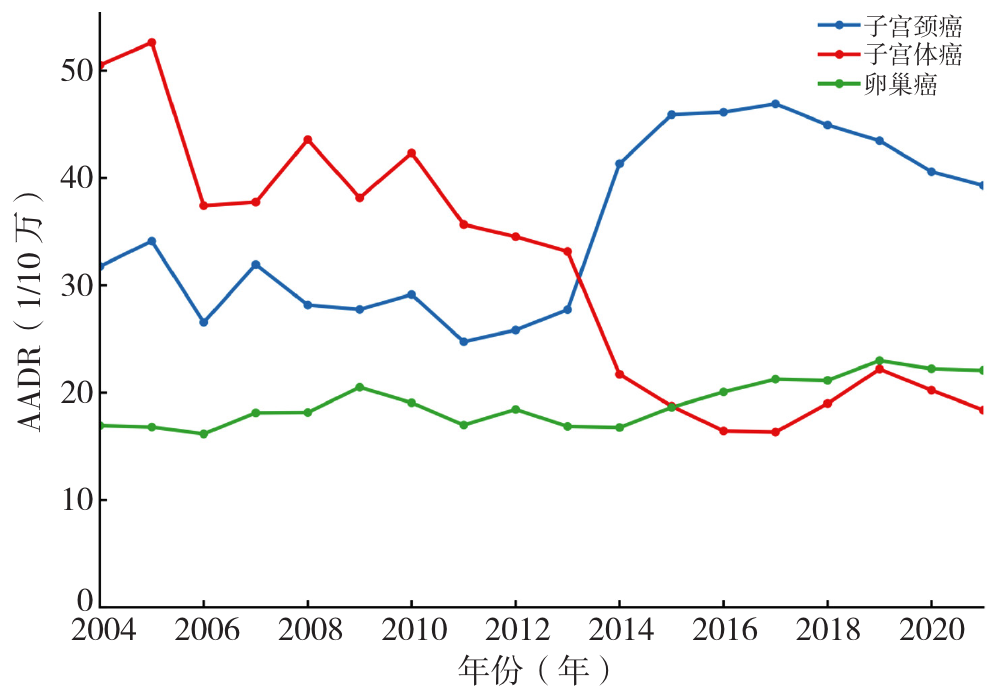
Figure 1 Trends in age-adjusted mortality rates of malignant tumors of the female reproductive system from 2004 to 2021
| [1] |
|
| [2] |
|
| [3] |
中国抗癌协会妇科肿瘤专业委员会. 子宫内膜癌诊断与治疗指南(2021年版)[J]. 中国癌症杂志, 2021, 31(6): 501-512.
|
| [4] |
|
| [5] |
王黎君. 完善中国死因监测系统 提供基本公共卫生数据[J]. 环境卫生学杂志, 2023, 13(8): 605-607.
|
| [6] |
张瑜瑜, 龚世俊, 杨仙湖, 等. 2013—2021年中国40岁及以上居民恶性肿瘤死亡趋势分析[J]. 中华肿瘤防治杂志, 2024, 31(22): 1347-1353. DOI: 10.16073/j.cnki.cjcpt.2024.22.01.
|
| [7] |
|
| [8] |
方燕梅, 王寅欢, 熊丹, 等. 中国女性乳腺癌2013—2021年死亡变化趋势[J]. 重庆医学, 2024, 53(15): 2343-2348.
|
| [9] |
王雪威, 王宝华, 艾飞玲, 等. 我国两省死因监测数据质量评价及分析[J]. 医学与社会, 2022, 35(8): 9-14.
|
| [10] |
孙畅,
|
| [11] |
韩笑. 基于不同年龄组高危型HPV分型及宫颈病变特征性分析[D]. 锦州: 锦州医科大学, 2025.
|
| [12] |
陆文雯, 陈静英, 陶瑞珏, 等. 2021年浙江省肿瘤登记地区子宫体癌流行现状及2000—2021年趋势分析[J]. 中国肿瘤, 2025, 34(12): 972-978. DOI: 10.11735/j.issn.1004-0242.2025.12.A009.
|
| [13] |
|
| [14] |
周薇, 张志将, 王丽君, 等. 中国子宫颈癌1987—2014年死亡趋势的Joinpoint回归分析[J]. 中国癌症杂志, 2017, 27(8): 634-640.
|
| [15] |
罗凌霄, 丛青. 子宫颈癌初筛方法及选择[J]. 实用妇产科杂志, 2025, 41(7): 529-532.
|
| [16] |
陈香梅, 刘太锋, 姚盛慧. TC方案联合贝伐珠单抗治疗晚期卵巢癌的效果及安全性[J]. 肿瘤研究与临床, 2024, 36(8): 610-614. DOI: 10.3760/cma.j.cn115355-20231024-00159.
|
| [17] |
李克敏, 李乔, 高国兰, 等. 老年女性子宫颈癌筛查中国专家共识[J]. 现代肿瘤医学, 2024, 32(13): 2313-2317.
|
| [18] |
姜丹凤, 朱孟秀, 赵清娟, 等. 中国女性生殖系统肿瘤发病率和死亡率分析[J]. 现代肿瘤医学, 2023, 31(23): 4426-4431.
|
| [19] |
李嘉怡, 刘沁娴, 宁祖乐, 等.1990—2021年中国女性卵巢癌疾病负担分析[J].首都公共卫生, 2025, 19(6): 339-343.
|
| [20] |
倪丽, 王莹莹, 朱晨辰, 等. 卵巢癌高风险患者行预防性手术105例临床资料分析[J]. 中国实用妇科与产科杂志, 2025, 41(7): 738-741. DOI: 10.19538/j.fk2025070115.
|
| [1] | ZHANG Shifei, GU Zhie, LYU Ya, YU Hailong. Mediating Effect of Fear of Disease Progression between Cancer Information Overload and Participation in Treatment Decision-making in Young and Middle-aged Cervical Cancer Patients [J]. Chinese General Practice, 2026, 29(23): 3307-3314. |
| [2] | QIU Yanli, GAO Yongyin, BIAN Xueyan, WANG Xue, LI Yue. The Predictive Value of Estimated Pulse Wave Velocity for All-cause and Cardiovascular-related Mortality in Cancer Patients [J]. Chinese General Practice, 2026, 29(14): 1890-1897. |
| [3] | SHANG Zhonghua, JIANG Zhiyue, HUANG Zhaohui, YANG Xing, LIU Haiyan, ZHANG Li. Trends in Cervical Cancer Burden in China from 1990 to 2021 and Prediction for 2022 to 2035 [J]. Chinese General Practice, 2025, 28(26): 3314-3320. |
| [4] | ZHANG Zhidong, JIN Hua, HU Jihong, JIANG Lu, WANG Li, LONG Kaichong, ZHANG Ronghua. Analysis and Prediction of the Incidence and Mortality Trends of Hypertensive Nephropathy in China from 1990 to 2021 [J]. Chinese General Practice, 2025, 28(18): 2262-2269. |
| [5] | FANG Liangmei, MIAO Ruifen, WANG Rong, QIU Beibei, HONG Xin, WANG Lina. Analysis of Changing Trends in Disease Burden of Multidrug-resistant Tuberculosis in China, 1992-2021 [J]. Chinese General Practice, 2025, 28(17): 2163-2171. |
| [6] | YUAN Xiaorui, TAN Yanlin, FU Chun. Construction of the Predictive Model for Lymph Node Metastasis in Patients with Epithelial Ovarian Cancer: Based on 18F-FDG PET/CT Radiomics Technology [J]. Chinese General Practice, 2025, 28(12): 1465-1472. |
| [7] | SHU Ting, LAN Zhipeng, WU Xia, LUO Yingjuan, YANG Liu. Study on the Infection and Related Factors of High-risk HPV in Cervical Cancer Screening Women: Based on 450 000 Participants in Chengdu [J]. Chinese General Practice, 2025, 28(02): 213-219. |
| [8] | QIAO Hui, WEI Yan, LIU Yu, BAI Rui, YANG Ping. Comparative Analysis of Cervical Cancer Screening Results from 2019 to 2021 in Shihezi City, Xinjiang Uyghur Autonomous Region [J]. Chinese General Practice, 2024, 27(23): 2897-2903. |
| [9] | MIAO Lipeng, REN Kehao, LI Mengdie, LYU Juncheng. Trend Analysis and Prediction of Cardiovascular Disease Mortality in China from 2009 to 2021 [J]. Chinese General Practice, 2024, 27(18): 2260-2264. |
| [10] | HUANG Gang, CAO Guiying, LIU Min. Current Situation and Trends in the Disease Burden of Dental Caries in China, 1990-2019 [J]. Chinese General Practice, 2024, 27(14): 1735-1741. |
| [11] | CHEN Dan, WANG Yawei, HUANG Fang, XU Yifan, ZHANG Yiying, SHAO Yueqin. Epidemic Trend Analysis of Colorectal Cancer in Jiading District, Shanghai from 2003 to 2019 [J]. Chinese General Practice, 2024, 27(10): 1261-1266. |
| [12] | LI Ziyue, FANG Jiawen, LIN Kaicheng. Analysis and Prediction of the Disease Burden of Type 2 Diabetes Attributable to High Body Mass Index in China from 1990 to 2019 [J]. Chinese General Practice, 2024, 27(09): 1126-1133. |
| [13] | HE Yufu, TONG Wenying, WANG Fang, LI Lixia, HE Junbing, SHAO Yiming. Effects of Pre-hospital Metformin Use on Clinical Outcomes in Patients with Diabetes and Sepsis [J]. Chinese General Practice, 2024, 27(09): 1034-1041. |
| [14] | DUAN Zhaohui, ZHANG Min, XU Jieru, XIONG Wenjing, CHEN Lei, ZHAO Xiangling, ZHANG Yiyun, RANG Weiqing. Past (2000-2019) and Future (2020-2024) Trends of Brain Cancer Mortality in China [J]. Chinese General Practice, 2023, 26(06): 734-741. |
| [15] | WANG Hongxin, FAN Wenlong, YANG Xiaoyu, CHEN Dongyu, HUANG Qiao, PAN Suyue, WANG Pu, HU Min, HE Yuqing. Protein-energy Malnutrition Incidence in China: Trend in 1990-2019 and Future Trend in 2020-2029 [J]. Chinese General Practice, 2023, 26(05): 591-597. |
| Viewed | ||||||
|
Full text |
|
|||||
|
Abstract |
|
|||||
