
中国全科医学 ›› 2026, Vol. 29 ›› Issue (05): 612-622.DOI: 10.12114/j.issn.1007-9572.2024.0327
罗秀1, 麻钊丽1, 黄梦宇1, 任茜2,*( )
)
收稿日期:2024-07-01
修回日期:2024-10-10
出版日期:2026-02-15
发布日期:2026-01-05
通讯作者:
任茜
罗秀负责文章的构思与设计,制定文献检索策略、资料整理和撰写论文初稿,并对文章整体负责;麻钊丽、黄梦宇负责制定文献检索策略、资料的收集和整理;任茜提出研究方向,负责论文初稿的修改与审校,并对文章整体负责。
基金资助:
LUO Xiu1, MA Zhaoli1, HUANG Mengyu1, REN Qian2,*()
Received:2024-07-01
Revised:2024-10-10
Published:2026-02-15
Online:2026-01-05
Contact:
REN Qian
摘要: 背景 许多观察性研究发现肠道微生物群与代谢综合征(MetS)及其组成部分存在相关性,但两者之间的因果关系尚不明确。 目的 本研究旨在探讨肠道微生物群与MetS及其组成部分之间的双向因果关系。 方法 从MiBioGen获得肠道微生物群相关的单核苷酸多态性,在英国生物样本库、Complex Trait Genetics(CTG)和其他联盟研究中获得了MetS及其组成部分的汇总统计数据,采用双向两样本孟德尔随机化分析,评估两者的因果关系。除此之外,通过一系列敏感性分析验证孟德尔随机化分析结果的稳健性。为了获得更严格的因果关系解释,使用Bonferroni校正检验肠道菌群和MetS之间因果关系的强度。 结果 逆方差加权估计结果表明,双歧杆菌(Bifidobacteriaceae)(OR=0.96,95%CI=0.93~0.98,P=1.49×10⁻³)与MetS有明显的负向因果关系。部分肠道菌群与腰围之间存在明显的正向因果关系,如酶莱纳菌纲(class.Melainabacteria)(OR=1.02,95%CI=1.01~1.03,P=1.90×10⁻³)、胃厌氧杆菌目(order.Gastranaerophilales)(OR=1.02,95%CI=1.01~1.03,P=1.61×10⁻³)、NB1n目(order.NB1n)(OR=1.02,95%CI=1.01~1.03,P=2.00×10⁻³)和霍氏真杆菌群(genus..Eubacteriumhalliigroup)(OR=1.03,95%CI=1.01~1.04,P=6.97×10⁻⁴)等,但是反向孟德尔随机化分析不支持两者之间的因果关系。敏感性分析表明不存在异质性或水平多效性。 结论 这项双向孟德尔随机化研究提供了肠道微生物群与MetS及其组成部分有明显的因果关系证据,但是不支持反向因果关系。这个发现为MetS的防治提供了新的思路。未来仍需要通过进一步的随机对照试验来阐明益生菌等微生物制剂与MetS的关系。
中图分类号:
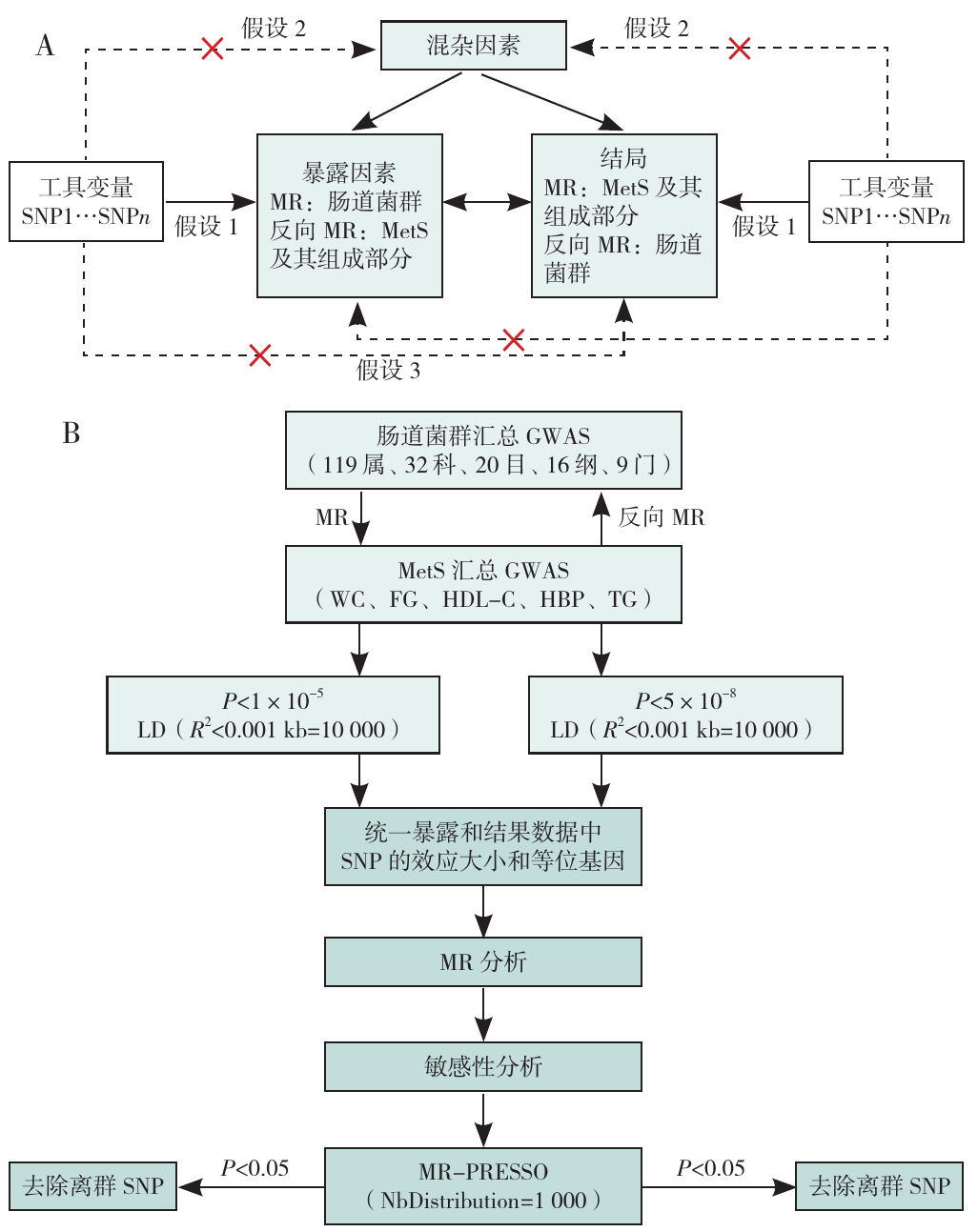
图1 MR分析流程注:A为MR的3种假设,B为本研究的整个工作流程;SNP=单核苷酸多态性,MR=孟德尔随机化,MetS=代谢综合征,GWAS=全基金组关联研究,WC=腰围,FG=空腹血糖,HDL-C=高密度脂蛋白胆固醇,HBP=高血压,TG=三酰甘油,LD=连锁不平衡。
Figure 1 The workflow of MR
| 暴露因素 | 结局指标 | 方法 | SNP(个) | OR(95%CI) | P值 | Q_pval | Egger_intercept | p-Egger_intercept |
|---|---|---|---|---|---|---|---|---|
| 双歧杆菌目 | MetS | MR Egger | 8 | 0.89(0.79~1.01) | 0.11 | |||
| IVW | 8 | 0.96(0.93~0.98) | 1.49×10⁻³ | 0.92 | 4.70×10⁻³ | 0.28 | ||
| WME | 8 | 0.96(0.92~0.99) | 0.01 | |||||
| SM | 8 | 0.96(0.91~1.01) | 0.14 | |||||
| WM | 8 | 0.96(0.91~1.01) | 0.13 | |||||
| 双歧杆菌科 | MetS | MR Egger | 8 | 0.89(0.79~1.01) | 0.11 | |||
| IVW | 8 | 0.96(0.93~0.98) | 1.49×10⁻³ | 0.92 | 4.70×10⁻³ | 0.28 | ||
| WME | 8 | 0.96(0.92~0.99) | 0.01 | |||||
| SM | 8 | 0.96(0.91~1.01) | 0.14 | |||||
| WM | 8 | 0.96(0.91~1.01) | 0.13 | |||||
| 梅莱纳菌纲 | WC | MR Egger | 10 | 1.02(0.98~1.05) | 0.38 | |||
| IVW | 10 | 1.02(1.01~1.03) | 1.90×10⁻³ | 0.81 | 3.81×10⁻⁴ | 0.85 | ||
| WME | 10 | 1.02(1.00~1.04) | 0.02 | |||||
| SM | 10 | 1.01(0.99~1.04) | 0.36 | |||||
| WM | 10 | 1.01(0.99~1.04) | 0.38 | |||||
| 胃厌氧杆菌目 | WC | MR Egger | 9 | 1.01(0.98~1.05) | 0.53 | |||
| IVW | 9 | 1.02(1.01~1.03) | 1.61×10⁻³ | 0.88 | 1.08×10⁻³ | 0.63 | ||
| WME | 9 | 1.02(1.00~1.04) | 0.02 | |||||
| SM | 9 | 1.02(0.99~1.04) | 0.18 | |||||
| WM | 9 | 1.01(0.99~1.04) | 0.28 | |||||
| NB1n目 | WC | MR Egger | 16 | 1.01(0.96~1.07) | 0.62 | |||
| IVW | 16 | 1.02(1.01~1.03) | 2.00×10⁻³ | 0.42 | -6.02×10⁻⁴ | 0.87 | ||
| WME | 16 | 1.02(1.01~1.03) | 0.01 | |||||
| SM | 16 | 1.02(1.00~1.04) | 0.06 | |||||
| WM | 16 | 1.02(1.00~1.04) | 0.08 | |||||
| 霍氏真杆菌群 | WC | MR Egger | 15 | 1.03(0.99~1.06) | 0.13 | |||
| IVW | 15 | 1.03(1.01~1.04) | 6.97×10⁻⁴ | 0.43 | -7.35×10⁻⁵ | 0.96 | ||
| WME | 15 | 1.03(1.01~1.05) | 0.01 | |||||
| SM | 15 | 1.04(1.00~1.08) | 0.07 | |||||
| WM | 15 | 1.04(1.01~1.07) | 0.03 |
表1 肠道微生物群对MetS因果效应的MR估计值
Table 1 MR estimates for the causal effects of gut microbiota on metabolic syndrome
| 暴露因素 | 结局指标 | 方法 | SNP(个) | OR(95%CI) | P值 | Q_pval | Egger_intercept | p-Egger_intercept |
|---|---|---|---|---|---|---|---|---|
| 双歧杆菌目 | MetS | MR Egger | 8 | 0.89(0.79~1.01) | 0.11 | |||
| IVW | 8 | 0.96(0.93~0.98) | 1.49×10⁻³ | 0.92 | 4.70×10⁻³ | 0.28 | ||
| WME | 8 | 0.96(0.92~0.99) | 0.01 | |||||
| SM | 8 | 0.96(0.91~1.01) | 0.14 | |||||
| WM | 8 | 0.96(0.91~1.01) | 0.13 | |||||
| 双歧杆菌科 | MetS | MR Egger | 8 | 0.89(0.79~1.01) | 0.11 | |||
| IVW | 8 | 0.96(0.93~0.98) | 1.49×10⁻³ | 0.92 | 4.70×10⁻³ | 0.28 | ||
| WME | 8 | 0.96(0.92~0.99) | 0.01 | |||||
| SM | 8 | 0.96(0.91~1.01) | 0.14 | |||||
| WM | 8 | 0.96(0.91~1.01) | 0.13 | |||||
| 梅莱纳菌纲 | WC | MR Egger | 10 | 1.02(0.98~1.05) | 0.38 | |||
| IVW | 10 | 1.02(1.01~1.03) | 1.90×10⁻³ | 0.81 | 3.81×10⁻⁴ | 0.85 | ||
| WME | 10 | 1.02(1.00~1.04) | 0.02 | |||||
| SM | 10 | 1.01(0.99~1.04) | 0.36 | |||||
| WM | 10 | 1.01(0.99~1.04) | 0.38 | |||||
| 胃厌氧杆菌目 | WC | MR Egger | 9 | 1.01(0.98~1.05) | 0.53 | |||
| IVW | 9 | 1.02(1.01~1.03) | 1.61×10⁻³ | 0.88 | 1.08×10⁻³ | 0.63 | ||
| WME | 9 | 1.02(1.00~1.04) | 0.02 | |||||
| SM | 9 | 1.02(0.99~1.04) | 0.18 | |||||
| WM | 9 | 1.01(0.99~1.04) | 0.28 | |||||
| NB1n目 | WC | MR Egger | 16 | 1.01(0.96~1.07) | 0.62 | |||
| IVW | 16 | 1.02(1.01~1.03) | 2.00×10⁻³ | 0.42 | -6.02×10⁻⁴ | 0.87 | ||
| WME | 16 | 1.02(1.01~1.03) | 0.01 | |||||
| SM | 16 | 1.02(1.00~1.04) | 0.06 | |||||
| WM | 16 | 1.02(1.00~1.04) | 0.08 | |||||
| 霍氏真杆菌群 | WC | MR Egger | 15 | 1.03(0.99~1.06) | 0.13 | |||
| IVW | 15 | 1.03(1.01~1.04) | 6.97×10⁻⁴ | 0.43 | -7.35×10⁻⁵ | 0.96 | ||
| WME | 15 | 1.03(1.01~1.05) | 0.01 | |||||
| SM | 15 | 1.04(1.00~1.08) | 0.07 | |||||
| WM | 15 | 1.04(1.01~1.07) | 0.03 |
| 暴露因素 | 结局指标 | 方法 | SNP (个) | OR(95%CI) | P值 |
|---|---|---|---|---|---|
| MetS | 双歧杆菌目 | MR Egger | 164 | 1.18(0.81~1.73) | 0.39 |
| IVW | 164 | 1.00(0.87~1.14) | 0.97 | ||
| WME | 164 | 0.97(0.81~1.18) | 0.78 | ||
| SM | 164 | 0.84(0.51~1.37) | 0.48 | ||
| WM | 164 | 0.90(0.65~1.25) | 0.53 | ||
| MetS | 双歧杆菌科 | MR Egger | 164 | 1.18(0.81~1.73) | 0.39 |
| IVW | 164 | 1.00(0.87~1.14) | 0.97 | ||
| WME | 164 | 0.97(0.81`1.18) | 0.78 | ||
| SM | 164 | 0.84(0.51~1.37) | 0.48 | ||
| WM | 164 | 0.90(0.65~1.25) | 0.53 | ||
| WC | 梅莱纳菌纲 | MR Egger | 303 | 1.03(0.66~1.59) | 0.90 |
| IVW | 303 | 0.94(0.81~1.10) | 0.46 | ||
| WME | 303 | 0.78(0.60~1.02) | 0.07 | ||
| SM | 303 | 0.58(0.29~1.19) | 0.14 | ||
| WM | 303 | 0.73(0.45~1.19) | 0.21 | ||
| WC | 胃厌氧杆菌目 | MR Egger | 303 | 1.03(0.66~1.59) | 0.91 |
| IVW | 303 | 0.95(0.81~1.10) | 0.47 | ||
| WME | 303 | 0.82(0.63~1.06) | 0.13 | ||
| SM | 303 | 0.63(0.29~1.38) | 0.25 | ||
| WM | 303 | 0.76(0.48~1.21) | 0.25 | ||
| WC | NB1n目 | MR Egger | 303 | 0.68(0.42~1.08) | 0.10 |
| IVW | 303 | 0.90(0.77~1.06) | 0.23 | ||
| WME | 303 | 0.90(0.69~1.17) | 0.41 | ||
| SM | 303 | 0.81(0.35~1.92) | 0.64 | ||
| WM | 303 | 0.69(0.42~1.14) | 0.15 | ||
| WC | 霍氏真杆菌群 | MR Egger | 303 | 0.99(0.76~1.28) | 0.94 |
| IVW | 303 | 1.02(0.93~1.11) | 0.73 | ||
| WME | 303 | 1.02(0.88~1.18) | 0.80 | ||
| SM | 303 | 1.28(0.82~1.98) | 0.28 | ||
| WM | 303 | 0.83(0.61~1.11) | 0.20 |
表2 MetS对肠道微生物群因果效应的MR估计值
Table 2 MR estimates for the causal effects of metabolic syndrome on gut microbiota
| 暴露因素 | 结局指标 | 方法 | SNP (个) | OR(95%CI) | P值 |
|---|---|---|---|---|---|
| MetS | 双歧杆菌目 | MR Egger | 164 | 1.18(0.81~1.73) | 0.39 |
| IVW | 164 | 1.00(0.87~1.14) | 0.97 | ||
| WME | 164 | 0.97(0.81~1.18) | 0.78 | ||
| SM | 164 | 0.84(0.51~1.37) | 0.48 | ||
| WM | 164 | 0.90(0.65~1.25) | 0.53 | ||
| MetS | 双歧杆菌科 | MR Egger | 164 | 1.18(0.81~1.73) | 0.39 |
| IVW | 164 | 1.00(0.87~1.14) | 0.97 | ||
| WME | 164 | 0.97(0.81`1.18) | 0.78 | ||
| SM | 164 | 0.84(0.51~1.37) | 0.48 | ||
| WM | 164 | 0.90(0.65~1.25) | 0.53 | ||
| WC | 梅莱纳菌纲 | MR Egger | 303 | 1.03(0.66~1.59) | 0.90 |
| IVW | 303 | 0.94(0.81~1.10) | 0.46 | ||
| WME | 303 | 0.78(0.60~1.02) | 0.07 | ||
| SM | 303 | 0.58(0.29~1.19) | 0.14 | ||
| WM | 303 | 0.73(0.45~1.19) | 0.21 | ||
| WC | 胃厌氧杆菌目 | MR Egger | 303 | 1.03(0.66~1.59) | 0.91 |
| IVW | 303 | 0.95(0.81~1.10) | 0.47 | ||
| WME | 303 | 0.82(0.63~1.06) | 0.13 | ||
| SM | 303 | 0.63(0.29~1.38) | 0.25 | ||
| WM | 303 | 0.76(0.48~1.21) | 0.25 | ||
| WC | NB1n目 | MR Egger | 303 | 0.68(0.42~1.08) | 0.10 |
| IVW | 303 | 0.90(0.77~1.06) | 0.23 | ||
| WME | 303 | 0.90(0.69~1.17) | 0.41 | ||
| SM | 303 | 0.81(0.35~1.92) | 0.64 | ||
| WM | 303 | 0.69(0.42~1.14) | 0.15 | ||
| WC | 霍氏真杆菌群 | MR Egger | 303 | 0.99(0.76~1.28) | 0.94 |
| IVW | 303 | 1.02(0.93~1.11) | 0.73 | ||
| WME | 303 | 1.02(0.88~1.18) | 0.80 | ||
| SM | 303 | 1.28(0.82~1.98) | 0.28 | ||
| WM | 303 | 0.83(0.61~1.11) | 0.20 |
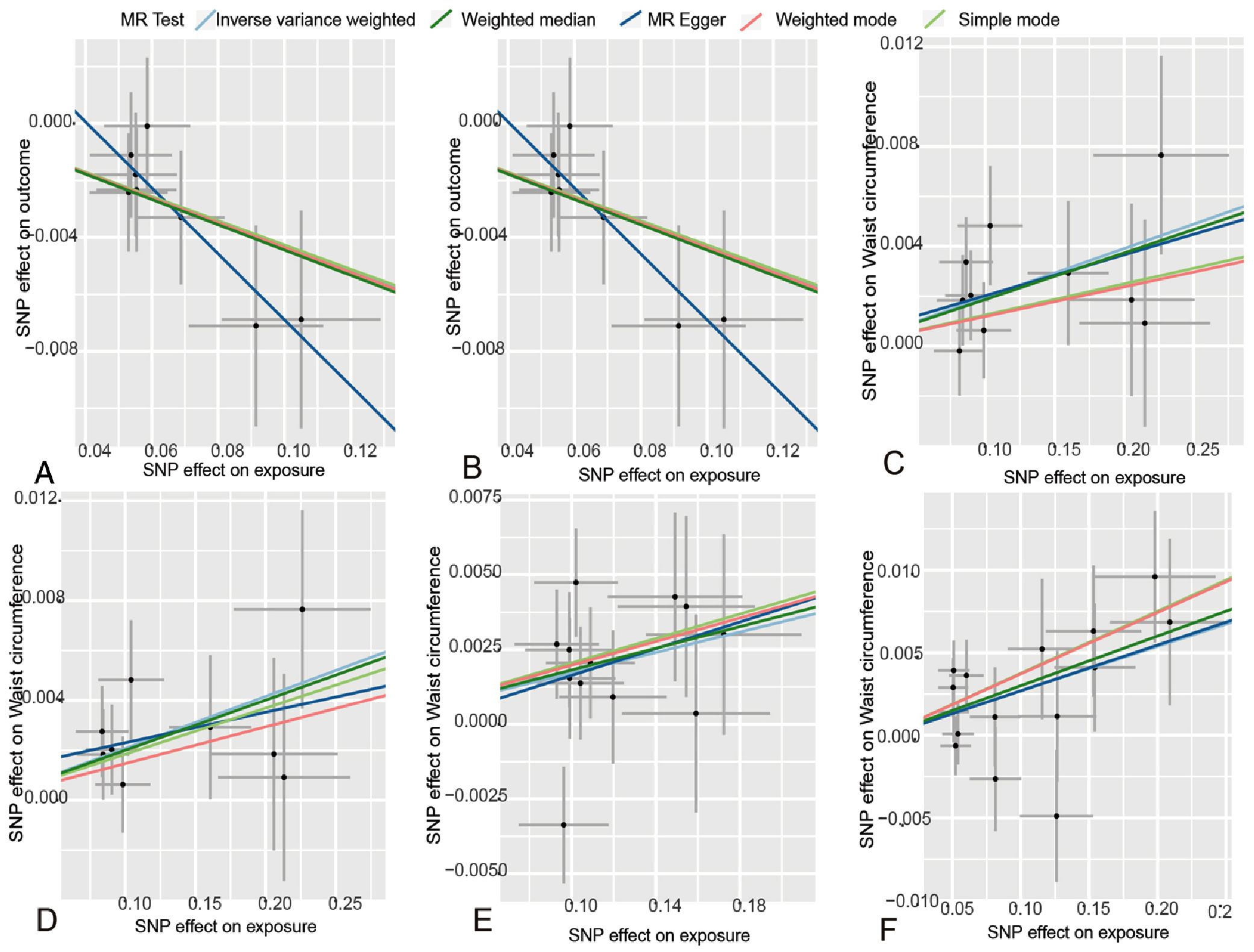
图2 与MetS具有因果关系的肠道微生物散点图注:A为双歧杆菌目,B为双歧杆菌科,C为梅莱纳菌纲,D为胃厌氧杆菌目,E为NB1n目,F为霍氏真杆菌群。
Figure 2 Scatter plot for gut microbiota with a causal relationship to MetS
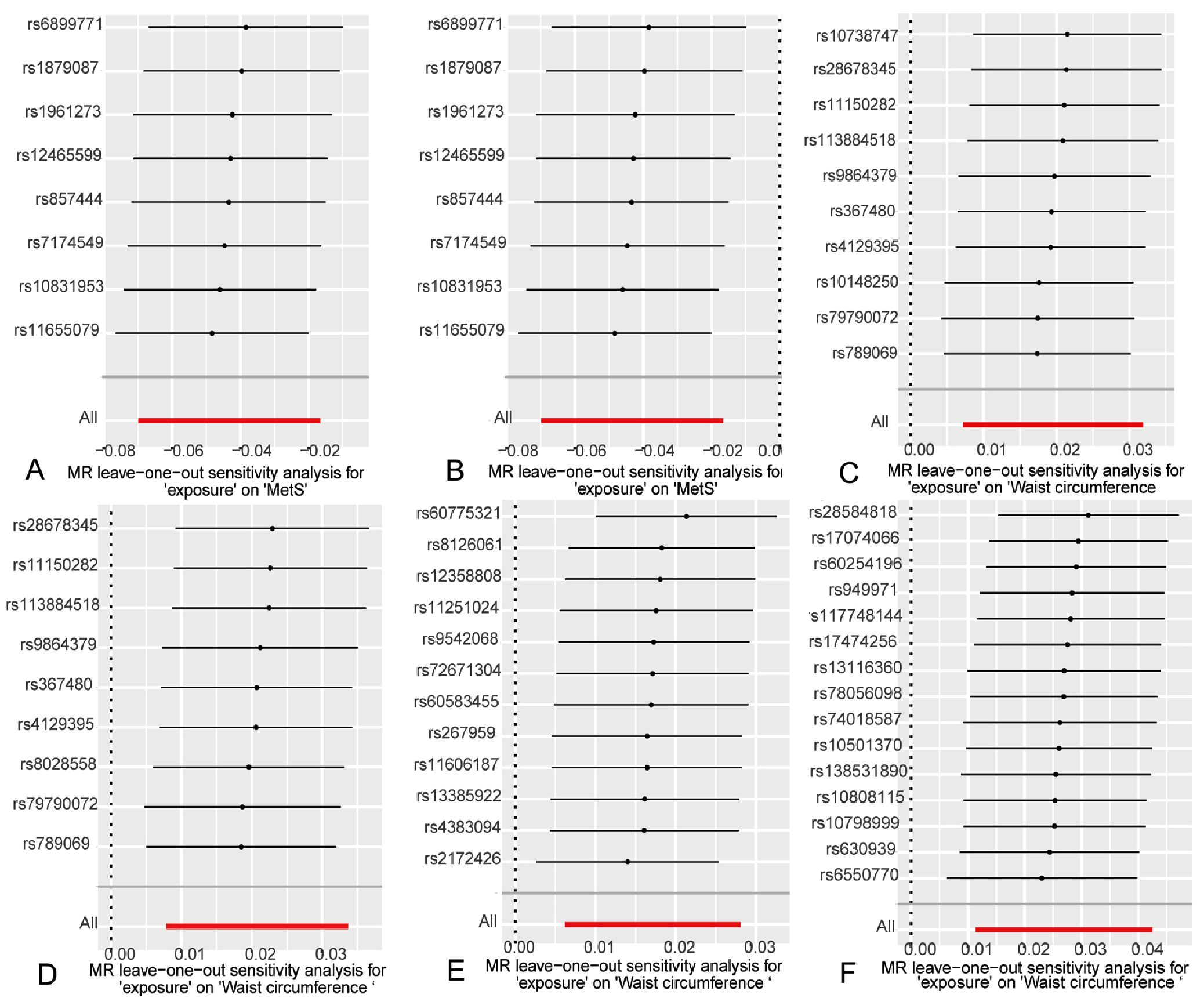
图3 与MetS具有因果关系的肠道微生物留一图注:A为双歧杆菌目,B为双歧杆菌科,C为梅莱纳菌纲,D为胃厌氧杆菌目,E为NB1n目,F为霍氏真杆菌群。
Figure 3 Leave-one-out plot for gut microbiota with a causal relationship to MetS
| [1] |
|
| [2] |
|
| [3] |
|
| [4] |
|
| [5] |
|
| [6] |
|
| [7] |
|
| [8] |
|
| [9] |
|
| [10] |
|
| [11] |
|
| [12] |
|
| [13] |
|
| [14] |
|
| [15] |
|
| [16] |
|
| [17] |
|
| [18] |
|
| [19] |
|
| [20] |
|
| [21] |
|
| [22] |
|
| [23] |
|
| [24] |
|
| [25] |
|
| [26] |
|
| [27] |
|
| [28] |
|
| [29] |
|
| [30] |
|
| [31] |
|
| [32] |
|
| [33] |
|
| [34] |
|
| [35] |
|
| [36] |
|
| [37] |
|
| [38] |
|
| [39] |
|
| [40] |
|
| [41] |
|
| [42] |
|
| [43] |
|
| [44] |
|
| [45] |
|
| [46] |
|
| [47] |
|
| [48] |
|
| [49] |
|
| [50] |
|
| [51] |
|
| [52] |
|
| [53] |
|
| [54] |
|
| [55] |
|
| [56] |
|
| [57] |
|
| [58] |
|
| [59] |
|
| [60] |
|
| [61] |
|
| [62] |
|
| [63] |
|
| [64] |
|
| [1] | 张梅, 李梦启, 卢双艳, 普惠婕, 李贵涛, 刁翌, 陶慧, 范卢明, 叶爱芳, 毛勇. 尿酸与高密度脂蛋白胆固醇比值与代谢综合征的关系研究:基于云南省彝族人群[J]. 中国全科医学, 2026, 29(18): 2532-2537. |
| [2] | 张馨文, 魏光成, 张解玉, 石金杰, 李晓旭, 马锐, 押玉珑, 彭九程, 曹炜. 睡眠特征与血清尿酸水平的因果效应:一项双向孟德尔随机化研究[J]. 中国全科医学, 2026, 29(17): 2354-2360. |
| [3] | 施雨峰, 卢晨霞, 吕安淇, 李晓东. 基于肠-肝轴理论探讨韦荣球菌属与肝脏疾病关系的研究进展[J]. 中国全科医学, 2026, 29(11): 1488-1496. |
| [4] | 李秋春, 苏萍, 逄锦宏, 陈巧巧, 赵颖颖, 何蕊言, 王玥, 陈学禹, 乔俊鹏, 迟蔚蔚. 三酰甘油-葡萄糖指数与心血管-肾脏-代谢综合征0~3期人群心血管疾病的关联性:一项前瞻性队列研究[J]. 中国全科医学, 2026, 29(09): 1129-1136. |
| [5] | 张睿, 王为强, 卢鸿润, 赵钰, 李佳禛. 60岁及以上人群连续代谢综合征评分与肾小球滤过率的关系研究[J]. 中国全科医学, 2026, 29(07): 879-884. |
| [6] | 冯展鹏, 谭思洁, 郭振, 曹立全. 24 h活动行为对青少年代谢综合征的成分等时替代效益研究[J]. 中国全科医学, 2026, 29(03): 325-330. |
| [7] | 周文超, 梁佳琪, 姚尚满, 薛朝, 刘龙, 郭相杰. 高血压与帕金森病的共享基因位点识别研究[J]. 中国全科医学, 2026, 29(02): 201-206. |
| [8] | 肖俊杰, 何佳玮, 曾潇, 向红霞, 雷茂, 郑如意, 郑川, 任益锋, 由凤鸣, 付西, 马琼. 昼夜节律紊乱与肺癌发生风险的因果关系及干预中药预测研究[J]. 中国全科医学, 2025, 28(36): 4605-4618. |
| [9] | 张书岑, 徐积兄. 多发性硬化症与自身免疫性甲状腺疾病的关系研究[J]. 中国全科医学, 2025, 28(33): 4159-4165. |
| [10] | 刘振宇, 魏云鹏, 王江敏, 邢彦. 睡眠时间与心力衰竭的因果关联研究[J]. 中国全科医学, 2025, 28(27): 3441-3446. |
| [11] | 殷佳慧, 杨昕晖, 王京京, 张雅静, 王丽娟, 付佐娣, 孔祥双, 郭光霞, 李玉凤. 腰高比和腰臀比及BMI对代谢综合征的预测价值研究[J]. 中国全科医学, 2025, 28(26): 3258-3263. |
| [12] | 王爽, 吴树法, 令垚, 谭茜蔚, 曹汝岱, 曾慧婷, 孔丹莉, 丁元林, 于海兵. 基于代谢组学探究非脂质代谢物在肥胖与糖尿病视网膜病变间的中介作用:孟德尔随机化研究[J]. 中国全科医学, 2025, 28(21): 2625-2634. |
| [13] | 李春贤, 刘安诺. 成年人肥胖和脂质相关指标对代谢综合征的影响及预测价值研究[J]. 中国全科医学, 2025, 28(21): 2595-2603. |
| [14] | 张露艺, 于瑞洪, 王琪, 张小宇, 李响, 王仲璇, 朱东山. 昼夜节律综合征和代谢综合征对主、客观认知功能的影响:基于平阴队列的横断面研究[J]. 中国全科医学, 2025, 28(20): 2481-2490. |
| [15] | 蒋小曼, 徐欣怡, 丁玲玉, 郭银宁, 缪雪怡, 陈丽, 许勤. 老年胃癌患者术前衰弱与代谢综合征的临床特征及相关性研究[J]. 中国全科医学, 2025, 28(17): 2134-2141. |
| 阅读次数 | ||||||
|
全文 |
|
|||||
|
摘要 |
|
|||||