
中国全科医学 ›› 2027, Vol. 30 ›› Issue (02): 210-218.DOI: 10.12114/j.issn.1007-9572.2025.0447
• 论著·慢性病共病专题研究 • 上一篇
周盛兰1, 李玉芬2, 邹浩3, 于晓东1, 张琳琳1,*( )
收稿日期:2025-09-15
修回日期:2026-08-21
出版日期:2027-01-15
发布日期:2026-11-26
通讯作者:
张琳琳
作者贡献:
周盛兰负责研究的构思与设计,撰写论文,筛选整理数据并进行统计分析,绘制图表;李玉芬负责研究指导,分析可行性;邹浩负责研究指导,论文修订;于晓东负责绘制图表,论文修订;张琳琳负责文章的质量控制与审查,对文章整体负责,监督管理。
基金资助:
ZHOU Shenglan1, LI Yufen2, ZOU Hao3, YU Xiaodong1, ZHANG Linlin1,*()
Received:2025-09-15
Revised:2026-08-21
Published:2027-01-15
Online:2026-11-26
Contact:
ZHANG Linlin
摘要: 背景 心血管代谢性共病(CMM)及体力活动均与认知结局相关,但二者对认知衰弱的纵向联合作用尚不明确。 目的 评估CMM与新发认知衰弱的关系,识别体力活动长期轨迹,并探讨体力活动轨迹与CMM对认知衰弱的交互作用和联合效应。 方法 基于中国健康与养老追踪调查(CHARLS)2011—2018年数据,纳入基线无认知衰弱、年龄≥45岁的参与者。采用组基轨迹模型(GBTM)识别体力活动轨迹。采用Cox比例风险模型分析中老年CMM、体力活动轨迹与新发认知衰弱风险的关联性,并通过乘法和相加交互分析评估两者的交互作用,通过联合效应分析探讨不同暴露组合的风险差异。 结果 共纳入4 384名参与者,随访期间新发认知衰弱307例(7.0%)。GBTM识别出两种体力活动轨迹:低水平稳定组(n=3 333)和高波动型活动组(n=1 051)。Cox回归分析显示,调整混杂因素后,CMM显著增加认知衰弱风险(HR=1.45,95%CI=1.06~1.99,P=0.021)。分层分析发现CMM的影响具有时间累积效应,在随访后期关联更强(HR=1.60,95%CI=1.16~2.21,P=0.005)。不同CMM组合中,心脏病+脑卒中风险最高(HR=2.05,95%CI=1.22~3.43,P=0.007)。交互作用分析显示CMM与体力活动轨迹间无显著交互作用(P>0.05)。进一步联合效应分析发现,与"无CMM+低水平稳定组"相比,"有CMM+高波动型活动组"的认知衰弱风险最高(HR=2.75),"有CMM+低水平稳定组"风险增加91%(HR=1.91)(χ2=61.55,P<0.000 1)。 结论 CMM显著增加中老年人认知衰弱风险。维持稳定的体力活动模式可能缓冲CMM的部分不良影响,而不稳定的高波动模式则会显著放大其风险。
| 组别 | 例数 | 年龄( | 体力活动总代谢量[M(P25,P75),MET-min/周] | 性别[名(%)] | 受教育程度[名(%)] | ||||
|---|---|---|---|---|---|---|---|---|---|
| 女 | 男 | 小学以下 | 小学 | 初中 | 高中及以上 | ||||
| 未发病组 | 4 077 | 57.9±8.6 | 5 544(1 732,12 264) | 2 033(49.9) | 2 044(50.2) | 1 603(39.3) | 958(23.5) | 946(23.2) | 570(14.0) |
| 发病组 | 307 | 60.0±8.6 | 6 772(2 142,14 958) | 219(71.4) | 88(28.7) | 242(78.8) | 37(12.1) | 19(6.2) | 9(2.9) |
| 检验统计量值 | -4.26a | -2.73b | 52.68c | 186.31c | |||||
| P值 | <0.001 | 0.004 | <0.001 | <0.001 | |||||
| 组别 | 婚姻状况[名(%)] | 居住地[名(%)] | 抑郁症状[名(%)] | ADL功能状态[名(%)] | |||||
| 已婚 | 其他 | 城市 | 农村 | 无 | 有 | 正常 | 受限 | ||
| 未发病组 | 3 503(85.9) | 574(14.1) | 1 685(41.4) | 2 392(58.7) | 2 870(70.3) | 1 207(29.6) | 3 346(82.9) | 731(17.9) | |
| 发病组 | 253(82.4) | 54(17.6) | 73(23.8) | 234(76.2) | 136(44.3) | 171(55.7) | 187(60.9) | 120(39.1) | |
| 检验统计量值 | 2.87c | 36.61c | 90.21c | 81.70c | |||||
| P值 | 0.090 | <0.001 | <0.001 | <0.001 | |||||
| 组别 | 吸烟[名(%)] | 饮酒[名(%)] | 高血压[名(%)] | CMM状态[名(%)] | |||||
| 否 | 是 | 否 | 是 | 否 | 是 | 非CMM | CMM | ||
| 未发病组 | 2 788(68.4) | 1 289(31.6) | 2 613(64.1) | 1 464(35.9) | 3 112(76.3) | 965(23.7) | 3 996(98.0) | 81(2.0) | |
| 发病组 | 247(80.5) | 60(19.5) | 244(79.5) | 63(20.5) | 205(66.8) | 102(33.2) | 295(96.1) | 12(3.9) | |
| 检验统计量值 | 19.53c | 29.78c | 14.16c | 5.08c | |||||
| P值 | <0.001 | <0.001 | <0.001 | 0.024 | |||||
表1 两组研究对象基线特征比较
Table 1 Comparison of baseline characteristics between the two study groups
| 组别 | 例数 | 年龄( | 体力活动总代谢量[M(P25,P75),MET-min/周] | 性别[名(%)] | 受教育程度[名(%)] | ||||
|---|---|---|---|---|---|---|---|---|---|
| 女 | 男 | 小学以下 | 小学 | 初中 | 高中及以上 | ||||
| 未发病组 | 4 077 | 57.9±8.6 | 5 544(1 732,12 264) | 2 033(49.9) | 2 044(50.2) | 1 603(39.3) | 958(23.5) | 946(23.2) | 570(14.0) |
| 发病组 | 307 | 60.0±8.6 | 6 772(2 142,14 958) | 219(71.4) | 88(28.7) | 242(78.8) | 37(12.1) | 19(6.2) | 9(2.9) |
| 检验统计量值 | -4.26a | -2.73b | 52.68c | 186.31c | |||||
| P值 | <0.001 | 0.004 | <0.001 | <0.001 | |||||
| 组别 | 婚姻状况[名(%)] | 居住地[名(%)] | 抑郁症状[名(%)] | ADL功能状态[名(%)] | |||||
| 已婚 | 其他 | 城市 | 农村 | 无 | 有 | 正常 | 受限 | ||
| 未发病组 | 3 503(85.9) | 574(14.1) | 1 685(41.4) | 2 392(58.7) | 2 870(70.3) | 1 207(29.6) | 3 346(82.9) | 731(17.9) | |
| 发病组 | 253(82.4) | 54(17.6) | 73(23.8) | 234(76.2) | 136(44.3) | 171(55.7) | 187(60.9) | 120(39.1) | |
| 检验统计量值 | 2.87c | 36.61c | 90.21c | 81.70c | |||||
| P值 | 0.090 | <0.001 | <0.001 | <0.001 | |||||
| 组别 | 吸烟[名(%)] | 饮酒[名(%)] | 高血压[名(%)] | CMM状态[名(%)] | |||||
| 否 | 是 | 否 | 是 | 否 | 是 | 非CMM | CMM | ||
| 未发病组 | 2 788(68.4) | 1 289(31.6) | 2 613(64.1) | 1 464(35.9) | 3 112(76.3) | 965(23.7) | 3 996(98.0) | 81(2.0) | |
| 发病组 | 247(80.5) | 60(19.5) | 244(79.5) | 63(20.5) | 205(66.8) | 102(33.2) | 295(96.1) | 12(3.9) | |
| 检验统计量值 | 19.53c | 29.78c | 14.16c | 5.08c | |||||
| P值 | <0.001 | <0.001 | <0.001 | 0.024 | |||||
| 组数 | 多项式 | BIC | 熵值 | AvePP | OCC | πj | Pj |
|---|---|---|---|---|---|---|---|
| 2 | 2,2 | -114 801.89 | 0.786 | 0.954,0.894 | 20.60,8.46 | 75.04,24.96 | 76.03,23.97 |
| 3 | 1,1,1 | -114 595.87 | 0.798 | 0.820,0.950,0.786 | 4.55,19.16,3.67 | 12.62,72.06,15.33 | 11.11,73.75,15.15 |
表2 不同轨迹组数体力活动总代谢量轨迹的模型检验
Table 2 Model fit indices for total physical activity energy expenditure trajectories across different numbers of trajectory groups
| 组数 | 多项式 | BIC | 熵值 | AvePP | OCC | πj | Pj |
|---|---|---|---|---|---|---|---|
| 2 | 2,2 | -114 801.89 | 0.786 | 0.954,0.894 | 20.60,8.46 | 75.04,24.96 | 76.03,23.97 |
| 3 | 1,1,1 | -114 595.87 | 0.798 | 0.820,0.950,0.786 | 4.55,19.16,3.67 | 12.62,72.06,15.33 | 11.11,73.75,15.15 |
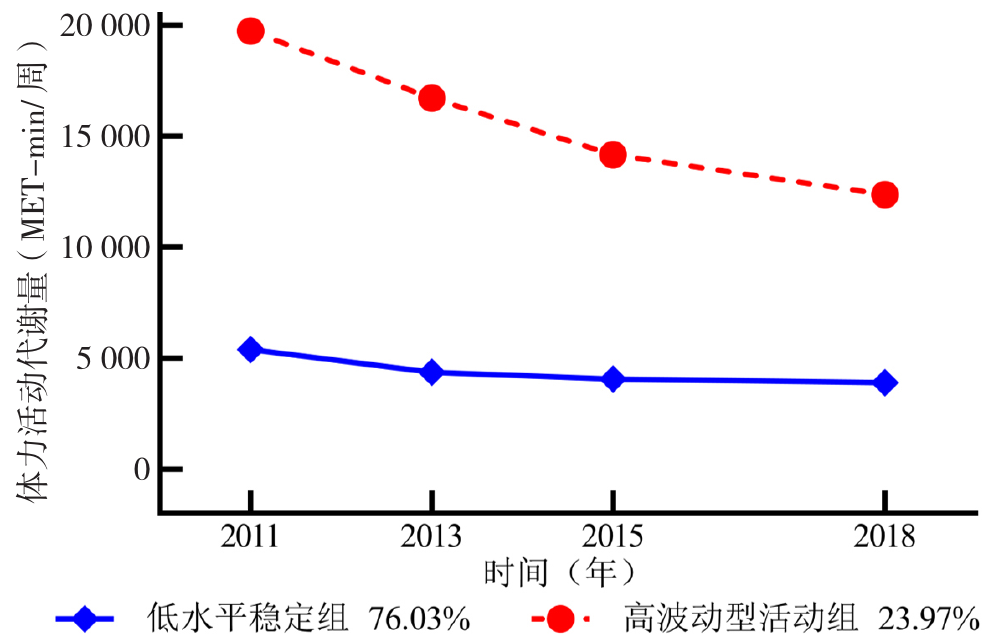
图1 中老年人群体力活动总量的组基轨迹模型
Figure 1 Group-based trajectory modeling of total physical activity among middle-aged and older adults
| 组别 | 例数 | 年龄( | 体力活动总代谢量[M(P25,P75),MET-min/周] | 性别[名(%)] | 教育程度[名(%)] | ||||
|---|---|---|---|---|---|---|---|---|---|
| 女 | 男 | 小学以下 | 小学 | 初中 | 高中及以上 | ||||
| 低水平稳定组 | 3 333 | 58.7±8.9 | 3 832(1 732,7 038) | 1 809(54.3) | 1 524(45.7) | 1 349(40.5) | 737(22.1) | 745(22.4) | 502(15.1) |
| 高波动型活动组 | 1 051 | 55.8±7.4 | 18 558(13 440,21 892) | 443(42.2) | 608(57.8) | 496(47.2) | 258(24.5) | 220(20.9) | 77(7.3) |
| 检验统计量值 | 9.79a | -42.93b | 47.02c | 47.59c | |||||
| P值 | <0.001 | <0.001 | <0.001 | <0.001 | |||||
| 组别 | 婚姻状况[名(%)] | 居住地[名(%)] | 抑郁症状[名(%)] | ADL功能状态[名(%)] | |||||
| 已婚 | 其他 | 城市 | 农村 | 无抑郁症状 | 有抑郁症状 | 正常 | 受限 | ||
| 低水平稳定组 | 2 819(84.6) | 514(15.4) | 1 552(46.6) | 1 781(53.4) | 2 331(69.9) | 1 002(30.1) | 2 689(80.7) | 644(19.3) | |
| 高波动型活动组 | 937(89.2) | 114(10.8) | 206(19.6) | 845(80.4) | 675(64.2) | 376(35.8) | 844(80.3) | 207(19.7) | |
| 检验统计量值 | 13.63c | 241.86c | 12.10c | 0.07c | |||||
| P值 | <0.001 | <0.001 | 0.001 | 0.789 | |||||
| 组别 | 吸烟[名(%)] | 饮酒[名(%)] | 高血压[名(%)] | CMM状态[名(%)] | |||||
| 否 | 是 | 否 | 是 | 否 | 是 | 非CMM | CMM | ||
| 低水平稳定组 | 2 392(71.8) | 941(28.2) | 2 258(67.7) | 1 075(32.3) | 2 419(72.6) | 914(27.4) | 3 245(97.4) | 88(2.6) | |
| 高波动型活动组 | 643(61.2) | 408(38.8) | 599(57.0) | 452(43.0) | 898(85.4) | 153(14.6) | 1 046(99.5) | 5(0.5) | |
| 检验统计量值 | 42.04c | 40.71c | 71.82c | 18.03c | |||||
| P值 | <0.001 | <0.001 | <0.001 | <0.001 | |||||
表3 按体力活动轨迹组分类的基线特征比较
Table 3 Comparison of baseline characteristics according to physical activity trajectory groups
| 组别 | 例数 | 年龄( | 体力活动总代谢量[M(P25,P75),MET-min/周] | 性别[名(%)] | 教育程度[名(%)] | ||||
|---|---|---|---|---|---|---|---|---|---|
| 女 | 男 | 小学以下 | 小学 | 初中 | 高中及以上 | ||||
| 低水平稳定组 | 3 333 | 58.7±8.9 | 3 832(1 732,7 038) | 1 809(54.3) | 1 524(45.7) | 1 349(40.5) | 737(22.1) | 745(22.4) | 502(15.1) |
| 高波动型活动组 | 1 051 | 55.8±7.4 | 18 558(13 440,21 892) | 443(42.2) | 608(57.8) | 496(47.2) | 258(24.5) | 220(20.9) | 77(7.3) |
| 检验统计量值 | 9.79a | -42.93b | 47.02c | 47.59c | |||||
| P值 | <0.001 | <0.001 | <0.001 | <0.001 | |||||
| 组别 | 婚姻状况[名(%)] | 居住地[名(%)] | 抑郁症状[名(%)] | ADL功能状态[名(%)] | |||||
| 已婚 | 其他 | 城市 | 农村 | 无抑郁症状 | 有抑郁症状 | 正常 | 受限 | ||
| 低水平稳定组 | 2 819(84.6) | 514(15.4) | 1 552(46.6) | 1 781(53.4) | 2 331(69.9) | 1 002(30.1) | 2 689(80.7) | 644(19.3) | |
| 高波动型活动组 | 937(89.2) | 114(10.8) | 206(19.6) | 845(80.4) | 675(64.2) | 376(35.8) | 844(80.3) | 207(19.7) | |
| 检验统计量值 | 13.63c | 241.86c | 12.10c | 0.07c | |||||
| P值 | <0.001 | <0.001 | 0.001 | 0.789 | |||||
| 组别 | 吸烟[名(%)] | 饮酒[名(%)] | 高血压[名(%)] | CMM状态[名(%)] | |||||
| 否 | 是 | 否 | 是 | 否 | 是 | 非CMM | CMM | ||
| 低水平稳定组 | 2 392(71.8) | 941(28.2) | 2 258(67.7) | 1 075(32.3) | 2 419(72.6) | 914(27.4) | 3 245(97.4) | 88(2.6) | |
| 高波动型活动组 | 643(61.2) | 408(38.8) | 599(57.0) | 452(43.0) | 898(85.4) | 153(14.6) | 1 046(99.5) | 5(0.5) | |
| 检验统计量值 | 42.04c | 40.71c | 71.82c | 18.03c | |||||
| P值 | <0.001 | <0.001 | <0.001 | <0.001 | |||||
| 变量 | HR | 95%CI | P值 |
|---|---|---|---|
| 模型1 | |||
| CMM(以非CMM为参照) | 2.40 | 2.05~3.23 | <0.001 |
| 模型2 | |||
| CMM(以非CMM为参照) | 2.45 | 1.81~3.31 | <0.001 |
| 性别(以女性为参照) | |||
| 男性 | 0.59 | 0.45~0.76 | <0.001 |
| 年龄 | 1.03 | 1.01~1.04 | <0.001 |
| 受教育程度(以小学以下为参照) | |||
| 小学 | 0.27 | 0.19~0.38 | <0.001 |
| 初中 | 0.17 | 0.10~0.27 | <0.001 |
| 高中及以上 | 0.14 | 0.07~0.28 | <0.001 |
| 婚姻状况(以其他为参照) | |||
| 已婚 | 1.03 | 0.78~1.36 | 0.856 |
| 居住地(以城市为参照) | |||
| 农村 | 1.68 | 1.28~2.20 | <0.001 |
| 模型3 | |||
| CMM(以非CMM为参照) | 1.45 | 1.06~1.99 | 0.021 |
| 性别(以女性为参照) | |||
| 男性 | 0.98 | 0.73~1.33 | 0.913 |
| 年龄 | 1.01 | 0.99~1.02 | 0.487 |
| 受教育程度(以小学以下为参照) | |||
| 小学 | 0.30 | 0.21~0.43 | <0.001 |
| 初中 | 0.21 | 0.13~0.34 | <0.001 |
| 高中及以上 | 0.22 | 0.11~0.43 | <0.001 |
| 婚姻状况(以其他为参照) | |||
| 已婚 | 1.08 | 0.82~1.44 | 0.576 |
| 居住地(以城市为参照) | |||
| 农村 | 1.20 | 0.91~1.57 | 0.196 |
| 吸烟(以否为参照) | |||
| 是 | 0.84 | 0.57~1.22 | 0.349 |
| 饮酒(以否为参照) | |||
| 是 | 0.60 | 0.43~0.83 | 0.002 |
| 高血压(以否为参照) | |||
| 是 | 1.23 | 0.96~1.56 | 0.096 |
| ADL功能状态(以正常为参照) | |||
| 受限 | 10.42 | 7.41~14.65 | <0.001 |
| 抑郁症状(以无为参照) | |||
| 有 | 2.00 | 1.55~2.60 | <0.001 |
表4 Cox比例风险回归分析CMM对认知衰弱发生风险的影响
Table 4 Cox proportional hazards regression analysis of the effect of CMM on the risk of cognitive frailty
| 变量 | HR | 95%CI | P值 |
|---|---|---|---|
| 模型1 | |||
| CMM(以非CMM为参照) | 2.40 | 2.05~3.23 | <0.001 |
| 模型2 | |||
| CMM(以非CMM为参照) | 2.45 | 1.81~3.31 | <0.001 |
| 性别(以女性为参照) | |||
| 男性 | 0.59 | 0.45~0.76 | <0.001 |
| 年龄 | 1.03 | 1.01~1.04 | <0.001 |
| 受教育程度(以小学以下为参照) | |||
| 小学 | 0.27 | 0.19~0.38 | <0.001 |
| 初中 | 0.17 | 0.10~0.27 | <0.001 |
| 高中及以上 | 0.14 | 0.07~0.28 | <0.001 |
| 婚姻状况(以其他为参照) | |||
| 已婚 | 1.03 | 0.78~1.36 | 0.856 |
| 居住地(以城市为参照) | |||
| 农村 | 1.68 | 1.28~2.20 | <0.001 |
| 模型3 | |||
| CMM(以非CMM为参照) | 1.45 | 1.06~1.99 | 0.021 |
| 性别(以女性为参照) | |||
| 男性 | 0.98 | 0.73~1.33 | 0.913 |
| 年龄 | 1.01 | 0.99~1.02 | 0.487 |
| 受教育程度(以小学以下为参照) | |||
| 小学 | 0.30 | 0.21~0.43 | <0.001 |
| 初中 | 0.21 | 0.13~0.34 | <0.001 |
| 高中及以上 | 0.22 | 0.11~0.43 | <0.001 |
| 婚姻状况(以其他为参照) | |||
| 已婚 | 1.08 | 0.82~1.44 | 0.576 |
| 居住地(以城市为参照) | |||
| 农村 | 1.20 | 0.91~1.57 | 0.196 |
| 吸烟(以否为参照) | |||
| 是 | 0.84 | 0.57~1.22 | 0.349 |
| 饮酒(以否为参照) | |||
| 是 | 0.60 | 0.43~0.83 | 0.002 |
| 高血压(以否为参照) | |||
| 是 | 1.23 | 0.96~1.56 | 0.096 |
| ADL功能状态(以正常为参照) | |||
| 受限 | 10.42 | 7.41~14.65 | <0.001 |
| 抑郁症状(以无为参照) | |||
| 有 | 2.00 | 1.55~2.60 | <0.001 |
| 组合类型 | HR | 95%CI | P值 |
|---|---|---|---|
| CMM组合(以无CMD为参照) | |||
| 糖尿病+心脏病 | 1.09 | 0.62~1.89 | 0.770 |
| 糖尿病+脑卒中 | 2.14 | 0.97~4.72 | 0.060 |
| 心脏病+脑卒中 | 2.05 | 1.22~3.43 | 0.007 |
表5 不同CMM组合对认知衰弱风险的Cox回归模型结果
Table 5 Results of Cox regression models for the risk of cognitive frailty according to different CMM combinations
| 组合类型 | HR | 95%CI | P值 |
|---|---|---|---|
| CMM组合(以无CMD为参照) | |||
| 糖尿病+心脏病 | 1.09 | 0.62~1.89 | 0.770 |
| 糖尿病+脑卒中 | 2.14 | 0.97~4.72 | 0.060 |
| 心脏病+脑卒中 | 2.05 | 1.22~3.43 | 0.007 |
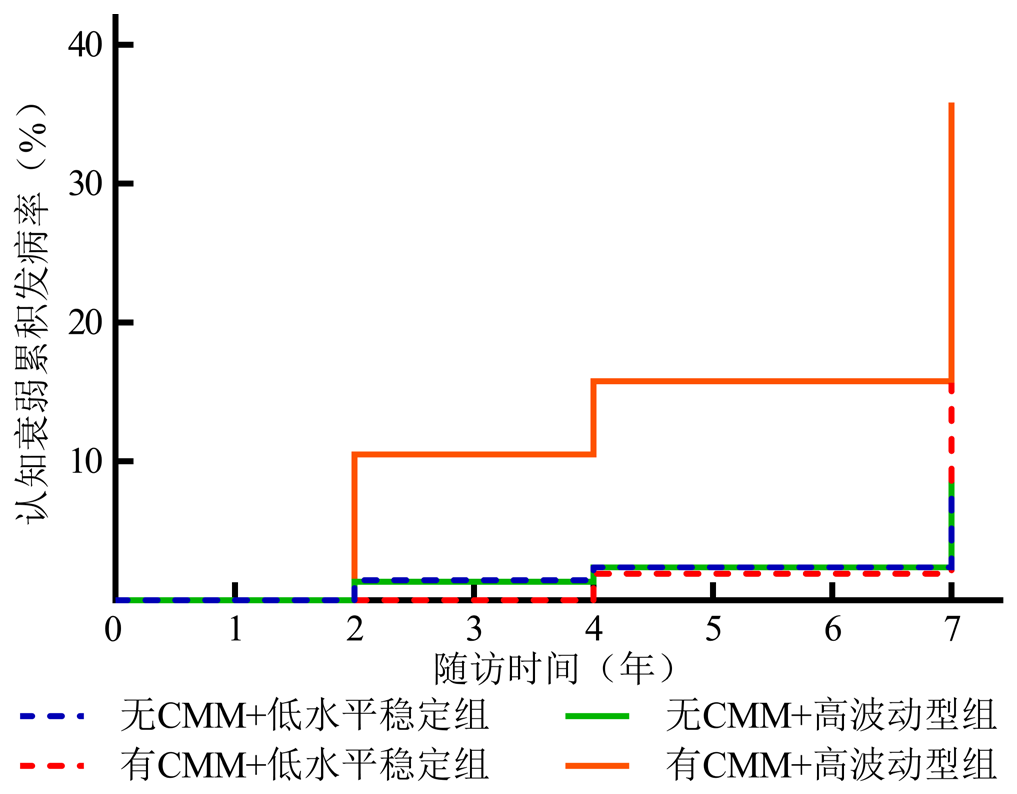
图2 不同CMM-体力活动轨迹组合的Kaplan-Meier生存曲线注:CMM=心血管代谢性共病。
Figure 2 Kaplan-Meier survival curves for different CMM-physical activity trajectory combinations
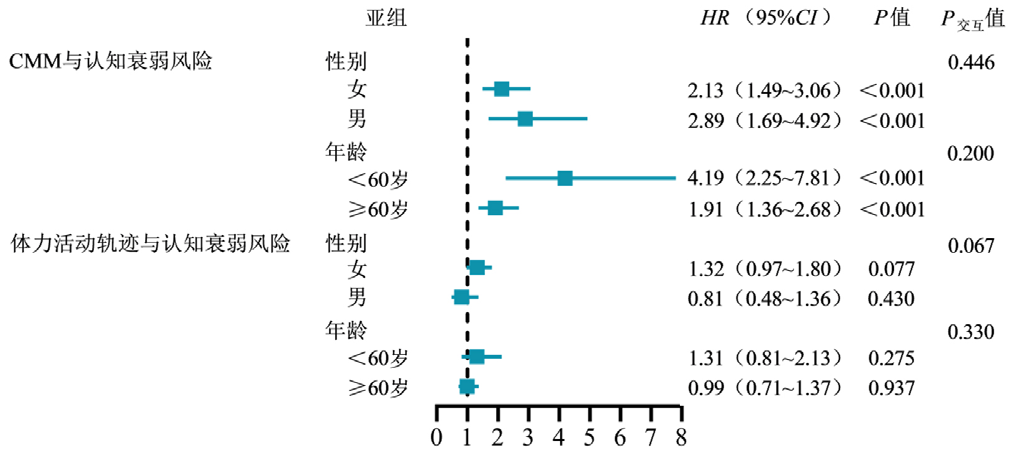
图3 CMM及体力活动轨迹与认知衰弱风险关联的亚组分析(按性别和年龄分层)
Figure 3 Subgroup analysis of the associations of CMM and physical activity trajectories with cognitive frailty risk, stratified by sex and age
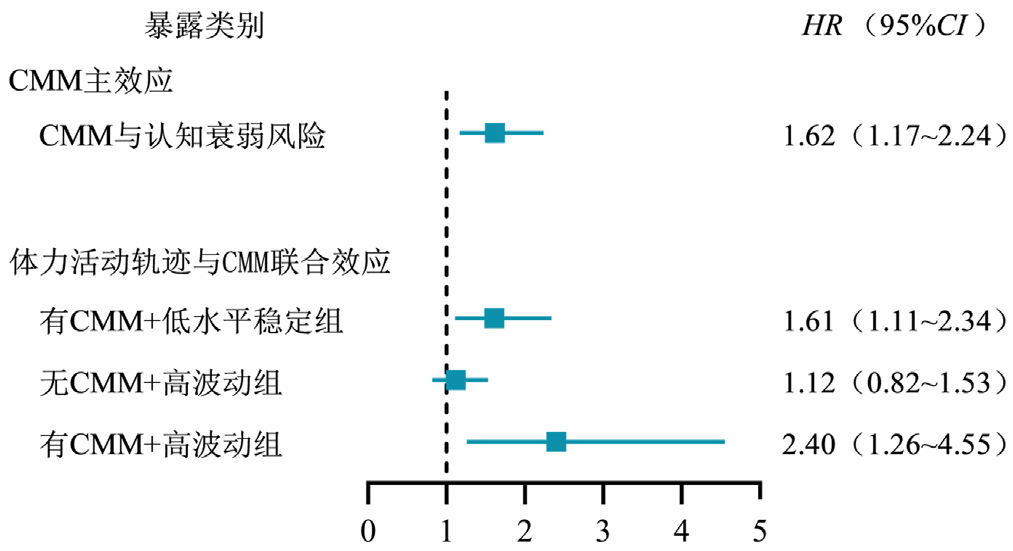
图4 排除随访前2年内新发认知衰弱个体后CMM与体力活动轨迹联合关联的敏感性分析
Figure 4 Sensitivity analysis of the joint association of CMM and physical activity trajectories with cognitive frailty risk after excluding individuals who developed cognitive frailty within the first 2 years of follow-up
| [1] |
赵新蕊,黄丽,曹立春, 等. 社区老年人可逆与潜在可逆性认知衰弱情况及影响因素研究[J]. 中国全科医学, 2025, 28(7): 824-830, 843. DOI: 10.12114/j.issn.1007-9572.2024.0244.
|
| [2] |
曾浩锋,刘银晴,李玲. 老年人社会参与对认知衰弱的影响研究[J]. 现代预防医学, 2024, 51(21): 3967-3972, 3979.
|
| [3] |
冯文婷,潘晔,史威力, 等. 中老年人群CMM患病情况调查及CMM患者认知功能的关联因素分析[J]. 中华全科医师杂志, 2025, 24(1): 62-69.
|
| [4] |
陈思林,地力木拉提·木合塔尔,马儒林, 等. 新疆南疆居民心血管代谢性共病的关联因素及累计效应分析[J]. 中华预防医学杂志, 2025, 59(3): 292-301.
|
| [5] |
|
| [6] |
|
| [7] |
|
| [8] |
|
| [9] |
李春利,曾燕,程桂荣, 等. 心血管代谢性疾病共病在饮食行为与轻度认知障碍关联中的作用[J]. 中华老年心脑血管病杂志, 2025, 27(3): 274-279. DOI: 10.3969/j.issn.1009-0126.2025.03.005.
|
| [10] |
|
| [11] |
刘凤梅,汪流,孟祥翔. 运动干预降低老年人骨折风险的研究进展[J]. 中华老年医学杂志, 2025, 44(4): 555-560.
|
| [12] |
|
| [13] |
|
| [14] |
|
| [15] |
刘书莲,侯爱敏,赵培文, 等. 基于CHARLS数据的体力活动强度对老年人认知功能的影响研究[J]. 护理学杂志, 2025, 40(14): 87-91. DOI: 10.3870/j.issn.1001-4152.2025.14.087.
|
| [16] |
|
| [17] |
郑华涛,王世强,李丹, 等. 老年人身体活动变化轨迹与衰弱的关联研究[J]. 中国全科医学, 2026, 29(3): 316-324.
|
| [18] |
|
| [19] |
杨鄂,王世强,罗丹, 等. 中国老年人睡眠时长和体力活动对认知障碍的联合作用研究[J]. 中国慢性病预防与控制, 2024, 32(10): 741-745, 751.
|
| [20] |
胡中华,赵红艳,姜秀荣, 等. 我国老年人体力活动与抑郁症发生率的关系[J]. 护理研究, 2025, 39(1): 27-32.
|
| [21] |
|
| [22] |
韩正,孙梦,傅方琳, 等. 50岁及以上人群三酰甘油葡萄糖指数与心血管代谢性共病关系的研究[J]. 中国全科医学, 2025, 28(18): 2278-2284. DOI: 10.12114/j.issn.1007-9572.2024.0416.
|
| [23] |
|
| [24] |
|
| [25] |
|
| [26] |
|
| [27] |
刘一兵,杜文雯,曹秋野, 等. 中老年人膳食胆碱摄入量轨迹与认知功能的关联[J]. 中华流行病学杂志, 2025, 46(2): 210-217. DOI: 10.3760/cma.j.cn112338-20240906-00559.
|
| [28] |
贾雪妮,周瑜,蔡金彩, 等. 男性尿酸轨迹与高血压,糖尿病及血脂异常的相关性研究[J]. 现代预防医学, 2025, 52(3): 412-417, 429. DOI: 10.20043/j.cnki.MPM.202409297.
|
| [29] |
杨钧涵,李皓炜,陈仕敏, 等. 北京市城市老年人群尿白蛋白-肌酐比值,心血管健康评分与心脑血管死亡及全因死亡的关联研究[J]. 中华流行病学杂志, 2025, 46(3): 385-392. DOI: 10.3760/cma.j.cn112338-20240711-00417.
|
| [30] |
|
| [31] |
|
| [32] |
|
| [33] |
|
| [34] |
|
| [35] |
|
| [36] |
|
| [37] |
卢婧雯,王伟炳. 中老年人体力活动轨迹与工具性生活自理能力的关联性分析[J]. 首都体育学院学报, 2024, 36(2): 207-216, 226. DOI: 10.14036/j.cnki.cn11-4513.2024.02.011.
|
| [38] |
|
| [39] |
|
| [1] | 马弋洲, 包鹏, 王琪, 杨楠, 宋炜婧, 徐志杰, 周鹏翔, 胡青, 朱帅, 潘颖, 尹学珺, 阎丽静, 吴静. 中国老年高血压与糖尿病共病患者的非药物基层管理专家共识[J]. 中国全科医学, 2027, 30(02): 161-178. |
| [2] | 常冰洁, 邵丽颖, 张琳, 赵琳琳, 朱宸立, 陆睿, 杜娟, 邵爽. 老年慢性病共病患者对居家智能药物管理工具的需求和使用障碍的质性研究[J]. 中国全科医学, 2027, 30(02): 203-209. |
| [3] | 谢慧, 柳娅婷, 陈珂, 贺强, 张宪亮, 陈斯. 基于等时替代模型的中国农村老年人24 h活动行为与衰弱的关联研究[J]. 中国全科医学, 2027, 30(01): 119-129. |
| [4] | 赵晨旭, 刘力源, 张杨, 李戈, 陈蕾, 高莹. 血清IgG4升高型桥本甲状腺炎的临床特征研究[J]. 中国全科医学, 2026, 29(36): 5385-5392. |
| [5] | 吴春香, 魏敏, 张志将. 肌壁间子宫肌瘤对自然受孕的影响研究[J]. 中国全科医学, 2026, 29(35): 5212-5218. |
| [6] | 龙仁, 李志翔, 赵思琪, 徐志杰, 刘晓云, 何莉, 赵洋. 中国大陆地区慢性病共病研究十五年回顾和展望:文献综述与态势分析[J]. 中国全科医学, 2026, 29(34): 5022-5032. |
| [7] | 李金婷, 高爱菊. 中国中老年人群体质量调整腰围指数与抑郁发生风险的关联研究[J]. 中国全科医学, 2026, 29(34): 5071-5077. |
| [8] | 文俊欣, 石挺皇, 秦庆新, 梁妍语, 孟凡莉. 健康体检成人不同体质量变化与新发高尿酸血症的关联[J]. 中国全科医学, 2026, 29(33): 4868-4875. |
| [9] | 兰博, 王振伟, 李想, 张金盈, 唐俊楠. 老年心力衰竭合并2型糖尿病共病的研究进展[J]. 中国全科医学, 2026, 29(33): 4973-4980. |
| [10] | 陈莱, 余雨枫, 周欣, 冉明慧, 舒思为, 张庭轩, 赵金锁. 中国成年人高血压、糖尿病、血脂异常三病共患患病率及相关因素的Meta分析[J]. 中国全科医学, 2026, 29(33): 4951-4959. |
| [11] | 汤皓晴, 李明月, 龙仁, 朱胤博, 梁伟欢, 朱萍, 赵炜, 赵洋, 刘晓云. 45岁及以上中老年糖尿病共病的治疗负担:基于6所基层医院患者的横断面调查[J]. 中国全科医学, 2026, 29(32): 4786-4797. |
| [12] | 王忠凯, 吴长勇, 李梦晗, 骆怡哗, 张冰清, 彭云珠. 中国中老年人残余胆固醇炎症指数与心血管代谢共病的关联研究[J]. 中国全科医学, 2026, 29(31): 4573-4581. |
| [13] | 张盼盼, 张梓鑫, 吴欣雨, 韩全乐, 赵莉, 杨静, 李雷, 李旭阳, 张伯亨, 吴寿岭. 脂肪肝指数与健康人群代谢功能障碍相关脂肪性肝病发病风险关系的回顾性队列研究[J]. 中国全科医学, 2026, 29(31): 4582-4588. |
| [14] | 魏学娟, 王利华, 王丽, 任静林, 闫海青, 于海洋, 刘景峰. 智能语音外呼辅助传统干预对社区老年"三高"共病患者健康管理的效果研究:一项随机对照试验[J]. 中国全科医学, 2026, 29(31): 4635-4640. |
| [15] | 张帅帅, 陈玥, 邱娇娇, 朱平, 王曙霞. 残余胆固醇炎症指数与中国中老年人生物学年龄加速的关联:一项全国性队列研究[J]. 中国全科医学, 2026, 29(30): 4397-4405. |
| 阅读次数 | ||||||
|
全文 |
|
|||||
|
摘要 |
|
|||||