中国全科医学 ›› 2027, Vol. 30 ›› Issue (01): 21-28.DOI: 10.12114/j.issn.1007-9572.2026.0257

• 全科医疗/社区卫生服务工作研究 • 上一篇    

居家医疗服务政策发布前后社区卫生服务机构服务效率变化与提升路径对比研究

巴亚辉, 张雅宁, 郭炳宏, 刘兰秋*()   

  1. 100069 北京市,首都医科大学医学人文与全科医学学院
  • 收稿日期:2026-09-23 修回日期:2026-10-13 出版日期:2027-01-05 发布日期:2026-11-17
  • 通讯作者: 刘兰秋

  • 作者贡献:

    巴亚辉负责研究构思与设计、数据收集与整理、统计学处理、图表绘制,撰写论文;张雅宁、郭炳宏负责文章构思与修订;刘兰秋提出主要研究目标,负责研究构思与设计、论文修订,对文章整体负责。

  • 基金资助:
    国家社会科学基金资助项目(24SGC106)

Changes in Service Efficiency and Improvement Pathways of Community Health Service Institutions before and after the Release of Home-based Medical Service Policies: a Comparative Study

BA Yahui, ZHANG Yaning, GUO Binghong, LIU Lanqiu*()   

  1. School of Medical Humanities and General Practice, Capital Medical University, Beijing 100069, China
  • Received:2026-09-23 Revised:2026-10-13 Published:2027-01-05 Online:2026-11-17
  • Contact: LIU Lanqiu

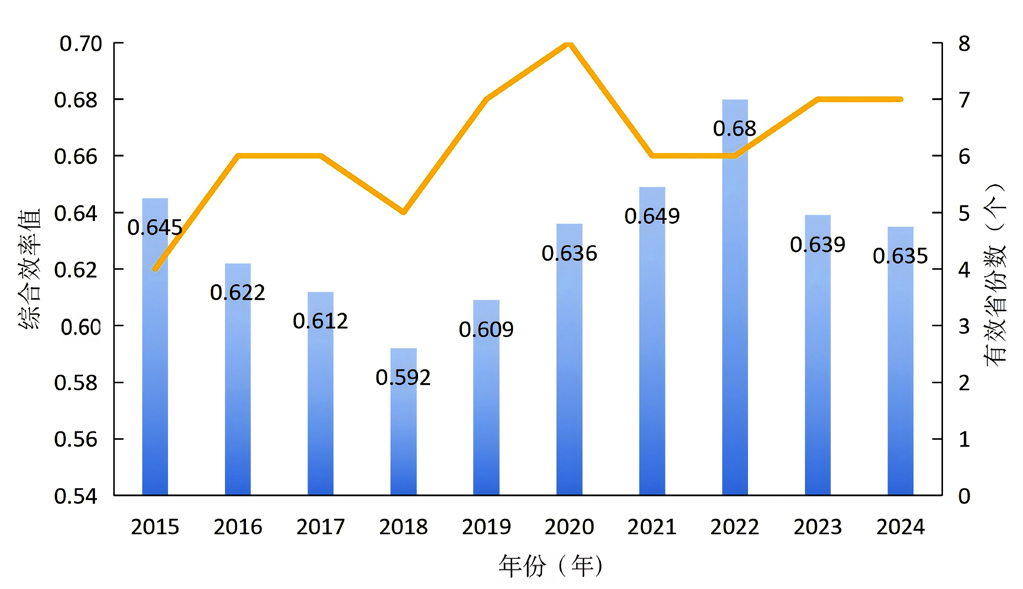
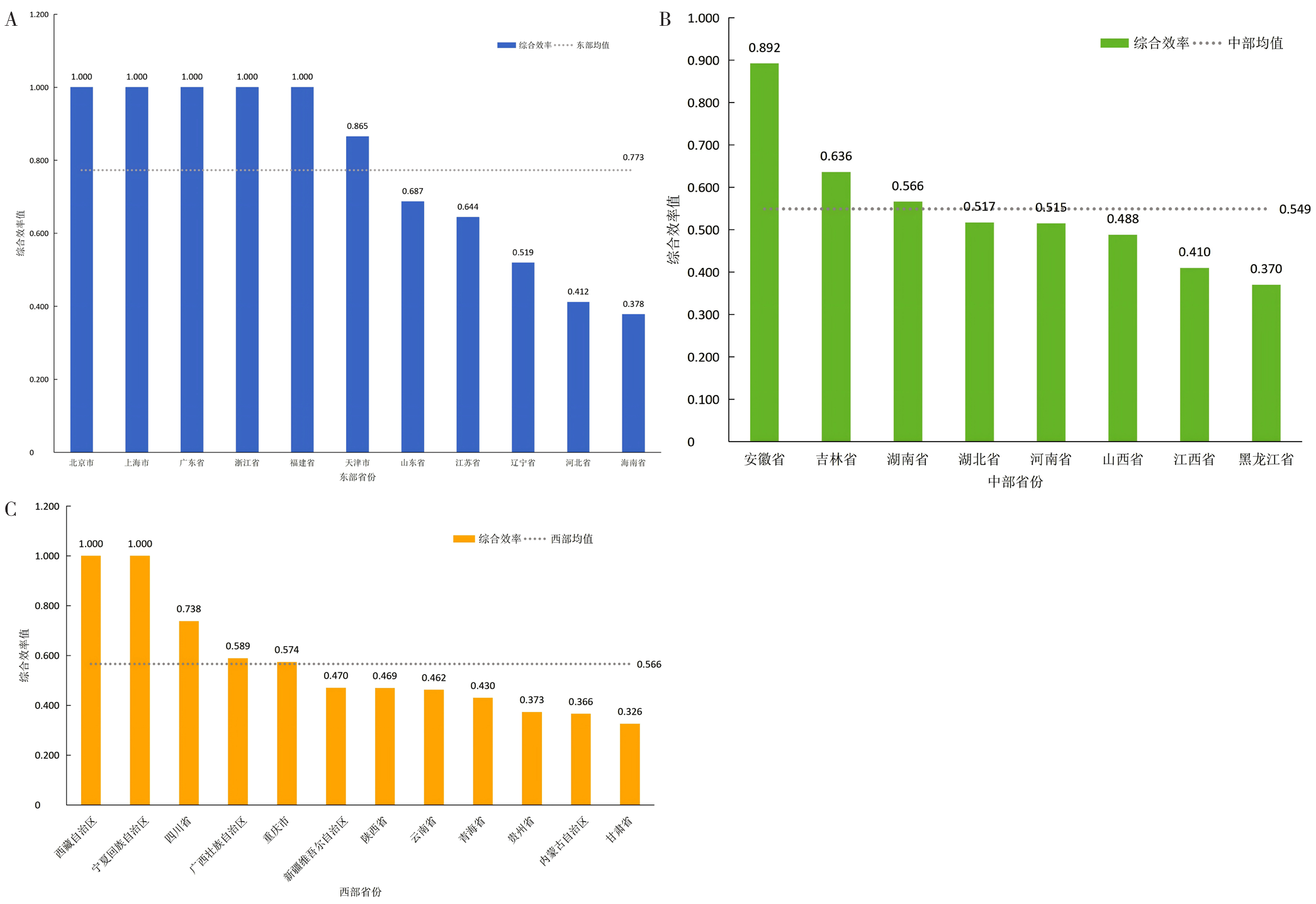
摘要: 背景 社区卫生服务机构作为基层医疗卫生服务体系的"网底",其居家医疗服务效率在政策驱动下呈现时空演化特征,但存在路径单一、区域差异大、持续动力不足等问题。 目的 评估2015—2024年我国社区卫生服务机构居家医疗服务效率的静态水平与动态演变趋势,识别效率提升的多元组态路径及其政策前后变化,为制订差异化的区域政策、推动居家医疗服务效率提升提供实证依据。 方法 数据来源于国家统计局编制的2016—2025年《中国统计年鉴》及国家卫生健康委员会编制的2016—2017年《中国卫生和计划生育统计年鉴》、2018—2025年《中国卫生健康统计年鉴》。通过文献阅读法结合研究需要选取对应指标变量,运用数据包络分析(DEA)中的变动规模报酬(BCC)模型和Malmquist指数测算2015—2024年中国社区卫生服务机构居家医疗静态和动态效率。运用模糊集定性比较分析法(fsQCA)对2020年与2024年两个截面数据进行跨时段组态对比,探寻效率提升的路径演化。 结果 2015—2024年社区卫生服务机构综合效率在波动中趋稳,但区域差异显著,东、中、西部地区的综合效率均值分别为0.773、0.549、0.566。全要素生产率均值为0.942,其中技术进步指数为0.943,低于技术效率变化指数0.999,是制约效率持续提升的主要瓶颈。高效率路径从2020年的单一模式演变为2024年的多元并驱:2020年仅存在1条"资源充裕驱动型"路径,覆盖度为0.327,典型案例均为东部地区省份;2024年扩展至3条路径,覆盖度为0.694,即S1"资源驱动型"、S2"城镇-结构优化型"、S3"人力补偿驱动型",实现了典型案例从"东部集中"向"东中西全覆盖"的转变。 结论 政策发布短期内能推动效率提升,但技术进步乏力导致持续动力不足;效率提升路径已从单一门槛走向多元可及。建议实施东、中、西部地区差异化分区施策:东部地区省份深化技术创新引领,巩固资源优势地位;中部地区省份强化人力补偿策略,补足结构性"短板";西部地区省份保持低负担优势,前瞻性储备服务能力。同时构建跨区域经验共享与梯度帮扶机制,实现政策资源的精准投放。

关键词: 居家医疗, 社区卫生服务机构, 政策评估, 服务效率, 组态分析

Abstract:

Background

As the foundation of the primary healthcare system, community health service institutions, the efficiency of which has shown spatiotemporal evolution under policy drivers; however, they face challenges such as limited improvement pathways, significant regional disparities, and insufficient momentum for sustained development.

Objective

To evaluate the static levels and dynamic trends in the efficiency of home-based medical services provided by China's community health service institutions from 2015 to 2024; to identify diverse pathways for improving efficiency and changes before and after policy release; and to inform the formulation of differentiated regional policies and promoting improvements in the efficiency of home-based medical services.

Methods

Data were derived from the China Statistical Yearbook (2016-2025) compiled by the National Bureau of Statistics of China, as well as the China Health and Family Planning Statistical Yearbook (2016-2017) and China Health Statistical Yearbook (2018-2025) compiled by the National Health Commission of China. Corresponding indicator variables were selected through literature review according to the research needs. The Banker-Charnes-Cooper (BCC) model under variable returns to scale (VRS) and the Malmquist index, both within the framework of data envelopment analysis (DEA), were employed to measure the static and dynamic efficiency of home-based medical care provided by community health service institutions in China from 2015 to 2024. The fuzzy-set qualitative comparative analysis (fsQCA) method was used to conduct a cross-period configurational comparison between the 2020 and 2024 cross-sections to explore the evolutionary pathways of efficiency improvement.

Results

From 2015 to 2024, the comprehensive efficiency of community health service institutions stabilized amid fluctuations, but significant regional disparities persisted: the average efficiency in the eastern region was 0.773, in the central region 0.549, and in the western region 0.566. The average total factor productivity was 0.942, with the technological progress index at 0.943—lower than the technical efficiency change index of 0.999—representing the primary bottleneck constraining sustained efficiency improvements. High-efficiency pathways evolved from a single model in 2020 to multiple concurrent pathways in 2024: In 2020, there was only one "resource-abundance-driven" pathway, with a coverage of 0.327, and all typical cases were from eastern provinces; By 2024, this had expanded to three pathways with a coverage rate of 0.694—namely, S1 "resource-driven", S2 "urbanization and structural optimization", and S3 "workforce compensation-driven"—marking a shift in typical cases from a "concentration in the east" to "comprehensive coverage across the east, central, and western regions".

Conclusion

While policy release can improve efficiency in the short term, insufficient technological progress leads to a lack of sustained momentum; the pathways to efficiency improvement have shifted from being singular and restrictive to multiple and accessible. It is recommended to implement differentiated policies tailored to the eastern, central, and western regions: eastern provinces should deepen technology-led innovation to consolidate their resource advantages; central provinces should strengthen labor-compensation strategies to address structural weaknesses; and western provinces should maintain their low-burden advantage while proactively building service capacity. At the same time, a mechanism for cross-regional experience sharing and tiered assistance should be established to ensure the targeted allocation of policy resources.

Key words: Home-based medical care, Community health service institutions, Policy evaluation, Service efficiency, Configurational analysis