
Chinese General Practice ›› 2026, Vol. 29 ›› Issue (21): 2959-2966.DOI: 10.12114/j.issn.1007-9572.2025.0177
Special Issue: 神经/行为/心理最新文章合辑
• Article • Previous Articles Next Articles
Received:2025-06-24
Revised:2025-08-08
Published:2026-07-20
Online:2026-06-03
Contact:
ZHANG Weisen
通讯作者:
张维森
作者简介:作者贡献:
柴智浩负责数据清洗、分析,文章撰写与修改;张维森负责数据收集,提出研究思路,指导文章撰写并审阅修改,最终版本修订;罗娇玲负责数据分析与文章撰写;朱峰、朱彤、靳雅丽、潘静、卢映君、江朝强负责数据收集,对文章进行审阅修改。
基金资助:CLC Number:
Add to citation manager EndNote|Ris|BibTeX
URL: https://www.chinagp.net/EN/10.12114/j.issn.1007-9572.2025.0177
| 基本特征 | 认知功能(MMSE得分) | 短期记忆功能(DWRT得分) | ||||||
|---|---|---|---|---|---|---|---|---|
| 正常(n=7 771) | MCI(n=1 120) | χ2(t)值 | P值 | 正常(n=7 085) | MMI(n=1 806) | χ2(t)值 | P值 | |
| 年龄( | 59.1±7.2 | 65.0±8.7 | 120.811a | <0.001 | 58.9±7.2 | 63.3±8.6 | 161.541a | <0.001 |
| BMI( | 23.8±3.3 | 23.8±3.5 | 8.970a | 0.676 | 23.8±3.3 | 23.8±3.4 | 4.536a | 0.875 |
| 性别[例(%)] | 24.733 | <0.001 | 60.506 | <0.001 | ||||
| 男 | 2 013(25.9) | 213(19.0) | 1 646(23.2) | 580(32.1) | ||||
| 女 | 5 758(74.1) | 907(81.0) | 5 439(76.8) | 1 226(67.9) | ||||
| 婚姻状况[例(%)] | 177.787 | <0.001 | 61.857 | <0.001 | ||||
| 已婚 | 6 632(85.3) | 778(69.5) | 6 016(84.9) | 1 394(77.2) | ||||
| 单身 | 1 139(14.7) | 342(30.5) | 1 069(15.1) | 412(22.8) | ||||
| 少儿期父母识/写字[例(%)] | 595.618 | <0.001 | 300.703 | <0.001 | ||||
| 父母均不识/写字 | 1 040(13.3) | 440(39.3) | 970(13.7) | 510(28.2) | ||||
| 父或母识/写字 | 3 502(45.1) | 527(47.1) | 3 169(44.7) | 860(47.6) | ||||
| 父母均识/写字 | 3 229(41.6) | 153(13.6) | 2 946(41.6) | 436(24.2) | ||||
| 文化程度[例(%)] | 496.476 | <0.001 | 283.944 | <0.001 | ||||
| 初中及以下 | 4 670(60.1) | 1 055(94.2) | 4 256(60.1) | 1 469(81.3) | ||||
| 高中及以上 | 3 101(39.9) | 65(5.8) | 2 829(39.9) | 337(18.7) | ||||
| 家庭年收入[例(%)] | 357.827 | <0.001 | 182.479 | <0.001 | ||||
| <30 000元 | 3 688(47.5) | 870(77.7) | 3 376(47.6) | 1 182(65.4) | ||||
| ≥30 000元 | 4 083(52.5) | 250(22.3) | 3 709(52.4) | 624(34.6) | ||||
| 职业[例(%)] | 159.972 | <0.001 | 43.051 | <0.001 | ||||
| 手工业或其他 | 6 007(77.3) | 1 049(93.7) | 5 522(77.9) | 1 534(84.9) | ||||
| 非手工业 | 1 764(22.7) | 71(6.3) | 1 563(22.1) | 272(15.1) | ||||
| 吸烟状况[例(%)] | 1.056 | 0.590 | 62.655 | <0.001 | ||||
| 从不吸烟 | 6 436(82.8) | 914(81.6) | 5 970(84.3) | 1 380(76.4) | ||||
| 已戒烟 | 579(7.5) | 91(8.1) | 478(6.7) | 192(10.6) | ||||
| 目前吸烟 | 756(9.7) | 115(10.3) | 637(9.0) | 234(13.0) | ||||
| 饮酒状况[例(%)] | 117.851 | <0.001 | 60.401 | <0.001 | ||||
| 从不饮酒 | 3 787(48.7) | 724(64.6) | 3 467(48.9) | 1 044(57.8) | ||||
| 已戒酒 | 138(1.8) | 34(3.1) | 122(1.8) | 50(2.8) | ||||
| 目前饮酒 | 3 846(49.5) | 362(32.3) | 3 496(49.3) | 712(39.4) | ||||
| 体力活动[例(%)] | 9.294 | 0.010 | 63.164 | <0.001 | ||||
| 低 | 786(10.2) | 146(13.0) | 677(9.6) | 255(14.2) | ||||
| 中 | 2 210(28.4) | 318(28.4) | 1 942(27.4) | 586(32.4) | ||||
| 高 | 4 775(61.4) | 656(58.6) | 4 466(63.0) | 965(53.4) | ||||
| 心血管疾病[例(%)] | 10.131 | 0.001 | 3.262 | 0.071 | ||||
| 是 | 3 184(41.0) | 403(36.0) | 2 892(40.8) | 695(38.5) | ||||
| 否 | 4 587(59.0) | 717(64.0) | 4 193(59.2) | 1 111(61.5) | ||||
| 糖尿病[例(%)] | 2.850 | 0.091 | 0.923 | 0.337 | ||||
| 是 | 544(7.0) | 94(8.4) | 499(7.0) | 139(7.7) | ||||
| 否 | 7 227(93.0) | 1 026(91.6) | 6 586(93.0) | 1 667(92.3) | ||||
| 自评健康[例(%)] | 64.422 | <0.001 | 28.706 | <0.001 | ||||
| 差 | 1 458(18.8) | 327(29.2) | 1 341(18.9) | 444(24.6) | ||||
| 好 | 6 313(81.2) | 793(70.8) | 5 744(81.1) | 1 362(75.4) | ||||
| 抑郁症状[例(%)] | 138.903 | <0.001 | 79.667 | <0.001 | ||||
| 是 | 976(12.6) | 288(25.7) | 889(12.5) | 375(20.8) | ||||
| 否 | 6 795(87.4) | 832(74.3) | 6196(87.5) | 1431(79.2) | ||||
Table 1 Comparison of basic characteristics of participants
| 基本特征 | 认知功能(MMSE得分) | 短期记忆功能(DWRT得分) | ||||||
|---|---|---|---|---|---|---|---|---|
| 正常(n=7 771) | MCI(n=1 120) | χ2(t)值 | P值 | 正常(n=7 085) | MMI(n=1 806) | χ2(t)值 | P值 | |
| 年龄( | 59.1±7.2 | 65.0±8.7 | 120.811a | <0.001 | 58.9±7.2 | 63.3±8.6 | 161.541a | <0.001 |
| BMI( | 23.8±3.3 | 23.8±3.5 | 8.970a | 0.676 | 23.8±3.3 | 23.8±3.4 | 4.536a | 0.875 |
| 性别[例(%)] | 24.733 | <0.001 | 60.506 | <0.001 | ||||
| 男 | 2 013(25.9) | 213(19.0) | 1 646(23.2) | 580(32.1) | ||||
| 女 | 5 758(74.1) | 907(81.0) | 5 439(76.8) | 1 226(67.9) | ||||
| 婚姻状况[例(%)] | 177.787 | <0.001 | 61.857 | <0.001 | ||||
| 已婚 | 6 632(85.3) | 778(69.5) | 6 016(84.9) | 1 394(77.2) | ||||
| 单身 | 1 139(14.7) | 342(30.5) | 1 069(15.1) | 412(22.8) | ||||
| 少儿期父母识/写字[例(%)] | 595.618 | <0.001 | 300.703 | <0.001 | ||||
| 父母均不识/写字 | 1 040(13.3) | 440(39.3) | 970(13.7) | 510(28.2) | ||||
| 父或母识/写字 | 3 502(45.1) | 527(47.1) | 3 169(44.7) | 860(47.6) | ||||
| 父母均识/写字 | 3 229(41.6) | 153(13.6) | 2 946(41.6) | 436(24.2) | ||||
| 文化程度[例(%)] | 496.476 | <0.001 | 283.944 | <0.001 | ||||
| 初中及以下 | 4 670(60.1) | 1 055(94.2) | 4 256(60.1) | 1 469(81.3) | ||||
| 高中及以上 | 3 101(39.9) | 65(5.8) | 2 829(39.9) | 337(18.7) | ||||
| 家庭年收入[例(%)] | 357.827 | <0.001 | 182.479 | <0.001 | ||||
| <30 000元 | 3 688(47.5) | 870(77.7) | 3 376(47.6) | 1 182(65.4) | ||||
| ≥30 000元 | 4 083(52.5) | 250(22.3) | 3 709(52.4) | 624(34.6) | ||||
| 职业[例(%)] | 159.972 | <0.001 | 43.051 | <0.001 | ||||
| 手工业或其他 | 6 007(77.3) | 1 049(93.7) | 5 522(77.9) | 1 534(84.9) | ||||
| 非手工业 | 1 764(22.7) | 71(6.3) | 1 563(22.1) | 272(15.1) | ||||
| 吸烟状况[例(%)] | 1.056 | 0.590 | 62.655 | <0.001 | ||||
| 从不吸烟 | 6 436(82.8) | 914(81.6) | 5 970(84.3) | 1 380(76.4) | ||||
| 已戒烟 | 579(7.5) | 91(8.1) | 478(6.7) | 192(10.6) | ||||
| 目前吸烟 | 756(9.7) | 115(10.3) | 637(9.0) | 234(13.0) | ||||
| 饮酒状况[例(%)] | 117.851 | <0.001 | 60.401 | <0.001 | ||||
| 从不饮酒 | 3 787(48.7) | 724(64.6) | 3 467(48.9) | 1 044(57.8) | ||||
| 已戒酒 | 138(1.8) | 34(3.1) | 122(1.8) | 50(2.8) | ||||
| 目前饮酒 | 3 846(49.5) | 362(32.3) | 3 496(49.3) | 712(39.4) | ||||
| 体力活动[例(%)] | 9.294 | 0.010 | 63.164 | <0.001 | ||||
| 低 | 786(10.2) | 146(13.0) | 677(9.6) | 255(14.2) | ||||
| 中 | 2 210(28.4) | 318(28.4) | 1 942(27.4) | 586(32.4) | ||||
| 高 | 4 775(61.4) | 656(58.6) | 4 466(63.0) | 965(53.4) | ||||
| 心血管疾病[例(%)] | 10.131 | 0.001 | 3.262 | 0.071 | ||||
| 是 | 3 184(41.0) | 403(36.0) | 2 892(40.8) | 695(38.5) | ||||
| 否 | 4 587(59.0) | 717(64.0) | 4 193(59.2) | 1 111(61.5) | ||||
| 糖尿病[例(%)] | 2.850 | 0.091 | 0.923 | 0.337 | ||||
| 是 | 544(7.0) | 94(8.4) | 499(7.0) | 139(7.7) | ||||
| 否 | 7 227(93.0) | 1 026(91.6) | 6 586(93.0) | 1 667(92.3) | ||||
| 自评健康[例(%)] | 64.422 | <0.001 | 28.706 | <0.001 | ||||
| 差 | 1 458(18.8) | 327(29.2) | 1 341(18.9) | 444(24.6) | ||||
| 好 | 6 313(81.2) | 793(70.8) | 5 744(81.1) | 1 362(75.4) | ||||
| 抑郁症状[例(%)] | 138.903 | <0.001 | 79.667 | <0.001 | ||||
| 是 | 976(12.6) | 288(25.7) | 889(12.5) | 375(20.8) | ||||
| 否 | 6 795(87.4) | 832(74.3) | 6196(87.5) | 1431(79.2) | ||||
| 变量 | 少儿期父母识/写字 | SES | 认知功能(MMSE得分),短期记忆功能(DWRT得分) |
|---|---|---|---|
| 少儿期父母识/写字 | 1.000 | ||
| SES | 0.312a | 1.000 | |
| 认知功能(MMSE得分),短期记忆功能(DWRT得分) | 0.306a,0.218a | 0.337a,0.240a | 1.000 |
Table 2 Correlation analysis of childhood parental literacy, SES, and cognitive function
| 变量 | 少儿期父母识/写字 | SES | 认知功能(MMSE得分),短期记忆功能(DWRT得分) |
|---|---|---|---|
| 少儿期父母识/写字 | 1.000 | ||
| SES | 0.312a | 1.000 | |
| 认知功能(MMSE得分),短期记忆功能(DWRT得分) | 0.306a,0.218a | 0.337a,0.240a | 1.000 |
| 少儿期父母识/写字 | 认知功能(MMSE得分) | 短期记忆功能(DWRT得分) | MCI | MMI |
|---|---|---|---|---|
| β(95%CI) | β(95%CI) | OR(95%CI) | OR(95%CI) | |
| 父母均不识/写字 | 0 | 0 | 1.00 | 1.00 |
| 父或母识/写字 | 1.00(0.84~1.14)a | 0.44(0.33~0.56)a | 0.48(0.41~0.57)a | 0.65(0.56~0.74)a |
| 父母均识/写字 | 1.46(1.30~1.62)a | 0.64(0.52~0.77)a | 0.27(0.22~0.34)a | 0.50(0.43~0.59)a |
| P趋势值 | <0.001 | <0.001 | <0.001 | <0.001 |
Table 3 Association between childhood parental literacy and cognitive function(multivariate linear regression, Logistic regression)
| 少儿期父母识/写字 | 认知功能(MMSE得分) | 短期记忆功能(DWRT得分) | MCI | MMI |
|---|---|---|---|---|
| β(95%CI) | β(95%CI) | OR(95%CI) | OR(95%CI) | |
| 父母均不识/写字 | 0 | 0 | 1.00 | 1.00 |
| 父或母识/写字 | 1.00(0.84~1.14)a | 0.44(0.33~0.56)a | 0.48(0.41~0.57)a | 0.65(0.56~0.74)a |
| 父母均识/写字 | 1.46(1.30~1.62)a | 0.64(0.52~0.77)a | 0.27(0.22~0.34)a | 0.50(0.43~0.59)a |
| P趋势值 | <0.001 | <0.001 | <0.001 | <0.001 |
| 中介变量 | 认知功能(MMSE得分) | 短期记忆功能(DWRT得分) | ||||||
|---|---|---|---|---|---|---|---|---|
| 中介效应β(95%CI) | 直接效应β(95%CI) | 总效应β(95%CI) | 中介效应占比(95%CI)(%) | 中介效应β(95%CI) | 直接效应β(95%CI) | 总效应β(95%CI) | 中介效应占比(95%CI)(%) | |
| SES | 0.196(0.173~0.218)a | 0.704(0.627~0.783)a | 0.900(0.824~0.972)a | 21.77(18.79~24.77)a | 0.109(0.094~0.126)a | 0.318(0.260~0.374)a | 0.427(0.371~0.480)a | 25.51(21.10~30.61)a |
| 文化程度 | 0.166(0.142~0.192)a | 0.734(0.655~0.812)a | 0.900(0.824~0.972)a | 18.44(15.49~21.50)a | 0.101(0.084~0.117)a | 0.325(0.271~0.380)a | 0.427(0.371~0.480)a | 23.65(19.25~29.03)a |
| 家庭年收入 | 0.059(0.046~0.073)a | 0.840(0.767~0.919)a | 0.900(0.824~0.972)a | 6.56(5.08~8.24)a | 0.031(0.023~0.041)a | 0.395(0.337~0.454)a | 0.427(0.371~0.480)a | 7.03(5.14~9.85)a |
| 职业 | 0.060(0.046~0.074)a | 0.842(0.764~0.916)a | 0.900(0.824~0.972)a | 6.67(5.07~8.34)a | 0.030(0.021~0.040)a | 0.398(0.338~0.456)a | 0.427(0.371~0.480)a | 7.02(4.74~9.68)a |
Table 4 Proportion of mediating effects of SES and its representative indicators in the association between childhood parental literacy and cognitive function
| 中介变量 | 认知功能(MMSE得分) | 短期记忆功能(DWRT得分) | ||||||
|---|---|---|---|---|---|---|---|---|
| 中介效应β(95%CI) | 直接效应β(95%CI) | 总效应β(95%CI) | 中介效应占比(95%CI)(%) | 中介效应β(95%CI) | 直接效应β(95%CI) | 总效应β(95%CI) | 中介效应占比(95%CI)(%) | |
| SES | 0.196(0.173~0.218)a | 0.704(0.627~0.783)a | 0.900(0.824~0.972)a | 21.77(18.79~24.77)a | 0.109(0.094~0.126)a | 0.318(0.260~0.374)a | 0.427(0.371~0.480)a | 25.51(21.10~30.61)a |
| 文化程度 | 0.166(0.142~0.192)a | 0.734(0.655~0.812)a | 0.900(0.824~0.972)a | 18.44(15.49~21.50)a | 0.101(0.084~0.117)a | 0.325(0.271~0.380)a | 0.427(0.371~0.480)a | 23.65(19.25~29.03)a |
| 家庭年收入 | 0.059(0.046~0.073)a | 0.840(0.767~0.919)a | 0.900(0.824~0.972)a | 6.56(5.08~8.24)a | 0.031(0.023~0.041)a | 0.395(0.337~0.454)a | 0.427(0.371~0.480)a | 7.03(5.14~9.85)a |
| 职业 | 0.060(0.046~0.074)a | 0.842(0.764~0.916)a | 0.900(0.824~0.972)a | 6.67(5.07~8.34)a | 0.030(0.021~0.040)a | 0.398(0.338~0.456)a | 0.427(0.371~0.480)a | 7.02(4.74~9.68)a |
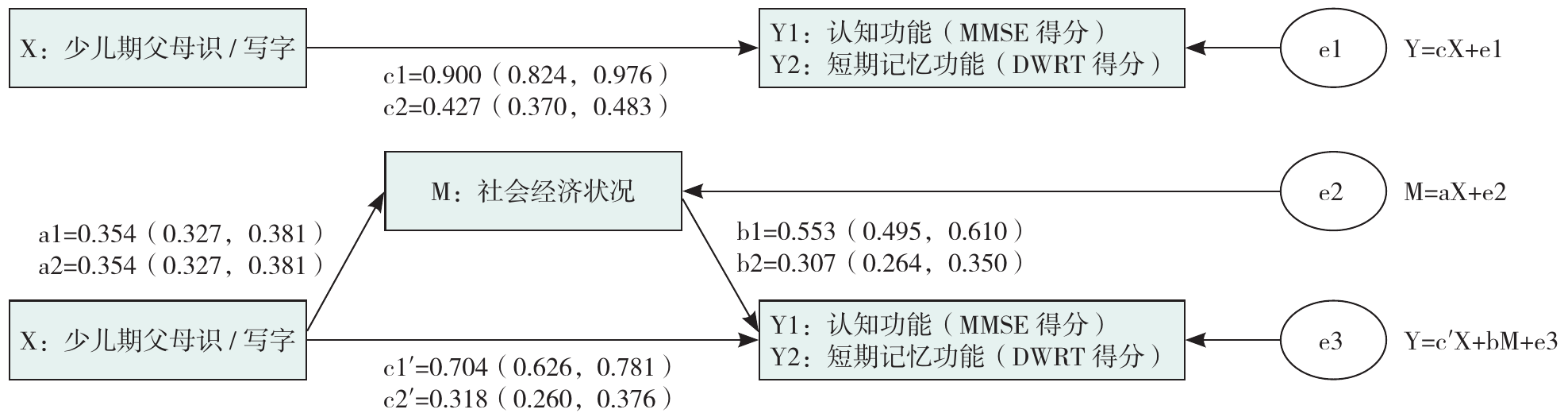
Figure 1 The mediation effect analysis of SES on the association between childhood parental literacy and cognitive function and short-term memory function
| [1] |
吴炳义, 董惠玲, 王媛媛, 等. 我国老年人口失能判别及其对健康预期寿命影响分析[J]. 人口学刊, 2019, 41(1): 101-112. DOI: 10.16405/j.cnki.1004-129X.2019.01.009.
|
| [2] |
倪秀石, 吴方, 宋娟, 等. 老年人认知障碍评估中国专家共识(2022)[J]. 中华老年医学杂志, 2022(12): 1430-1440. DOI: 10.3969/J.issn.1672-6790.2024.03.030.
|
| [3] |
|
| [4] |
2019 Dementia Forecasting Collaborators G B D. Estimation of the global prevalence of dementia in 2019 and forecasted prevalence in 2050: an analysis for the Global Burden of Disease Study 2019[J]. Lancet Public Health, 2022, 7(2): e105-e125. DOI: 10.1016/S2468-2667(21)00249-8.
|
| [5] |
|
| [6] |
|
| [7] |
|
| [8] |
|
| [9] |
|
| [10] |
|
| [11] |
|
| [12] |
|
| [13] |
|
| [14] |
|
| [15] |
|
| [16] |
|
| [17] |
|
| [18] |
薛新东, 葛凯啸. 社会经济地位对我国老年人健康状况的影响——基于中国老年健康影响因素调查的实证分析[J]. 人口与发展, 2017, 23(2): 61-69. DOI: 10.3969/j.issn.1674-1668.2017.02.007.
|
| [19] |
李燕, 孙晓杰, 刘坤. 国内外老年人社会经济地位与健康关系的研究综述[J]. 中国社会医学杂志, 2015, 32(4): 278-281. DOI: 10.3969/j.issn.1673-5625.2015.04.009.
|
| [20] |
|
| [21] |
|
| [22] |
|
| [23] |
|
| [24] |
|
| [25] |
|
| [26] |
|
| [27] |
|
| [28] |
黄晓彤, 王琼, 刘晨, 等. 童年社会经济地位对中老年认知功能影响的中介效应路径分析[J]. 中国全科医学, 2024, 27(3): 322-327, 334. DOI: 10.12114/j.issn.1007-9572.2023.0359.
|
| [29] |
|
| [30] |
|
| [31] |
|
| [32] |
|
| [33] |
孙永强, 颜燕. 我国教育代际传递的城乡差异研究——基于中国家庭追踪调查(CFPS)的实证分析[J]. 北京师范大学学报(社会科学版), 2015(6): 59-67.
|
| [34] |
|
| [1] | CHENG Yu, HAN Shiyao, SUN Ping, XIANG Juan, YANG Hui, LI Dongze, ZHENG Li, LIAO Xiaoyang. Analysis of Socioeconomic and Demographic Challenges in Chronic Disease Management [J]. Chinese General Practice, 2026, 29(20): 2800-2807. |
| [2] | NIE Jiahui, LI Guojuan, HAO Zhuoqun, DU Qiaorong, LIU Penghong, LIU Zhifen, LIU Sha, ZHANG Aixia, WANG Yanfang. Heterogeneity and Influencing Factors of Cognitive Function Impairment in Patients with Major Depressive Disorder [J]. Chinese General Practice, 2026, 29(17): 2340-2346. |
| [3] | LI Li, XU Tianchao, DONG Xiaomei, HUANG Hongfei, CUI Gang, LI Dongdong, ZHANG Ou, FAN Lin, WANG Qi. The Effect of Kidney Tonifying and Brain Strengthening Acupuncture Combined with Sertraline in the Treatment of Elderly Depression: a Randomized Controlled Trial [J]. Chinese General Practice, 2026, 29(11): 1399-1404. |
| [4] | GUAN Yanping, WU Yunxiao, XU Zhifei. Correlation between Obstructive Sleep Apnea Syndrome and Emotional-behavioural Problems in Preschool Children [J]. Chinese General Practice, 2026, 29(09): 1155-1160. |
| [5] | WEN Min, ZHOU Yongling, LIU Jingjing, JIANG Keqing, LIU Juan, ZHU Xiaodan. The Effect and Mechanism of Compensatory Cognitive Training Based on mHealth APP on Stable Schizophrenia Patients [J]. Chinese General Practice, 2025, 28(22): 2819-2825. |
| [6] | ZHANG Luyi, YU Ruihong, WANG Qi, ZHANG Xiaoyu, LI Xiang, WANG Zhongxuan, ZHU Dongshan. The Impact of Circadian Syndrome and Metabolic Syndrome on Subjective and Objective Cognitive Functions: a Cross-sectional Analysis from the Pingyin Cohort [J]. Chinese General Practice, 2025, 28(20): 2481-2490. |
| [7] | AN Qinyu, WANG Yiying, ZHANG Xiaodan, ZHANG Tianlin, ZHAN Qingqing, ZHANG Fuyan, LIU Tao, WU Yanli. Prospective Cohort Study of the Impact of Socioeconomic Status and Healthy Lifestyle on Cardiovascular Disease [J]. Chinese General Practice, 2025, 28(16): 2017-2024. |
| [8] | FU Chunying, YU Ruihong, WANG Qi, LI Meiling, WANG Xiaoyi, ZHU Dongshan. The Association between Female Reproductive Factors and Subjective and Objective Cognitive Function: a Cross-sectional Analysis from the Pingyin Cohort [J]. Chinese General Practice, 2025, 28(08): 980-988. |
| [9] | YANG Le, LI Zhenhao, YAO Dianrui, YANG Yang, SUN Yufang, HE Ying. Cognitive Function of Older Adults Relocated for Poverty Alleviation and Its Influencing Factors [J]. Chinese General Practice, 2025, 28(08): 939-947. |
| [10] | DONG Xiaomei, ZHAO Hongyan, GENG Zhongli, XU Tianchao, WANG Qi. The Effect of Cerebellar Vermal rTMS with TBS Paradigm on Negative Symptoms, Cognitive Function and Serum Inflammatory Factors in Elderly Patients with Chronic Schizophrenia: a Randomized Controlled Trial [J]. Chinese General Practice, 2025, 28(05): 575-580. |
| [11] | YU Haidong, PAN Miaomiao, GU Hongqin, LIU Tao, DAI Jie, LIU Linghua, HOU Junping, YANG Li, SHI Meifang, ZHAO Chao. Correlation Analysis between Depressive, Cognitive Symptoms and Nutritional Metabolism in the Elderly in Community [J]. Chinese General Practice, 2024, 27(28): 3540-3545. |
| [12] | WANG Chenyu, ZHANG Chen, SHI Lulu, ZHU Mengna, WANG Lina. Advances in Cognitive Function Health Management Strategies for Individuals with Mild Cognitive Impairment in Community [J]. Chinese General Practice, 2024, 27(26): 3273-3280. |
| [13] | TU Shuting, LIN Jiaying, ZHUANG Jinyang, XIANG Jingnan, WEI Dongshuai, XIE Yong, JIA Jie. Incidence and Related Factors of Post-stroke Cognitive Impairment: a Multicenter Cross-sectional Study Based on Full-cycle Rehabilitation in Stroke [J]. Chinese General Practice, 2024, 27(23): 2829-2837. |
| [14] | QIAN Zhen, LU Tongbo, HE Jun, ZHU Haiying, WANG Jin, GONG Zunke. Efficacy and Preliminary Mechanism of Precise Exercise Prescriptions for Anxiety, Depression, and Cognitive Function in Patients with Stroke: a Randomized Controlled Trial [J]. Chinese General Practice, 2024, 27(20): 2445-2450. |
| [15] | PANG Lan, LI Peifan, ZHU Xiaogang, YANG Zaihong, ZHENG Lei. Deep Transcranial Magnetic Stimulation Combined with Escitalopram Oxalate in the Treatment of Depression: a Randomized Controlled Trial [J]. Chinese General Practice, 2024, 27(17): 2098-2103. |
| Viewed | ||||||
|
Full text |
|
|||||
|
Abstract |
|
|||||
