
Chinese General Practice ›› 2026, Vol. 29 ›› Issue (29): 4272-4280.DOI: 10.12114/j.issn.1007-9572.2025.0219
• Article • Previous Articles Next Articles
Received:2025-05-22
Revised:2026-02-18
Published:2026-10-15
Online:2026-09-02
Contact:
HUANG Zhongxia
通讯作者:
黄仲夏
作者简介:作者贡献:
张天宇负责研究设计与实施、数据采集、统计分析、图表制作及论文撰写;陈飞参与实验操作、数据整理与患者随访;李新、张佳佳、申曼、詹晓凯、汤然参与数据解析与统计学验证;范斯斌、赵凤仪参与结果分析与文献整理;黄仲夏主导研究构思,参与论文的审阅与修订,并对论文整体负责。
基金资助:
Add to citation manager EndNote|Ris|BibTeX
URL: https://www.chinagp.net/EN/10.12114/j.issn.1007-9572.2025.0219
| 组别 | 例数 | 年龄( | 性别(男/女) | PC% ( | 血钙[M(QR),mmol/L] | 肌酐[M(QR),μmol/L] | 血红蛋白( | 骨质破坏[例(%)] | 髓外病变[例(%)] | ISS分期(Ⅰ/Ⅱ/Ⅲ) | R-ISS分期(Ⅰ/Ⅱ/Ⅲ) | 分型(IgG/IgA/κ/λ) |
|---|---|---|---|---|---|---|---|---|---|---|---|---|
| HC组 | 24 | 66.6±6.9 | 13/11 | 2.2(0.2) | 80.1(72.1) | 84.9±37.6 | ||||||
| aMM组 | 43 | 67.2±14.5 | 27/16 | 22.0±3.4 | 2.2(0.3) | 80.2(129.0) | 95.9±24.4 | 40(93.0) | 12(27.9) | 4/20/21 | 0/7/15 | 24/13/3/3 |
| rMM组 | 33 | 65.3±10.8 | 13/20 | 4.6±0.6 | 2.2(0.2) | 78.4(50.2) | 112.2±19.0 | 31(93.9) | 6(18.2) | 2/15/14 | 0/2/5 | 15/15/1/2 |
| 检验统计量值 | 0.595a | 4.120b | 2.244 | 1.769 | 6.316a | |||||||
| P值 | 0.553 | 0.127 | 0.326 | 0.413 | 0.003 | |||||||
| 组别 | FISH[1q21+/t(4; 14)/t(14; 16)/del(17p)] | 乳酸脱氢酶[M(QR),U/L] | β2微球蛋白[M(QR),mg/L] | 白蛋白[M(QR),g/L] | 甘油三酯[M(QR),mmol/L] | 总胆固醇( | 高密度脂蛋白胆固醇( | 低密度脂蛋白胆固醇( | NLR [M(QR)] | MLR [M(QR)] | PLR [M(QR)] | |
| HC组 | 176.5(64.3) | 3.7(2.5) | 41.9(9.1) | 1.4(0.8) | 4.0±0.8 | 1.2±0.3 | 2.3±0.9 | 5.5(5.6) | 0.1(0.3) | 135(175.7) | ||
| aMM组 | 11/5/1/1 | 180.3(83.0) | 6.2(6.7) | 36.9(5.0) | 1.6(1.5) | 3.6±1.3 | 0.9±0.3 | 2.3±1.0 | 6.1(3.3) | 0.5(0.2) | 128.3(178.6) | |
| rMM组 | 5/1/0/0 | 170.2(58.2) | 3.6(2.0) | 38.4(4.8) | 1.4(0.8) | 4.0±1.0 | 1.1±0.3 | 2.6±0.7 | 2.1(1.5) | 0.3(0.3) | 123.6(74.6) | |
| 检验统计量值 | 1.770 | 35.379 | 9.316 | 2.622 | 0.815a | 8.096a | 1.177a | 1.266 | 36.655 | 7.478 | ||
| P值 | 0.413 | <0.001 | 0.009 | 0.270 | 0.446 | 0.001 | 0.313 | 0.531 | <0.001 | 0.024 |
Table 1 Comparison of basic characteristics among three groups
| 组别 | 例数 | 年龄( | 性别(男/女) | PC% ( | 血钙[M(QR),mmol/L] | 肌酐[M(QR),μmol/L] | 血红蛋白( | 骨质破坏[例(%)] | 髓外病变[例(%)] | ISS分期(Ⅰ/Ⅱ/Ⅲ) | R-ISS分期(Ⅰ/Ⅱ/Ⅲ) | 分型(IgG/IgA/κ/λ) |
|---|---|---|---|---|---|---|---|---|---|---|---|---|
| HC组 | 24 | 66.6±6.9 | 13/11 | 2.2(0.2) | 80.1(72.1) | 84.9±37.6 | ||||||
| aMM组 | 43 | 67.2±14.5 | 27/16 | 22.0±3.4 | 2.2(0.3) | 80.2(129.0) | 95.9±24.4 | 40(93.0) | 12(27.9) | 4/20/21 | 0/7/15 | 24/13/3/3 |
| rMM组 | 33 | 65.3±10.8 | 13/20 | 4.6±0.6 | 2.2(0.2) | 78.4(50.2) | 112.2±19.0 | 31(93.9) | 6(18.2) | 2/15/14 | 0/2/5 | 15/15/1/2 |
| 检验统计量值 | 0.595a | 4.120b | 2.244 | 1.769 | 6.316a | |||||||
| P值 | 0.553 | 0.127 | 0.326 | 0.413 | 0.003 | |||||||
| 组别 | FISH[1q21+/t(4; 14)/t(14; 16)/del(17p)] | 乳酸脱氢酶[M(QR),U/L] | β2微球蛋白[M(QR),mg/L] | 白蛋白[M(QR),g/L] | 甘油三酯[M(QR),mmol/L] | 总胆固醇( | 高密度脂蛋白胆固醇( | 低密度脂蛋白胆固醇( | NLR [M(QR)] | MLR [M(QR)] | PLR [M(QR)] | |
| HC组 | 176.5(64.3) | 3.7(2.5) | 41.9(9.1) | 1.4(0.8) | 4.0±0.8 | 1.2±0.3 | 2.3±0.9 | 5.5(5.6) | 0.1(0.3) | 135(175.7) | ||
| aMM组 | 11/5/1/1 | 180.3(83.0) | 6.2(6.7) | 36.9(5.0) | 1.6(1.5) | 3.6±1.3 | 0.9±0.3 | 2.3±1.0 | 6.1(3.3) | 0.5(0.2) | 128.3(178.6) | |
| rMM组 | 5/1/0/0 | 170.2(58.2) | 3.6(2.0) | 38.4(4.8) | 1.4(0.8) | 4.0±1.0 | 1.1±0.3 | 2.6±0.7 | 2.1(1.5) | 0.3(0.3) | 123.6(74.6) | |
| 检验统计量值 | 1.770 | 35.379 | 9.316 | 2.622 | 0.815a | 8.096a | 1.177a | 1.266 | 36.655 | 7.478 | ||
| P值 | 0.413 | <0.001 | 0.009 | 0.270 | 0.446 | 0.001 | 0.313 | 0.531 | <0.001 | 0.024 |
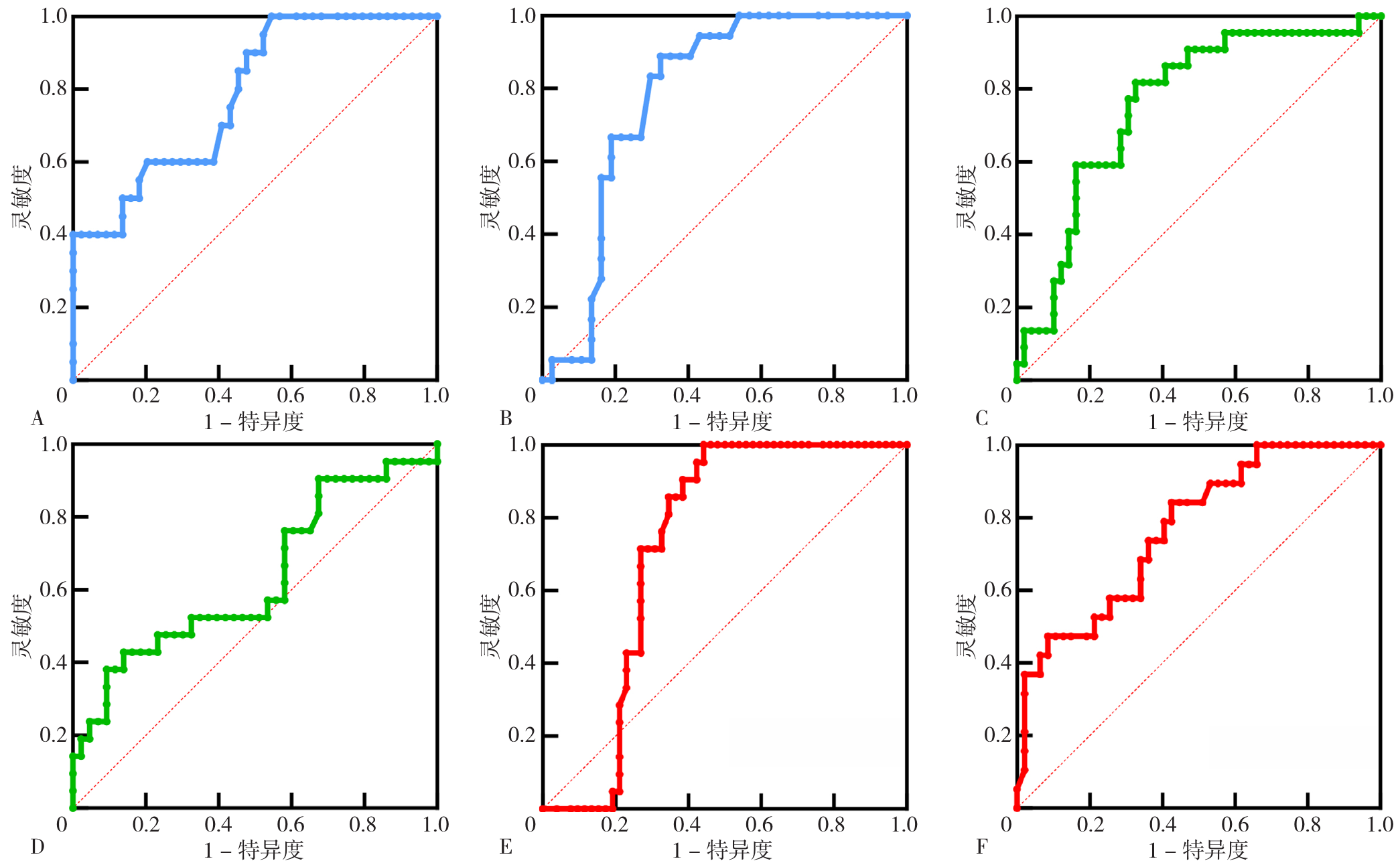
Figure 1 ROC curves of plasma and bone marrow plasma for LILRB1, CD36 and LEF-1 in the diagnosis of MM
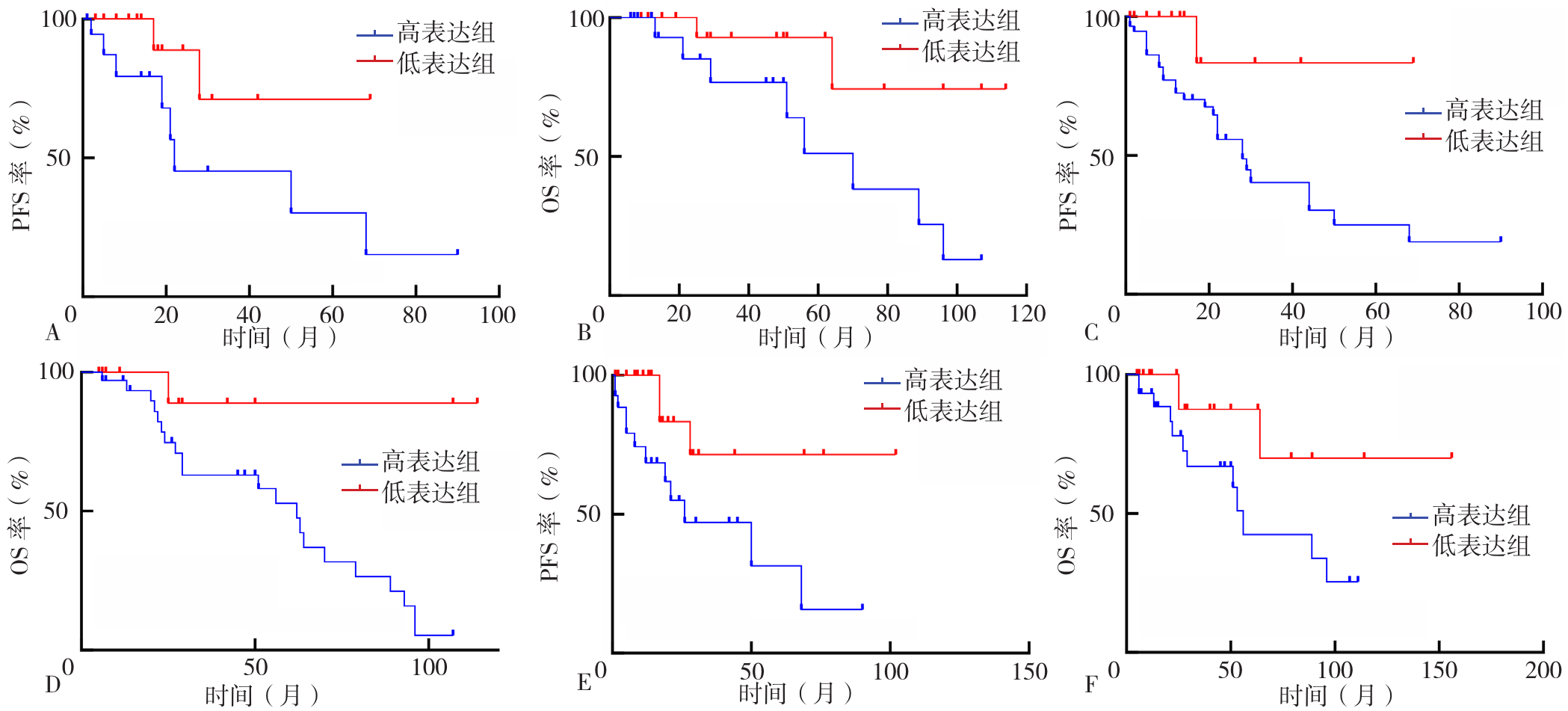
Figure 2 The PFS and OS survival curves of patients in the high-expression group and low-expression group of plasma LILRB1,CD36,and LEF-1
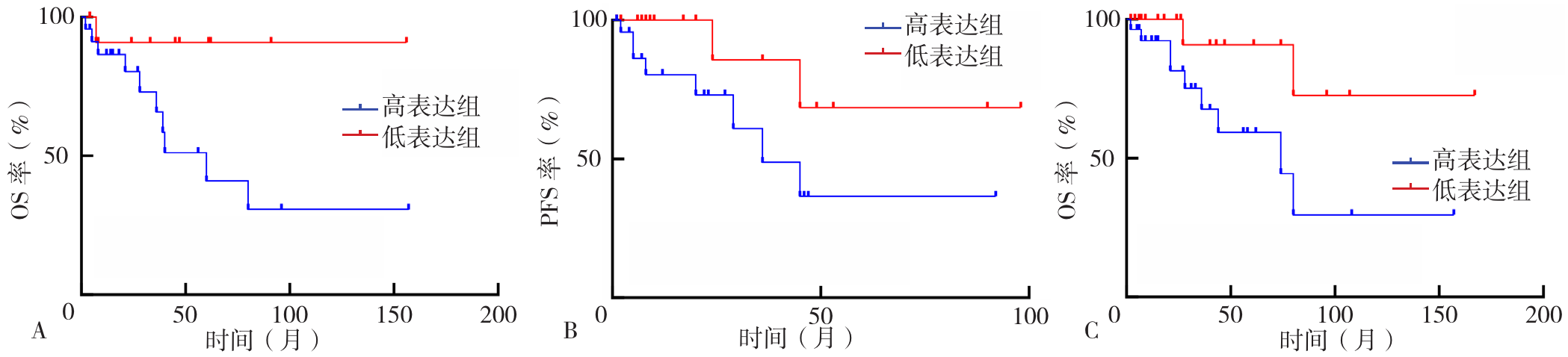
Figure 3 The PFS and OS survival curves of patients in the high-expression group and low-expression group of bone marrow plasma LILRB1, CD36, and LEF-1
| 病例 | 遗传学异常和测定因子异常 |
|---|---|
| 病例1(男性,60岁,IgGλ型,ISS Ⅱ期) | OGM异常:del(1)(p36.11),del(1)(q21.1q21.2),del(1)(q21.1),del(3)(q22.3),del(5)(q13.2),del(5)(q14.2),del(6)(p21.33),del(6)(p22.3),del(7)(p22.3),del(8)(p23.1),del(9)(q34.3),del(10)(q11.22),del(15)(q25.2),del(16)(p11.2),del(17)(q12),del(17)(p11.2),del(19)(q13.2),del(22)(q11.21),del(24)(q11.223q11.23),dup(1)(q44),dup(1)(p36.32p36.31),dup(2)(p25.3),dup(3)(p26.3p26.2),dup(3)(q29),dup(4)(q35.2),dup(4)(q35.1q35.2),dup(5)(q13.2q13.2),dup(5)(q35.2q35.3),dup(5)(q35.3),dup(6)(p25.3p25.2),dup(7)(p22.2p21.3),dup(7)(q36.3),dup(7)(q36.2q36.3),dup(8)(p23.1p23.1),dup(9)(p24.3p24.2),dup(11)(p15.5p15.4),dup(12)(p13.33),dup(14)(q32.31q32.33),dup(15)(q11.2q13.1),dup(15)(q26.3),dup(16)(p13.3),dup(17)(p13.3p13.2),dup(17)(p13.3),dup(18)(q23),dup(18)(p11.32p11.31),dup(19)(p13.3),dup(19)(q13.43),dup(20)(p13),dup(21)(q22.3) |
| FISH和染色体异常:del(17p),gain(1q21),IgH/FGFR3,IgH/MAF,IgH/CCND1,IgH/MAFB | |
| LEF-1水平大于截断值:是 | |
| 病例2(女性,70岁,κ型,ISS Ⅲ期) | OGM异常:del(1)(p36.11),del(1)(p13.3),del(1)(q21.1q21.2),del(1)(q21.1),del(6)(p22.3),del(7)(p22.3),del(7)(q34),del(8)(p23.1),del(10)(q11.22q11.23),del(10)(q11.22),del(14)(q13.2),del(15)(q25.2),del(16)(p13.3),del(16)(p11.2),del(17)(q12),del(22)(q11.21),del(23)(q28),dup(1)(q44),dup(1)(q21.1q21.2),dup(2)(p25.3),dup(3)(p26.3p26.1),dup(5)(q35.2q35.3),dup(5)(q35.3),dup(6)(p25.3p25.2),del(6)(p21.33),dup(7)(q36.2q36.3),dup(7)(q36.3),dup(9)(p24.3),dup(11)(p15.5p15.4),dup(12)(p13.33),dup(14)(q32.31q32.33),dup(15)(q11.2q13.1),dup(15)(q26.2q26.3),dup(16)(p13.3),dup(17)(p11.2p11.2),dup(17)(p13.3),dup(18)(q23),dup(18)(p11.32p11.31),dup(19)(q13.42q13.43),dup(19)(p13.2),dup(19)(p13.3),dup(19)(p13.2p13.12),dup(19)(q13.42q13.43),dup(20)(p13),dup(21)(q22.3),dup(22)(q11.21q11.21) |
| FISH和染色体异常:del(17p),del(1q21),IgH/FGFR3,IgH/MAF,IgH/MAFB | |
| LEF-1水平大于截断值:是 | |
| 病例3(男性,60岁,κ型,ISS Ⅲ期) | OGM异常:del(1)(q31.3),del(1)(q21.1q21.2),del(1)(p13.3),del(1)(q21.1),del(5)(q13.2),del(6)(p22.3),del(6)(p21.33),del(6)(p22.1),del(7)(q35),del(7)(p22.3),del(10)(q11.22),del(15)(q25.2),del(16)(p11.2),del(17)(p11.2),del(22)(q11.21),dup(3)(q29),dup(8)(p23.1p23.1),dup(15)(q26.2q26.3),dup(16)(p11.2p11.2),dup(22)(q11.21q11.21) |
| FISH和染色体异常:IgH/FGFR3,IgH,TP53(位于17p13.1位点) | |
| LEF-1水平大于截断值:是 | |
| 病例4(男性,85岁,κ型,ISS Ⅲ期) | OGM异常:del(1)(q21.1q21.2),del(1)(q21.1),del(1)(p13.3),del(2)(q24.1),del(10)(q11.22q11.23),del(10)(p12.1),del(10)(q11.22),del(15)(q11.2),del(15)(q25.2),del(17)(q11.2),del(19)(q13.2),del(19)(p13.2),del(22)(q11.21),del(23)(q28),dup(8)(p23.1p23.1),dup(16)(p13.11),dup(17)(p11.2p11.2),dup(17)(q12q12),dup(22)(q11.21q11.21) |
| FISH和染色体异常:CCND1,1q21 | |
| LEF-1水平大于截断值:否 | |
| 病例5(男性,71岁,IgA κ型,ISS Ⅲ期) | OGM异常:del(22)(q11.21),del(10)(q11.22q11.23),del(16)(p11.2),del(17)(q12),del(15)(q11.2),del(5)(q13.2),del(6)(p21.33),dup(16)(p13.11p12.3),del(7)(q11.23),del(17)(p11.2),del(1)(q21.1q21.2),del(1)(q21.1),del(6)(p22.3),del(10)(q11.22),del(6)(p22.1),del(14)(q13.2),del(15)(q25.2),dup(8)(p23.1p23.1) |
| FISH和染色体异常:TP53,IgH,IgH/FGFR3,IgH/MAF | |
| LEF-1水平大于截断值:是 | |
| 病例6(男性,73岁,IgA κ型,ISS Ⅲ期) | OGM异常:del(22)(q11.21),del(10)(q11.22q11.23),del(16)(p11.2),del(8)(p23.1),del(15)(q11.2),dup(8)(p23.1p23.1),del(19)(q13.2),del(5)(q13.2),dup(12)(p13.33),dup(15)(q11.2q13.1),del(6)(p21.33),del(17)(p11.2),del(19)(p13.2),del(1)(p13.3),del(1)(p31.3),del(1)(q21.1q21.2),del(6)(p22.3),del(10)(q11.22),del(6)(p22.1),dup(22)(q11.21q11.21) |
| FISH和染色体异常:IgH | |
| LEF-1水平大于截断值:否 |
Table 2 Genetic abnormalities and measurement factor abnormalities in 6 MM patients by OGM and FISH
| 病例 | 遗传学异常和测定因子异常 |
|---|---|
| 病例1(男性,60岁,IgGλ型,ISS Ⅱ期) | OGM异常:del(1)(p36.11),del(1)(q21.1q21.2),del(1)(q21.1),del(3)(q22.3),del(5)(q13.2),del(5)(q14.2),del(6)(p21.33),del(6)(p22.3),del(7)(p22.3),del(8)(p23.1),del(9)(q34.3),del(10)(q11.22),del(15)(q25.2),del(16)(p11.2),del(17)(q12),del(17)(p11.2),del(19)(q13.2),del(22)(q11.21),del(24)(q11.223q11.23),dup(1)(q44),dup(1)(p36.32p36.31),dup(2)(p25.3),dup(3)(p26.3p26.2),dup(3)(q29),dup(4)(q35.2),dup(4)(q35.1q35.2),dup(5)(q13.2q13.2),dup(5)(q35.2q35.3),dup(5)(q35.3),dup(6)(p25.3p25.2),dup(7)(p22.2p21.3),dup(7)(q36.3),dup(7)(q36.2q36.3),dup(8)(p23.1p23.1),dup(9)(p24.3p24.2),dup(11)(p15.5p15.4),dup(12)(p13.33),dup(14)(q32.31q32.33),dup(15)(q11.2q13.1),dup(15)(q26.3),dup(16)(p13.3),dup(17)(p13.3p13.2),dup(17)(p13.3),dup(18)(q23),dup(18)(p11.32p11.31),dup(19)(p13.3),dup(19)(q13.43),dup(20)(p13),dup(21)(q22.3) |
| FISH和染色体异常:del(17p),gain(1q21),IgH/FGFR3,IgH/MAF,IgH/CCND1,IgH/MAFB | |
| LEF-1水平大于截断值:是 | |
| 病例2(女性,70岁,κ型,ISS Ⅲ期) | OGM异常:del(1)(p36.11),del(1)(p13.3),del(1)(q21.1q21.2),del(1)(q21.1),del(6)(p22.3),del(7)(p22.3),del(7)(q34),del(8)(p23.1),del(10)(q11.22q11.23),del(10)(q11.22),del(14)(q13.2),del(15)(q25.2),del(16)(p13.3),del(16)(p11.2),del(17)(q12),del(22)(q11.21),del(23)(q28),dup(1)(q44),dup(1)(q21.1q21.2),dup(2)(p25.3),dup(3)(p26.3p26.1),dup(5)(q35.2q35.3),dup(5)(q35.3),dup(6)(p25.3p25.2),del(6)(p21.33),dup(7)(q36.2q36.3),dup(7)(q36.3),dup(9)(p24.3),dup(11)(p15.5p15.4),dup(12)(p13.33),dup(14)(q32.31q32.33),dup(15)(q11.2q13.1),dup(15)(q26.2q26.3),dup(16)(p13.3),dup(17)(p11.2p11.2),dup(17)(p13.3),dup(18)(q23),dup(18)(p11.32p11.31),dup(19)(q13.42q13.43),dup(19)(p13.2),dup(19)(p13.3),dup(19)(p13.2p13.12),dup(19)(q13.42q13.43),dup(20)(p13),dup(21)(q22.3),dup(22)(q11.21q11.21) |
| FISH和染色体异常:del(17p),del(1q21),IgH/FGFR3,IgH/MAF,IgH/MAFB | |
| LEF-1水平大于截断值:是 | |
| 病例3(男性,60岁,κ型,ISS Ⅲ期) | OGM异常:del(1)(q31.3),del(1)(q21.1q21.2),del(1)(p13.3),del(1)(q21.1),del(5)(q13.2),del(6)(p22.3),del(6)(p21.33),del(6)(p22.1),del(7)(q35),del(7)(p22.3),del(10)(q11.22),del(15)(q25.2),del(16)(p11.2),del(17)(p11.2),del(22)(q11.21),dup(3)(q29),dup(8)(p23.1p23.1),dup(15)(q26.2q26.3),dup(16)(p11.2p11.2),dup(22)(q11.21q11.21) |
| FISH和染色体异常:IgH/FGFR3,IgH,TP53(位于17p13.1位点) | |
| LEF-1水平大于截断值:是 | |
| 病例4(男性,85岁,κ型,ISS Ⅲ期) | OGM异常:del(1)(q21.1q21.2),del(1)(q21.1),del(1)(p13.3),del(2)(q24.1),del(10)(q11.22q11.23),del(10)(p12.1),del(10)(q11.22),del(15)(q11.2),del(15)(q25.2),del(17)(q11.2),del(19)(q13.2),del(19)(p13.2),del(22)(q11.21),del(23)(q28),dup(8)(p23.1p23.1),dup(16)(p13.11),dup(17)(p11.2p11.2),dup(17)(q12q12),dup(22)(q11.21q11.21) |
| FISH和染色体异常:CCND1,1q21 | |
| LEF-1水平大于截断值:否 | |
| 病例5(男性,71岁,IgA κ型,ISS Ⅲ期) | OGM异常:del(22)(q11.21),del(10)(q11.22q11.23),del(16)(p11.2),del(17)(q12),del(15)(q11.2),del(5)(q13.2),del(6)(p21.33),dup(16)(p13.11p12.3),del(7)(q11.23),del(17)(p11.2),del(1)(q21.1q21.2),del(1)(q21.1),del(6)(p22.3),del(10)(q11.22),del(6)(p22.1),del(14)(q13.2),del(15)(q25.2),dup(8)(p23.1p23.1) |
| FISH和染色体异常:TP53,IgH,IgH/FGFR3,IgH/MAF | |
| LEF-1水平大于截断值:是 | |
| 病例6(男性,73岁,IgA κ型,ISS Ⅲ期) | OGM异常:del(22)(q11.21),del(10)(q11.22q11.23),del(16)(p11.2),del(8)(p23.1),del(15)(q11.2),dup(8)(p23.1p23.1),del(19)(q13.2),del(5)(q13.2),dup(12)(p13.33),dup(15)(q11.2q13.1),del(6)(p21.33),del(17)(p11.2),del(19)(p13.2),del(1)(p13.3),del(1)(p31.3),del(1)(q21.1q21.2),del(6)(p22.3),del(10)(q11.22),del(6)(p22.1),dup(22)(q11.21q11.21) |
| FISH和染色体异常:IgH | |
| LEF-1水平大于截断值:否 |
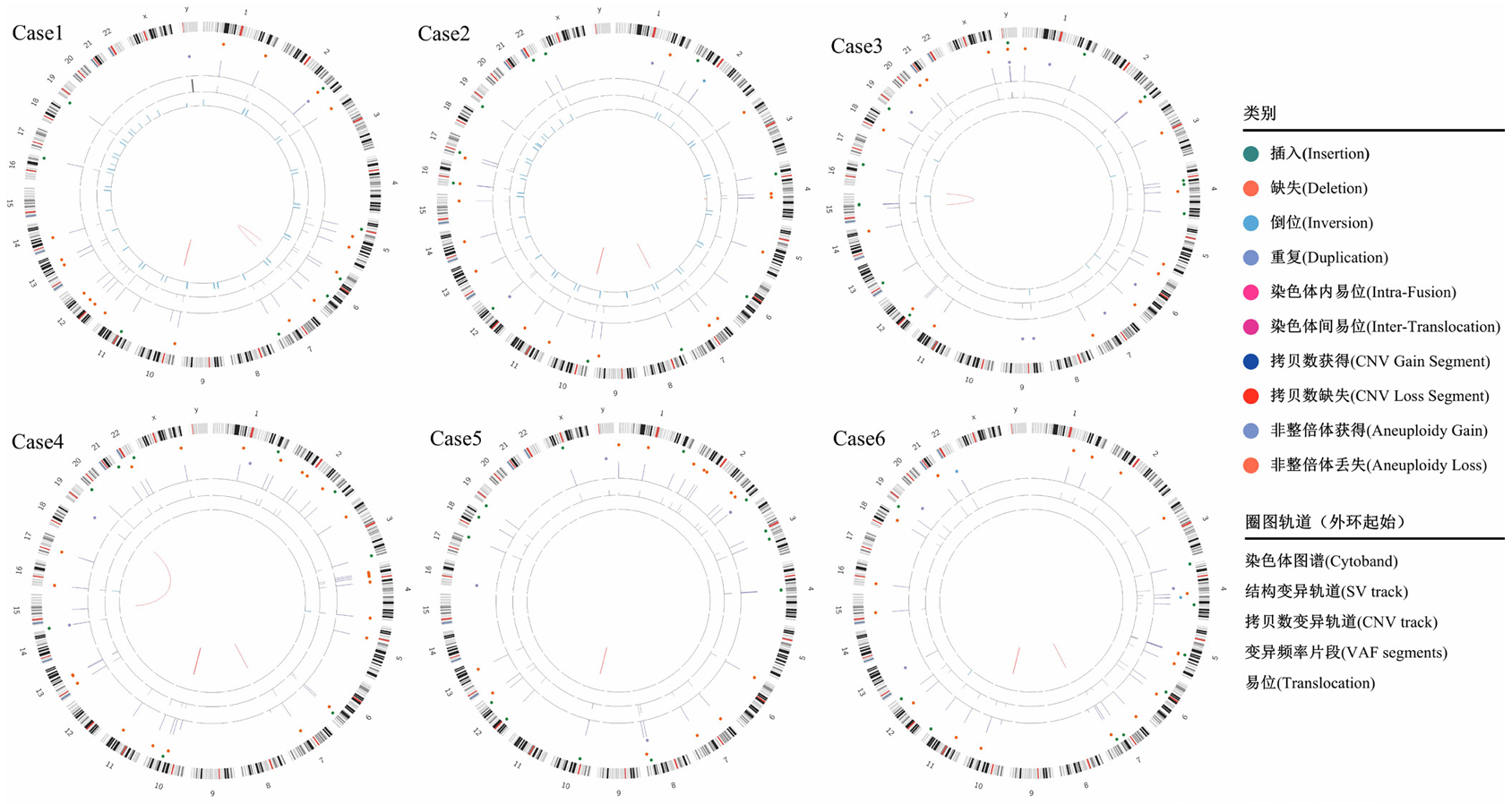
Figure 4 Circos diagram of the distribution of chromosomal structural variants in the 6 patients by OGM
| [1] |
|
| [2] |
|
| [3] |
|
| [4] |
|
| [5] |
|
| [6] |
王艳芳,张朕豪,王化, 等. 利用全基因组光学图谱检测多发性骨髓瘤细胞遗传学异常[J]. 中华血液学杂志, 2024, 45(3): 303-307. DOI: 10.3760/cma.j.cn121090-20230915-00123.
|
| [7] |
|
| [8] |
|
| [9] |
|
| [10] |
|
| [11] |
|
| [12] |
|
| [13] |
|
| [14] |
|
| [15] |
|
| [16] |
|
| [17] |
|
| [18] |
|
| [19] |
|
| [1] | HU Yuting, YAN Ying, YAN Mingjie, WANG Huijun, HAN Hu. Network Meta-analysis of the Efficacy of Different Bone-modifying Drugs in the Treatment of Patients with Bone Metastases from Solid Tumours or Multiple Myeloma [J]. Chinese General Practice, 2026, 29(30): 4489-4502. |
| [2] | LI Jiao, ZHOU Jianjie, PENG Lang, MEI Yingbing, TAN Zihu. Development and Validation of a Risk Prediction Model for Poor Prognosis in Alzheimer's Disease Patients with Community-acquired Pneumonia [J]. Chinese General Practice, 2026, 29(29): 4248-4257. |
| [3] | YAN Yi, JIANG Yu, CHEN Bi, ZHANG Cantang, WANG Jing. Study on the Predictive Value of a Multi-parameter Model Based on Lymphocyte Count for the Prognosis of Patients with Acute Exacerbation of Interstitial Lung Disease Complicated with Pulmonary Infection [J]. Chinese General Practice, 2026, 29(26): 3760-3766. |
| [4] | ZHAO Sinan, LIN Shan, KANG Xi, WANG Chunyan, WANG Shunxiang. Impact of Immune Inhibitory Factors Programmed Cell Death Ligand 1 and T Cell Immunoglobulin Mucin-3 on the Prognosis of Hepatocellular Carcinoma Patients [J]. Chinese General Practice, 2026, 29(24): 3461-3465. |
| [5] | WANG Xinliang, ZOU Nannan, CHEN Nana, WANG Xin. Analysis of Clinical Characteristics and Prognostic Risk Factors in Patients with Pulmonary Mucormycosis Complicated with Diabetes Mellitus [J]. Chinese General Practice, 2026, 29(22): 3154-3161. |
| [6] | HAN Congcong, QIU Xinyu, SHAN Chunfang, SONG Ning, CHEN Qingjie, MULADILI· Abudureheman, LI Xiaomei, YANG Yining, ZHAO Qian. Impact of Metabolic Obesity Phenotype on Long-term Prognosis after Percutaneous Coronary Intervention in Patients with Acute Coronary Syndrome [J]. Chinese General Practice, 2026, 29(21): 2950-2958. |
| [7] | LIU Yang, ZHOU Guoping, LI Xiaoshi, LI Ping, ZHANG Xin. Impact of Acute Respiratory Distress Syndrome Etiology on the Prognostic Value of Driving Pressure: a Prospective Cohort Study [J]. Chinese General Practice, 2026, 29(19): 2638-2647. |
| [8] | LUAN Xiaoqing, SUN Jingjing, LI Xiaoling, WANG Manxia. Research Progress on Potential Biomarkers of Neuromyelitis Optica Spectrum Disorder [J]. Chinese General Practice, 2026, 29(17): 2418-2424. |
| [9] | ZHAN Li, HENG Zhaoyang, HE Liangyu, ZHAO Jie, CHEN Jie, XING Jinshan. Efficacy and Safety of CAR-T Therapy Targeting the B Cell Maturation Antigen on Relapsed/Refractory Multiple Myeloma in Chinese People: a Meta-analysis [J]. Chinese General Practice, 2026, 29(14): 1921-1930. |
| [10] | XIONG Siyu, LU Bing, JIANG Wenhong, YU Tingting. Study on the Relationship between Fructose-1, 6-Bisphosphate Aldolase A Expression before and after Targeted Drug Resistance in Lung Adenocarcinoma and Patient Prognosis [J]. Chinese General Practice, 2026, 29(14): 1883-1889. |
| [11] | SUN Xia, SHEN Wen, TANG Xiang, ZHONG Wei, WANG Kailin, DAI Zhiyin, ZHANG Chaopu, YUAN Wei, YUAN Guoyue. Analysis of Clinical Characteristics in Dilated Cardiomyopathy Patients with Different Weight Statuses and the Influence of Weight Management on the Prognosis [J]. Chinese General Practice, 2026, 29(11): 1448-1455. |
| [12] | XIA Ning, SHI Lan, DING Wanbao, ZHANG Jie, LONG Yi, DAI Hui, ZHANG Can, DAI Hailong. Clinical Characteristics and Prognosis of Patients with Amyloidosis [J]. Chinese General Practice, 2026, 29(09): 1161-1167. |
| [13] | LEI Chunxin, ZHANG Xiya, ZHANG Yan, CHEN Jiaqi, LIU Zihan, LUO Jing, TAO Qingwen. Clinical Characteristics and Influencing Factors of Primary Sjögren's Disease with Dryness and Blood-stasis Syndrome [J]. Chinese General Practice, 2026, 29(06): 718-725. |
| [14] | WANG Lina, LEI Jingshu, LI Kuibao, WANG Ruiying, LI Xinmiao, WANG Fangfang, GUO Xiaorong, NIU Ruihao, ZHAO Wei, ZHOU Fangfang, ZHAO Jingjing, LEE CHONGYOU. Review on Inflammatory Response in Patients with Acute Myocardial Infarction [J]. Chinese General Practice, 2026, 29(06): 790-801. |
| [15] | WANG Xue, YANG Chengming, WANG Ziyun, ZHOU Zhong. Analysis on Prognosis and Influencing Factors in Patients with Post-tuberculosis Bronchiectasis [J]. Chinese General Practice, 2026, 29(05): 606-611. |
| Viewed | ||||||
|
Full text |
|
|||||
|
Abstract |
|
|||||
