
Chinese General Practice ›› 2026, Vol. 29 ›› Issue (26): 3760-3766.DOI: 10.12114/j.issn.1007-9572.2025.0105
Special Issue: 呼吸疾病文章合辑
• Article • Previous Articles Next Articles
Received:2025-02-10
Revised:2025-05-06
Published:2026-09-15
Online:2026-08-11
Contact:
WANG Jing
通讯作者:
王景
作者简介:作者贡献:
闫屹负责研究的构思与设计,研究的实施,数据的收集,撰写论文;蒋宇负责数据的收集与整理,统计学处理,图、表的绘制;陈碧、张灿堂进行研究的可行性分析、论文的修订;王景负责文章的质量控制与审查,对文章整体负责,监督管理。
基金资助:CLC Number:
Add to citation manager EndNote|Ris|BibTeX
URL: https://www.chinagp.net/EN/10.12114/j.issn.1007-9572.2025.0105
| 组别 | 例数 | 性别[例(%)] | 年龄( | 合并心血管疾病[例(%)] | 合并糖尿病[例(%)] | 合并肾功能不全[例(%)] | ILD分型[例(%)] | |||
|---|---|---|---|---|---|---|---|---|---|---|
| 男 | 女 | IPF | CTD-ILD | 非IPF的IIP | ||||||
| 死亡组 | 65 | 40(61.5) | 25(38.4) | 68.5±11.3 | 34(66.7) | 12(23.5) | 10(19.6) | 12(23.5) | 27(57.0) | 12(23.5) |
| 存活组 | 37 | 22(59.4) | 15(40.5) | 72.4±10.5 | 17(33.3) | 11(21.6) | 0 | 15(29.4) | 18(35.3) | 18(35.3) |
| 检验统计量值 | 0.209a | 1.818b | 11.333a | 0.056a | 8.890a | 3.333a | ||||
| P值 | 0.836 | 0.072 | 0.001 | 0.813 | 0.003 | 0.189 | ||||
| 组别 | NEU[M(P25,P75),×109/L] | Hb[M(P25,P75),g/L] | PLT[M(P25,P75),×109/L] | d1 LYM[M(P25,P75),×109/L] | d3 LYM[M(P25,P75),×109/L] | d5 LYM[M(P25,P75),×109/L] | PCT[M(P25,P75),μg/L] | CRP[M(P25,P75),mg/L] | ||
| 死亡组 | 10.81(8.44,14.12) | 116(93,131) | 208(133,270) | 0.7(0.4,1.4) | 0.7(0.4,1.0) | 0.60(0.4,1.0) | 0.27(0.13,0.69) | 92.6(20.2,153.9) | ||
| 存活组 | 7.79(5.83,11.79) | 125(116,137) | 200(169,274) | 0.9(0.6,1.6) | 1.1(0.7,1.9) | 1.20(0.8,1.9) | 0.09(0.05,0.31) | 46.1(9.6,107.6) | ||
| 检验统计量值 | -2.868 | -2.805 | -0.479 | -1.579 | -3.889 | -4.598 | -1.817 | -3.303 | ||
| P值 | 0.004 | 0.005 | 0.635 | 0.115 | <0.001 | <0.001 | <0.001 | 0.023 | ||
| 组别 | Tbil[M(P25,P75),mmol/L] | ALB[M(P25,P75),g/L] | Scr[M(P25,P75),mmol/L] | APACHEⅡ评分[M(P25,P75),分] | SOFA评分[M(P25,P75),分] | LDH[M(P25,P75),U/L] | Lac[M(P25,P75),mmol/L] | P/F[M(P25,P75),mmHg] | ||
| 死亡组 | 7.6(2.9,12.8) | 30.0(28.2,33.0) | 54.0(45,77) | 18(15,20) | 4(3,5) | 388(291,574) | 1.30(0.80,2.10) | 136(114,237) | ||
| 存活组 | 6.5(4.0,9.3) | 32.5(29.9,35.2) | 51.0(42,63) | 15(13,17) | 3(2,3) | 320(245,489) | 0.80(0.50,1.30) | 189(147,236) | ||
| 检验统计量值 | -0.542 | -2.795 | -1.747 | -4.080 | -3.700 | -2.068 | -2.200 | -2.075 | ||
| P值 | 0.590 | 0.005 | 0.081 | <0.001 | <0.001 | 0.038 | 0.028 | 0.038 | ||
Table 1 Comparison of baseline indicators between the death group and the survival group
| 组别 | 例数 | 性别[例(%)] | 年龄( | 合并心血管疾病[例(%)] | 合并糖尿病[例(%)] | 合并肾功能不全[例(%)] | ILD分型[例(%)] | |||
|---|---|---|---|---|---|---|---|---|---|---|
| 男 | 女 | IPF | CTD-ILD | 非IPF的IIP | ||||||
| 死亡组 | 65 | 40(61.5) | 25(38.4) | 68.5±11.3 | 34(66.7) | 12(23.5) | 10(19.6) | 12(23.5) | 27(57.0) | 12(23.5) |
| 存活组 | 37 | 22(59.4) | 15(40.5) | 72.4±10.5 | 17(33.3) | 11(21.6) | 0 | 15(29.4) | 18(35.3) | 18(35.3) |
| 检验统计量值 | 0.209a | 1.818b | 11.333a | 0.056a | 8.890a | 3.333a | ||||
| P值 | 0.836 | 0.072 | 0.001 | 0.813 | 0.003 | 0.189 | ||||
| 组别 | NEU[M(P25,P75),×109/L] | Hb[M(P25,P75),g/L] | PLT[M(P25,P75),×109/L] | d1 LYM[M(P25,P75),×109/L] | d3 LYM[M(P25,P75),×109/L] | d5 LYM[M(P25,P75),×109/L] | PCT[M(P25,P75),μg/L] | CRP[M(P25,P75),mg/L] | ||
| 死亡组 | 10.81(8.44,14.12) | 116(93,131) | 208(133,270) | 0.7(0.4,1.4) | 0.7(0.4,1.0) | 0.60(0.4,1.0) | 0.27(0.13,0.69) | 92.6(20.2,153.9) | ||
| 存活组 | 7.79(5.83,11.79) | 125(116,137) | 200(169,274) | 0.9(0.6,1.6) | 1.1(0.7,1.9) | 1.20(0.8,1.9) | 0.09(0.05,0.31) | 46.1(9.6,107.6) | ||
| 检验统计量值 | -2.868 | -2.805 | -0.479 | -1.579 | -3.889 | -4.598 | -1.817 | -3.303 | ||
| P值 | 0.004 | 0.005 | 0.635 | 0.115 | <0.001 | <0.001 | <0.001 | 0.023 | ||
| 组别 | Tbil[M(P25,P75),mmol/L] | ALB[M(P25,P75),g/L] | Scr[M(P25,P75),mmol/L] | APACHEⅡ评分[M(P25,P75),分] | SOFA评分[M(P25,P75),分] | LDH[M(P25,P75),U/L] | Lac[M(P25,P75),mmol/L] | P/F[M(P25,P75),mmHg] | ||
| 死亡组 | 7.6(2.9,12.8) | 30.0(28.2,33.0) | 54.0(45,77) | 18(15,20) | 4(3,5) | 388(291,574) | 1.30(0.80,2.10) | 136(114,237) | ||
| 存活组 | 6.5(4.0,9.3) | 32.5(29.9,35.2) | 51.0(42,63) | 15(13,17) | 3(2,3) | 320(245,489) | 0.80(0.50,1.30) | 189(147,236) | ||
| 检验统计量值 | -0.542 | -2.795 | -1.747 | -4.080 | -3.700 | -2.068 | -2.200 | -2.075 | ||
| P值 | 0.590 | 0.005 | 0.081 | <0.001 | <0.001 | 0.038 | 0.028 | 0.038 | ||
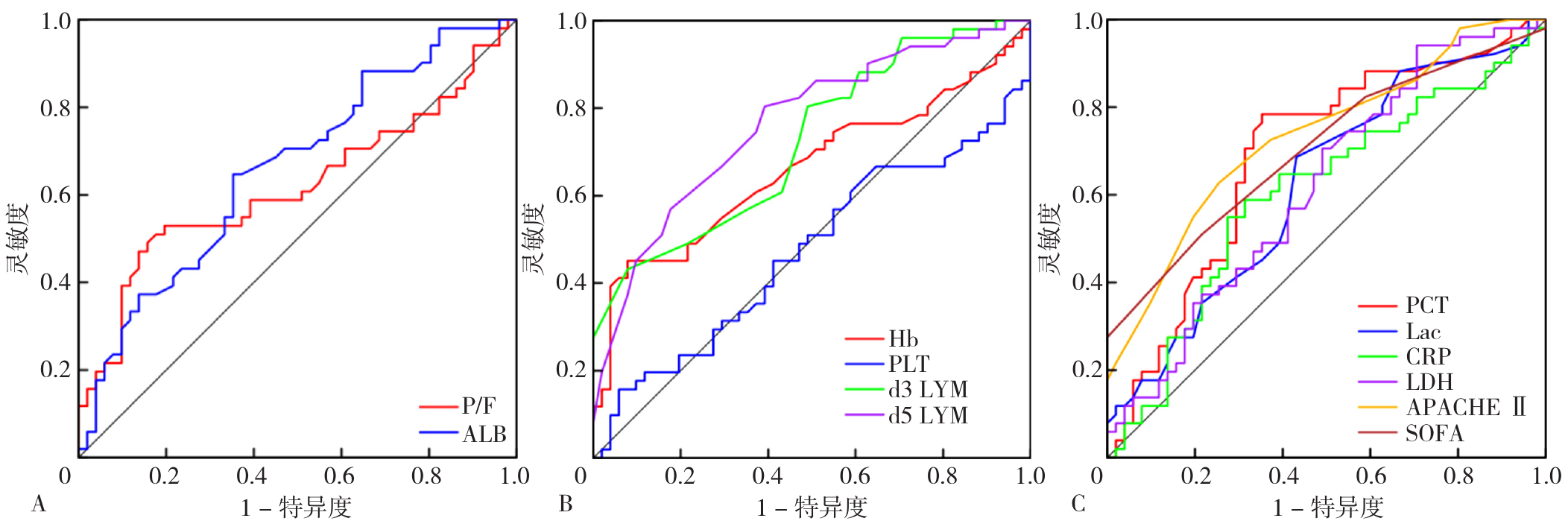
Figure 1 ROC curves of various clinical indicators for predicting the 28-day prognosis of AE-ILD patients with pulmonary infection
| 临床指标 | AUC(95%CI) | P值 | 灵敏度(%) | 特异度(%) | 最佳截断值 |
|---|---|---|---|---|---|
| APACHEⅡ评分 | 0.733(0.637~0.830) | <0.001 | 0.627 | 0.745 | 16.5分 |
| SOFA评分 | 0.704(0.603~0.805) | <0.001 | 0.510 | 0.784 | 3.5分 |
| d3 LYM | 0.723(0.626~0.820) | <0.001 | 0.922 | 0.431 | 0.55×10⁹/L |
| d5 LYM | 0.764(0.672~0.856) | <0.001 | 0.824 | 0.569 | 0.70×10⁹/L |
| PCT | 0.390(0.585~0.795) | 0.001 | 0.784 | 0.647 | 0.123 5 μg/L |
| CRP | 0.604(0.493~0.716) | 0.069 | 0.588 | 0.686 | 81.0 mg/L |
| Lac | 0.690(0.514~0.732) | 0.032 | 0.686 | 0.239 | 0.623 |
| P/F | 0.619(0.507~0.731) | 0.038 | 0.863 | 0.471 | 132 mmHg |
| Hb | 0.661(0.553~0.769) | 0.005 | 0.961 | 0.373 | 100 g/L |
| ALB | 0.661(0.555~0.766) | 0.005 | 0.647 | 0.647 | 31.5 g/L |
| LDH | 0.619(0.510~0.728) | 0.039 | 0.941 | 0.294 | 252 U/L |
Table 2 The value of various clinical indicators in predicting the 28 days prognosis of AE-ILD patients with pulmonary infection
| 临床指标 | AUC(95%CI) | P值 | 灵敏度(%) | 特异度(%) | 最佳截断值 |
|---|---|---|---|---|---|
| APACHEⅡ评分 | 0.733(0.637~0.830) | <0.001 | 0.627 | 0.745 | 16.5分 |
| SOFA评分 | 0.704(0.603~0.805) | <0.001 | 0.510 | 0.784 | 3.5分 |
| d3 LYM | 0.723(0.626~0.820) | <0.001 | 0.922 | 0.431 | 0.55×10⁹/L |
| d5 LYM | 0.764(0.672~0.856) | <0.001 | 0.824 | 0.569 | 0.70×10⁹/L |
| PCT | 0.390(0.585~0.795) | 0.001 | 0.784 | 0.647 | 0.123 5 μg/L |
| CRP | 0.604(0.493~0.716) | 0.069 | 0.588 | 0.686 | 81.0 mg/L |
| Lac | 0.690(0.514~0.732) | 0.032 | 0.686 | 0.239 | 0.623 |
| P/F | 0.619(0.507~0.731) | 0.038 | 0.863 | 0.471 | 132 mmHg |
| Hb | 0.661(0.553~0.769) | 0.005 | 0.961 | 0.373 | 100 g/L |
| ALB | 0.661(0.555~0.766) | 0.005 | 0.647 | 0.647 | 31.5 g/L |
| LDH | 0.619(0.510~0.728) | 0.039 | 0.941 | 0.294 | 252 U/L |
| 变量 | B | SE | Wald χ2值 | P值 | HR(95%CI) |
|---|---|---|---|---|---|
| SOFA评分 | 1.146 | 0.291 | 15.437 | 0.005 | 2.20(1.27~3.81) |
| APACHEⅡ评分 | 0.787 | 0.281 | 7.832 | <0.001 | 3.15(1.78~5.58) |
| Lac | 0.724 | 0.302 | 5.756 | 0.016 | 2.06(1.14~3.73) |
| P/F | 0.942 | 0.282 | 11.105 | 0.001 | 2.57(1.47~4.47) |
| PCT | 1.441 | 0.342 | 17.729 | <0.001 | 4.23(2.16~8.27) |
| LDH | 1.415 | 0.595 | 5.650 | 0.017 | 4.12(1.28~13.20) |
| Alb | 5.650 | 0.290 | 7.061 | 0.008 | 2.16(1.22~3.82) |
| CRP | 0.789 | 0.283 | 7.770 | 0.005 | 2.20(1.26~3.84) |
| Hb | 1.259 | 0.295 | 18.201 | <0.001 | 3.52(1.98~6.28) |
| d3 LYM | 1.270 | 0.288 | 19.407 | <0.001 | 3.56 (2.02~6.27) |
| d5 LYM | 1.369 | 0.354 | 14.903 | <0.001 | 3.93(1.96~7.88) |
Table 3 Univariate Cox proportional hazards regression analysis of 28-day prognosis in AE-ILD patients with pulmonary infection
| 变量 | B | SE | Wald χ2值 | P值 | HR(95%CI) |
|---|---|---|---|---|---|
| SOFA评分 | 1.146 | 0.291 | 15.437 | 0.005 | 2.20(1.27~3.81) |
| APACHEⅡ评分 | 0.787 | 0.281 | 7.832 | <0.001 | 3.15(1.78~5.58) |
| Lac | 0.724 | 0.302 | 5.756 | 0.016 | 2.06(1.14~3.73) |
| P/F | 0.942 | 0.282 | 11.105 | 0.001 | 2.57(1.47~4.47) |
| PCT | 1.441 | 0.342 | 17.729 | <0.001 | 4.23(2.16~8.27) |
| LDH | 1.415 | 0.595 | 5.650 | 0.017 | 4.12(1.28~13.20) |
| Alb | 5.650 | 0.290 | 7.061 | 0.008 | 2.16(1.22~3.82) |
| CRP | 0.789 | 0.283 | 7.770 | 0.005 | 2.20(1.26~3.84) |
| Hb | 1.259 | 0.295 | 18.201 | <0.001 | 3.52(1.98~6.28) |
| d3 LYM | 1.270 | 0.288 | 19.407 | <0.001 | 3.56 (2.02~6.27) |
| d5 LYM | 1.369 | 0.354 | 14.903 | <0.001 | 3.93(1.96~7.88) |
| 变量 | B | SE | Waldχ2值 | P值 | HR(95%CI) |
|---|---|---|---|---|---|
| P/F | 0.699 | 0.317 | 4.865 | 0.027 | 2.01(1.08~3.75) |
| PCT | 0.759 | 0.378 | 4.02 | 0.045 | 2.14(1.02~4.49) |
| Hb | 0.850 | 0.331 | 6.60 | 0.010 | 2.34(1.22~4.48) |
| d5 LYM | 0.874 | 0.441 | 3.920 | 0.048 | 2.40(1.01~5.70) |
Table 4 Multivariate Cox proportional hazards regression analysis of prognostic risk factors at 28 days in AE-ILD patients with pulmonary infection
| 变量 | B | SE | Waldχ2值 | P值 | HR(95%CI) |
|---|---|---|---|---|---|
| P/F | 0.699 | 0.317 | 4.865 | 0.027 | 2.01(1.08~3.75) |
| PCT | 0.759 | 0.378 | 4.02 | 0.045 | 2.14(1.02~4.49) |
| Hb | 0.850 | 0.331 | 6.60 | 0.010 | 2.34(1.22~4.48) |
| d5 LYM | 0.874 | 0.441 | 3.920 | 0.048 | 2.40(1.01~5.70) |
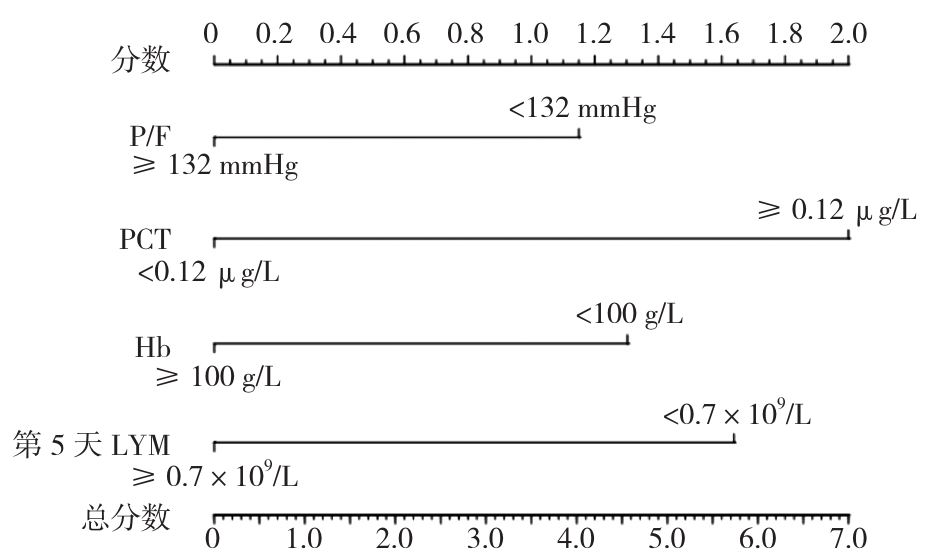
Figure 2 Nomogram for predicting the 28-day mortality risk in AE-ILD patients with pulmonary infection
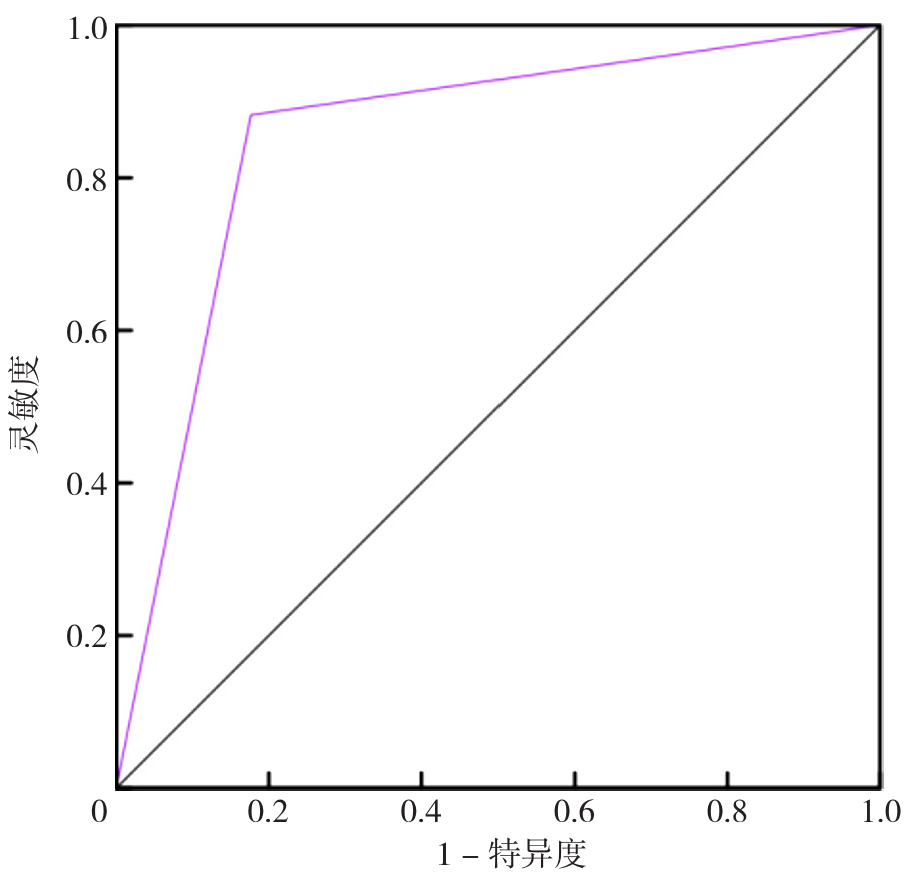
Figure 3 ROC curve for predicting the 28 days mortality risk of AE-ILD patients with pulmonary infection using nomogram model
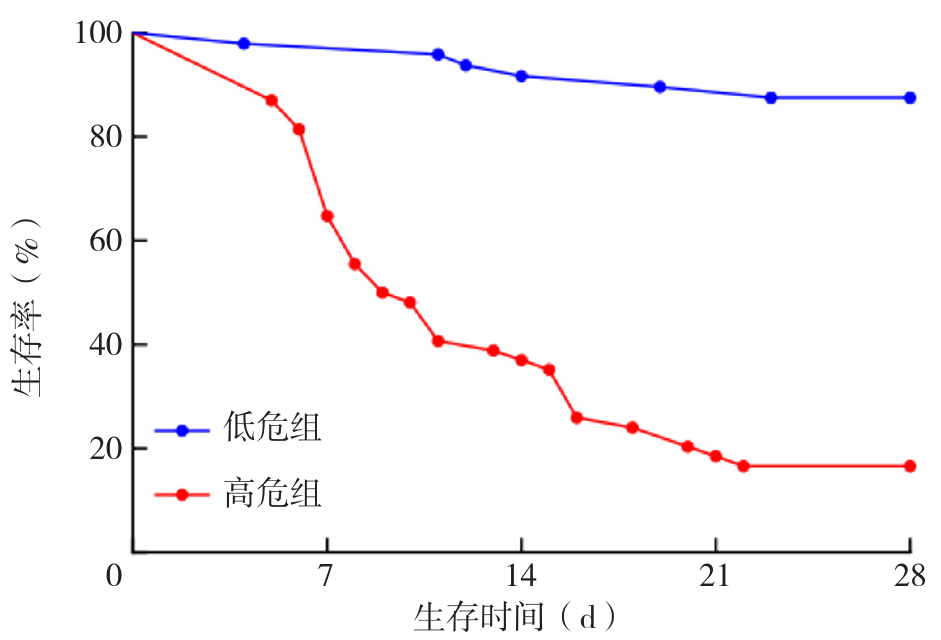
Figure 4 Survival curves of 28 days mortality for the high risk group and the low risk group of AE-ILD patients with pulmonary infection
| [1] |
蒋捍东, 陈碧. 间质性肺疾病的再认识[J]. 中华医学杂志, 2021, 101(20): 1453-1457. DOI: 10.3760/cma.j.cn112137-2020831-02514.
|
| [2] |
|
| [3] |
|
| [4] |
|
| [5] |
|
| [6] |
|
| [7] |
|
| [8] |
|
| [9] |
|
| [10] |
|
| [11] |
|
| [12] |
|
| [13] |
|
| [14] |
|
| [15] |
孟晓, 奚斌, 陈碧, 等. 淋巴细胞计数对间质性肺疾病急性加重患者短期预后的预测价值[J]. 国际呼吸杂志, 2024, 44(5): 576-584. DOI: 10.3760/cma.j.cn131368-20231117-00337.
|
| [16] |
|
| [17] |
中华医学会呼吸病学分会间质性肺病学组, 中国医师协会呼吸医师分会间质性肺疾病工作委员会. 特发性肺纤维化急性加重诊断和治疗中国专家共识[J].中华医学杂志, 2019, 99(26): 2014-2023. DOI: 10.3760/cma.j.issn.0376-2491.2019.26.005.
|
| [18] |
|
| [19] |
|
| [20] |
|
| [21] |
|
| [22] |
|
| [23] |
|
| [24] |
|
| [25] |
王明明, 宋立强, 陈洁, 等. 间质性肺疾病急性加重患者外周血淋巴细胞亚群特点分析[J]. 临床肺科杂志, 2024, 29(5): 660-664. DOI: 10.3969/j.issn.1009-6663.2024.05.003.
|
| [26] |
|
| [1] | ZHAO Sinan, LIN Shan, KANG Xi, WANG Chunyan, WANG Shunxiang. Impact of Immune Inhibitory Factors Programmed Cell Death Ligand 1 and T Cell Immunoglobulin Mucin-3 on the Prognosis of Hepatocellular Carcinoma Patients [J]. Chinese General Practice, 2026, 29(24): 3461-3465. |
| [2] | WANG Xinliang, ZOU Nannan, CHEN Nana, WANG Xin. Analysis of Clinical Characteristics and Prognostic Risk Factors in Patients with Pulmonary Mucormycosis Complicated with Diabetes Mellitus [J]. Chinese General Practice, 2026, 29(22): 3154-3161. |
| [3] | HAN Congcong, QIU Xinyu, SHAN Chunfang, SONG Ning, CHEN Qingjie, MULADILI· Abudureheman, LI Xiaomei, YANG Yining, ZHAO Qian. Impact of Metabolic Obesity Phenotype on Long-term Prognosis after Percutaneous Coronary Intervention in Patients with Acute Coronary Syndrome [J]. Chinese General Practice, 2026, 29(21): 2950-2958. |
| [4] | LIU Yang, ZHOU Guoping, LI Xiaoshi, LI Ping, ZHANG Xin. Impact of Acute Respiratory Distress Syndrome Etiology on the Prognostic Value of Driving Pressure: a Prospective Cohort Study [J]. Chinese General Practice, 2026, 29(19): 2638-2647. |
| [5] | LUAN Xiaoqing, SUN Jingjing, LI Xiaoling, WANG Manxia. Research Progress on Potential Biomarkers of Neuromyelitis Optica Spectrum Disorder [J]. Chinese General Practice, 2026, 29(17): 2418-2424. |
| [6] | WANG Yibo, HE Kaiyu, LIANG Guofen, YANG Zhenhua, ZHAO Tingxian, LIAO Biyi, ZHANG La, LIU Shiwei, GONG Xuezhong, LIU Xusheng, GU Yueyu, QIN Xindong, SU Guobin. Diagnosis and Management of Recurrent Urinary Tract Infections in Women: a Comparison and Interpretation Based on Existing Guidelines and Evidence [J]. Chinese General Practice, 2026, 29(17): 2387-2399. |
| [7] | XIONG Siyu, LU Bing, JIANG Wenhong, YU Tingting. Study on the Relationship between Fructose-1, 6-Bisphosphate Aldolase A Expression before and after Targeted Drug Resistance in Lung Adenocarcinoma and Patient Prognosis [J]. Chinese General Practice, 2026, 29(14): 1883-1889. |
| [8] | CAO Yulong, SHAN Jiao, WANG Bin, WANG Yan, WANG Yanbin, HUAI Wei, BAO Xiaoyuan, JIN Meng, KUANG Jiqiu, GAO Yan. Construction of an Investigation Form for Postoperative Infection Outbreak Based on Epidemiological Characteristics and Specialist Research [J]. Chinese General Practice, 2026, 29(13): 1776-1783. |
| [9] | SUN Xia, SHEN Wen, TANG Xiang, ZHONG Wei, WANG Kailin, DAI Zhiyin, ZHANG Chaopu, YUAN Wei, YUAN Guoyue. Analysis of Clinical Characteristics in Dilated Cardiomyopathy Patients with Different Weight Statuses and the Influence of Weight Management on the Prognosis [J]. Chinese General Practice, 2026, 29(11): 1448-1455. |
| [10] | XIA Ning, SHI Lan, DING Wanbao, ZHANG Jie, LONG Yi, DAI Hui, ZHANG Can, DAI Hailong. Clinical Characteristics and Prognosis of Patients with Amyloidosis [J]. Chinese General Practice, 2026, 29(09): 1161-1167. |
| [11] | WANG Lina, LEI Jingshu, LI Kuibao, WANG Ruiying, LI Xinmiao, WANG Fangfang, GUO Xiaorong, NIU Ruihao, ZHAO Wei, ZHOU Fangfang, ZHAO Jingjing, LEE CHONGYOU. Review on Inflammatory Response in Patients with Acute Myocardial Infarction [J]. Chinese General Practice, 2026, 29(06): 790-801. |
| [12] | LEI Chunxin, ZHANG Xiya, ZHANG Yan, CHEN Jiaqi, LIU Zihan, LUO Jing, TAO Qingwen. Clinical Characteristics and Influencing Factors of Primary Sjögren's Disease with Dryness and Blood-stasis Syndrome [J]. Chinese General Practice, 2026, 29(06): 718-725. |
| [13] | JIN Huizi, XU Xin, LI Zhijing, GAO Bing, MA Yonghuai, JI Ying. Assessment of Emergency Health Capabilities for Respiratory Infectious Diseases among Community Medical Staff [J]. Chinese General Practice, 2026, 29(05): 559-567. |
| [14] | WANG Xue, YANG Chengming, WANG Ziyun, ZHOU Zhong. Analysis on Prognosis and Influencing Factors in Patients with Post-tuberculosis Bronchiectasis [J]. Chinese General Practice, 2026, 29(05): 606-611. |
| [15] | FU Jiyi, ZHENG Boyue, WU Jiafei, WANG Jun, LI Hui. Efficacy and Safety of a Combined Regimen of Histone Deacetylase Inhibitors Venetoclax and Azacitidine in Adult T-cell Acute Lymphoblastic Leukemia [J]. Chinese General Practice, 2026, 29(04): 483-489. |
| Viewed | ||||||
|
Full text |
|
|||||
|
Abstract |
|
|||||
