
Chinese General Practice ›› 2025, Vol. 28 ›› Issue (29): 3608-3618.DOI: 10.12114/j.issn.1007-9572.2025.0205
Special Issue: 社区卫生服务最新研究合辑; 老年人群健康最新文章合辑
• Guidelines·Consensus • Previous Articles Next Articles
Received:2025-06-10
Revised:2025-07-10
Published:2025-10-15
Online:2025-08-26
基金资助:CLC Number:
Add to citation manager EndNote|Ris|BibTeX
URL: https://www.chinagp.net/EN/10.12114/j.issn.1007-9572.2025.0205
| 睡眠质量指标 | 新生儿/婴儿早期(0~3个月) | 婴儿期(4~11个月) | 幼儿期(1~2岁) | 学龄前儿童(3~5岁) | 学龄儿童(6~13岁) | 青少年(14~17岁) | 青年期(18~25岁) | 成年期(26~64岁) | 老年期(≥65岁) |
|---|---|---|---|---|---|---|---|---|---|
| 睡眠连续性指标 | |||||||||
| 入睡潜伏期(min) | √:≤30 ○:31~45 ×:>45 | √:≤30 ○:31~45 ×:>45 | √:≤30 ○:31~45 ×:>45 | √:≤30 ○:31~45 ×:>45 | √:≤30 ○:31~45 ×:>45 | √:≤30 ○:31~45 ×:>45 | √:≤30 ○:31~45 ×:>45 | √:≤30 ○:31~60 ×:>60 | |
| 夜间觉醒次数(次) | √:0~1 ○:2~3 ×:≥4 | √:0~1 ○:2~3 ×:≥4 | √:0~1 ○:2~3 ×:≥4 | √:0~1 ○:2 ×:≥3 | √:0~1 ○:2~3 ×:≥4 | √:0~1 ○:2~3 ×:≥4 | √:0~2 ○:3 ×:≥4 | ||
| WASO(min) | √:≤20 ○:21~50 ×:>50 | √:≤20 ○:21~40 ×:>40 | √:≤20 ○:21~50 ×:>50 | √:≤20 ○:21~40 ×:>40 | √:≤20 ○:21~40 ×:>40 | √:≤30 ×:>30 | |||
| 睡眠效率(%) | √:≥85 ○:75~84 ×:<75 | √:≥85 ○:75~84 ×:<75 | √:≥85 ○:75~84 ×:<75 | √:≥85 ○:75~84 ×:<75 | √:≥85 ○:75~84 ×:<75 | √:≥85 ○:65~84 ×:<65 | √:≥85 ○:75~84 ×:<75 | √:≥85 ○:75~84 ×:<75 | |
| 睡眠结构指标 | |||||||||
| REM睡眠比例(%) | √:>40 ○:21~40 ×:≤20 | ○:>10 ×:≤10 | ○:>10 ×:≤10 | ○:>10 ×:≤10 | ○:>10 ×:≤10 | ○:≤40 ×:>40 | √:21~30 ○:≤20或31~40 ×:>40 | ○:≤40 ×:>40 | |
| N1睡眠比例(%) | ○:≤20 ×:>20 | ○:≤20 ×:>20 | √:≤5 ○:6~20 ×:>20 | √:≤5 ○:6~20 ×:>20 | √:≤5 ○:6~20 ×:>20 | √:≤5 ○:6~20 ×:>20 | ○:≤25 ×:>25 | ||
| N2睡眠比例(%) | ○:≤80 ×:>80 | ○:≤80 ×:>80 | ○:≤80 ×:>80 | ○:≤80 ×:>80 | ○:≤80 ×:>80 | ○:≤80 ×:>80 | ○:≤80 ×:>80 | ||
| N3睡眠比例(%) | ○:>10 ×:≤10 | ○:>10 ×:≤10 | ○:>10 ×:≤10 | √:20~25 ○:11~20或≥26 ×:≤10 | √:20~25 ○:6~20或≥26 ×:≤5 | ○:>5 ×:≤5 | √:16~20 ○:6~15或≥20 ×:≤5 | ||
| 小睡相关指标 | |||||||||
| 每日小睡次数(次) | ○:0~3 ×:≥4 | √:0 ○:1 ×:≥2 | √:0~1 ○:2 ×:≥3 | √:0 ○:1~2 ×:≥3 | ○:0~3 ×:≥4 | ○:0~3 ×:≥4 | |||
| 小睡时长(min) | √:≤20 ○:21~120 ×:>120 | ○:≤100 ×:>100 | ○:≤100 ×:>100 | ○:≤100 ×:>100 | |||||
| 每周小睡频率(d) | ○:0~2 ×:3~7 | √:0 ×:1~7 | √:0 ×:1~7 | ||||||
Table 1 Reference criteria for determining good sleep quality across different age groups
| 睡眠质量指标 | 新生儿/婴儿早期(0~3个月) | 婴儿期(4~11个月) | 幼儿期(1~2岁) | 学龄前儿童(3~5岁) | 学龄儿童(6~13岁) | 青少年(14~17岁) | 青年期(18~25岁) | 成年期(26~64岁) | 老年期(≥65岁) |
|---|---|---|---|---|---|---|---|---|---|
| 睡眠连续性指标 | |||||||||
| 入睡潜伏期(min) | √:≤30 ○:31~45 ×:>45 | √:≤30 ○:31~45 ×:>45 | √:≤30 ○:31~45 ×:>45 | √:≤30 ○:31~45 ×:>45 | √:≤30 ○:31~45 ×:>45 | √:≤30 ○:31~45 ×:>45 | √:≤30 ○:31~45 ×:>45 | √:≤30 ○:31~60 ×:>60 | |
| 夜间觉醒次数(次) | √:0~1 ○:2~3 ×:≥4 | √:0~1 ○:2~3 ×:≥4 | √:0~1 ○:2~3 ×:≥4 | √:0~1 ○:2 ×:≥3 | √:0~1 ○:2~3 ×:≥4 | √:0~1 ○:2~3 ×:≥4 | √:0~2 ○:3 ×:≥4 | ||
| WASO(min) | √:≤20 ○:21~50 ×:>50 | √:≤20 ○:21~40 ×:>40 | √:≤20 ○:21~50 ×:>50 | √:≤20 ○:21~40 ×:>40 | √:≤20 ○:21~40 ×:>40 | √:≤30 ×:>30 | |||
| 睡眠效率(%) | √:≥85 ○:75~84 ×:<75 | √:≥85 ○:75~84 ×:<75 | √:≥85 ○:75~84 ×:<75 | √:≥85 ○:75~84 ×:<75 | √:≥85 ○:75~84 ×:<75 | √:≥85 ○:65~84 ×:<65 | √:≥85 ○:75~84 ×:<75 | √:≥85 ○:75~84 ×:<75 | |
| 睡眠结构指标 | |||||||||
| REM睡眠比例(%) | √:>40 ○:21~40 ×:≤20 | ○:>10 ×:≤10 | ○:>10 ×:≤10 | ○:>10 ×:≤10 | ○:>10 ×:≤10 | ○:≤40 ×:>40 | √:21~30 ○:≤20或31~40 ×:>40 | ○:≤40 ×:>40 | |
| N1睡眠比例(%) | ○:≤20 ×:>20 | ○:≤20 ×:>20 | √:≤5 ○:6~20 ×:>20 | √:≤5 ○:6~20 ×:>20 | √:≤5 ○:6~20 ×:>20 | √:≤5 ○:6~20 ×:>20 | ○:≤25 ×:>25 | ||
| N2睡眠比例(%) | ○:≤80 ×:>80 | ○:≤80 ×:>80 | ○:≤80 ×:>80 | ○:≤80 ×:>80 | ○:≤80 ×:>80 | ○:≤80 ×:>80 | ○:≤80 ×:>80 | ||
| N3睡眠比例(%) | ○:>10 ×:≤10 | ○:>10 ×:≤10 | ○:>10 ×:≤10 | √:20~25 ○:11~20或≥26 ×:≤10 | √:20~25 ○:6~20或≥26 ×:≤5 | ○:>5 ×:≤5 | √:16~20 ○:6~15或≥20 ×:≤5 | ||
| 小睡相关指标 | |||||||||
| 每日小睡次数(次) | ○:0~3 ×:≥4 | √:0 ○:1 ×:≥2 | √:0~1 ○:2 ×:≥3 | √:0 ○:1~2 ×:≥3 | ○:0~3 ×:≥4 | ○:0~3 ×:≥4 | |||
| 小睡时长(min) | √:≤20 ○:21~120 ×:>120 | ○:≤100 ×:>100 | ○:≤100 ×:>100 | ○:≤100 ×:>100 | |||||
| 每周小睡频率(d) | ○:0~2 ×:3~7 | √:0 ×:1~7 | √:0 ×:1~7 | ||||||
| PSQI的得分范围 | 睡眠质量评价 | 干预举措 |
|---|---|---|
| PSQI≤5分 | 正常睡眠质量,日间功能不受影响 | 每年常规体检时随访 |
| 6分≤PSQI≤10分 | 轻度睡眠障碍,日间功能影响较小 | 健康教育+睡眠卫生行为干预 |
| 11分≤PSQI≤15分 | 中度睡眠障碍,日间功能明显受限 | 康复治疗+心理干预 |
| PSQI>15分 | 重度睡眠障碍,可能合并其他精神障碍 | 转诊专业机构,制订个体康复计划 |
Table 2 Graded management recommendations based on PSQI score
| PSQI的得分范围 | 睡眠质量评价 | 干预举措 |
|---|---|---|
| PSQI≤5分 | 正常睡眠质量,日间功能不受影响 | 每年常规体检时随访 |
| 6分≤PSQI≤10分 | 轻度睡眠障碍,日间功能影响较小 | 健康教育+睡眠卫生行为干预 |
| 11分≤PSQI≤15分 | 中度睡眠障碍,日间功能明显受限 | 康复治疗+心理干预 |
| PSQI>15分 | 重度睡眠障碍,可能合并其他精神障碍 | 转诊专业机构,制订个体康复计划 |
| 监测方法 | 监测内容 | 主要用途 | 适用场景 | 优点 | 局限性 |
|---|---|---|---|---|---|
| PSG | 脑电、眼电、肌电、心电、呼吸、血氧、体位、打鼾等 | 睡眠结构分析、睡眠障碍诊断(金标准) | 医院或睡眠中心,复杂病例诊断 | 数据全面,准确性高,可诊断多种障碍 | 成本高,操作复杂,对老年人依从性具有挑战 |
| 便携式PSG | 呼吸、血氧、心率、体动、体位等(不含脑电图检查) | 睡眠呼吸障碍的初步筛查 | 居家或社区使用 | 便捷、费用较低,可普及性强 | 无法分期,不能识别非呼吸性睡眠障碍 |
| 腕式体动记录仪 | 肢体活动(通过加速度传感器) | 昼夜节律评估、失眠评估、干预效果追踪 | 居家长时间使用(7~14 d) | 非侵入性、操作简单、适合老年人 | 无法分辨睡眠阶段,易受静坐干扰 |
| 多次睡眠潜伏期试验 | 日间睡眠潜伏期、入睡至REM时间 | 评估日间嗜睡、诊断发作性睡病 | 专科医院,需在特定指征下使用 | 高度标准化、诊断明确 | 耗时长、对老年人适用性较低 |
| 可穿戴/非接触式睡眠监测设备 | 心率、呼吸频率、体动、睡眠评分等(通过算法估算) | 总体睡眠趋势评估、干预随访 | 社区或家庭使用 | 便捷、依从性高、成本低 | 精度依赖算法,不能替代PSG诊断 |
Table 3 Common objective sleep monitoring methods
| 监测方法 | 监测内容 | 主要用途 | 适用场景 | 优点 | 局限性 |
|---|---|---|---|---|---|
| PSG | 脑电、眼电、肌电、心电、呼吸、血氧、体位、打鼾等 | 睡眠结构分析、睡眠障碍诊断(金标准) | 医院或睡眠中心,复杂病例诊断 | 数据全面,准确性高,可诊断多种障碍 | 成本高,操作复杂,对老年人依从性具有挑战 |
| 便携式PSG | 呼吸、血氧、心率、体动、体位等(不含脑电图检查) | 睡眠呼吸障碍的初步筛查 | 居家或社区使用 | 便捷、费用较低,可普及性强 | 无法分期,不能识别非呼吸性睡眠障碍 |
| 腕式体动记录仪 | 肢体活动(通过加速度传感器) | 昼夜节律评估、失眠评估、干预效果追踪 | 居家长时间使用(7~14 d) | 非侵入性、操作简单、适合老年人 | 无法分辨睡眠阶段,易受静坐干扰 |
| 多次睡眠潜伏期试验 | 日间睡眠潜伏期、入睡至REM时间 | 评估日间嗜睡、诊断发作性睡病 | 专科医院,需在特定指征下使用 | 高度标准化、诊断明确 | 耗时长、对老年人适用性较低 |
| 可穿戴/非接触式睡眠监测设备 | 心率、呼吸频率、体动、睡眠评分等(通过算法估算) | 总体睡眠趋势评估、干预随访 | 社区或家庭使用 | 便捷、依从性高、成本低 | 精度依赖算法,不能替代PSG诊断 |
| 睡眠障碍类型 | 治疗参数 | 疗效 |
|---|---|---|
| 原发性失眠 | 线圈:8字形 部位:双侧DLPFC、右顶叶、优势M1 频率:1 Hz 强度:80%~110%静息运动阈值 持续时间:20~30 min,干预10~20次 脉冲数:800~1 800脉冲 | 增加N3和REM睡眠比例,减少过度觉醒,与药物和心理治疗相比,具有长期效果和更高的疗效 |
| RLS | 线圈:8字形 部位:左侧辅助运动区、双侧M1 频率:1 Hz、5 Hz、15 Hz 强度:100%~120%静息运动阈值 持续时间:10次 脉冲数:600~1 000脉冲 | 有效改善国际不宁腿综合征量表得分 |
| OSA | 线圈:8字形 部位:左侧M1、优势侧/非优势侧M1 频率:5 Hz、10 Hz、25 Hz 强度:80%~120%静息运动阈值、80%主动运动阈值 持续时间:差异较大 脉冲数:600、1 200脉冲 | 未见明显改善 |
| 发作性睡病 | 线圈:8字形 部位:双侧M1均可 频率:20 Hz 强度:110%静息运动阈值 持续时间:差异较大 | 未见明显改善 |
Table 4 Treatment parameters and efficacy of rTMS for primary sleep disorders
| 睡眠障碍类型 | 治疗参数 | 疗效 |
|---|---|---|
| 原发性失眠 | 线圈:8字形 部位:双侧DLPFC、右顶叶、优势M1 频率:1 Hz 强度:80%~110%静息运动阈值 持续时间:20~30 min,干预10~20次 脉冲数:800~1 800脉冲 | 增加N3和REM睡眠比例,减少过度觉醒,与药物和心理治疗相比,具有长期效果和更高的疗效 |
| RLS | 线圈:8字形 部位:左侧辅助运动区、双侧M1 频率:1 Hz、5 Hz、15 Hz 强度:100%~120%静息运动阈值 持续时间:10次 脉冲数:600~1 000脉冲 | 有效改善国际不宁腿综合征量表得分 |
| OSA | 线圈:8字形 部位:左侧M1、优势侧/非优势侧M1 频率:5 Hz、10 Hz、25 Hz 强度:80%~120%静息运动阈值、80%主动运动阈值 持续时间:差异较大 脉冲数:600、1 200脉冲 | 未见明显改善 |
| 发作性睡病 | 线圈:8字形 部位:双侧M1均可 频率:20 Hz 强度:110%静息运动阈值 持续时间:差异较大 | 未见明显改善 |
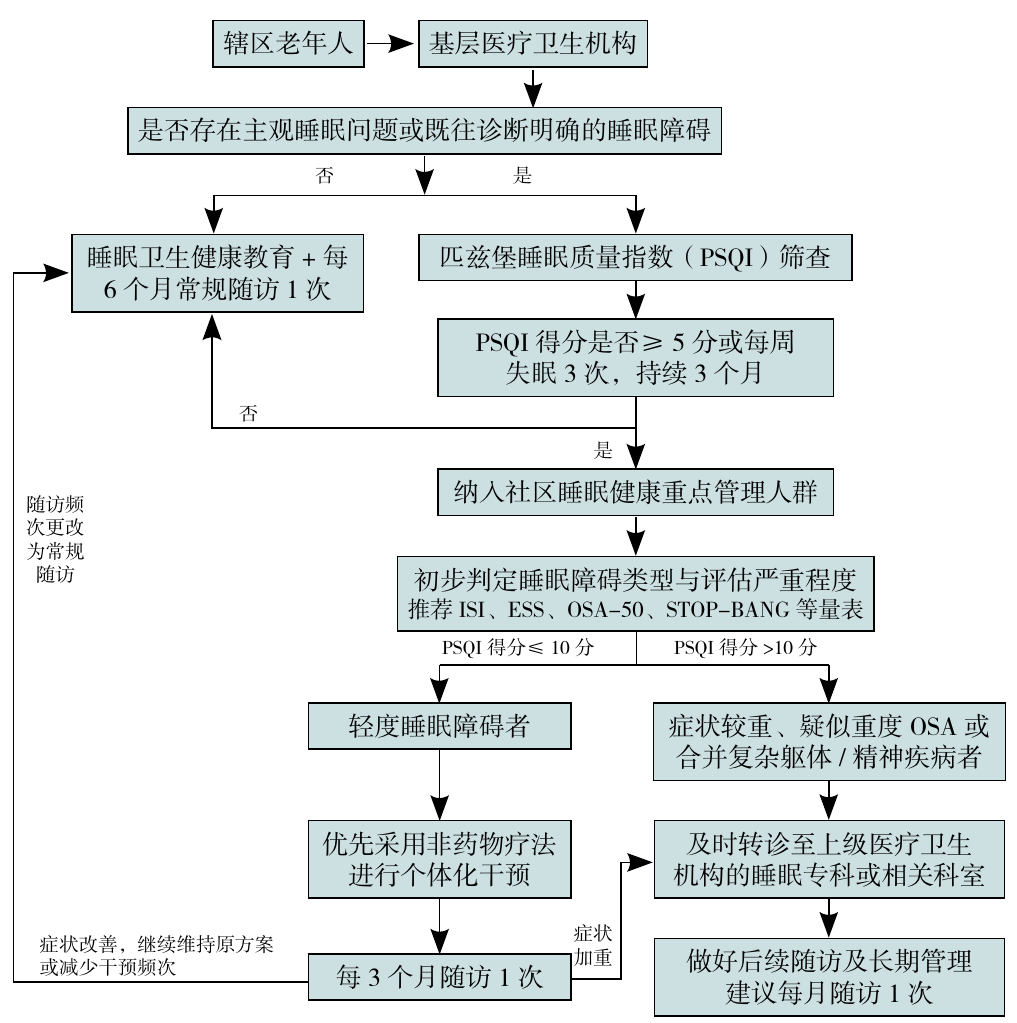
Figure 1 Sleep health and rehabilitation management flowchart in primary healthcare institutions
| [1] |
|
| [2] |
王振杰,赵蔓,陈婷蔚,等. 中国老年人睡眠障碍患病率的Meta分析[J]. 中国全科医学,2022,25(16):2036-2043. DOI:10.12114/j.issn.1007-9572.2022.0151.
|
| [3] |
2023年度国家老龄事业发展公报[EB/OL].(2024-10-11)[2025-04-25].
|
| [4] |
|
| [5] |
2023年我国卫生健康事业发展统计公报[J]. 中国农村卫生,2024(9):6-14,33.
|
| [6] |
|
| [7] |
|
| [8] |
|
| [9] |
|
| [10] | |
| [11] |
|
| [12] |
|
| [13] |
|
| [14] |
|
| [15] |
全国爱卫办发布睡眠健康核心信息及释义[EB/OL].(2025-03-18)[2025-04-20].
|
| [16] |
|
| [17] |
|
| [18] |
|
| [19] |
|
| [20] |
|
| [21] |
|
| [22] | |
| [23] |
|
| [24] |
|
| [25] |
|
| [26] |
|
| [27] |
|
| [28] |
|
| [29] |
|
| [30] |
|
| [31] |
|
| [32] |
|
| [33] |
|
| [34] |
|
| [35] |
|
| [36] |
|
| [37] |
|
| [38] |
|
| [39] |
|
| [40] |
|
| [41] |
|
| [42] |
|
| [43] |
|
| [44] |
|
| [45] |
|
| [46] |
|
| [47] |
|
| [48] |
杨逍寅,姜云武,尹朝飞,等. 针刺治疗老年睡眠障碍选穴规律[C]//2024中国针灸学会年会论文集:2024年卷. 2024:8.
|
| [49] |
王津翔,方磊,葛龙,等. 失眠中西医结合康复临床实践指南[J]. 上海中医药杂志,2025,59(1):1-6. DOI:10.16305/j.1007-1334.2025.z20240627013.
|
| [50] |
|
| [51] |
|
| [52] |
|
| [53] |
|
| [54] |
|
| [1] | ZHOU Xiaoya, WANG Weikai, LIU Qian, LI Jianhua, SUN Bo, WANG Yanxia. Study of the Interaction between Sleep Quality and Melatonin Receptor 1B Gene Polymorphism on Gestational Hypertension [J]. Chinese General Practice, 2026, 29(21): 2975-2981. |
| [2] | CHAI Zhihao, ZHANG Weisen, LUO Jiaoling, ZHU Feng, ZHU Tong, JIN Yali, PAN Jing, LU Yingjun, JIANG Chaoqiang. The Mediation Effect of Socioeconomic Status in Childhood Parental Literacy and Cognitive Function in Middle-aged and Older People: Based on Guangzhou Biobank Cohort Study [J]. Chinese General Practice, 2026, 29(21): 2959-2966. |
| [3] | LI Zhenyu, ZHU Qiong, CHEN Rong, LU Jing, YU Zhijie, SHEN Fulai, SHEN Yi, FENG Yu, LIU Mei. A Single-group Community Intervention Trial on Improving the Service Efficiency of Contracted Residents Via an Enhanced Medical-preventive "Micro" Integration Service Package [J]. Chinese General Practice, 2026, 29(21): 3020-3027. |
| [4] | LI Wenping, CHEN Jianhua, XU Jiapei, JIN Xue, PAN Zihan, CHI Chunhua. A Scoping Review on the Empowerment of Community Elderly Health Services by Digital-Intelligent Health Management Platforms [J]. Chinese General Practice, 2026, 29(21): 2938-2949. |
| [5] | LI Feng, HU Changhao, LUO Xu. Progress in the Study of Influencing Factors and Intervention Strategies of Mental Health in Elderly Patients with Multiple Chronic Conditions [J]. Chinese General Practice, 2026, 29(20): 2816-2828. |
| [6] | YAN Wen, ZHANG Hanzhi, JIN Hua, QIAN Jie, YU Dehua. Study on the Diagnosis and Treatment Capacity for Depressive Disorders in Community Health Service Institutions in Shanghai [J]. Chinese General Practice, 2026, 29(20): 2790-2799. |
| [7] | LI Wanyu, JIN Hua, YANG Sen, FU Qiangqiang, YU Dehua. Assessment and Optimization of Community Health Behaviors Guided by the Behaviour Change Wheel Theory [J]. Chinese General Practice, 2026, 29(19): 2688-2694. |
| [8] | ZHANG Xiaojuan, LIU Yang, PENG Bo, YE Yuan, ZHU Kun. Study on the Prevention and Treatment of Hypertension and Diabetes Mellitus in Community Hospital [J]. Chinese General Practice, 2026, 29(19): 2614-2620. |
| [9] | YI Minzhe, GAO Qingtao, YANG Xianxiao, CHEN Weiwei. The Residents' Perception of Health Education Needs in Different Community Types [J]. Chinese General Practice, 2026, 29(19): 2621-2630. |
| [10] | CHEN Xinyi, HUANG Ziqian, CHEN Yufeng, HUANG Jun, WENG Fan, LAI Zhisheng, XUE Yumei, CAO Xi. Diagnostic Performance of a Hand-held Single-lead ECG Device in Detecting Atrial Fibrillation and Its Potential in Atrial Fibrillation Screening in Community [J]. Chinese General Practice, 2026, 29(19): 2717-2723. |
| [11] | QIN Han, YANG Mei, LIU Yingcun, LIU Yazhen, XIE Junhao, CHEN Xiaojie, LIU Juan. Comparative Study of Cardiac Structure and Function in Obstructive Sleep Apnea Patients Based on the Classification of Hypopnea/Apnea Ratio [J]. Chinese General Practice, 2026, 29(19): 2656-2663. |
| [12] | PANG Shu, SUN ying, JIANG Chunyan. Comparison of the Effectiveness of Fried's Frailty Phenotype and the FRAIL Scale in Assessing Pre-frailty among Community-dwelling Older Adults Undergoing Health Examinations [J]. Chinese General Practice, 2026, 29(19): 2664-2670. |
| [13] | ZHAO Xinxin, SUN Xiaoting, LUO Xinhao, SUN Jin, PENG Derong, ZHENG Jialin. Research on the Localization of the Patient-centered Medical Home Model in China: Adaptation Mechanisms, Challenges, and Pathway Analysis [J]. Chinese General Practice, 2026, 29(19): 2608-2613. |
| [14] | China Pharmacological Society Committee on Drug-induced Diseases. Expert Consensus on Medication Therapy for Acid-related Diseases [J]. Chinese General Practice, 2026, 29(19): 2593-2607. |
| [15] | General Practice Branch of Cross-straits Medicine Exchange Association, General Practice Branch of Zhejiang Medical Association, General Undifferentiated Disease Professional Committee of Zhejiang Society of Mathematical Medicine, Chinese Geriatrics Society. Expert Consensus on the Diagnosis, Treatment, and Management of Numbness (2025) [J]. Chinese General Practice, 2026, 29(18): 2433-2449. |
| Viewed | ||||||
|
Full text |
|
|||||
|
Abstract |
|
|||||
