
Chinese General Practice ›› 2026, Vol. 29 ›› Issue (33): 4868-4875.DOI: 10.12114/j.issn.1007-9572.2025.0514
• Article • Previous Articles Next Articles
Received:2025-12-22
Revised:2026-08-11
Published:2026-11-20
Online:2026-10-21
Contact:
MENG Fanli
通讯作者:
孟凡莉
作者简介:作者贡献:
文俊欣提出研究思路,设计研究方案,数据分析,论文撰写与修改;石挺皇负责数据分析,论文审阅与修改;秦庆新、梁妍语负责数据采集与整理,数据清洗;孟凡莉负责研究设计,最终版本修订,对文章整体负责,监督管理,论文经费支持。
基金资助:
Add to citation manager EndNote|Ris|BibTeX
URL: https://www.chinagp.net/EN/10.12114/j.issn.1007-9572.2025.0514
| 组别 | 例数 | 性别[例(%)] | 年龄( | 基线BMI ( | 基线BMI分组[例(%)] | ||||
|---|---|---|---|---|---|---|---|---|---|
| 男 | 女 | <18.5 kg/m2 | 18.5~<24.0 kg/m2 | 24.0~<28.0 kg/m2 | ≥28.0 kg/m2 | ||||
| 显著减重 | 1 691 | 720(42.6) | 971(57.4) | 45.5±14.5 | 24.5±3.4 | 40(2.4) | 736(43.5) | 689(40.7) | 226(13.4) |
| 轻度减重 | 3 862 | 1 965(50.9) | 1 897(49.1) | 45.1±13.6 | 23.8±3.1 | 127(3.3) | 1 911(49.5) | 1 491(38.6) | 333(8.6) |
| 体质量稳定 | 3 167 | 1 652(52.2) | 1 515(47.8) | 43.6±13.0 | 23.6±3.1 | 148(4.7) | 1 623(51.2) | 1 146(36.2) | 250(7.9) |
| 轻度增重 | 5 364 | 2 689(50.1) | 2 675(49.9) | 41.6±12.7 | 23.2±3.2 | 297(5.5) | 3 040(56.7) | 1 673(31.2) | 354(6.6) |
| 显著增重 | 4 095 | 1 636(40.0) | 2 459(60.0) | 35.3±11.7 | 21.9±3.0 | 478(11.7) | 2 733(66.7) | 759(18.5) | 125(3.1) |
| 检验统计量值 | 169.984a | 378.911b | 310.440b | 1 040.905a | |||||
| P值 | <0.01 | <0.01 | <0.01 | <0.01 | |||||
| 组别 | SBP( | DBP( | TC( | HDL-C( | LDL-C( | TG[M(P25,P75),mmol/L] | FPG[M(P25,P75),mmol/L] | ||
| 显著减重 | 123±18 | 75±12 | 5.49±1.10 | 1.58±0.39 | 3.12±0.80 | 1.17(0.84,1.65) | 5.39(4.97,6.02) | ||
| 轻度减重 | 122±18 | 75±12 | 5.41±1.08 | 1.56±0.37 | 3.11±0.80 | 1.13(0.82,1.63) | 5.29(4.91,5.76) | ||
| 体质量稳定 | 121±17 | 74±12 | 5.33±1.03 | 1.56±0.37 | 3.07±0.77 | 1.10(0.79,1.61) | 5.24(4.90,5.70) | ||
| 轻度增重 | 119±16 | 74±11 | 5.28±1.05 | 1.57±0.37 | 3.02±0.79 | 1.06(0.77,1.50) | 5.19(4.82,5.59) | ||
| 显著增重 | 115±14 | 70±10 | 5.07±0.99 | 1.64±0.37 | 2.87±0.75 | 0.90(0.70,1.23) | 5.09(4.77,5.42) | ||
| 检验统计量值 | 124.369b | 103.838b | 68.749b | 29.430b | 41.727b | 504.964c | 481.944c | ||
| P值 | <0.01 | <0.01 | <0.01 | <0.01 | <0.01 | <0.01 | <0.01 | ||
| 组别 | BUN[M(P25,P75),mmol/L] | Scr[M(P25,P75),μmol/L] | BUN/Scr [M(P25,P75)] | ALT [M(P25,P75),U/L] | AST [M(P25,P75),U/L] | AST/ALT[M(P25,P75)] | |||
| 显著减重 | 4.55(3.81,5.43) | 74.20(61.70,89.30) | 0.06(0.05,0.08) | 24.00(17.76,35.00) | 21.00(17.00,26.00) | 0.83(0.62,1.07) | |||
| 轻度减重 | 4.58(3.81,5.42) | 75.50(63.00,89.60) | 0.06(0.05,0.07) | 23.80(17.90,34.00) | 20.40(17.00,26.00) | 0.84(0.63,1.11) | |||
| 体质量稳定 | 4.52(3.79,5.40) | 75.60(61.80,89.60) | 0.06(0.05,0.07) | 23.48(17.72,33.39) | 20.60(17.00,26.00) | 0.85(0.64,1.10) | |||
| 轻度增重 | 4.50(3.71,5.32) | 74.70(61.73,88.80) | 0.06(0.05,0.07) | 23.00(17.20,32.00) | 20.00(17.00,25.00) | 0.87(0.65,1.14) | |||
| 显著增重 | 4.35(3.62,5.18) | 72.00(60.50,86.50) | 0.06(0.05,0.07) | 20.70(16.00,28.12) | 19.00(16.00,24.00) | 0.89(0.68,1.17) | |||
| 检验统计量值 | 94.586c | 53.231c | 12.242c | 224.318c | 125.457c | 75.003c | |||
| P值 | <0.01 | <0.01 | <0.01 | <0.01 | <0.01 | <0.01 | |||
Table 1 Comparison of baseline characteristics of 18 179 adult health examinees stratified by body weight change groups
| 组别 | 例数 | 性别[例(%)] | 年龄( | 基线BMI ( | 基线BMI分组[例(%)] | ||||
|---|---|---|---|---|---|---|---|---|---|
| 男 | 女 | <18.5 kg/m2 | 18.5~<24.0 kg/m2 | 24.0~<28.0 kg/m2 | ≥28.0 kg/m2 | ||||
| 显著减重 | 1 691 | 720(42.6) | 971(57.4) | 45.5±14.5 | 24.5±3.4 | 40(2.4) | 736(43.5) | 689(40.7) | 226(13.4) |
| 轻度减重 | 3 862 | 1 965(50.9) | 1 897(49.1) | 45.1±13.6 | 23.8±3.1 | 127(3.3) | 1 911(49.5) | 1 491(38.6) | 333(8.6) |
| 体质量稳定 | 3 167 | 1 652(52.2) | 1 515(47.8) | 43.6±13.0 | 23.6±3.1 | 148(4.7) | 1 623(51.2) | 1 146(36.2) | 250(7.9) |
| 轻度增重 | 5 364 | 2 689(50.1) | 2 675(49.9) | 41.6±12.7 | 23.2±3.2 | 297(5.5) | 3 040(56.7) | 1 673(31.2) | 354(6.6) |
| 显著增重 | 4 095 | 1 636(40.0) | 2 459(60.0) | 35.3±11.7 | 21.9±3.0 | 478(11.7) | 2 733(66.7) | 759(18.5) | 125(3.1) |
| 检验统计量值 | 169.984a | 378.911b | 310.440b | 1 040.905a | |||||
| P值 | <0.01 | <0.01 | <0.01 | <0.01 | |||||
| 组别 | SBP( | DBP( | TC( | HDL-C( | LDL-C( | TG[M(P25,P75),mmol/L] | FPG[M(P25,P75),mmol/L] | ||
| 显著减重 | 123±18 | 75±12 | 5.49±1.10 | 1.58±0.39 | 3.12±0.80 | 1.17(0.84,1.65) | 5.39(4.97,6.02) | ||
| 轻度减重 | 122±18 | 75±12 | 5.41±1.08 | 1.56±0.37 | 3.11±0.80 | 1.13(0.82,1.63) | 5.29(4.91,5.76) | ||
| 体质量稳定 | 121±17 | 74±12 | 5.33±1.03 | 1.56±0.37 | 3.07±0.77 | 1.10(0.79,1.61) | 5.24(4.90,5.70) | ||
| 轻度增重 | 119±16 | 74±11 | 5.28±1.05 | 1.57±0.37 | 3.02±0.79 | 1.06(0.77,1.50) | 5.19(4.82,5.59) | ||
| 显著增重 | 115±14 | 70±10 | 5.07±0.99 | 1.64±0.37 | 2.87±0.75 | 0.90(0.70,1.23) | 5.09(4.77,5.42) | ||
| 检验统计量值 | 124.369b | 103.838b | 68.749b | 29.430b | 41.727b | 504.964c | 481.944c | ||
| P值 | <0.01 | <0.01 | <0.01 | <0.01 | <0.01 | <0.01 | <0.01 | ||
| 组别 | BUN[M(P25,P75),mmol/L] | Scr[M(P25,P75),μmol/L] | BUN/Scr [M(P25,P75)] | ALT [M(P25,P75),U/L] | AST [M(P25,P75),U/L] | AST/ALT[M(P25,P75)] | |||
| 显著减重 | 4.55(3.81,5.43) | 74.20(61.70,89.30) | 0.06(0.05,0.08) | 24.00(17.76,35.00) | 21.00(17.00,26.00) | 0.83(0.62,1.07) | |||
| 轻度减重 | 4.58(3.81,5.42) | 75.50(63.00,89.60) | 0.06(0.05,0.07) | 23.80(17.90,34.00) | 20.40(17.00,26.00) | 0.84(0.63,1.11) | |||
| 体质量稳定 | 4.52(3.79,5.40) | 75.60(61.80,89.60) | 0.06(0.05,0.07) | 23.48(17.72,33.39) | 20.60(17.00,26.00) | 0.85(0.64,1.10) | |||
| 轻度增重 | 4.50(3.71,5.32) | 74.70(61.73,88.80) | 0.06(0.05,0.07) | 23.00(17.20,32.00) | 20.00(17.00,25.00) | 0.87(0.65,1.14) | |||
| 显著增重 | 4.35(3.62,5.18) | 72.00(60.50,86.50) | 0.06(0.05,0.07) | 20.70(16.00,28.12) | 19.00(16.00,24.00) | 0.89(0.68,1.17) | |||
| 检验统计量值 | 94.586c | 53.231c | 12.242c | 224.318c | 125.457c | 75.003c | |||
| P值 | <0.01 | <0.01 | <0.01 | <0.01 | <0.01 | <0.01 | |||
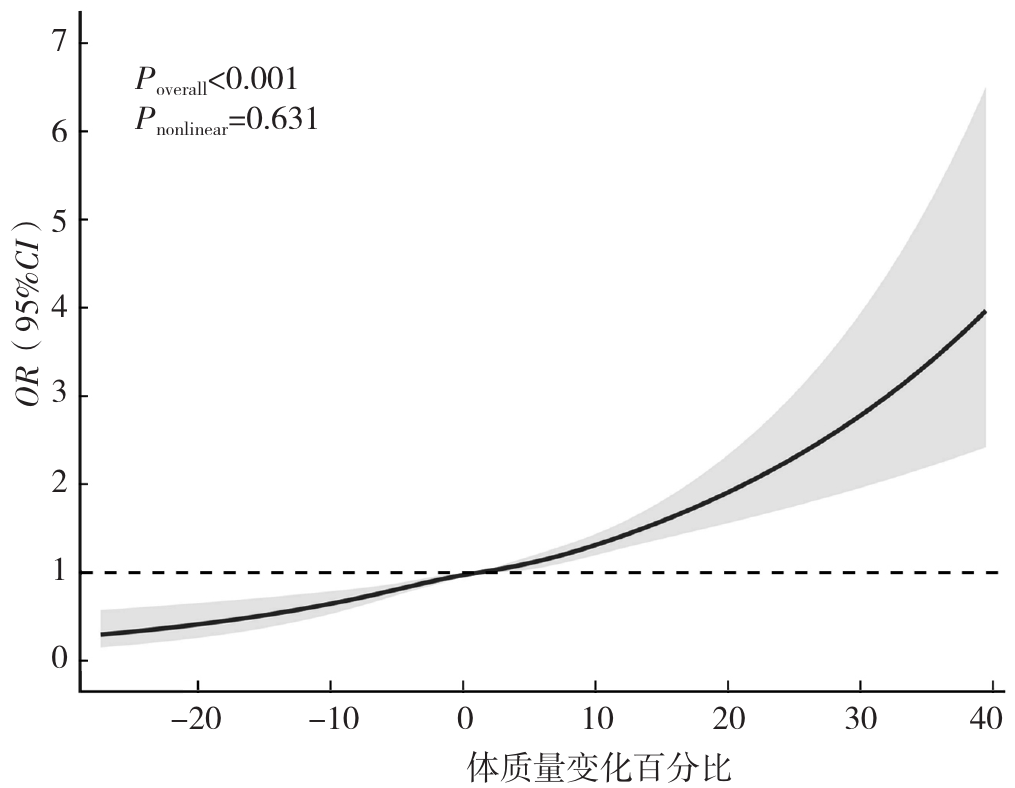
Figure 1 Restricted cubic spline plot of the association between percentage body weight change and the risk of hyperuricemia in adult health examinees
| 组别 | 随访(人年) | 发病(例) | 发病密度(1/1 000人年) | 模型1 | 模型2 | 模型3 | |||
|---|---|---|---|---|---|---|---|---|---|
| OR(95%CI) | P值 | OR(95%CI) | P值 | OR(95%CI) | P值 | ||||
| 显著减重 | 5 805 | 178 | 30.66 | 0.622(0.518~0.746) | <0.01 | 0.690(0.570~0.834) | <0.01 | 0.618(0.489~0.782) | <0.01 |
| 轻度减重 | 10 197 | 545 | 53.45 | 0.868(0.761~0.990) | 0.04 | 0.862(0.752~0.989) | 0.03 | 0.826(0.697~0.978) | 0.03 |
| 体质量稳定 | 7 337 | 504 | 68.69 | 1 | 1 | 1 | |||
| 轻度增重 | 13 916 | 857 | 61.58 | 1.001(0.891~1.133) | 0.94 | 1.063(0.937~1.205) | 0.34 | 1.101(0.941~1.288) | 0.23 |
| 显著增重 | 14 761 | 602 | 40.78 | 0.911(0.801~1.036) | 0.15 | 1.232(1.073~1.415) | 0.03 | 1.428(1.192~1.711) | <0.01 |
Table 2 Unconditional Logistic regression analysis of the association between body weight changes and hyperuricemia in adult health examinees
| 组别 | 随访(人年) | 发病(例) | 发病密度(1/1 000人年) | 模型1 | 模型2 | 模型3 | |||
|---|---|---|---|---|---|---|---|---|---|
| OR(95%CI) | P值 | OR(95%CI) | P值 | OR(95%CI) | P值 | ||||
| 显著减重 | 5 805 | 178 | 30.66 | 0.622(0.518~0.746) | <0.01 | 0.690(0.570~0.834) | <0.01 | 0.618(0.489~0.782) | <0.01 |
| 轻度减重 | 10 197 | 545 | 53.45 | 0.868(0.761~0.990) | 0.04 | 0.862(0.752~0.989) | 0.03 | 0.826(0.697~0.978) | 0.03 |
| 体质量稳定 | 7 337 | 504 | 68.69 | 1 | 1 | 1 | |||
| 轻度增重 | 13 916 | 857 | 61.58 | 1.001(0.891~1.133) | 0.94 | 1.063(0.937~1.205) | 0.34 | 1.101(0.941~1.288) | 0.23 |
| 显著增重 | 14 761 | 602 | 40.78 | 0.911(0.801~1.036) | 0.15 | 1.232(1.073~1.415) | 0.03 | 1.428(1.192~1.711) | <0.01 |
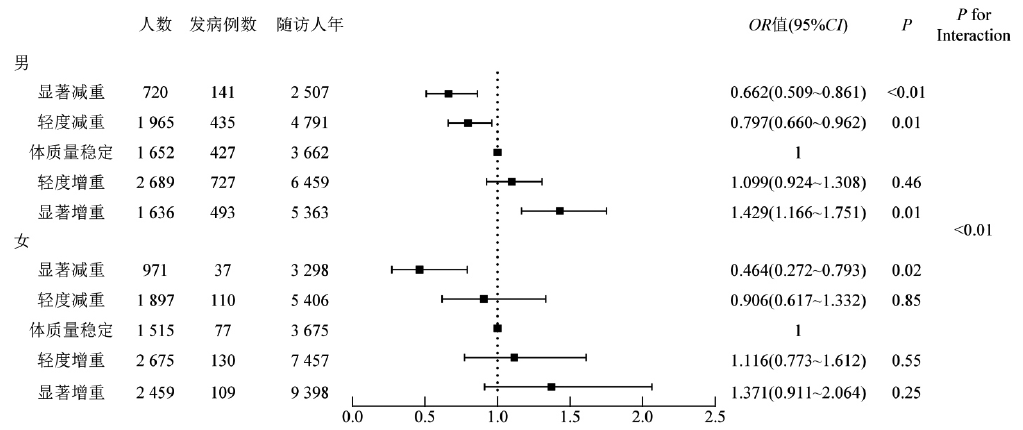
Figure 2 Forest plot for the association between weight change and hyperuricemia in adults by sex
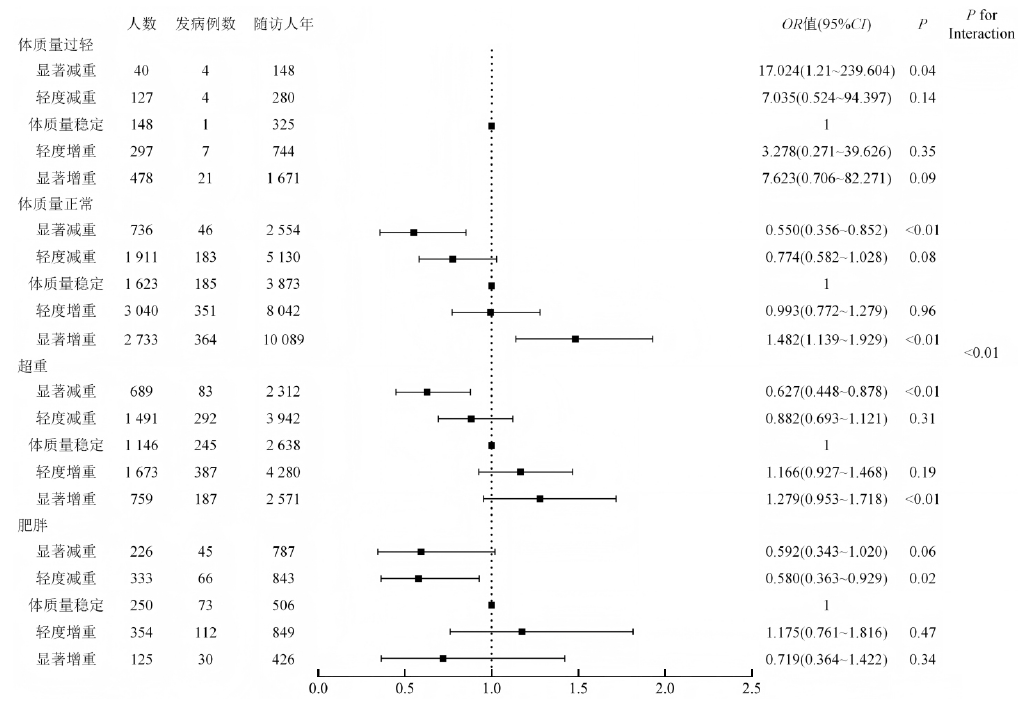
Figure 3 Forest plot for the association between weight change and hyperuricemia in adults by baseline BMI
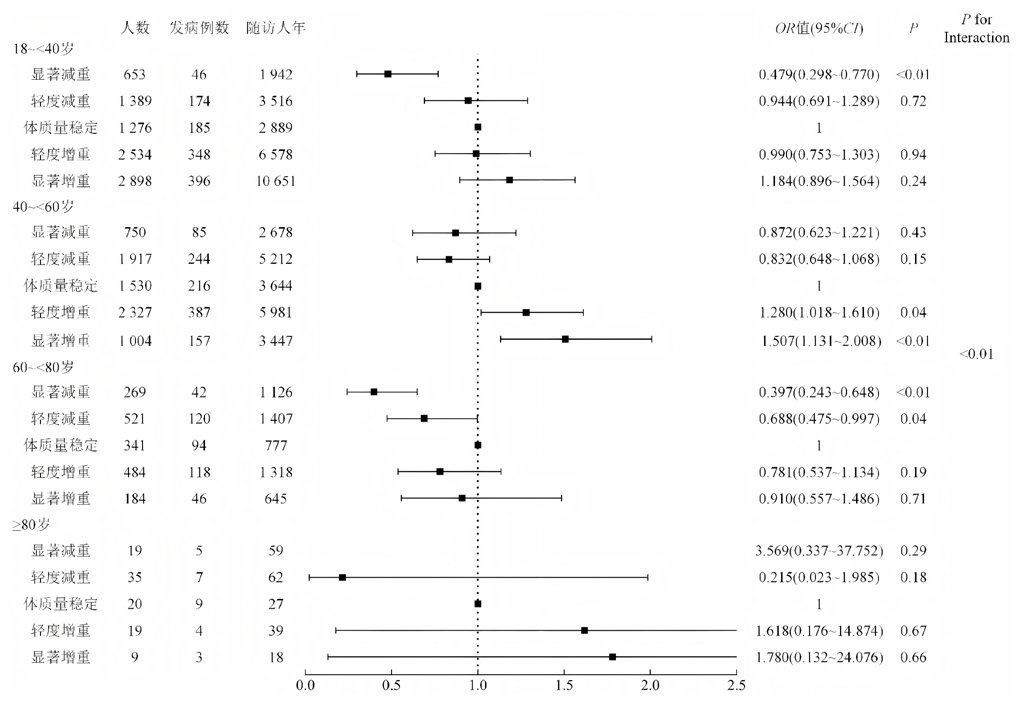
Figure 4 Forest plot for the association between weight change and hyperuricemia in adults by age group
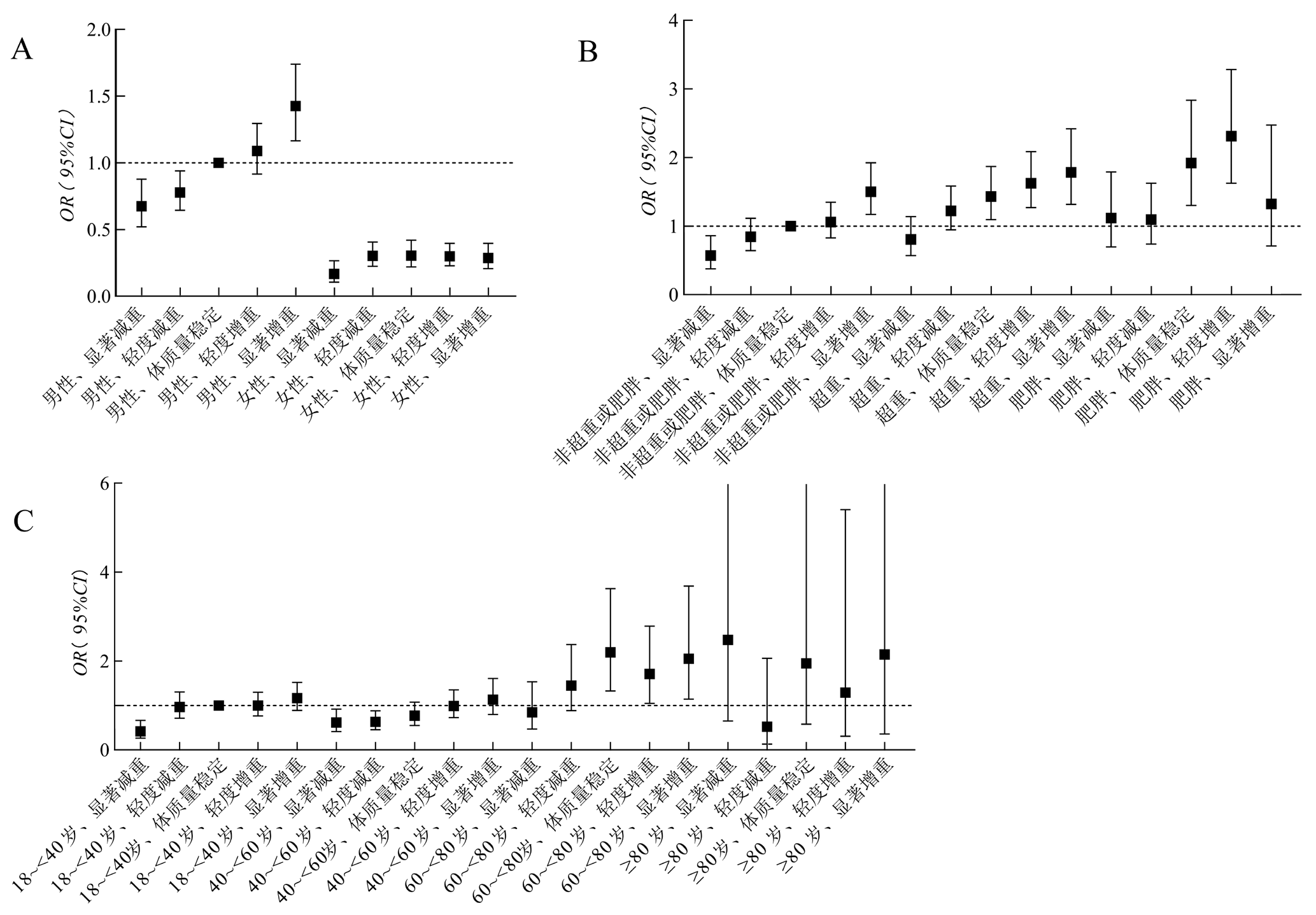
Figure 5 Joint effects of different characteristics and weight change on the risk of incident hyperuricemia
| 组别 | 随访(人年) | 发病(例) | 发病密度(1/1 000人年) | 模型1 | 模型2 | 模型3 | |||
|---|---|---|---|---|---|---|---|---|---|
| OR(95%CI) | P值 | OR(95%CI) | P值 | OR(95%CI) | P值 | ||||
| 显著减重 | 5 345 | 207 | 38.73 | 0.688(0.579~0.818) | <0.01 | 0.706(0.568~0.877) | <0.01 | 0.668(0.535~0.833) | <0.01 |
| 轻度减重 | 9 593 | 603 | 62.86 | 0.896(0.789~1.018) | 0.09 | 0.877(0.749~1.028) | 0.11 | 0.864(0.736~1.014) | 0.07 |
| 体质量稳定 | 7 092 | 553 | 77.98 | 1 | 1 | 1 | |||
| 轻度增重 | 13 214 | 932 | 70.53 | 1.011(0.900~1.136) | 0.86 | 1.052(0.909~1.218) | 0.50 | 1.087(0.936~1.261) | 0.27 |
| 显著增重 | 13 941 | 743 | 53.30 | 1.059(0.937~1.197) | 0.36 | 1.316(1.118~1.549) | <0.01 | 1.418(1.201~1.675) | <0.01 |
Table 3 Results of sensitivity analysis on the relationship between body weight changes and the incidence of hyperuricemia in adults undergoing health examination
| 组别 | 随访(人年) | 发病(例) | 发病密度(1/1 000人年) | 模型1 | 模型2 | 模型3 | |||
|---|---|---|---|---|---|---|---|---|---|
| OR(95%CI) | P值 | OR(95%CI) | P值 | OR(95%CI) | P值 | ||||
| 显著减重 | 5 345 | 207 | 38.73 | 0.688(0.579~0.818) | <0.01 | 0.706(0.568~0.877) | <0.01 | 0.668(0.535~0.833) | <0.01 |
| 轻度减重 | 9 593 | 603 | 62.86 | 0.896(0.789~1.018) | 0.09 | 0.877(0.749~1.028) | 0.11 | 0.864(0.736~1.014) | 0.07 |
| 体质量稳定 | 7 092 | 553 | 77.98 | 1 | 1 | 1 | |||
| 轻度增重 | 13 214 | 932 | 70.53 | 1.011(0.900~1.136) | 0.86 | 1.052(0.909~1.218) | 0.50 | 1.087(0.936~1.261) | 0.27 |
| 显著增重 | 13 941 | 743 | 53.30 | 1.059(0.937~1.197) | 0.36 | 1.316(1.118~1.549) | <0.01 | 1.418(1.201~1.675) | <0.01 |
| [1] |
中华医学会内分泌学分会. 中国高尿酸血症与痛风诊疗指南(2019)[J]. 中华内分泌代谢杂志, 2020, 36(1): 1-13. DOI: 10.3969/j.issn.1001-9057.2020.06.022.
|
| [2] |
|
| [3] |
|
| [4] |
|
| [5] |
|
| [6] |
裴芳, 裴华, 夏中华, 等. 高尿酸血症和痛风的表观遗传学研究进展[J]. 生理科学进展, 2019, 50(3): 175-180. DOI: 10.3969/j.issn.0559-7765.2019.03.004.
|
| [7] |
|
| [8] |
|
| [9] |
|
| [10] |
张鹏, 高鹰, 杨洪喜, 等. 中国长寿地区老年人血尿酸水平与慢性肾脏病发病风险研究[J]. 中国全科医学, 2023, 26(31): 3884-3889, 3907. DOI: 10.12114/j.issn.1007-9572.2023.0001.
|
| [11] |
黄迁, 徐健, 袁雪丽, 等. 深圳市社区65岁及以上老年人高尿酸血症与慢性肾病的相关性研究 [J]. 中国慢性病预防与控制, 2023, 31(8): 606-610. DOI: 10.16386/j.cjpccd.issn.1004-6194.2023.08.009.
|
| [12] |
|
| [13] |
|
| [14] |
|
| [15] |
胡彩红, 程云凤, 王美兰, 等. 南京市60岁及以上人群肥胖与高尿酸血症的关联研究[J]. 中国慢性病预防与控制, 2024, 32(11): 815-820. DOI: 10.16386/j.cjpccd.issn.1004-6194.2024.11.003.
|
| [16] |
|
| [17] |
中国民族卫生协会重症代谢疾病分会, 高尿酸血症相关疾病诊疗多学科共识专家组. 中国高尿酸血症相关疾病诊疗多学科专家共识(2023年版)[J]. 中国实用内科杂志, 2023, 43(6): 461-480. DOI: 10.19538/j.nk2023060106.
|
| [18] |
方海琴, 姜萍, 王永俊, 等. 成人高尿酸血症与痛风食养指南(2024年版)[J]. 卫生研究, 2024, 53(3): 352-356. DOI: 10.19813/j.cnki.weishengyanjiu.2024.03.002.
|
| [19] |
中华医学会健康管理学分会, 中国营养学会临床营养分会, 全国卫生产业企业管理协会医学营养产业分会, 等. 超重或肥胖人群体重管理流程的专家共识(2021年)[J]. 中华健康管理学杂志, 2021, 15(4): 317-322. DOI: 10.3760/cma.j.cn115624-20210630-00368.
|
| [20] |
WS/T 428-2013成人体重判定[S].
|
| [21] |
|
| [22] |
唐桂敏, 苗鑫蕾, 王倩倩, 等. 健康体检成人体重变化与高尿酸血症发病关系的队列研究[J]. 中华健康管理学杂志, 2024, 18(10): 740-746. DOI: 10.3760/cma.j.cn115624-20240228-00143.
|
| [23] |
|
| [24] |
|
| [25] |
|
| [26] |
|
| [27] |
|
| [1] | MA Feng, ZHOU Liang, JIN Jianfeng, LU Ya'er. Effect Evaluation of Color-coded Management and Active Recall in Post-examination Services for Health Checkups in Primary Healthcare Institutions [J]. Chinese General Practice, 2026, 29(28): 4125-4131. |
| [2] | JIANG Huajie, ZHUO Lin, LI Xinyue, JIN Rui, MA Yue, CUI Jingqiu, WANG Xiuying. Related Factors and Preventive Measures of Hyperuricemia in Elderly Men [J]. Chinese General Practice, 2026, 29(27): 3915-3923. |
| [3] | LIU Shuai, YUAN Shizhao, LIU Yan, JIA Shuoxian, ZHAO Yan, WANG Ziyi, ZHOU Chunhua, YU Jing. Evaluation of the Efficacy, Safetyand Economy of Different Amphotericin B Formulationsin Invasive Fungal Disease: a Retrospective Cohort Study [J]. Chinese General Practice, 2026, 29(21): 2967-2974. |
| [4] | WU Zhiyuan, WANG Chuanxu, YANG Feng, ZHANG Xuming, ZHOU Jiabao, GAO Jiandong. Study on the Mechanism of Shizhi Fang in Uric Acid Transport-related Proteins in Hyperuricemia [J]. Chinese General Practice, 2026, 29(14): 1898-1910. |
| [5] | SUN Xia, SHEN Wen, TANG Xiang, ZHONG Wei, WANG Kailin, DAI Zhiyin, ZHANG Chaopu, YUAN Wei, YUAN Guoyue. Analysis of Clinical Characteristics in Dilated Cardiomyopathy Patients with Different Weight Statuses and the Influence of Weight Management on the Prognosis [J]. Chinese General Practice, 2026, 29(11): 1448-1455. |
| [6] | HU Jiaqi, LI Duan, FANG Hao, FAN Xingying, DU Wei, ZHOU Hanni. Study on Predictive Model of Non-genetic Risk Factors for Hyperuricemia in a Physical Examination Cohort [J]. Chinese General Practice, 2026, 29(10): 1324-1333. |
| [7] | WANG Xiaonan, RUAN Xiaonan, LIU Yang, WU Kang, QIU Hua, LIU Qingping, SONG Jiahui, GAO Jiaojiao, ZHOU Yi, LIU Xiaolin. Correlation between Anthropometric Indices and the Risk of Stroke: a Nested Case-control Study [J]. Chinese General Practice, 2026, 29(08): 1020-1028. |
| [8] | ZHU Chenrui, LI Na, WU Yuntao, ZHAO Haiyan, HUANG Zhe, LIU Yan, JI Chunpeng, WU Shouling. The Impact of Serum Uric Acid Levels on New-onset Atrioventricular Block: a Prospective Cohort Study [J]. Chinese General Practice, 2026, 29(05): 583-590. |
| [9] | XIANG Fengling, WANG Yuankun, WANG Xiaoyan, HE Shengjie, GAN Jinhua. The Prevalence of Hyperuricemia among Children and Adolescents in China: a Meta-analysis [J]. Chinese General Practice, 2025, 28(33): 4206-4213. |
| [10] | YANG Bingqing, YANG Tianyuan, HOU Chenxue, WANG Qi. Comparative Study on the Potential of Non-invasive Models in Evaluating Liver Fibrosis in Patients with Chronic Hepatitis B Combined with Non-alcoholic Fatty Liver Disease [J]. Chinese General Practice, 2025, 28(32): 4067-4074. |
| [11] | ZHOU Penglong, CHANG Jing, DING Suying, CHEN Jingfeng, WANG Tao, LI Chenyang. Correlation Analysis between Age-Stratified Differences in Fat-to-muscle Ratio and Hyperuricemia [J]. Chinese General Practice, 2025, 28(27): 3375-3384. |
| [12] | FAN Boyang, ZHANG Yu, SUN Wenning, ZHANG Huifang, WANG Yingjie, ZHANG Ao, ZHAO Yang, WANG Haipeng. Study of Behavioral Intention and Influencing Factors of Integrated Medical and Preventive Care Provided by Grassroots Doctors for Patients with Chronic Diseases [J]. Chinese General Practice, 2025, 28(25): 3144-3150. |
| [13] | ZHANG Shujing, SUN Lixin, CAO Yuqing. Comparative Study on the Clinicopathological Features and Prognostic between HPV-related and Non-HPV-related Cervical Adenocarcinoma [J]. Chinese General Practice, 2025, 28(14): 1758-1764. |
| [14] | CHEN Xiaolu, LIU Jian. A Retrospective Cohort Study of Chinese Herbal Medicine Reducing the Risk of Readmission of Rheumatoid Arthritis Complicated with Sjogren's Syndrome [J]. Chinese General Practice, 2025, 28(12): 1506-1512. |
| [15] | QI Haiyan, WANG Jie, LUO Yuxi, WU Yun. Correlation Study between Hyperuricemia and Chronic Pulmonary Heart Disease: Based on LASSO Regression and Propensity Score Matching [J]. Chinese General Practice, 2024, 27(24): 2954-2960. |
| Viewed | ||||||
|
Full text |
|
|||||
|
Abstract |
|
|||||
