
中国全科医学 ›› 2027, Vol. 30 ›› Issue (02): 256-265.DOI: 10.12114/j.issn.1007-9572.2026.0165
• 论著 • 上一篇
蒋婷1,2, 李培裴3, 张杰2,*( ), 蓝广芊1,*()
收稿日期:2026-06-24
修回日期:2026-07-30
出版日期:2027-01-15
发布日期:2026-11-26
通讯作者:
张杰, 蓝广芊
作者贡献:
蒋婷进行试验设计、数据收集、数据处理、文章撰写;李培裴进行患者随访(协助)、数据收集、数据处理;张杰进行试验设计、患者随访、论文审阅;蓝广芊进行研究指导、论文审阅。
基金资助:
JIANG Ting1,2, LI Peipei3, ZHANG Jie2,*(), LAN Guangqian1,*()
Received:2026-06-24
Revised:2026-07-30
Published:2027-01-15
Online:2026-11-26
Contact:
ZHANG Jie, LAN Guangqian
摘要: 背景 经导管动脉化疗栓塞(TACE)联合抗血管生成药物已成为肝细胞癌的重要治疗手段。但两者联合的最佳治疗顺序与时间间隔尚不明确,临床决策缺乏参考依据,导致患者预后差异较大。 目的 探讨TACE联合抗血管生成药物治疗肝细胞癌的最佳治疗顺序与时间间隔。 方法 回顾性纳入2020年1月—2025年5月于成都医学院第一附属医院接受TACE联合抗血管生成药物治疗的228例肝细胞癌患者,根据治疗顺序分为抗血管先序组(166例)、同步治疗组(15例)、TACE先序组(47例)。抗血管先序组根据治疗时间间隔分为1~7 d亚组(82例)、8~14 d亚组(68例)、≥15 d亚组(16例)。收集患者临床资料,包括年龄、性别、中国肝癌分期、体能状态评分、营养风险筛查评分、TACE次数、抗血管生成治疗方案、抗血管生成联合治疗方案、合并症等。所有患者随访至2026-05-01,采用主分析与敏感性分析相结合的方法比较组间客观缓解率(ORR)、疾病控制率(DCR)、中位无进展生存期(mPFS)及不良事件发生率。采用Kaplan-Meier法进行生存分析,通过Log-rank检验进行组间比较;采用多因素Cox比例风险回归模型分析影响无进展生存期(PFS)的预后因素。 结果 总体人群主分析显示,抗血管先序组、同步治疗组、TACE先序组ORR、DCR及mPFS比较,差异均无统计学意义(P>0.05)。敏感性分析(乐观假设)显示,三组间mPFS比较,差异有统计学意义(P=0.013),其中抗血管先序组mPFS优于TACE先序组(P<0.05)。在抗血管先序组内,时间间隔亚组主分析显示,三亚组间ORR、DCR比较,差异均无统计学意义(P>0.05);三亚组间mPFS比较,差异有统计学意义(P=0.019),其中8~14 d亚组mPFS优于≥15 d亚组(P<0.05)。多因素Cox比例风险回归分析显示,在总体人群主分析和时间间隔亚组主分析中,门静脉癌栓与肝外转移为肝细胞癌的不良预后因素(总体人群:HR=1.719,95%CI=1.074~2.753;HR=1.616,95%CI=1.021~2.558;时间间隔亚组:HR=2.321,95%CI=1.304~4.134;HR=1.907,95%CI=1.056~3.444)。安全性方面,总体人群与亚组人群三组间各项不良事件的发生率比较,差异均无统计学意义(P>0.05)。 结论 TACE联合抗血管生成治疗肝细胞癌具有一定疗效。尽管主分析未显示统计学差异,但敏感性分析提示抗血管生成先行策略在延长PFS方面具有潜在优势,8~14 d可能是相对更优的治疗窗口。
中图分类号:
| 组别 | 例数 | 年龄 | 性别 | CNLC分期 | |||||||
|---|---|---|---|---|---|---|---|---|---|---|---|
| ≥60岁 | <60岁 | 男 | 女 | Ⅰa期 | Ⅰb期 | Ⅱa期 | Ⅱb期 | Ⅲa期 | Ⅲb期 | ||
| 抗血管先序组 | 166 | 107(64.46) | 59(35.54) | 140(84.34) | 26(15.66) | 3(1.81) | 17(10.24) | 48(28.92) | 65(39.16) | 15(9.04) | 18(10.84) |
| 同步治疗组 | 15 | 7(46.67) | 8(53.33) | 11(73.33) | 4(26.67) | 0 | 1(6.67) | 3(20.00) | 7(46.67) | 1(6.67) | 3(20.00) |
| TACE先序组 | 47 | 30(63.83) | 17(36.17) | 41(87.23) | 6(12.77) | 2(4.26) | 5(10.64) | 8(17.02) | 15(31.91) | 4(8.51) | 13(27.66) |
| χ2值 | 1.883 | — | — | ||||||||
| P值 | 0.390 | 0.430 | 0.274 | ||||||||
| 组别 | PS评分 | NRS评分 | Child-Pugh肝功能分级 | AFP值a | |||||||
| 0分 | 1分 | 2分 | 1分 | 2分 | 3分 | A级 | B级 | ≥400 μg/L | <400 μg/L | ||
| 抗血管先序组 | 15(9.04) | 122(73.49) | 29(17.47) | 144(86.75) | 17(10.24) | 5(3.01) | 114(68.67) | 52(31.33) | 44(26.51) | 106(63.86) | |
| 同步治疗组 | 2(13.33) | 13(86.67) | 0 | 13(86.67) | 2(13.33) | 0 | 11(73.33) | 4(26.67) | 4(26.67) | 10(66.67) | |
| TACE先序组 | 3(6.38) | 34(72.34) | 10(21.28) | 40(85.11) | 6(12.77) | 1(2.13) | 34(72.34) | 13(27.66) | 22(46.80) | 22(46.80) | |
| χ2值 | — | — | — | — | |||||||
| P值 | 0.318 | 0.924 | 0.907 | 0.036 | |||||||
| 组别 | 合并肝炎 | 抗病毒治疗 | 肝硬化 | 门静脉癌栓 | |||||||
| 无 | 乙肝 | 丙肝 | 是 | 否 | 是 | 否 | 是 | 否 | |||
| 抗血管先序组 | 45(27.11) | 112(67.47) | 9(5.42) | 107(64.46) | 59(35.54) | 91(54.82) | 75(45.18) | 21(12.65) | 145(87.35) | ||
| 同步治疗组 | 6(40.00) | 9(60.00) | 0 | 7(46.67) | 8(53.33) | 9(60.00) | 6(40.00) | 2(13.33) | 13(86.67) | ||
| TACE先序组 | 8(17.02) | 33(70.21) | 6(12.77) | 34(72.34) | 13(27.66) | 24(51.06) | 23(48.94) | 7(14.89) | 40(85.11) | ||
| χ2值 | — | 3.346 | 0.412 | — | |||||||
| P值 | 0.167 | 0.188 | 0.814 | 0.838 | |||||||
| 组别 | 肝外转移 | 高血压 | 糖尿病 | 慢性胃炎 | |||||||
| 是 | 否 | 是 | 否 | 是 | 否 | 是 | 否 | ||||
| 抗血管先序组 | 18(10.84) | 148(89.16) | 38(22.89) | 128(77.11) | 21(12.65) | 145(87.35) | 40(24.10) | 126(75.90) | |||
| 同步治疗组 | 3(20.00) | 12(80.00) | 0 | 15(100.00) | 0 | 15(100.00) | 3(20.00) | 12(80.00) | |||
| TACE先序组 | 13(27.66) | 34(72.34) | 13(27.66) | 34(72.34) | 8(17.02) | 39(82.98) | 5(10.64) | 42(89.36) | |||
| χ2值 | — | — | — | — | |||||||
| P值 | 0.014 | 0.055 | 0.251 | 0.135 | |||||||
| 组别 | 抗血管生成治疗方案 | ||||||||||
| 贝伐珠单抗200 mg | 阿帕替尼250 mg | 阿帕替尼500 mg | 阿帕替尼750 mg | 仑伐替尼4 mg | 仑伐替尼8 mg | 仑伐替尼12 mg | 索拉非尼400 mg | ||||
| 抗血管先序组 | 0 | 1(0.60) | 0 | 0 | 1(0.60) | 153(92.17) | 2(1.20) | 9(5.42) | |||
| 同步治疗组 | 2(13.33) | 0 | 0 | 0 | 0 | 13(86.67) | 0 | 0 | |||
| TACE先序组 | 4(8.51) | 2(4.26) | 2(4.26) | 1(2.13) | 2(4.26) | 26(55.32) | 9(19.15) | 1(2.13) | |||
| χ2值 | — | ||||||||||
| P值 | <0.001 | ||||||||||
| 组别 | 抗血管生成联合方案 | TACE总次数 | 抗血管生成治疗模式(按用药天数) | ||||||||
| 贝伐珠单抗+免疫检查点抑制剂 | 阿帕替尼 | 仑伐替尼 | 索拉非尼 | ≤3次 | >3次 | 连续 | 间断 | ||||
| 抗血管先序组 | 0 | 1(0.60) | 156(93.98) | 9(5.42) | 153(92.17) | 13(7.83) | 166(100.00) | 0 | |||
| 同步治疗组 | 2(13.33) | 0 | 13(86.67) | 0 | 14(93.33) | 1(6.67) | 14(93.33) | 1(6.67) | |||
| TACE先序组 | 4(8.51) | 5(10.64) | 37(78.72) | 1(2.13) | 38(80.85) | 9(19.15) | 41(87.23) | 6(12.77) | |||
| χ2值 | — | — | — | ||||||||
| P值 | <0.001 | 0.066 | <0.001 | ||||||||
表1 三组基线资料比较[例(%)]
Table 1 Comparison of baseline data among three groups
| 组别 | 例数 | 年龄 | 性别 | CNLC分期 | |||||||
|---|---|---|---|---|---|---|---|---|---|---|---|
| ≥60岁 | <60岁 | 男 | 女 | Ⅰa期 | Ⅰb期 | Ⅱa期 | Ⅱb期 | Ⅲa期 | Ⅲb期 | ||
| 抗血管先序组 | 166 | 107(64.46) | 59(35.54) | 140(84.34) | 26(15.66) | 3(1.81) | 17(10.24) | 48(28.92) | 65(39.16) | 15(9.04) | 18(10.84) |
| 同步治疗组 | 15 | 7(46.67) | 8(53.33) | 11(73.33) | 4(26.67) | 0 | 1(6.67) | 3(20.00) | 7(46.67) | 1(6.67) | 3(20.00) |
| TACE先序组 | 47 | 30(63.83) | 17(36.17) | 41(87.23) | 6(12.77) | 2(4.26) | 5(10.64) | 8(17.02) | 15(31.91) | 4(8.51) | 13(27.66) |
| χ2值 | 1.883 | — | — | ||||||||
| P值 | 0.390 | 0.430 | 0.274 | ||||||||
| 组别 | PS评分 | NRS评分 | Child-Pugh肝功能分级 | AFP值a | |||||||
| 0分 | 1分 | 2分 | 1分 | 2分 | 3分 | A级 | B级 | ≥400 μg/L | <400 μg/L | ||
| 抗血管先序组 | 15(9.04) | 122(73.49) | 29(17.47) | 144(86.75) | 17(10.24) | 5(3.01) | 114(68.67) | 52(31.33) | 44(26.51) | 106(63.86) | |
| 同步治疗组 | 2(13.33) | 13(86.67) | 0 | 13(86.67) | 2(13.33) | 0 | 11(73.33) | 4(26.67) | 4(26.67) | 10(66.67) | |
| TACE先序组 | 3(6.38) | 34(72.34) | 10(21.28) | 40(85.11) | 6(12.77) | 1(2.13) | 34(72.34) | 13(27.66) | 22(46.80) | 22(46.80) | |
| χ2值 | — | — | — | — | |||||||
| P值 | 0.318 | 0.924 | 0.907 | 0.036 | |||||||
| 组别 | 合并肝炎 | 抗病毒治疗 | 肝硬化 | 门静脉癌栓 | |||||||
| 无 | 乙肝 | 丙肝 | 是 | 否 | 是 | 否 | 是 | 否 | |||
| 抗血管先序组 | 45(27.11) | 112(67.47) | 9(5.42) | 107(64.46) | 59(35.54) | 91(54.82) | 75(45.18) | 21(12.65) | 145(87.35) | ||
| 同步治疗组 | 6(40.00) | 9(60.00) | 0 | 7(46.67) | 8(53.33) | 9(60.00) | 6(40.00) | 2(13.33) | 13(86.67) | ||
| TACE先序组 | 8(17.02) | 33(70.21) | 6(12.77) | 34(72.34) | 13(27.66) | 24(51.06) | 23(48.94) | 7(14.89) | 40(85.11) | ||
| χ2值 | — | 3.346 | 0.412 | — | |||||||
| P值 | 0.167 | 0.188 | 0.814 | 0.838 | |||||||
| 组别 | 肝外转移 | 高血压 | 糖尿病 | 慢性胃炎 | |||||||
| 是 | 否 | 是 | 否 | 是 | 否 | 是 | 否 | ||||
| 抗血管先序组 | 18(10.84) | 148(89.16) | 38(22.89) | 128(77.11) | 21(12.65) | 145(87.35) | 40(24.10) | 126(75.90) | |||
| 同步治疗组 | 3(20.00) | 12(80.00) | 0 | 15(100.00) | 0 | 15(100.00) | 3(20.00) | 12(80.00) | |||
| TACE先序组 | 13(27.66) | 34(72.34) | 13(27.66) | 34(72.34) | 8(17.02) | 39(82.98) | 5(10.64) | 42(89.36) | |||
| χ2值 | — | — | — | — | |||||||
| P值 | 0.014 | 0.055 | 0.251 | 0.135 | |||||||
| 组别 | 抗血管生成治疗方案 | ||||||||||
| 贝伐珠单抗200 mg | 阿帕替尼250 mg | 阿帕替尼500 mg | 阿帕替尼750 mg | 仑伐替尼4 mg | 仑伐替尼8 mg | 仑伐替尼12 mg | 索拉非尼400 mg | ||||
| 抗血管先序组 | 0 | 1(0.60) | 0 | 0 | 1(0.60) | 153(92.17) | 2(1.20) | 9(5.42) | |||
| 同步治疗组 | 2(13.33) | 0 | 0 | 0 | 0 | 13(86.67) | 0 | 0 | |||
| TACE先序组 | 4(8.51) | 2(4.26) | 2(4.26) | 1(2.13) | 2(4.26) | 26(55.32) | 9(19.15) | 1(2.13) | |||
| χ2值 | — | ||||||||||
| P值 | <0.001 | ||||||||||
| 组别 | 抗血管生成联合方案 | TACE总次数 | 抗血管生成治疗模式(按用药天数) | ||||||||
| 贝伐珠单抗+免疫检查点抑制剂 | 阿帕替尼 | 仑伐替尼 | 索拉非尼 | ≤3次 | >3次 | 连续 | 间断 | ||||
| 抗血管先序组 | 0 | 1(0.60) | 156(93.98) | 9(5.42) | 153(92.17) | 13(7.83) | 166(100.00) | 0 | |||
| 同步治疗组 | 2(13.33) | 0 | 13(86.67) | 0 | 14(93.33) | 1(6.67) | 14(93.33) | 1(6.67) | |||
| TACE先序组 | 4(8.51) | 5(10.64) | 37(78.72) | 1(2.13) | 38(80.85) | 9(19.15) | 41(87.23) | 6(12.77) | |||
| χ2值 | — | — | — | ||||||||
| P值 | <0.001 | 0.066 | <0.001 | ||||||||
| 组别 | 主分析 | 保守假设 | 乐观假设 | ||||||
|---|---|---|---|---|---|---|---|---|---|
| 例数 | ORR | DCR | 例数 | ORR | DCR | 例数 | ORR | DCR | |
| 抗血管先序组 | 142 | 98(69.01) | 121(85.21) | 166 | 98(59.04) | 121(72.89) | 166 | 122(73.49) | 145(87.35) |
| 同步治疗组 | 12 | 8(66.67) | 9(75.00) | 15 | 8(53.33) | 9(60.00) | 15 | 11(73.33) | 12(80.00) |
| TACE先序组 | 44 | 36(81.82) | 40(90.91) | 47 | 36(76.60) | 40(85.11) | 47 | 39(82.98) | 43(91.49) |
| χ2值 | — | — | 5.355 | — | — | — | |||
| P值 | 0.212 | 0.301 | 0.069 | 0.090 | 0.420 | 0.462 | |||
表2 总体人群ORR/DCR主分析及敏感性分析结果[例(%)]
Table 2 Results of primary and sensitivity analysis for ORR/DCR in the overall population
| 组别 | 主分析 | 保守假设 | 乐观假设 | ||||||
|---|---|---|---|---|---|---|---|---|---|
| 例数 | ORR | DCR | 例数 | ORR | DCR | 例数 | ORR | DCR | |
| 抗血管先序组 | 142 | 98(69.01) | 121(85.21) | 166 | 98(59.04) | 121(72.89) | 166 | 122(73.49) | 145(87.35) |
| 同步治疗组 | 12 | 8(66.67) | 9(75.00) | 15 | 8(53.33) | 9(60.00) | 15 | 11(73.33) | 12(80.00) |
| TACE先序组 | 44 | 36(81.82) | 40(90.91) | 47 | 36(76.60) | 40(85.11) | 47 | 39(82.98) | 43(91.49) |
| χ2值 | — | — | 5.355 | — | — | — | |||
| P值 | 0.212 | 0.301 | 0.069 | 0.090 | 0.420 | 0.462 | |||
| 组别 | 主分析 | 保守假设 | 乐观假设 | |||
|---|---|---|---|---|---|---|
| 例数 | mPFS(95%CI) | 例数 | mPFS(95%CI) | 例数 | mPFS(95%CI) | |
| 抗血管先序组 | 142 | 10.4(8.8~12.0) | 166 | 7.7(5.1~10.3) | 166 | 12.9(9.8~16.0) |
| 同步治疗组 | 12 | 6.4(2.1~10.7) | 15 | 6.4(1.2~11.6) | 15 | 11.1(0~29.3) |
| TACE先序组 | 44 | 10.0(7.4~12.6) | 47 | 10.0(8.1~11.9) | 47 | 10.0(7.9~12.1)a |
表3 总体人群mPFS主分析及敏感性分析结果(月)
Table 3 Results of primary and sensitivity analysis for mPFS in the overall population
| 组别 | 主分析 | 保守假设 | 乐观假设 | |||
|---|---|---|---|---|---|---|
| 例数 | mPFS(95%CI) | 例数 | mPFS(95%CI) | 例数 | mPFS(95%CI) | |
| 抗血管先序组 | 142 | 10.4(8.8~12.0) | 166 | 7.7(5.1~10.3) | 166 | 12.9(9.8~16.0) |
| 同步治疗组 | 12 | 6.4(2.1~10.7) | 15 | 6.4(1.2~11.6) | 15 | 11.1(0~29.3) |
| TACE先序组 | 44 | 10.0(7.4~12.6) | 47 | 10.0(8.1~11.9) | 47 | 10.0(7.9~12.1)a |
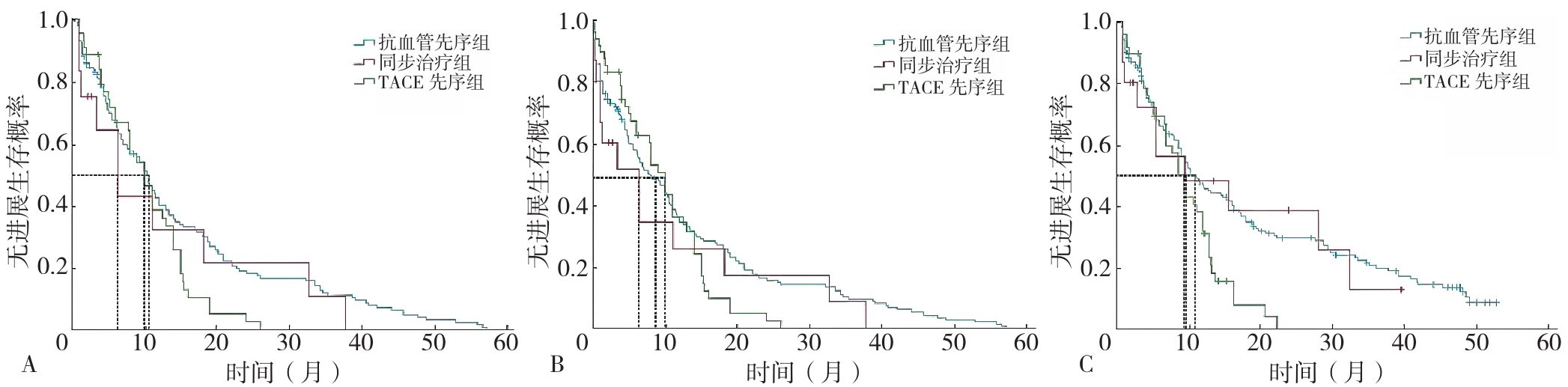
图1 总体人群无进展生存期的Kaplan-Meier生存曲线分析注:TACE=经导管动脉化疗栓塞;A为主分析生存曲线,B为敏感性分析生存曲线(保守假设),C为敏感性分析生存曲线(乐观假设)。
Figure 1 Kaplan-Meier survival curve analysis of progression-free survival in the overall population
| 变量 | 单因素分析 | 多因素分析 | ||||||||
|---|---|---|---|---|---|---|---|---|---|---|
| β | SE | Wald χ2值 | P值 | HR(95%CI) | β | SE | Wald χ2值 | P值 | HR(95%CI) | |
| 治疗顺序(以抗血管先序组为参照) | ||||||||||
| TACE先序组 | 0.365 | 0.188 | 3.764 | 0.052 | 1.440(0.996~2.082) | 0.153 | 0.203 | 0.565 | 0.452 | 1.165(0.782~1.735) |
| 门静脉癌栓(以否为参照) | ||||||||||
| 是 | 0.687 | 0.231 | 8.846 | 0.003 | 1.988(1.264~3.126) | 0.542 | 0.240 | 5.092 | 0.024 | 1.719(1.074~2.753) |
| 肝外转移(以否为参照) | ||||||||||
| 是 | 0.640 | 0.218 | 8.642 | 0.003 | 1.897(1.238~2.907) | 0.480 | 0.234 | 4.205 | 0.040 | 1.616(1.021~2.558) |
表4 总体人群主分析中患者预后的Cox回归分析
Table 4 Cox regression analysis on prognosis for primary analysis in the overall population
| 变量 | 单因素分析 | 多因素分析 | ||||||||
|---|---|---|---|---|---|---|---|---|---|---|
| β | SE | Wald χ2值 | P值 | HR(95%CI) | β | SE | Wald χ2值 | P值 | HR(95%CI) | |
| 治疗顺序(以抗血管先序组为参照) | ||||||||||
| TACE先序组 | 0.365 | 0.188 | 3.764 | 0.052 | 1.440(0.996~2.082) | 0.153 | 0.203 | 0.565 | 0.452 | 1.165(0.782~1.735) |
| 门静脉癌栓(以否为参照) | ||||||||||
| 是 | 0.687 | 0.231 | 8.846 | 0.003 | 1.988(1.264~3.126) | 0.542 | 0.240 | 5.092 | 0.024 | 1.719(1.074~2.753) |
| 肝外转移(以否为参照) | ||||||||||
| 是 | 0.640 | 0.218 | 8.642 | 0.003 | 1.897(1.238~2.907) | 0.480 | 0.234 | 4.205 | 0.040 | 1.616(1.021~2.558) |
| 组别 | 主分析 | 保守假设 | 乐观假设 | ||||||
|---|---|---|---|---|---|---|---|---|---|
| 例数 | ORR | DCR | 例数 | ORR | DCR | 例数 | ORR | DCR | |
| 1~7 d亚组 | 72 | 49(68.06) | 63(87.50) | 82 | 49(59.76) | 63(76.83) | 82 | 59(71.95) | 73(89.02) |
| 8~14 d亚组 | 56 | 39(69.64) | 47(83.93) | 68 | 39(57.35) | 47(69.11) | 68 | 51(75.00) | 59(86.76) |
| ≥15 d亚组 | 14 | 10(71.42) | 11(78.57) | 16 | 10(62.50) | 11(68.75) | 16 | 12(75.00) | 13(81.25) |
| χ2值 | — | — | 0.177 | — | — | — | |||
| P值 | 1.000 | 0.573 | 0.915 | 0.521 | 0.933 | 0.614 | |||
表5 时间间隔亚组ORR/DCR主分析及敏感性分析结果[例(%)]
Table 5 Results of primary and sensitivity analysis for ORR/DCR in the time-interval subgroup population
| 组别 | 主分析 | 保守假设 | 乐观假设 | ||||||
|---|---|---|---|---|---|---|---|---|---|
| 例数 | ORR | DCR | 例数 | ORR | DCR | 例数 | ORR | DCR | |
| 1~7 d亚组 | 72 | 49(68.06) | 63(87.50) | 82 | 49(59.76) | 63(76.83) | 82 | 59(71.95) | 73(89.02) |
| 8~14 d亚组 | 56 | 39(69.64) | 47(83.93) | 68 | 39(57.35) | 47(69.11) | 68 | 51(75.00) | 59(86.76) |
| ≥15 d亚组 | 14 | 10(71.42) | 11(78.57) | 16 | 10(62.50) | 11(68.75) | 16 | 12(75.00) | 13(81.25) |
| χ2值 | — | — | 0.177 | — | — | — | |||
| P值 | 1.000 | 0.573 | 0.915 | 0.521 | 0.933 | 0.614 | |||
| 组别 | 主分析 | 保守假设 | 乐观假设 | |||
|---|---|---|---|---|---|---|
| 例数 | mPFS(95%CI) | 例数 | mPFS(95%CI) | 例数 | mPFS(95%CI) | |
| 1~7 d亚组 | 72 | 10.0(6.9~13.1) | 82 | 7.7(5.0~10.4) | 82 | 11.5(9.2~13.8) |
| 8~14 d亚组 | 56 | 14.3(5.4~23.2) | 68 | 10.0(4.5~15.5) | 68 | 20.9(16.8~25.0) |
| ≥15 d亚组 | 14 | 4.7(0~10.3)a | 16 | 4.7(0.2~9.2) | 16 | 7.0(0~17.4) |
表6 时间间隔亚组mPFS主分析与敏感性分析结果(月)
Table 6 Results of primary and sensitivity analysis for mPFS in the time-interval subgroup population
| 组别 | 主分析 | 保守假设 | 乐观假设 | |||
|---|---|---|---|---|---|---|
| 例数 | mPFS(95%CI) | 例数 | mPFS(95%CI) | 例数 | mPFS(95%CI) | |
| 1~7 d亚组 | 72 | 10.0(6.9~13.1) | 82 | 7.7(5.0~10.4) | 82 | 11.5(9.2~13.8) |
| 8~14 d亚组 | 56 | 14.3(5.4~23.2) | 68 | 10.0(4.5~15.5) | 68 | 20.9(16.8~25.0) |
| ≥15 d亚组 | 14 | 4.7(0~10.3)a | 16 | 4.7(0.2~9.2) | 16 | 7.0(0~17.4) |
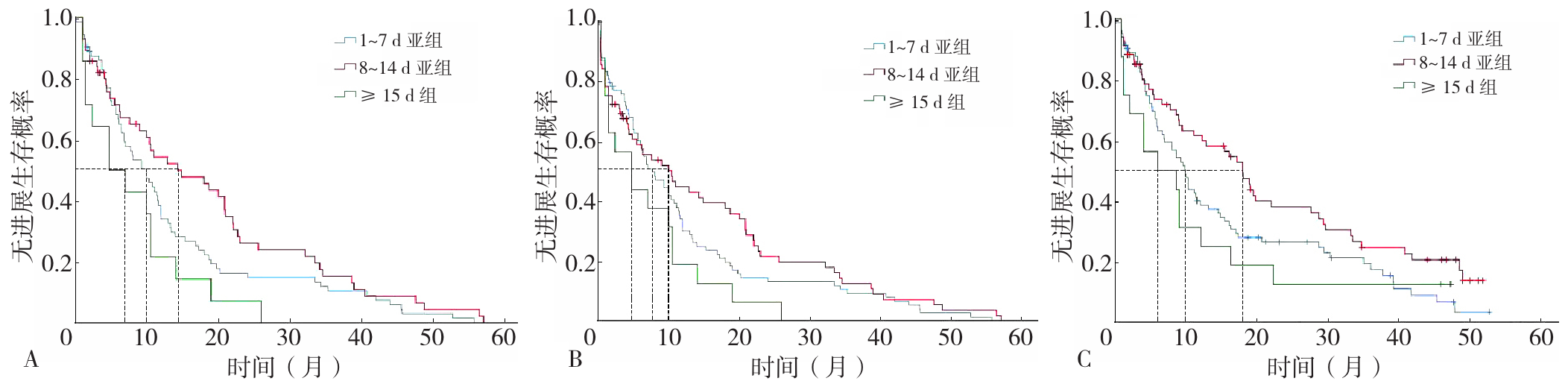
图2 时间间隔亚组患者无进展生存期的Kaplan-Meier生存曲线分析注:A为主分析生存曲线;B为敏感性分析生存曲线(保守假设);C为敏感性分析生存曲线(乐观假设)。
Figure 2 Kaplan-Meier survival curve analysis of progression-free survival in the time-interval subgroup
| 项目 | 单因素分析 | 多因素分析 | ||||||||
|---|---|---|---|---|---|---|---|---|---|---|
| β | SE | Wald χ2值 | P值 | HR(95%CI) | β | SE | Wald χ2值 | P值 | HR(95%CI) | |
| 时间间隔(以1~7 d亚组为参照) | ||||||||||
| 8~14 d亚组 | -0.318 | 0.193 | 2.730 | 0.098 | 0.728(0.499~1.061) | -0.216 | 0.198 | 1.192 | 0.275 | 0.806(0.547~1.187) |
| ≥15 d亚组 | 0.507 | 0.297 | 2.917 | 0.088 | 1.661(0.928~2.973) | 0.572 | 0.299 | 3.660 | 0.056 | 1.772(0.986~3.184) |
| 肝外转移(以否为参照) | ||||||||||
| 是 | 0.834 | 0.293 | 8.112 | 0.004 | 2.303(1.297~4.088) | 0.645 | 0.302 | 4.577 | 0.032 | 1.907(1.056~3.444) |
| 门静脉癌栓(以否为参照) | ||||||||||
| 是 | 0.998 | 0.280 | 12.670 | <0.001 | 2.712(1.566~4.699) | 0.842 | 0.294 | 8.182 | 0.004 | 2.321(1.304~4.134) |
表7 时间间隔亚组主分析中患者预后的Cox比例风险回归分析
Table 7 Cox proportional hazards regression analysis on prognosis for primary analysis in the time-interval subgroup
| 项目 | 单因素分析 | 多因素分析 | ||||||||
|---|---|---|---|---|---|---|---|---|---|---|
| β | SE | Wald χ2值 | P值 | HR(95%CI) | β | SE | Wald χ2值 | P值 | HR(95%CI) | |
| 时间间隔(以1~7 d亚组为参照) | ||||||||||
| 8~14 d亚组 | -0.318 | 0.193 | 2.730 | 0.098 | 0.728(0.499~1.061) | -0.216 | 0.198 | 1.192 | 0.275 | 0.806(0.547~1.187) |
| ≥15 d亚组 | 0.507 | 0.297 | 2.917 | 0.088 | 1.661(0.928~2.973) | 0.572 | 0.299 | 3.660 | 0.056 | 1.772(0.986~3.184) |
| 肝外转移(以否为参照) | ||||||||||
| 是 | 0.834 | 0.293 | 8.112 | 0.004 | 2.303(1.297~4.088) | 0.645 | 0.302 | 4.577 | 0.032 | 1.907(1.056~3.444) |
| 门静脉癌栓(以否为参照) | ||||||||||
| 是 | 0.998 | 0.280 | 12.670 | <0.001 | 2.712(1.566~4.699) | 0.842 | 0.294 | 8.182 | 0.004 | 2.321(1.304~4.134) |
| 分组 | 例数 | ALT升高 | AST升高 | 总胆红素升高 | 白细胞降低 | 中性粒细胞降低 | 血小板降低 | 血肌酐升高 | 恶心/呕吐 | 腹痛/腹泻 | 手足皮肤反应 | 发热/感染 |
|---|---|---|---|---|---|---|---|---|---|---|---|---|
| 抗血管先序组 | 166 | 115 (69.28) | 130(78.31) | 91(54.82) | 16(9.64) | 8(4.82) | 63(37.95) | 11(6.63) | 57(34.34) | 76(45.78) | 4(2.41) | 43(25.90) |
| 同步治疗组 | 15 | 11(73.33) | 12(80.00) | 10(66.67) | 4(26.67) | 2(13.33) | 8(53.33) | 1(6.67) | 4(26.67) | 6(40.00) | 1(6.67) | 4(26.67) |
| TACE先序组 | 47 | 33(70.21) | 42(89.36) | 30(63.83) | 3(6.38) | 2(4.26) | 20(42.55) | 8(17.02) | 17(36.17) | 24(51.06) | 0 | 10(21.28) |
| χ2值 | — | — | 1.774 | — | — | 1.529 | — | 0.461 | 0.683 | — | — | |
| P值 | 1.000 | 0.223 | 0.412 | 0.096 | 0.293 | 0.465 | 0.088 | 0.794 | 0.711 | 0.235 | 0.801 |
表8 总体人群不良事件反应发生率比较[例(%)]
Table 8 Comparison of the occurrence of adverse events in the overall population
| 分组 | 例数 | ALT升高 | AST升高 | 总胆红素升高 | 白细胞降低 | 中性粒细胞降低 | 血小板降低 | 血肌酐升高 | 恶心/呕吐 | 腹痛/腹泻 | 手足皮肤反应 | 发热/感染 |
|---|---|---|---|---|---|---|---|---|---|---|---|---|
| 抗血管先序组 | 166 | 115 (69.28) | 130(78.31) | 91(54.82) | 16(9.64) | 8(4.82) | 63(37.95) | 11(6.63) | 57(34.34) | 76(45.78) | 4(2.41) | 43(25.90) |
| 同步治疗组 | 15 | 11(73.33) | 12(80.00) | 10(66.67) | 4(26.67) | 2(13.33) | 8(53.33) | 1(6.67) | 4(26.67) | 6(40.00) | 1(6.67) | 4(26.67) |
| TACE先序组 | 47 | 33(70.21) | 42(89.36) | 30(63.83) | 3(6.38) | 2(4.26) | 20(42.55) | 8(17.02) | 17(36.17) | 24(51.06) | 0 | 10(21.28) |
| χ2值 | — | — | 1.774 | — | — | 1.529 | — | 0.461 | 0.683 | — | — | |
| P值 | 1.000 | 0.223 | 0.412 | 0.096 | 0.293 | 0.465 | 0.088 | 0.794 | 0.711 | 0.235 | 0.801 |
| 组别 | 例数 | ALT升高 | AST升高 | 总胆红素升高 | 白细胞降低 | 中性粒细胞降低 | 血小板降低 | 血肌酐升高 | 恶心/呕吐 | 腹痛/腹泻 | 手足皮肤反应 | 发热/感染 |
|---|---|---|---|---|---|---|---|---|---|---|---|---|
| 1~7 d亚组 | 82 | 58(70.73) | 64(78.05) | 46(56.10) | 9(10.98) | 4(4.88) | 29(35.37) | 7(8.54) | 26(31.71) | 40(48.78) | 1(1.22) | 24(29.27) |
| 8~14 d亚组 | 68 | 46(67.65) | 52(76.47) | 36(52.94) | 4(5.88) | 4(5.88) | 26(38.24) | 2(2.94) | 25(36.76) | 28(41.18) | 2(2.94) | 12(17.65) |
| ≥15 d亚组 | 16 | 11(68.75) | 14(87.50) | 9(56.25) | 3(18.75) | 0 | 8(50.00) | 2(12.50) | 6(37.50) | 8(50.00) | 1(6.25) | 7(43.75) |
| χ2值 | — | — | 0.164 | — | — | 1.221 | — | 0.500 | 0.993 | — | — | |
| P值 | 0.939 | 0.674 | 0.921 | 0.199 | 1.000 | 0.543 | 0.167 | 0.779 | 0.609 | 0.301 | 0.058 |
表9 时间间隔亚组不良事件发生率比较[例(%)]
Table 9 Comparison of the occurrence of major adverse events in the time-interval subgroup
| 组别 | 例数 | ALT升高 | AST升高 | 总胆红素升高 | 白细胞降低 | 中性粒细胞降低 | 血小板降低 | 血肌酐升高 | 恶心/呕吐 | 腹痛/腹泻 | 手足皮肤反应 | 发热/感染 |
|---|---|---|---|---|---|---|---|---|---|---|---|---|
| 1~7 d亚组 | 82 | 58(70.73) | 64(78.05) | 46(56.10) | 9(10.98) | 4(4.88) | 29(35.37) | 7(8.54) | 26(31.71) | 40(48.78) | 1(1.22) | 24(29.27) |
| 8~14 d亚组 | 68 | 46(67.65) | 52(76.47) | 36(52.94) | 4(5.88) | 4(5.88) | 26(38.24) | 2(2.94) | 25(36.76) | 28(41.18) | 2(2.94) | 12(17.65) |
| ≥15 d亚组 | 16 | 11(68.75) | 14(87.50) | 9(56.25) | 3(18.75) | 0 | 8(50.00) | 2(12.50) | 6(37.50) | 8(50.00) | 1(6.25) | 7(43.75) |
| χ2值 | — | — | 0.164 | — | — | 1.221 | — | 0.500 | 0.993 | — | — | |
| P值 | 0.939 | 0.674 | 0.921 | 0.199 | 1.000 | 0.543 | 0.167 | 0.779 | 0.609 | 0.301 | 0.058 |
| [1] |
|
| [2] |
|
| [3] |
|
| [4] |
中华人民共和国国家卫生健康委员会.原发性肝癌诊疗指南(2026年版)[J].肿瘤防治研究, 2026, 53(5): 374-412.
|
| [5] |
|
| [6] |
|
| [7] |
卢芬萍,邢光艳,刘博文,等. TACE联合抗血管生成药治疗不可切除PLC有效性和安全性的网状Meta分析[J].中国药房, 2024, 35(20): 2533-2540.
|
| [8] |
|
| [9] |
|
| [10] |
|
| [11] |
|
| [12] |
|
| [13] |
U.S. Department of Health and Human Services, National Institutes of Health, National Cancer Institute. Common Terminology Criteria for Adverse Events (CTCAE) Version 5.0 [EB/OL]. (2017-11-27)(2026-06-24).
|
| [14] |
|
| [15] |
|
| [16] |
|
| [17] |
|
| [18] |
|
| [19] |
|
| [20] |
|
| [21] |
|
| [22] |
|
| [23] |
|
| [24] |
刘灿,谢天乐,吴雨笛, 等. 肿瘤血管正常化时间窗的研究进展[J]. 中国癌症防治杂志, 2024, 16(3): 361-366.
|
| [25] |
|
| [26] |
劳深,何建行,梁文华. 靶向周细胞肿瘤血管正常化:重塑肿瘤微环境的新策略[J]. 中国全科医学, 2022, 25(32): 3971-3977. DOI: 10.12114/j.issn.1007-9572.2022.0364.
|
| [27] |
|
| [28] |
|
| [29] |
|
| [30] |
|
| [31] |
|
| [32] |
|
| [33] |
|
| [1] | 张瑞, 吴曼, 潘志刚. 放疗与化疗对未手术中晚期肝细胞癌患者的临床疗效及预后研究[J]. 中国全科医学, 2026, 29(35): 5219-5228. |
| [2] | 赵思楠, 林杉, 康希, 王春燕, 王顺祥. 免疫抑制性因子程序性细胞死亡配体1和T细胞免疫球蛋白黏蛋白3对肝细胞癌患者预后的影响[J]. 中国全科医学, 2026, 29(24): 3461-3465. |
| [3] | 张仕雅, 苗同国, 娄贤哲, 张云静, 马冬, 南月敏. 血清高密度脂蛋白胆固醇预测乙型肝炎病毒和丙型肝炎病毒阴性肝细胞癌患者发生门静脉癌栓及预后的价值研究[J]. 中国全科医学, 2026, 29(11): 1441-1447. |
| [4] | 娄贤哲, 苗同国, 张仕雅, 马冬, 南月敏. 单核细胞/高密度脂蛋白胆固醇比值对原发性非病毒性肝细胞癌患者预后的影响:一项回顾性队列研究[J]. 中国全科医学, 2025, 28(09): 1092-1099. |
| [5] | 马晓萱, 王荣琦. 代谢组学在肝细胞癌诊疗中的研究进展[J]. 中国全科医学, 2025, 28(08): 1017-1022. |
| [6] | 宁麟, 孙建光. 芪术化积方治疗肝细胞癌癌前病变患者的随机对照研究[J]. 中国全科医学, 2024, 27(03): 335-342. |
| [7] | 李勇, 龙勇, 赵冲, 张冠卿, 苏彦河. EGFR-TKIs联合抗血管生成药物治疗晚期EGFR突变型非小细胞肺癌患者疗效的Meta分析[J]. 中国全科医学, 2022, 25(08): 1007-1013. |
| [8] | 程国涛,杨涛,孔曙兵,郑义 . 双源CT虚拟新单能量重建技术在肝癌经导管动脉化疗栓塞术后的应用价值[J]. 中国全科医学, 2019, 22(30): 3736-3741. |
| 阅读次数 | ||||||
|
全文 |
|
|||||
|
摘要 |
|
|||||