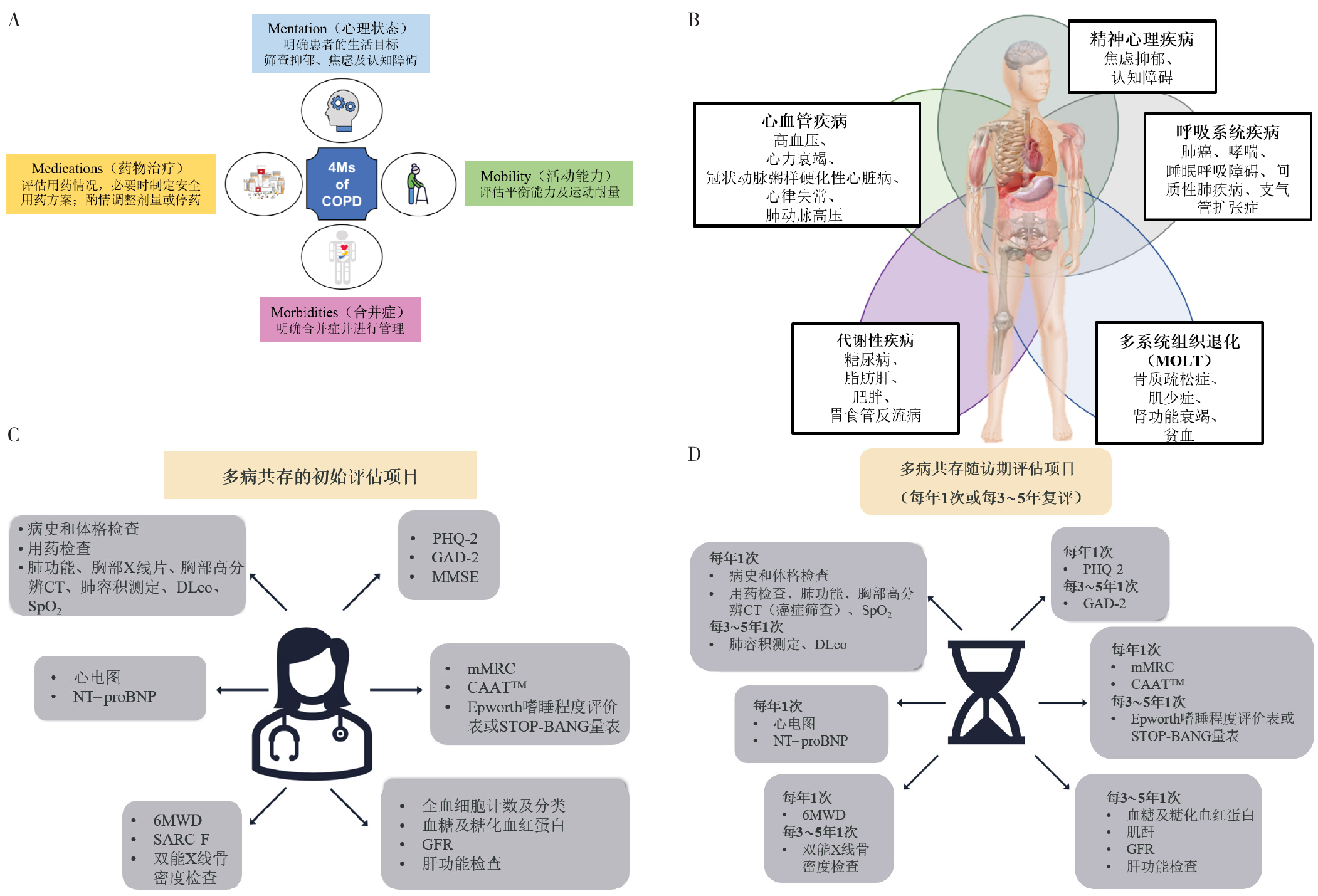
| [1] |
The Global Initiative for Chronic Obstructive Lung Disease. Global strategy for prevention, diagnosis and management of COPD: 2026 report[EB/OL]. (2025-11-11)[2025-12-01].
|
| [2] |
|
| [3] |
|
| [4] |
Wang Z F, Lin J F, Liang L N, et al. Global, regional, and national burden of chronic obstructive pulmonary disease and its attributable risk factors from 1990 to 2021: an analysis for the Global Burden of Disease Study 2021[J]. Respir Res, 2025, 26(1): 2.
|
| [5] |
Boers E, Barrett M, Su J G, et al. Global burden of chronic obstructive pulmonary disease through 2050[J]. JAMA Netw Open, 2023, 6(12): e2346598.
|
| [6] |
Salvi S S, Barnes P J. Chronic obstructive pulmonary disease in non-smokers[J]. Lancet, 2009, 374(9691): 733-743.
|
| [7] |
GBD 2023 Causes of Death Collaborators. Global burden of 292 causes of death in 204 countries and territories and 660 subnational locations, 1990-2023: a systematic analysis for the Global Burden of Disease Study 2023[J]. The Lancet, 2025, 406(10513): 1811-1872.
|
| [8] |
Lamprecht B, Soriano J B, Studnicka M, et al. Determinants of underdiagnosis of COPD in national and international surveys[J]. Chest, 2015, 148(4): 971-985.
|
| [9] |
Martinez-González C, Blanco I, Diego I, et al. Estimated prevalence and number of PiMZ genotypes of alpha-1 antitrypsin in seventy-four countries worldwide[J]. Int J Chron Obstruct Pulmon Dis, 2021, 16: 2617-2630.
|
| [10] |
Cho M H, Boutaoui N, Klanderman B J, et al. Variants in FAM13A are associated with chronic obstructive pulmonary disease[J]. Nat Genet, 2010, 42(3): 200-202.
|
| [11] |
Boers E, Allen A, Barrett M, et al. Forecasting the global economic and health burden of COPD from 2025 through 2050[J]. CHEST, 2025, 168(4): 880-889.
|
| [12] |
Siddharthan T, Pollard S L, Quaderi S A, et al. Discriminative accuracy of chronic obstructive pulmonary disease screening instruments in 3 low- and middle-income country settings[J]. JAMA, 2022, 327(2): 151-160.
|
| [13] |
Labonté L E, Tan W C, Li P Z, et al. Undiagnosed chronic obstructive pulmonary disease contributes to the burden of health care use. Data from the CanCOLD study[J]. Am J Respir Crit Care Med, 2016, 194(3): 285-298.
|
| [14] |
Gerstein E, Bierbrier J, Whitmore G A, et al. Impact of undiagnosed chronic obstructive pulmonary disease and asthma on symptoms, quality of life, healthcare use, and work productivity[J]. Am J Respir Crit Care Med, 2023, 208(12): 1271-1282.
|
| [15] |
Aaron S D, Montes de Oca M, Celli B, et al. Early diagnosis and treatment of chronic obstructive pulmonary disease: the costs and benefits of case finding[J]. Am J Respir Crit Care Med, 2024, 209(8): 928-937.
|
| [16] |
Aaron S D, Vandemheen K L, Whitmore G A, et al. Early diagnosis and treatment of COPD and asthma—a randomized, controlled trial[J]. N Engl J Med, 2024, 390(22): 2061-2073.
|
| [17] |
Le Rouzic O, Roche N, Cortot A B, et al. Defining the "frequent exacerbator" phenotype in COPD: a hypothesis-free approach[J]. Chest, 2018, 153(5): 1106-1115.
|
| [18] |
Martinez F J, Yawn B P, Angulo D, et al. Impact of the CAPTURE chronic obstructive pulmonary disease screening tool in U.S. primary care: a cluster-randomized trial[J]. Am J Respir Crit Care Med, 2025, 211(5): 789-802.
|
| [19] |
Lipson D A, Barnhart F, Brealey N, et al. Once-daily single-inhaler triple versus dual therapy in patients with COPD[J]. N Engl J Med, 2018, 378(18): 1671-1680.
|
| [20] |
Grohskopf L A, Ferdinands J M, Blanton L H, et al. Prevention and control of seasonal influenza with vaccines: recommendations of the advisory committee on immunization practices—United States, 2024-25 influenza season[J]. MMWR Recomm Rep, 2024, 73(5): 1-25.
|
| [21] |
Wongsurakiat P, Maranetra K N, Wasi C, et al. Acute respiratory illness in patients with COPD and the effectiveness of influenza vaccination: a randomized controlled study[J]. Chest, 2004, 125(6): 2011-2020.
|
| [22] |
Zahhar J A, Salamatullah H K, Almutairi M B, et al. Influenza vaccine effect on risk of stroke occurrence: a systematic review and meta-analysis[J]. Front Neurol, 2023, 14: 1324677.
|
| [23] |
Poole P J, Chacko E, Wood-Baker R W, et al. Influenza vaccine for patients with chronic obstructive pulmonary disease[J]. Cochrane Database Syst Rev, 2006(1): CD002733.
|
| [24] |
Wongsurakiat P, Lertakyamanee J, Maranetra K N, et al. Economic evaluation of influenza vaccination in Thai chronic obstructive pulmonary disease patients[J]. J Med Assoc Thai, 2003, 86(6): 497-508.
|
| [25] |
Nichol K L, Margolis K L, Wuorenma J, et al. The efficacy and cost effectiveness of vaccination against influenza among elderly persons living in the community[J]. N Engl J Med, 1994, 331(12): 778-784.
|
| [26] |
Anthony E F, David K S, Karen B, et al. Prevention and control of seasonal influenza with vaccines: recommendations of the Advisory Committee on Immunization Practices (ACIP), 2009[J]. MMWR Recomm Rep, 2009, 58(Rr-8):1-52.
|
| [27] |
Huang C L, Nguyen P A, Kuo P L, et al. Influenza vaccination and reduction in risk of ischemic heart disease among chronic obstructive pulmonary elderly[J]. Comput Methods Programs Biomed, 2013, 111(2): 507-511.
|
| [28] |
Anderson C S, Hua C, Wang Z Y, et al. Influenza vaccination to improve outcomes for patients with acute heart failure (PANDA II): a multiregional, seasonal, hospital-based, cluster-randomised, controlled trial in China[J]. Lancet, 2025, 406(10507): 1020-1031.
|
| [29] |
Walsh E E, Pérez Marc G, Zareba A M, et al. Efficacy and safety of a bivalent RSV prefusion F vaccine in older adults[J]. N Engl J Med, 2023, 388(16): 1465-1477.
|
| [30] |
Papi A, Ison M G, Langley J M, et al. Respiratory syncytial virus prefusion F protein vaccine in older adults[J]. N Engl J Med, 2023, 388(7): 595-608.
|
| [31] |
Wilson E, Goswami J, Baqui A H, et al. Efficacy and safety of an mRNA-based RSV PreF vaccine in older adults[J]. N Engl J Med, 2023, 389(24): 2233-2244.
|
| [32] |
Wodi A P, Issa A N, Moser C A, et al. Advisory committee on immunization practices recommended immunization schedule for adults aged 19 years or older—United States, 2025[J]. MMWR Morb Mortal Wkly Rep, 2025, 74(2): 30-33.
|
| [33] |
Cong B B, Dighero I, Zhang T T, et al. Understanding the age spectrum of respiratory syncytial virus associated hospitalisation and mortality burden based on statistical modelling methods: a systematic analysis[J]. BMC Med, 2023, 21(1): 224.
|
| [34] |
Melgar M, Britton A, Roper L E, et al. Use of respiratory syncytial virus vaccines in older adults: recommendations of the advisory committee on immunization practices—United States, 2023[J]. MMWR Morb Mortal Wkly Rep, 2023, 72(29): 793-801.
|
| [35] |
Woodruff R C, Melgar M, Pham H, et al. Acute cardiac events in hospitalized older adults with respiratory syncytial virus infection[J]. JAMA Intern Med, 2024, 184(6): 602-611.
|
| [36] |
Ison M G, Papi A, Athan E, et al. Efficacy, safety, and immunogenicity of the AS01E-adjuvanted respiratory syncytial virus prefusion F protein vaccine (RSVPreF3 OA) in older adults over three respiratory syncytial virus seasons (AReSVi-006): a multicentre, randomised, observer-blinded, placebo-controlled, phase 3 trial[J]. Lancet Respir Med, 2025, 13(6): 517-529.
|
| [37] |
Surie D, Self W H, Yuengling K A, et al. RSV vaccine effectiveness against hospitalization among US adults aged 60 years or older during 2 seasons[J]. JAMA, 2025, 334(16): 1442-1451.
|
| [38] |
Bhatt S P, Rabe K F, Hanania N A, et al. Dupilumab for COPD with blood eosinophil evidence of type 2 inflammation[J]. N Engl J Med, 2024, 390(24): 2274-2283.
|
| [39] |
Rabe K F, Martinez F J, Ferguson G T, et al. Triple inhaled therapy at two glucocorticoid doses in moderate-to-very-severe COPD[J]. N Engl J Med, 2020, 383(1): 35-48.
|
| [40] |
Halpin D M G, Dransfield M T, Han M K, et al. The effect of exacerbation history on outcomes in the IMPACT trial[J]. Eur Respir J, 2020, 55(5): 1901921.
|
| [41] |
Singh D, Fabbri L M, Corradi M, et al. Extrafine triple therapy in patients with symptomatic COPD and history of one moderate exacerbation[J]. Eur Respir J, 2019, 53(5): 1900235.
|
| [42] |
Bhatt S P, Rabe K F, Hanania N A, et al. Dupilumab for COPD with type 2 inflammation indicated by eosinophil counts[J]. N Engl J Med, 2023, 389(3): 205-214.
|
| [43] |
Pavord I D, Chanez P, Criner G J, et al. Mepolizumab for eosinophilic chronic obstructive pulmonary disease[J]. N Engl J Med, 2017, 377(17): 1613-1629.
|
| [44] |
Sciurba F C, Criner G J, Christenson S A, et al. Mepolizumab to prevent exacerbations of COPD with an eosinophilic phenotype[J]. N Engl J Med, 2025, 392(17): 1710-1720.
|
| [45] |
Chapman K R, Hurst J R, Frent S M, et al. Long-term triple therapy de-escalation to indacaterol/glycopyrronium in patients with chronic obstructive pulmonary disease (SUNSET): a randomized, double-blind, triple-dummy clinical trial[J]. Am J Respir Crit Care Med, 2018, 198(3): 329-339.
|
| [46] |
Singh D, Han M K, Bhatt S P, et al. Is disease stability an attainable chronic obstructive pulmonary disease treatment goal?[J]. Am J Respir Crit Care Med, 2025, 211(3): 452-463.
|
| [47] |
Soler-Cataluña J J, Villagrasa M, Catalán P, et al. Risk validation of a new quantitative score for clinical control of chronic obstructive pulmonary disease: the RADAR score[J]. Arch Bronconeumol, 2026, 62(1): 28-34.
|
| [48] |
Tashkin D P, Celli B, Senn S, et al. A 4-year trial of tiotropium in chronic obstructive pulmonary disease[J]. N Engl J Med, 2008, 359(15): 1543-1554.
|
| [49] |
Reumkens C, Endres A, Simons S O, et al. Application of the Rome severity classification of COPD exacerbations in a real-world cohort of hospitalised patients[J]. ERJ Open Res, 2023, 9(3): 00569-2022.
|
| [50] |
Cometa M, Ursitti A, Lombardo L P, et al. Can the Rome classification of chronic obstructive pulmonary disease exacerbation severity be applied in the hospital setting?[J]. Respir Med, 2024, 222: 107509.
|
| [51] |
Crisafulli E, Sartori G, Huerta A, et al. Association between Rome classification among hospitalized patients with COPD exacerbations and short-term and intermediate-term outcomes[J]. Chest, 2023, 164(6): 1422-1433.
|
| [52] |
Couturaud F, Bertoletti L, Pastre J, et al. Prevalence of pulmonary embolism among patients with COPD hospitalized with acutely worsening respiratory symptoms[J]. JAMA, 2021, 325(1): 59-68.
|
| [53] |
Graul E L, Nordon C, Rhodes K, et al. Temporal risk of nonfatal cardiovascular events after chronic obstructive pulmonary disease exacerbation: a population-based study[J]. Am J Respir Crit Care Med, 2024, 209(8): 960-972.
|
| [54] |
Celli B R, Fabbri L M, Aaron S D, et al. An updated definition and severity classification of chronic obstructive pulmonary disease exacerbations: the Rome proposal[J]. Am J Respir Crit Care Med, 2021, 204(11): 1251-1258.
|
| [55] |
Martinez F J, Han M K, Flaherty K, et al. Role of infection and antimicrobial therapy in acute exacerbations of chronic obstructive pulmonary disease[J]. Expert Rev Anti Infect Ther, 2006, 4(1): 101-124.
|
| [56] |
Celli B R, MacNee W, ATS/ERS Task Force. Standards for the diagnosis and treatment of patients with COPD: a summary of the ATS/ERS position paper[J]. Eur Respir J, 2004, 23(6): 932-946.
|
| [57] |
Bardsley G, Pilcher J, McKinstry S, et al. Oxygen versus air-driven nebulisers for exacerbations of chronic obstructive pulmonary disease: a randomised controlled trial[J]. BMC Pulm Med, 2018, 18(1): 157.
|
| [58] |
Leuppi J D, Schuetz P, Bingisser R, et al. Short-term vs conventional glucocorticoid therapy in acute exacerbations of chronic obstructive pulmonary disease: the REDUCE randomized clinical trial[J]. JAMA, 2013, 309(21): 2223-2231.
|
| [59] |
Waljee A K, Rogers M A M, Lin P, et al. Short term use of oral corticosteroids and related harms among adults in the United States: population based cohort study[J]. Bmj, 2017: j1415.
|
| [60] |
Ramakrishnan S, Jeffers H, Langford-Wiley B, et al. Blood eosinophil-guided oral prednisolone for COPD exacerbations in primary care in the UK (STARR2): a non-inferiority, multicentre, double-blind, placebo-controlled, randomised controlled trial[J]. Lancet Respir Med, 2024, 12(1): 67-77.
|
| [61] |
Miravitlles M, Kruesmann F, Haverstock D, et al. Sputum colour and bacteria in chronic bronchitis exacerbations: a pooled analysis[J]. Eur Respir J, 2012, 39(6): 1354-1360.
|
| [62] |
Sheng W L, Huang L X, Gu X Y, et al. Procalcitonin-guided use of antibiotic in hospitalized patients with acute exacerbation of chronic obstructive pulmonary disease: a randomized clinical trial[J]. Clin Microbiol Infect, 2025, 31(5): 785-792.
|
| [63] |
Llor C, Moragas A, Miravitlles M, et al. Are short courses of antibiotic therapy as effective as standard courses for COPD exacerbations? A systematic review and meta-analysis[J]. Pulm Pharmacol Ther, 2022, 72: 102111.
|
| [64] |
Oczkowski S, Ergan B, Bos L, et al. ERS clinical practice guidelines: high-flow nasal Cannula in acute respiratory failure[J]. Eur Respir J, 2022, 59(4): 2101574.
|
| [65] |
Celli B R, Fabbri L M, Yohannes A M, et al. A person-centred clinical approach to the multimorbid patient with COPD[J]. Eur J Intern Med, 2025, 140: 106424.
|
| [66] |
Moll M, Qiao D D, Regan E A, et al. Machine learning and prediction of all-cause mortality in COPD[J]. Chest, 2020, 158(3): 952-964.
|
| [67] |
Fralick M, Bartsch E, Ritchie C S, et al. Estimating the use of potentially inappropriate medications among older adults in the United States[J]. J Am Geriatr Soc, 2020, 68(12): 2927-2930.
|
| [68] |
Fabbri L M. Smoking, not COPD, as the disease[J]. N Engl J Med, 2016, 374(19): 1885-1886. DOI: 10.1056/NEJMe1515508.
|
| [69] |
Divo M J, Casanova C, Marin J M, et al. COPD comorbidities network[J]. Eur Respir J, 2015, 46(3): 640-650.
|
| [70] |
Divo M, Cote C, de Torres J P, et al. Comorbidities and risk of mortality in patients with chronic obstructive pulmonary disease[J]. Am J Respir Crit Care Med, 2012, 186(2): 155-161.
|
| [71] |
Schattner A. The clinical encounter revisited[J]. Am J Med, 2014, 127(4): 268-274.
|
| [72] |
Azhimamatova R, Salieva R S, Zalova T B, et al. Frailty in COPD: clinical impact, diagnosis, biomarkers, and management strategies[J]. Int J Chron Obstruct Pulmon Dis, 2025, 20: 2445-2458.
|
| [73] |
Roberts M H, Mapel D W, Ganvir N, et al. Frailty among older individuals with and without COPD: a cohort study of prevalence and association with adverse outcomes[J]. Int J Chron Obstruct Pulmon Dis, 2022, 17: 701-717.
|
| [74] |
Xu J, Xu W, Qiu Y, et al. Association of prefrailty and frailty with all-cause mortality, acute exacerbation, and hospitalization in patients with chronic obstructive pulmonary disease: a meta-analysis[J]. J Am Med Dir Assoc, 2023, 24(7): 937-944.e3.
|
| [75] |
Cherian M, Masoudian P, Thavorn K, et al. The impact of frailty on clinical outcomes among individuals with COPD: a systematic review and meta-analysis[J]. BMC Pulm Med, 2025, 25(1): 146.
|
| [76] |
Osadnik C R, Brighton L J, Burtin C, et al. European Respiratory Society statement on frailty in adults with chronic lung disease[J]. Eur Respir J, 2023, 62(2): 2300442.
|
| [77] |
Dransfield M T, Criner G J, Halpin D M G, et al. Time-dependent risk of cardiovascular events following an exacerbation in patients with chronic obstructive pulmonary disease: post hoc analysis from the IMPACT trial[J]. J Am Heart Assoc, 2022, 11(18): e024350.
|
| [78] |
Krist A H, Davidson K W, Mangione C M, et al. Screening for lung cancer: us preventive services task force recommendation statement[J]. JAMA, 2021, 325(10): 962.
|
| [79] |
Ritchie A I, Singayagam A, Mitchell S, et al. The effect of inhaled corticosteroids on pneumonia risk in patients with COPD-bronchiectasis overlap: a UK population-based case-control study[J]. Chest, 2023, 164(4): 875-884.
|
| [80] |
Loebinger M R, Quint J K, van der Laan R, et al. Risk factors for nontuberculous mycobacterial pulmonary disease: a systematic literature review and meta-analysis[J]. Chest, 2023, 164(5): 1115-1124.
|
| [81] |
Kroenke K, Spitzer R L, Williams J B, et al. Anxiety disorders in primary care: prevalence, impairment, comorbidity, and detection[J]. Ann Intern Med, 2007, 146(5): 317-325.
|
| [82] |
Zhang J Z, Moll M, Hobbs B D, et al. Genetically predicted body mass index and mortality in chronic obstructive pulmonary disease[J]. Am J Respir Crit Care Med, 2024, 210(7): 890-899.
|
| [83] |
Celli B R, Locantore N, Tal-Singer R, et al. Emphysema and extrapulmonary tissue loss in COPD: a multi-organ loss of tissue phenotype[J]. Eur Respir J, 2018, 51(2): 1702146.
|
| [84] |
Howell M D, Corrado G S, DeSalvo K B. Three epochs of artificial intelligence in health care[J]. JAMA, 2024, 331(3): 242.
|
| [85] |
Vila M, Sisó-Almirall A, Ocaña A, et al. Prevalence, diagnostic accuracy, and healthcare utilization patterns in patients with COPD in primary healthcare: a population-based study[J]. NPJ Prim Care Respir Med, 2025, 35(1): 17.
|
| [86] |
Spetrini R, Pikman P, Kang V, et al. Prospective COPD case finding in a lung cancer screening program: a pilot study[J]. Chronic Obstr Pulm Dis, 2025, 12(5): 411-418.
|
| [87] |
Wang Z F, Liang L N, Huang F F, et al. The characteristics of the concavity of descending limb of maximal expiratory flow-volume curves generated by spirometry[J]. Lung, 2025, 203(1): 18.
|
| [88] |
Agusti A, Alcazar B, Cosio B, et al. Time for a change: anticipating the diagnosis and treatment of COPD[J]. Eur Respir J, 2020, 56(1): 2002104.
|
| [89] |
Chen W J, Sin D D, FitzGerald J M, et al. An individualized prediction model for long-term lung function trajectory and risk of COPD in the general population[J]. Chest, 2020, 157(3): 547-557.
|
| [90] |
Bush A, Greenough A, Agustí A, et al. Falling through the cracks: what happens to survivors of preterm birth?[J]. ERJ Open Res, 2025, 11(1): 643-2024.
|
| [91] |
Idrisoglu A, Dallora A L, Cheddad A, et al. COPDVD: Automated classification of chronic obstructive pulmonary disease on a new collected and evaluated voice dataset[J]. Artif Intell Med, 2024, 156: 102953.
|
| [92] |
Abdo M, Watz H, Trinkmann F, et al. Oscillometry-defined small airway dysfunction in tobacco-exposed adults with impaired or preserved airflow[J]. Am J Respir Crit Care Med, 2025, 211(9): 1652-1661.
|
| [93] |
Qu S Y, Feng E Z, Dong D H, et al. Early screening of lung function by electrical impedance tomography in people with normal spirometry reveals unrecognized pathological features[J]. Nat Commun, 2025, 16(1): 622.
|
| [94] |
Castro M, Papi A, Porsbjerg C, et al. Effect of dupilumab on exhaled nitric oxide, mucus plugs, and functional respiratory imaging in patients with type 2 asthma (VESTIGE): a randomised, double-blind, placebo-controlled, phase 4 trial[J]. Lancet Respir Med, 2025, 13(3): 208-220.
|
| [95] |
Luo Y, Hooshangnejad H, Ngwa W, et al. Opportunities and challenges in lung cancer care in the era of large language models and vision language models[J]. Transl Lung Cancer Res, 2025, 14(5): 1830-1847.
|
| [96] |
Carrasco-Zanini J, Pietzner M, Davitte J, et al. Proteomic signatures improve risk prediction for common and rare diseases[J]. Nat Med, 2024, 30(9): 2489-2498.
|
| [97] |
Olvera N, Sánchez-Valle J, Núñez-Carpintero I, et al. Lung tissue multilayer network analysis uncovers the molecular heterogeneity of chronic obstructive pulmonary disease[J]. Am J Respir Crit Care Med, 2024, 210(10): 1219-1229.
|
| [98] |
Khor Y H, Poberezhets V, Buhr R G, et al. Assessment of home-based monitoring in adults with chronic lung disease: an official American thoracic society research statement[J]. Am J Respir Crit Care Med, 2025, 211(2): 174-193.
|
| [99] |
Spielmanns M, Gloeckl R, Jarosch I, et al. Using a smartphone application maintains physical activity following pulmonary rehabilitation in patients with COPD: a randomised controlled trial[J]. Thorax, 2023, 78(5): 442-450.
|
| [100] |
Ayers J W, Poliak A, Dredze M, et al. Comparing physician and artificial intelligence chatbot responses to patient questions posted to a public social media forum[J]. JAMA Intern Med, 2023, 183(6): 589-596.
|
| [101] |
Smith L A, Oakden-Rayner L, Bird A, et al. Machine learning and deep learning predictive models for long-term prognosis in patients with chronic obstructive pulmonary disease: a systematic review and meta-analysis[J]. Lancet Digit Heal, 2023, 5(12): e872-e881.
|
| [102] |
Singh D, Hurst J R, Martinez F J, et al. Predictive modeling of COPD exacerbation rates using baseline risk factors[J]. Ther Adv Respir Dis, 2022, 16: 17534666221107314.
|
| [103] |
Zhu Y, Wang M, Gu X N, et al. Development and validation of the machine learning model for acute exacerbation of chronic obstructive pulmonary disease prediction based on inflammatory biomarkers[J]. Front Med, 2025, 12: 1616712.
|
| [104] |
Castaldi P J, Boueiz A, Yun J, et al. Machine learning characterization of COPD subtypes: insights from the COPD Gene study[J]. Chest, 2020, 157(5): 1147-1157.
|
| [105] |
Janjua S, Pike K C, Carr R, et al. Interventions to improve adherence to pharmacological therapy for chronic obstructive pulmonary disease (COPD)[J]. Cochrane Database Syst Rev, 2021, 9(9): CD013381.
|
| [106] |
Cox N S, Dal Corso S, Hansen H, et al. Telerehabilitation for chronic respiratory disease[J]. Cochrane Database Syst Rev, 2021, 1(1): CD013040.
|
| [107] |
Rochester C L, Alison J A, Carlin B, et al. Pulmonary rehabilitation for adults with chronic respiratory disease: an official American thoracic society clinical practice guideline[J]. Am J Respir Crit Care Med, 2023, 208(4): e7-e26.
|
| [108] |
Jade S, Anke L, Marjolein B K, et al. Self-management interventions for people with chronic obstructive pulmonary disease[J]. Cochrane Database Syst Rev, 2022, 1(1): CD002990.
|
| [109] |
Kermelly S B, Bourbeau J. eHealth in self-managing at a distance patients with COPD[J]. Life, 2022, 12(6): 773.
|
| [110] |
Cao W B, Zheng J, Li Q, et al. Global, regional, and national temporal trends in prevalence, deaths and disability-adjusted life years for chronic pulmonary disease, 1990-2021: an age-period-cohort analysis based on the global burden of disease study 2021[J]. Front Med, 2025, 12: 1554442.
|
| [111] |
Liao J M, Zeng L S, Huang X L, et al. Burden of chronic obstructive pulmonary disease in China: a global burden of disease study on temporal trends, risk factor contributions, and projected disease burden from 1990 to 2030[J]. COPD, 2025, 22(1): 2531016.
|
| [112] |
Li X P, Feng S C, Yang Y Q, et al. Association between airway mucus plugs and risk of moderate-to-severe exacerbations in patients with COPD: results from a Chinese prospective cohort study[J]. Chest, 2025, 168(3): 627-638.
|
| [113] |
Zhou Y M, Wu F, Shi Z, et al. Effect of high-dose N-acetylcysteine on exacerbations and lung function in patients with mild-to-moderate COPD: a double-blind, parallel group, multicentre randomised clinical trial[J]. Nat Commun, 2024, 15: 8468.
|
| [114] |
Dai S Y, Kwok C S. The impact of pulmonary rehabilitation on sleep quality in patients with chronic obstructive pulmonary disease: a systematic review and meta-analysis[J]. PLoS One, 2025, 20(6): e0318424.
|
| [115] |
Chen J W, Vela M F, Peterson K A, et al. AGA clinical practice update on the diagnosis and management of extraesophageal gastroesophageal reflux disease: expert review[J]. Clin Gastroenterol Hepatol, 2023, 21(6): 1414-1421.e3.
|
| [116] |
Huang T M, Kuo K C, Wang Y H, et al. Risk of active tuberculosis among COPD patients treated with fixed combinations of long-acting beta2 agonists and inhaled corticosteroids[J]. BMC Infect Dis 2020, 20(1): 706.
|